
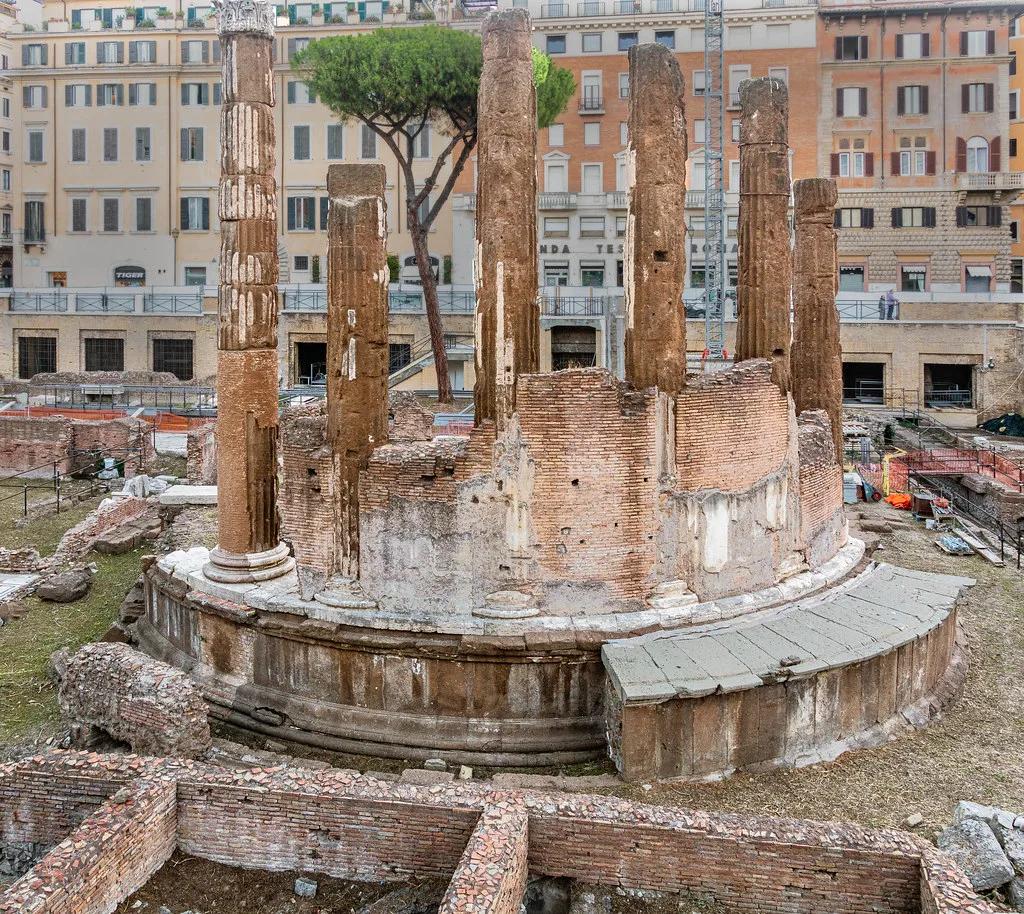
Last updated November 2026: the best Roman ruins in Rome start with the Colosseum, the Roman Forum with Palatine Hill, and the Pantheon. Beyond that core, Largo di Torre Argentina, Trajan's Market, Domus Aurea and Ostia Antica repay the extra effort. Main trade-off: ticketed headline sites against free ruins you can walk past, so every stop below carries a time estimate, a booking type and a skip-if note.
Featured image: Me in ME, CC BY 2.0, via Flickr.
Quick answer: the Roman ruins in Rome worth your time
Rome packs more ancient ruins into its streets than one trip can cover, so choose by time, booking and route rather than fame. Start with the Colosseum, Roman Forum and Palatine Hill, which fill roughly half a day. Add the Pantheon for 30 to 60 minutes inside. From the 12 stops below, pick two or three that match your pace. Free options include the Circus Maximus park and the Theatre of Marcellus exterior, at about 30 minutes each. Ticketed stops with the biggest payoff are the Domus Aurea and the Baths of Diocletian. Readers with one day can follow our one-day ancient Rome plan.
How to choose: free vs ticketed Roman ruins
Rome's ruins fall into four types: ticketed sites, free exteriors, free parks and museums. Ticketed sites need a booking or a queue, so plan them first. Free exteriors and parks fill the gaps between them, at about 30 minutes each. Museums such as the Baths of Diocletian run closer to 1.5 hours. Ostia Antica is the longest commitment, at 2 to 3 hours on site. Use the table to match each stop to your time and your tolerance for booking ahead.
| Site | Type | Time needed | Booking | Best for | Skip if |
|---|---|---|---|---|---|
| Colosseum | Ticketed | 1 to 3 hours | Book ahead; arena and underground extra | First-timers | You only want exterior photos |
| Roman Forum and Palatine Hill | Ticketed (combined with Colosseum) | 2 hours to a full day | Combined ticket | History lovers | It is midday in summer heat |
| Pantheon | Ticketed entry; rules have changed | 30 to 60 minutes inside | Check current rules | Almost everyone | You dislike queues |
| Circus Maximus | Free park | 30 minutes | None for the park | Families, picnics | You expect standing ruins |
| Largo di Torre Argentina | Free street view; ticket to walk among ruins | Short stop | None for street view | Budget travelers | You want a long visit |
| Theatre of Marcellus | Free exterior | 30 minutes | None | Photographers | You want to go inside |
| Trajan's Market | Museum | Check official site | Ticketed | Imperial fora fans | You are short on time |
| Domus Aurea | Ticketed, guided only | 1 hour 15 minutes | Book ahead; limited days | Underground ruins | You cannot fix a date |
| Baths of Diocletian | Museum | 1.5 hours | Ticketed; combination tickets | Indoor sightseeing | You want open-air ruins |
| Mausoleum of Augustus and Ara Pacis | Tomb mound plus museum | Check official site | Mausoleum status changes | Augustus followers | You need a guaranteed entry |
| Appian Way and Aqueducts Park | Free to walk; park | Half day to full day | Optional bike tour | Cyclists, walkers | It is very hot or mobility is limited |
| Ostia Antica | Ticketed archaeological park | 2 to 3 hours plus travel | Ticket required | Ancient-city fans | You have only a half day |
The 12 best Roman ruins in Rome
Prices and hours checked November 2026; euro amounts are adult rates. Items run from the ancient core outward, so reading in order roughly matches a walking route.
1. Colosseum
The Flavian Amphitheatre, built between 72 and 80 CE, is the ancient monument most visitors picture first. Its ellipse measures 189 m (615 ft) by 156 m (510 ft), and it held between 50,000 and 80,000 spectators. Walk the full exterior first, then go inside to see the arena line and the exposed brick walls of the chambers below it.
Adult tickets have started at €12 on the Colosseum archaeological park site, with arena and underground access costing extra. Allow one to three hours, and skip the interior if you only want photos, since walking around the outside costs nothing.
2. Roman Forum and Palatine Hill
The Roman Forum was the working centre of ancient Rome, a rectangular plaza between the Palatine and Capitoline hills. Look for the Temple of Saturn and the Arch of Septimius Severus, dedicated in 203 CE. Basilica of Maxentius, finished in 312 CE, was the last major addition to the complex.
By the imperial period, crowding buildings had reduced the open square to about 130 by 50 m. Budget 2 hours for the highlights or a full day to read every ruin, and add Palatine Hill on the same combined ticket. Shade is scarce, so go early or late in summer and skip it at midday in peak heat.
3. Pantheon
Hadrian's Pantheon survives largely intact because it became a church in the early 600s CE. Its dome spans 43 m (142 ft), and a 9 m oculus opens at the top to let in light and rain. Look for the coffered ceiling and the tomb of Raphael.
Entry was free until July 2023, so check the Turismo Roma visitor site for the current fee and reservation rules. Lines of 15 to 30 minutes have been reported at peak times, and 30 to 60 minutes inside is enough. Skip the midday rush by arriving early, or by visiting late in the day.
4. Circus Maximus
Circus Maximus park is a grassy oval today, but the track once measured 621 m (2,037 ft) by 118 m (387 ft). Chariot races here drew more than 250,000 spectators, and the track offers views of Palatine Hill. Entry to the park is free, 30 minutes covers a loop, and Metro B stops at Circo Massimo.
Summer visits can add an augmented-reality layer, which our augmented-reality Circus Maximus visit guide explains. Season and booking details sit on the official Circo Massimo Experience site. Skip it if you expect standing ruins, because little rises above the ground.
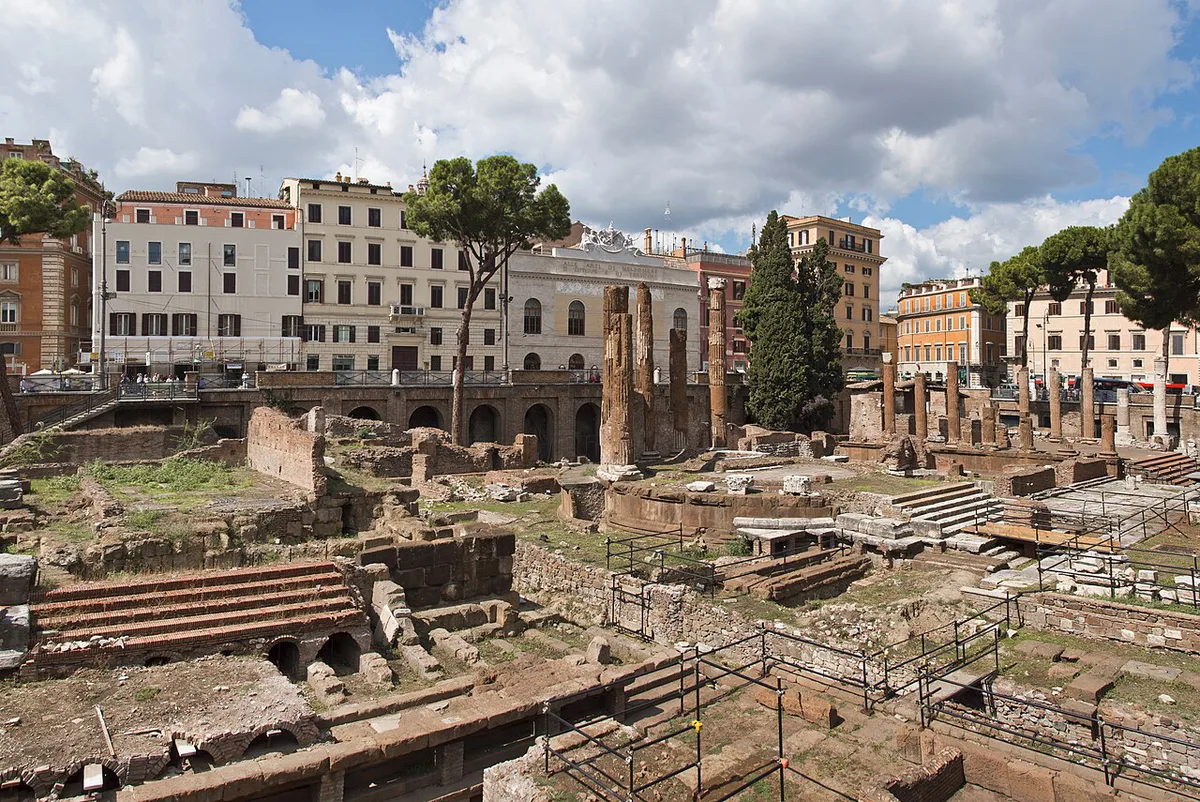
5. Largo di Torre Argentina
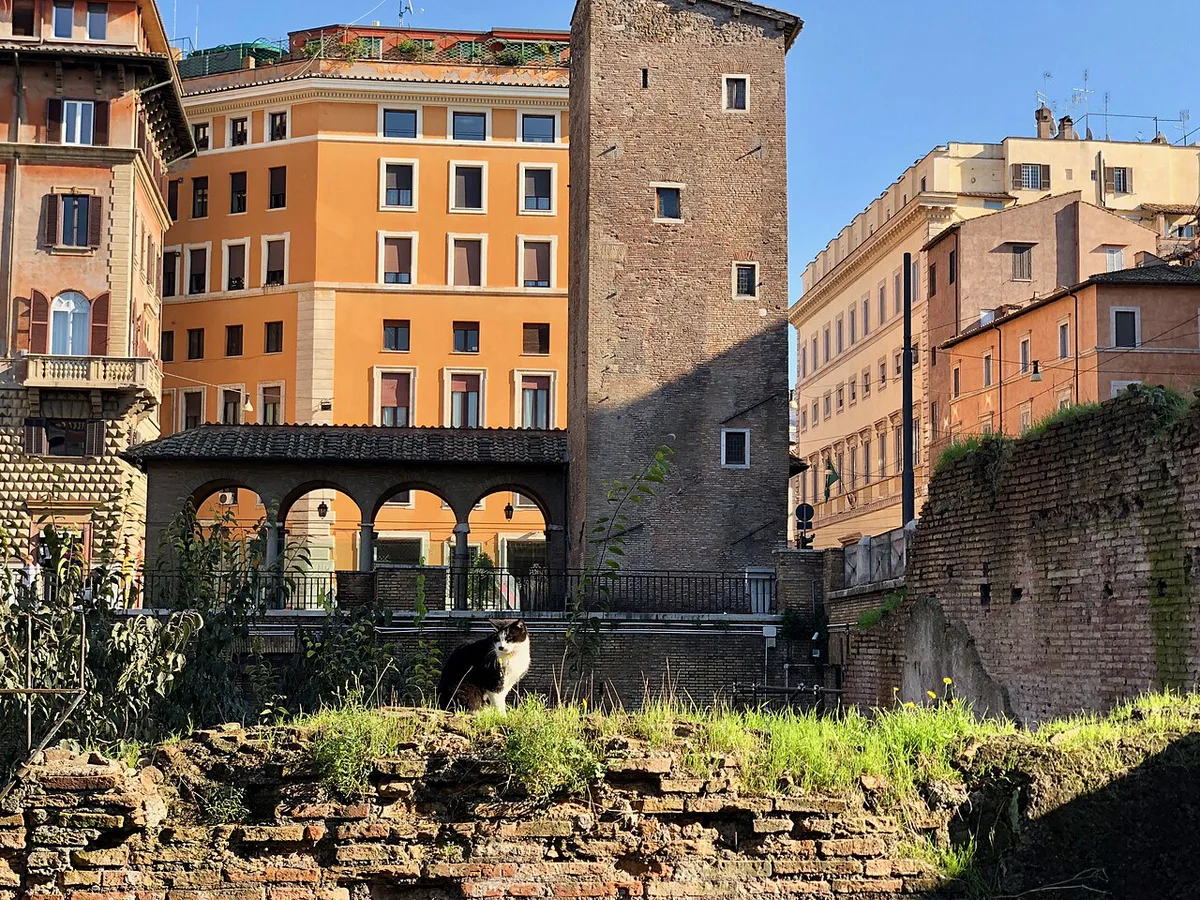
Largo di Torre Argentina is a sunken square of temple bases and the Curia of Pompey, created in 1926 when houses were demolished. Julius Caesar was killed in 44 BCE in the Curia of Pompey, whose ruins sit against the west wall. Stray cats live here in a sanctuary established in 1993.
You can see everything from street level, and our Torre Argentina ruins guide explains the layout. Pair it with the Crypta Balbi museum, part of the Museo Nazionale Romano, which shows how this neighborhood changed over the centuries. Skip the paid entry if you want more than a short stop.
6. Theatre of Marcellus
Theatre of Marcellus is a curved, arcaded facade in the Ghetto neighborhood, started under Julius Caesar. It was inaugurated in 13 or 11 BCE and seated more than 20,000 people. A 16th-century palazzo now sits on top, split into apartments.
You can walk around the exterior for free in about 30 minutes, looking for the Doric and Ionic columns. Our Marcellus theatre exterior guide covers the best angles. Skip it if you want to go inside, because the interior is closed.
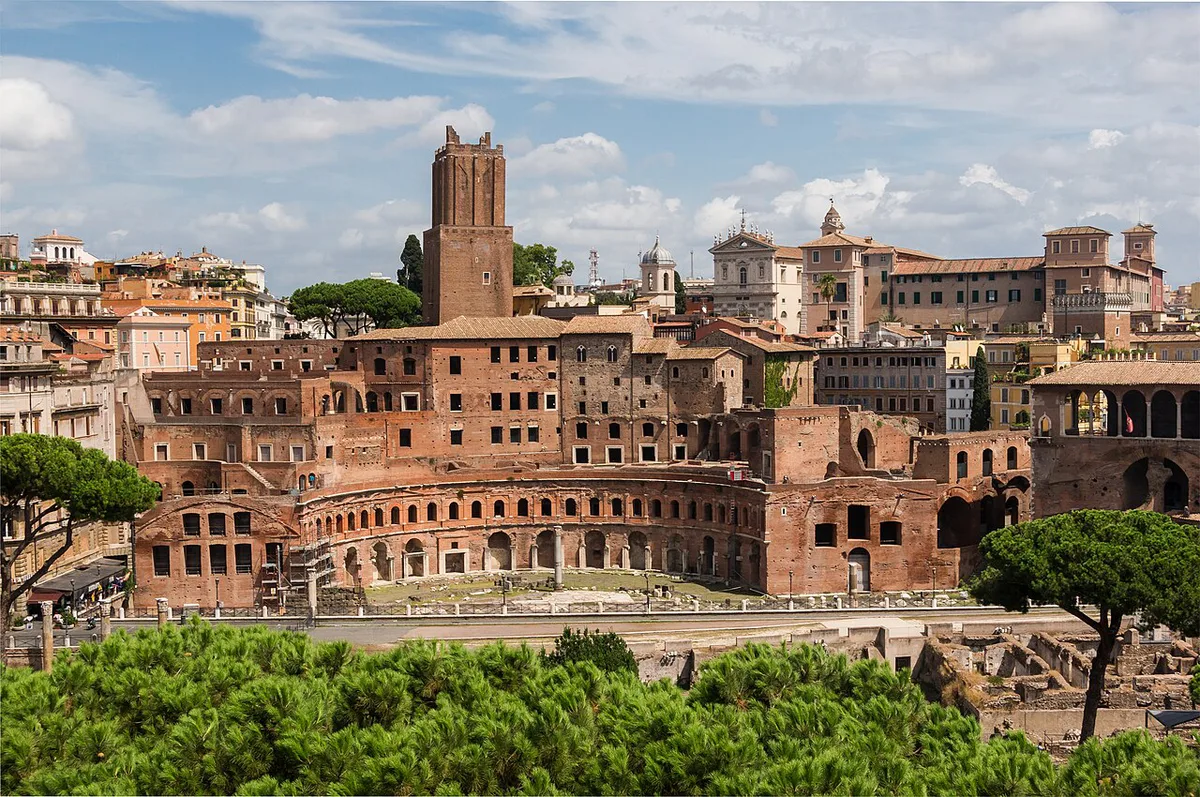
7. Trajan's Market
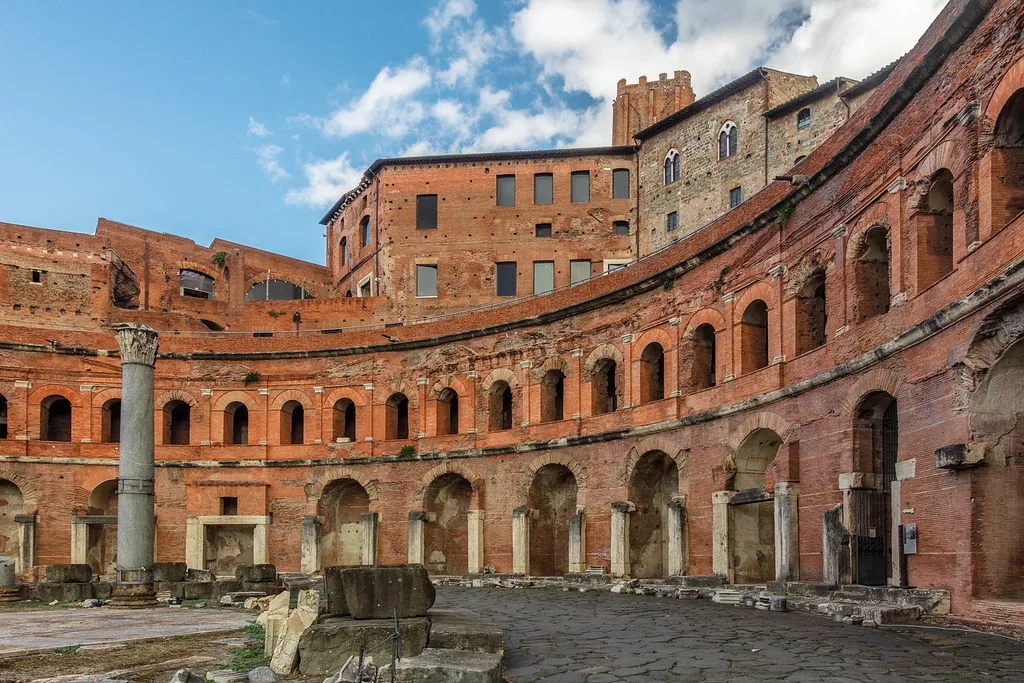
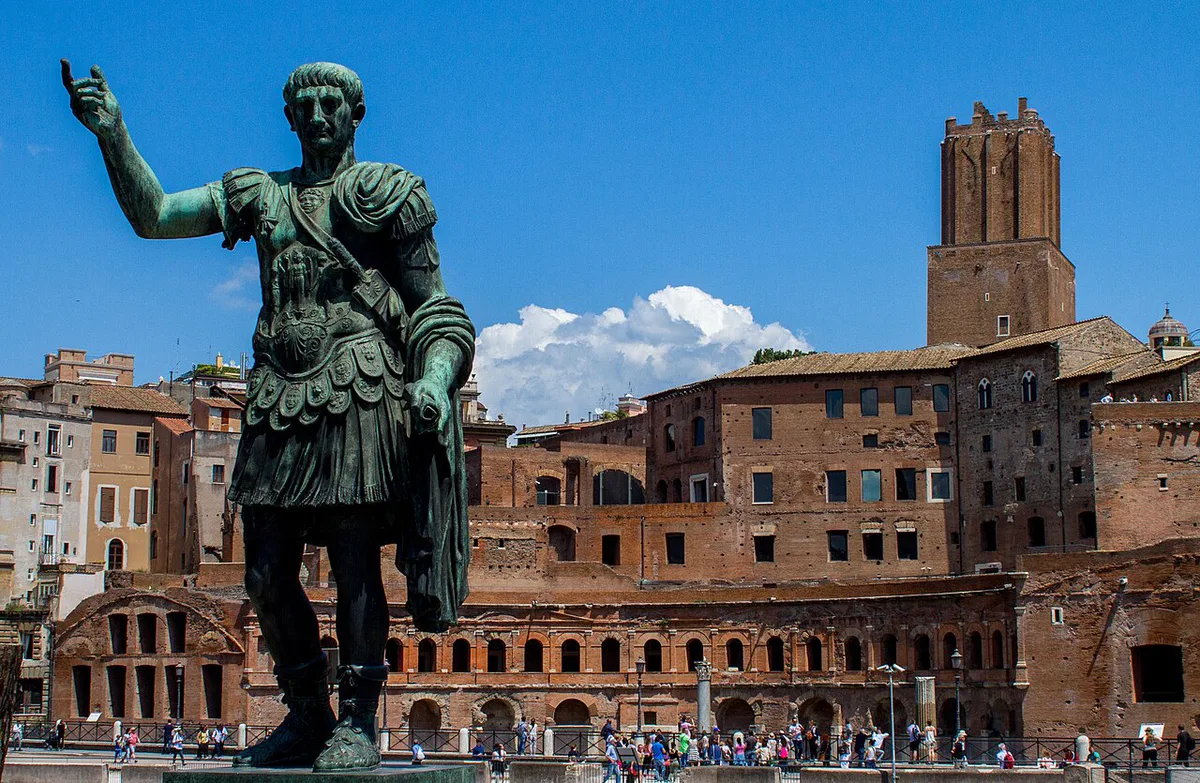
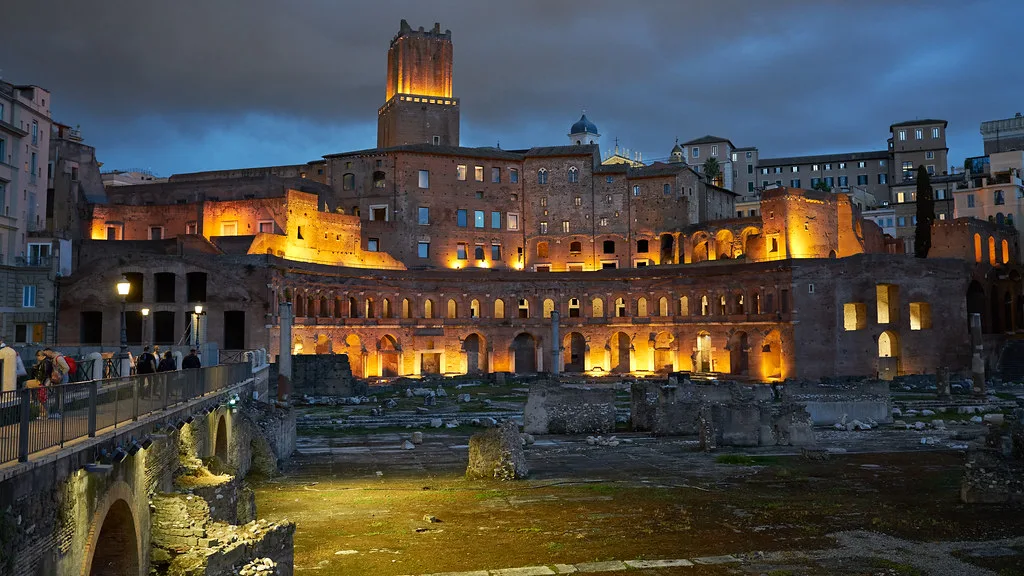
Built around 100 CE, Trajan's Market was a multi-storey semicircular complex of more than 150 shops and offices. Ground-floor tabernae are barrel-vaulted rooms where customers likely bought from the doorway. Its Great Hall opens onto a front area 32 m long that staged concerts.
Today the site houses the Museo dei Fori Imperiali, so entry is by museum ticket. Hours and fees are listed on the Trajan's Markets museum page. Our Trajan's Market complex guide covers what to see, and the site is best for readers who like imperial fora.
8. Domus Aurea
Domus Aurea is Nero's palace, built between 64 and 68 CE and now underground close to the Colosseum. Visits are guided only, on limited days, and last about 1 hour 15 minutes. Visitors descend in hard hats to walk through some of the palace's many halls.
Adult tickets have been quoted at €14, and our Domus Aurea guided tour guide explains the format. When you are ready to reserve, see booking Domus Aurea entry. Skip it if you cannot commit to a date, since there is no walk-in option.
9. Baths of Diocletian and Palazzo Massimo
Baths of Diocletian, built between 298 and 306 CE, stand near Termini Station and form part of the Museo Nazionale Romano. Allow about 1.5 hours, and expect adult entry at €12 with combination tickets for other museum sites. Indoor halls give shade when the Forum is baking.
Read our Diocletian's baths guide for the layout. Palazzo Massimo museum sits on the same Termini side and adds sculpture, mosaics and frescoes. Skip this group if you want open-air ruins rather than museum rooms.
10. Mausoleum of Augustus and Ara Pacis
Augustus's mausoleum, built in 28 BCE, is a huge circular tomb mound in the Augustan area. It reopened on 1 March 2021 after restoration, but it has been reported closed since June 2022 during redevelopment of Piazza Augusto Imperatore. Access status changes, so read our Augustus's mausoleum guide before building a plan around it.
The Ara Pacis altar stands in its own museum, covered by a museum ticket. See the Ara Pacis altar museum guide, and check hours on the official Museo dell'Ara Pacis site. Skip this pair if you need a guaranteed interior visit.
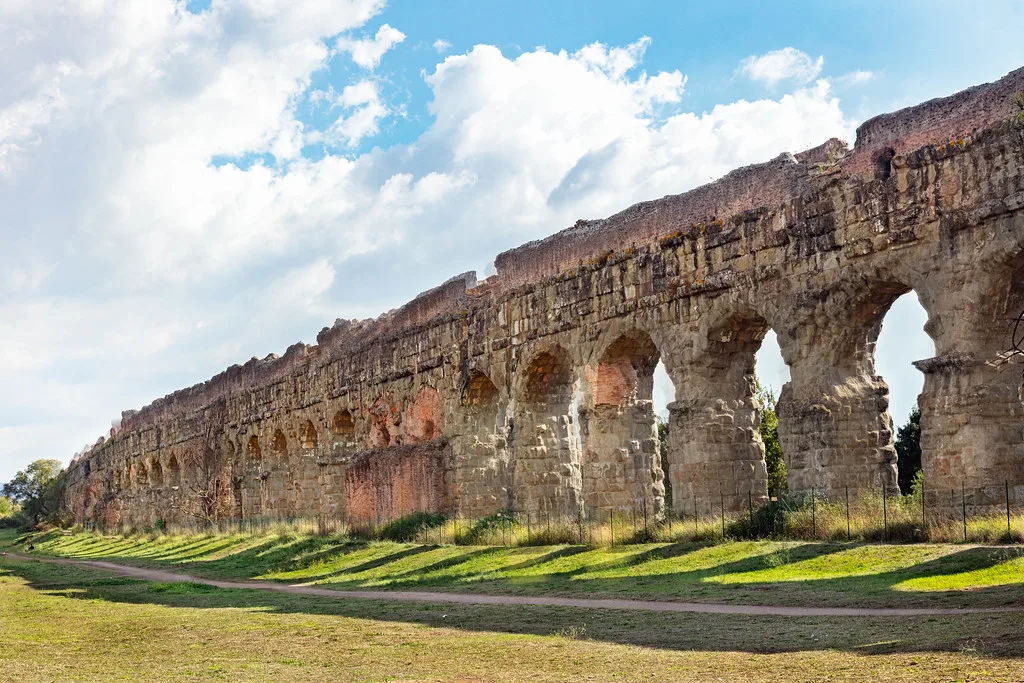
11. Appian Way and Aqueducts Park
Appian Way leaves Rome from the south, with its first stretch begun in 312 BCE. Walking it is free, and sights along the route include the Tomb of Geta and Roman aqueduct arches. Bike tours have been quoted from €43 for a half day and €69 for a full day.
Route details and rules are on the Appia Antica regional park site. For aqueduct arches in open grass, see our Aqueducts Park walk guide. Skip this group in the heat or if mobility is limited, because the outing is outdoors and long.
12. Ostia Antica
Ostia Antica was ancient Rome's harbor town, and most of the city dates from the 3rd century BCE. Walk the central road, then see the amphitheatre, warehouses and temples. Reaching it takes about 1 hour by local transport, and a single train fare has been quoted at €1.50.
Entry has been quoted at €12, with an audio guide at €5, and 2 to 3 hours on site is enough. Half-day tours from Rome start at €69. Skip it if you have only a half day, because travel eats a third of your time.
Which Roman ruins suit which traveler
Match each stop to the traveler rather than to a fame ranking. First-timers with half a day should stay inside the ancient core. Families do better with open ground such as the Circus Maximus park than with a long guided tour. Heat-averse readers should trade the shadeless Forum for indoor museum sites.
| Traveler | Best picks | Why | Skip |
|---|---|---|---|
| First-timer with half a day | Colosseum, Forum and Palatine | One combined ticket covers all three | Ostia Antica |
| History buff | Domus Aurea, Trajan's Market, Ostia Antica | Deeper layers beyond the headline sites | Quick photo stops |
| Family with kids | Circus Maximus park, Theatre of Marcellus exterior | Free, open and about 30 minutes each | Long guided tours |
| Low-mobility or heat-averse | Baths of Diocletian, Palazzo Massimo | Indoor halls and short routes | Appian Way, Forum at midday |
| Budget or free-only | Circus Maximus, Theatre of Marcellus, Largo di Torre Argentina | Street-level or park views at no cost | Paid arena access |
| Repeat visitor | Domus Aurea, Crypta Balbi, Appian Way | Less crowded alternatives to the core | The big three again |
Routes by area and time available
Group stops by area to cut backtracking. A half day fits the ancient core: Colosseum, Forum and Palatine, then Circus Maximus. With a full day, move to the centro storico for the Pantheon, Largo di Torre Argentina and Theatre of Marcellus. Two days leave room for the Termini side, where the Baths of Diocletian and Palazzo Massimo pair well. Augustan area stops, the Mausoleum and Ara Pacis, fit a gap between other plans. Outside the walls, the Appian Way and Aqueducts Park suit a half day. Ostia Antica deserves a day of its own, with about 1 hour to reach and 2 to 3 hours on site. Keep the Termini side separate from the ancient core to avoid backtracking.
Pairing Domus Aurea with the ancient core half day works only if its 1 hour 15 minutes guided visit fits a booked slot.
| Area | Sites | Pairs well with | Typical time |
|---|---|---|---|
| Ancient core | Colosseum, Forum, Palatine, Circus Maximus | Domus Aurea | Half day |
| Centro storico | Pantheon, Largo di Torre Argentina, Theatre of Marcellus, Crypta Balbi | Each other | Half day |
| Imperial fora | Trajan's Market | Ancient core | 1 to 2 hours |
| Termini side | Baths of Diocletian, Palazzo Massimo | Each other | Half day |
| Augustan area | Mausoleum of Augustus, Ara Pacis | Centro storico | 1 to 2 hours |
| Outside the walls | Appian Way, Aqueducts Park, Ostia Antica | Nothing else | Half to full day |
Tickets, passes and booking
One combined ticket covers the Colosseum, Roman Forum and Palatine Hill, and the official archaeological park site sells it. Arena and underground visits cost extra and may need a separate ticket or tour. Baths of Diocletian, Palazzo Massimo and Crypta Balbi all belong to the Museo Nazionale Romano, whose combination tickets can cut repeat costs. Domus Aurea needs a booked guided slot, so reserve early. Buy from official sites, because resellers add cost and uncertainty. Decide on the Rome archaeological pass by adding up the paid entries on your route. Compare that total with the pass price and its listed coverage. A route with the Domus Aurea at €14, the Baths of Diocletian at €12 and Ostia Antica at €12 already totals €38. Passes pay off only when they cover most of those stops, so skip the pass if you plan just one or two paid sites.
Mistakes to avoid at Rome's ancient sites
Treating the Forum, Palatine and Colosseum as three separate tickets is a common slip, since one combined ticket covers all three. Shade is scarce in the Forum, so a midday visit in summer wears you out quickly. Underestimating the walking is another trap, because moving between the Colosseum, Forum and Circus Maximus adds up. Skipping timed or guided-only entries causes the worst disappointments. Domus Aurea runs a 1 hour 15 minute tour that needs a booked slot. Assuming access never changes also backfires, as the Mausoleum of Augustus shows.
Getting around and practical logistics
Metro B stops at Circo Massimo, next to the park. Termini Station sits close to the Baths of Diocletian, which makes that group simple to reach. Local transport to Ostia Antica takes about 1 hour, and a single train fare has been quoted at €1.50. Walking adds up between sites, so wear sturdy shoes and carry water. Check accessibility details on each site's official page before booking, since ancient ground is uneven. Allow extra time for the 15 to 30 minute Pantheon lines in peak season.
Frequently Asked Questions
What are the most famous Roman ruins?
Colosseum, Roman Forum and Pantheon top most lists. Circus Maximus and Trajan's Market make strong follow-ups.
What are the Roman ruins in Rome called?
Italian names include Foro Romano for the Forum, Palatino for Palatine Hill and Terme di Diocleziano for the Baths of Diocletian. Trajan's Market appears as Mercati di Traiano.
What are the top 5 sites to see in Rome?
For ancient Rome, start with the Colosseum, Roman Forum, Palatine Hill and Pantheon. Add the Domus Aurea or Trajan's Market as a fifth stop.
Explore More Guides
Keep planning your trip with these guides.
Guides
- Circus Maximus Rome
- Circus Maximus Experience Rome
- Domus Aurea Rome
- Domus Aurea Tickets: How to Book, What's Included & Tips
- Largo di Torre Argentina: Hours, Tickets & What to See
- Baths of Diocletian, Rome
- Trajan's Market, Rome
- Mausoleum of Augustus, Rome
- Ara Pacis Rome
- Theatre of Marcellus Rome
- Crypta Balbi, Rome
- Palazzo Massimo Rome
- Parco degli Acquedotti, Rome
- Which Ticket or Card to Buy
- Ancient Rome in One Day: Colosseum, Forum & Palatine Route
Related guides



Continue reading
Guides on the same trip


