5 Best Things to See at Mycenae, Greece: Citadel Guide
Last updated November 2026: Mycenae is a Late Bronze Age citadel in the Argolid, Greece, and the center of the civilization called Mycenaean. This guide ranks five stops on the hill and nearby, then explains how to reach them and which sites to pair with them. Read it before you go, because the museum, the walls and the tombs make far more sense in the right order.
Featured image: laurentius87, CC BY-SA 2.0, via Flickr.
What Is Mycenae?
Mycenae is a fortified hilltop settlement in the Argolid, on the Peloponnese. It gave its name to the Mycenaean civilization of Bronze Age Greece. Homer's epics tied that culture to legend, and archaeological discoveries from the late 19th century showed it had been real. Agamemnon and the Trojan War remain legend, while the walls, graves and palace foundations are physical evidence you can walk through. The Ministry of Culture's site entry describes the monument officially. For background on who the Mycenaeans were, start with our civilization guide.
5 Best Things to See at Mycenae
Prices and hours checked November 2026. This guide quotes no fees or opening times, so use the official links in the ticket section below. The five stops run in a sensible walking order, with the museum placed where it helps most.
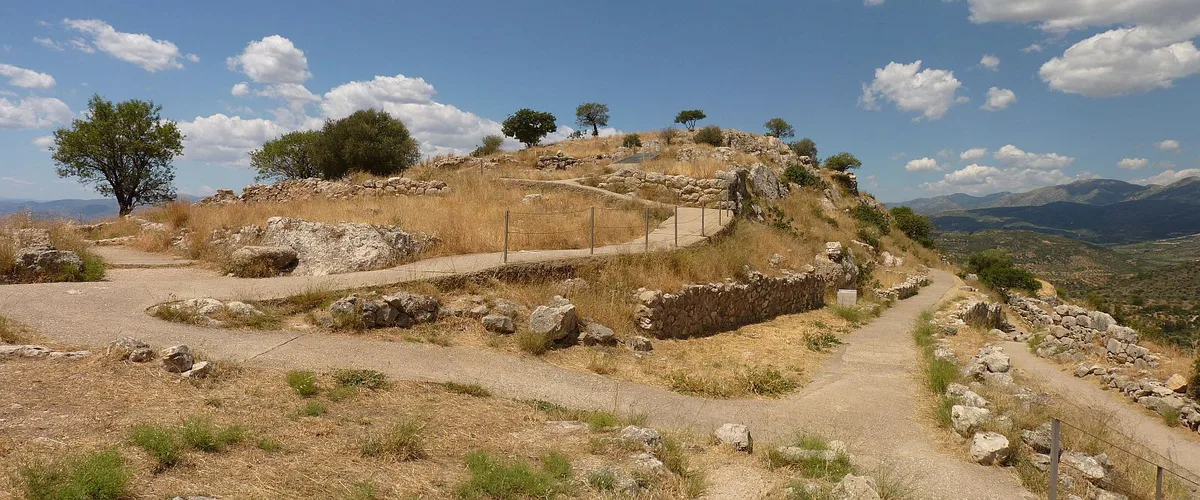
1. Lion Gate
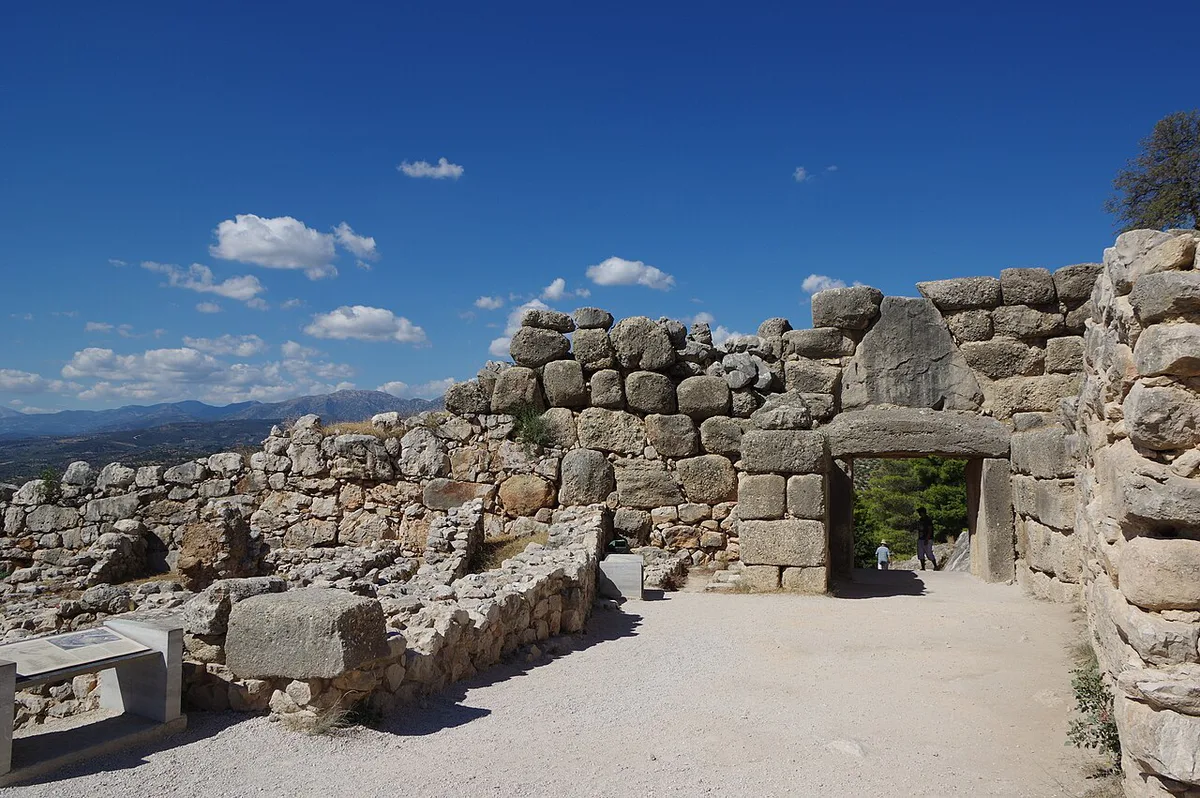
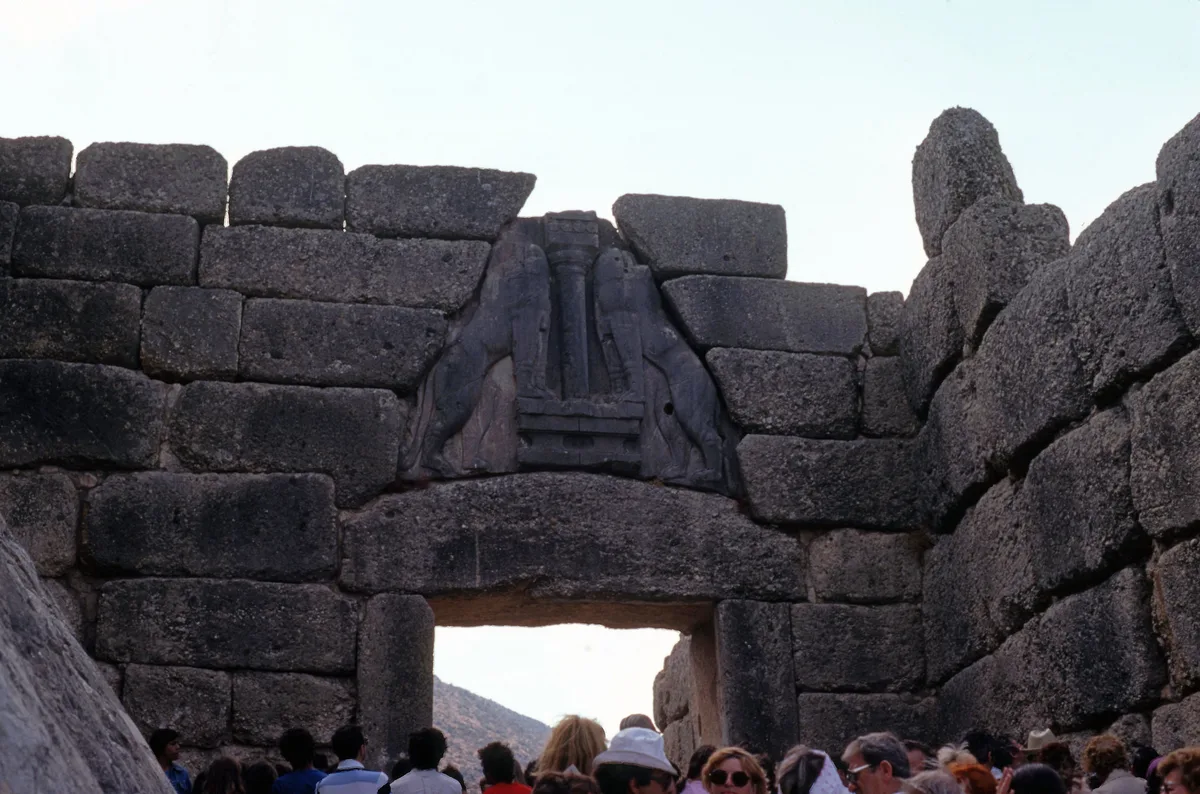
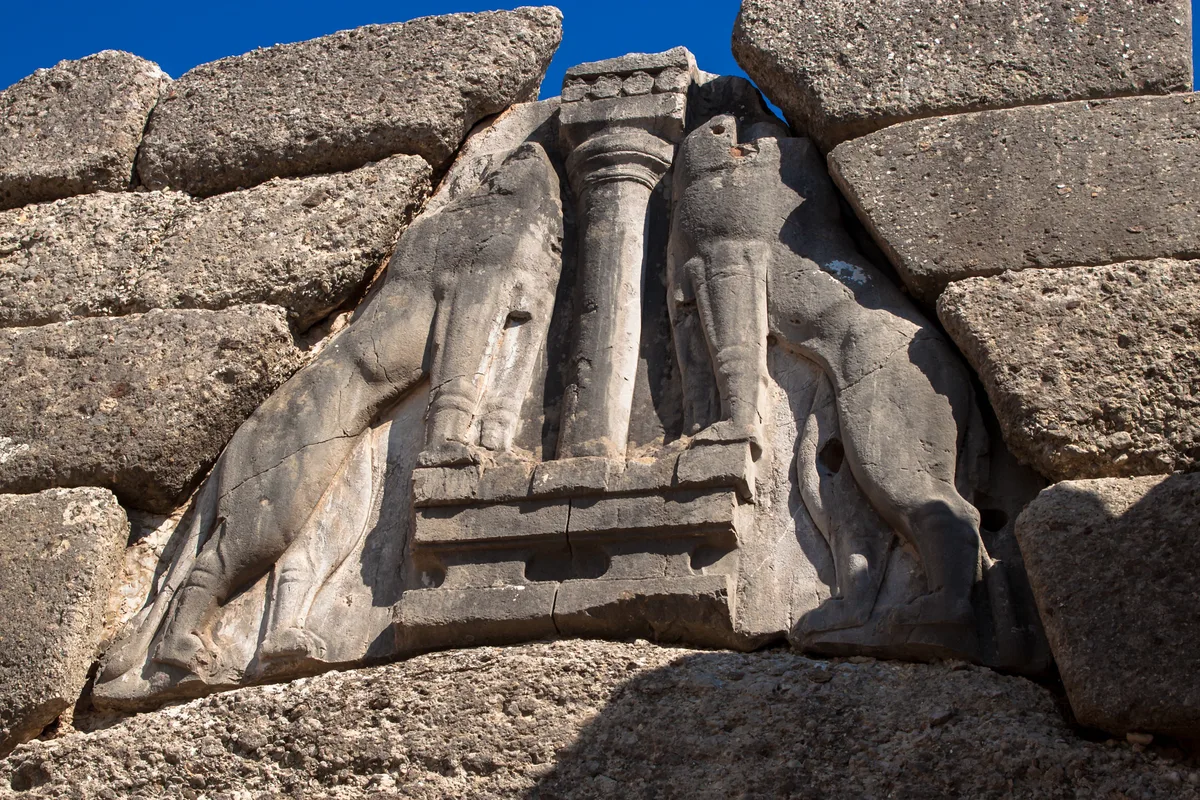
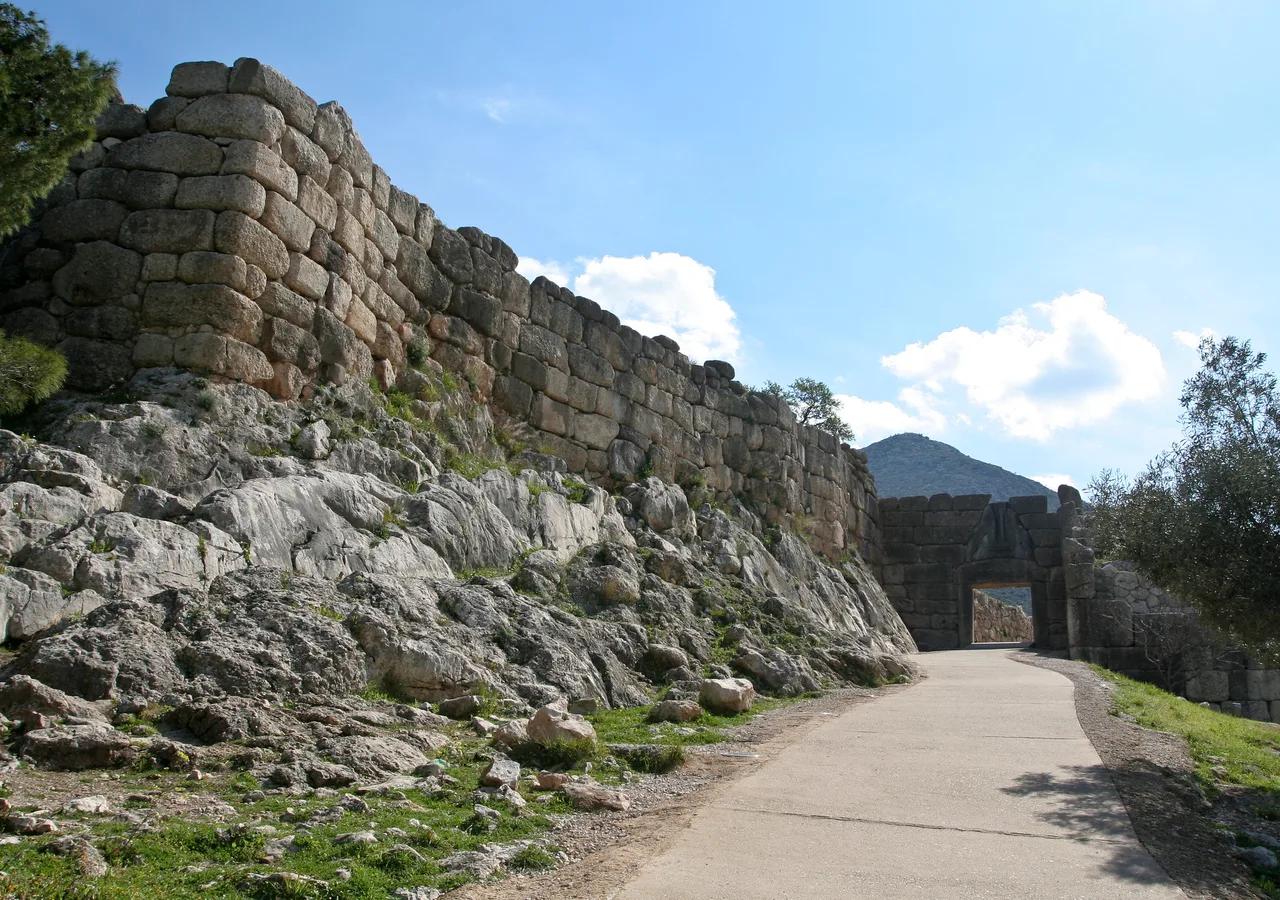
Lion Gate is the main entrance to the citadel, and it is the image most visitors come for. Two lions face each other in relief above the lintel, carved in stone that has weathered but kept its outline. Walk up the approach ramp before you pass through, so you see the gate as arrivals once did.
Our Lion Gate guide covers the carving in more detail. Come early if you want the gateway without a line of photographers. Skip long lingering here in midday heat, because the approach offers little shade.
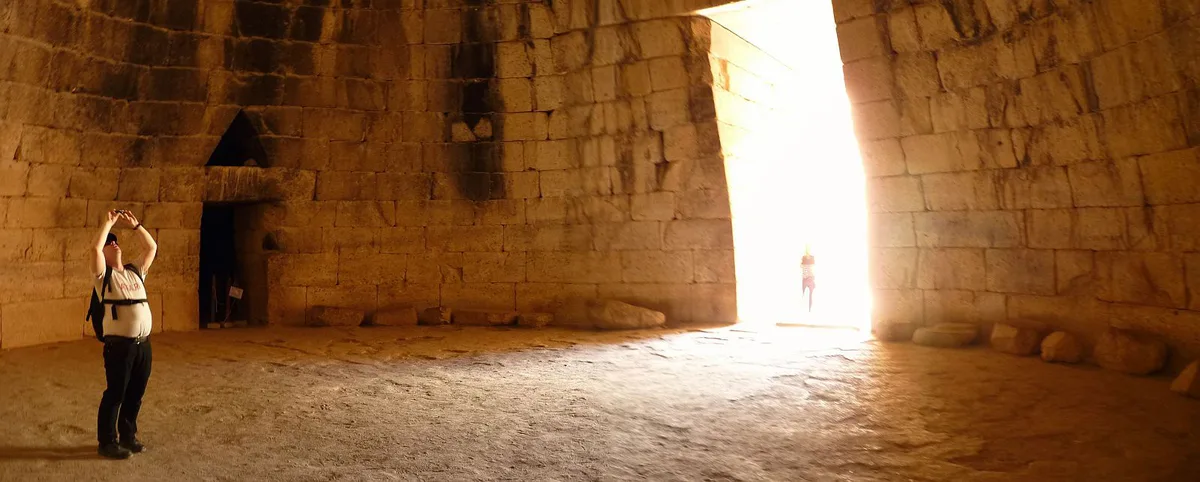
2. Cyclopean Walls and Palace Remains
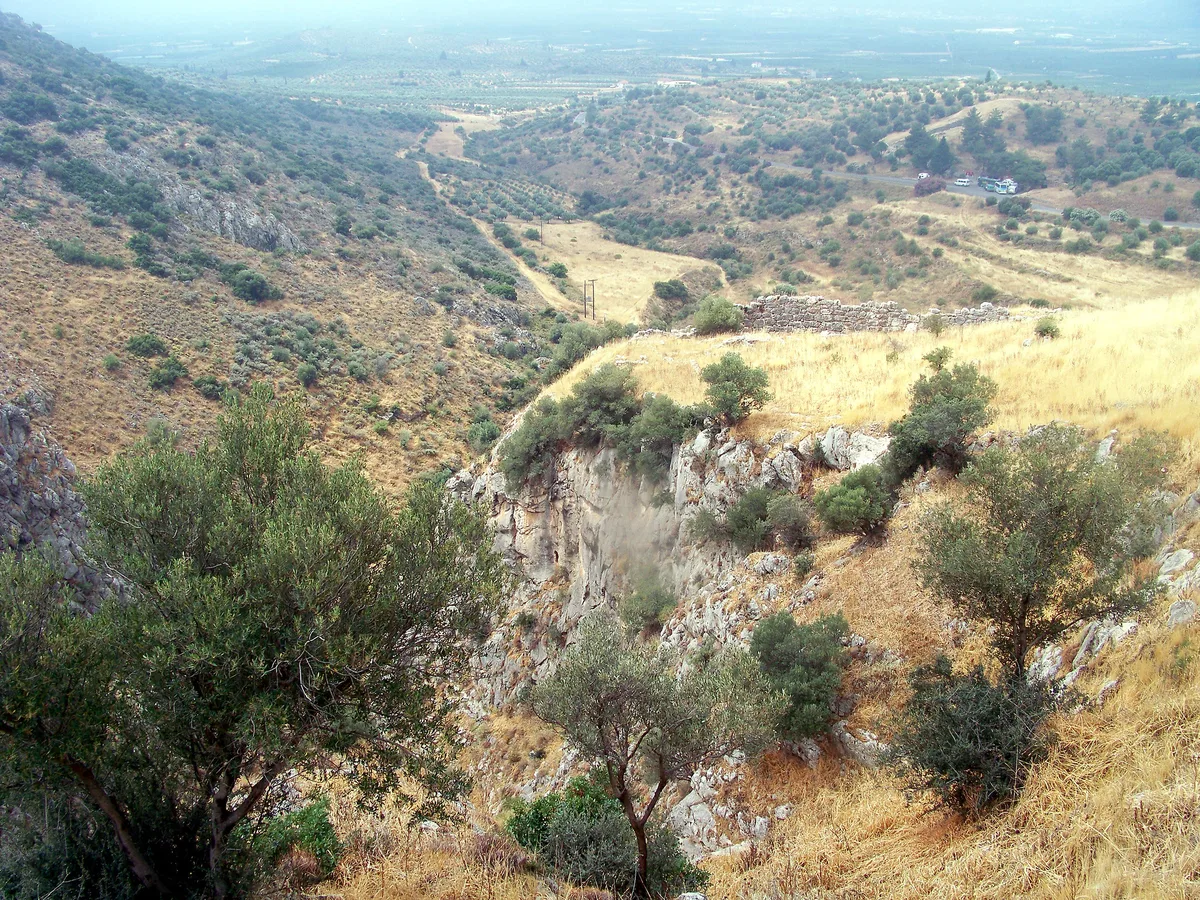
Cyclopean walls ring the citadel and make the fortress readable even where little else stands. Later Greeks believed giants called Cyclopes had lifted the huge stones, which is where the name comes from. Climb to the summit to see the palace remains, which are foundations and floor plans rather than a rebuilt palace.
From the top, the hill commands wide views over the Argolid, which explains why it was fortified. Skip the summit climb if uneven ground is a problem, because the paths are rough stone.
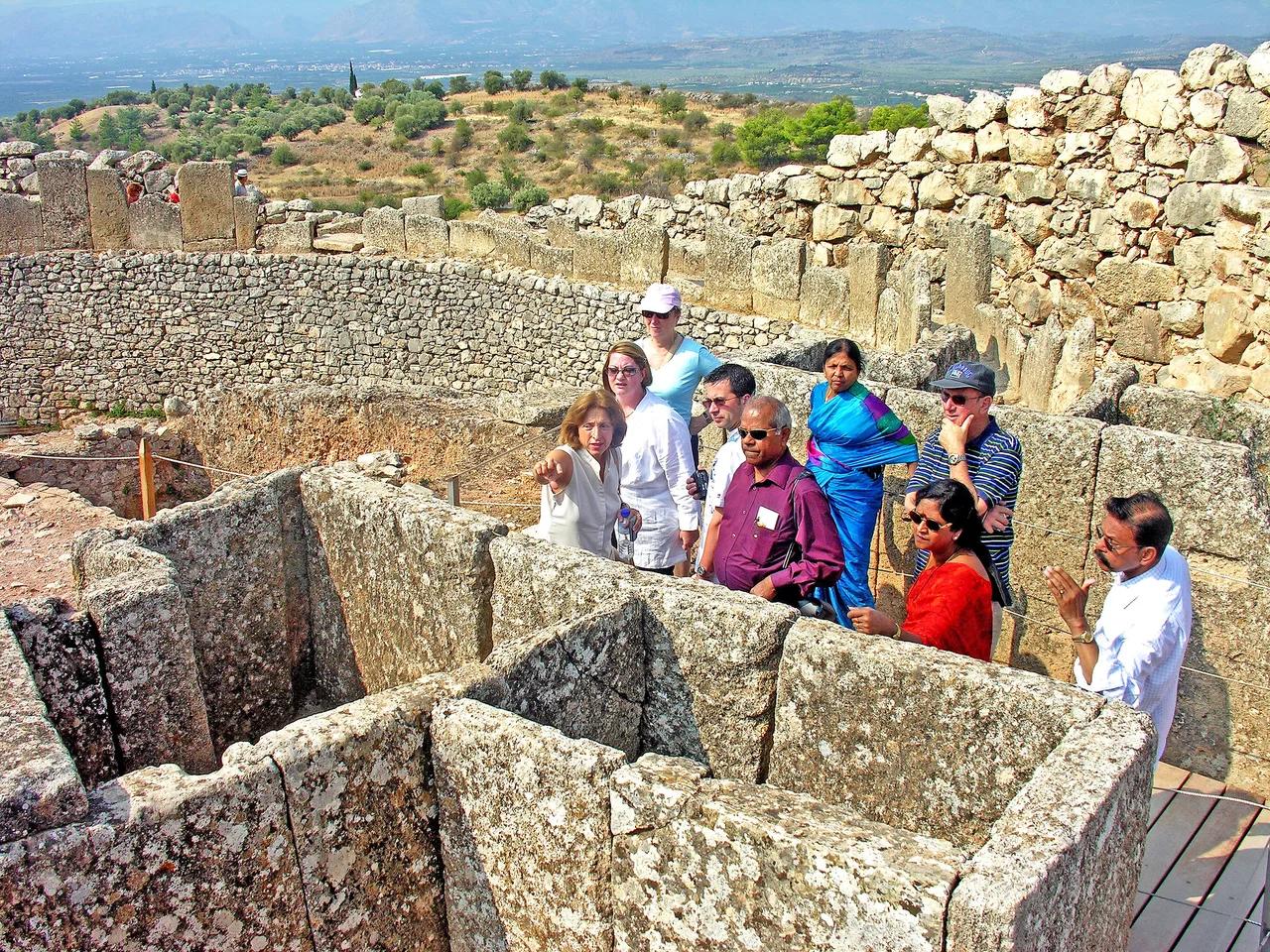
3. Grave Circle A
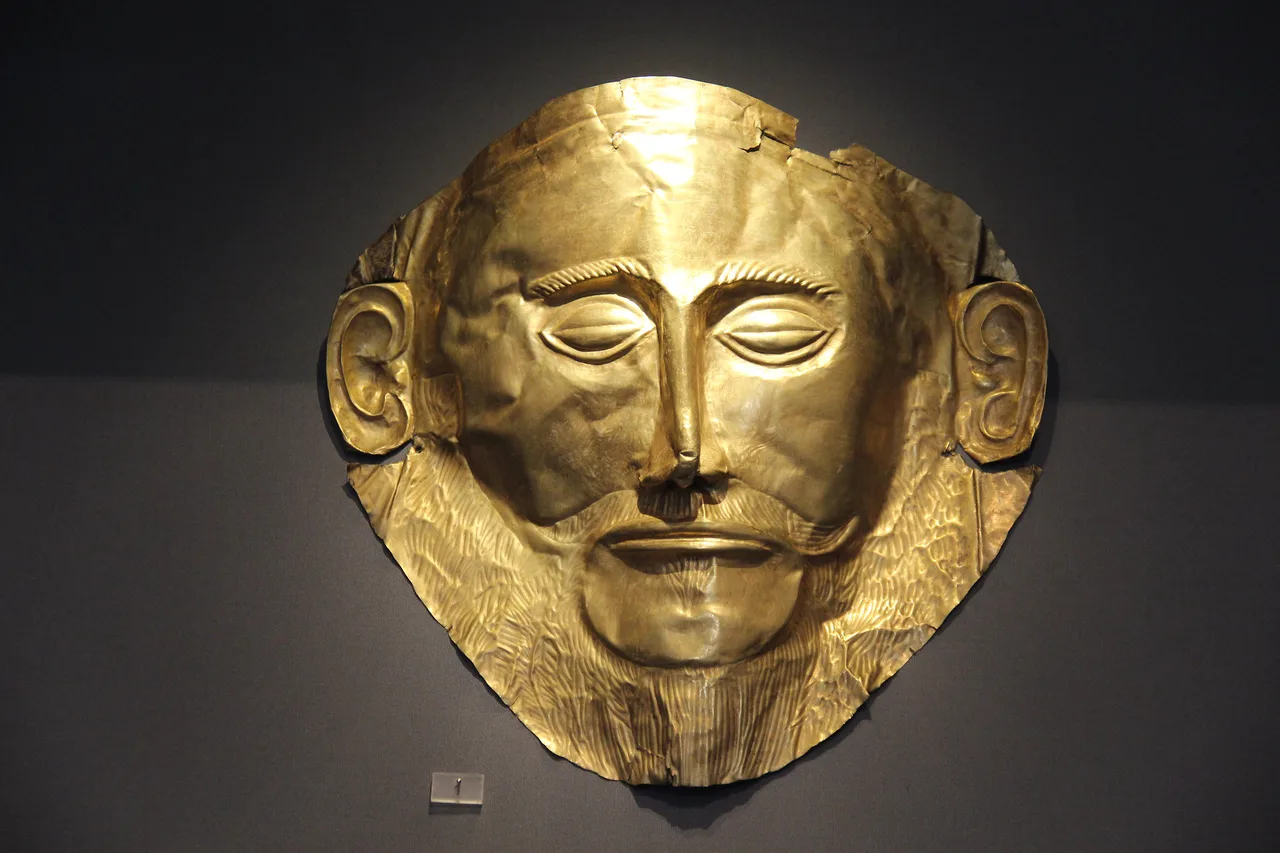
Grave Circle A is a ring of shaft graves inside the citadel walls. Rich burials here held gold objects, including the funeral mask known as the Mask of Agamemnon. That name comes from legend, and the burials belong to the Late Bronze Age rather than to a king of Homer's story.
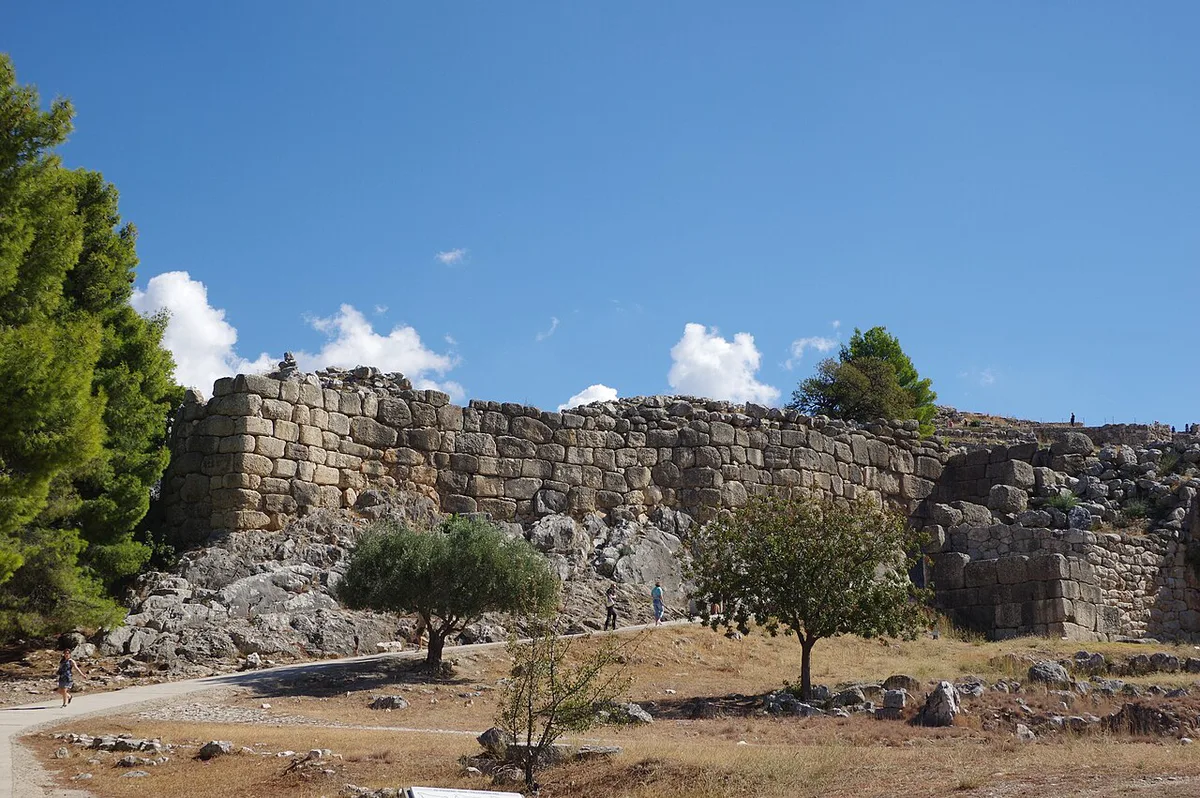
Come here for scale and context, then use the finds in a museum to picture what the graves held. Skip a long stop if you only want monumental architecture, since the circle is a quick look.
4. Treasury of Atreus
Treasury of Atreus is a tholos tomb, a large domed burial chamber built of stone, outside the citadel walls. A long entrance passage leads into a tall corbelled chamber that rewards a slow walk through. Its name is traditional and legendary, and the building was a tomb rather than a royal treasury.
Our guide to the tholos tomb explains the construction. Plan the route so you do not double back, since it sits apart from the main hilltop. Skip it only if time or mobility forces a choice, because few other stops show Mycenaean building skill so clearly.
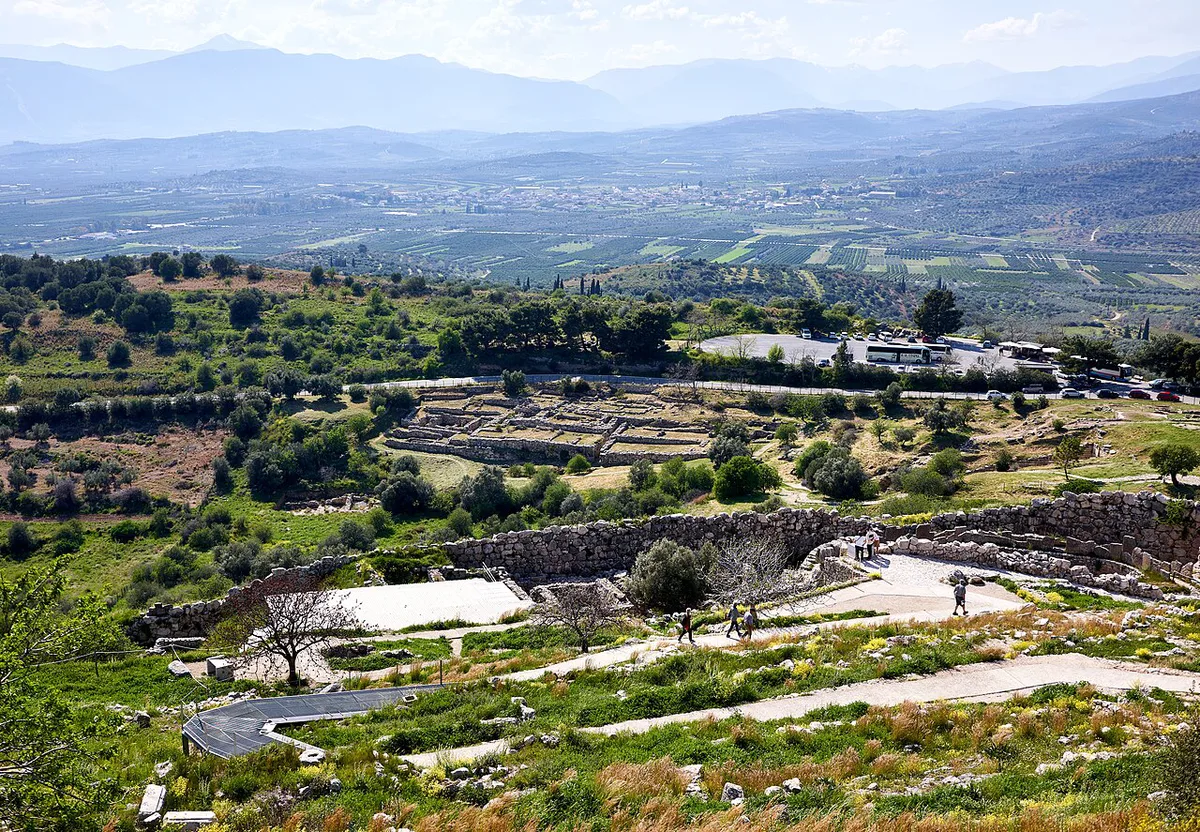
5. Archaeological Museum and the Mask
The on-site museum displays finds from the citadel and its graves. Visit it before or early in the walk so the foundations and tombs arrive with context. Seeing it last is a common mistake, because you then climb the hill without knowing what stood there.
The gold funeral mask is not here, as it is held at the National Archaeological Museum in Athens. Skip the museum only if you want ruins alone, though you will understand less of them.
Mycenae vs Minoan Crete: What's the Difference?
Minoans lived on Crete, while Mycenaeans were mainland Greeks centered on the Peloponnese. Mycenaeans later became the conquerors of Minoan Crete. Linear B records Mycenaean Greek, which makes it the earliest recorded Greek dialect. Expect fortified citadels, tombs and warrior imagery at Mycenae, not the palace complexes associated with Crete. Our guide to Mycenaean society and its rivals goes deeper.
How Much Time to Plan
No verified visit length is available, so plan by stops: the hill, the Treasury and the museum. Read our museum guide before deciding how long to give the displays.
Tickets and Opening Hours
Current prices, hours and closure days are set by the Hellenic Ministry of Culture and change by season. Book through the official e-ticket service and read our ticket options and booking tips.
Getting to Mycenae From Athens and Around the Argolid
Options include a car, a guided tour or a bus, and the trade-offs are explained in our Athens-to-Mycenae route guide. Bus timetables sit on the KTEL Argolidas site.
Combine Mycenae With Nearby Sites
Pair Mycenae with one or two other Argolid stops rather than all of them. Each suits a different reader.
| Nearby site | What it offers | Skip it if |
|---|---|---|
| Tiryns | Another Bronze Age fortress with massive walls | One fortress is enough |
| Epidaurus | A classical-era theatre, a contrast to Mycenae | — |
| Ancient Corinth | Greek and Roman remains rather than Bronze Age ones | You want one era only |
| Nemea | A stadium and temple linked to ancient games | You want major monuments |
| Argos | An ancient theatre in a modern town | You have already seen Epidaurus |
- Tiryns: the citadel of Tiryns is another Bronze Age fortress with massive walls. Skip it if one fortress is enough.
- Epidaurus: the theatre at Epidaurus is a classical-era contrast. Read why its sound carries first. Summer performances are run by the Athens Epidaurus Festival.
- Ancient Corinth: Corinth's ancient ruins show Greek and Roman remains rather than Bronze Age ones. Skip it if you want one era only.
- Nemea: Nemea's stadium and temple suit readers interested in ancient games. Skip it if you want major monuments.
- Argos: Argos's ancient theatre is an easy stop in a modern town. Skip it if you have already seen Epidaurus.
Mycenaean art and palace life drew heavily on Minoan Crete; our guide to the Minoan palaces covers Phaistos, Malia and Zakros.
The theatres at Epidaurus and Argos belong to a much later era; our roundup of ancient Greek theatres compares them with theatres in Sicily and beyond.
Practical Tips for Visiting Mycenae
The site is open hillside with uneven stone paths and little shade. Wear sturdy shoes, bring water and a hat, and aim for the cooler hours of the day. Avoid these common mistakes.
- Seeing the museum last, which leaves the hill without context.
- Expecting a reconstructed palace, when the summit shows foundations.
- Treating Agamemnon as documented history, when he belongs to legend.
- Wearing smooth-soled shoes on rough, uneven stone.
Explore More Guides
Keep planning your trip with these guides.
Guides
- Mycenae from Athens: Getting There and Day Planner
- Mycenae Tickets: What's Included, Booking and Tips
- Mycenae Archaeological Museum: What to See and Plan
- Lion Gate Mycenae: History, Visit Tips & What to See
- Treasury of Atreus: Visit Guide to Agamemnon's Tomb
- Mask of Agamemnon: Where to See It & Who It Really Was
- Tiryns Guide
- Epidaurus Ancient Theatre: Visitor Guide & Day Trip Tips
- Epidaurus Acoustics: How the Ancient Theatre Works and How to Test It
- Ancient Corinth: What to See, Time Needed and How to Visit
- Mycenaean Civilization: History, Key Sites and Visits
- Nemea, Greece
- Argos Ancient Theatre, Greece
Related guides
Continue reading
Guides on the same trip