
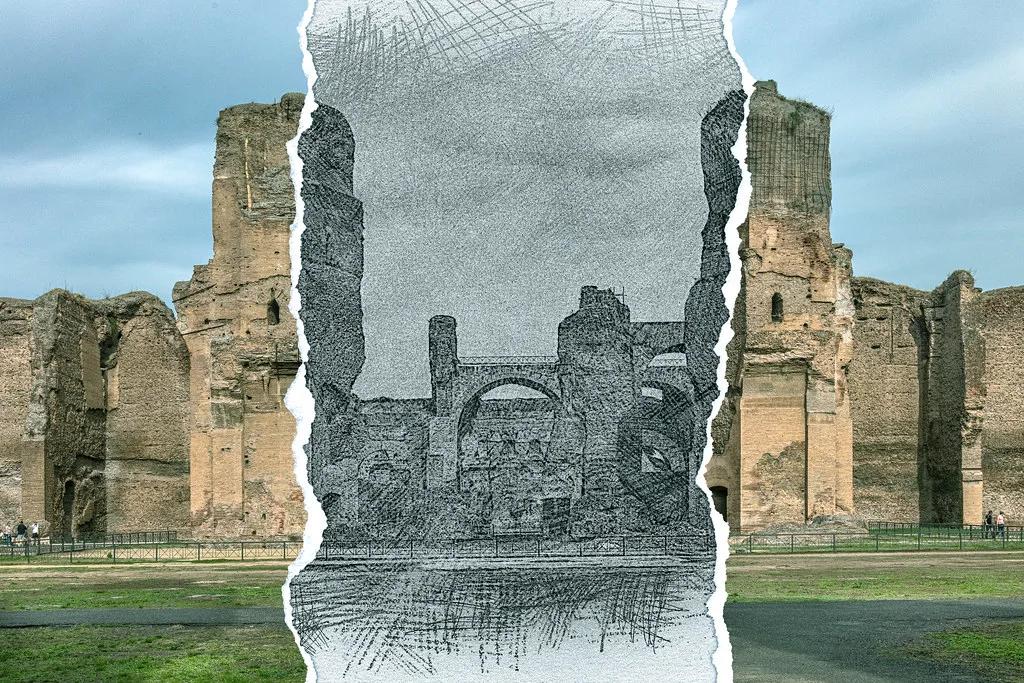
Baths of Diocletian, Rome: What Survives and How to Visit
Last updated November 2026. The baths of Diocletian (Terme di Diocleziano) were Rome's largest imperial bath complex, and today there is no single entrance to them. Remains are spread across a few sites beside Termini station, including a museum, a church and a curved square. This guide shows what each one offers so you can decide how much time to give them, as one stop within our wider 12 Roman Ruins in Rome: Best Sites, Tickets & Routes guide.
Featured image: Me in ME, CC BY 2.0, via Flickr.
What the Baths of Diocletian Were (and What You Can Still See)
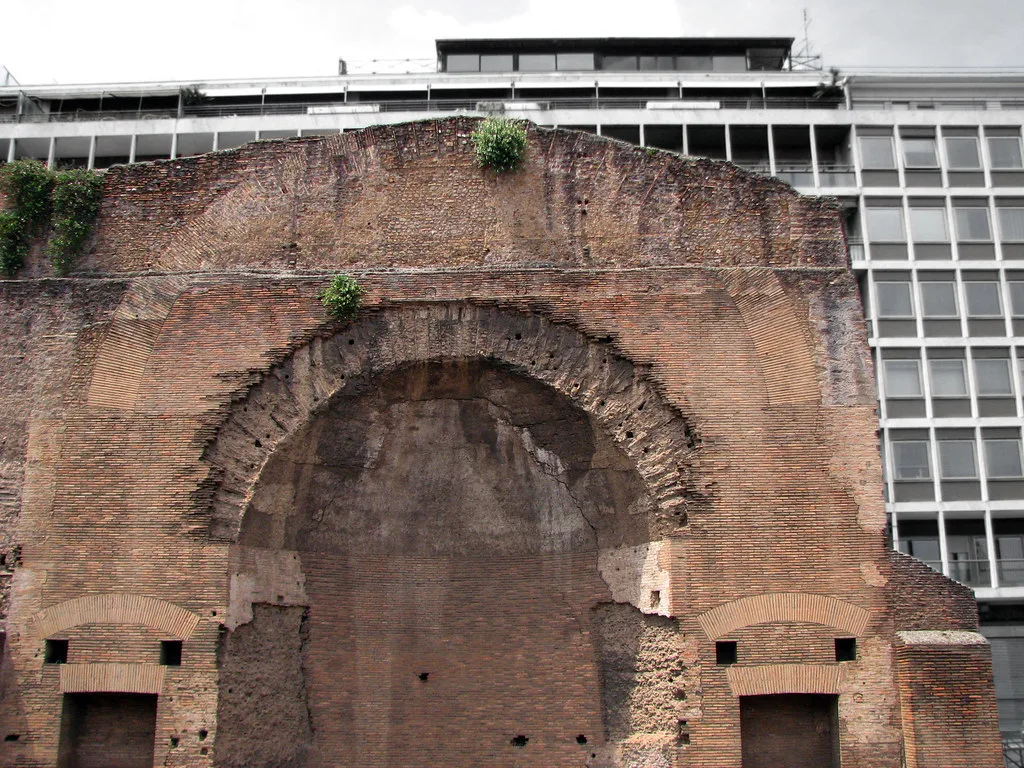
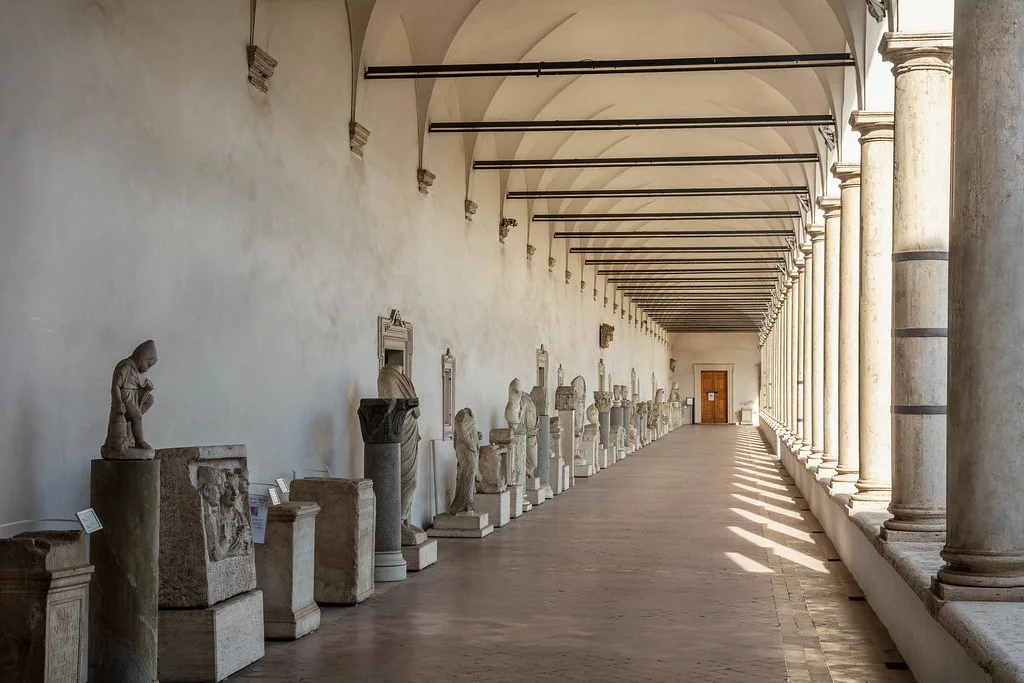
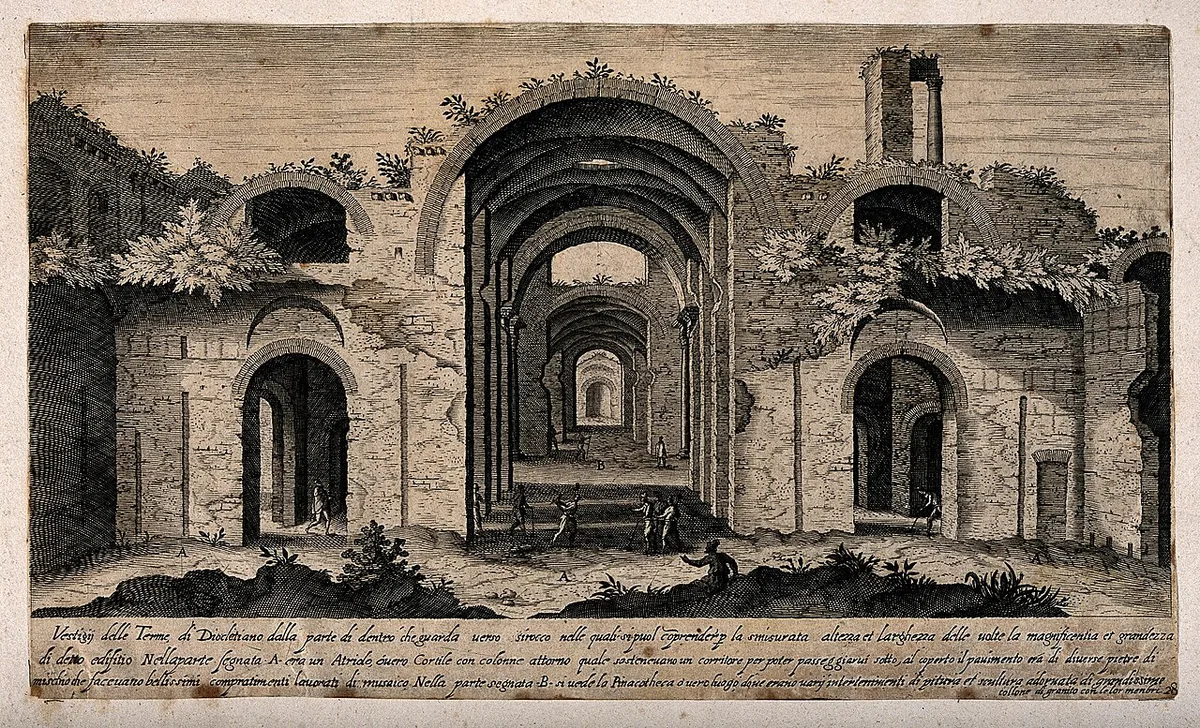
Begun under Diocletian and Maximian around the turn of the 4th century, the complex was dedicated in 306. Rome's other imperial baths were smaller. Later centuries reused the great halls instead of clearing them, which is why pieces survive in unexpected places. Part of the central hall became a church, and other rooms became a museum. Its original footprint still shapes the street plan, because the curve of Piazza della Repubblica follows the old semicircular exedra. The Museo Nazionale Romano runs the museum section, which is the core of any visit.
How the Baths Worked: Rooms, Routine and Scale
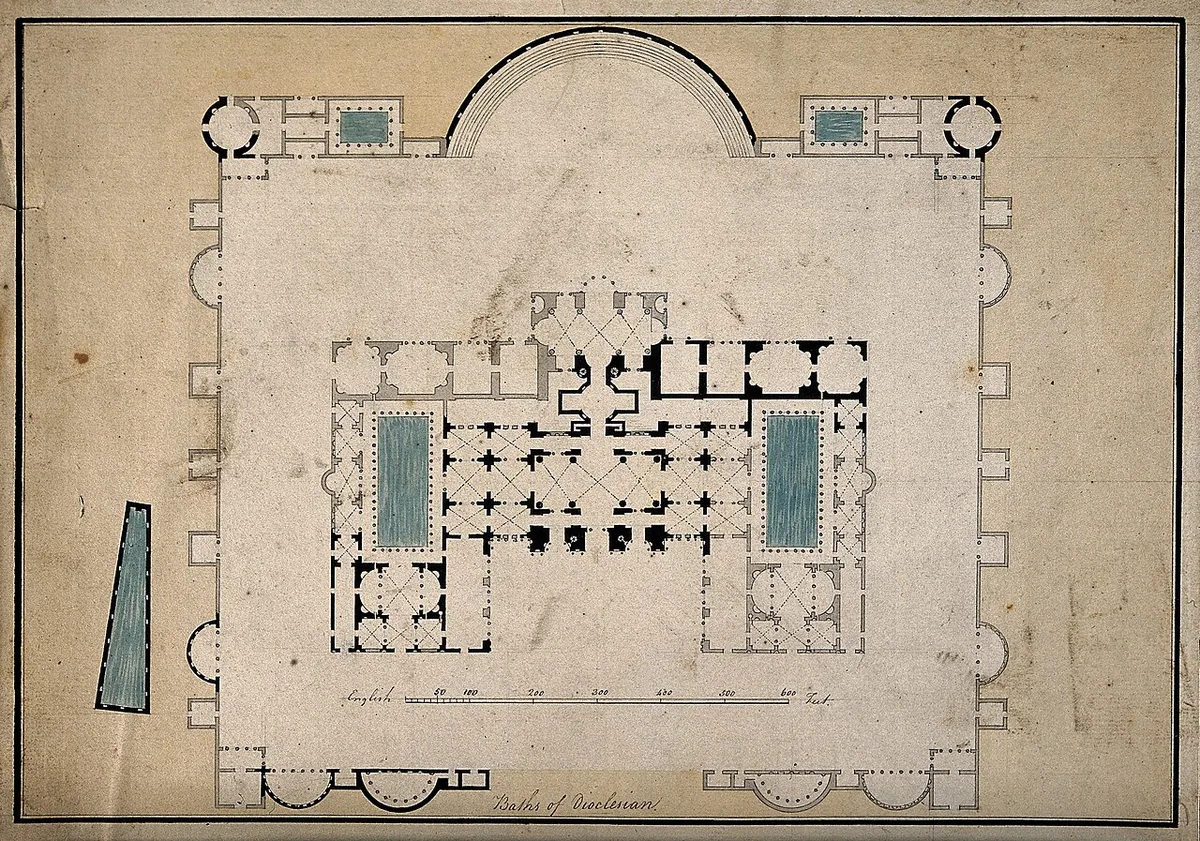
Knowing the standard layout of an imperial bath makes the scattered fragments easier to read. Ancient sources and later estimates put the complex at roughly 13 hectares, with room for around 3,000 bathers at once. Exact figures vary between scholars, so treat them as approximate.
A typical visit followed a set sequence:
- Palaestra: an open exercise yard for ball games and wrestling before bathing.
- Apodyterium: the changing room, where bathers left their clothes.
- Tepidarium: a warm room used to ease the body into the heat.
- Caldarium: the hot room, heated from below by a hypocaust system.
- Frigidarium: the central cold hall, with a cold plunge.
- Natatio: an open-air swimming pool.
The complex also held libraries and gardens, so it worked as a social and cultural centre as well as a place to wash. The vast church interior you can walk into today is the nearest thing to the scale of the central cold hall. That is why the church often gives a better sense of the baths' size than the smaller museum rooms do.
Where to See the Remains: Site-by-Site Guide
Treat this as a short walk through several stops. Each one shows a different layer of the baths. Ticketing and opening details for every row sit on the museum's official pages.
Piazza della Repubblica costs nothing to cross, and its curve traces a complex dedicated in 306, so a free stop still teaches you the layout.
| Site | What you see | Ticketed or free | Best for |
|---|---|---|---|
| Museo Nazionale Romano – Terme di Diocleziano | Museum rooms, cloister and inscriptions inside the baths' remains | Check official source | Museum and epigraphy fans |
| Aula Ottagona | A large octagonal hall from the baths | Check official source | Anyone wanting an intact ancient room |
| Basilica di Santa Maria degli Angeli e dei Martiri | A church built into the baths' central hall | Check official source | Travelers who want scale in a short stop |
| Piazza della Repubblica | The curve of the old exedra, now a city square | Free to walk through | A quick look on the way to Termini |
Michelangelo's Conversion: Church, Cloister and Meridian Line
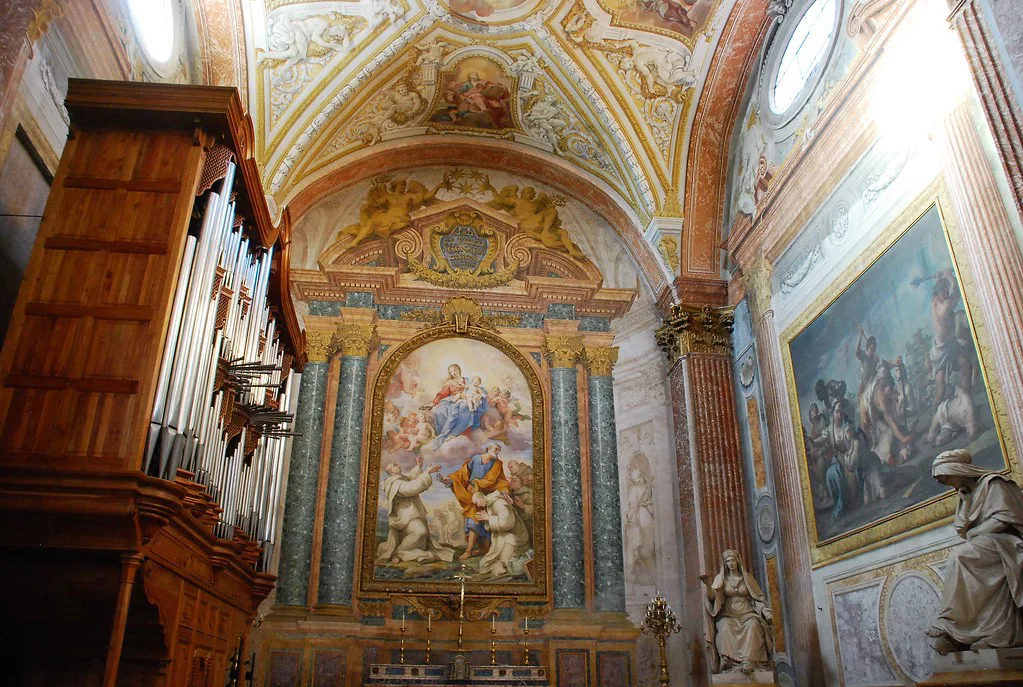
Much of what survives is there because of one 16th-century decision. In 1561 Pope Pius IV commissioned Michelangelo to turn part of the ruined central hall into a church. He kept the ancient vaults and columns rather than demolishing them, which is why the interior still feels Roman in scale. Michelangelo died in 1564, and the church was completed by others after his death.
Three details are worth looking for:
- The ancient granite columns inside the church, which belong to the original bath hall.
- The meridian line set into the floor in 1702. It was built as an astronomical instrument, and sunlight crosses it at midday through a small opening in the wall.
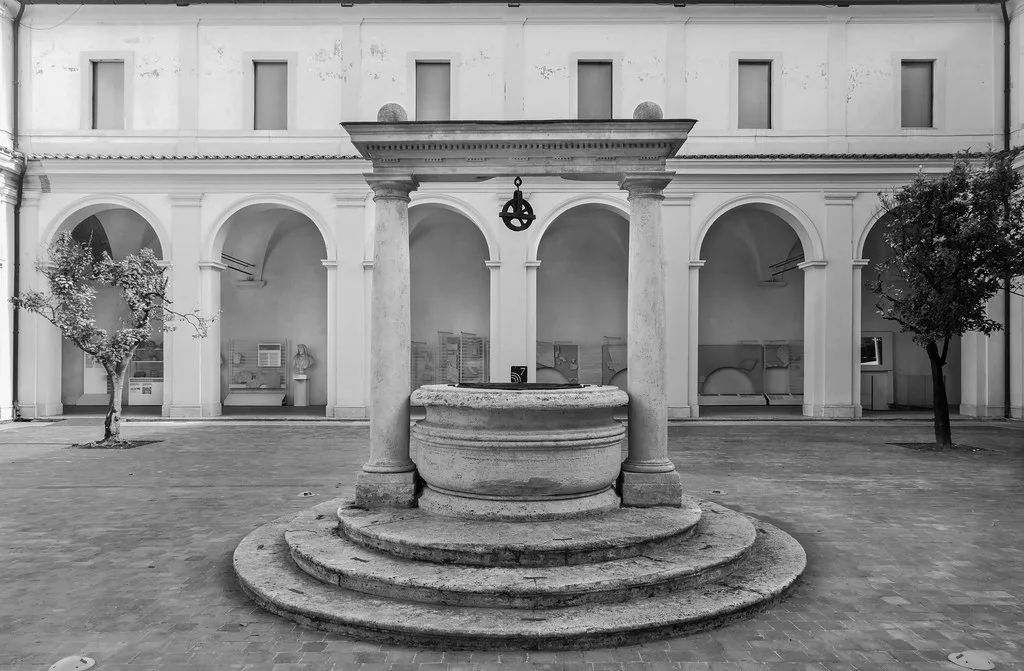
- The Michelangelo cloister in the museum, a large arcaded courtyard that began as part of a Carthusian monastery. It is a calm place to rest, and it lets you see the later layer of the site.
The octagonal hall was used for exhibitions and other purposes over the centuries, so its modern use may differ from what older guidebooks describe. Check the museum's official pages for what is on display and what is open on the day you visit.
Tickets, Hours and Combined Passes
Prices, opening days and last-entry times change, so read them on the official Museo Nazionale Romano site before you go. The same museum also runs Palazzo Massimo Rome: Highlights, Tickets and Tips and Crypta Balbi, Rome: Is It Worth It? Visit Tips and Passes, so ask about combined access there. For pass coverage, see our Roman Forum Pass: Which Ticket or Card to Buy (2026) guide.
How to Get There and Plan Your Time
The baths sit beside Termini station, Rome's main rail hub, so arriving by train puts you almost on top of them. That makes them a practical first-morning stop if you drop bags nearby, or a last-hour stop before a departure. Pair the museum with Palazzo Massimo Rome: Highlights, Tickets and Tips, which is also close to Termini. Both together fit comfortably into a half day. To place them within a bigger route, use our Ancient Rome in One Day: Colosseum, Forum & Palatine Route plan. The Termini area is busy with commuters, so keep bags closed as you would in any large station.
Is It Worth It? Who Should Go and Who Can Skip
Go if you like museums, inscriptions and rainy-day plans, or if you have a Termini layover. Skip it if you are short on time and want one large open-air ruin. The Colosseum and Forum give you that; here the appeal is indoor, spread out and quiet by comparison. Readers comparing Roman baths may also weigh the Baths of Caracalla, which you should check separately on its own official page.
Pair It With Other Ancient Rome Stops
Several stops work well alongside this one. Each adds a different period of Roman building.
- Trajan's Market shows multi-level imperial brickwork from a different part of the city.
- Domus Aurea Rome: Is Nero's Golden House Worth It? offers painted rooms from Nero's palace, a very different scale from the baths.
- Largo di Torre Argentina: Hours, Tickets & What to See is a free-to-view sunken sacred area in the city centre.
A Simple Walking Route Through the Surviving Baths
Start at Piazza della Repubblica and look at its broad semicircular curve. It follows the old exedra of a bath complex dedicated in 306. This is the quickest way to understand why the remains appear scattered through a modern district.
Walk next to the Basilica di Santa Maria degli Angeli e dei Martiri. Its vast interior occupies part of the former central hall. The church makes the 4th-century scale easier to grasp than the outdoor fragments alone.
Finish at the Museo Nazionale Romano – Terme di Diocleziano. Its rooms, cloister and inscriptions provide the strongest explanation of how the complex changed after antiquity. Pair it with Palazzo Massimo if you have a half day near Termini. Check the Museo Nazionale Romano’s official pages for current entry arrangements before setting out.
For trip-planning details, see Turismo Roma official visitor site.
Related guides



Continue reading
Guides on the same trip


