Hadrian's Villa: 6 Best Sights and How to Plan Your Visit
Last updated November 2026: Hadrian's Villa, called Villa Adriana in Italian, is a sprawling imperial retreat at Tivoli, about 23 km from Rome. Emperor Hadrian built it in the 2nd century AD, and it joined the UNESCO World Heritage list in 1999. Our guide ranks the six areas worth your time, then covers tickets, transport, tours and Tivoli add-ons, with a short verdict in whether the trip pays off.
Featured image: Dmitry Djouce, CC BY 2.0, via Flickr.
Hadrian's Villa at a Glance
Villa Adriana is an open-air archaeological park, not a single building. Ruins, pools and colonnades sit among olive trees and cypresses. The site is run by the Istituto autonomo Villa Adriana e Villa d'Este, part of the Italian Ministry of Culture. Look for the name Villa Adriana on signs and in transport apps, because many of them skip the English name.
- Location
- Tivoli, outside Rome, about 23 km from the city.
- Status
- UNESCO World Heritage site since 1999.
- Typical visit
- Allow roughly 1.5 to 2 hours for a short visit, longer for the full site.
- Best fit
- Ruins lovers, first-time Rome visitors with a spare half day, and anyone curious about Roman design.
6 Best Sights at Hadrian's Villa
Prices and hours checked November 2026 on the official site. This ranking balances how much survives, how easy each sight is to read and how much it rewards a slow look. Order your walk to match the site map you pick up at the entrance.
Canopus needs 20 to 30 minutes, so a short visit of 1.5 to 2 hours still fits Canopus and the Maritime Theatre.
1. Canopus and the Serapeum
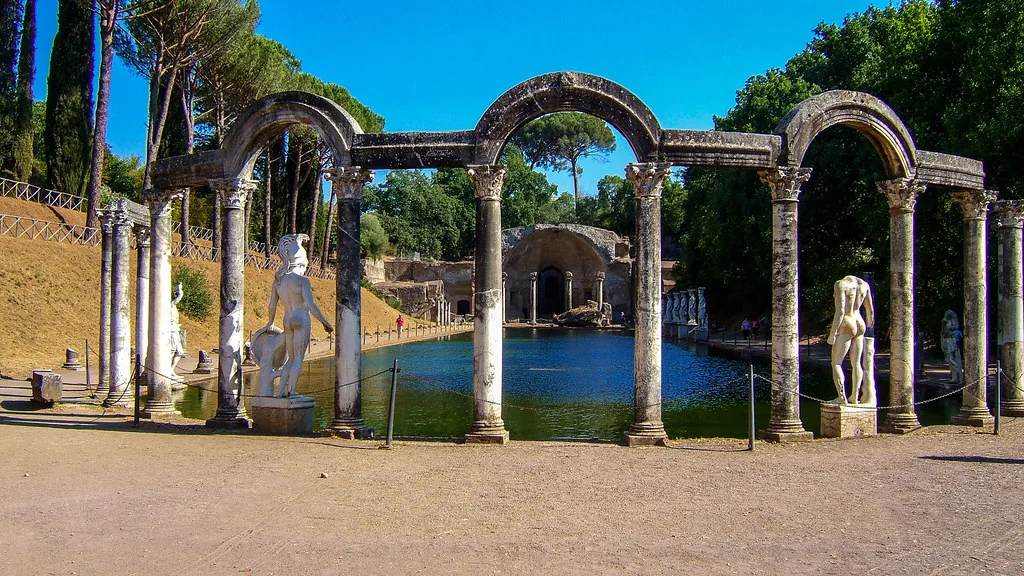
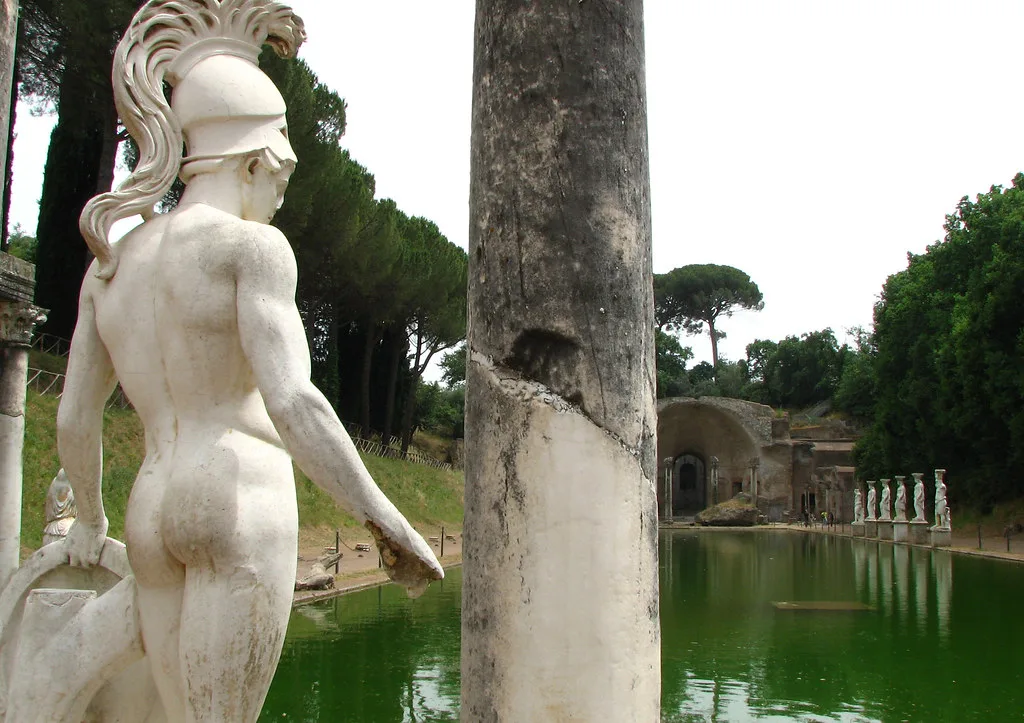
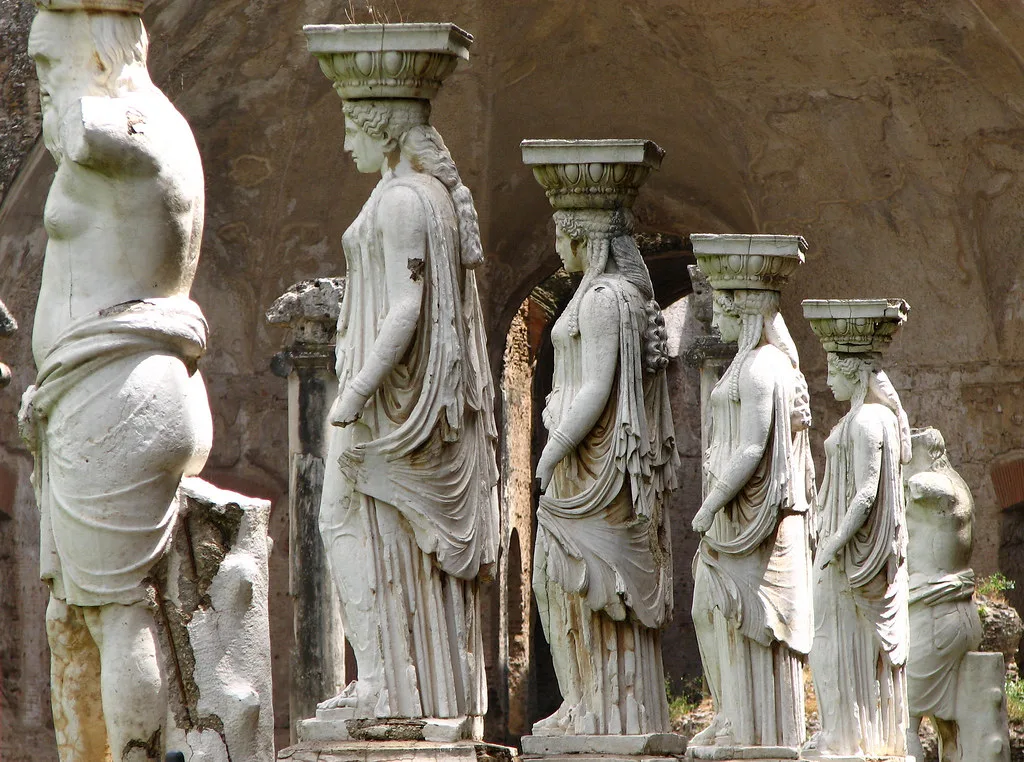
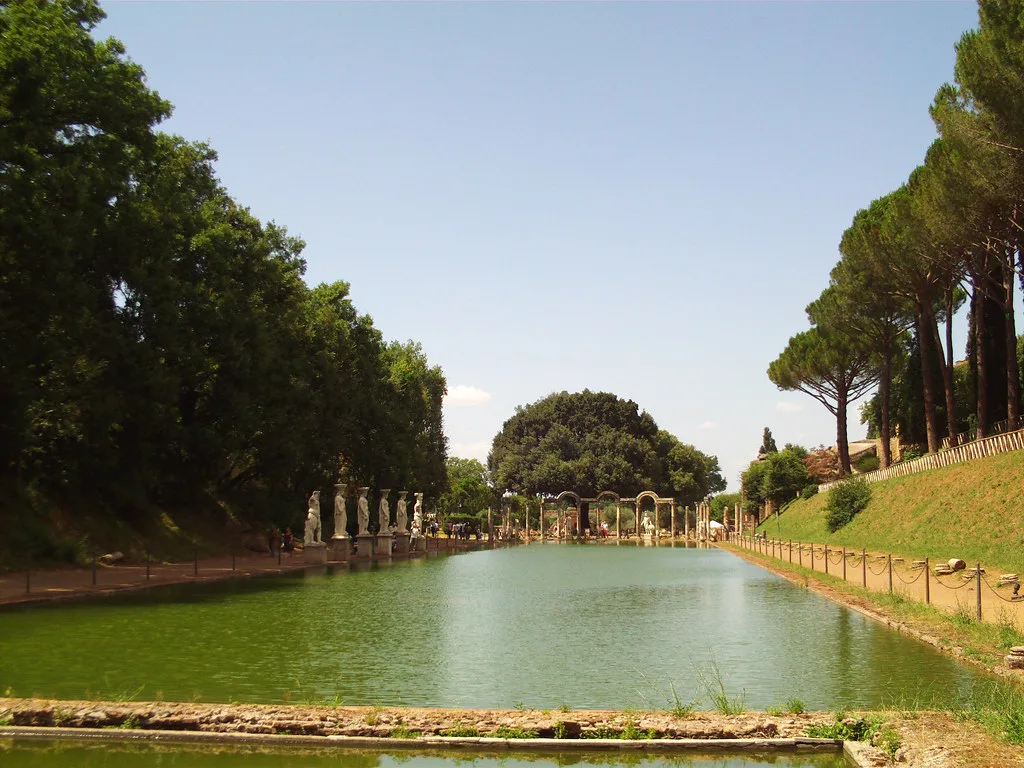
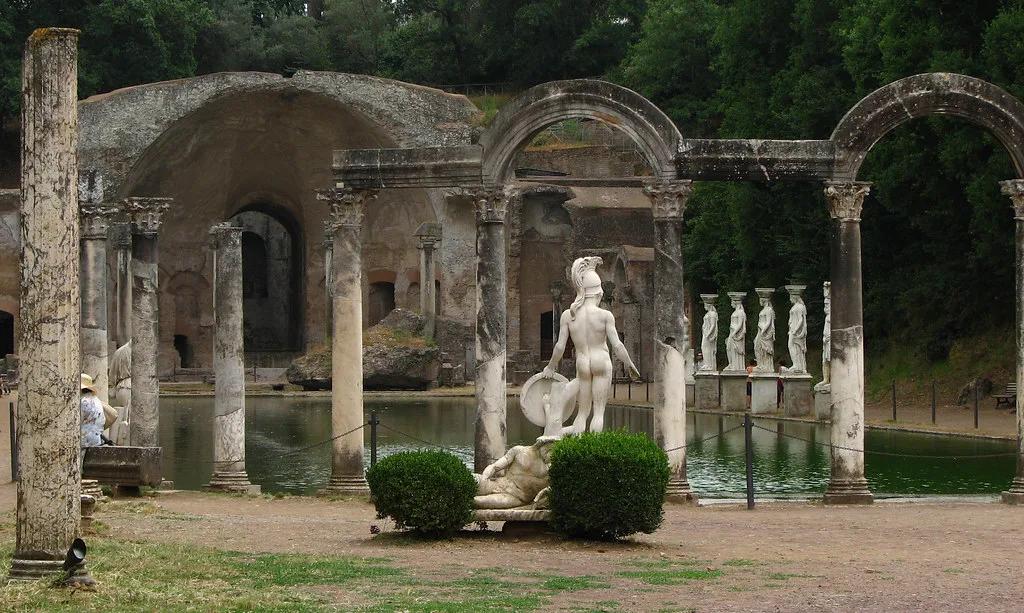
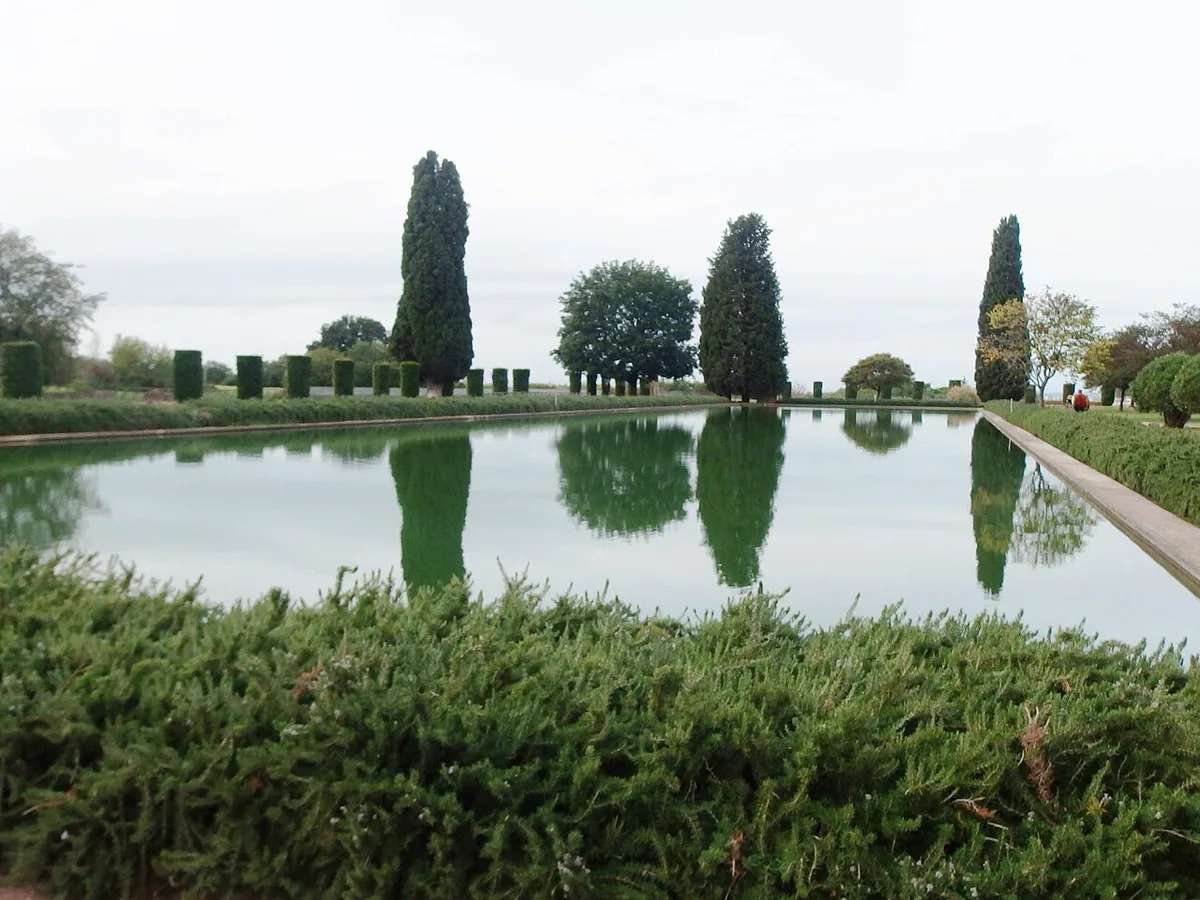
Canopus is a long ornamental pool lined with columns and statues. It copies the sanctuary of the god Serapis near Alexandria, and Hadrian is said to have brought in Egyptian statues for it. At the far end sits the Serapeum, a dining and ceremonial space that frames the water. Stand at the pool's edge and look along its length, because the view is the point.
Allow 20 to 30 minutes if you want to walk the full perimeter and sit for a few minutes. Late afternoon light flatters the water and the colonnade. Skip it only if you are very short on time. Our Canopus visitor guide covers the statues and the best vantage points.
2. Maritime Theatre
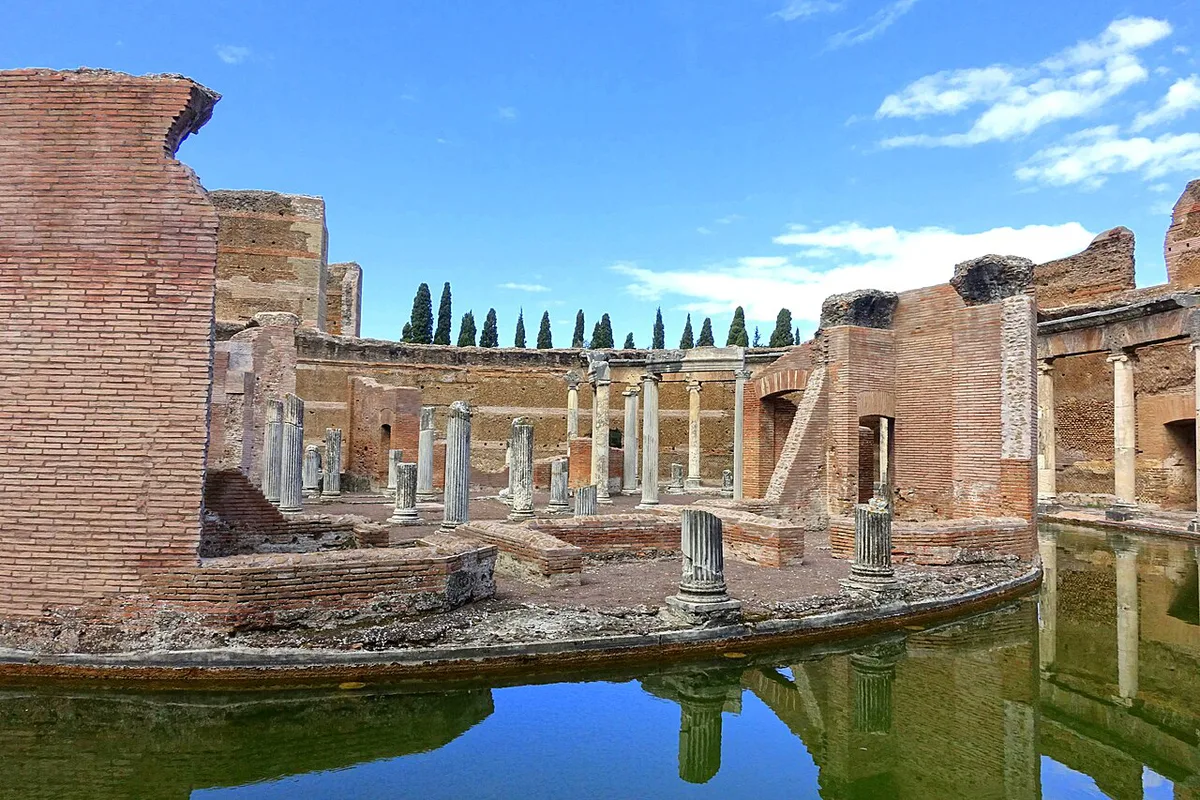
This is a circular pool with a small island at its center, ringed by columns. Scholars often read the island as a private retreat for the emperor, reached by a drawbridge. Little is roofed, so you read the plan from the outer wall. Imagine the pool filled and the island as a miniature villa.
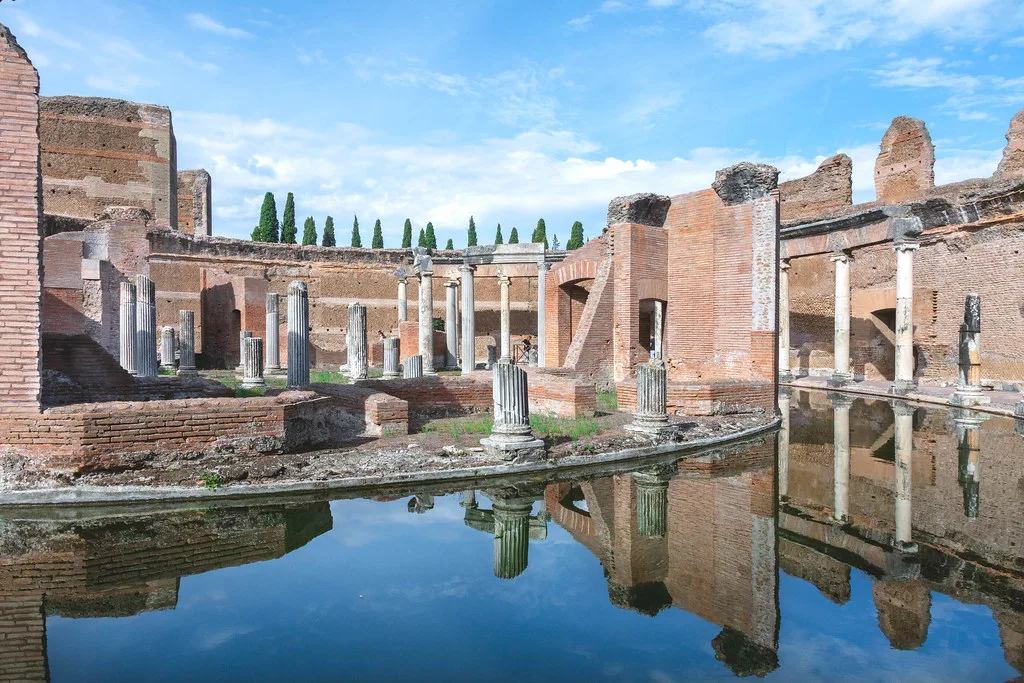
Allow 15 to 20 minutes. It photographs well from the ring wall, and the shapes are easier to grasp than at most other spots on the site. Visitors who dislike reconstructing buildings from foundations may find it quiet. Others consider it the clearest picture of Hadrian's taste.
3. Stoa Poikile (Pecile)
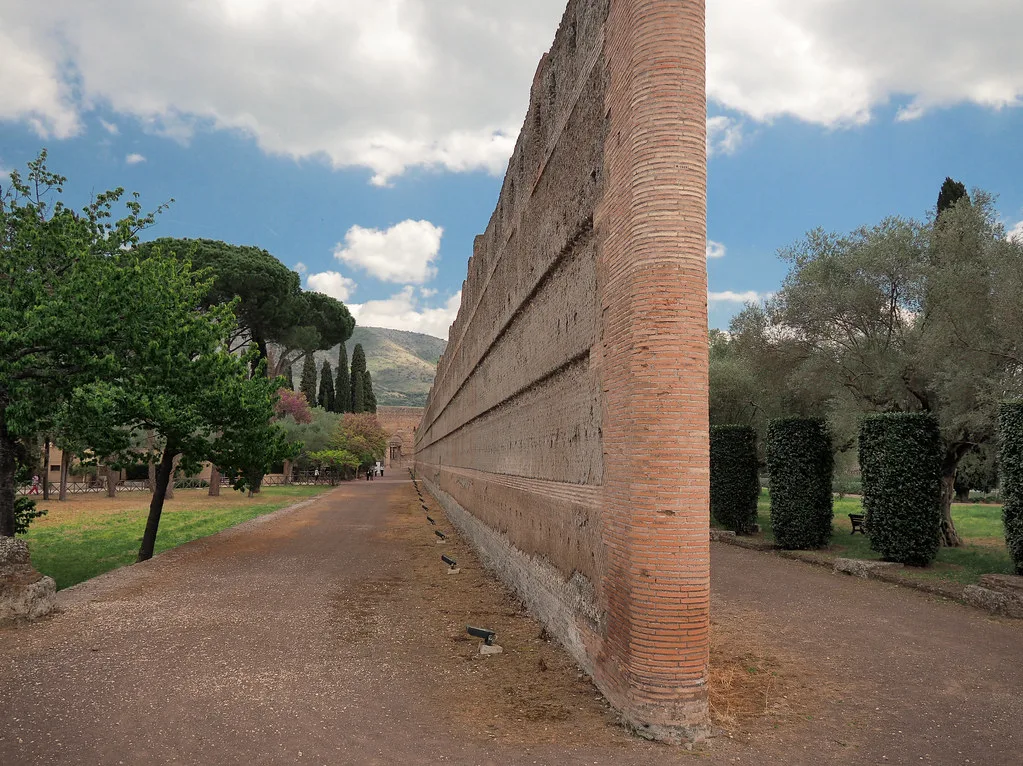
Stoa Poikile was Hadrian's version of a famous colonnade in Athens. Here it appears as a vast rectangular garden platform with a large central pool and a tall surviving wall. This is the best place to feel the scale of the villa. Walking its long sides takes time, so it works as a rest-and-reflect stop rather than a sight to inspect.
Allow 15 to 25 minutes. There is little shade across the open space, so take water in warm months. Skip the full lap if the heat is intense or your legs are tired. A look from one end gives you the main impression.
4. Hall of the Philosophers
Near the Stoa Poikile stands the Hall of the Philosophers, which probably once served as a library. Its curved niches suggest rooms for reading and conversation. It reflects the intellectual side of Hadrian's retreat, which matters if you want more than just ruins. The structure is easy to place on your map.
Allow 10 to 15 minutes. It is a short stop between larger sights, and a good place to check the plan before you move on. Casual visitors may not linger. History readers should add it for the picture of how an emperor lived and worked.
5. The Baths
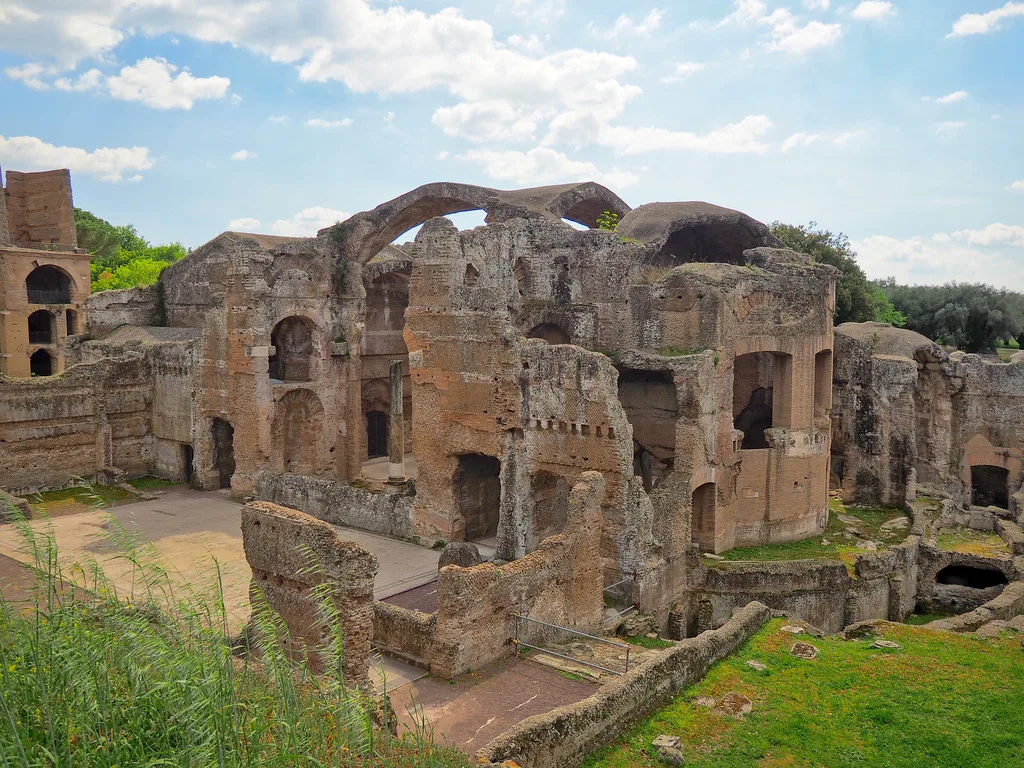
The villa has two bath complexes. Their rounded rooms, thick walls and surviving vaulting give a sense of how comfortable imperial leisure was. Look for the changes in floor level and the curved walls that once held heated rooms. These are details that reward a guide or audio commentary.
Allow 15 to 25 minutes depending on which complex you visit. Some areas may be closed for conservation, so check the site map on arrival. Skip it if you are pressed for time. Choose the baths over the Hall of the Philosophers when you prefer architecture to ideas.
6. Underground Passages
Service tunnels run beneath parts of the villa. They once let staff move supplies without crossing the formal spaces above. Passages are a rare view of the working side of an imperial estate. Official access varies, so check at the entrance which sections are open to visitors.
Allow 10 to 20 minutes if a section is open. Take a small light or a phone torch only if staff permit it. Skip it if you dislike enclosed or dim spaces. Many visitors never see this part, and the main sights stand well without it.
How Much Time to Plan at Hadrian's Villa
The site is large, the ground is uneven and shade is limited. A short visit of about 1.5 to 2 hours covers Canopus, the Maritime Theatre and a stretch of the Stoa Poikile. A longer visit adds the baths, the Hall of the Philosophers and any open passages. Look at the site model near the entrance first, because it shows how the ruins fit together.
| Visit length | What you cover | Best for |
|---|---|---|
| Short, about 1.5 to 2 hours | Canopus, Maritime Theatre, Stoa Poikile | Rome trips with limited time, hot days |
| Standard, a half day | Add the baths and the Hall of the Philosophers | First-timers who want the main story |
| Long, most of a day | Every open area, with rests and photos | History buffs and photographers |
Most visitors reach Tivoli from Rome; our guide to Roman ruins in Rome covers the ancient sites in the city.
The same emperor ordered the frontier wall across northern England; see our Hadrian's Wall guide.
Hadrian's Villa Tickets, Hours and Booking
Prices, closing days, last-entry time and any free-entry categories change by season, so read them on the official Villa Adriana site. Check whether timed or advance entry applies before you travel. Our ticket and booking details cover the practical steps. Do not rely on a trip-planning blog's price list, since fees change.
Getting to Hadrian's Villa from Rome
Tivoli sits about 23 km from Rome, and the usual choices are rail, regional bus, car or an organized tour. Each has a different last-mile step to the gate. Our guide to getting there from Rome goes into schedules. Look up current timetables with Trenitalia and Cotral before you leave, and check Sunday and holiday service.
| Option | Transfer chain | Main friction |
|---|---|---|
| Train | Rome to Tivoli, then a local link to the site | Last-mile bus or taxi |
| Regional bus | Rome to Tivoli on a Cotral service | Timetable gaps on Sundays and holidays |
| Car | Direct drive to the site parking | Parking and Rome traffic |
| Organized tour | Pickup in Rome, guide on site | Fixed schedule, less flexibility |
Guided Tour or Self-Guided Visit
Signage is sparse and reconstruction is limited, so a guide or audio guide changes what you understand. First-timers and visitors with little background in Roman history gain the most. Confident readers with a good map can go alone. See our guide to guided options for what is offered, and ask the official site which audio tools it provides.
Combining Tivoli Stops with Hadrian's Villa
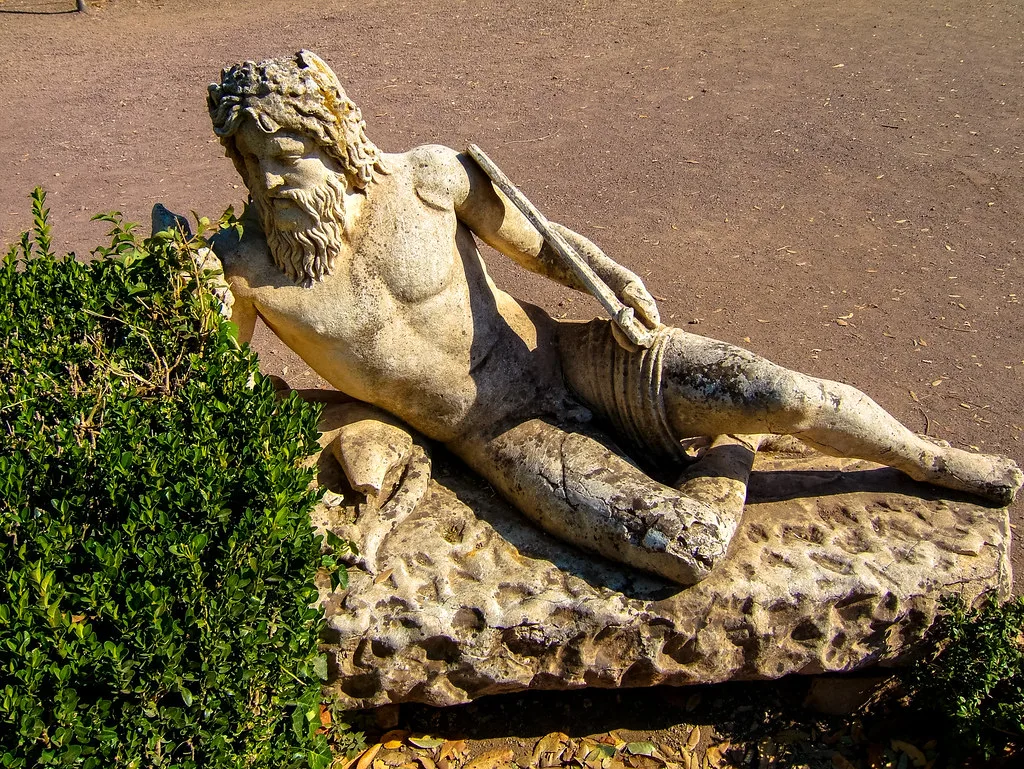
Villa d'Este sits in Tivoli, and its builder, Cardinal Ippolito II d'Este, took marble from Hadrian's Villa in the 16th century. That link makes the two a natural pair. Villa d'Este has no linked page here, so use its official page for hours. For a gentler add-on, consider the Villa Gregoriana stop. For a short historic detour, see the Temple of Vesta at Tivoli. A full day suits the villa plus one more stop. A half day suits the villa alone. Check opening days so closures do not clash.
Villa d'Este's builder took marble here in the 16th century, centuries after Hadrian's 2nd century villa was built.
| Combo | Best for | Trade-off |
|---|---|---|
| Hadrian's Villa plus Villa d'Este | History and Renaissance gardens | Long day, lots of walking |
| Hadrian's Villa plus Villa Gregoriana | Ruins and outdoor scenery | Needs good footwear |
Is Hadrian's Villa Worth It?
Yes, if you enjoy ruins and have a half day to spare. Skip it on a very short Rome stay, in strong heat with mobility limits, or if you have no interest in archaeology. A simple rule helps: if you would happily spend two hours at the Forum, you will enjoy the villa. Our full worth-it verdict weighs the trade-offs.
- Common mistakes
- Arriving without checking the closing day or last entry.
- Underestimating the walking and the lack of shade.
- Mixing up Villa d'Este and Hadrian's Villa.
- Skipping the site model and the map.
- Trying to cram the visit into too short a Rome stay.
Hadrian and the Story of the Villa
Hadrian built the villa in the early 2nd century AD as a retreat from Rome. It copies places he knew, including Athens and Egypt. After the empire fell, the site was abandoned, and marble was later stripped for other buildings. That history explains why you see foundations rather than finished rooms. Read more in Hadrian's life and reign.
How to Read the Ruins Without a Guide
Hadrian’s Villa rewards visitors who slow down and read its plan rather than expecting intact palaces. Many rooms survive as walls, niches and foundations. The Maritime Theatre is one of the easiest spaces to understand because its circular pool and island still define the layout. Allow 15 to 20 minutes there.
At Canopus, focus on the long water axis and the Serapeum at its end. Its columns and pool make the ceremonial design clearer than most parts of the park. Allow 20 to 30 minutes to walk around it and look back along the water.
Use the site model and entrance map before setting off. Then choose a few major places to examine closely instead of rushing through every fragment. A short route already takes about 1.5 to 2 hours, and the open ground can make the villa feel larger than a map suggests.
Frequently Asked Questions
What year was Hadrian's villa built?
Hadrian built it in the early 2nd century AD as an imperial retreat. Later emperors kept using it after his death.
Are Villa Adriana and Hadrian's villa the same?
Yes. Villa Adriana is the Italian name for Hadrian's Villa at Tivoli. Use that name when you read signs or search transport apps.
Explore More Guides
Keep planning your trip with these guides.
Guides
Related guides
Continue reading
Guides on the same trip