
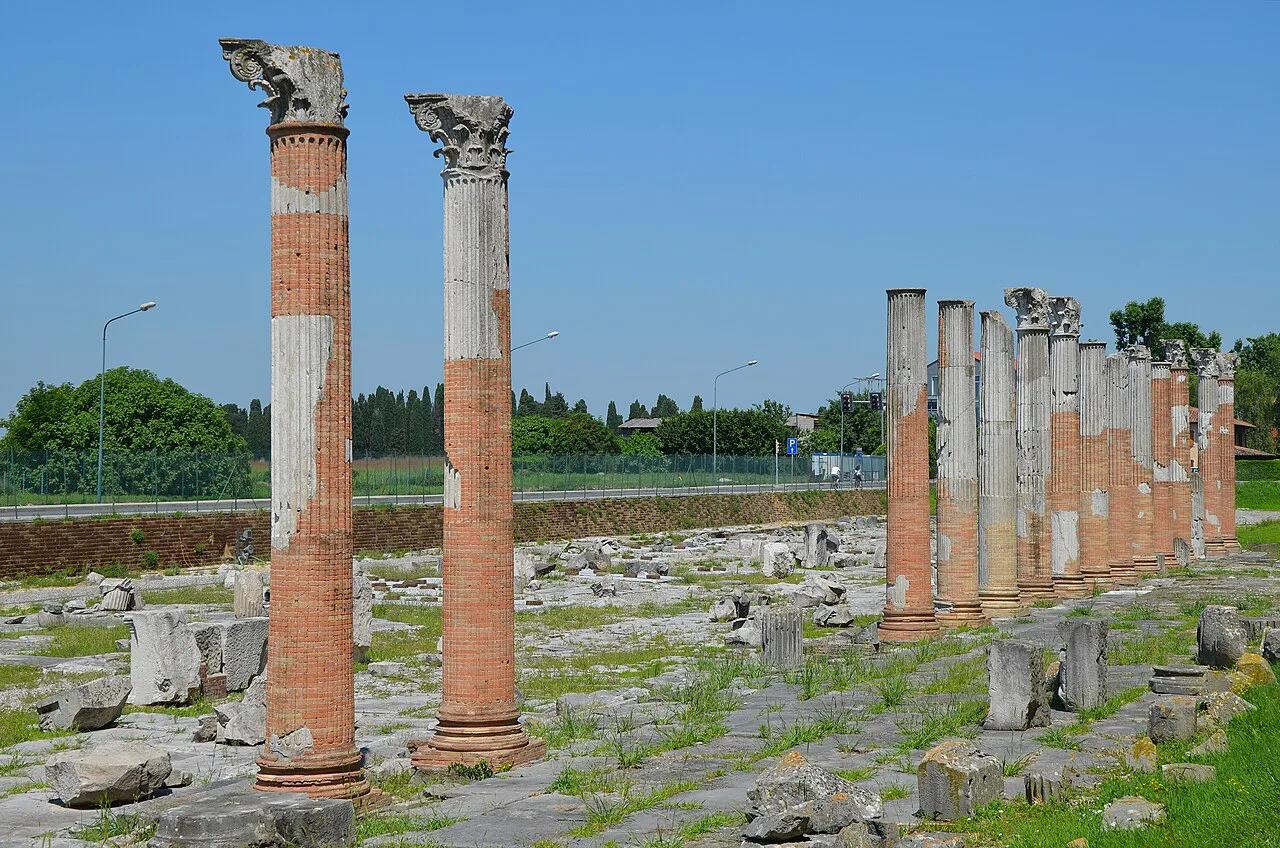
Last updated November 2026: Roman ruins in Italy reach well beyond the Colosseum and Pompeii, from northern walled towns to hill-country forums and Greek-and-Roman coast sites. You will find city ruins, amphitheatres, baths and old roads in almost every region. Use the quick picks to match a site to your goal, then follow the guide links for depth.
Featured image: Carole Raddato from FRANKFURT, Germany, CC BY-SA 2.0, via Wikimedia Commons.
Quick Picks: Which Roman Ruins in Italy Suit You?
Start with what you want from the day. Each pick below points to a fuller entry later in this guide.
- Best intact amphitheatre
- Verona's Roman amphitheatre still hosts opera and music performances, so check the Arena schedule before you book.
- Best walkable ancient city
- Aosta scatters its Roman bridge, theatre, gates and forum through the town, so you can link them on foot.
- Best quiet site
- Alba Fucens and Carsulae sit in rural settings, and both reward travelers who prefer open ground to queues.
- Best Rome day trip
- Ostia Antica, Rome's ancient port city, is the easiest excavation to reach from the capital.
- Best for road trippers
- Follow the ancient Via Flaminia route and stop at ruins along the way.
- Best Greek-and-Roman mix in the south
- The Magna Graecia sites of Metaponto, Locri and Sibari carry Roman layers over Greek foundations.
8 Roman Ruins in Italy Worth the Detour
Entries run from north to south, with the effort and trade-offs noted for each. Visit times and crowd levels here are editor estimates, not official figures.
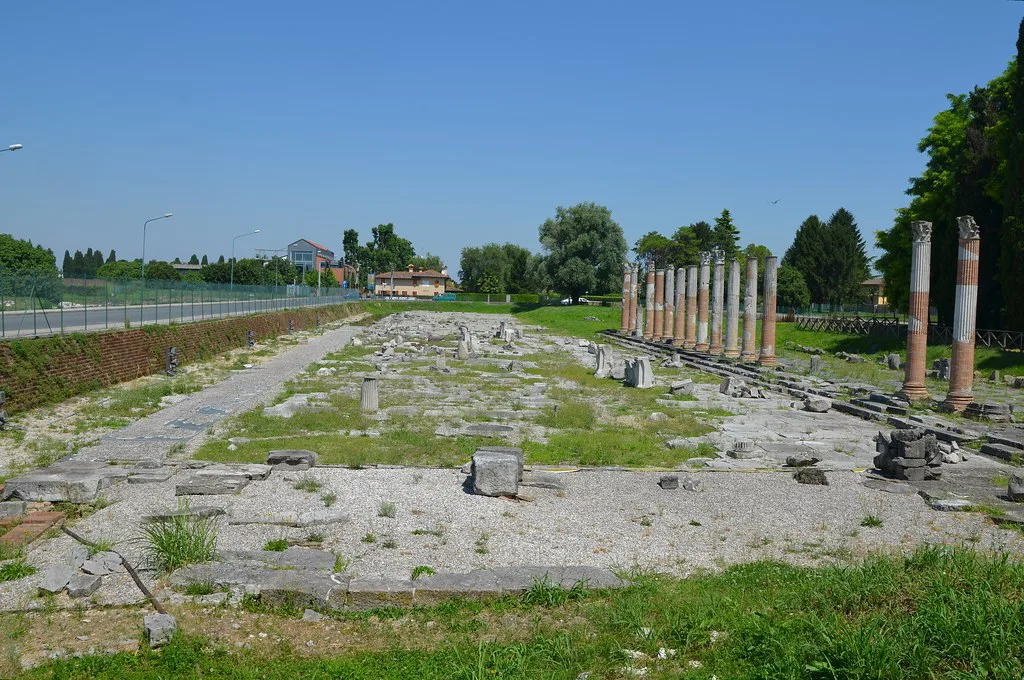
1. Aquileia
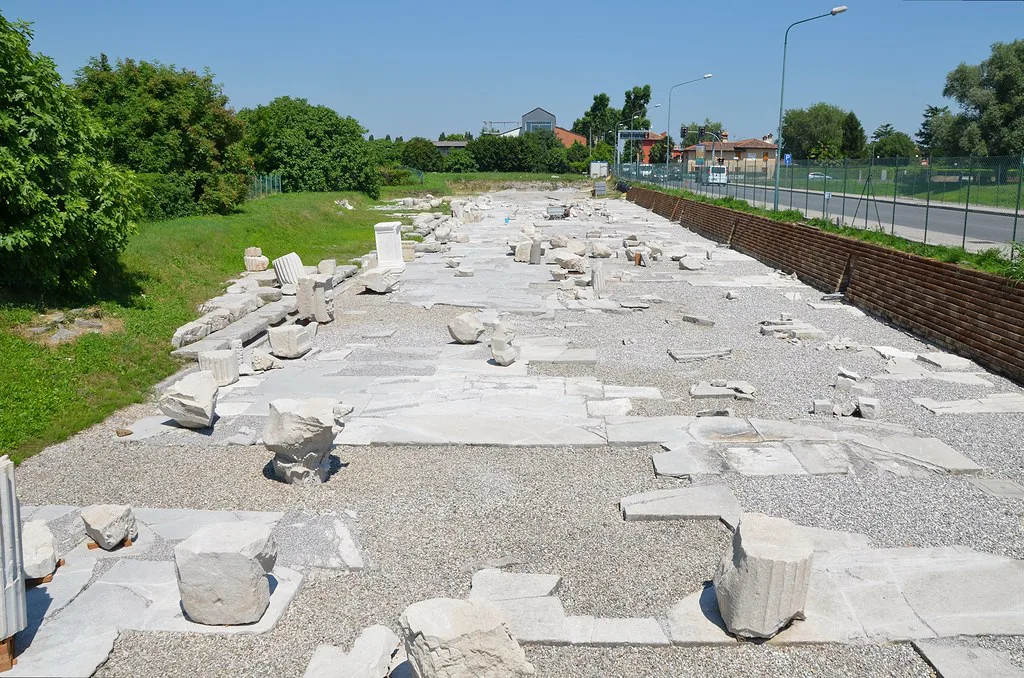
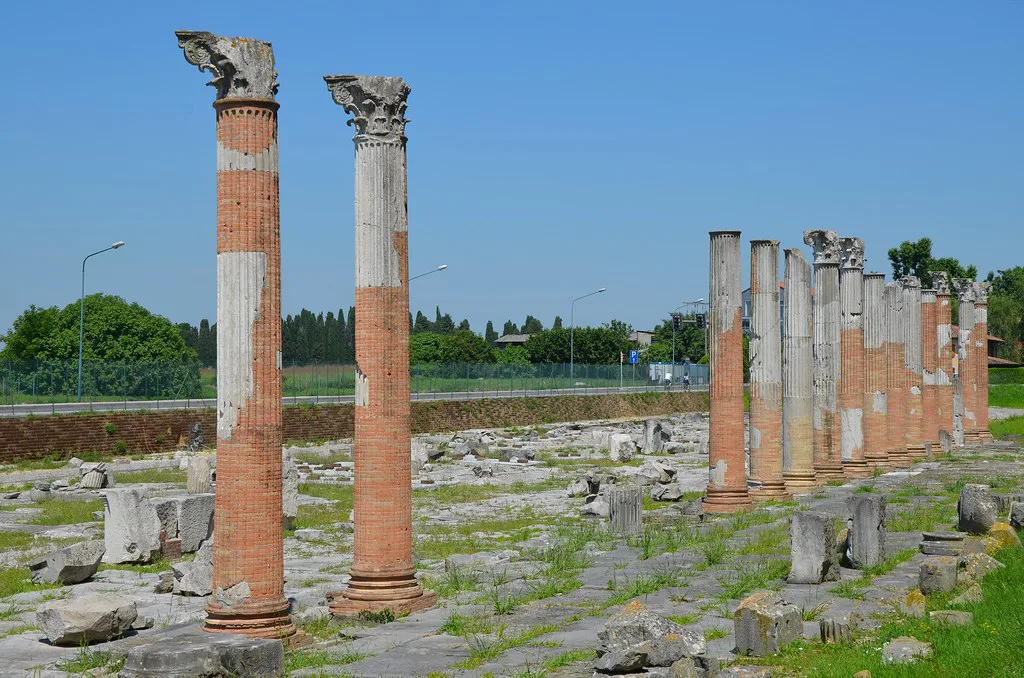
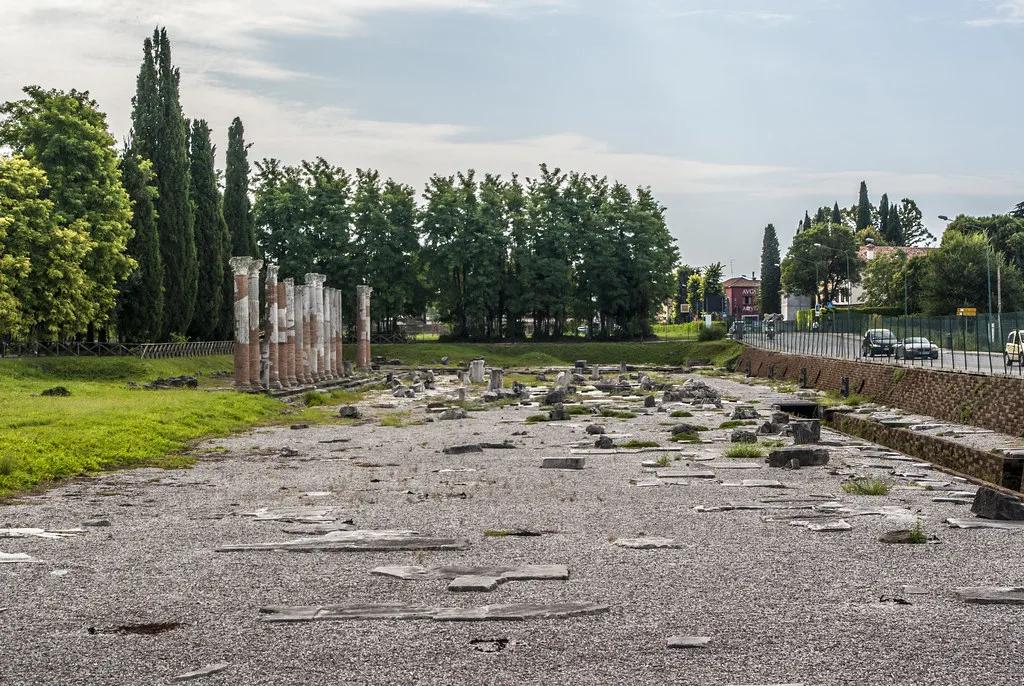
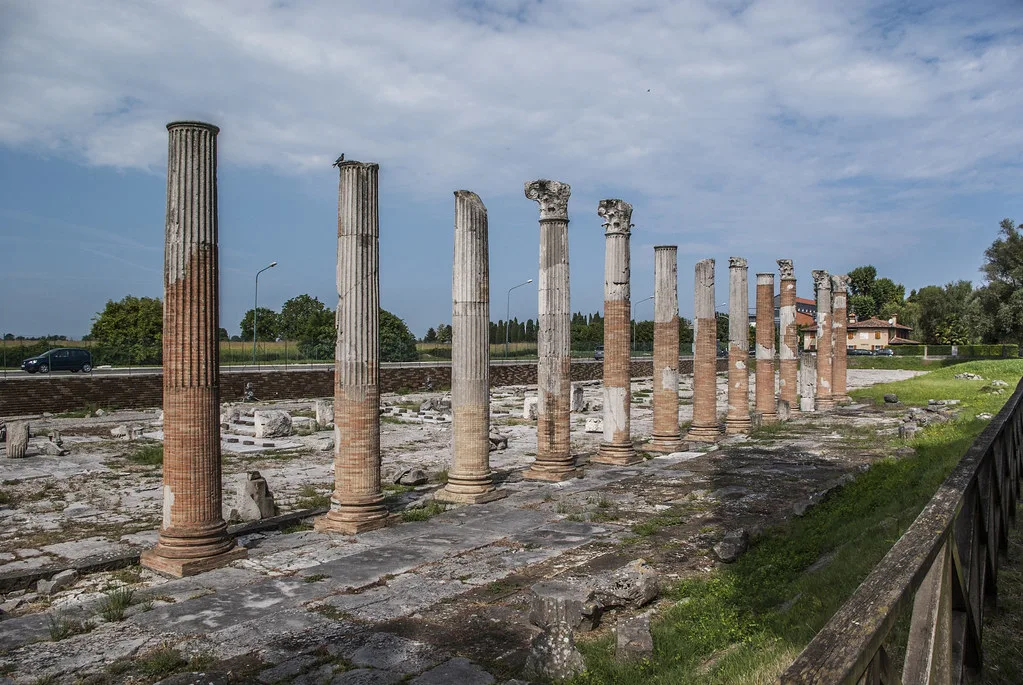
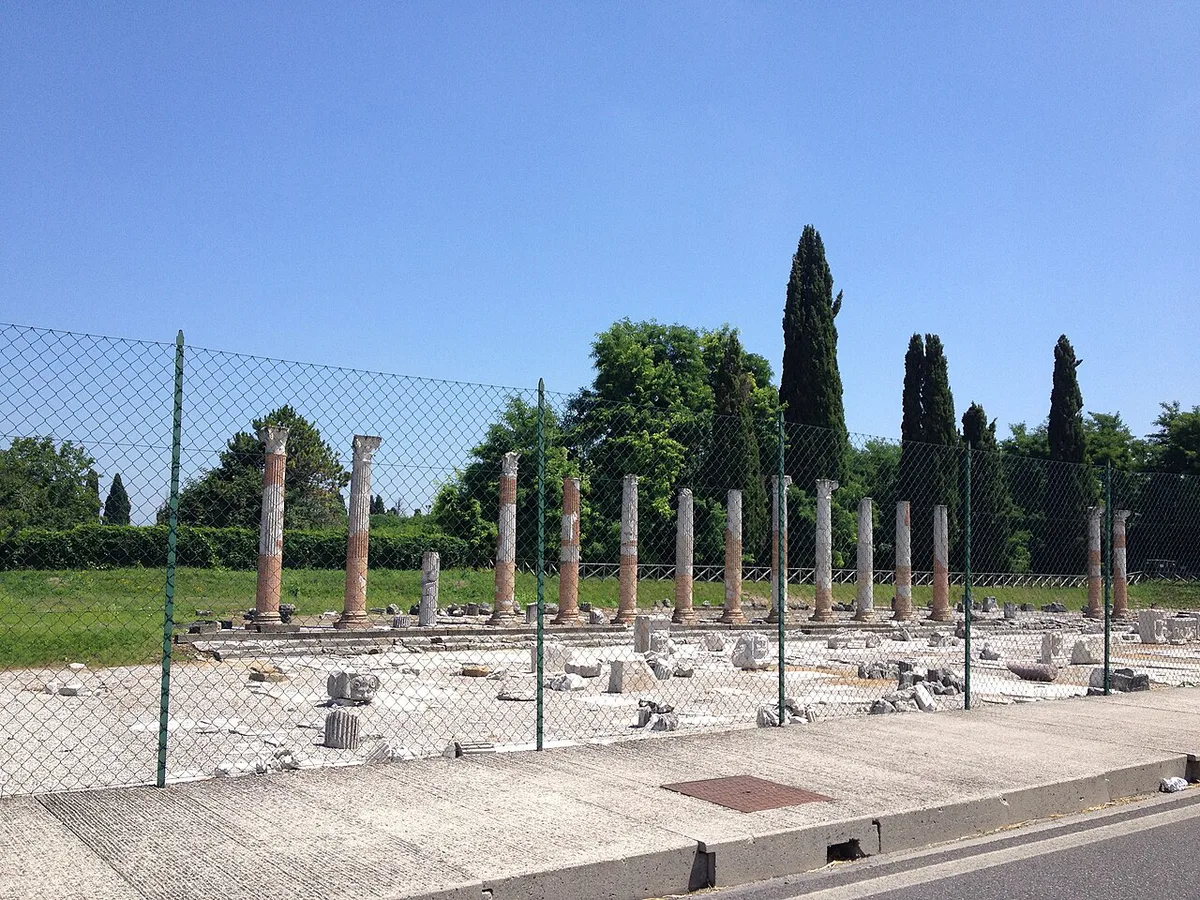
Aquileia is a Roman city site in Friuli, where open archaeological ground rewards slow walking more than a checklist. Fondazione Aquileia is the place to check visiting details for the archaeological areas. Our Aquileia guide explains how to plan the visit.
Allow a half day for the ruins and the basilica. Give it a miss if you want one dramatic monument, since the appeal is spread across open ground.
2. Aosta
Aosta, once the Roman town of Augusta Praetoria, sits near the French border and keeps its ruins among modern streets. Look for the Roman bridge, the theatre, towers and gates, the Arco d'Augusta and the forum excavations. Everything links on foot, which makes this the best car-free choice on the list.
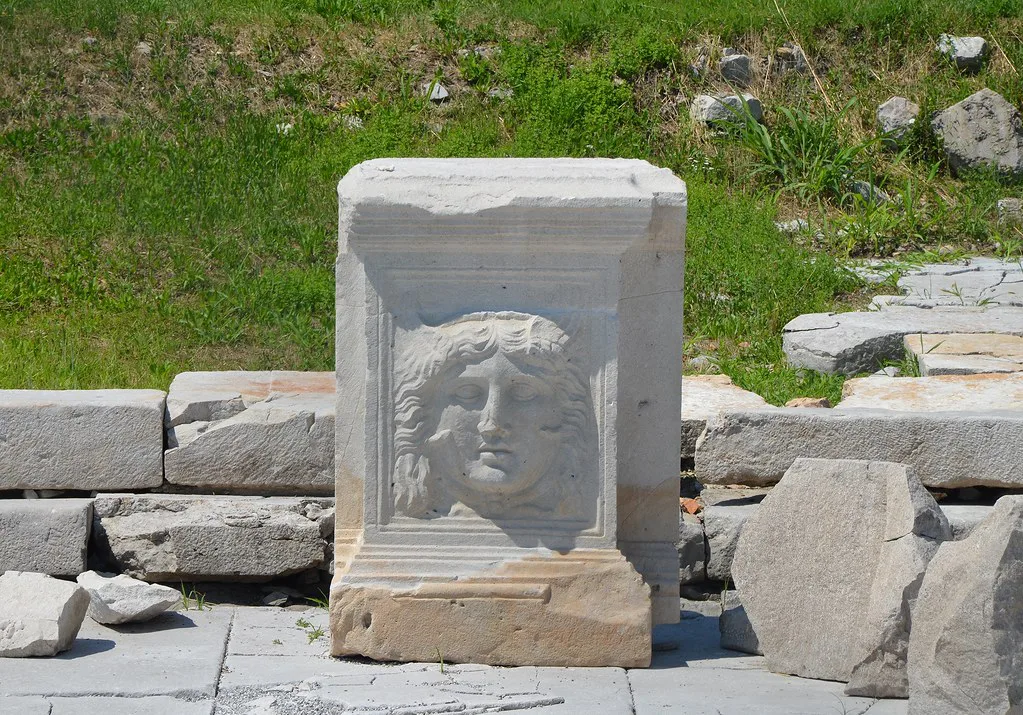
Aosta Valley regional tourism carries current visitor information. Our guide to Aosta's Roman gate and theatre helps with ordering the stops. Plan a few hours rather than a full day.
3. Rimini
Rimini pairs two standout monuments: the Arch of Augustus and the Tiberius Bridge. Both stand within the city, so you can see them on foot in a short visit. Rimini city tourism lists current visitor details.
Our Rimini arch and bridge guide helps you fit them into a wider day. Northern travelers can also read about the Roman site at Luni. Not ideal if you want an excavated ancient town, since these are individual monuments.
4. Carsulae
Carsulae's ruined town sits on the route of the ancient Via Flaminia. That makes it a natural stop on a central Italy road trip. Expect open ground and a rural pace rather than big-site crowds.
You will almost certainly need a car, and a half day is a fair estimate. Look elsewhere if you rely on trains and buses.
5. Alba Fucens
Alba Fucens lies in Abruzzo, about halfway between Rome and the Adriatic, with Mount Velino rising above the ruins. Excavations include an amphitheatre, buildings and part of the old Roman road. Many visitors come for the mountain setting as much as the stones.
Saepinum's ruins suit the same slow, car-based style of trip. Norba's ruins do too. Opening days at rural sites can be limited, so check ahead.
6. Cosa at Ansedonia
Cosa is a Roman town site near the Tuscan coast at Ansedonia. Walk the ruined streets and layout rather than looking for standing monuments. Our guide to Cosa at Ansedonia helps you plan the stop.
A car makes access easier, and a half day is a reasonable estimate. Not the right pick if you want tall, intact structures.
7. Naples area beyond Pompeii
Pompeii draws the crowds, but the Naples area holds more ancient layers. Naples itself shows Roman remains at the Santa Chiara Monastery and under San Lorenzo Maggiore Church. Capua, a city near Naples, has a large Roman amphitheatre and a gladiator museum nearby.
Capua's Mithraeum may need advance arrangement through the archaeology museum. Our guide to more ancient sites around Naples widens the loop. Choose Pompeii instead if you only have one day and want one large site.
8. Metaponto, Locri and Sibari
These are Magna Graecia sites with Roman layers, so expect Greek and Roman remains rather than purely Roman ruins. Start with Metaponto's Greek-and-Roman remains. Locri's ancient city adds a second coastal stop. Sibari's layered site completes the trio.
Grumentum's Roman town adds a more purely Roman stop. Plan a car and separate half days for each site. Look elsewhere if you want one compact visit.
Bigger Names and Island Sites to Pair With Them
These well-known stops fit around the eight entries above.
- Baths of Caracalla, Rome
- Built between 211 and 216 AD, the baths host summer opera.
- Ostia Antica
- Rome's ancient port city works as a day trip from the capital.
- Pompeii
- A volcanic eruption buried the city in 79 AD.
- Verona and Brescia
- Verona's amphitheatre hosts performances, and Brescia's Brixia area has a capitolium dated to 73 AD.
- Turris Libisonis, Sardinia
- Julius Caesar founded this colony in 46 BC, and entry may be bundled with the Antiquarium.
- Egnazia and Tharros
- Egnazia in Puglia has a forum, arena and museum, and Tharros sits by the sea on the Sinis Peninsula.
Compare the Sites at a Glance
Visit time, access and crowd columns are editor estimates, not official figures.
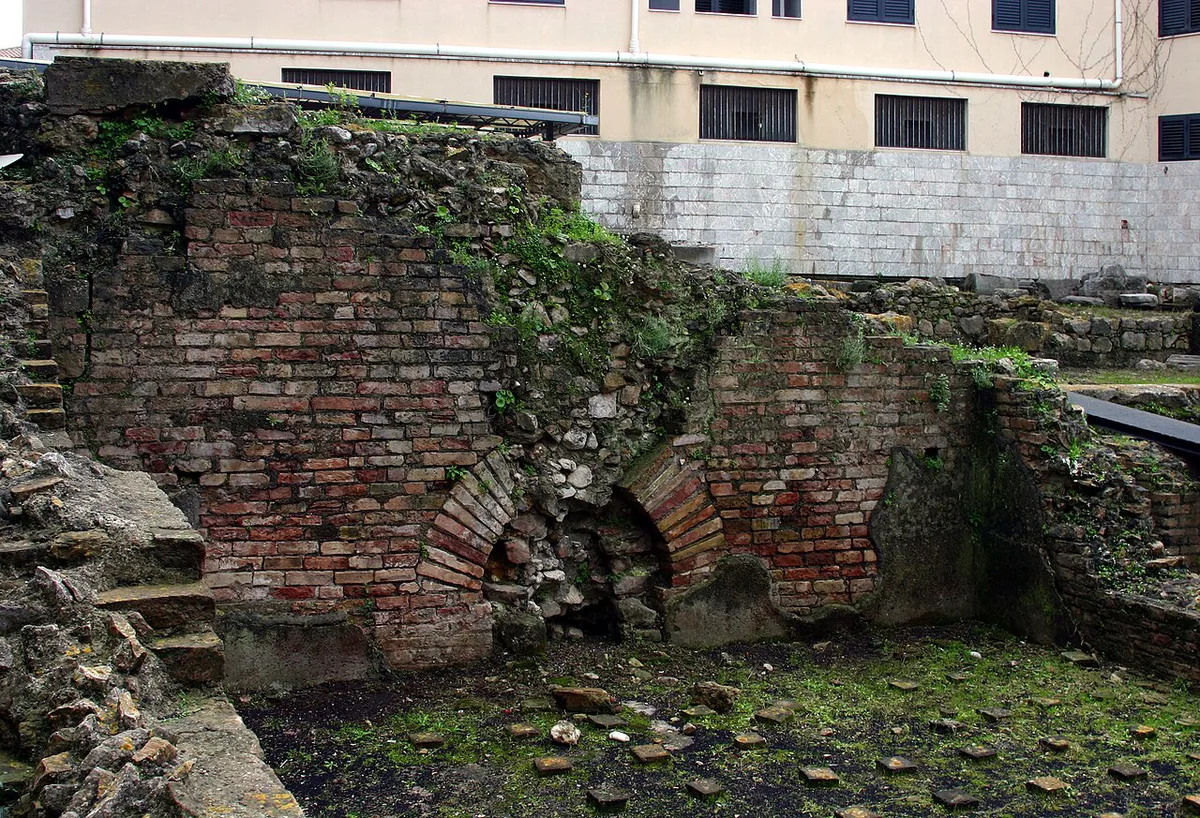
| Site | Region | What survives | Visit time | Access | Crowds |
|---|---|---|---|---|---|
| Aquileia | Friuli | Open archaeological areas | Half day | Car or local transport | Quiet |
| Aosta | Aosta Valley | Bridge, theatre, gates, forum | Few hours | On foot in town | Moderate |
| Rimini | Emilia-Romagna | Arch of Augustus, Tiberius Bridge | Short visit | On foot in town | Moderate |
| Carsulae | Umbria | Ruined town | Half day | Needs a car | Quiet |
| Alba Fucens | Abruzzo | Amphitheatre, road, buildings | Half day | Needs a car | Quiet |
| Cosa at Ansedonia | Tuscany | Town layout | Half day | Car easiest | Quiet |
| Naples area | Campania | Underground layers, amphitheatre | Full day | Day trip from Naples | Varies |
| Metaponto, Locri, Sibari | Basilicata and Calabria | Greek and Roman layers | Half day each | Needs a car | Quiet |
Tickets, Opening Hours and Seasonal Timing
Ticket rules, opening days and closures differ for every site and change by season. Check the Italian Ministry of Culture or each park's own site before you travel.
How to Get Around: Trains, Day Trips and When You Need a Car
Ostia Antica and the Naples-area sites suit day trips, and Aosta and Rimini work on foot. Carsulae, Alba Fucens, Cosa and the southern sites are easiest with a car.
Mistakes to Avoid
A few cautions save a wasted day.
- Packing Rome and Pompeii into one day
- Each deserves its own day, and the journey between them eats the hours.
- Visiting rural sites without checking opening days
- Small sites such as Alba Fucens and Carsulae may not follow city schedules.
- Assuming every site has staffed facilities
- Rural ruins may have limited services, so carry water and plan food stops.
Short Routes for Seeing Roman Italy
Build the trip around a hub instead of trying to join distant regions in one rush. From Rome, spend one full day in the city’s major monuments and make Ostia Antica a separate day trip. The excavation offers a more complete ancient-town experience than a quick stop between Rome sights.
For Campania, base yourself in Naples. Combine the Roman layers at Santa Chiara or San Lorenzo Maggiore with Capua’s amphitheatre on a full day, then reserve another day for Pompeii. This keeps the largest site from being squeezed into an already busy itinerary.
Use a car for a central or southern ruins loop. Carsulae, Alba Fucens and Cosa at Ansedonia each merit a half day, while Metaponto, Locri and Sibari need separate half days. Check opening days before leaving your base, especially for rural archaeological areas.
For the ancient sites of the capital itself, see our guide to Roman ruins in Rome.
To see how Italy's amphitheatres compare with those at Nîmes, Arles and Pula, see our roundup of Roman amphitheatres in Europe.
Explore More Guides
Keep planning your trip with these guides.
Guides
- Aquileia Travel Guide
- Aosta Roman Sights
- Roman Rimini
- Carsulae Guide
- Alba Fucens Guide
- Saepinum (Sepino)
- Grumentum Archaeological Park
- Metaponto Guide
- Locri, Calabria
- Sibari, Calabria
- Norba Ruins, Italy
- Via Flaminia: What to See & How to Visit From Rome
- Cosa Ansedonia: Visiting the Roman Colony in Tuscany
- Luni Roman Ruins: Visiting the Ancient Town in Italy
- Ruins Near Naples
Related guides



Continue reading
Guides on the same trip



