
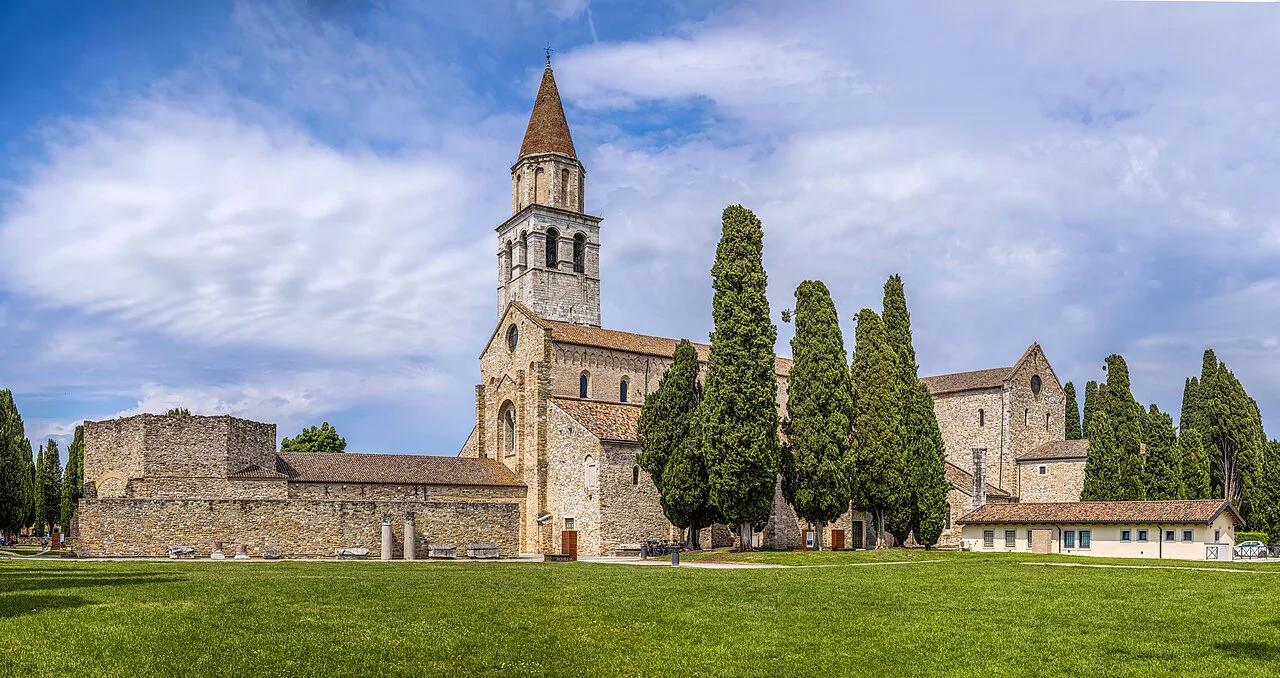
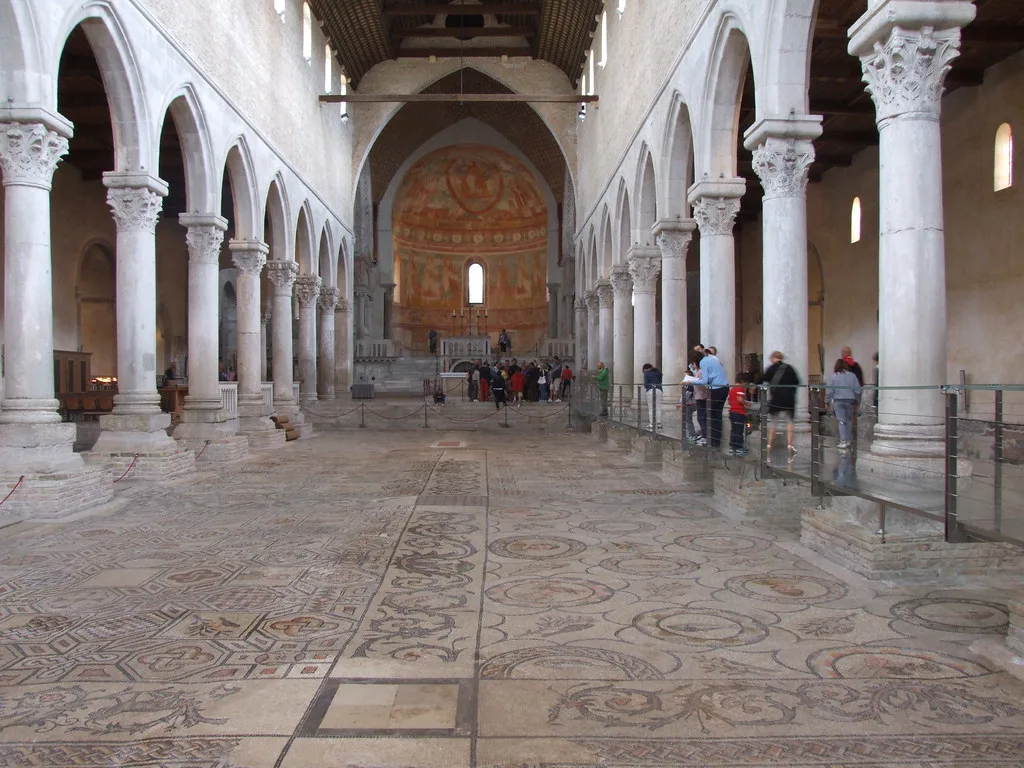
Last updated November 2026: Aquileia is a small town in Friuli Venezia Giulia that was once a major Roman city and is now a UNESCO World Heritage Site, inscribed in 1998. Its draws are the Patriarchal Basilica, with an early Christian floor mosaic, and a free open-air archaeological area. Allow half a day, buy the €12 basilica complex ticket, and base yourself in town or in Grado.
Featured image: Terragio67, CC BY-SA 4.0, via Wikimedia Commons.
Aquileia at a glance
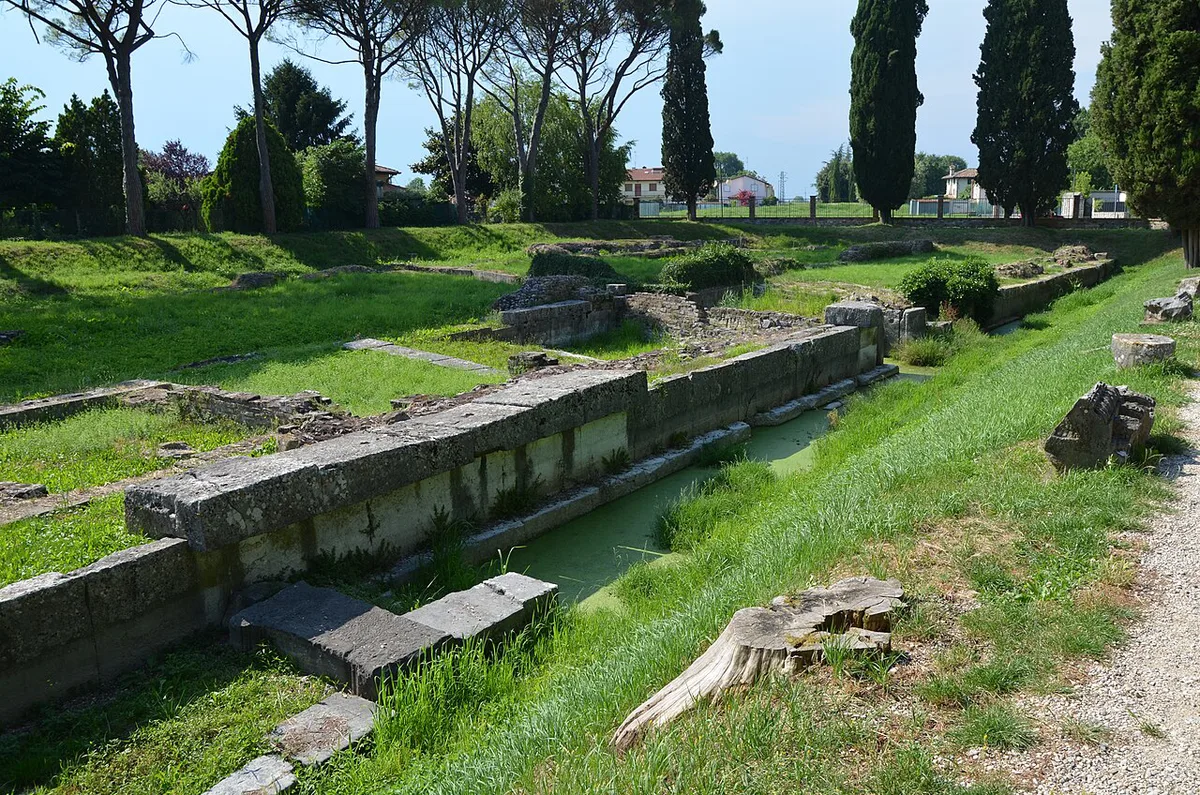
Romans founded Aquileia as a colony in 181 BC at the head of the Adriatic, and it became one of the biggest ancient ports on that sea. Today it is a town of 3,302 people (a 2017 figure), about 10 km from the coast. UNESCO lists the archaeological area and the Patriarchal Basilica as reference 825. Italia.it describes the basilica's floor mosaic as the largest in the Western Christian world.
- Worth it if you want Roman and early Christian mosaics, free open-air ruins and an uncrowded day out.
- Skip it if you expect standing Roman buildings, because the ancient city survives mainly as excavated foundations, streets and mosaic floors.
What to see in Aquileia, in priority order
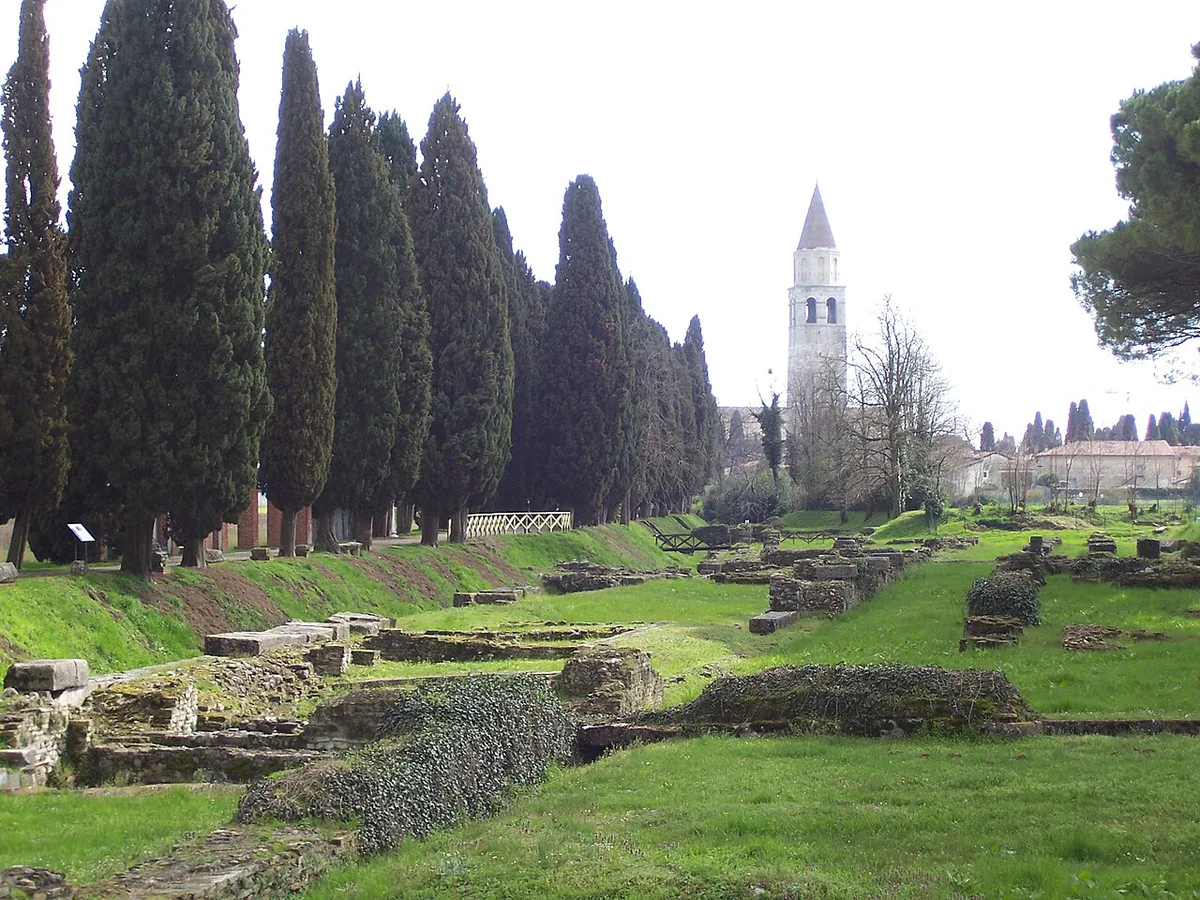
Start with the basilica complex, then walk the free open-air sites, then decide whether the museum fits your day. Most sites sit within a few minutes' walk of the campanile and Piazza Capitolo.
| Site | Access | Why go |
|---|---|---|
| Patriarchal Basilica | Ticketed (€12 complex) | 4th-century floor mosaics |
| Frescoed crypt | Ticketed (complex) | 9th-century frescoes |
| Excavation crypt | Ticketed (complex) | 4th-century mosaic hall around the bell tower foundations |
| Baptistery and Südhalle | Ticketed (complex) | 4th–5th-century mosaic under a protective structure |
| Domus and Bishop's Palace | Ticketed (complex) | Mosaic floors of the episcopal quarter |
| Domus of Titus Macer | Ticketed (complex) | One of the largest Roman houses found in northern Italy |
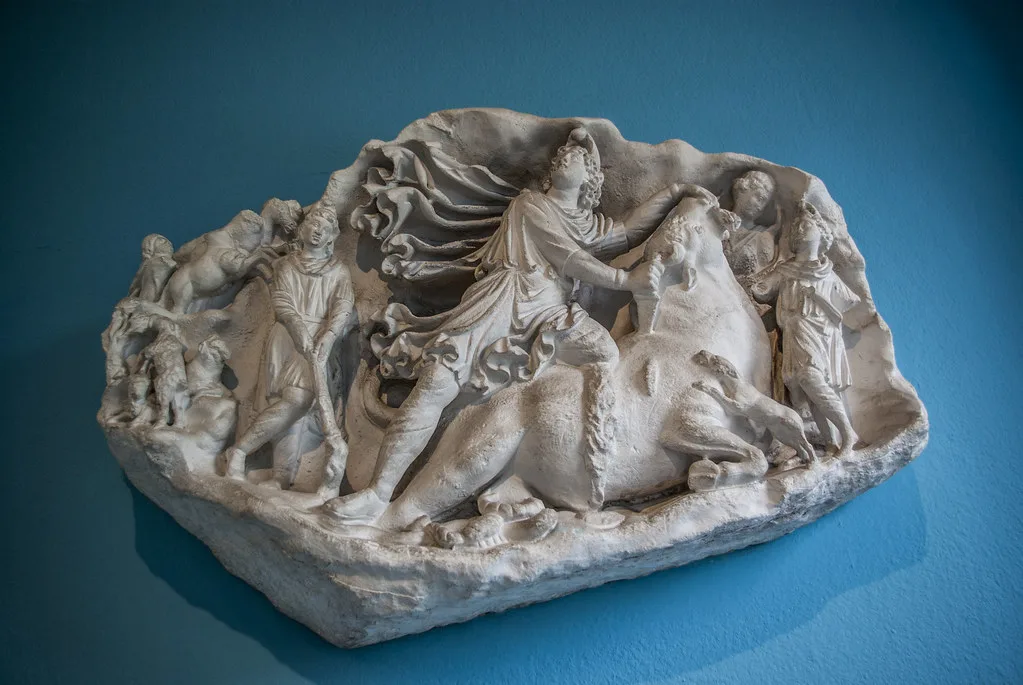
| National Archaeological Museum | Ticketed (€9) | Inscriptions, statues, mosaics and local glass |
| Early Christian Museum | Limited hours | Mosaic remains of early basilicas and funerary stelae |
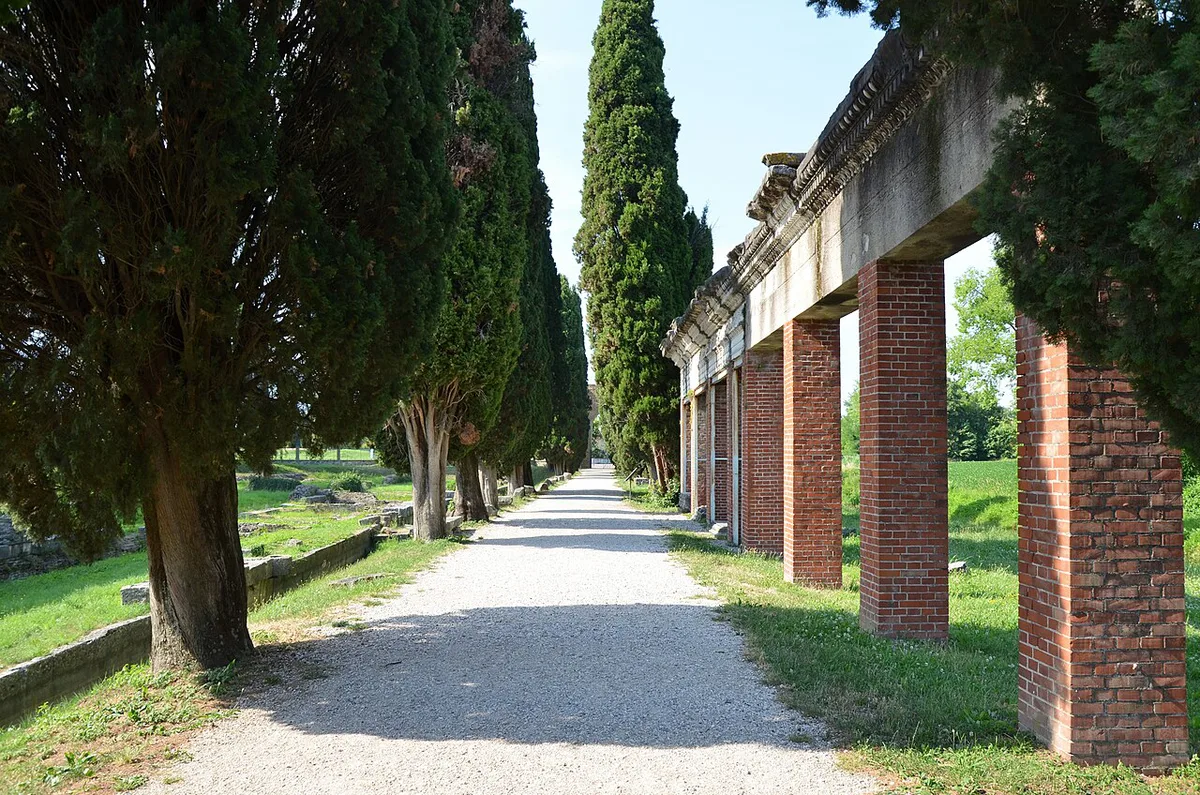
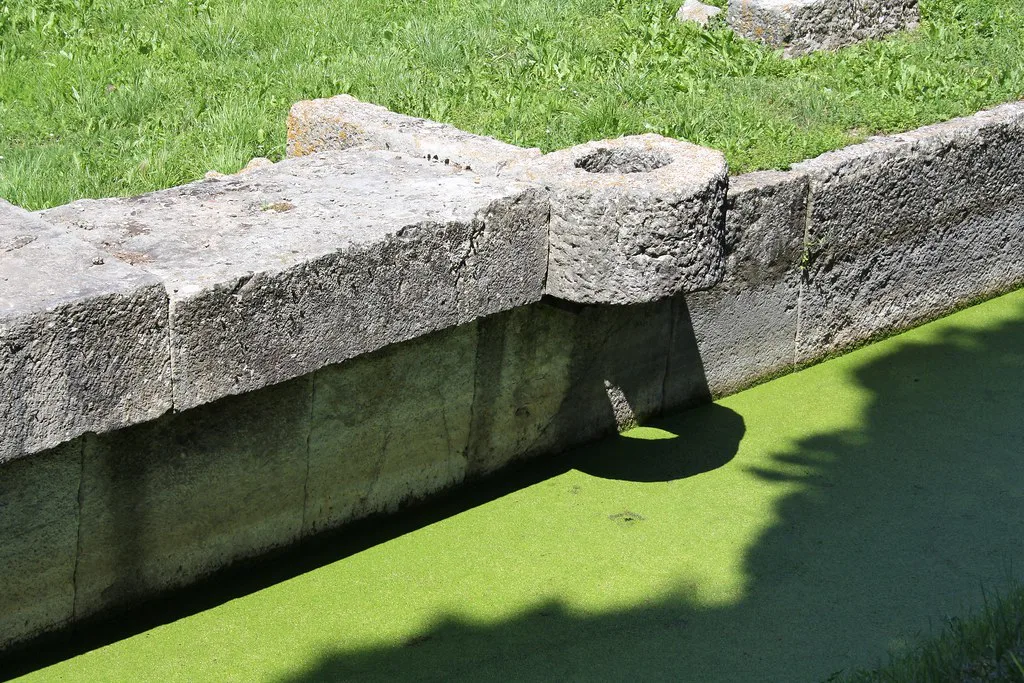
| Roman forum, river port | Free | Core of the ancient city and its inland harbour |
| Fondo Pasqualis markets, Fondo CAL | Free | Late antique market and house remains |
| Decumanus of Aratria Galla, necropolis | Free | A Roman street and a small burial ground |
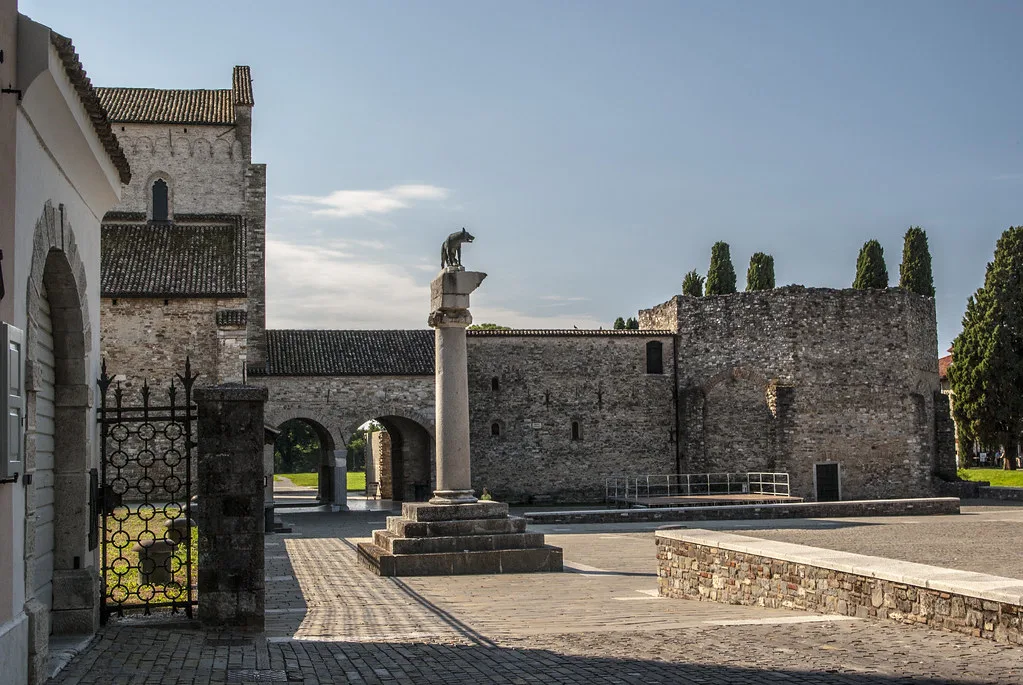
- Cemetery of Heroes: a short stop near the basilica, tied to the choice of the Unknown Soldier in 1921.
Tickets, free sites and passes in Aquileia
One €12 ticket covers the basilica, frescoed crypt, excavation crypt, baptistery with Südhalle, Domus and Bishop's Palace, and the Domus of Titus Macer. Groups of at least 15 pay €9 each. The National Archaeological Museum is separate at €9, with €2 for ages 18 to 25. Prices and hours checked November 2026 on the Fondazione Aquileia visit page.
| Site | Entry |
|---|---|
| Forum, river port, Fondo CAL, Fondo Pasqualis, decumanus, necropolis | Free |
| Basilica complex plus Domus of Titus Macer | €12 (€9 for groups of 15+) |
| National Archaeological Museum | €9 (€2 ages 18–25) |
| Early Christian Museum | Free |
| FVGcard Aquileia&Grado | €20 for 48 hours |
Free entry and the FVGcard
Under-18s enter the basilica complex and the museum free, as do Aquileia residents at the basilica. FVGcard holders also enter free. The digital FVGcard Aquileia&Grado costs €20 for an adult plus a child under 18 and lasts 48 hours from first use. It also covers PromoTurismoFVG guided tours. If the museum is among the affiliated sites, €12 plus €9 is €21, so the card edges ahead for a two-ticket visit.
Pick your first day deliberately: the FVGcard lasts 48 hours from first use, so its clock starts at your first visit.
Opening hours by season
Basilica hours change by month and weekday, so match your date to the table below. The basilica's own site carries the same schedule. Ticket offices close 15 minutes before closing. Sunday opening is at 12:00 all year.
| Period | Mon–Fri | Saturday | Sunday |
|---|---|---|---|
| Nov–Feb | 10:00–16:00 | 10:00–17:00 | 12:00–17:00 |
| March, October | 10:00–18:00 | 10:00–18:00 | 12:00–18:00 |
| Apr–Sep | 10:00–19:00 | 10:00–18:00 (Mar–Oct) | 12:00–19:00 |
- Free open-air sites: 9:00–19:00 from 1 April to 30 September, 9:00–18:00 in March and from 30 September to 24 October, and 9:00–16:00 from 25 October to 28 February.
- National Archaeological Museum: Tuesday to Sunday, 10:00–19:00, with the cash desk closing at 18:00.
- Early Christian Museum: Saturday 8:30–13:30 from April to October, and by reservation from November to March.
- Mistake to avoid: arriving on Monday, when the museum is closed.
- Mistake to avoid: reaching the ticket office in the last 15 minutes.
- Mistake to avoid: assuming one ticket covers the museum, which it does not.
- Mistake to avoid: relying on summer hours in winter, when open-air sites close at 16:00.
How to plan your time
Choose a route by the hours you have, then drop items from the bottom of the list first. Open-air ruins go first when daylight is short, since they close at 16:00 from late October to February.
| Budget | Route | Drop first |
|---|---|---|
| 2 hours | Basilica complex only | Domus of Titus Macer |
| Half day | Basilica complex, forum and river port, museum | Fondo CAL |
| Full day | Add the bell tower if open, a bike ride to Grado, local wine | Museum |
Getting there and getting around
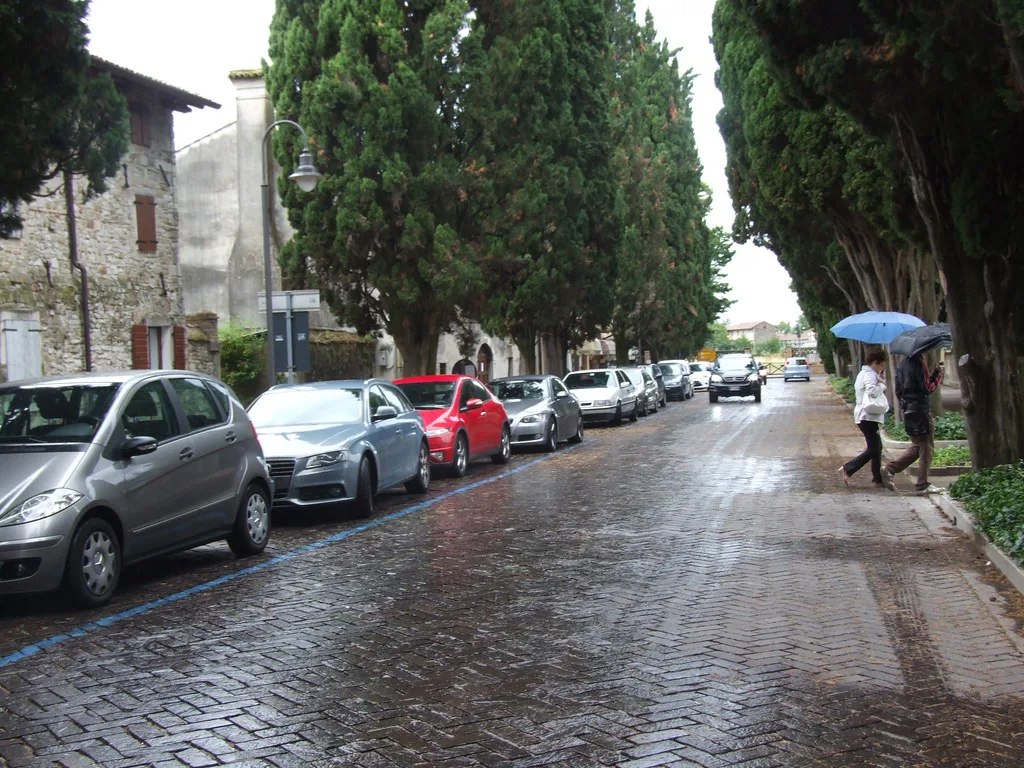
By car, leave the A4 at Palmanova and follow SR 352 toward Aquileia-Grado. Drive along Via Julia Augusta and follow the campanile to Piazza Capitolo. By rail, the station is Cervignano-Aquileia-Grado, where Saf or Apt buses run on to the town. Get off at Aquileia Centro and walk about 5 minutes toward the campanile. From the airport at Ronchi dei Legionari, the same bus link applies. Italia.it notes bike rental in town. Riding south on the Alpe Adria cycle route reaches Grado, and a boat service carries bikes on the return.
From Aquileia Centro, walk about 5 minutes toward the campanile, so most sites sit within a few minutes' walk of it.
Guided tours, audio guides and dogs
The PromoTurismoFVG infopoint at Via Giulia Augusta 11 (tel. +39 0431 919491) books three tours in Italian and English. They cover Roman Aquileia, the Domus of Titus Macer, and an after-sunset walk. The Titus Macer house covers 1,700 square metres. The infopoint also rents audio guides. Dogs on a leash are allowed in the open-air areas and the Domus and Bishop's Palace. Only small dogs in arms or a carrier may enter the Domus of Titus Macer.
Where to stay and base choices
Each base trades quiet against beach or city access. You do not need a hotel recommendation to choose well.
- Aquileia: quietest option, with sites a short walk from your door.
- Grado: beach town reachable by bike on the Alpe Adria route.
- Lignano Sabbiadoro: sea resort for beach days, with Aquasplash water park.
- Udine: city base with more evening options.
- Trieste: a longer day trip rather than a base.
Nearby add-ons
Italia.it names Palmanova and Cividale del Friuli as UNESCO sites a short distance away. Grado pairs best with a cycling day. Trieste works only as a longer outing, so leave it for a second day.
Other Roman sites in Italy
For more context, see our guide to Roman ruins across Italy. Roman road routes start with the Via Flaminia: What to See & How to Visit From Rome, whose builder Caius Flaminius helped found Aquileia. In the north, try Aosta's Roman remains. Another northern stop is Roman remains in Rimini. A third is Roman Luni. Further south, visit Cosa and Ansedonia. Another stop is the ruins at Carsulae. For the Naples area, see ruins around Naples.
Frequently Asked Questions
What is Aquileia famous for?
Romans founded Aquileia in 181 BC, and it grew into a major Adriatic port. Its Patriarchal Basilica holds a 4th-century floor mosaic. UNESCO listed the site in 1998.
Is Aquileia worth visiting?
Yes, if you like archaeology and mosaics. Most Roman sites are free, and one €12 ticket covers the basilica complex. Skip it if you want standing Roman buildings.
Related guides



Continue reading
Guides on the same trip



