
Last updated November 2026. Aosta Roman history starts in 25 BC, when Rome founded the town as Augusta Praetoria. Its surviving pieces are a city gate, a triumphal arch, a theatre facade, an underground portico and stretches of wall. Expect an Alpine garrison town rather than a Rome-style monument city, and read on for a walking order that links the sights. For wider context, see our guide to 8 Roman Ruins in Italy Beyond Rome and Pompeii.
Featured image: Luigi Chiesa, CC BY-SA 3.0, via Wikimedia Commons.
Aosta Roman sights at a glance
Augusta Praetoria was laid out in 25 BC at a crossroads of Alpine routes. Today the main remains cluster in a compact historic centre. Each sight below survives in a different form, so your expectations should shift from site to site. Entry rules for the ticketed sites sit with the regional heritage office, covered under tickets below.
| Site | What survives | Setting | Best for |
|---|---|---|---|
| Arch of Augustus | Arch at the old city entrance, with empty niches on the facade | Outdoor, street view | Quick first stop |
| Roman bridge (Pont de Pierre) | Stone bridge of Roman origin over the Buthier | Outdoor, street view | Short detour |
| Porta Praetoria | Eastern gate with three arches | Outdoor, street view | Best single image of Roman Aosta |
| Roman theatre | 22 m southern facade, lower cavea steps, backstage foundations | Archaeological area | History fans |
| Forum cryptoporticus | Underground arms of a horseshoe-shaped portico | Underground | Rain or cold days |
| Roman walls and towers | Stretches of wall, some towers with Roman appearance | Outdoor | Extra walking |
| Regional archaeological museum | Finds from several cultures, plus Roman gate remains in the basement | Indoor | Wet-weather half day |
A walking route through Roman Aosta
Start on the eastern approach, where Roman travellers arrived. Move west in order, and the sights fall into a loop of short walks. Stops three and four need entry arrangements, so check them before you set out.
Arch of Augustus and the Roman bridge
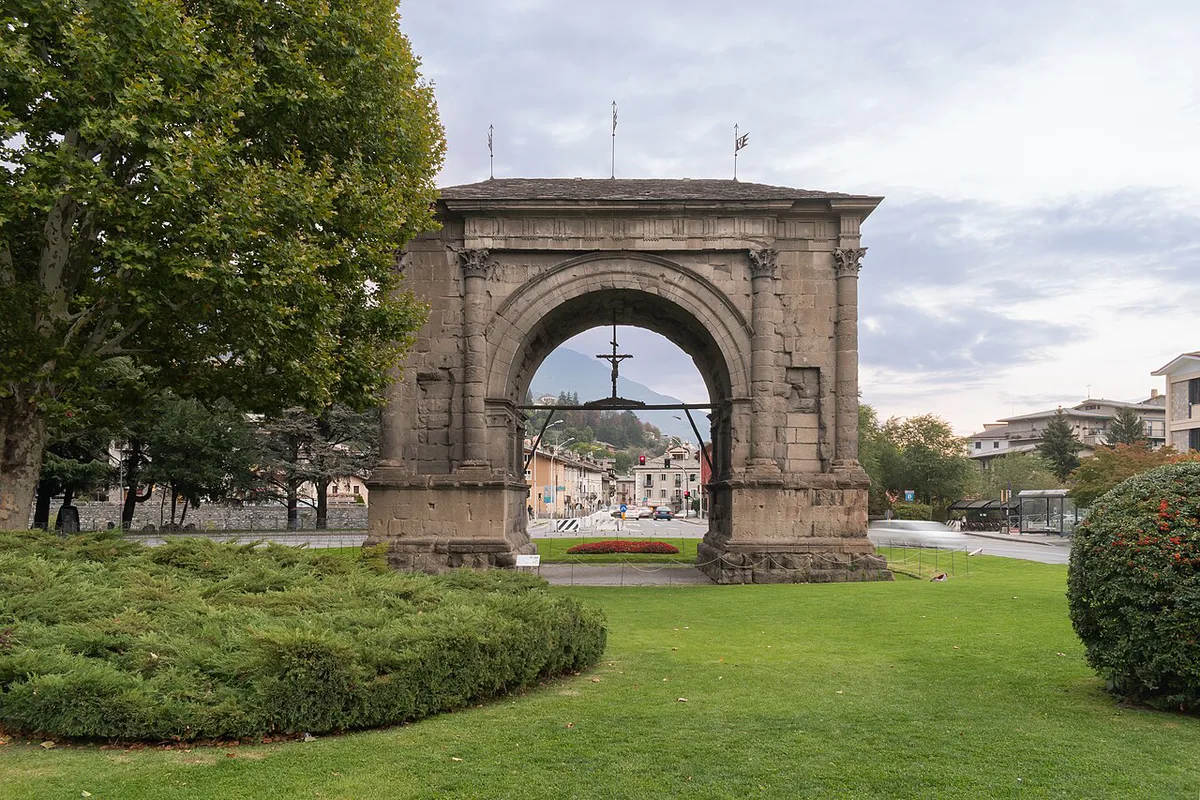
Rome built the Arch of Augustus at the city entrance after the Salassi people were definitively defeated, following the 25 BC founding. Look for the empty niches on its facade, which probably once held trophies. A crucifix from the 15th century hangs beneath the arch. Close by, the Roman stone bridge once crossed the Buthier river. That river now flows further west, so the bridge spans dry ground today. Both stops are views from the street.
Porta Praetoria
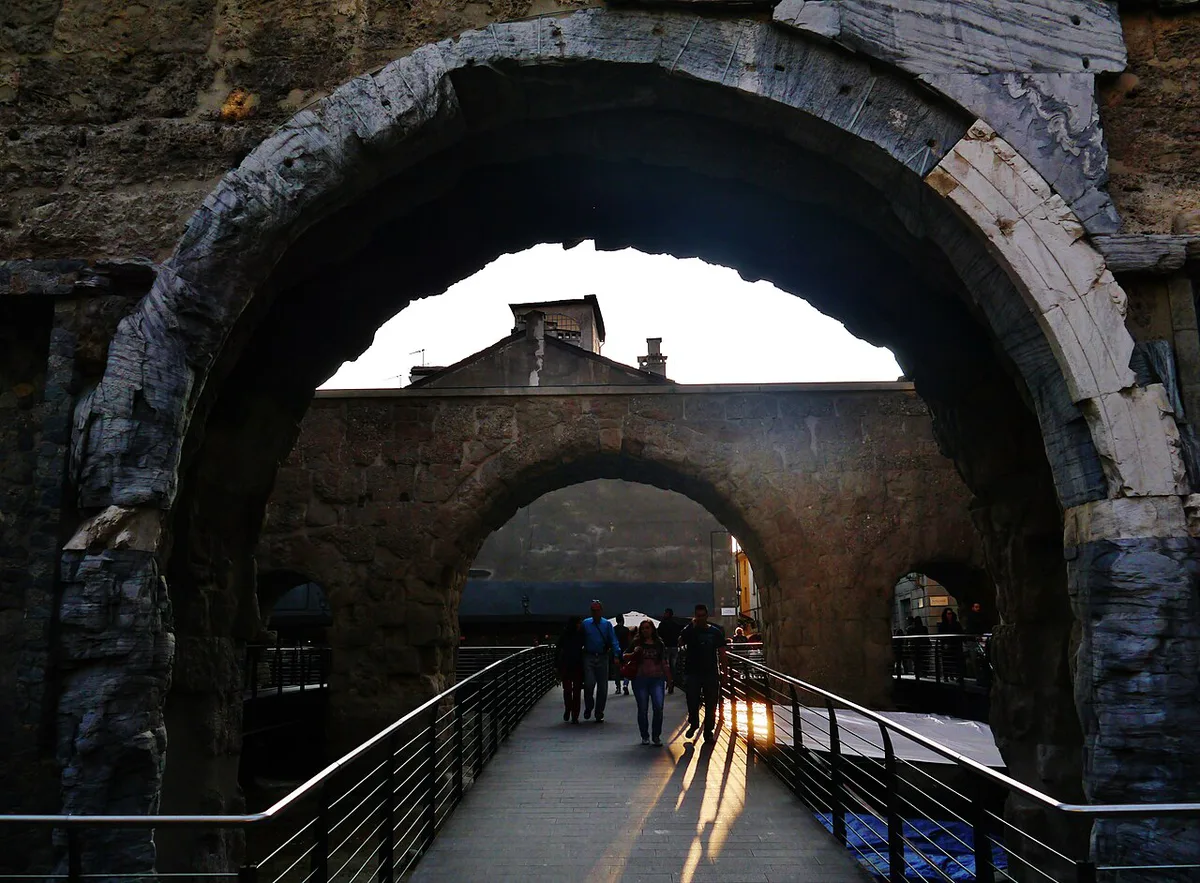
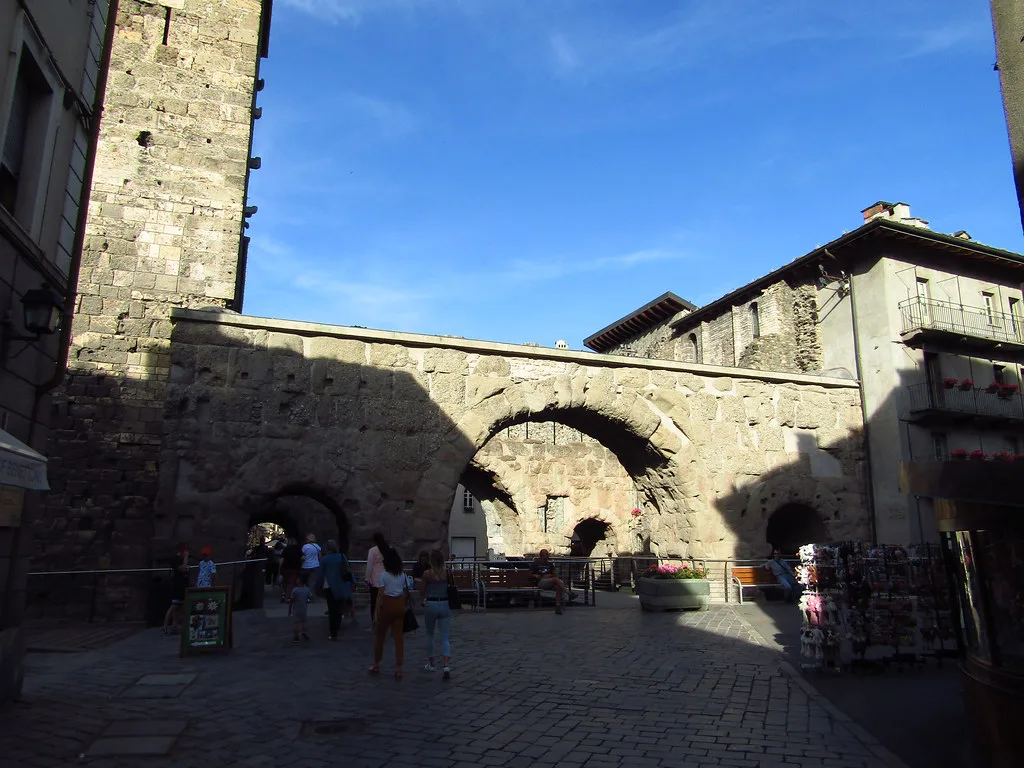
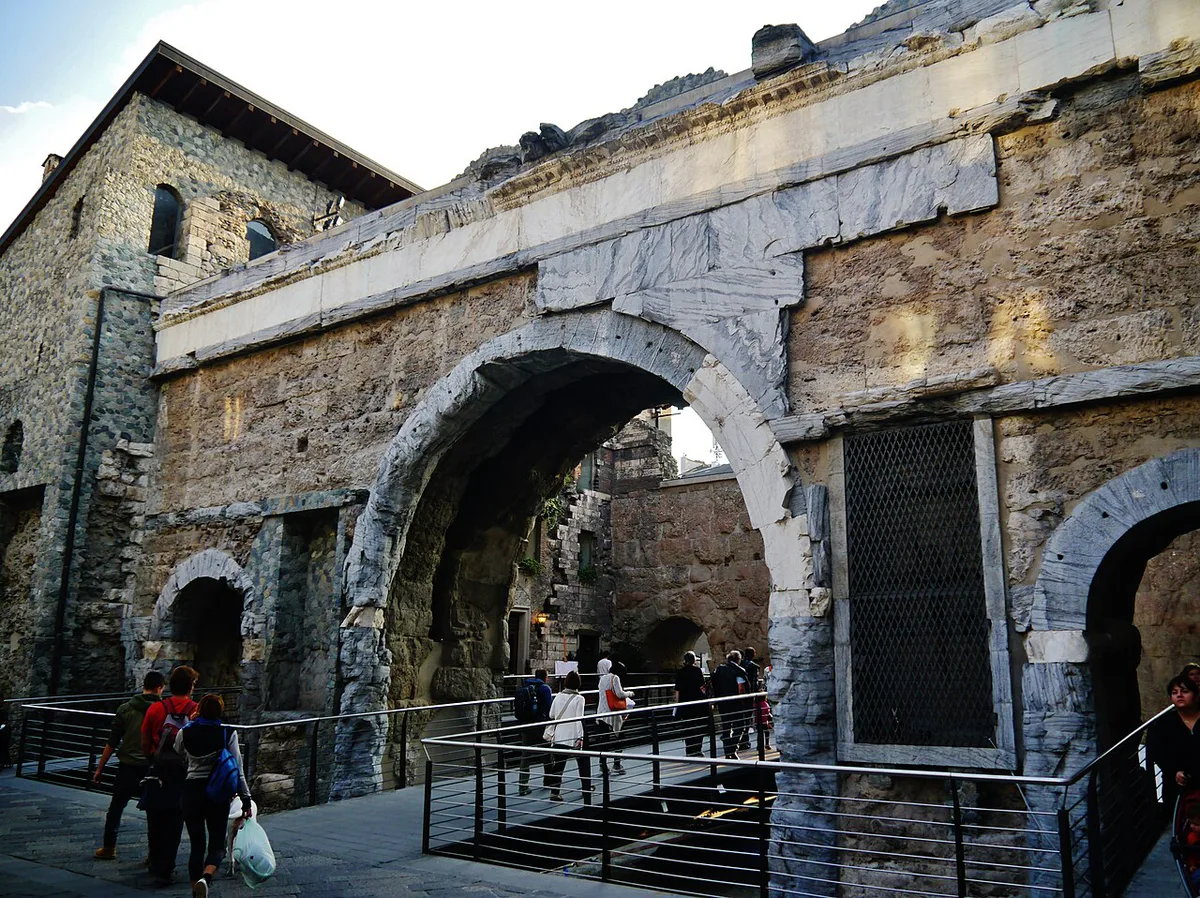
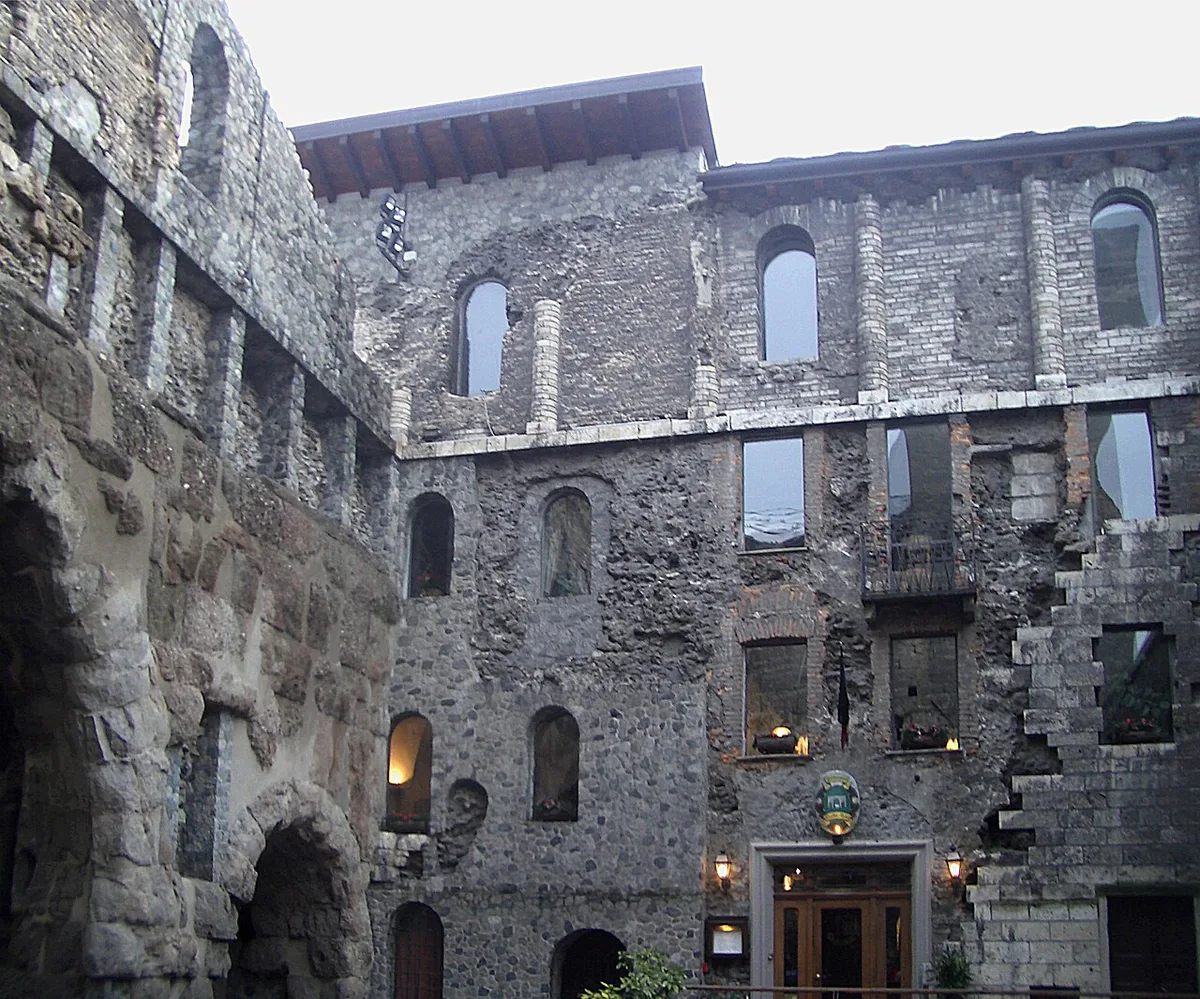
Porta Praetoria was the eastern entrance and main access point, built in 25 BC. It has three arches. Carts passed through the larger central one, while pedestrians used the two side arches. Between the openings sits a small parade ground that lies two metres below today's street level. On the outer side you can still see grooves left by the grilles lowered at night. A few marble slabs remain from the original facing. Via di Porta Pretoria leads from here toward the theatre.
Roman theatre and archaeological area
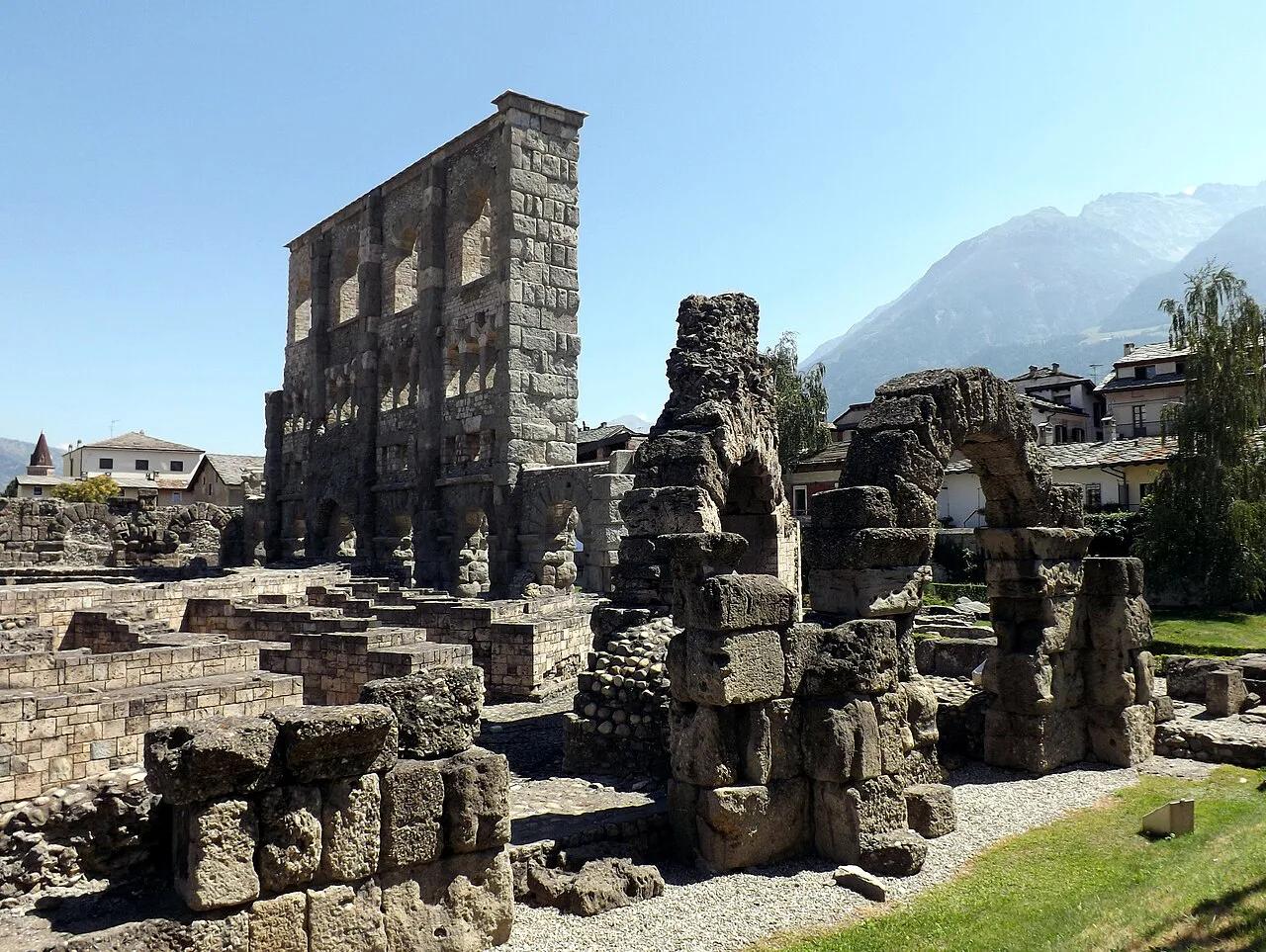
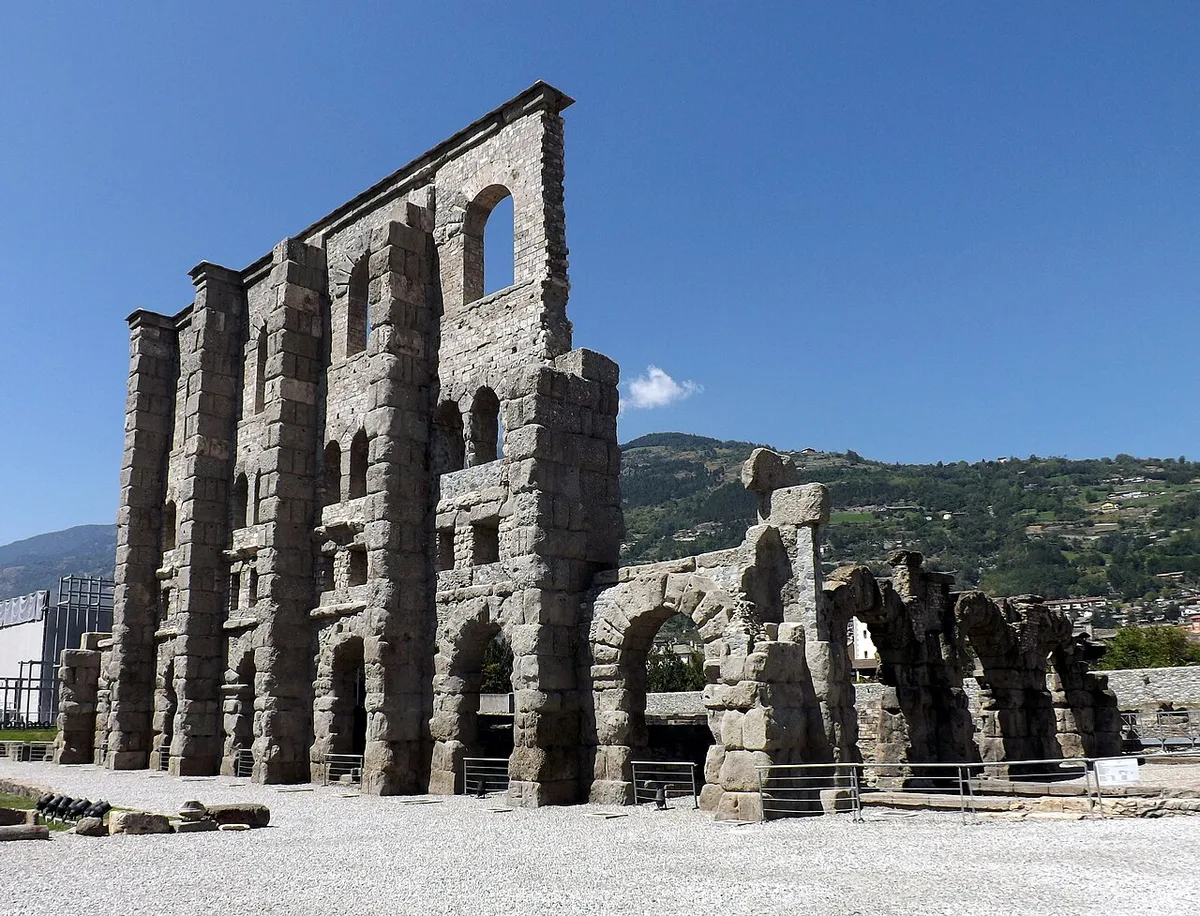
Aosta's theatre dates to around 24 BC, and its southern facade still stands 22 metres high. Arcades and irregular windows pierce the wall. Below it you can see the lower cavea steps and the foundations of the backstage wall. Medieval buildings once leaned against the facade, and modern restoration removed them. The amphitheatre stood next to the theatre, probably built under Claudius around 50 AD. Do not expect Colosseum scale. The site address is Via Porta Pretoria 1, and the regional heritage office lists its current opening arrangements on its archaeological sites pages.
Forum cryptoporticus under the cathedral
Rome built the cryptoporticus under Augustus to level the ground between the forum and the sacred area to its north. It forms three horseshoe-shaped arms with two naves under barrel vaults. The central arm runs 87 metres and the side arms 72 metres. Locals used it as cellars from the Middle Ages onward, and the temperature stays constant. Large portions lie beneath the cathedral on Place Jean XIII, where a sacred space of the forum once stood. Plan it as your rain or cold-day stop.
Roman walls, towers and the archaeological museum
Roman Aosta's circuit wall measured 724 by 572 metres and stood 7 metres high. Travertine blocks covered the outer face, and 20 towers punctuated the line. Medieval builders reused much of the stone. Tour du Pailleron and Tour du Lépreux are the two towers that kept their Roman appearance. Tour du Lépreux was later turned into a feudal residence around the 12th century. Back inside the centre, the regional archaeological museum shows finds from Egyptian, Etruscan, Roman, Christian and medieval collections. Its basement preserves the southwest corner of the eastern tower of the Porta Principalis Sinistra, one of the city's four Roman gates.
Tickets, hours and what is free
Arch, bridge, Porta Praetoria and wall stretches are outdoor monuments you can view from the street. The theatre area, cryptoporticus and museum run on their own arrangements. Hours and fees change by season, and winter timetables differ from summer ones. Prices and hours were not published as a single list we can quote, so use the regional heritage office's official site for current figures. The Aosta Valley tourism portal also lists visitor information. Ask there whether a combined ticket covers several sites.
How much time to allow
Time, rather than money, is the main trade-off in Aosta. Pick the plan that matches your interest.
- Short stop: Arch of Augustus, Porta Praetoria and the theatre facade, all on the same eastern axis.
- Half day: add the cryptoporticus, a wall stretch such as Tour du Pailleron, and the archaeological museum.
- Full day: add Collegiate Church of Saint-Ours and the cathedral, which reward slow looking.
- Wet or cold day: lead with the cryptoporticus and the museum, then see the gates between showers.
Getting there and getting around
Aosta sits at the crossroads of routes to France through the Mont Blanc tunnel or the Little St Bernard Pass. A third road runs to Switzerland over the Great St Bernard Pass. The city is reachable by road and rail. The historic centre is largely pedestrian around Place Émile Chanoux, so leave the car at the edge. Parking and restricted-traffic rules should be checked with the city before you drive in. Via Croce di Città is the main pedestrian street, and Via di Porta Pretoria leads from the gate.
When to go
Aosta is Alpine, with cold winters and a ski season. A cable car links the town to the Pila ski area in 17 minutes, at 1,800 metres above sea level. Summer suits the outdoor monuments and wall walks best. Winter favours the underground cryptoporticus and the museum, though some opening hours shrink. Check the Aosta Valley tourism portal for seasonal timetables before booking.
Beyond Roman Aosta
Collegiate Church of Saint-Ours is the town's most important religious site, with a cloister probably dating to 1133. The cathedral keeps two Romanesque bell towers from its 12th-century origins. Archaeology fans can add the megalithic area, discovered in 1969 on the western outskirts. It is a covered excavation of 10,000 square metres with elements more than 6000 years old. Skip it if you want only Roman material, and keep it if you enjoy prehistory.
Comparing Aosta with other Roman sites in Italy
Aosta suits travellers who like compact Roman towns with gates and walls. Visitors who prefer sprawling ruins may enjoy Aquileia's Roman remains in the northeast. The Adriatic coast adds Rimini's Roman monuments. Along the Ligurian-Tuscan border, Luni's Roman ruins show a coastal colony. Our overview of Roman sites helps you choose between them.
Mistakes to avoid
Do not expect an amphitheatre on the scale of Rome's. Do not assume every monument is ticketed, since the gates and arch are street views. Check theatre opening before you walk there. Do not skip the cryptoporticus because it sits underground and is easy to overlook.
Frequently Asked Questions
What is the famous Roman ruin called in Aosta?
Porta Praetoria is the best-known piece, a three-arched eastern gate built in 25 BC. The Roman theatre facade, 22 metres high, is the other headline sight.
What is Aosta known for?
Aosta is known for its Alpine position and its Roman remains from Augusta Praetoria. It also has medieval towers, Collegiate Church of Saint-Ours and a cable car to the Pila ski area.
Related guides



Continue reading
Guides on the same trip



