
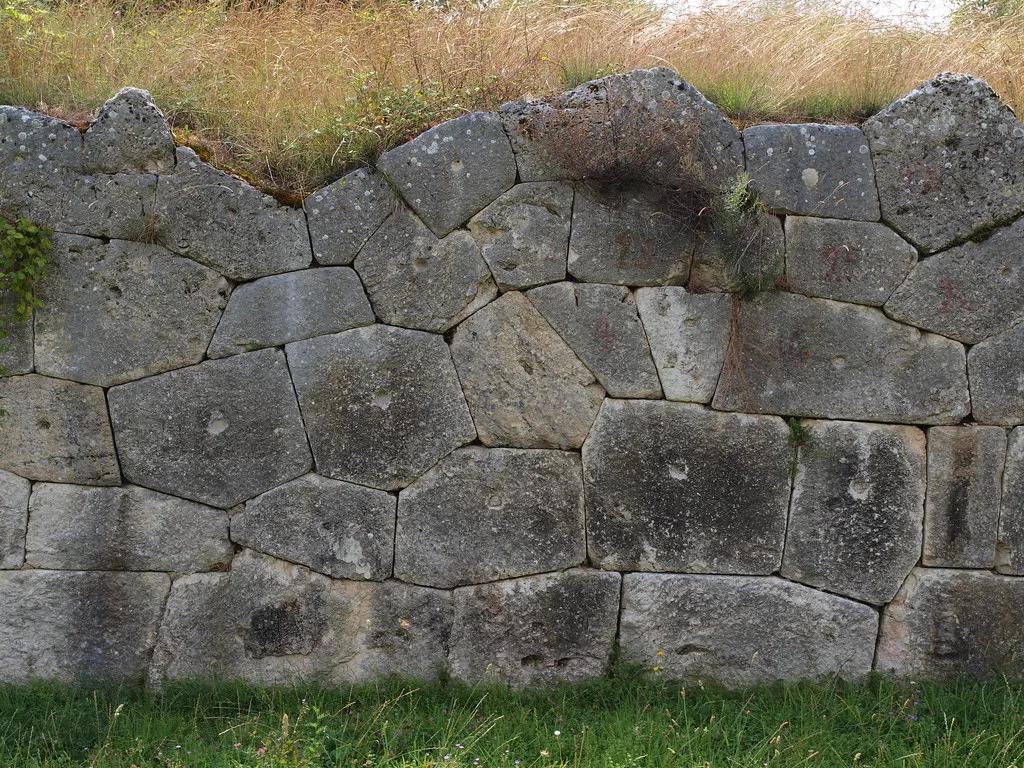
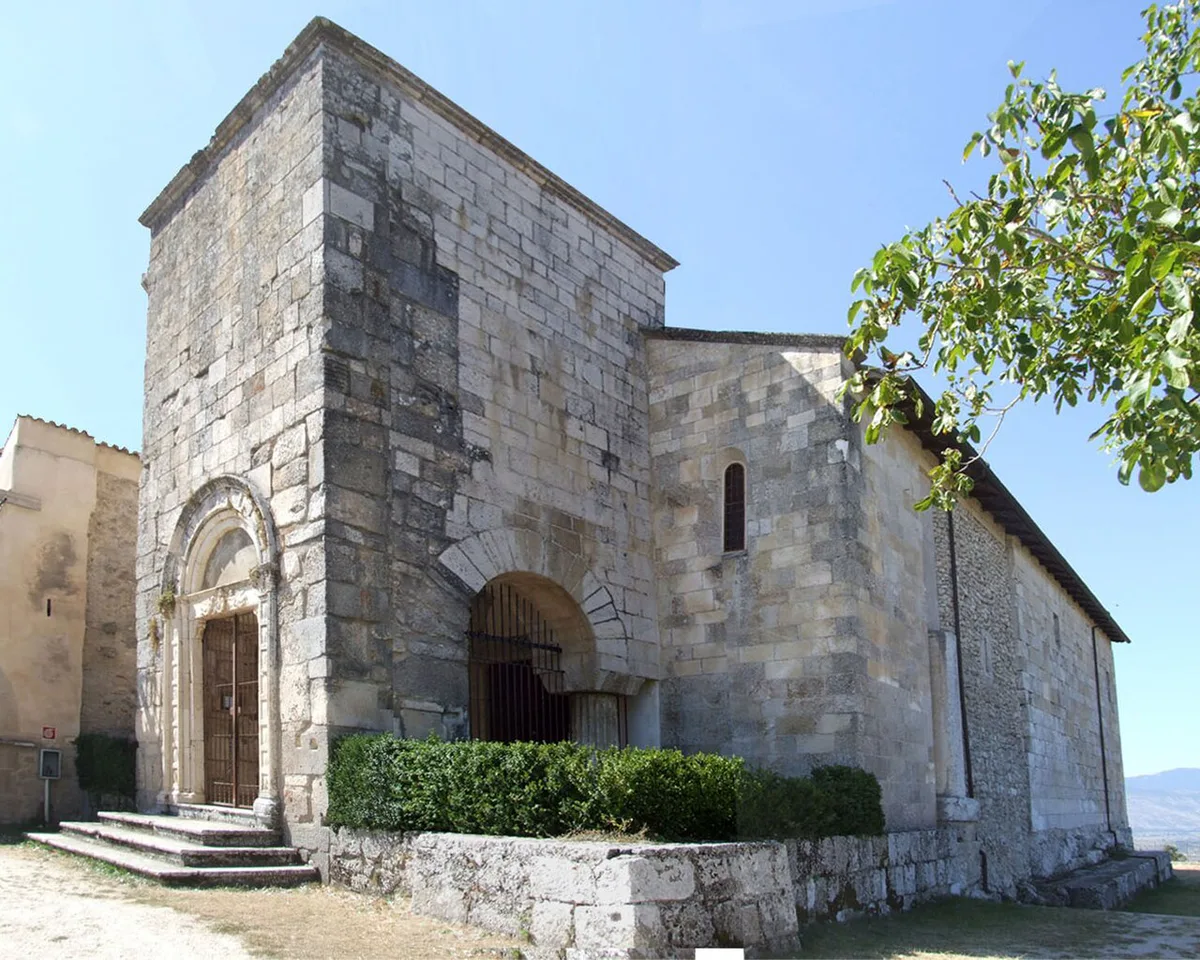
Last updated November 2026. Alba Fucens is a Latin colony founded in 304–303 BC in Abruzzo, on a hillside below Monte Velino in the comune of Massa d'Albe. Its ruins include a polygonal wall circuit of almost 3 km, a forum, a basilica, an amphitheatre and a Romanesque church built over a temple. This guide gives you a self-guided route, planning advice and other Roman sites to pair it with.
Featured image: moedermens, CC BY 2.0, via Flickr.
What Alba Fucens Is and Why Visit
Alba Fucens is an Italic site that began as a colony with Latin rights. It sits in an elevated, well-fortified position at the foot of Monte Velino. Few places in Italy let you read a Roman town plan so clearly against a mountain backdrop. It suits archaeology fans and anyone who prefers open hillsides to city-centre ruins. Our guide to Roman sites across Italy shows how it fits into the wider picture.
- Location: Massa d'Albe, province of L'Aquila, Abruzzo
- Founded: 304–303 BC as a colony
- Main features: polygonal walls, forum, basilica, theatre, amphitheatre, San Pietro church
- Terrain: hillside with slopes and uneven ground
A Short History: From Latin Colony to Ruins
The Enciclopedia Italiana entry on the site (1961) dates the colony to 304–303 BC. It describes a wall circuit of roughly 3 km, about 3 m thick, that follows soon after the founding. Some stretches belong to later periods. The town followed a Roman grid plan and was crossed by the Via Valeria. A milestone from the reign of Magnentius (350–353 AD) records a distance of 68 Roman miles from Rome. Belgian and Italian teams began excavating in 1949, and many finds went to the national antiquities museum in Chieti. Those measurements and excavation notes date from 1961, so later work may have refined them.
What to See: A Self-Guided Route Through Alba Fucens
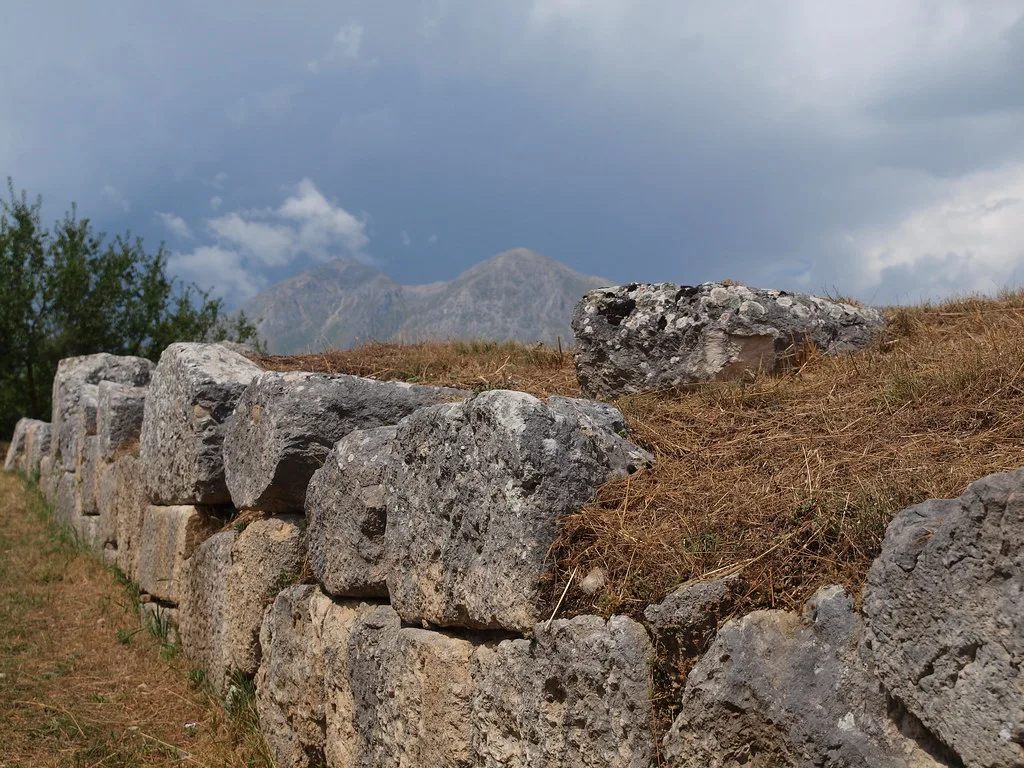
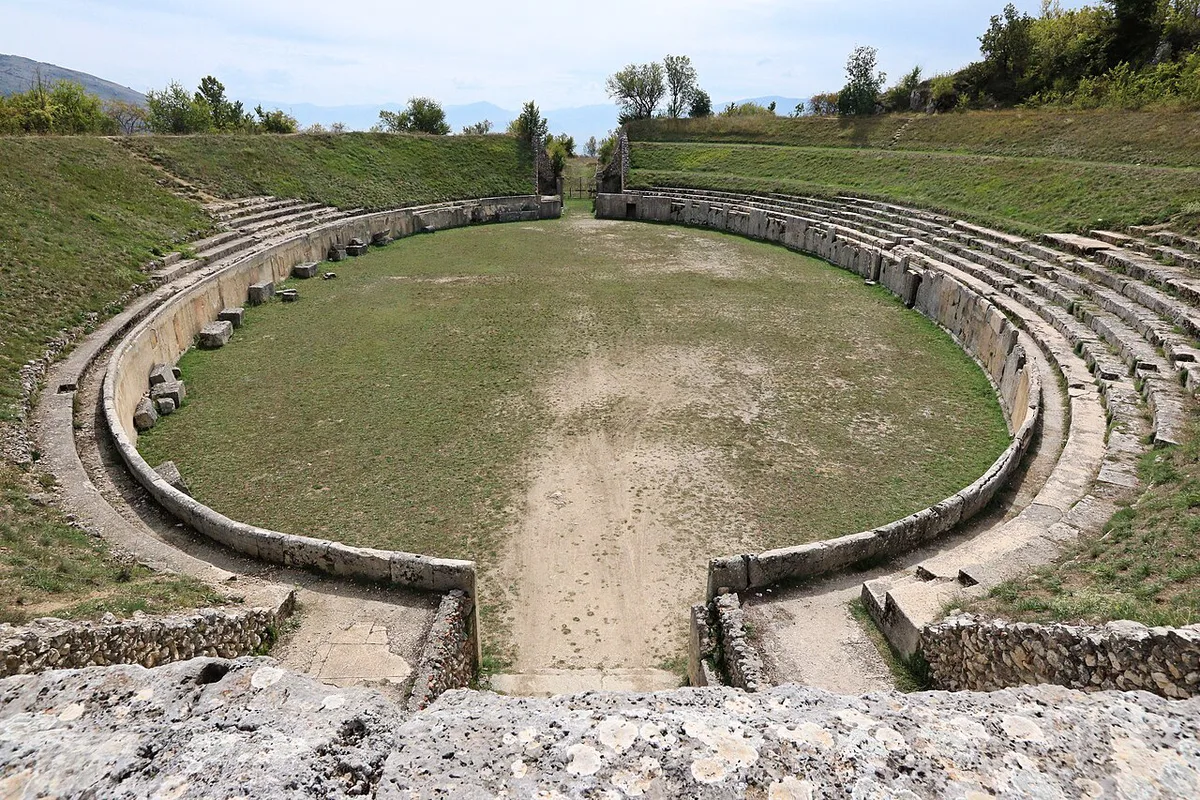
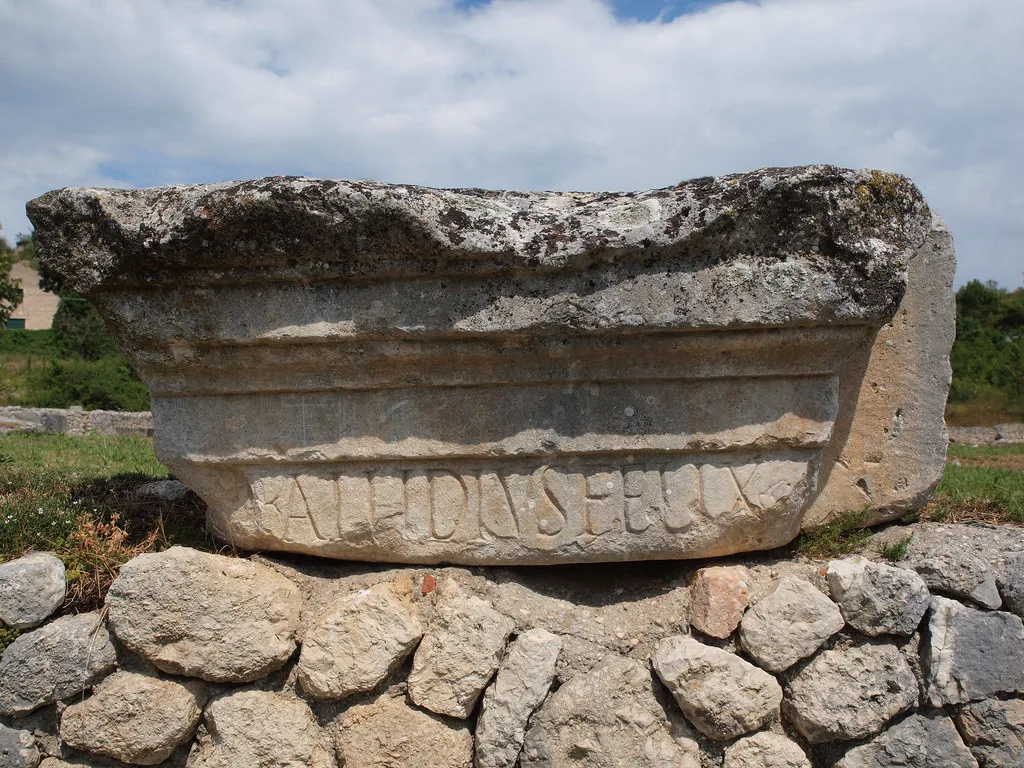
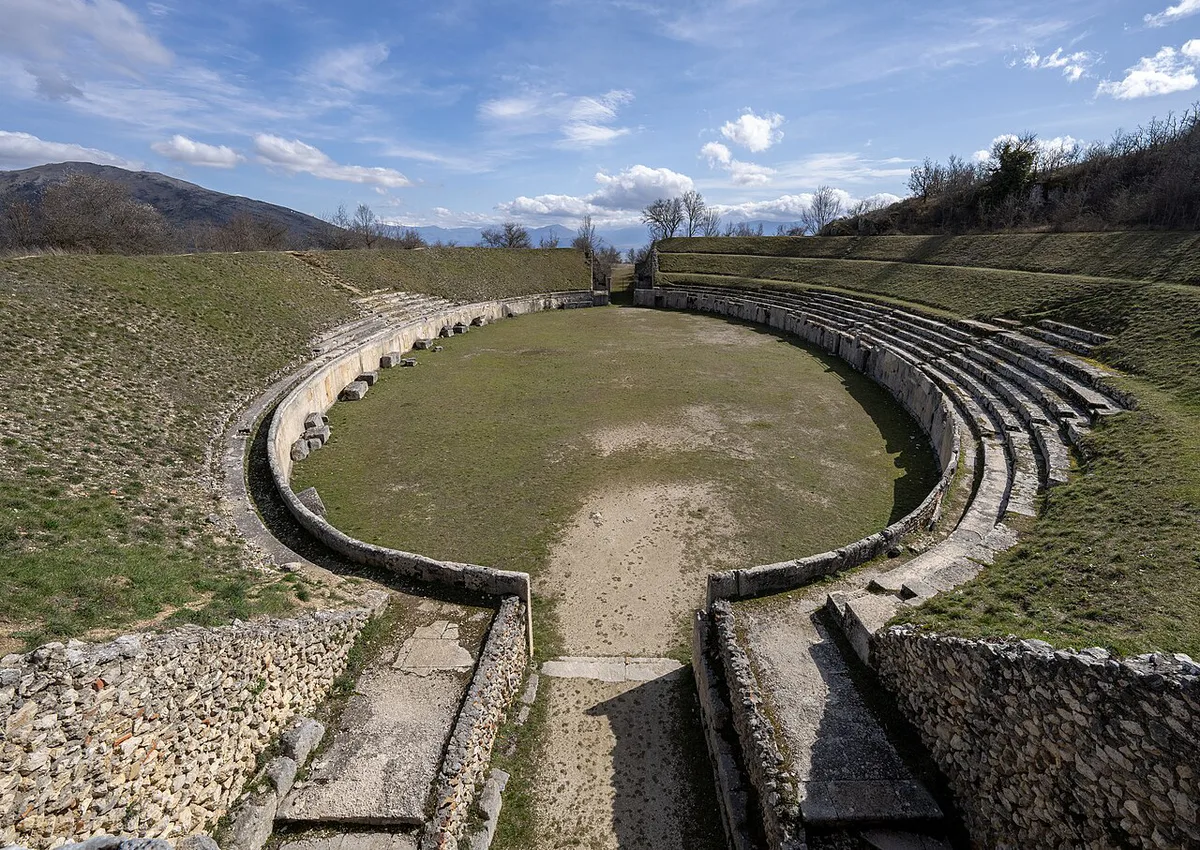
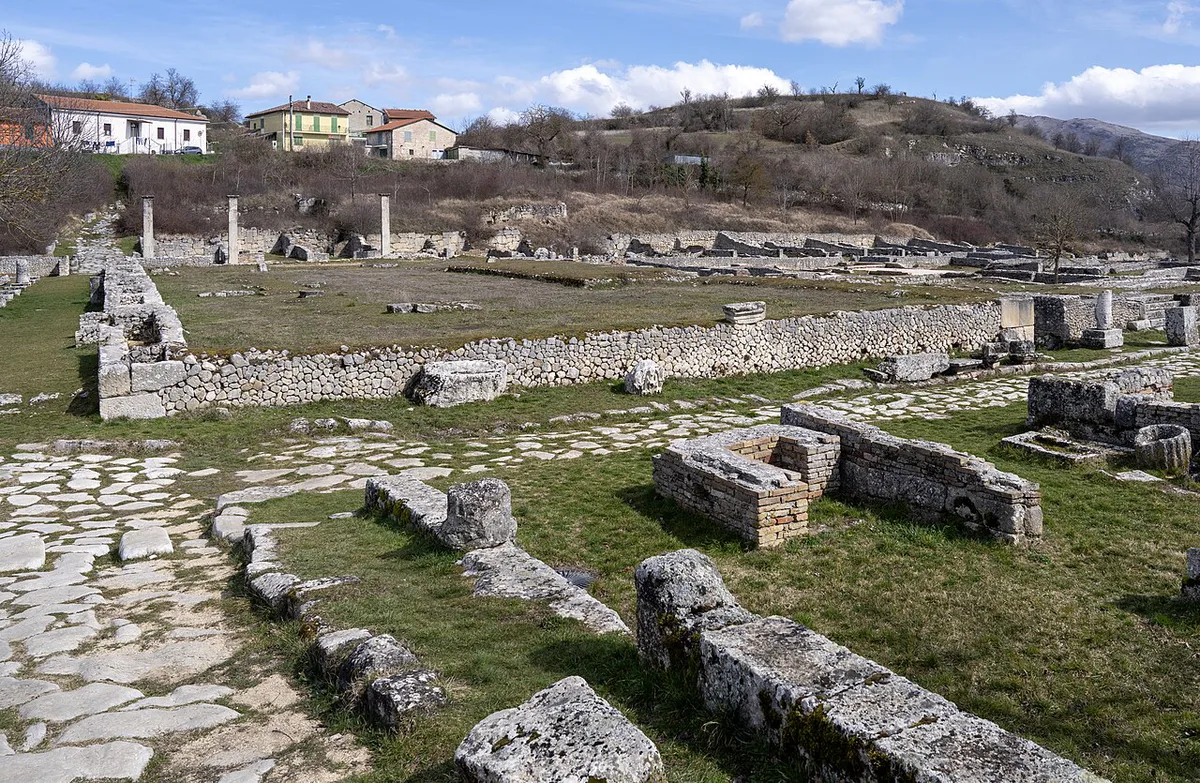
Start with the walls, because they frame everything else. Three gates still open in the circuit, named Massa, San Massimo and Fullonica. From there, drop into the low ground where the town centre stood. The forum measures about 100 × 40 m and is closed at one end by the basilica. The basilica's base is about 53 × 24 m, and four shops open from it onto a macellum, or market hall. Baths and a row of shops have also been traced along the Via Valeria. Next, climb to the slopes where the theatre and amphitheatre were cut into the hillside. The amphitheatre measures about 101 × 79 m, with entrances built in polygonal stonework. Finish on the San Pietro hilltop. The Romanesque church there stands inside a Tuscan-style temple about 21 × 13 m, attributed to Apollo from graffiti on its pilasters.
- 1. Walls and gates (Massa, San Massimo, Fullonica)
- 2. Forum and basilica in the low ground
- 3. Shops, macellum and baths along the Via Valeria
- 4. Theatre and amphitheatre on the slopes
- 5. San Pietro hilltop: church over the temple
How Much Time to Plan
Allow a short stop if you only want the forum, basilica and amphitheatre. Plan a half day if you want the full route above, including the climb to San Pietro. Walking the entire wall circuit of almost 3 km takes longer again, so pair it with a base town. The hilltop is exposed, so start early enough to leave daylight for the descent.
Tickets, Opening Hours and Rules
We have no published admission price or hours for the site. Check the Abruzzo regional museums directorate before you go, and ask the comune of Massa d'Albe about staffing and guided visits.
Getting There and Getting Around
Most visitors arrive by car, since the site lies in the comune of Massa d'Albe, close to Avezzano. Rome and L'Aquila are the obvious starting points, and the Via Valeria once linked the colony to Rome by 68 Roman miles. Look up a current road route and any bus service before you travel, as we cannot confirm one. Parking, toilets and water on site are also worth checking. Bring sturdy footwear for stone and slopes.
Via Valeria distances to Rome were counted in 68 Roman miles, so check a current road route rather than that figure.
Where to Stay and Eat Nearby
Avezzano and L'Aquila are the practical base towns for meals and lodging. Choose Avezzano if you want a short drive to the ruins. Choose L'Aquila if you want a longer trip through Abruzzo with a city stay. The Abruzzo tourism portal lists accommodation and itineraries across the region. Bring your own water and snacks for the hilltop, because food options on site are unconfirmed.
Who Should Visit and Who Can Skip
Alba Fucens rewards visitors who like reading a site from its stones and layout. It asks more effort than a city-centre ruin, and parts of it need imagination.
Even a short stop can reach the amphitheatre, which measures about 101 × 79 m, on the slopes.
| Visitor type | Effort | What you get |
|---|---|---|
| Archaeology enthusiasts | Medium to high | Walls, forum, basilica, amphitheatre, temple-church |
| Families | Medium | Open ground to explore, but slopes and uneven stone |
| Photographers | Medium | Mountain backdrop, amphitheatre, San Pietro hilltop |
| Short stop on a drive | Low | Forum and amphitheatre only |
- Do not arrive without checking whether the site is staffed.
- Do not expect a museum on site; finds went to Chieti.
- Do not wear smooth-soled shoes on uneven stone.
- Do not start the hilltop climb late in the day.
Combine It With Other Roman Sites
If you like walled hill sites, Norba's ruins make a natural next stop. For an inland town with a road link, see Saepinum's hill-town ruins. The inland Roman road and Carsulae's ruined town offer similar quiet settings. If you would rather be near the coast, the Campania sites are the contrast to Abruzzo's mountain interior.
Related guides



Continue reading
Guides on the same trip


