
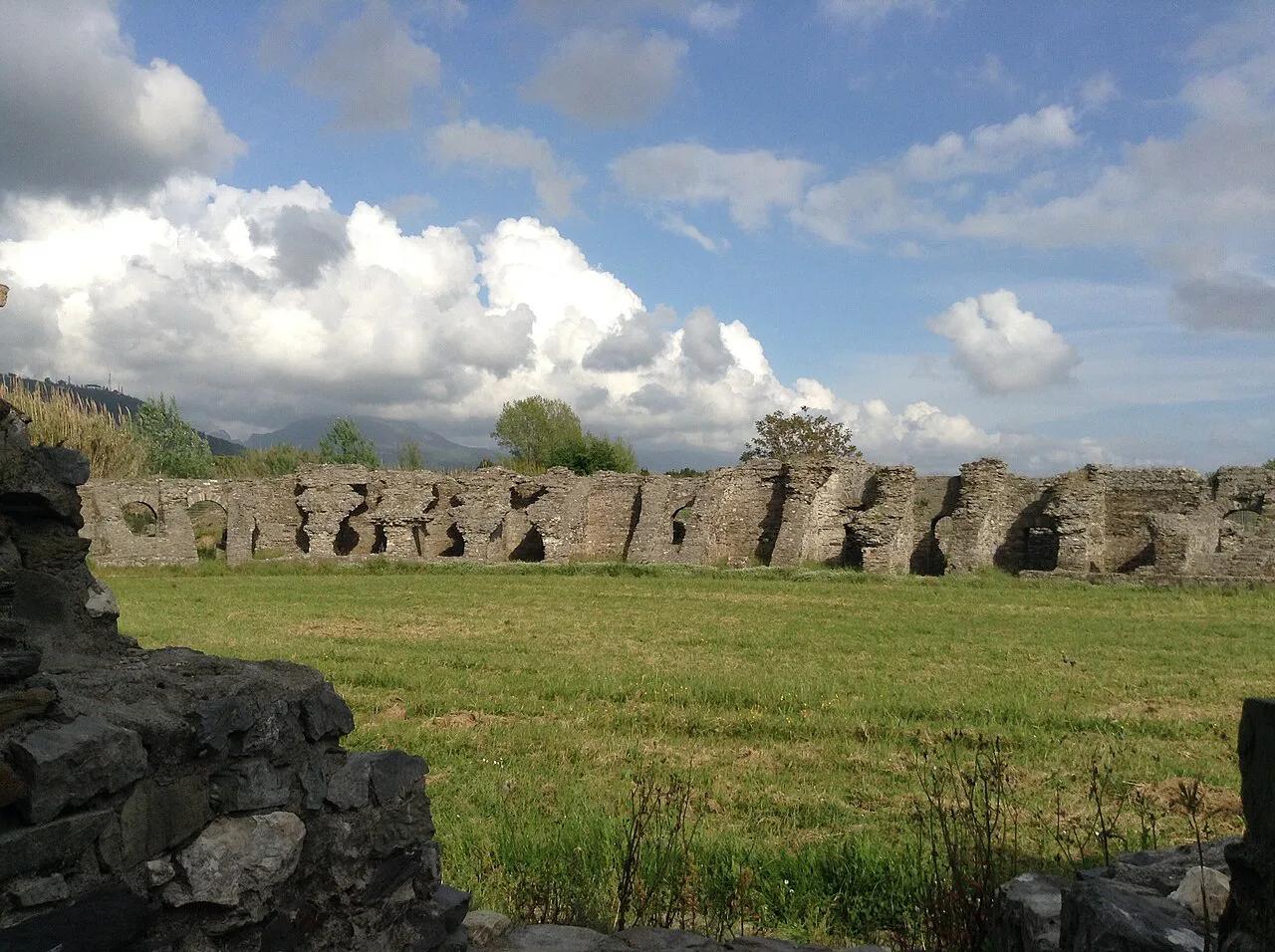
Last updated November 2026. Luni is the ancient Roman town of Luna in Italy, not a brand or an app. Romans founded the colony in 177 BC on the Ligurian-Tuscan border, near Ortonovo and Sarzana. This guide covers what survives, who should make the detour and how it fits among the 8 Roman Ruins in Italy Beyond Rome and Pompeii.
Featured image: Angela Tanania, CC BY-SA 4.0, via Wikimedia Commons.
What Luni Is (and Isn't)
Search results for "luni" are dominated by shops, apps and creators. None of them has anything to do with this site. Our subject is Luna, the Roman colony founded in 177 BC. Its remains lie close to Ortonovo and Sarzana, where Liguria meets Tuscany. Visitors today find an archaeological area with excavated structures and a national museum, not a standing ancient city.
Luni's History: From Roman Colony to Abandoned Port
Understanding why Luni is mostly foundations makes the visit easier to read. The story runs in three stages.
Founding and prosperity
Rome planted the colony of Luna in 177 BC, on the coast near the mouth of the Magra river. Its wealth came largely from the nearby Apuan Alps, where the quarries produced the white marble the Romans called marmor Lunense (today's Carrara marble). Blocks were shipped out through the town's port, and marble export is the main reason a small colony grew into a substantial town with a forum, temples, private houses and an amphitheatre.
Decline
From late antiquity the town lost ground. The port silted up, the surrounding coastal plain turned marshy, and coastal raids made life on the shore insecure. Luni survived for centuries as a diminished settlement and bishopric. In 1204 the episcopal seat moved to nearby Sarzana, which marks the point at which the town was effectively abandoned.
What this means on site
- The low walls and foundations reflect centuries of stone being reused in medieval buildings nearby, not just the passage of time.
- The amphitheatre survives better than the civic buildings because its oval footprint is still easy to read in the open ground.
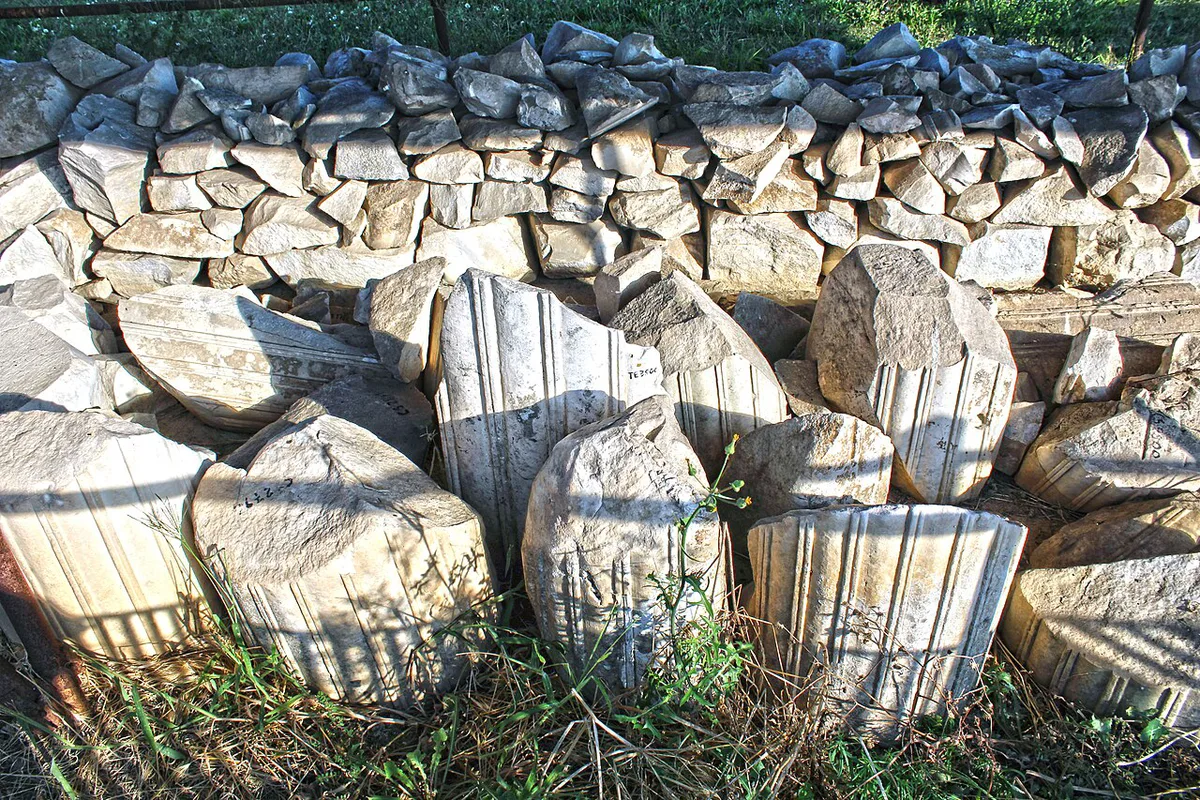
- Marble finds in the museum, including architectural fragments and sculpture, are the best evidence of the town's trade-based wealth.
If you want Roman streets and buildings that still stand, the best-preserved Roman towns are a better match. Luni is the place to see how a marble-trading port rose and faded.
What to See at the Site
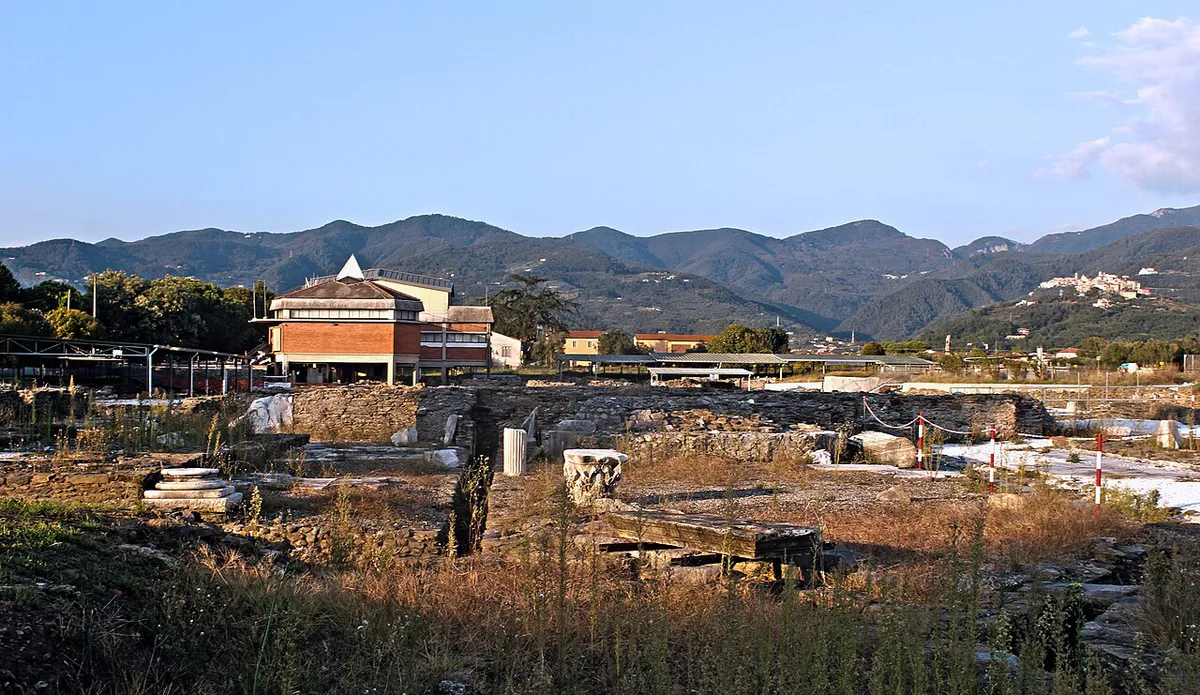
Luni rewards people who like reading a landscape. The main features are the amphitheatre, the forum and the remains of domus, the Roman town houses. The Museo Archeologico Nazionale di Luni holds finds from the town. Expect excavated foundations and low walls rather than intact monuments.
- Start at the museum to understand the town plan and its finds.
- Walk to the forum, the civic centre of the colony.
- Look at the domus remains to see how residents lived.
- Finish at the amphitheatre, the most recognisable structure.
The Amphitheatre, Forum and Capitolium in Detail
Three areas repay a closer look once you are on the ground, because the signage is sparse and the stones need a little interpretation.
The amphitheatre
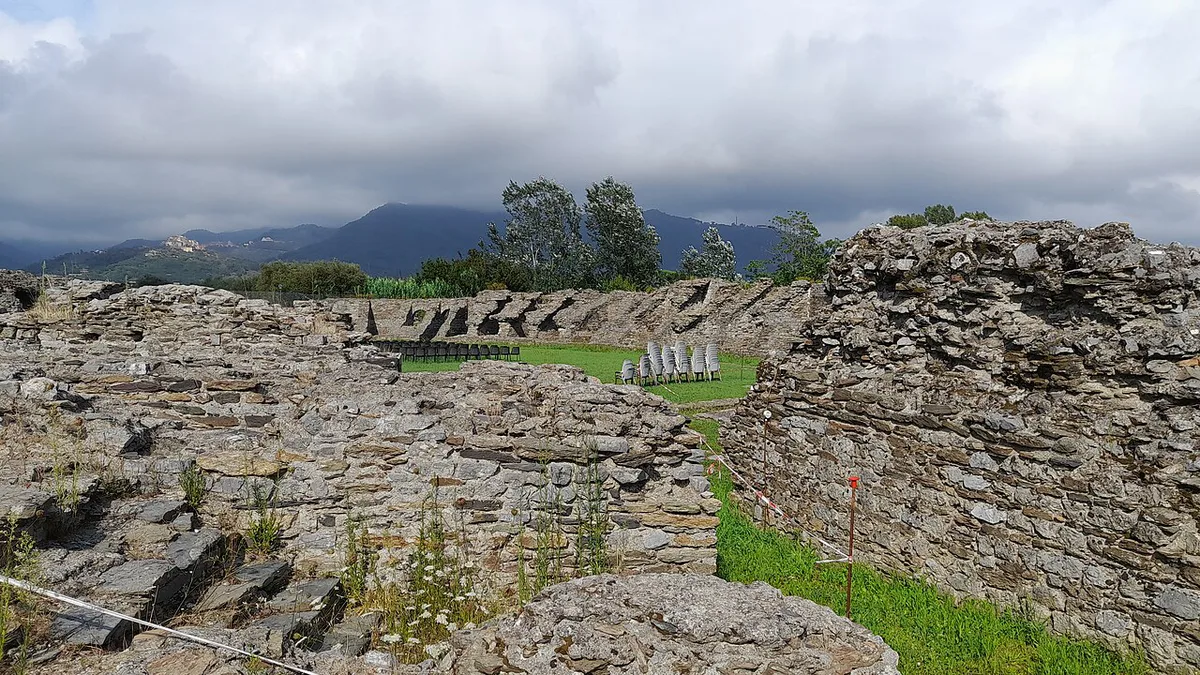
The oval arena is the clearest shape on the site. It dates to the early imperial period and was large for a colony of this size, with seating usually estimated at several thousand. Walk the rim first, then drop to the arena floor to see how the ground plan is laid out. Little of the upper tiers survives, so expect an outline rather than stepped stone seating.
The forum and Capitolium
The forum was a rectangular civic square. On its north side stood the Capitolium, the main temple dedicated to Rome's chief gods. Today you see the platform and foundations, not columns. Standing at the edge of the paved area and looking toward the temple platform makes the original layout easier to grasp.
The domus
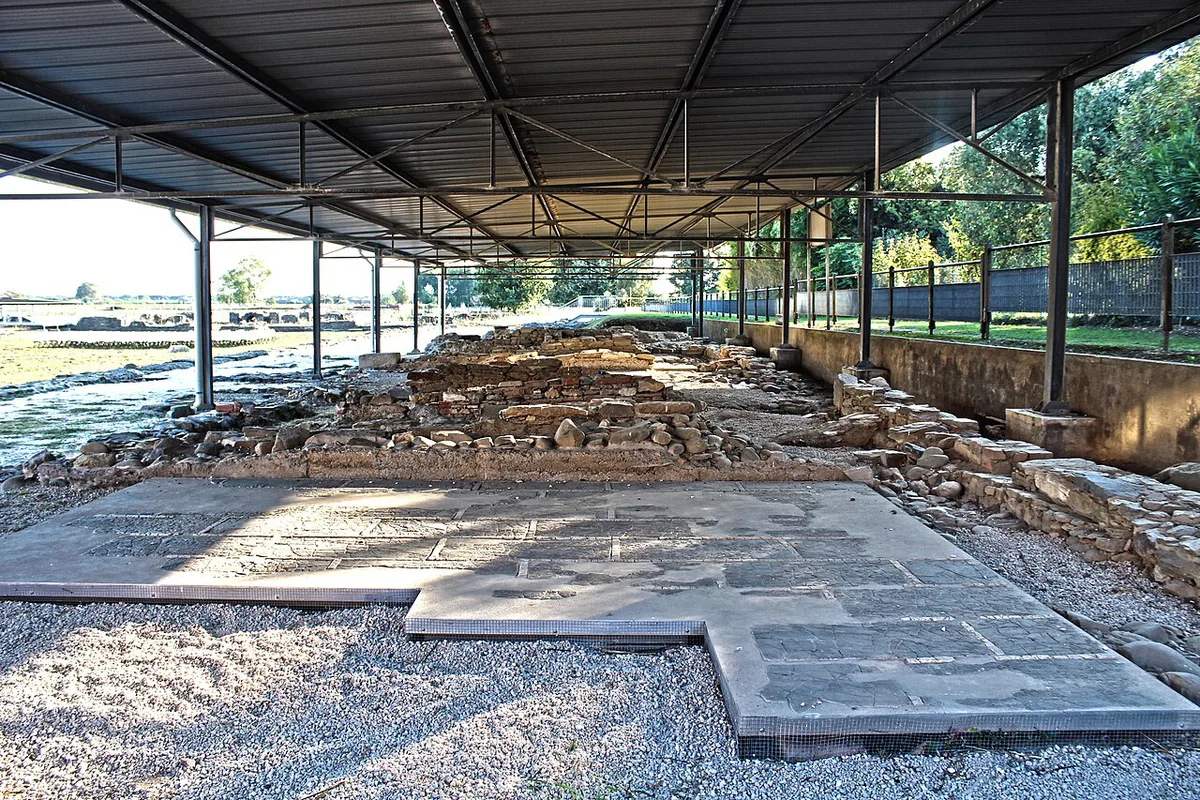
The excavated houses show room divisions and, in places, floor decoration. Mosaic and wall-painting finds are kept in the museum rather than left exposed, so link what you see outdoors with the cases inside.
- Best light: morning or late afternoon, when low sun brings out the outline of the foundations.
- Footwear: the ground is open grass and uneven stone, so wear sturdy shoes.
- Shade: there is little cover in summer, so carry water.
Is Luni Worth the Detour?
Luni suits travellers who already enjoy archaeology or are crossing the Ligurian-Tuscan border by car. It is a poor match for anyone expecting a Colosseum-style monument. If you only have 60 minutes, spend them on the museum and the amphitheatre.
| Traveler type | Fit | Why |
|---|---|---|
| Archaeology fan | Strong | Forum, domus and museum finds in one stop |
| Family with children | Moderate | Open ground suits short walks, but little is intact |
| Short-stay coast visitor | Limited | Better as a add-on than a main stop |
| Driver | Good | Easy to fold into a Liguria-Tuscany drive |
| Public-transport traveler | Plan ahead | Last-mile access needs checking |
Getting There and Getting Around
Sarzana and Ortonovo are the nearest towns. Check current rail, bus and parking details on the Liguria tourism site.
Tickets, Opening Hours and Seasonal Notes
Hours and fees for the museum and the open area can differ and change by season. Check the current schedule through Musei Liguria before you go.
How Long to Allow and Combining Stops
Allow a half-day at most, with the museum as the anchor. Pair Luni with other Roman coastal sites for context. Cosa and Ansedonia show another Roman colony on the Tuscan coast. For Roman roads, see the Via Flaminia, though we do not claim it lies near Luni.
Under 60 minutes, the museum and amphitheatre are the stops to keep, and a half-day remains the ceiling for the whole visit.
Marble, Sarzana and the Wider Area Around Luni
Luni makes more sense as part of a wider day, because the Roman story here is really a story of marble. Two nearby places help complete it.
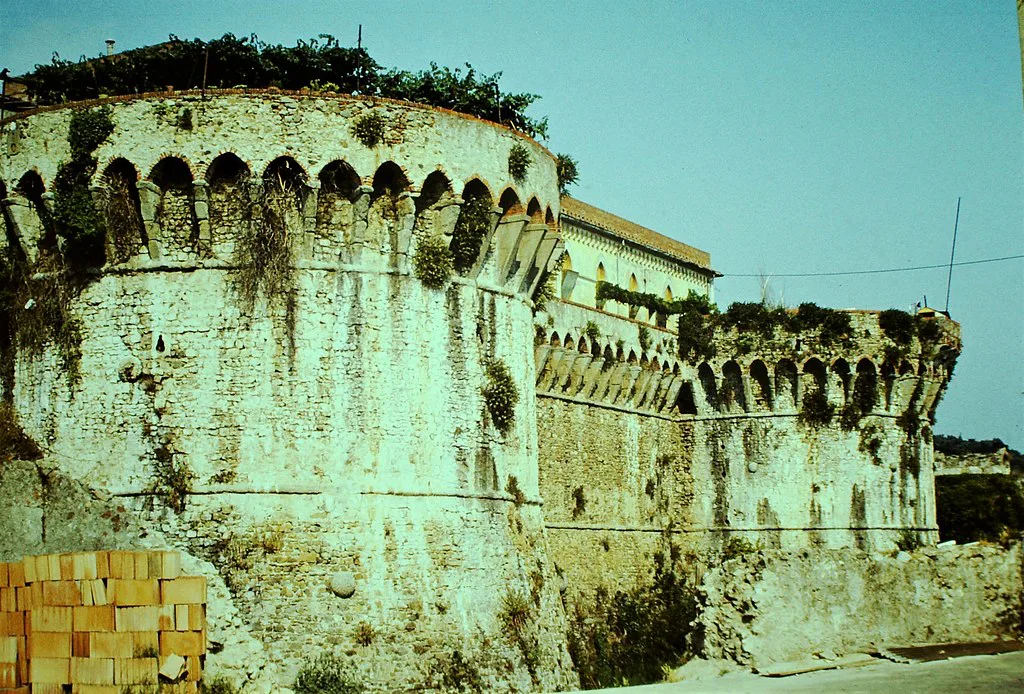
- Sarzana: the medieval town that took over from Luni after the bishop's seat moved in 1204. Its old centre, cathedral and Fortezza Firmafede are an easy follow-up on foot, and the town has far more cafes and restaurants than the ruins area.
- The Apuan Alps quarries: the source of the marble that made Luni rich. Carrara, a short drive south-east, is the usual base for seeing the working quarries and the marble museum there. Check opening times and tour availability locally before you set out.
A sensible order is the Roman site and museum in the morning, lunch in Sarzana, then the marble country in the afternoon if you are driving. Without a car, the quarries are harder to reach, so keep the plan to Luni and Sarzana.
If you are building a longer trip around ancient sites, our guide to ancient ruins in Europe shows where else a day like this fits.
Common Mistakes
Do not assume the site and museum open on the same days all year. Do not arrive expecting standing temples. Do not search the bare name "luni", which returns brands and apps. Add "Roman ruins" or "archaeological area" to your search.
Where Luni Fits Among Italy's Roman Sites
Luni is a small colony site, so scale matters. Aquileia is a larger northern Roman city. Rimini's Roman sites offer another colony comparison. Mountain travellers can look at Aosta's Roman remains. Inland, Carsulae adds a ruined town in open countryside. The full Roman ruins guide helps you choose between them.
Founded in 177 BC, Luni is a small colony, so choose Aquileia if you want a larger northern Roman city.
Related guides



Continue reading
Guides on the same trip



