
Giants' Tombs Sardinia: What They Are and Which to Visit
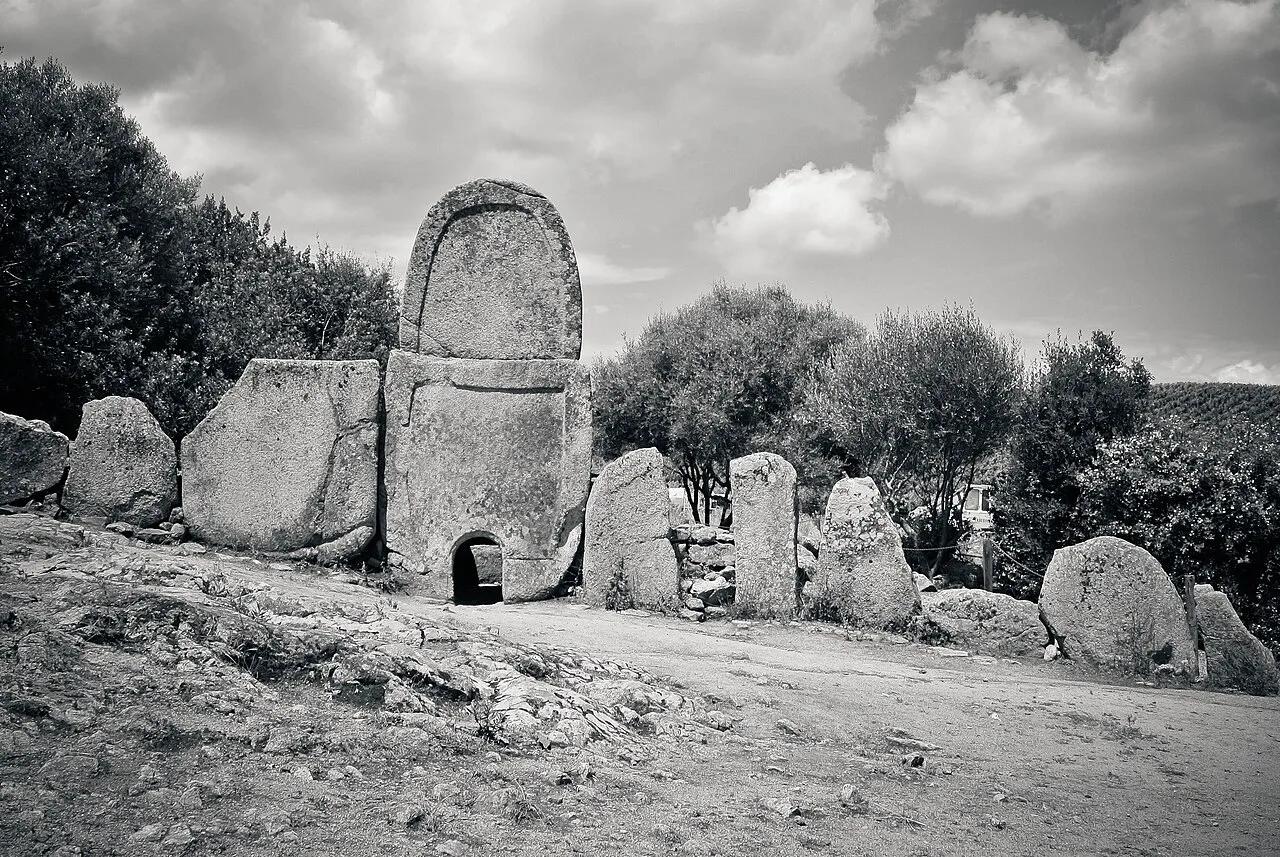
Last updated November 2026: giants tombs Sardinia visitors search for are Nuragic collective burial monuments, marked by a long, curved stone forecourt and a tall central stele. Their name comes from their scale and from legend, because no giants have ever been found. This guide explains how to recognise one, which are worth a detour, and how to plan around access.
Featured image: Pablo Rende, CC BY-SA 3.0, via Wikimedia Commons.
What Are Giants' Tombs in Sardinia?
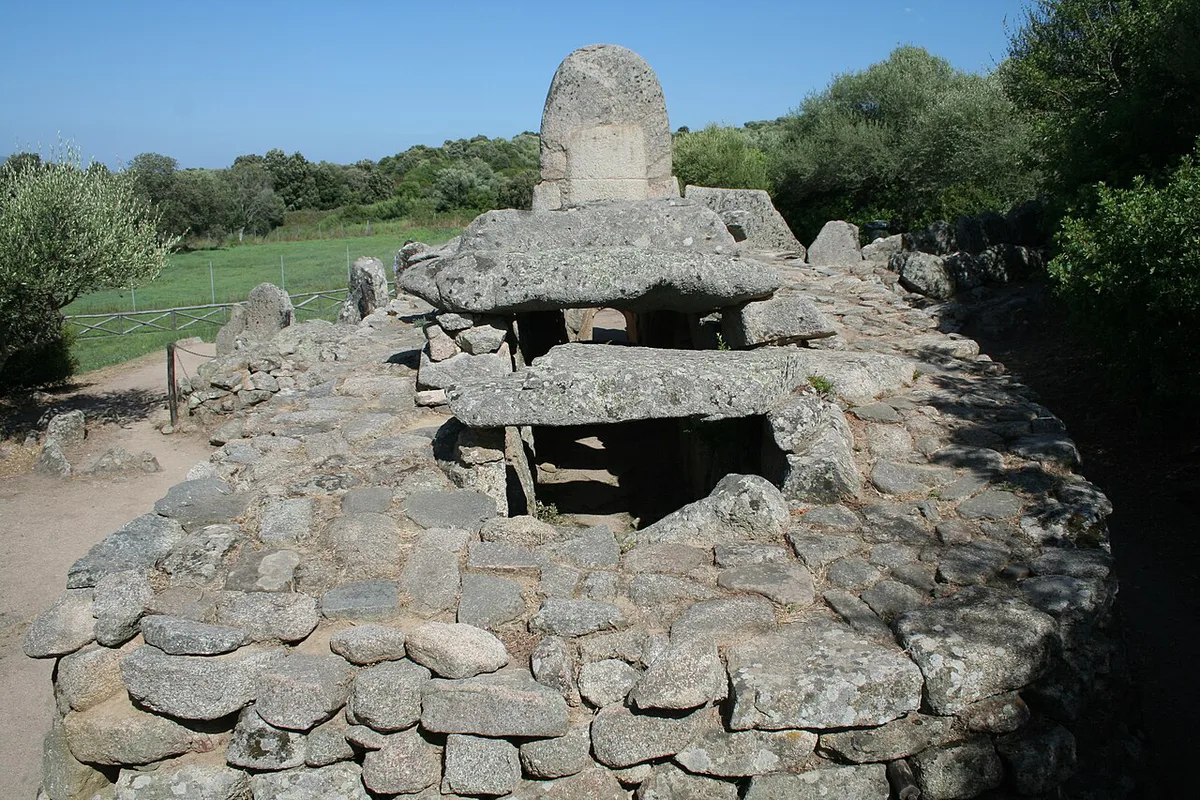
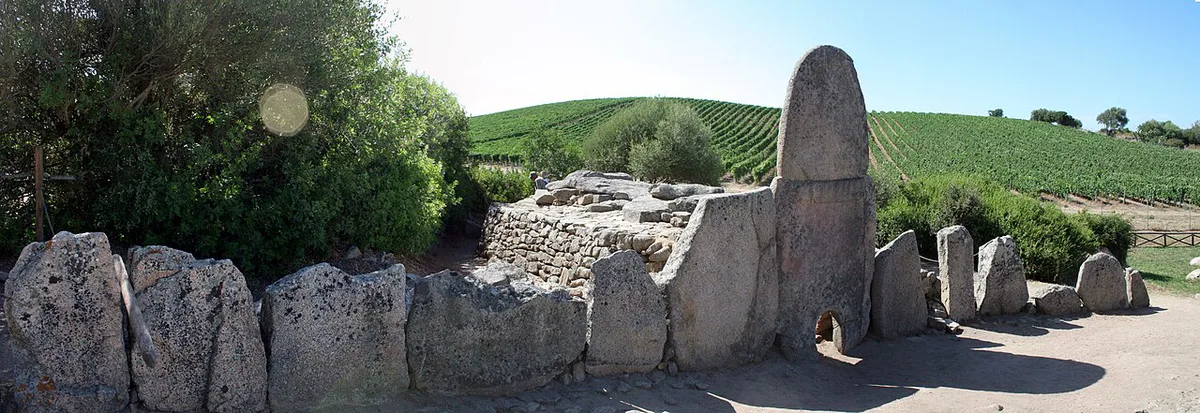
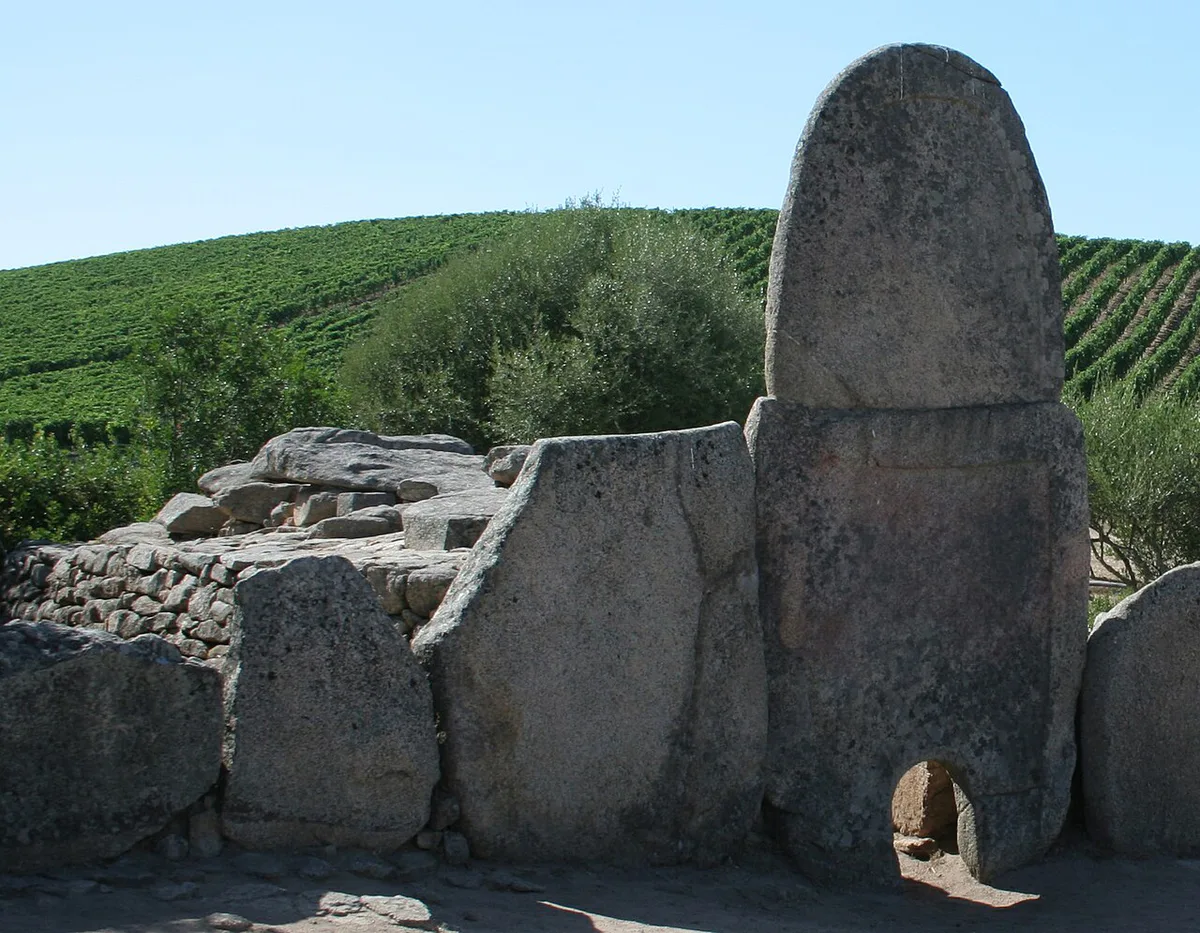
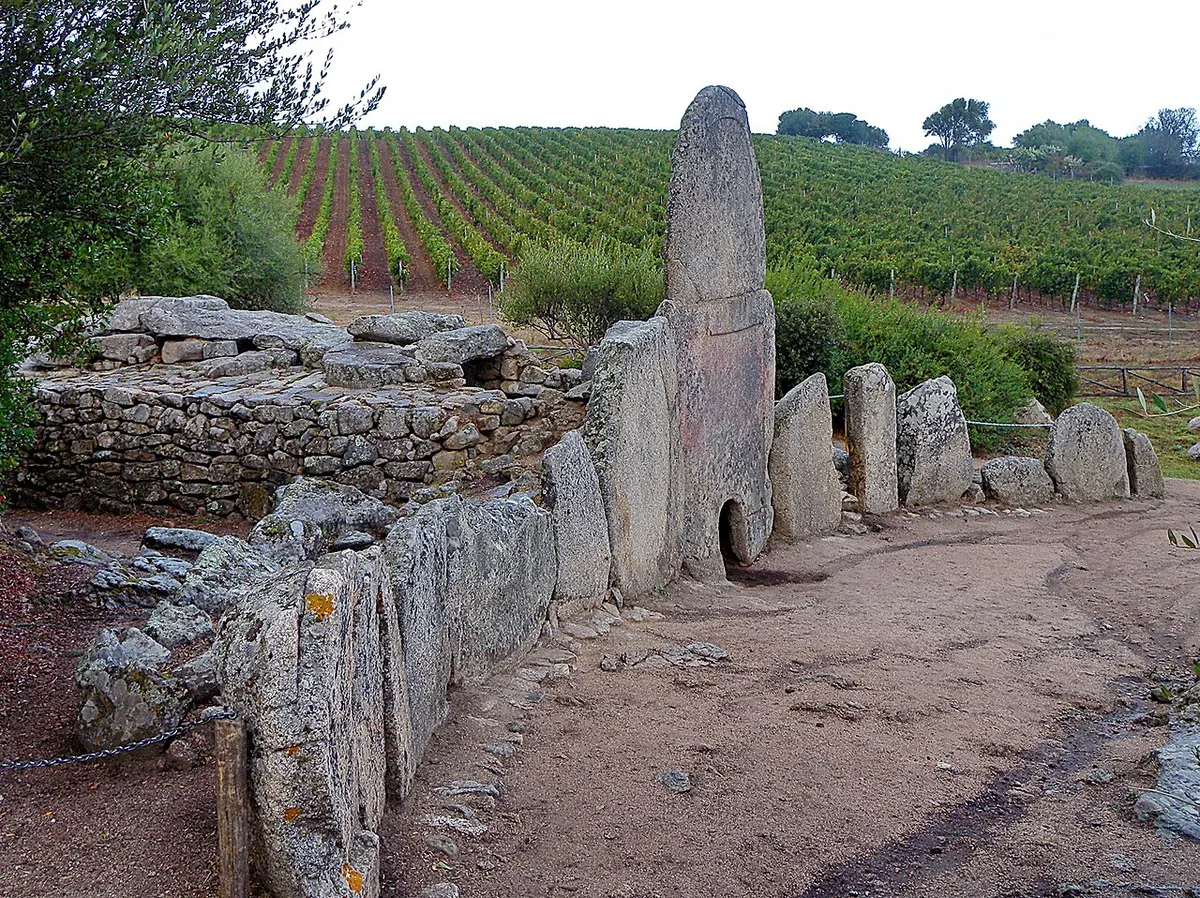
A giants' tomb (tomba dei giganti) is a collective grave built by the Nuragic civilization in the Bronze Age, roughly the second millennium BC. Builders set a curved, stone-lined forecourt, called an exedra, in front of a long burial chamber. A tall stele stands at the centre of the facade.
Local legend gave the monuments their name, because the structures look made for people of enormous size. No giant remains have been found. Raffaele Pettazzoni (1883–1959), an Italian historian of religions, read the legend differently. He linked it to an incubation rite at the tombs of ancestor-heroes, where sleepers were said to rest for five days and five nights. Treat that as one scholar's interpretation, not settled fact.
Giants' tombs are not the same as a nuraghe. Sardinia's nuraghe towers were built as towers and settlements, while these are graves. They also differ from the earlier rock-cut chamber tombs, which were carved into rock rather than built from stone.
How to Recognise a Giants' Tomb on Site
Many sites have little on-site explanation, so a short checklist helps. Read up first, starting with the regional culture portal.
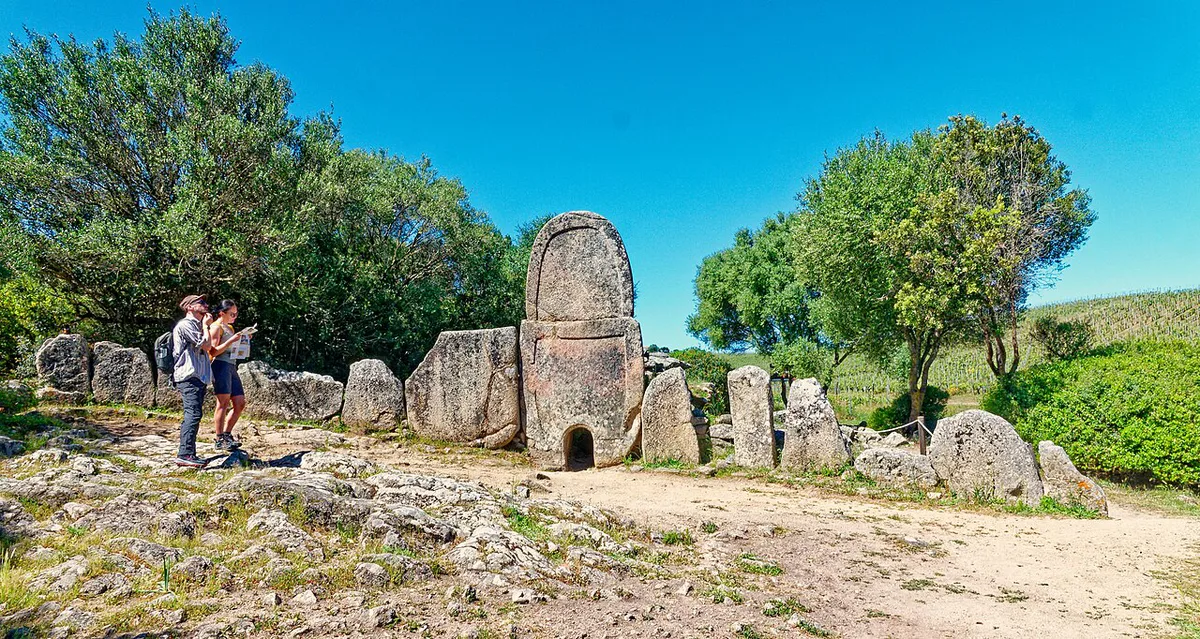
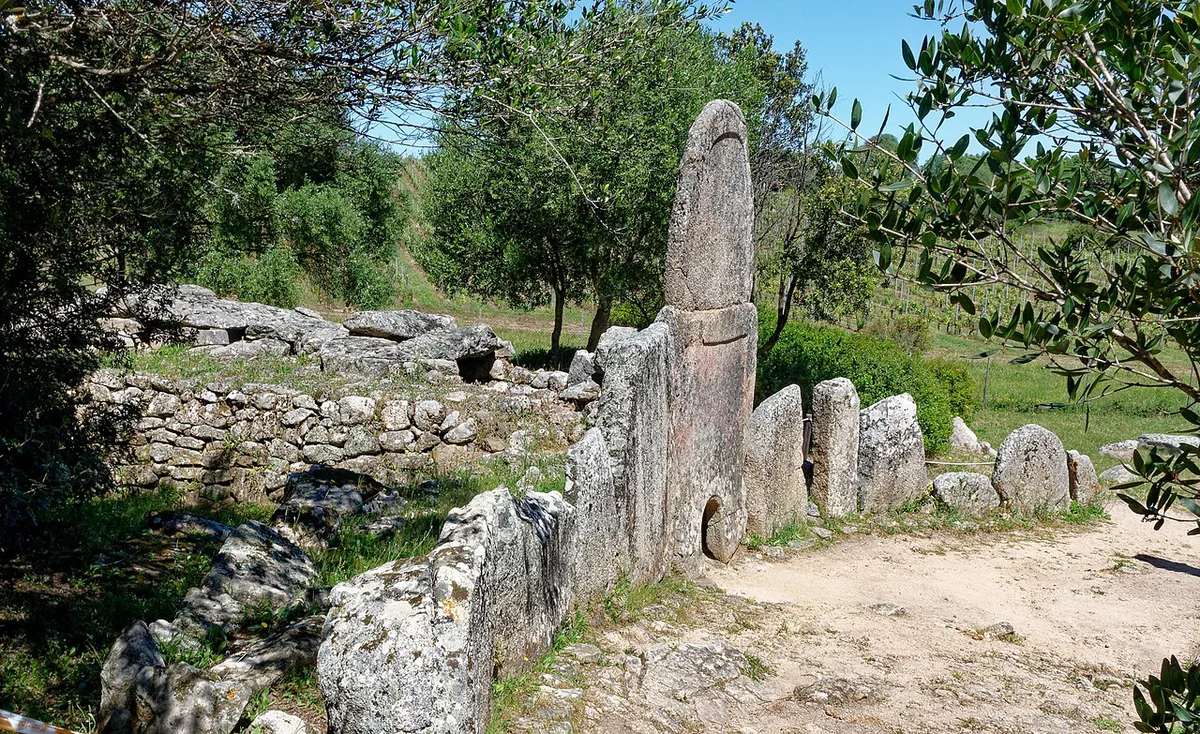
- Forecourt: a wide, curved arc of upright or stacked stones facing outward.
- Stele: a tall central slab at the middle of the facade, often the most visible feature.
- Chamber: a long, narrow stone-built corridor running back from the stele.
- Stone shapes: look for the way the facade stones are set side by side, since this makes the curve easy to read.
Which Giants' Tombs Are Worth Visiting
This is a selection, not a full list. Access, signage and condition vary between sites, so check locally before you commit a drive to any of them.
| Site | Area | Best for | Skip if |
|---|---|---|---|
| Coddu Vecchiu | Arzachena, northeast | Northeast itineraries that already pass through Arzachena | You are staying far from the northeast |
| Barrancu Mannu | Santadi, southwest | Southwest routes that need a burial-monument stop | You want a site with guided interpretation |
| San Cosimo | Gonnosfanadiga | Travellers who want a lesser-known tomb in the southwest | You dislike navigating to unsigned sites |
| Iloi | Sedilo | Inland routes through central Sardinia | You only have a coastal base |
| Conca 'e Pira Onne (Padru su Chiai) | Villagrande Strisaili, east | Trips into the east of the island | You need a short, easy stop |
Planning Trade-Offs: Time, Access and Effort
Staffed sites give context, while open-air ones give freedom and little explanation. A car is likely the practical way to reach remote tombs, so check a map and local transport before you rely on buses. Wear sturdy shoes, since paths at unstaffed sites can be rough. Shade can be scarce, so carry water.
Route by region rather than by distance. Cluster your stops using the areas in the table above.
- Half a day: choose one tomb near your base and add a nearby Nuragic site in the same area.
- Full day: stay inside one region, such as Arzachena in the northeast or Santadi and Gonnosfanadiga in the southwest.
- One week: plan around regions in order, northeast, then central Sedilo, then the east around Villagrande Strisaili, then the southwest.
- Mistake to avoid: expecting museum-style interpretation at every site.
- Mistake to avoid: trusting a map pin without checking the site's current status.
- Mistake to avoid: arriving at an unshaded tomb without water.
Costs, Tickets and Opening Hours
We have no confirmed ticket prices or opening hours for these tombs. Check the Sardegna Turismo site and the local municipality before you go.
Combine Giants' Tombs With Other Nuragic Sites
Pairing a tomb with a settlement or sacred site gives the burial monuments their context. Each stop below adds something different.
- Su Nuraxi's nuraghe complex: a towered settlement rather than a grave.
- Santu Antine tower: a nuraghe, useful for comparing living and burial architecture.
- Losa nuraghe: another tower to set beside the tombs.
- Sacred well at Santa Cristina: a Nuragic ritual site, not a tomb.
- Serra Orrios village: shows how Nuragic people lived.
- Mont'e Prama statues: a separate "giants" topic, so do not confuse them with the tombs.
- Wider Sardinian ruins: a broader overview across periods.
- Tharros and Nora: Phoenician and Roman sites, a different period if you want contrast.
What the Giants’ Legend Means
The word “giants” is a legend, not evidence that unusually large people were buried here. The name reflects the imposing scale of the stone façades and burial chambers. It can help to separate that story from the archaeology while you explore.
Raffaele Pettazzoni (1883–1959), an Italian historian of religions, proposed one interpretation of the tradition. He connected the tombs with ancestor-heroes and an incubation rite. In this account, people slept at a tomb for 5 days and 5 nights in hope of a meaningful dream or encounter.
That idea remains an interpretation rather than an established description of Nuragic ritual. The visible monument still gives the clearest starting point: the curved exedra faces outward, while the long chamber behind it was built for collective burial. Read the legend as part of Sardinia’s cultural memory, but do not mistake it for proof that giants existed.
Related guides



Continue reading
Guides on the same trip



