
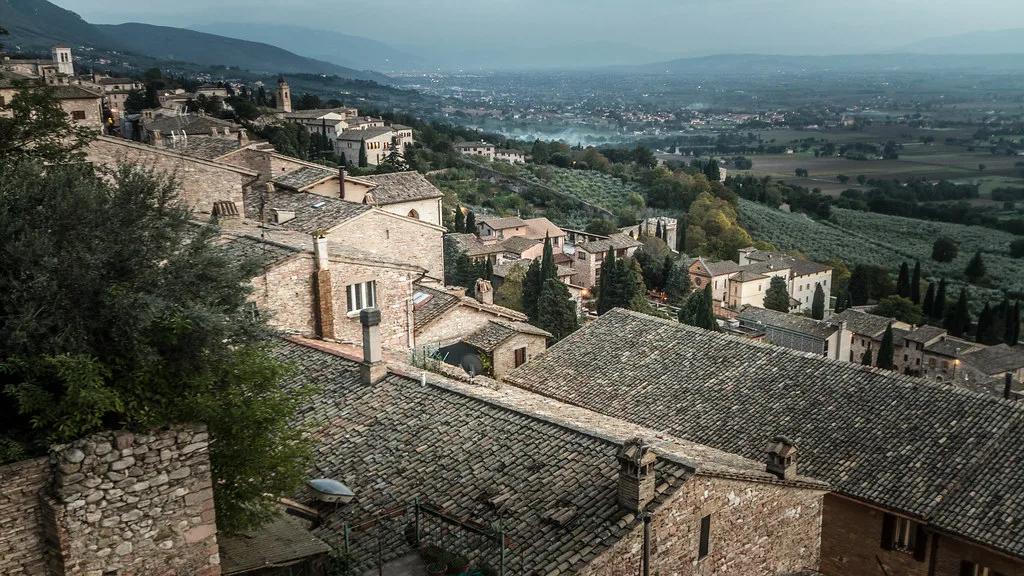
Last updated November 2026: who were the Etruscans? They were a pre-Roman civilization of Etruria, organized as independent city-states and known for painted tombs, metalwork and sea trade. Etruria covered modern Tuscany, northern Lazio and parts of Umbria, and you can still walk through their necropolises, hill towns and museums.
Featured image: Nicola since 1972, CC BY 2.0, via Flickr.
Who Were the Etruscans? Quick Facts
Etruria is the name for their homeland between the Tiber and the Tyrrhenian coast. A necropolis, from the Greek for "city of the dead", is a cemetery laid out like a town. Tradition describes a league of 12 cities, but each city ran its own affairs and none ruled the others.
- Region: Etruria, roughly modern Tuscany, northern Lazio and parts of Umbria.
- Government: independent city-states rather than one kingdom.
- Language: written in an alphabet adapted from Greek. Many inscriptions can be read aloud, but vocabulary is only partly understood.
- Self-name: Rasenna is the form usually given by scholars.
- Rome: a neighbor, rival and eventually the power that absorbed Etruscan cities.
Where Did the Etruscans Come From?
Ancient writers and modern scholars disagree. One view holds that the Etruscans developed locally from earlier Italian communities. Another proposes that migrants arrived by sea from the eastern Mediterranean. Neither theory has settled the question, so treat any confident one-line answer with caution. What the tombs and museums show is a culture that was clearly Italian in its setting and open to Greek and eastern influence through trade.
Etruscan Timeline: Key Dates From 900 BC to the Roman Era
Dates for the Etruscans are approximate until the Roman period, because most evidence comes from tombs rather than written histories. This outline uses the periods most scholars and museums use.
| Period | Approximate dates | What was happening |
|---|---|---|
| Villanovan culture | c. 900-700 BC | Early Iron Age communities in central Italy, cremating their dead in urns. Often treated as the direct precursor of the Etruscans. |
| Orientalizing period | c. 700-600 BC | Wealth from metals and trade, rich princely tombs and growing Greek and eastern influence. |
| Archaic peak | c. 600-480 BC | The city-states are at their strongest, with large painted tombs and wide sea trade. |
| Pressure from rivals | c. 474-396 BC | Syracuse defeats an Etruscan fleet at Cumae in 474 BC. Rome captures Veii in 396 BC. |
| Absorption by Rome | c. 350-264 BC | City after city makes peace, alliance or submission. Volsinii, the last major city to resist, falls in 264 BC. |
| Roman citizenship | 90-89 BC | Citizenship is extended to Italian allies, and Etruscan communities become Roman in law. |
The sequence explains what you see on site. The most lavish painted tombs at Tarquinia and Cerveteri date from the centuries of independence. Many later urns and sarcophagi in museums such as Volterra's Guarnacci collection come from a period when the cities were already under Roman influence.
Etruscan culture did not vanish overnight. Priests continued to practice Etruscan divination into the Roman Empire, and the emperor Claudius is recorded as having written a history of the Etruscans, now lost.
How the Etruscans Lived: Cities, Trade, Religion and Women
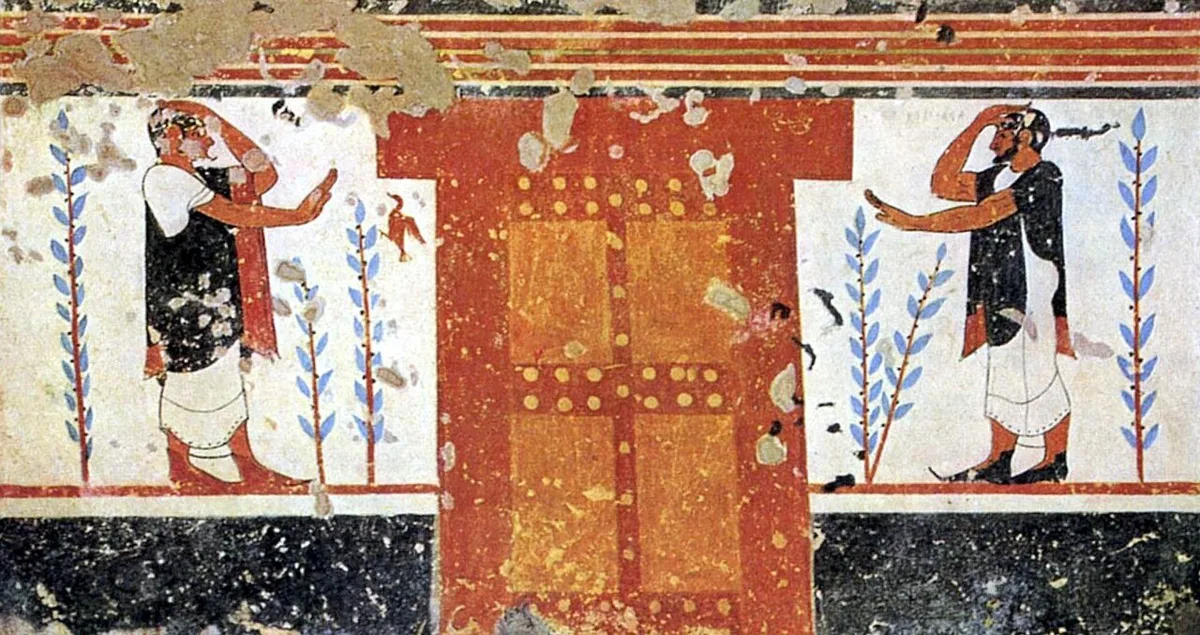
Etruscan cities sat on defensible tufa plateaus, such as the hilltop town of Volterra. Trade in metal ore, bronze and pottery connected them to Greek and Mediterranean markets. Religion shaped daily life, and priests read omens in thunder and animal organs. Belief in an afterlife explains the elaborate Etruscan Tombs in Italy: Which to Visit and How, which copy the rooms of a house. Wall paintings show banquets, music and dancing. Women appear at those banquets beside men, which struck Greek observers as unusual. Bronzes, mirrors and painted ceramics from these tombs now fill museum cases.
How Rome and the Etruscans Were Connected
Rome lay just south of Etruria and learned from its neighbors. Ancient writers credit Etruscan culture with shaping some Roman religious ritual and public display. Treat such claims as measured influence, not a hidden story. Rome grew stronger over time and took Etruscan cities one by one, through conquest and later through alliance and citizenship. Greek naval rivals and Celtic movements in the north also weakened Etruscan power. By the late Republic, Etruria was Roman in law and language. Its tombs, walls and local museums are what survive.
Where to See the Etruscans Today
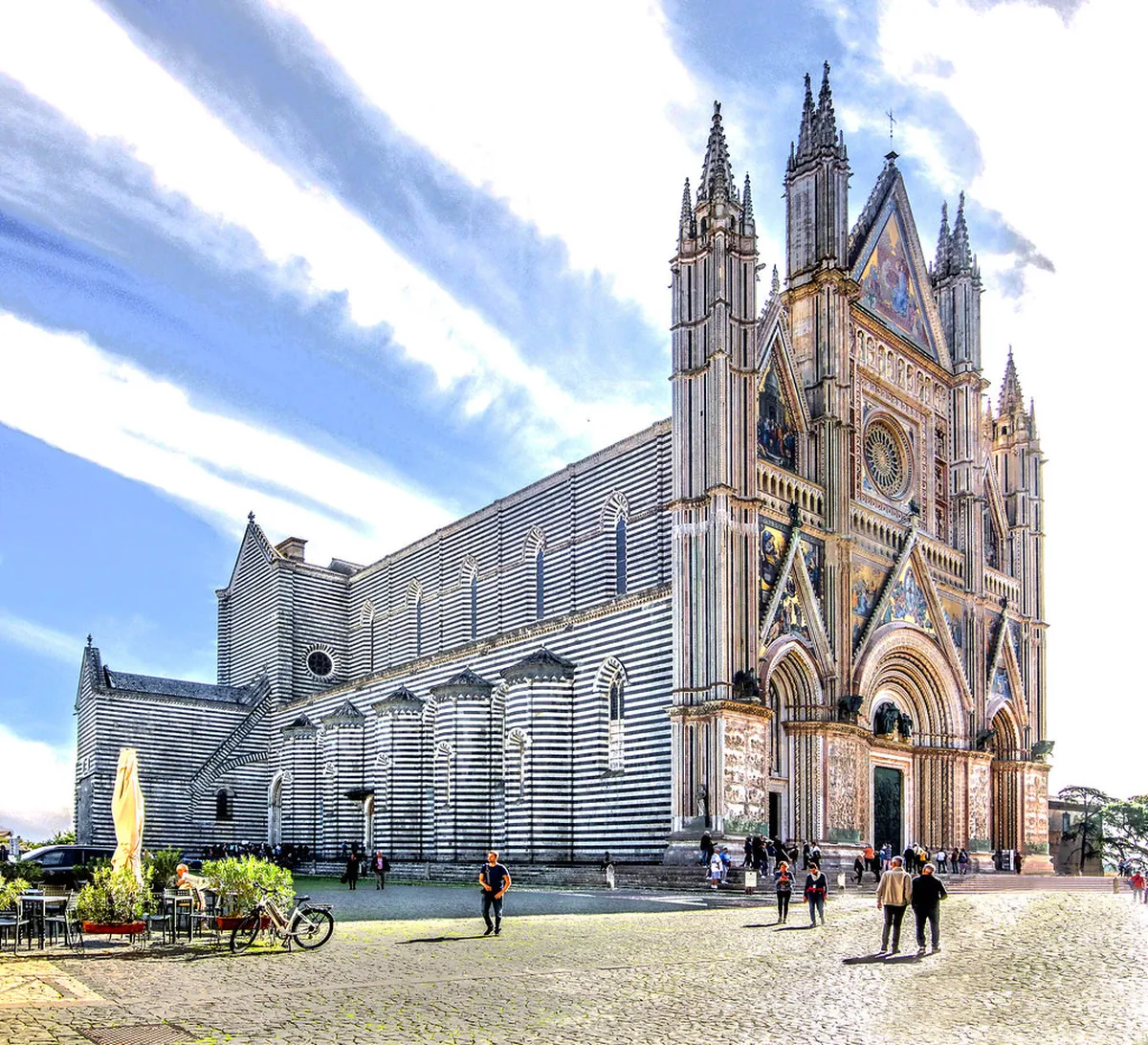
Etruscan places look different from Roman ruins. Most of what survives is underground or in museums, not in standing temples. Our hub on Etruscan sites in Italy maps the full set. Use this table to match a place to your trip.
Tradition describes a league of 12 cities, so the sites on this list belong to separate towns, not one Etruscan state.
| Site | Type | Best for | Practical note |
|---|---|---|---|
| Tarquinia | Necropolis | Painted tomb art | Access to individual tombs is limited; check the official park page |
| Cerveteri | Necropolis | Mound tombs shaped like houses | Easier to combine with Tarquinia on one trip |
| Villa Giulia, Rome | Museum | One museum-only stop | Gives context for every other site |
| Vulci | Park and landscape | Open-air ruins and tombs | Best with a car |
| Volterra | Hill town and museum | A Tuscan base | Combines town walls with the Guarnacci collection |
| Chiusi | Town and tombs | Quiet museum-and-tomb stop | Pairs with other southern Tuscany stops |
| Sovana | Landscape | Rock-cut roads and tombs | Walking shoes needed |
| Populonia | Coast and mining | Seaside history | Combines tombs with a coastal setting |
| Tuscania Travel Guide: Basilicas, Etruscan Museum & Day Plan | Landscape and town | Off-the-beaten-path tombs | Car recommended |
Etruscan Art and Objects to Look For in Museums
Because the cities left few standing buildings, museums are where Etruscan craftsmanship is easiest to appreciate. Knowing what to look for makes a short visit more rewarding.
- Bucchero pottery: glossy black ceramics, often with thin walls and incised or relief decoration. It is one of the most recognizable Etruscan wares.
- Bronze work: engraved hand mirrors, statuettes and helmets. Etruscan bronzesmiths were admired in the ancient Mediterranean.
- Gold jewelry: fine granulation, where tiny gold beads are fused to a surface, appears on brooches and earrings from the wealthier tombs.
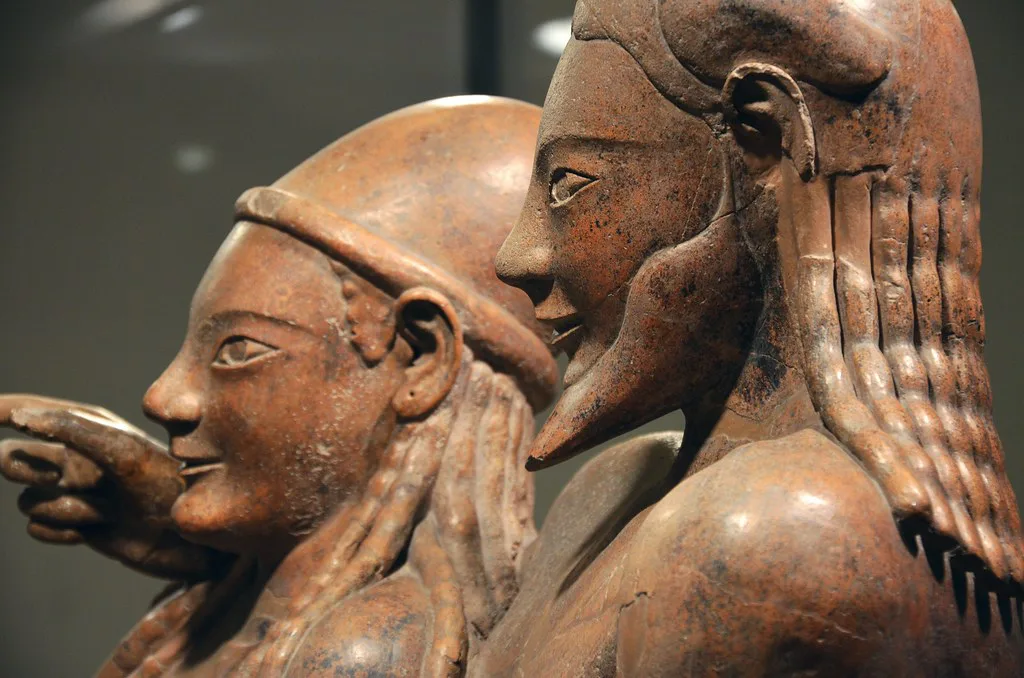
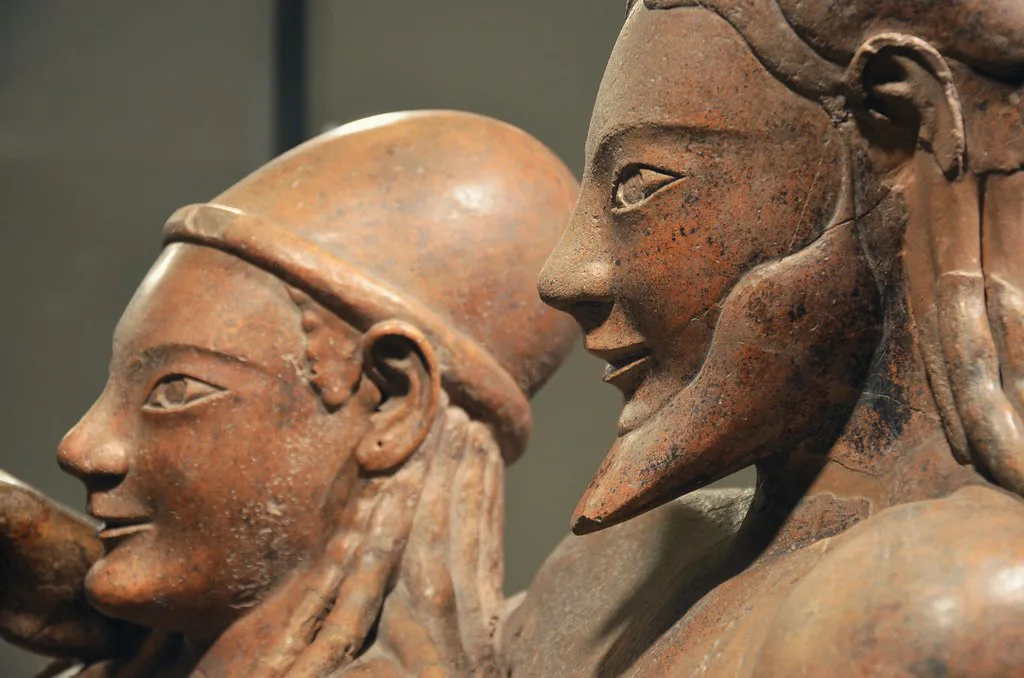
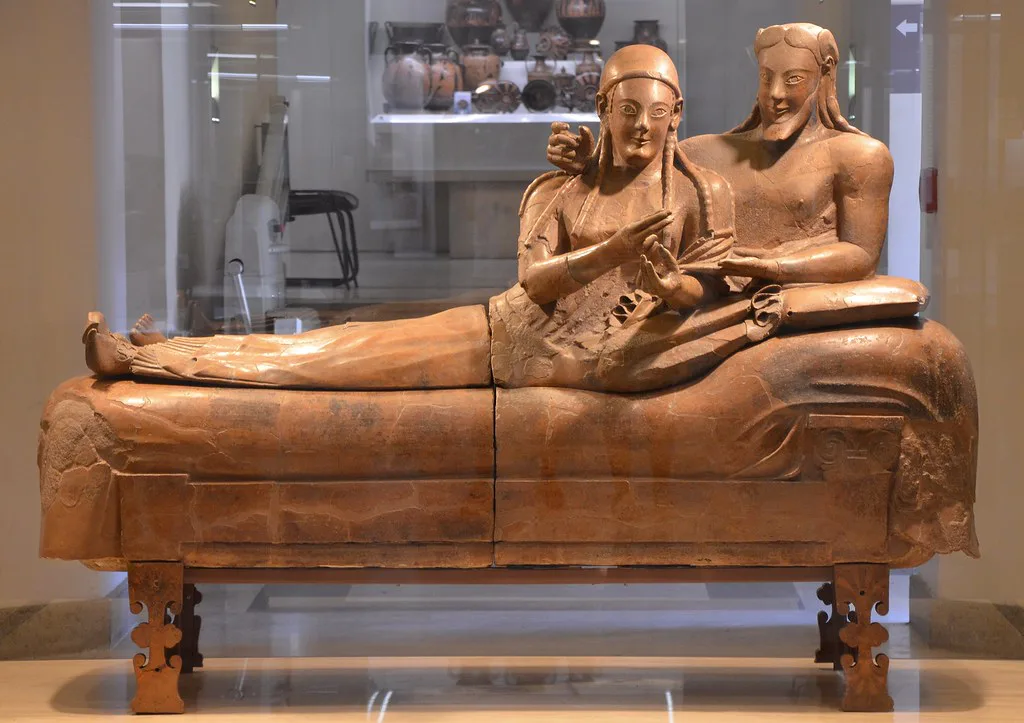
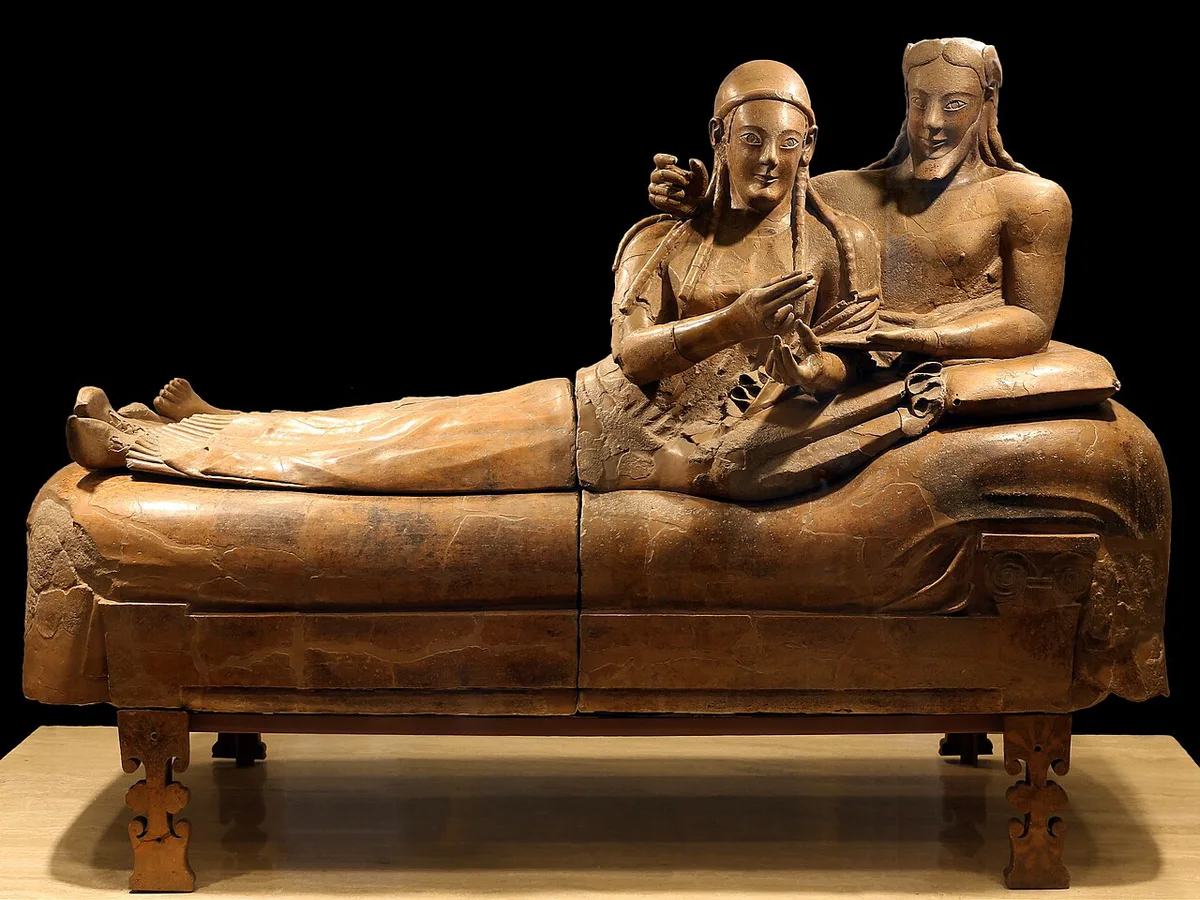
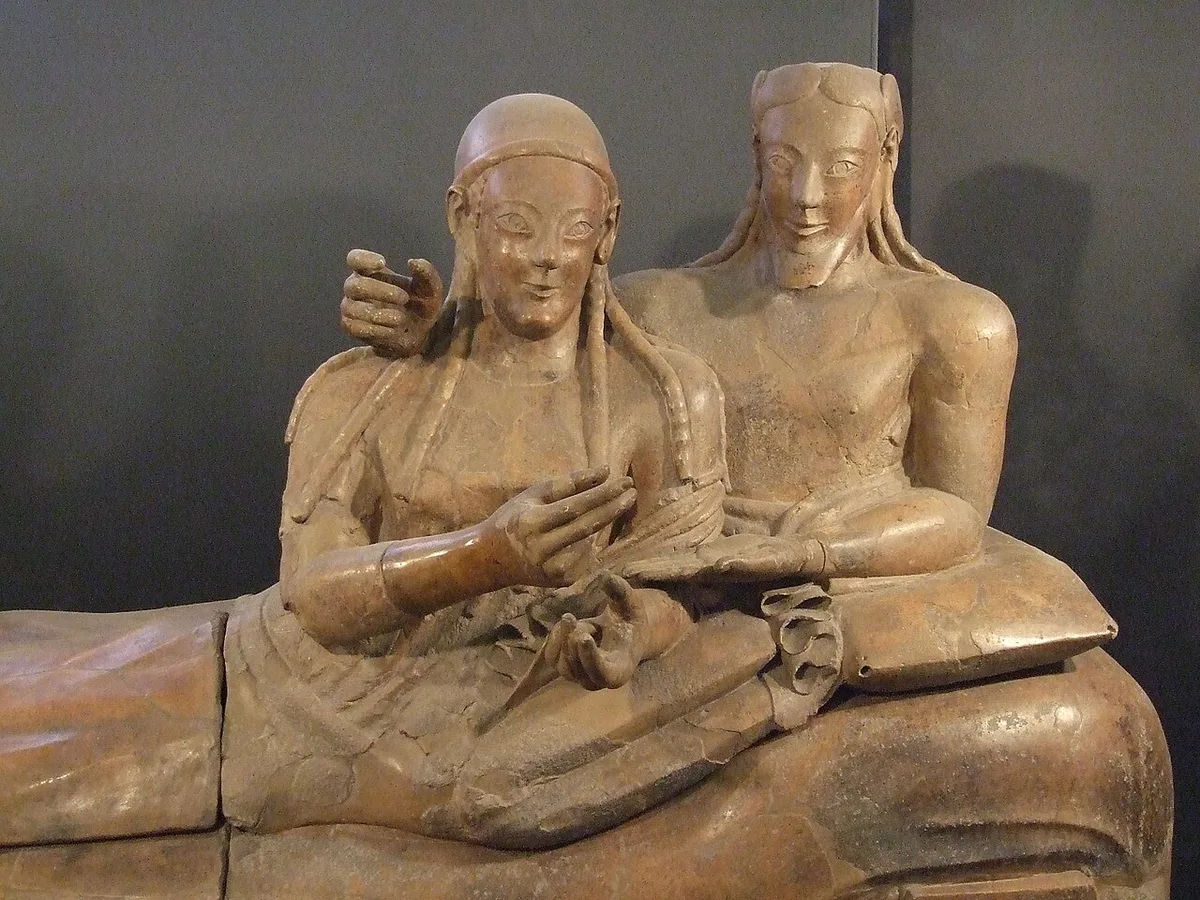
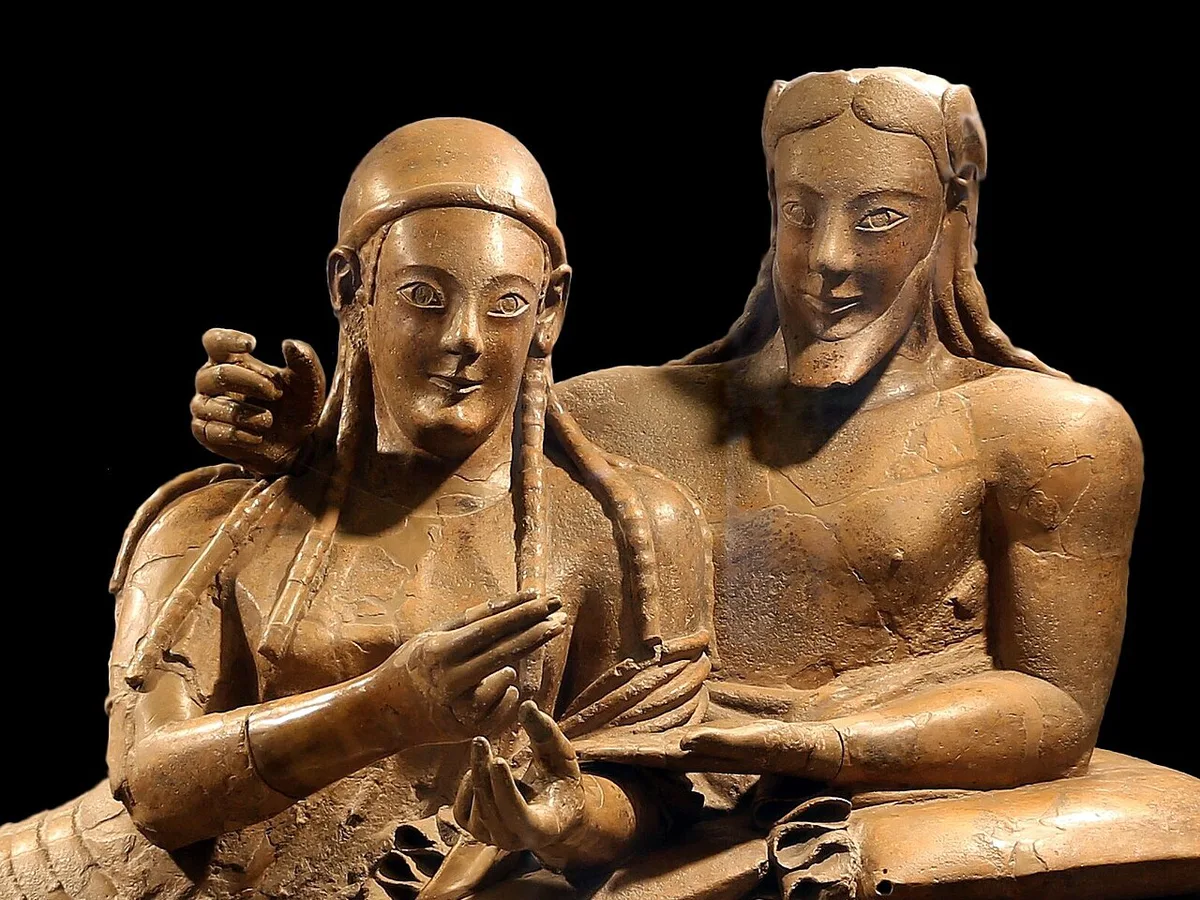
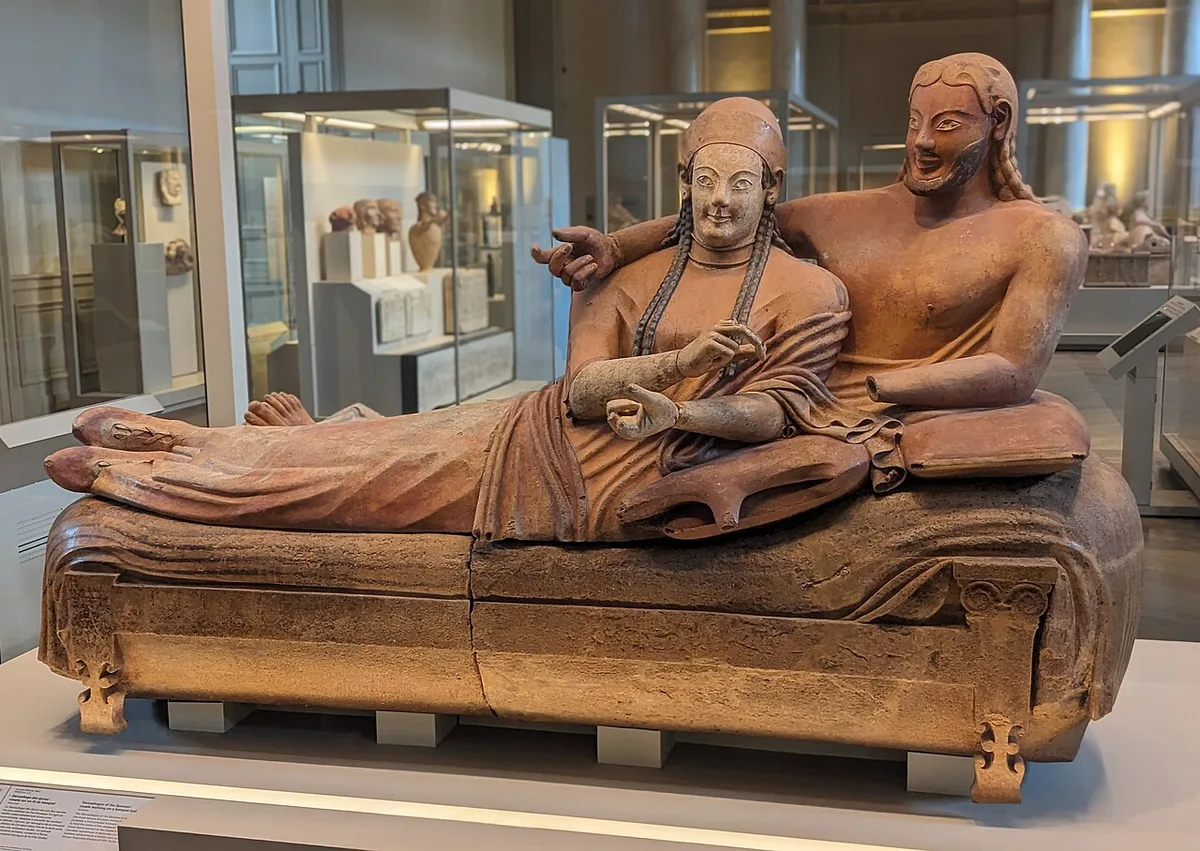
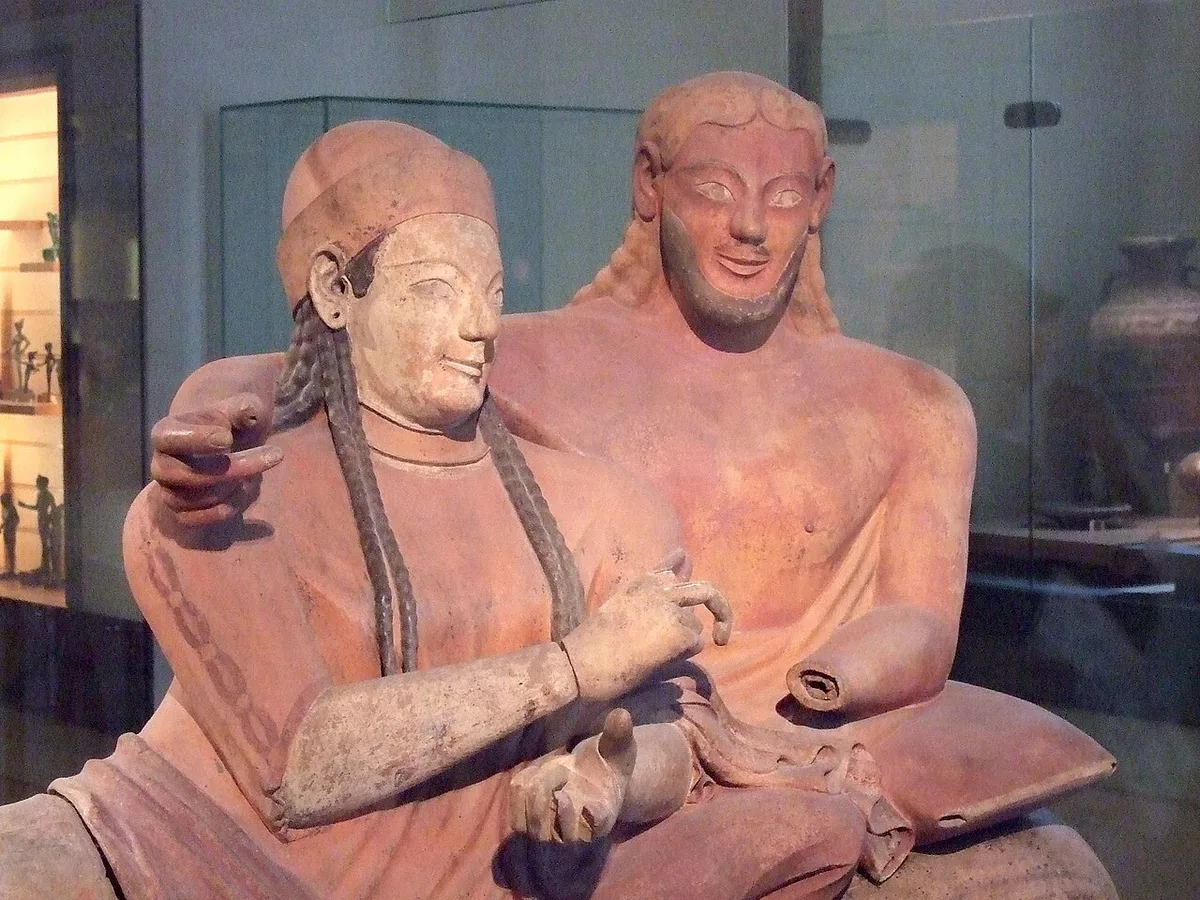
- Sarcophagi and urns: lids often show a couple reclining as if at a banquet, which echoes the tomb paintings. Volterra and Chiusi hold large collections of cinerary urns.
- Painted terracotta: temple decoration and architectural plaques, including the large figures displayed at Villa Giulia in Rome.
Many pieces carry short inscriptions, usually names, so you can connect the objects to the writing described above. Wall paintings at Tarquinia cannot be moved, so museum cases hold the portable finds while the tombs hold the painted scenes. See both if you can, and check each museum's official page for current opening hours before you go.
Which Etruscan Site to Choose
Start with how much time you have and whether you drive. Opening hours, painted-tomb access and seasonal closures change, so use each site's official page before you commit.
- Day trip from Rome without a car: follow our guide to Tarquinia from Rome: Train, Car or Tour (and Cerveteri).
- One museum, no travel: Rome's Villa Giulia holds the key objects, and its official museum site lists current visiting details.
- Atmosphere and landscape: Sovana, Norchia and Tuscania reward walkers more than museum-goers.
- Coast and mining history: Populonia and Baratti.
- Hill-town base: Volterra and Chiusi, where the museum and the town sit close together.
Common Mistakes When Visiting Etruscan Sites
Expecting Roman-style marble ruins leads to disappointment. Assuming the best frescoes are always open is another trap. Check the Cerveteri and Tarquinia park's official page before you plan a visit around painted tombs. Skip the museum and the tombs make less sense. Packing too many sites into one day leaves little time at each. Pick two at most, then use the Etruscan sites hub to plan the next trip.
Can We Read the Etruscan Language?
Partly. Etruscan inscriptions use an alphabet adapted from Greek, so many texts can be sounded out. Their meaning is harder to recover because much of the vocabulary remains uncertain. This is why museum labels often identify names, family relationships or objects more confidently than full sentences.
The language also reflects a world of separate cities rather than 1 centralized state. Tradition describes a league of 12 cities, yet each city managed its own affairs. That political independence helps explain why inscriptions and local customs can vary from place to place.
At a museum, look closely at inscribed mirrors, pottery, cinerary urns and stone markers. These objects give the written language useful context. Villa Giulia is a strong first stop before visiting tombs, while Volterra and Chiusi combine local collections with the landscapes where Etruscan communities lived.
Related guides



Continue reading
Guides on the same trip


