
Tuscania Travel Guide: Basilicas, Etruscan Museum & Day Plan
Last updated November 2026. Tuscania sits in northern Lazio, in the province of Viterbo, about 20 km (roughly 12 miles) from Viterbo, and it is not in Tuscany. Two Romanesque basilicas on the San Pietro hill, a national museum of Etruscan finds and rock-cut tombs in the surrounding valleys make it a good half day or full day. Use this guide to sequence the stops and to fit the town into a wider Etruscan sites route.
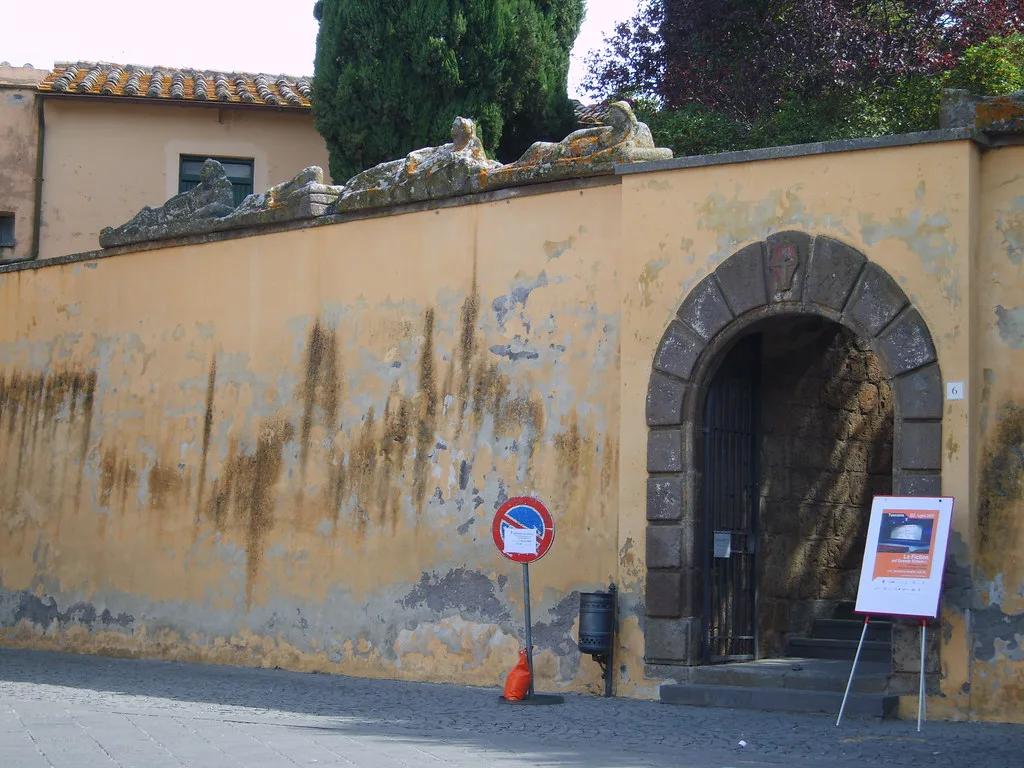
Featured image: Karsten Wentink, CC BY-SA 2.0, via Flickr.
Is Tuscania worth visiting? Who it suits
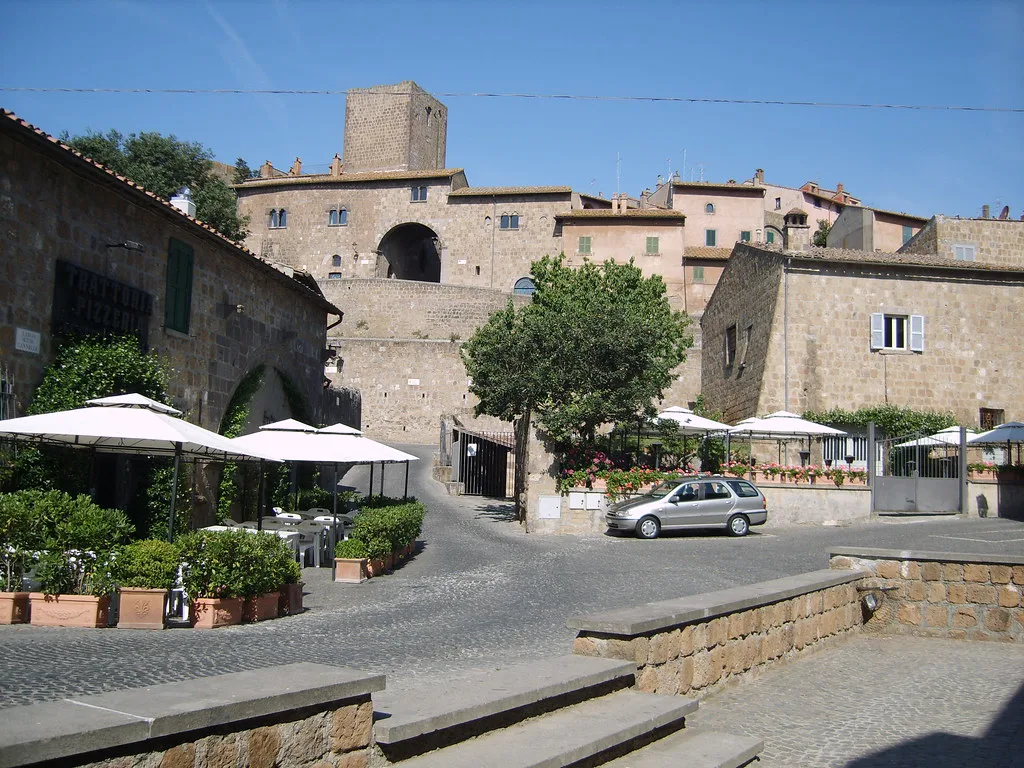
Tuscania is worth a visit if you care more about medieval churches and Etruscan archaeology than about shopping or nightlife. It stands at about 165 m (roughly 540 ft) on tuff hills above the Marta River, in the Viterbo part of Tuscia. Touring Club Italiano has given the town its Orange Flag, a mark for small inland towns. Expect steep lanes, quiet evenings and a short list of major sights. The reward is that two of the best Romanesque churches in Lazio stand a short walk from an Etruscan museum. Match the town to your travel style with the list below.
- Etruscan enthusiasts: the museum's sarcophagi are the draw, and Tuscania pairs well with the painted tombs at Tarquinia.
- Romanesque and architecture fans: San Pietro and Santa Maria Maggiore alone justify the trip.
- Day-trippers from Rome: a car makes the day easy, while public transport is thin (see the access section).
- Families: the open plateau on the San Pietro hill gives children room to roam, but lanes are steep and cobbled.
- Limited mobility: park along the walls, then choose the basilicas and the museum, and skip the uphill centre.
Best things to see in Tuscania
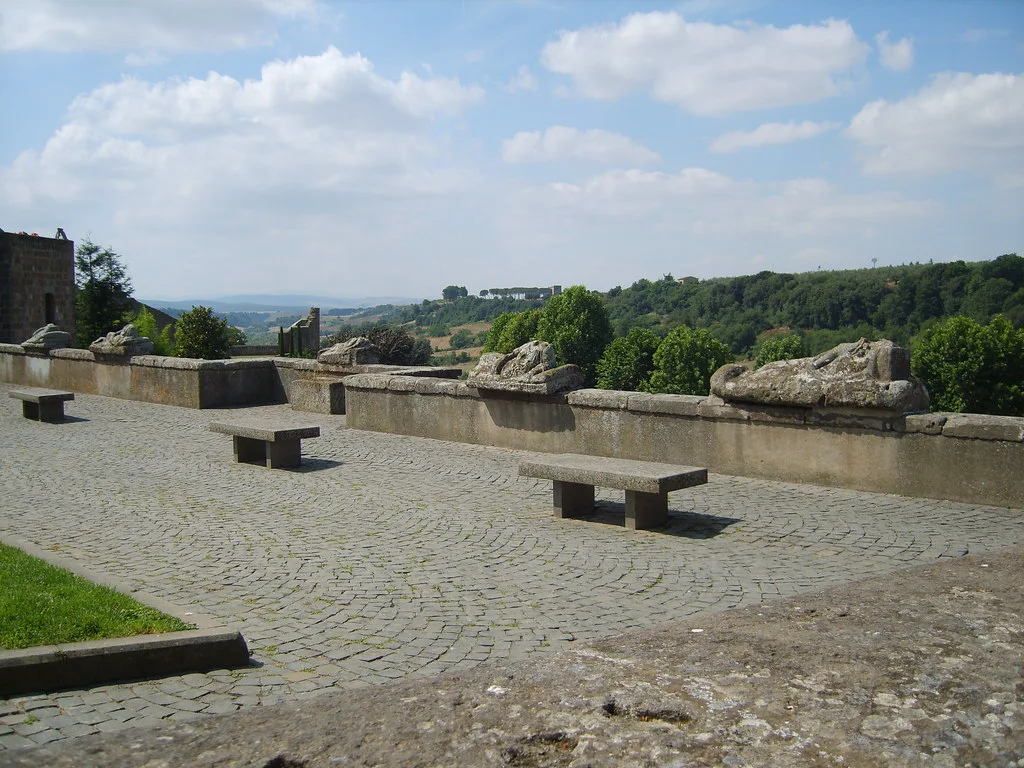
Tuscania reads on two levels. Outside the medieval walls, the San Pietro hill holds the two Romanesque basilicas on the old Etruscan acropolis. Inside the walls, the historic centre has towers, palaces, fountains and the Duomo. Start on the hill, because the basilicas keep seasonal hours that change between summer and winter. Check the Comune di Tuscania website for current times before you set out. Then walk down into the centre and finish at the museum on its western edge. Smaller churches are opened mainly for services or on request, so treat them as a bonus.
- San Pietro: the largest monument in town. By the most widely accepted reconstruction it was founded around the eighth century on an earlier temple. The 11th century brought rebuilt aisles, apses and crypt, and the facade grew in two phases. Its large white rose window is ringed by monsters, animals and evangelist symbols, and inside you find a Cosmatesque floor and a crypt with many different capitals.
- Santa Maria Maggiore: mentioned in a papal bull of 852 and consecrated on October 6, 1206. Scholars disagree on its dating, so think of a building campaign between the 11th and 13th centuries. Look for the white marble central portal on two lions, the rose window on two rings of 12 small columns, and the octagonal 13th-century font. The 14th-century Last Judgment on the counterfacade is attributed to Gregorio and Donato d'Arezzo.
- Duomo (San Giacomo Maggiore): mainly 18th-century in appearance, with a 16th-century facade. Tuscania was an episcopal seat until 1653, and this is the town's main church today.
- Santa Maria della Rosa: built between the 13th and 14th centuries, with a portal on twisted columns and a worked rose window. It shows the shift from Romanesque to Gothic.
- Walls, Torre di Lavello and fountains: the walls were reinforced around 1240. The Torre di Lavello overlooks the valleys from its park, and the Fontana delle sette cannelle has a long basin fed by seven spouts.
- San Giusto abbey: a medieval monastic complex in the countryside toward the river, best for a late-afternoon walk if you have a car or time.
The Etruscan side: museum and necropolises
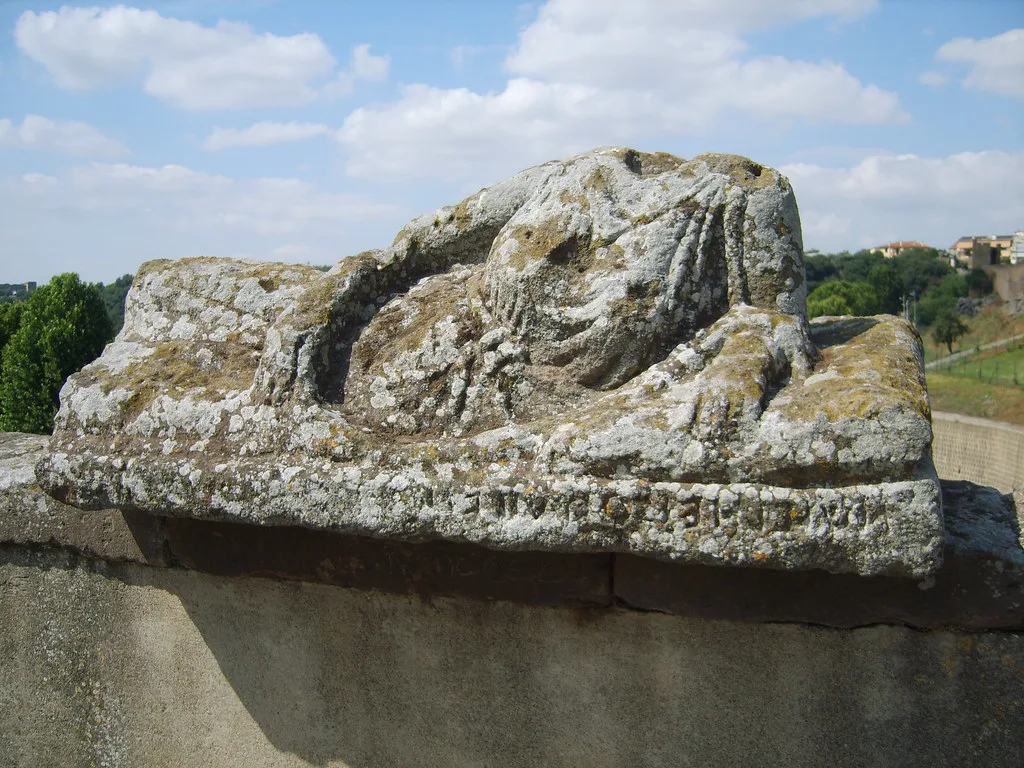
Before it was a medieval town, Tuscania was an important Etruscan city, and its memory lives in the museum and in the rock-cut tombs around it. The Museo Archeologico Nazionale occupies the former Franciscan convent of Santa Maria del Riposo, founded in 1247 and remodeled in the 15th and 16th centuries. Its address is Largo Mario Moretti 1. Finds from the area's tombs ended up here, so the sarcophagi stand close to where they were found. Highlights include sarcophagi from the Curunas Tombs, excavated between 1967 and 1970 in the Madonna dell'Olivo necropolis. The Vipinana family tomb at Carcarello yielded 27 sarcophagi, used between the late 4th and the first half of the 2nd century BC. Lids show the dead reclining, and inscriptions in the Etruscan alphabet sit beside urns and terracottas. The museum also tells the story of the Campanari family, the 19th-century antiquarians whose digs sent many Tuscania finds to museums across Europe. More than a dozen necropolises have been recorded in the valleys, among them Ara del Tufo, Pian di Mola and Carcarello. They are tombs cut into tuff, with chambers, benches and sometimes carved facades. Most lie in open countryside along gullies, and access terms vary, so ask the Pro Loco whether any are open or guided before you plan a walk. Read how Etruscan rock tombs work before you go. For the bigger picture, see who the Etruscans were. If your main goal is painted chambers, Tarquinia's necropolis is the stronger stop.
How to get to Tuscania and get around
A car is by far the easiest way in. From Rome, take the Rome–Civitavecchia road, leave at the Tarquinia exit and head inland. From Viterbo, a road of just over 20 km leads right up to the walls. Leave the car in the parking areas along the walls, because the historic centre is largely pedestrian and uphill. Do not try to drive into the old lanes. Public transport is thin. Cotral buses and regional trains via Viterbo or Civitavecchia are the usual public routes, but timetables and transfers are best taken from the operators' own sites. Plan to arrive well before the last connection home. If you are starting from Rome without a car, read our Rome day-trip guide to Cerveteri and Tarquinia to compare options. On the ground, the centre is compact, and you can walk it in about two hours. The San Pietro hill sits just outside the walls, so add an uphill stretch on foot or a short drive between hill and centre.
How long to spend: sample plans
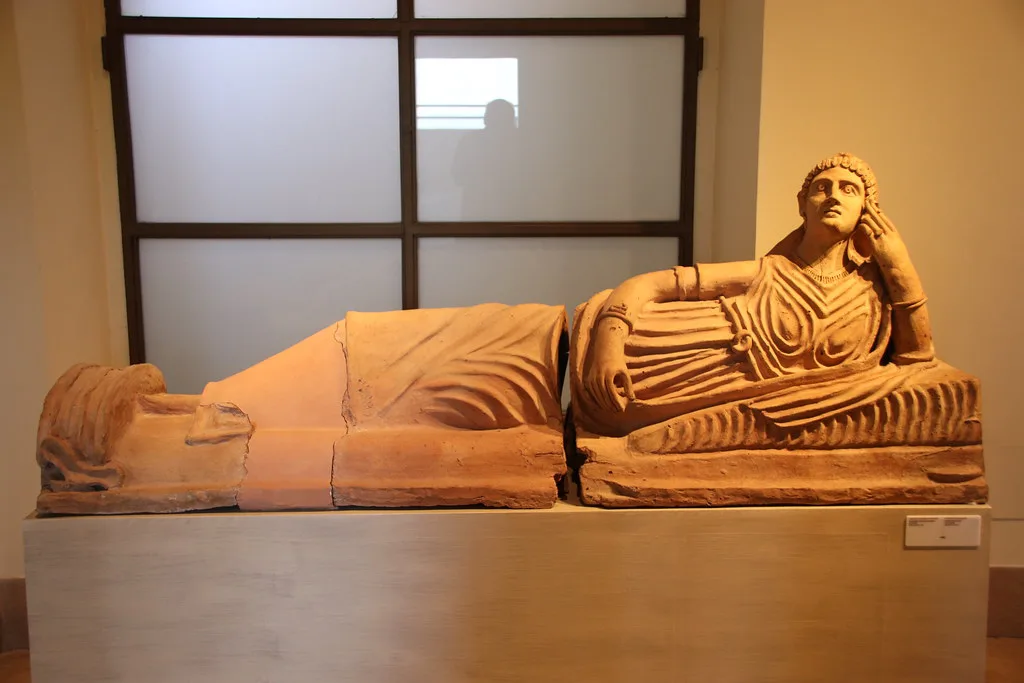
Match your time to your priorities. The table below gives rough planning estimates, except where noted, and the centre's two-hour figure is the walking time for the whole walled town. Use it with the plans after it.
Give the museum 1 to 1.5 hours (estimate), and count back from last entry at 19:00 when you plan the afternoon.
| Stop | Time needed | Effort and access notes |
|---|---|---|
| San Pietro and Santa Maria Maggiore (hill) | 1.5 to 2 hours (estimate) | Short uphill walk from the parking along the walls; seasonal church hours |
| Walled centre (Duomo, Santa Maria della Rosa, towers, fountains) | About 2 hours | Steep, cobbled lanes; smaller churches open only on request |
| Museo Archeologico Nazionale | 1 to 1.5 hours (estimate) | Closed Mondays; last entry 19:00 |
| Necropolis and San Giusto walk | Half a day (estimate) | Countryside tracks; ask the Pro Loco about access |
- Half day: the two basilicas on the hill, then the museum before it closes.
- One day: basilicas in the morning, then lunch, the walled centre and the museum in the afternoon.
- Two days: add a countryside walk to the necropolises and San Giusto, or take a second day for Tarquinia and Vulci.
- Only two hours? See San Pietro and Santa Maria Maggiore and skip everything else.
- Only the Etruscan side? Go to the museum, then continue to Tarquinia.
Opening hours, tickets and costs
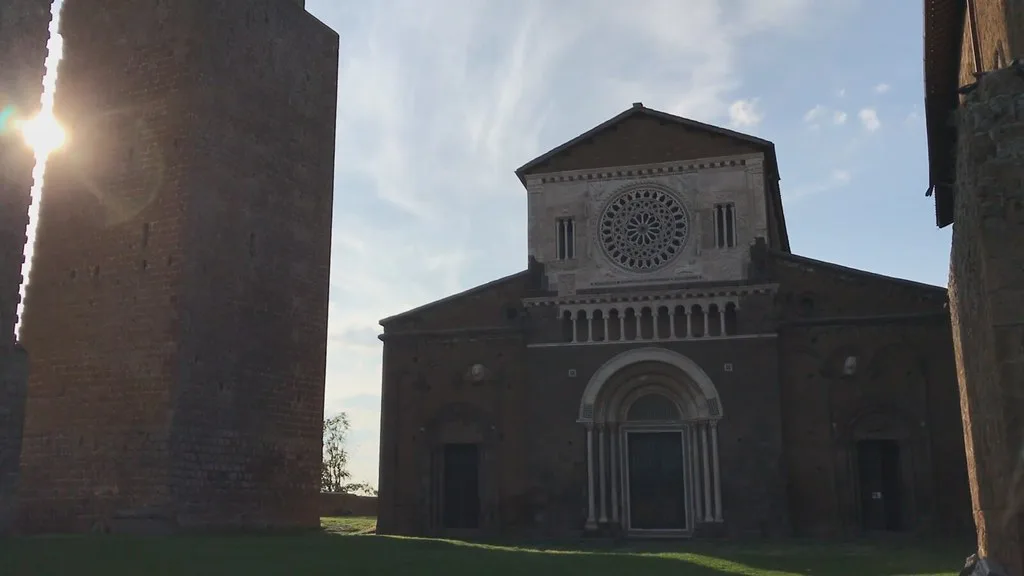
The museum is open from 8:30 to 19:30, with last entry at 19:00. It is closed on Mondays, on January 1 and on December 25. Entry was free for years, but since 2025 some visits require a ticket. Check the rate and current opening days on the Musei Nazionali del Lazio site, because conditions have changed recently. The two basilicas keep seasonal hours, so use the Comune di Tuscania website for the times that apply on your date. Walking the walls, the lanes and the fountains costs nothing, so the museum is the main admission to budget for. We have no confirmed ticket price for the basilicas. For general regional planning, Visit Lazio is a useful official starting point.
Tuscania with Norchia and the wider Etruscan route
Norchia is a nearby rock-cut necropolis in the same Tuscia landscape, and it pairs naturally with Tuscania for anyone who likes tombs set in open countryside. Access terms and opening details differ from the staffed sites. Tarquinia is about half an hour away by car. It is the best add-on for painted tombs, and the Cerveteri and Tarquinia archaeological park publishes the official details. Vulci, also within about half an hour, offers a large open-air landscape, and Vulci's archaeological park is the natural second-day stop. Cerveteri, covered in our Cerveteri necropolis guide, has the monumental mounded tombs. With limited time, Tuscania gives the strongest Romanesque content, Tarquinia the best painted tombs and Vulci the widest landscape. If you want more finds before or after your trip, the Villa Giulia museum in Rome holds a major collection. Farther afield and in other regions, Chiusi, Sovana, Volterra and Populonia are separate trips, not add-ons. Avoid these common mistakes on the day.
- Arriving on a Monday: the museum is closed.
- Searching for the basilicas inside the walls: they stand on the San Pietro hill outside them.
- Skipping the church-hours check: times change between summer and winter.
- Driving into the pedestrian centre: park along the walls instead.
- Expecting a big dining scene: this is a small town with limited choice, so plan lunch.
When to visit, accessibility and practical tips
Late afternoon gives raking light across the hills and the valleys, which suits photography on the San Pietro plateau. A Lavender Festival is said to run on the first weekend of July, and to have done so since 2011. Cobbles, steps and slopes make the walled centre hard going for wheelchairs and strollers. The hill is open and flat on top, but reaching it from the parking involves an uphill walk. Children usually enjoy the sarcophagi and the towers more than the smaller churches. For tourist information, contact the Pro Loco through its official channels, and check phone and email there before you rely on them.
Where to eat and stay
Tuscania has small, family-run trattorias and bars, but choice is limited and many places keep short hours. Plan lunch around your church and museum timings. For more lodging options, base yourself in Viterbo or Tarquinia, both within about half an hour by car. You can also stay in Tuscania itself, in a guesthouse or a country farm stay. Browse the official lists on Visit Lazio, and read current reviews before booking.
Related guides



Continue reading
Guides on the same trip


