
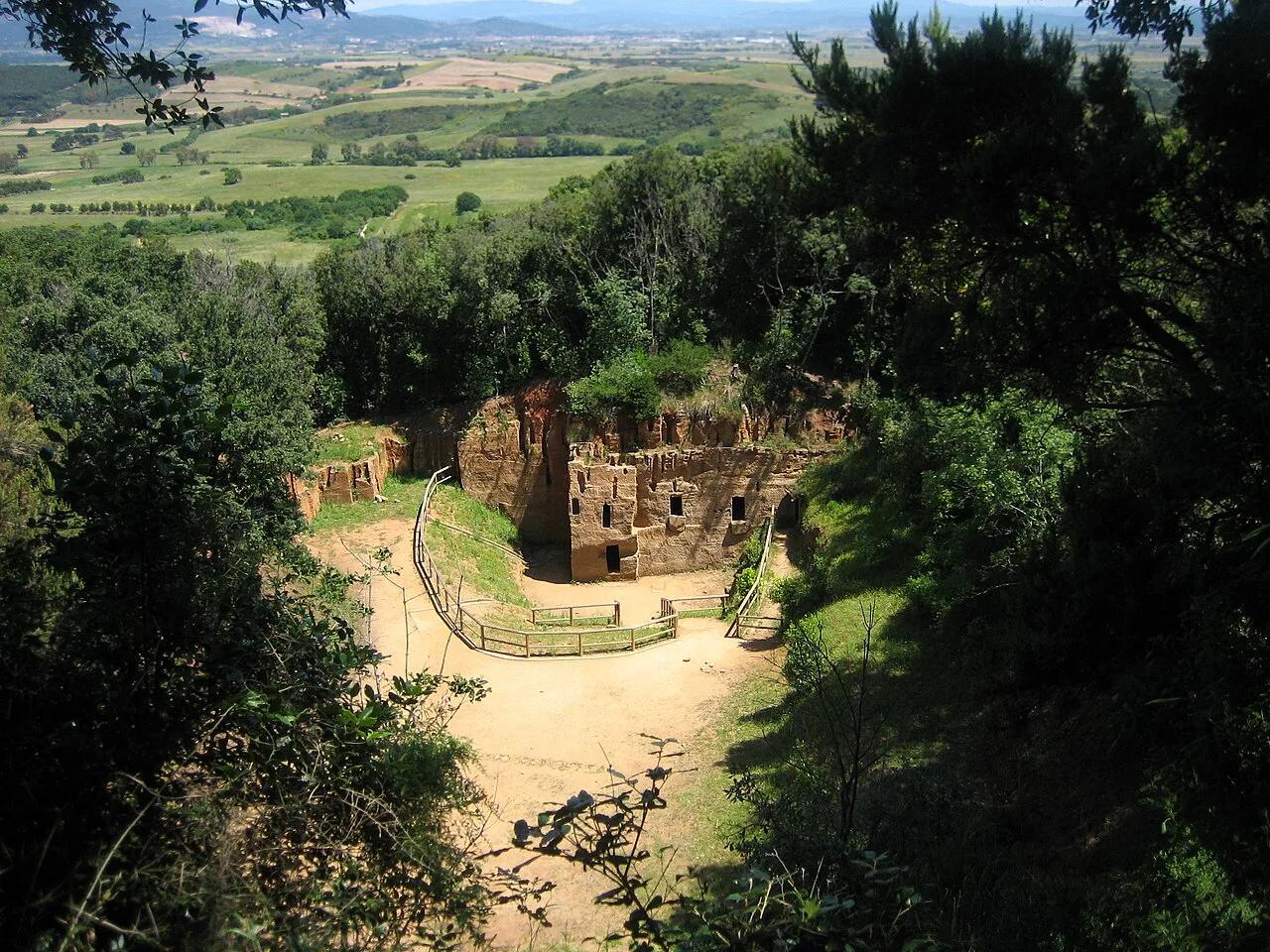
Populonia and Baratti: Etruscan City on the Sea (Visit Guide)
Last updated November 2026: Populonia is the only one of the twelve Etruscan League cities built on the sea, and it splits into two separate visits. Baratti's necropolis and archaeological park sit at sea level, while the medieval village of Populonia Alta stands on the acropolis above. Plan a half day for the ruins and a full day if you add the beach, and use our Etruscan sites guide to place it on a wider route.
Featured image: AlMare, CC BY-SA 2.5, via Wikimedia Commons.
Populonia at a Glance
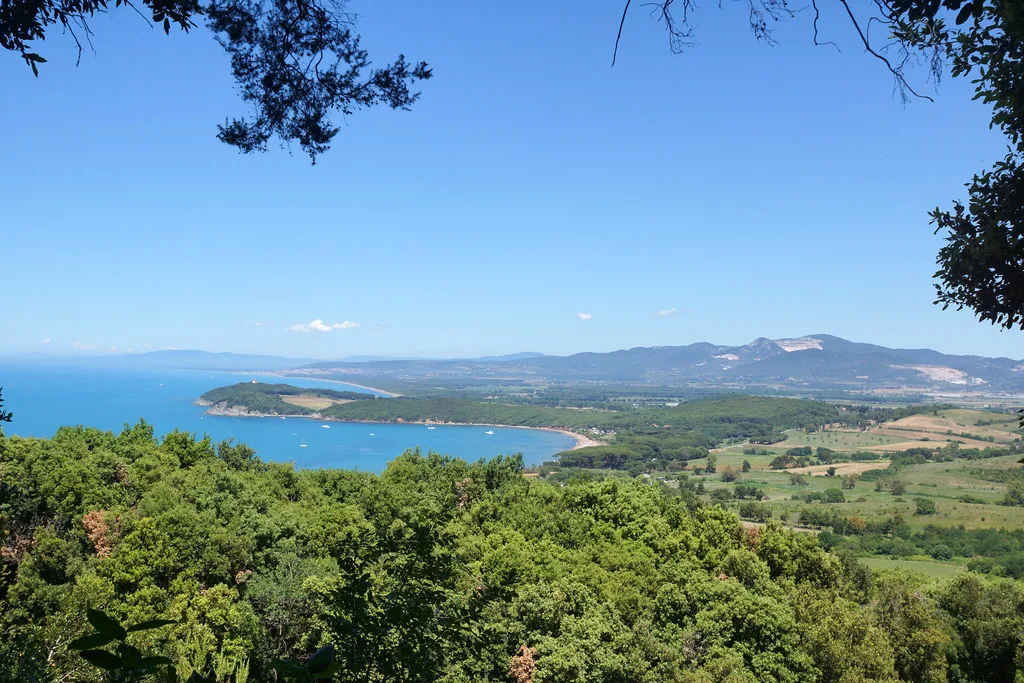
Populonia lies about 13 km (8 miles) north of Piombino, on the Gulf of Baratti in Tuscany. Two sites make up the visit. The Parco Archeologico di Baratti e Populonia covers about 80 hectares (roughly 200 acres) around the necropolis. Populonia Alta holds the medieval village, its Rocca and views over the gulf.
Populonia emerged in the 8th–7th centuries BC, so the medieval fortifications up on Populonia Alta are a much later layer.
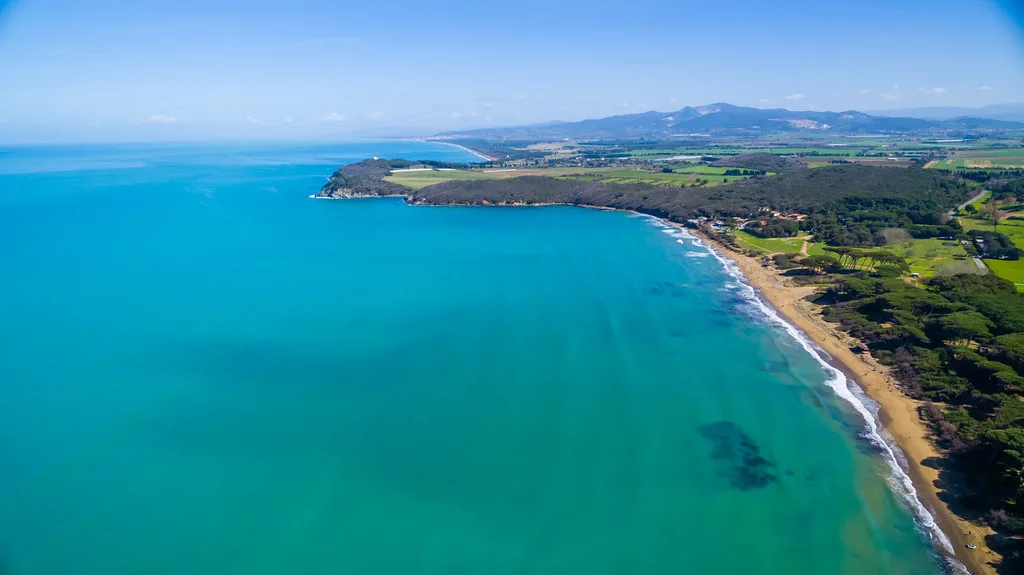
- Location: Gulf of Baratti, a frazione of Piombino, Tuscany
- What's there: necropolis, slag fields, quarry tombs, medieval village, village museum, beach
- Time needed: half day for ruins only; a full day with the beach
- Car needed: yes, for a realistic day trip
- Best for: archaeology readers, families, and Tuscany coast road trips
Why Populonia Is Different From Other Etruscan Sites
Most Etruscan cities sit inland on tufa plateaus. Populonia had a harbor. Iron ore from Elba and the Colline Metallifere reached its port, and smelters here turned it into metal. The city also minted its own silver coins. Slag heaps from that industry still lie across the bay. Volterra shared this mining and metals economy, and our Etruscan Volterra guide covers the inland side. If you need background on the people themselves, start with who the Etruscans were. Populonia emerged as a city in the 8th–7th centuries BC and flourished into the 3rd century BC.
What to See at Populonia: Necropolis, Acropolis, Museum
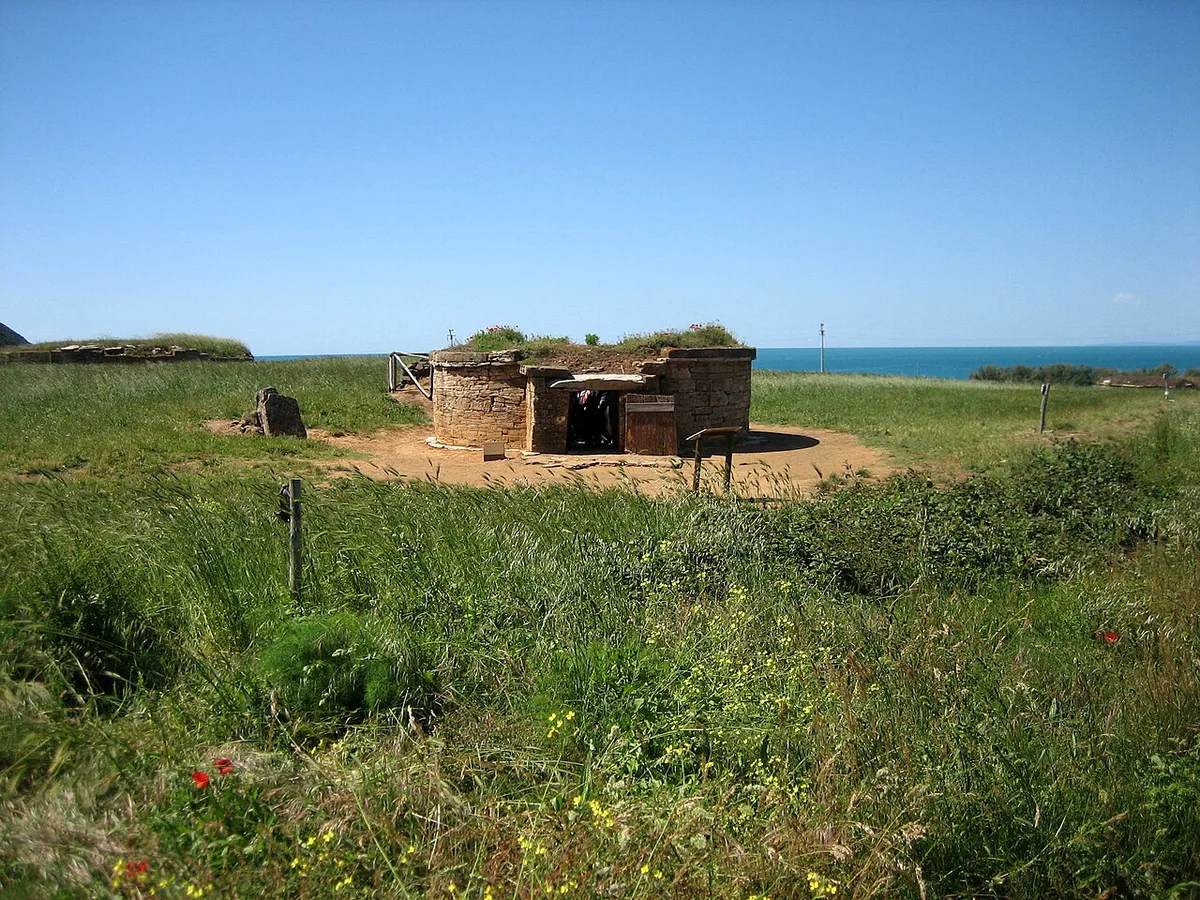
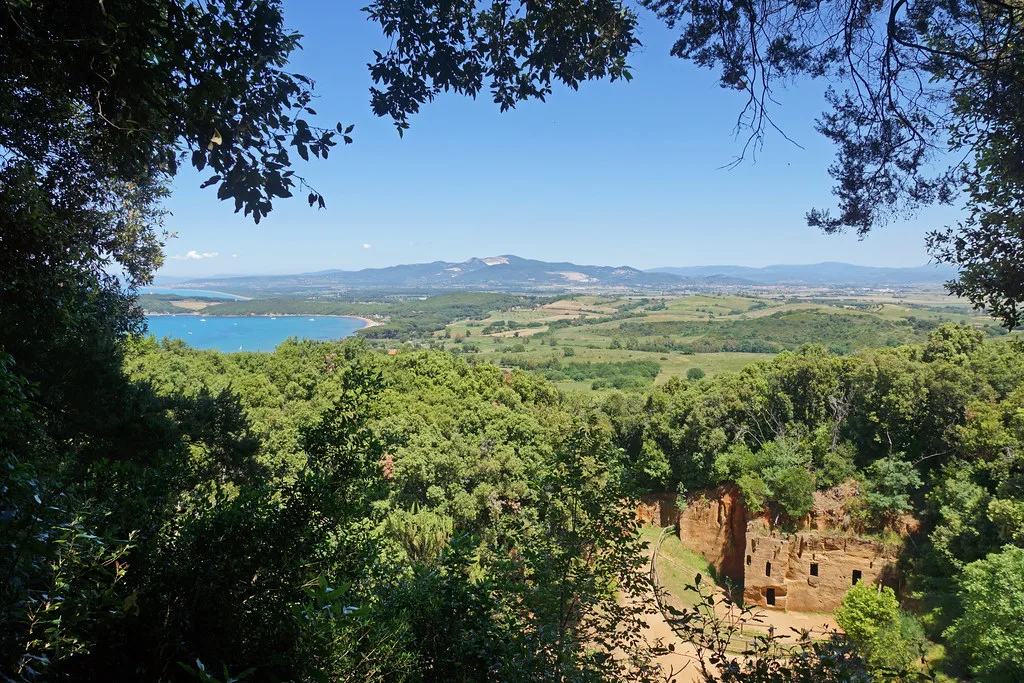
Start at sea level. The San Cerbone necropolis has marked paths past tumulus tombs, chamber tombs and temple tombs. Tomb of the Carri is the headline: its drum measures about 28 m (92 ft) across, one of the largest tumuli found. Etruscan tomb types explains how these forms differ. A second burial ground, the Necropoli delle Grotte, was cut into an ancient quarry and is reached along paths through holm oak and cork oak woods. The slag fields show what the city actually did for a living. Up the hill, Populonia Alta preserves medieval fortifications dated to around 1200, with the Rocca fused to the walls. Only 17 people lived there as of 2009. A small museum in the village displays finds from the site.
- Necropolis: tumuli, chamber tombs and temple tombs along marked paths
- Necropoli delle Grotte: tombs cut into a quarry, under holm oak and cork oak
- Slag fields: the waste of ancient iron smelting across the bay
- Populonia Alta: Rocca, walls and gulf views
How to Plan Your Time at Populonia
Visit the necropolis first. Its paths are exposed, so morning light and cooler air help, especially in summer. Climb to Populonia Alta next, when you want shade and a seat. Finish at the beach if you have a full day. Skipping a stage is easier than rushing all four across the 80 hectares of the park.
| Plan | Order | Best for |
|---|---|---|
| Half day | Necropolis, then village | Archaeology focus or a Tuscany road-trip stop |
| Full day | Necropolis, quarry tombs, village, museum, beach | Families and mixed ruins-and-swim days |
Tickets, Opening Hours and Booking
The park is open year-round, with hours that change by season. Combination tickets covering the necropolis and the village museum are usually offered. Check current fares, guided-visit times and hours on the Parchi Val di Cornia site.
Getting to Populonia and Getting Around
From Piombino, take the SP23 coastal road toward Baratti, which then climbs to Populonia Alta. No direct train serves Populonia. The nearest station is Piombino Marittima, which connects to Campiglia Marittima on the Pisa–Rome line. Local buses are infrequent, so a hire car or a taxi from Piombino is the practical choice. In summer, arrive early to find parking near Baratti.
Populonia sits about 13 km (8 miles) from Piombino, so the SP23 coastal road is the drive to plan around, since no train runs there.
| Option | Trade-off |
|---|---|
| Car | Most flexible; links the park, village and beach |
| Taxi from Piombino | Easy, but plan your return in advance |
| Bus | Infrequent; works only if you build the day around its schedule |
| Train | Gets you to Piombino Marittima only; you still need road transport |
Baratti Beach and the Coast
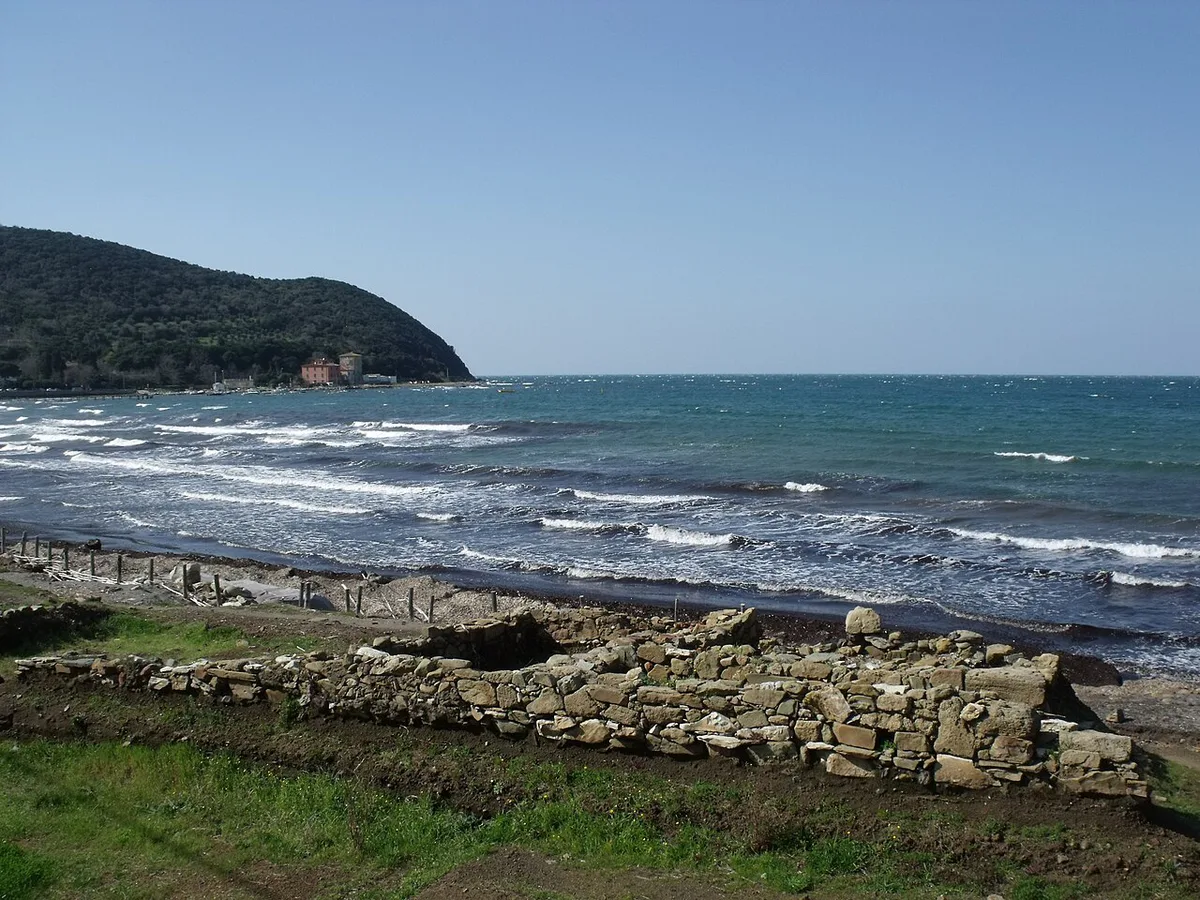
Baratti's fine reddish sand is mostly freely accessible, with pine forest behind it. It suits families, and a swim fits easily after the necropolis walk. The Gulf of Baratti is a popular summer destination, so expect fuller parking and warmer paths from midday. Spring and early autumn give you the same ruins with more space.
Who Should Visit Populonia, and Who Might Skip It
Match the visit to your reason for coming. Painted tombs are elsewhere, so set expectations before you go.
| Traveler | Prioritize | Could skip |
|---|---|---|
| Archaeology reader | Necropolis, quarry tombs, slag fields | Beach time |
| Family | Park paths, beach | Long museum stop |
| Beach-and-ruins day | Early necropolis, afternoon swim | Village climb in midday heat |
| Short road-trip stop | Tomb of the Carri, Populonia Alta views | Quarry tombs |
Mistakes to Avoid at Populonia
Most problems come from underestimating the site. Two places, the shore and the hill, need separate time.
- Treating Populonia as one stop instead of the park plus Populonia Alta
- Arriving at midday in summer, when paths are exposed and parking fills
- Counting on a bus without checking its schedule
- Skipping the slag fields, which explain the city's wealth
- Expecting painted tombs like those at Tarquinia
Pairing Populonia With Other Etruscan Sites
Populonia is coastal and industrial. Lazio's necropolises are about painted chambers and tumuli. For the contrast, read about Tarquinia's painted tombs. Then compare them with Cerveteri's tumulus necropolis. Inland Tuscany offers Chiusi's Etruscan tombs. Next, try Sovana and its sunken roads. In Volterra, the Museo Etrusco Guarnacci shows the inland Etruscan world. If you are starting from the capital, see Etruscan day trips from Rome.
Related guides



Continue reading
Guides on the same trip



