
14 Roman Ruins in France: Best Sites and How to Plan Your Visit
Last updated November 2026: roman ruins in france cluster in Provence and the Rhône corridor, with strong outliers in Burgundy, on the Atlantic coast and in Paris. Our guide groups 14 sites by region so you can pick a base and build a route. Each entry says what survives, who it suits and who should skip it.
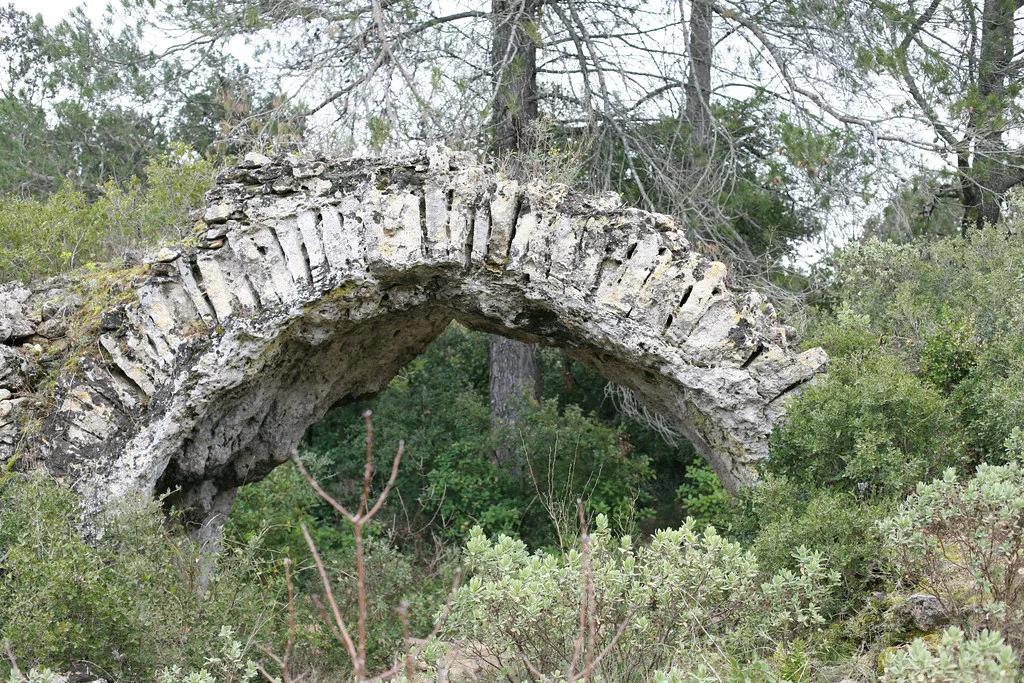
Featured image: Jeanne Menjoulet, CC BY 2.0, via Flickr.
Quick answer: Roman ruins in France by region
Provence and the Rhône corridor hold the densest Roman heritage in France. Arles and Orange give you standing monuments, while Vaison-la-Romaine and Glanum give you excavated streets. Other regions add one or two strong sites each. Use the table to compare what survives at each place before you choose.
| Site | Region | What survives | Best for |
|---|---|---|---|
| Arles | Provence | Amphitheatre, theatre, underground galleries | First-timers without a car |
| Orange | Provence | Theatre with stage wall, triumphal arch | Theatre lovers |
| Vaison-la-Romaine | Provence | Excavated town quarters, Roman bridge | Wandering domestic ruins |
| Glanum | Provence | Ruined town, nearby mausoleum and arch | Archaeology fans |
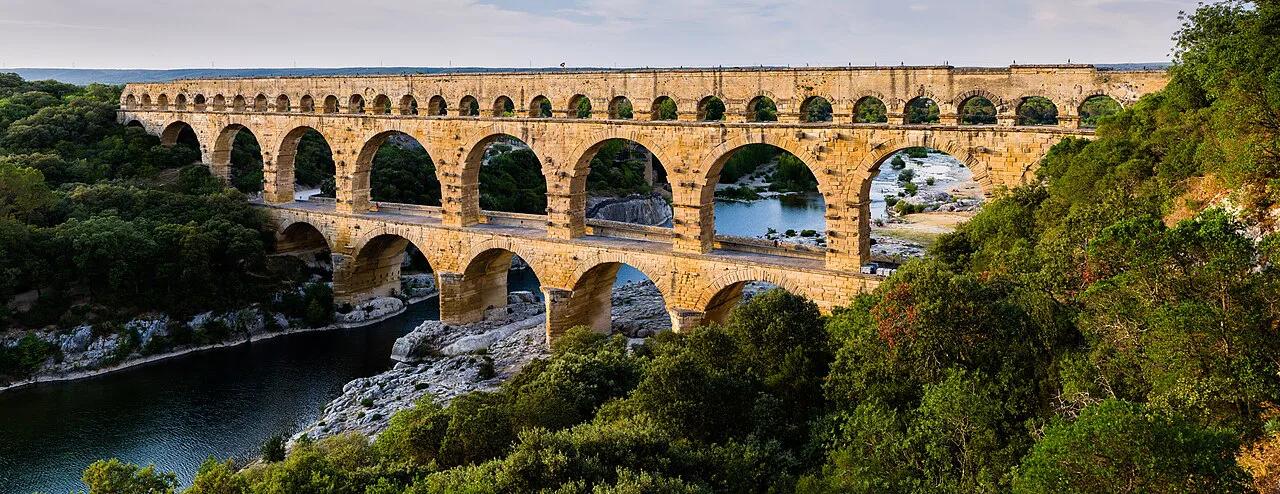
| Pont du Gard | Near Nîmes | Aqueduct bridge | Engineering and photos |
| Nîmes | Languedoc | Temple, arena | Compact city break |
| Lyon | Rhône-Alpes | Hillside theatres | City-break travelers |
| Vienne | Rhône-Alpes | Temple of Augustus and Livia | Easy Lyon day trip |
| Fréjus | Riviera | Amphitheatre and aqueduct remains | Beach trips with history |
| Autun | Burgundy | Town gates, theatre | Burgundy road trips |
| Saintes | Atlantic coast | Arch, amphitheatre | Western France routes |
| Paris | Île-de-France | Arena, baths | Paris-only trips |
| Alésia | Burgundy | Excavations, museum park | History readers |
| Bibracte | Burgundy | Gaulish hilltop town | Walkers |
14 Roman Ruins in France Worth Visiting
Prices and hours checked November 2026: this guide quotes no fares, so use each official site for current opening times. Entries run from Provence north and west, with the strongest monuments first.
1. Arles: amphitheatre, theatre and underground galleries
Arles packs the densest Roman core of any single French town, and you can cover it on foot. Start with the amphitheatre and the Roman theatre, both in the old centre, then follow our guide to the amphitheatre and theatre in Arles. Next, go below ground into the underground cryptoporticus galleries, a cool break from summer heat.
Event dates and closures appear on the Arles tourism office site. Best for first-timers who want several monuments without a car, but skip it if you want empty ruins.
2. Orange: the theatre and the triumphal arch
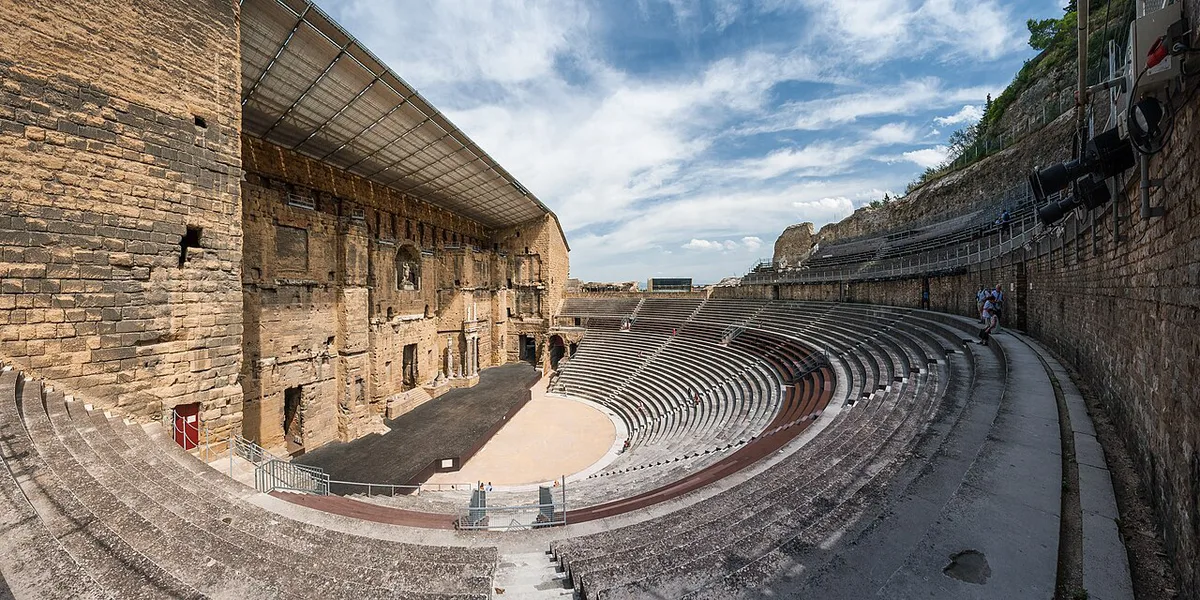
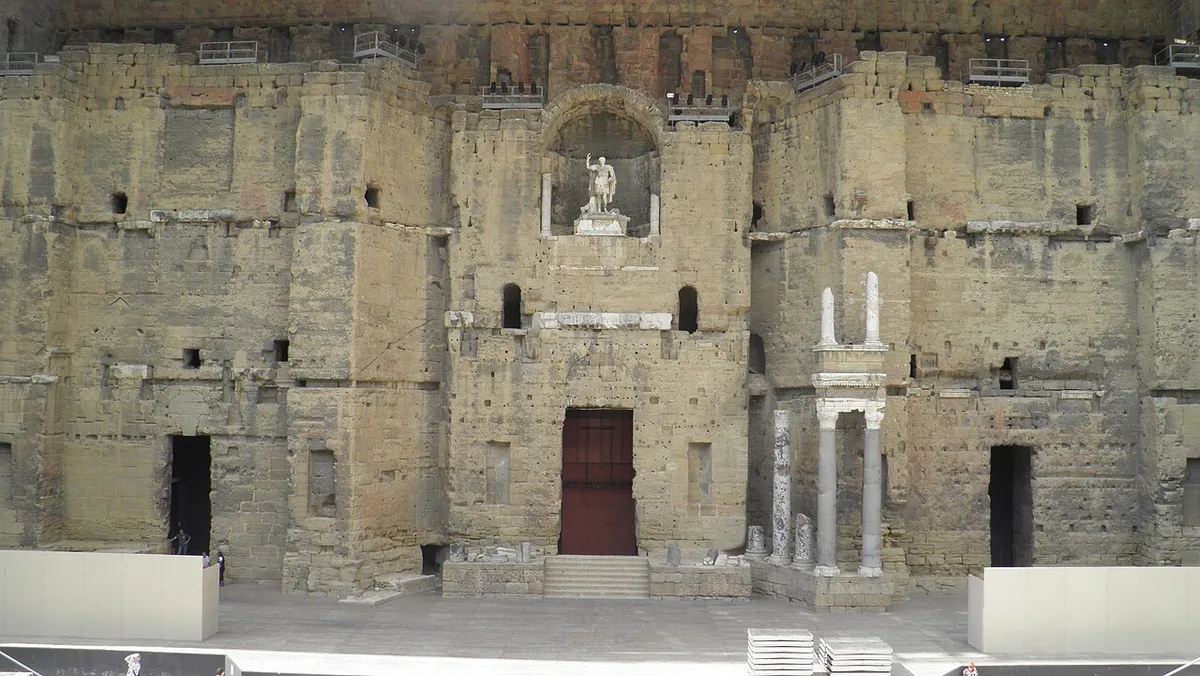
Orange has a Roman theatre whose tall stage wall still stands, which gives you a real sense of the original scale. Read opening details on the official theatre site. The venue still hosts live performances, so daytime access can change on event dates.
Afterwards, see Orange's triumphal arch, a carved Roman gateway worth a short stop. Best for theatre lovers, though travelers who dislike crowds should avoid event weekends.
3. Vaison-la-Romaine: excavated Roman quarters
Vaison-la-Romaine lets you walk through the streets and house plots of a Roman town. Excavations are split into quarters, so you learn about daily life rather than one monument. Explore the excavated Roman quarters at Vaison at an easy pace.
A Roman bridge also survives in town, and the Vaison Ventoux tourism office lists current visiting arrangements. Best for travelers who like wandering through domestic ruins, while anyone wanting one grand monument can give it a miss.
4. Glanum, by Saint-Rémy-de-Provence
Glanum is a ruined town by Saint-Rémy-de-Provence, run as a national monument. Walk the streets of Glanum's excavated town, where Gallic, Greek and Roman phases overlap. Current opening details sit on the Glanum official site.
A Roman mausoleum and arch, known as Les Antiques, stand close to the site. Best for archaeology fans, but you will see foundations rather than intact buildings, so skip it if you want standing walls.
5. Pont du Gard, near Nîmes
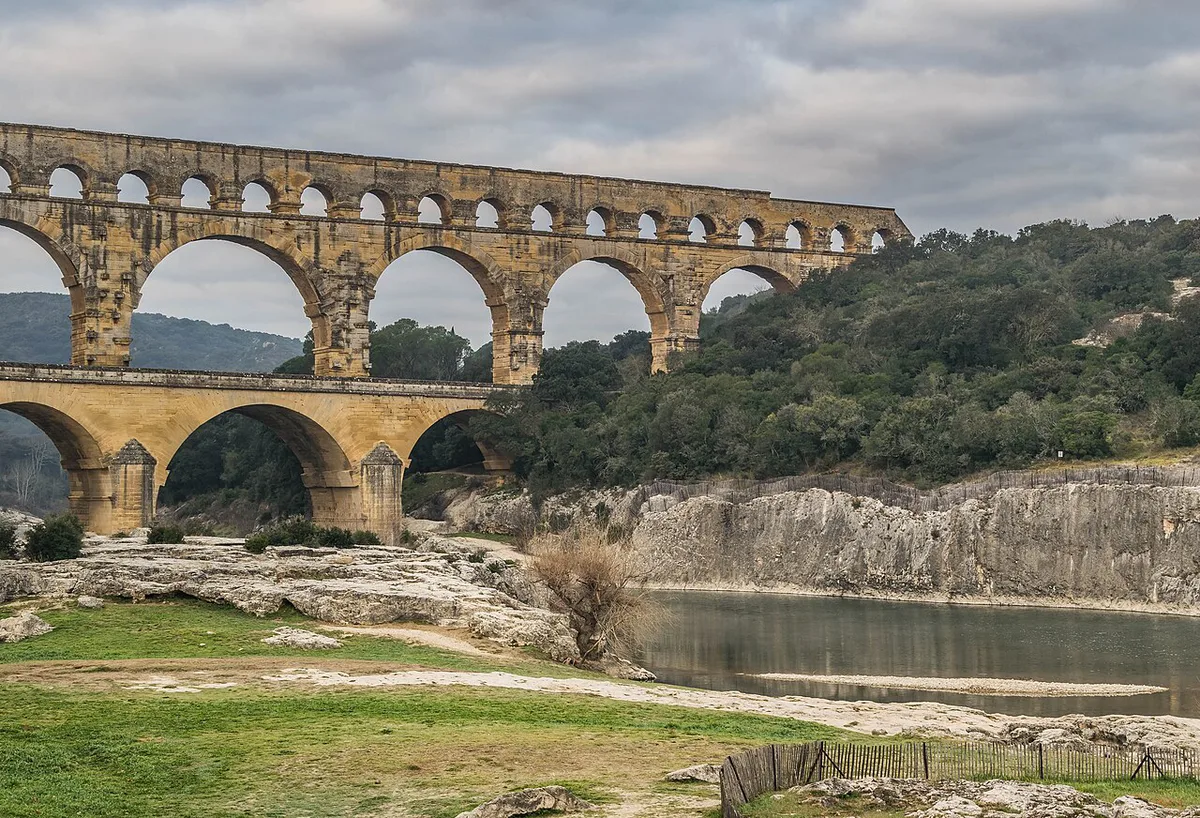
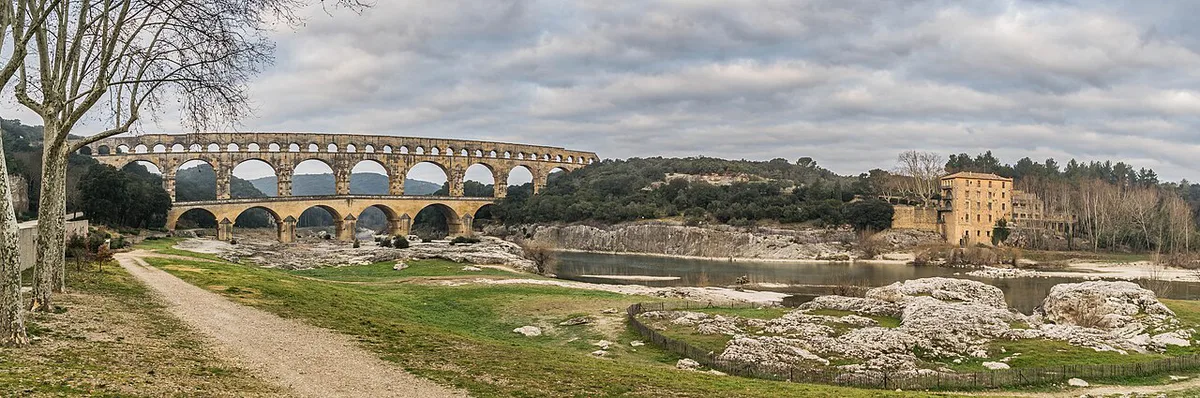
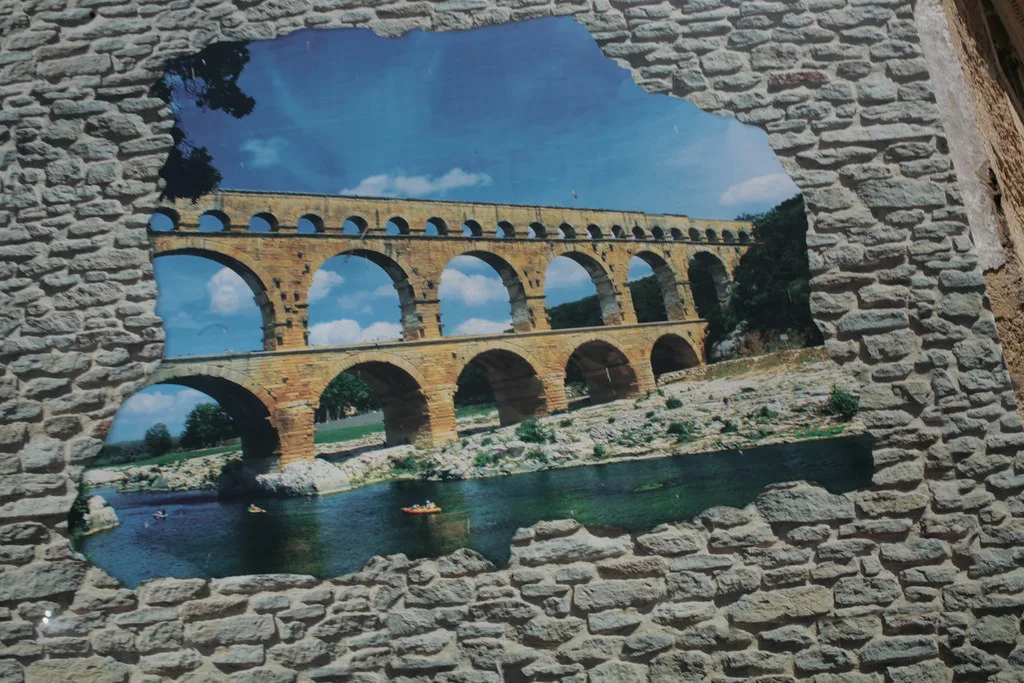
Pont du Gard is a Roman aqueduct bridge with three tiers of arches crossing the Gardon river. It carried water toward Nîmes, which is why the two are often visited together. Walk the river banks for the best views of the arches.
Best for engineering lovers and photographers, especially as a first stop when driving from Nîmes. Reaching it without a car takes extra planning, so travelers relying on trains should look at tours first.
6. Nîmes: Maison Carrée and the arena
Nîmes has a Roman temple, the Maison Carrée, and a Roman arena in its city centre. Both sit within the old town, so half a day is enough to see them. Combine Nîmes with Pont du Gard for a full day of Roman sights.
Best for visitors who want a compact city break with intact monuments. Not ideal for rural quiet, and the arena hosts events, so check listings before you plan a visit.
7. Lyon: Roman theatres on Fourvière hill
Lyon was the Roman city of Lugdunum, and its theatres sit on Fourvière hill. Explore the Roman theatres on Fourvière, where stepped seating looks over the city. Allow half a day, since the hillside and its museum reward a slow visit.
Best for city-break travelers who want Roman history alongside a major city's food and transport. Skip it if you only want intact Provence-style arches.
8. Vienne: the temple of Augustus and Livia
Vienne pairs naturally with Lyon as a day trip. Its main Roman prize is the Roman temple at Vienne, a classical temple front standing in the town. A couple of hours covers the temple and a walk through the old centre.
Best for travelers who want a quiet, intact monument after Lyon's hillside. Not worth a special journey on its own.
9. Fréjus on the Riviera
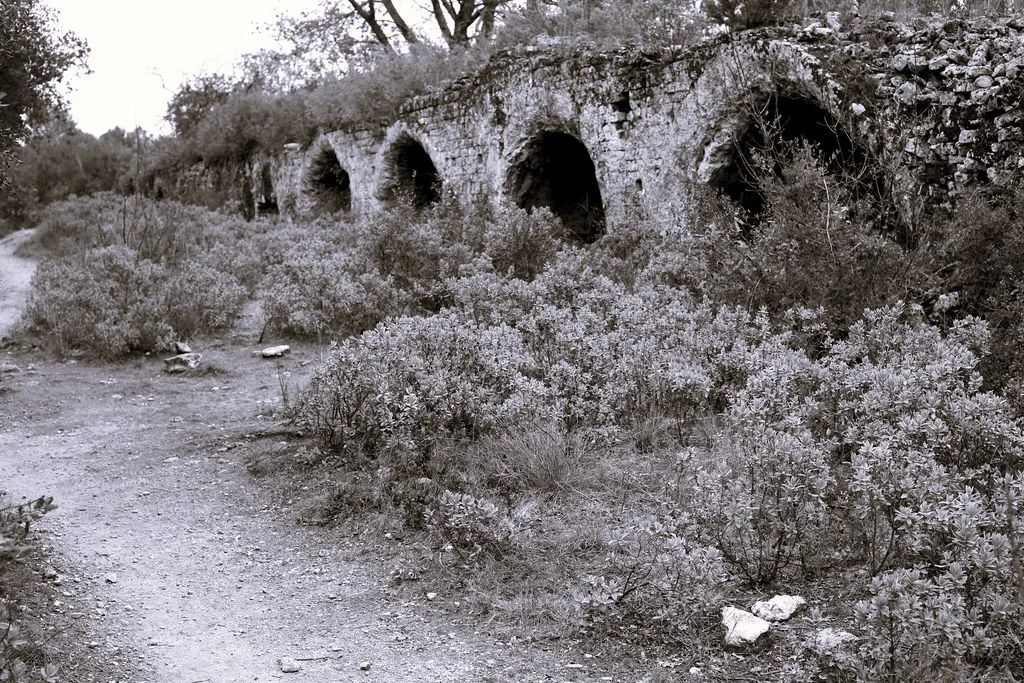
Fréjus brings Roman remains to the Riviera coast. See the Roman remains at Fréjus, including its amphitheatre and sections of aqueduct arches. Plan around half a day, which fits easily between beach time and other stops.
Best for coastal holidays that need a dose of history. Skip it if ruins are your whole reason for travel, because Provence offers more.
10. Autun: Roman gates in Burgundy
Autun, the Roman Augustodunum, keeps two town gates, the Porte d'Arroux and the Porte Saint-André. Find them in our guide to the Roman gates and theatre of Autun. A Roman theatre completes the picture, so you can see the town's outline in one walk.
Best for Burgundy road trips, especially when combined with Bibracte. Travelers without a car should check rail links first.
11. Saintes on the Atlantic side
Saintes, in western France, has a Roman arch and an amphitheatre. Visit the Roman arch and amphitheatre at Saintes as part of a western France route. A short stop of a few hours is enough.
Best for road-trippers already heading along the Atlantic side. Skip it if your trip is limited to Provence.
12. Paris: Lutetia's arena and baths
Paris was the Roman town of Lutetia, and a few traces survive. Arènes de Lutèce is an amphitheatre in the Latin Quarter, and Roman baths survive at the Cluny museum. Read more in our guide to Roman remains in Paris.
Best for travelers who have only Paris and want one Roman hour. Skip it if you expect grand monuments, since these are fragments.
13. Alésia: the last Gallic stand
Alésia is the Burgundy site linked to Caesar's siege of the Gauls. Explore the Alésia battle site for context on Rome's conquest. Expect interpretation, a museum and excavated foundations rather than standing monuments.
Best for history readers who care about the story more than the stonework. Skip it if you want Provence-style arches.
14. Bibracte: a Gaulish hilltop town
Bibracte was a Gaulish capital on Mont Beuvray, later overshadowed by Autun. Visit the Gaulish hilltop town of Bibracte for ramparts, excavations and a museum. Walking the hillside is the main activity, so bring sturdy shoes.
Best for walkers and Burgundy road trips paired with Autun. Skip it if you want Roman monuments, because this is mostly Gaulish.
How to choose: itinerary options
A Provence base in Arles suits a three-day route. Spend day one in Arles on foot. On day two, drive to Glanum, then on to Nîmes or Pont du Gard. From Arles, Glanum's excavated streets make the easiest second stop. On day three, head to Orange. From Orange, continue to the Roman town of Vaison. For a Lyon day trip, take Lyon's hillside theatres in the morning and Vienne's temple in the afternoon. In Burgundy, pair Autun with Bibracte and Alésia by car.
| Trip type | Start with | Transport trade-off |
|---|---|---|
| Three days in Provence | Arles | Walk in Arles, drive for the rest |
| Lyon and Vienne day trip | Lyon | Both work by train |
| Burgundy stop | Autun | Car needed for hilltops |
Tickets, hours and seasonal timing
Fares, closing days and evening events vary by site and season, and heat makes midday visits hard in summer. Check the Centre des monuments nationaux site for state-run monuments.
With 14 sites to check, plan for separate hours and closing days, since fares and evening events vary by site and season.
Getting around and where to base yourself
Arles, Avignon and Lyon work well as bases. Arles suits a Provence circuit on foot, with short drives to the rest. Lyon covers Vienne by train. Arles and Nîmes also work well by rail. Rural sites reward a rental car. Hilltop sites such as Bibracte and Alésia are far easier by car. Mistake to avoid: expecting Alésia and Bibracte to look like Arles, when they are mostly Gaulish and conquest-era sites.
Frequently Asked Questions
Where is the best preserved Roman city?
In France, Arles and Orange offer the strongest mix of standing monuments. Vaison-la-Romaine lets you walk through excavated streets.
Where are all the Roman ruins?
Most Roman sites in France concentrate in Provence and the Rhône corridor. Outliers sit in Lyon, Burgundy, the Atlantic coast and Paris, and the table above lists 14 sites by region.
What was France called in ancient Rome?
Romans called the region Gaul, or Gallia. Provence became an early Roman province.
Explore More Guides
Keep planning your trip with these guides.
Guides
Related guides

Continue reading
Guides on the same trip