Last updated November 2026: the Théâtre antique d'Orange (Roman Theatre of Orange) is a UNESCO-listed Roman theatre in Orange, Vaucluse, whose stage wall still stands. It works as a museum-and-theatre site, with the Musée d'Orange across the street. This guide covers what to look at, how to plan the visit and where to find current ticket details, and it links to our wider 14 Roman Ruins in France: Best Sites and How to Plan Your Visit roundup.
Featured image: Juhele_CZ, CC0 1.0, via Flickr.
Is the Théâtre antique d'Orange worth visiting?
Yes, if you want to see what a Roman stage building looks like when it has not been reduced to a few columns. Most ancient theatres keep their seating and lose the wall behind the stage. Orange kept the wall. Plan for a focused stop of a few hours, not a full day, and pair it with the Musée d'Orange and the Triumphal Arch.
- Go if: you want the best-preserved stage wall on a Provence itinerary, or you are following a Roman route through southern France.
- Go if: you like sitting in a tiered cavea and imagining the acoustics.
- Skip it if: you only have an hour in Orange and prefer open-air archaeology with no seated viewing.
- Skip it if: you have just toured Arles and Nîmes and want a different kind of site. Even then, the stage wall is the reason to make an exception.
What you are looking at: stage wall, statue niche and seating
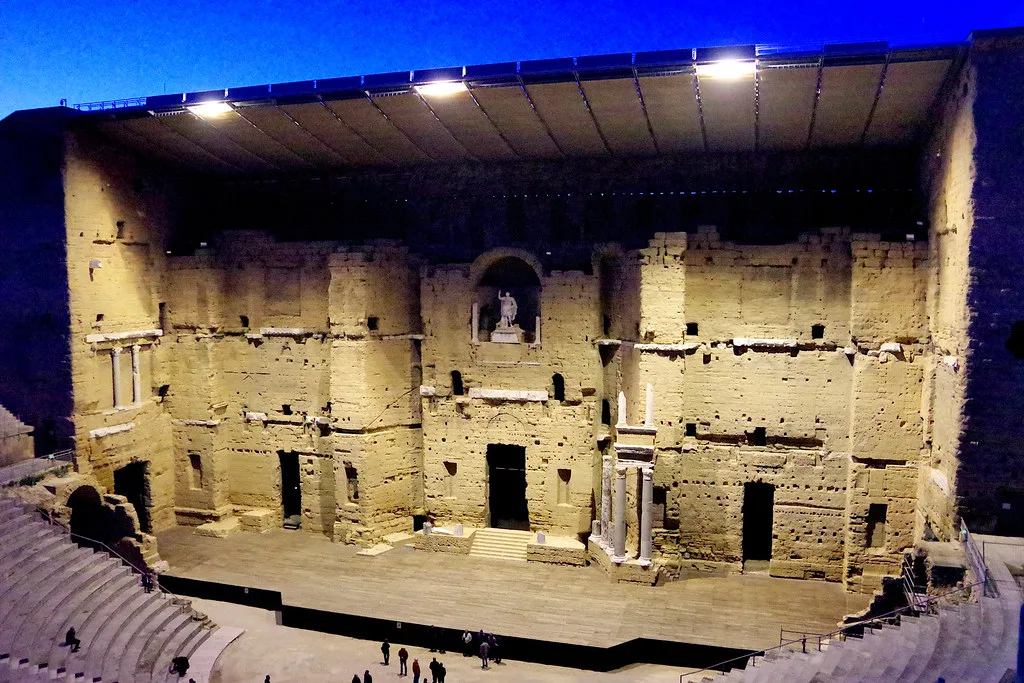
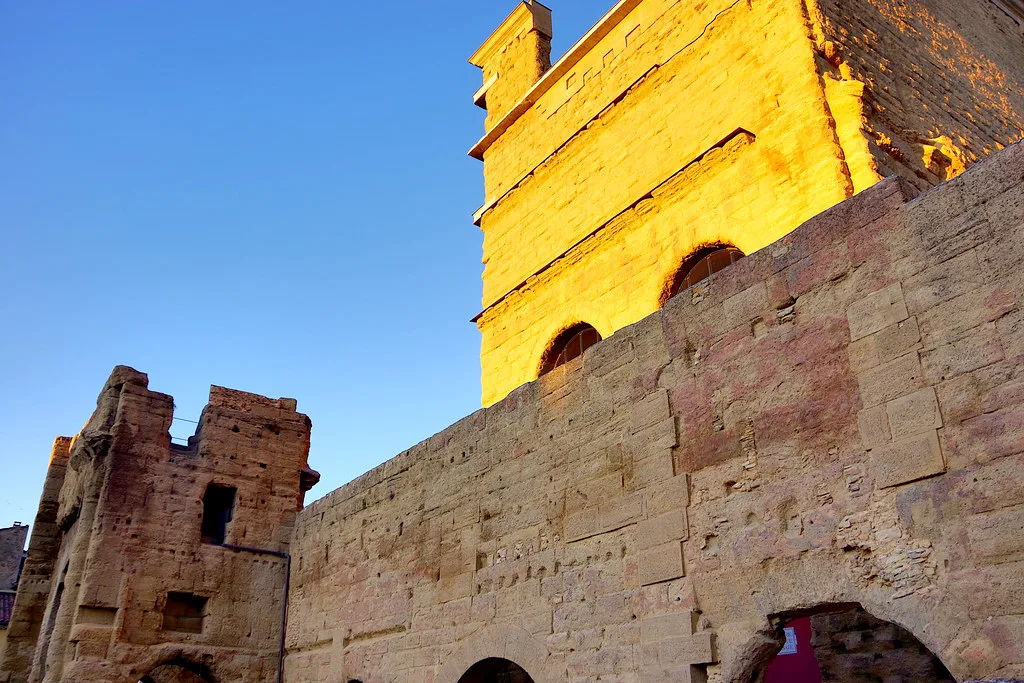
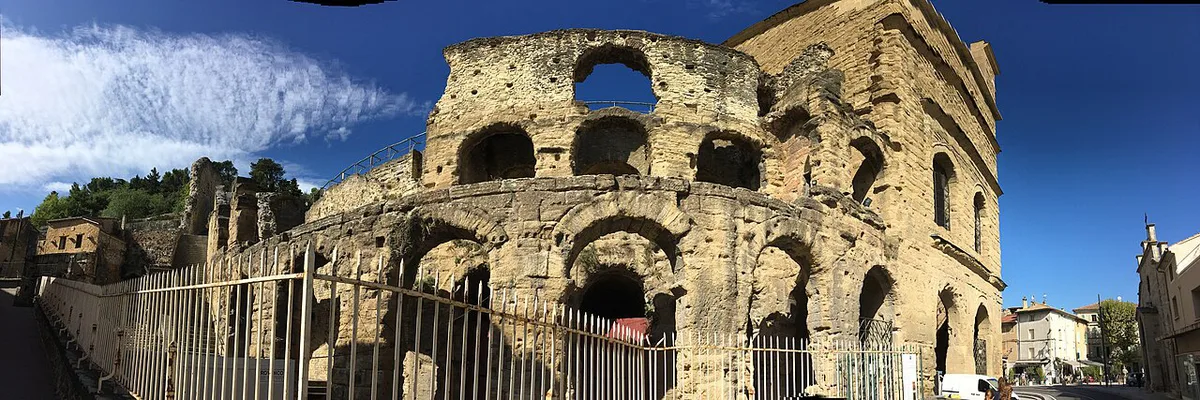
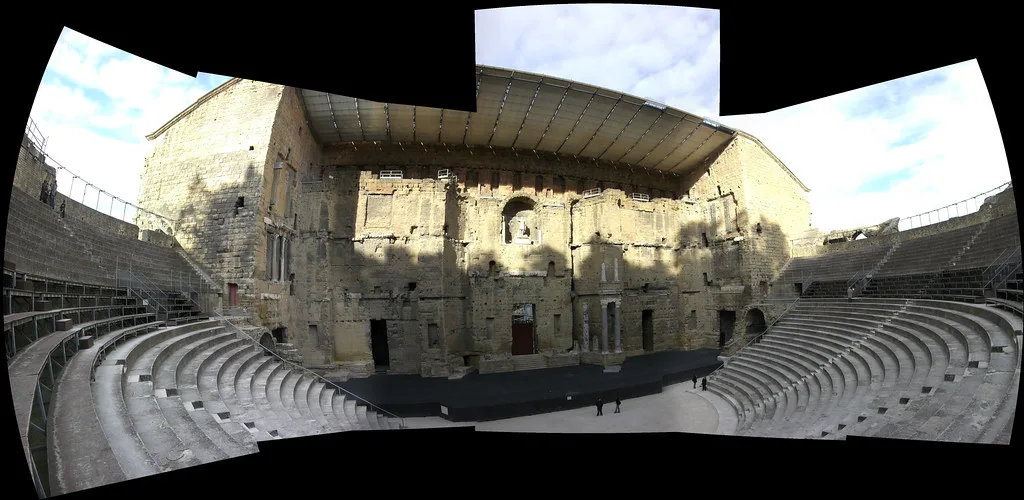
Roman theatres had three parts that matter here. The first is the stage wall, known in Latin as the frons scaenae. It is the tall, flat backdrop behind the performers, and it also reflected sound toward the audience. Commonly quoted figures put it at 37 m (about 121 ft) high and 103 m (about 338 ft) long, which is why it dominates every photo. The second is the central niche in that wall, where a statue of an emperor stood as the focal point of the whole stage. Check the museum and the official site for how the statue is shown today. The third is the cavea, the tiered seating cut into the hillside. Visitors usually climb it to appreciate the scale and the acoustics. Orange was built in the early 1st century AD, in the Augustan period, as a place for mime, pantomime and poetry readings. Dates for ancient buildings are approximate, so treat any single year with caution.
Standing 37 m (about 121 ft) high and 103 m (about 338 ft) long, the wall gives a few-hour stop its main payoff.
Tickets, opening hours and what's included
No current ticket price, opening hour or closure day is confirmed for this guide. The official site of the theatre publishes current fares, combined ticket options and event closures.
How long to spend and how to plan the visit
Allow time for the stage wall first, then the seating, then the museum if you want context. Use the table below as a planning guide only. Durations are rough estimates and depend on how long you sit in the cavea. Adding the old town and the Triumphal Arch of Orange turns the stop into a half day.
| Visit option | Typical time (estimate) | What you see | Best for |
|---|---|---|---|
| Theatre only | Short stop | Stage wall, cavea, statue niche | Travellers on a tight Provence schedule |
| Theatre + Musée d'Orange | Half a morning or afternoon | Site plus the museum across the street | Anyone who wants the history behind the stone |
| Theatre + arch + old town | Half a day or more | Theatre, arch on the Via Agrippa approach, town centre | Roman-route travellers with a free afternoon |
Daytime visit vs an evening performance
A daytime visit lets you walk the site, look closely at the wall and take photos at your own pace. An evening performance gives you the theatre as it was meant to be used, with sound and light. Orange is known for its Chorégies d'Orange summer opera and concert season, which uses the theatre. Performance seating and acoustics differ from the daytime visitor experience. Rehearsals and events can also affect visiting hours. Check the official site for dates before you plan a daytime stop in summer, and book early if you want a performance seat.
Getting there and getting around Orange
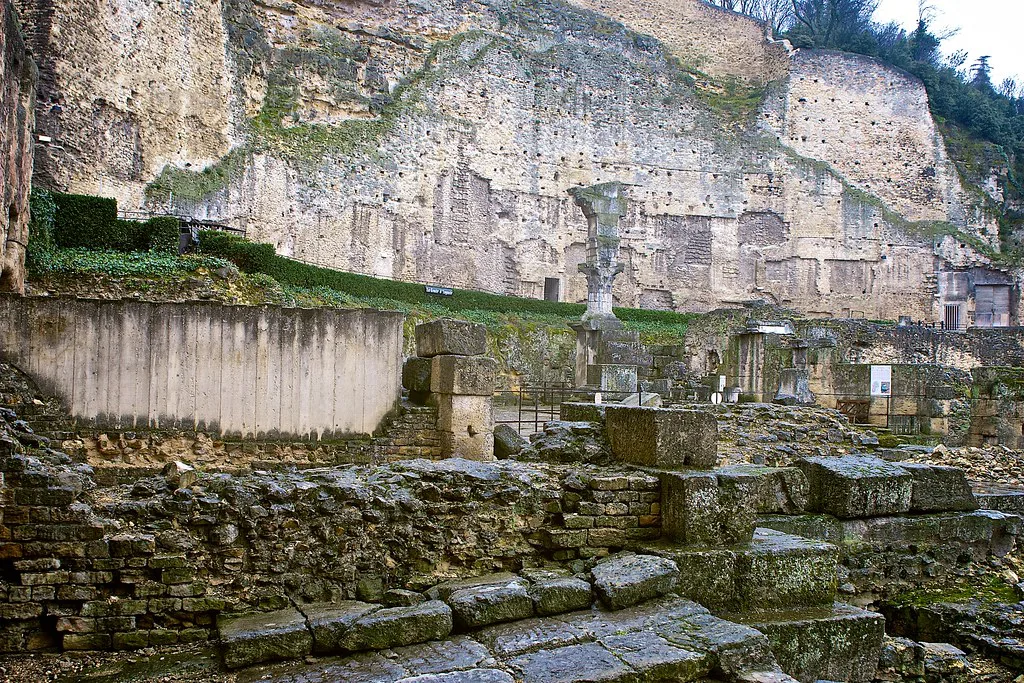
Orange is a compact town in Vaucluse, and the theatre, the Musée d'Orange and the arch sit within the central area. Arrive by train at Orange station, or by road from Avignon. Check the Orange tourism office via Provence Guide for parking and event-day access. The tiered seating involves steps, so visitors with limited mobility should ask the official site about access routes before they go. For lodging, staying in Orange keeps you close to the evening performances. Basing yourself in Avignon gives you more restaurants and rail options, at the cost of a trip back each day.
Best time to visit: season, heat and Mistral
Midday in summer is the hardest time to sit in an open-air theatre, because stone seating holds the heat and offers little shade. Bring water and a hat. Spring and autumn are gentler for a long look at the cavea. The Mistral wind can make the upper rows feel cooler and breezier than the town below. Evening events change the crowd pattern, so a morning visit on a performance day may be quieter or restricted.
Pairing Orange with other Roman sites
Start with the arch, which stands outside the theatre site on the Via Agrippa approach into town. Then plan a second stop based on how much Roman Provence you want. Vaison-la-Romaine offers a different kind of site, with excavated streets and houses. Glanum near Saint-Rémy shows a Gallo-Roman town beside the later arch and mausoleum. In Arles, the Roman monuments of Arles give you an amphitheatre and theatre to compare with Orange. Further north, Lyon's Roman theatres suit readers who want another theatre on a longer route.
Common mistakes to avoid
Most problems come from timing and assumptions, not from the site itself.
- Visiting at midday in summer, when the stone seating is hottest and shade is scarce.
- Missing the arch because it is outside the theatre site.
- Assuming the theatre is always open to visitors, when events can change access.
- Skipping the museum, which explains what you are looking at.
- Not checking performance dates before booking a day trip.
Related guides

Continue reading
Guides on the same trip