Last updated November 2026: Arles Roman monuments sit close together, so most visitors cover them on foot in a day. Many of the city's monuments are on the UNESCO World Heritage List. Start with the amphitheatre and theatre, then add the antiquity museum if time allows.
Featured image: ell brown, CC BY 2.0, via Flickr.
Roman Arles at a glance
Greeks from Massalia founded Arles in the 6th century B.C. Julius Caesar conquered Massalia in 49 B.C., and the city became a Roman colony named Arelate. Augustus and later emperors gave it a forum, a theatre, an amphitheatre and temples. Constantine added an imperial palace and baths in the early 4th century. Today the visible Roman layer is a short list of sites:
- Amphitheatre (Arènes)
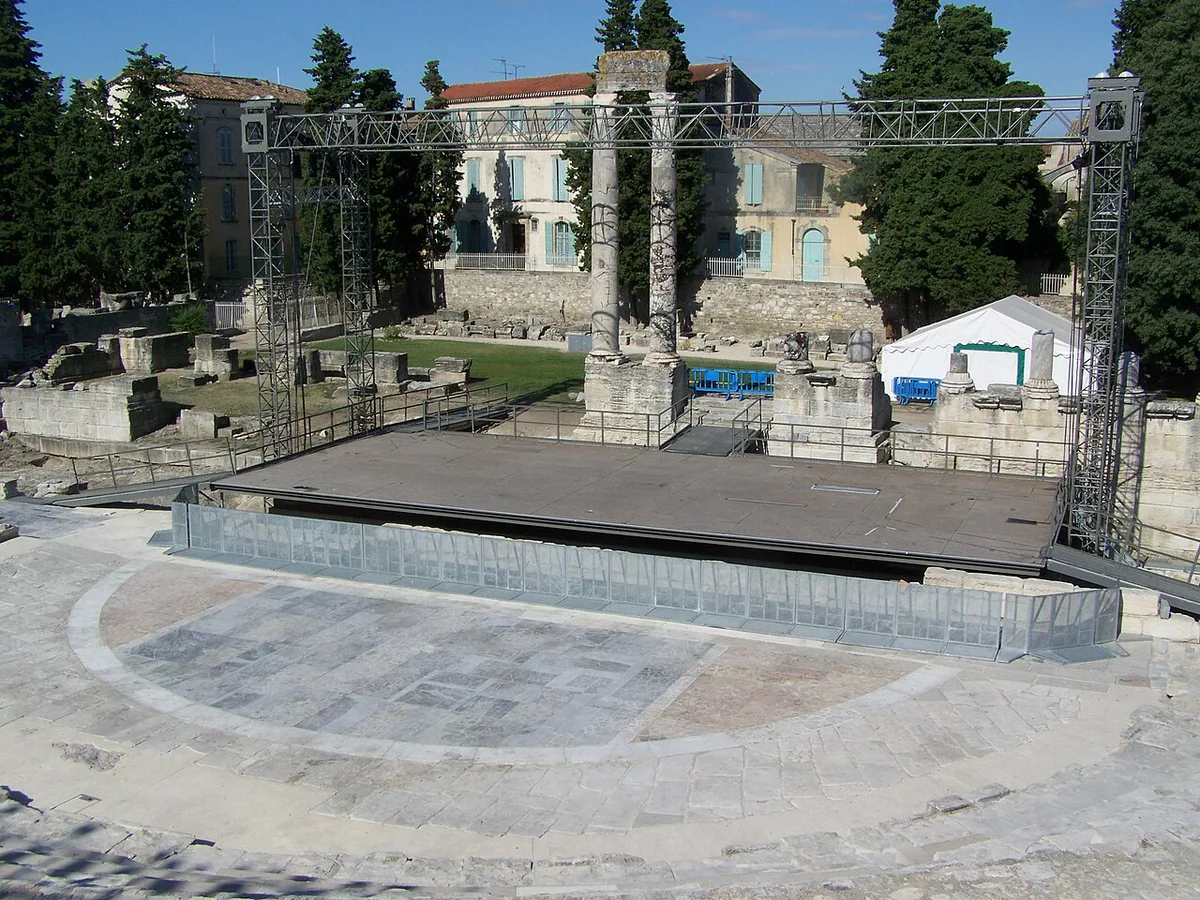
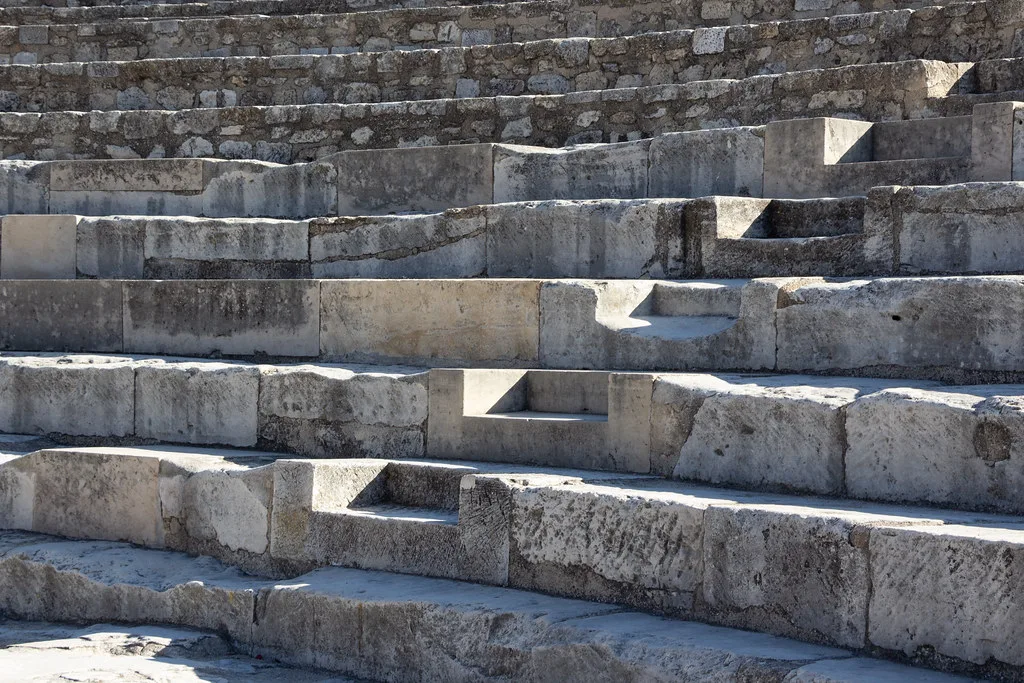
- Ancient theatre (Théâtre antique)
- Cryptoporticus
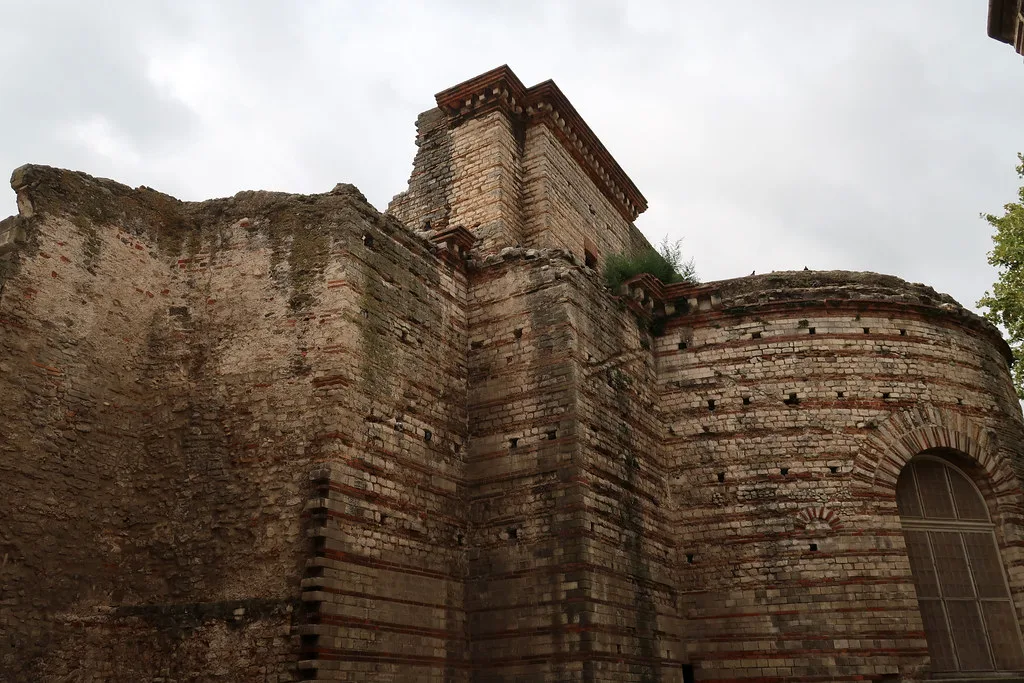
- Baths of Constantine
- Les Alyscamps
- Museum of Antiquity and the Roman circus beside it
The Arles Roman monuments, ranked by priority
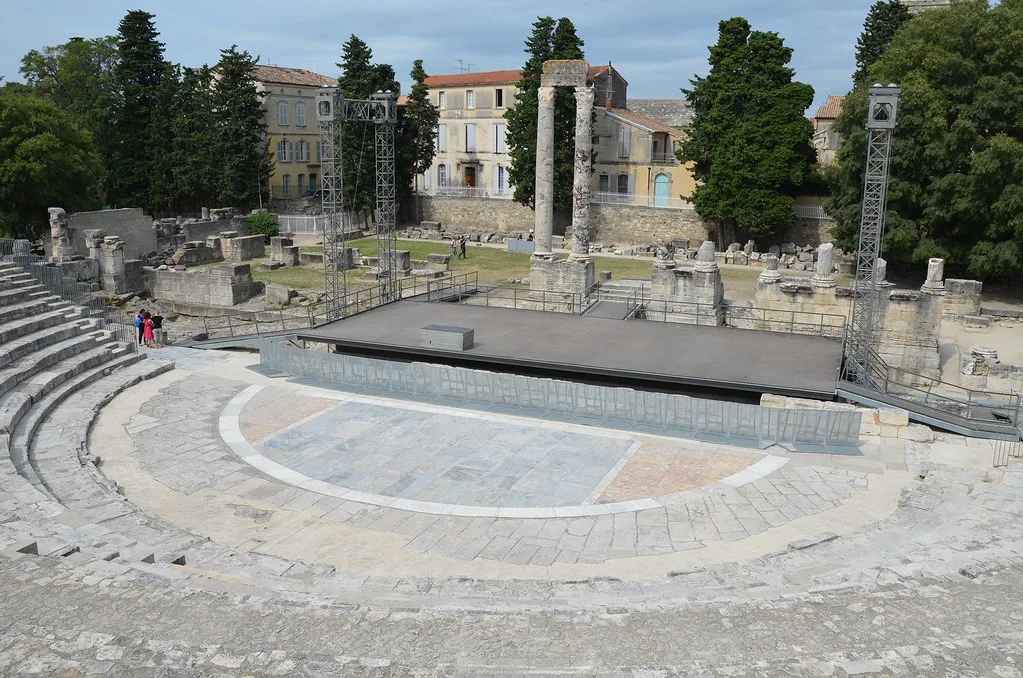
Not every site delivers the same payoff. The amphitheatre and theatre are the best-preserved Roman buildings in town, so they come first. The others are partial remains or collections, and they suit specific travelers.
| Site | What survives | Access notes | Best for |
|---|---|---|---|
| Amphitheatre | Largely intact arena | Closed or restricted on event days | First-time visitors |
| Theatre | Seating and partial stage | Check official site for hours | Short stops |
| Cryptoporticus | Underground galleries | Check official site for hours | Hot days |
| Baths of Constantine | Partial remains | Check official site for hours | Roman history fans |
| Alyscamps | Tombs and sarcophagi along a path | Check official site for hours | Quiet walkers |
| Museum of Antiquity | Collections plus circus remains | Closed Tuesday | Rainy days, families |
- 1. Amphitheatre (Arènes): built in the late 1st century A.D. and still a working venue. It has staged bullfights and pageants, so you see an intact arena rather than a ruin. It suits almost everyone, though steps and uneven stone are hard going with limited mobility.
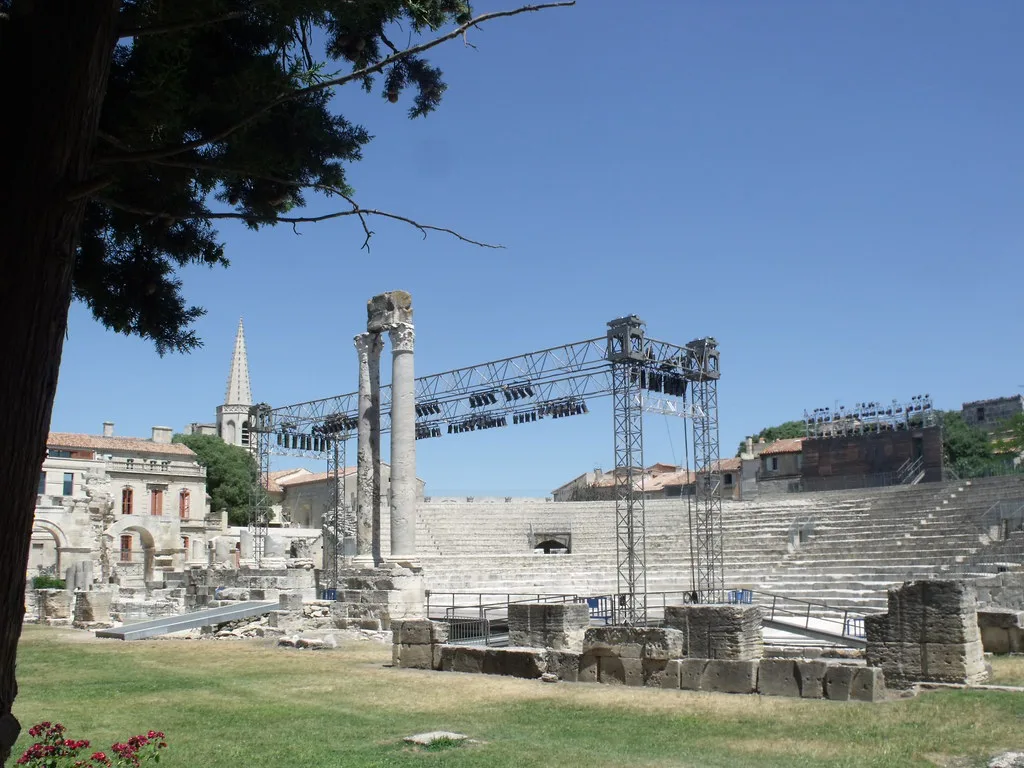
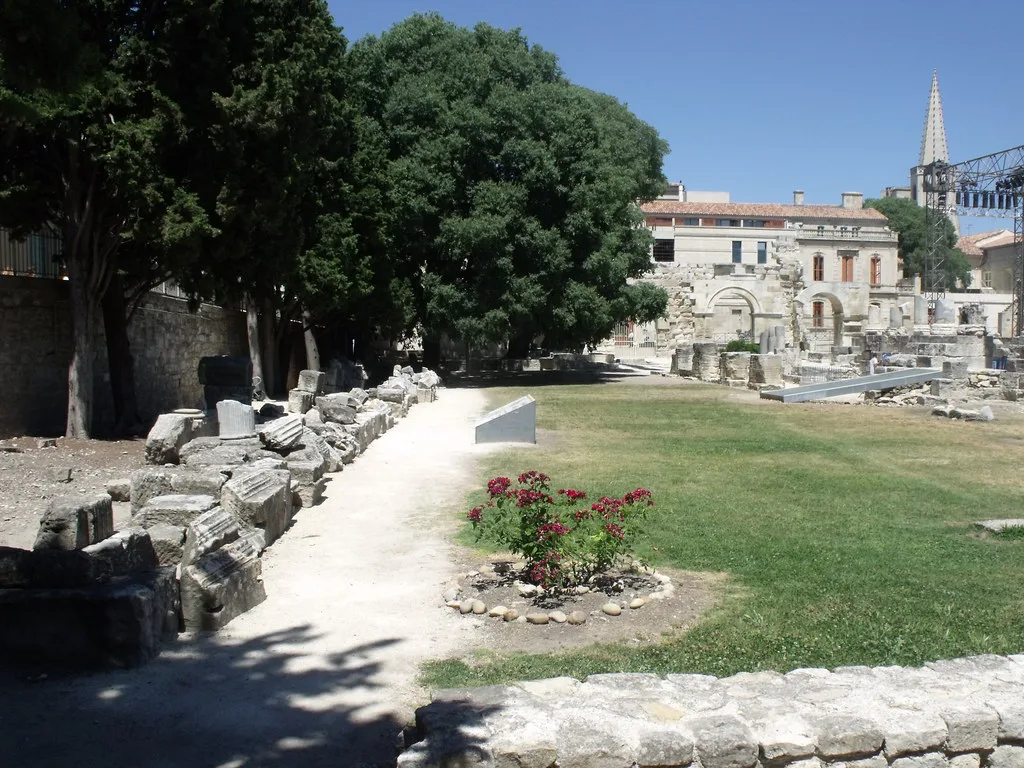
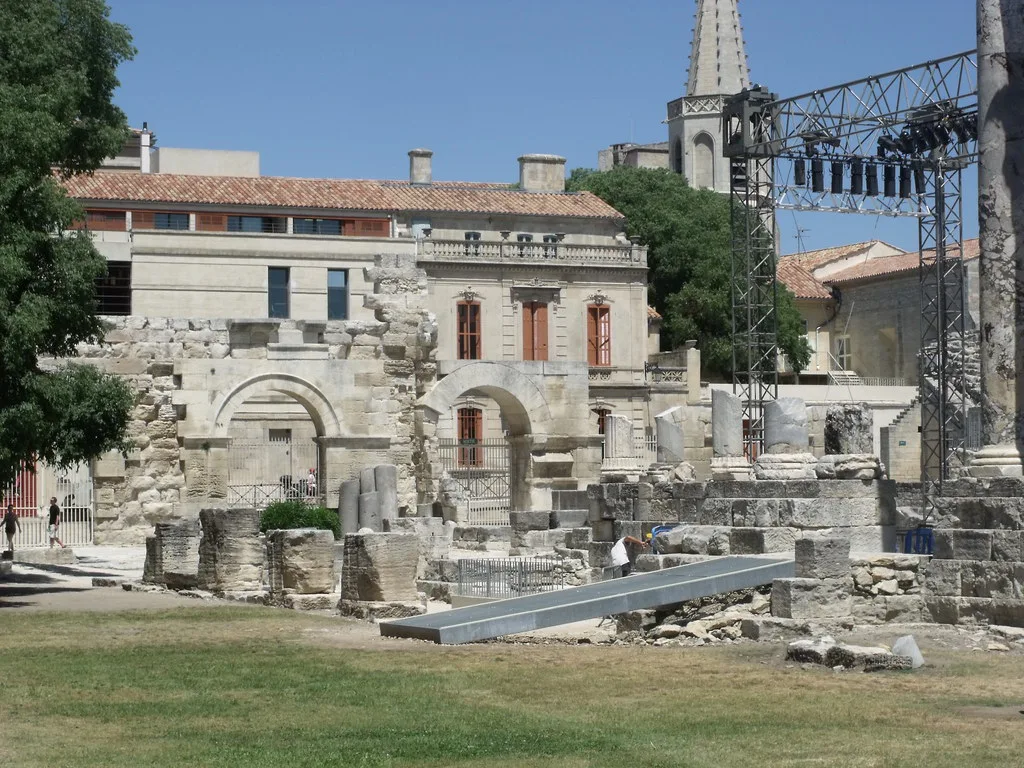
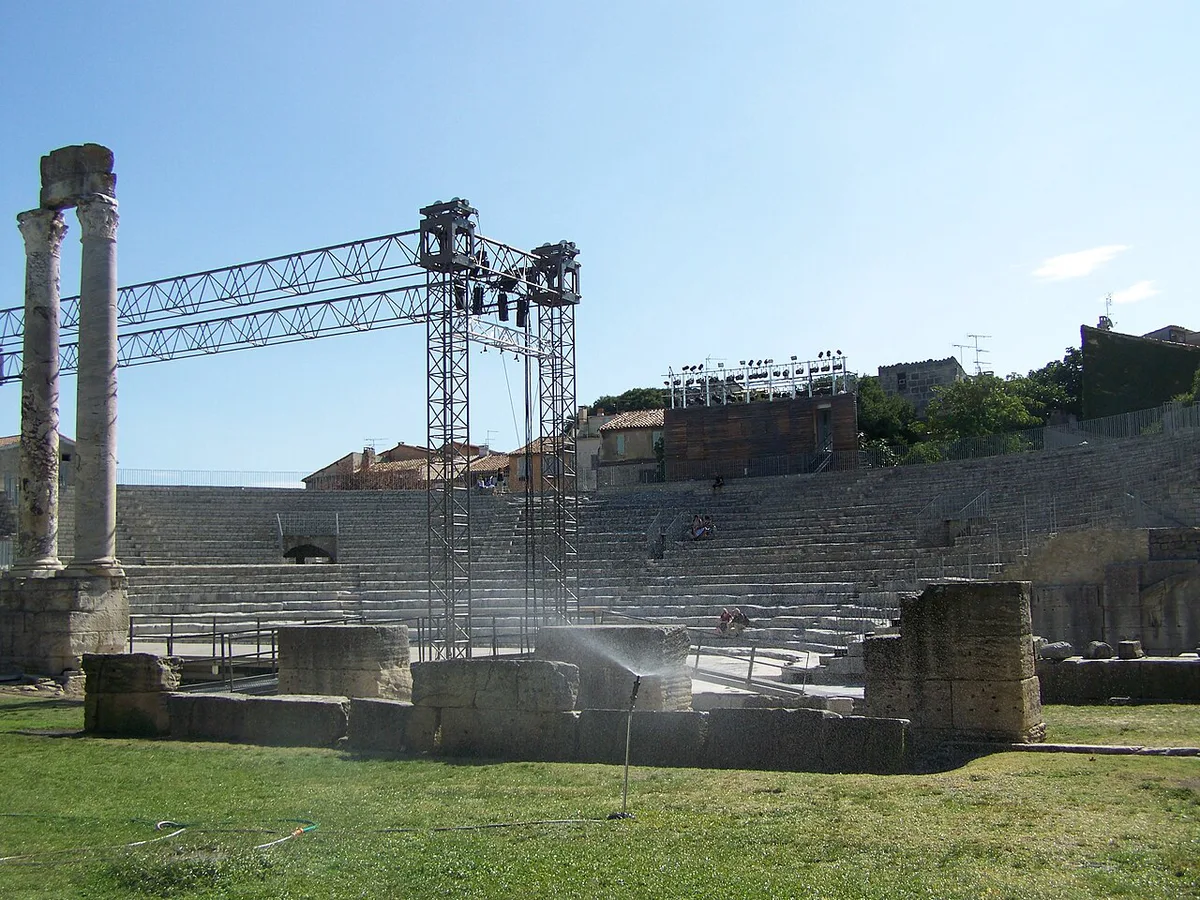
- 2. Ancient theatre: begun in the late 1st century B.C. and among the best preserved Roman buildings in Arles. Expect stone seating and surviving stage elements rather than a full structure. It suits anyone who wants a quick, photogenic stop.
- 3. Cryptoporticus: an underground gallery system that many visitors miss. Our guide to the underground galleries of the cryptoporticus explains what you walk through. It suits visitors escaping summer heat.
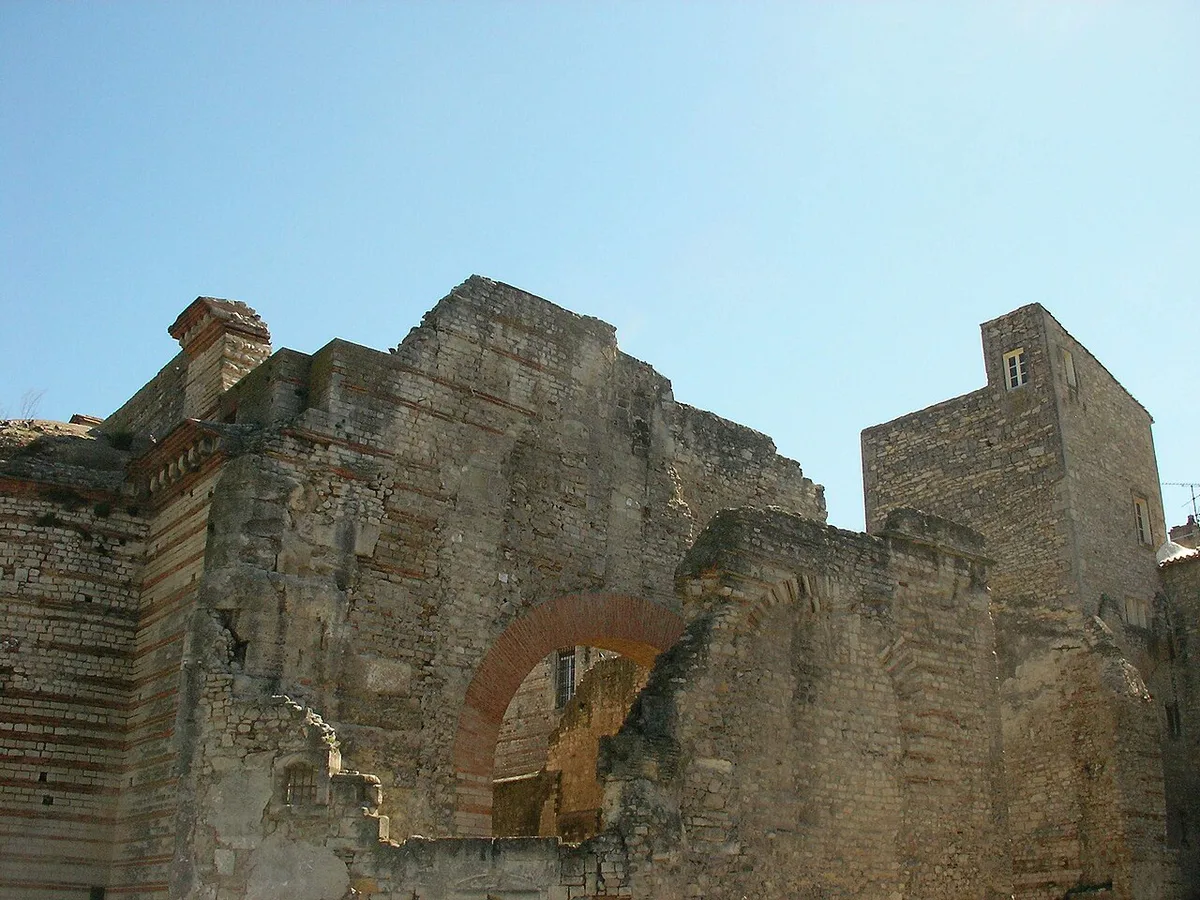
- 4. Baths of Constantine: remains of the early 4th century imperial baths. Expect partial walls rather than a complete bathhouse. It suits anyone interested in the late Roman city.
- 5. Les Alyscamps: a Roman and medieval cemetery along the Via Aurelia, the old road from Italy. It is a quiet walk among tombs. Skip it if you want big monuments only.
- 6. Museum of Antiquity and circus: the museum sits in a triangular building by Henri Ciriani, beside the remains of the Roman circus. It holds sculpture, mosaics, scale models of Roman Arles and sarcophagi from the Alyscamps. Anyone who dislikes museums can skip the interior and still see the circus site.
How to plan your time
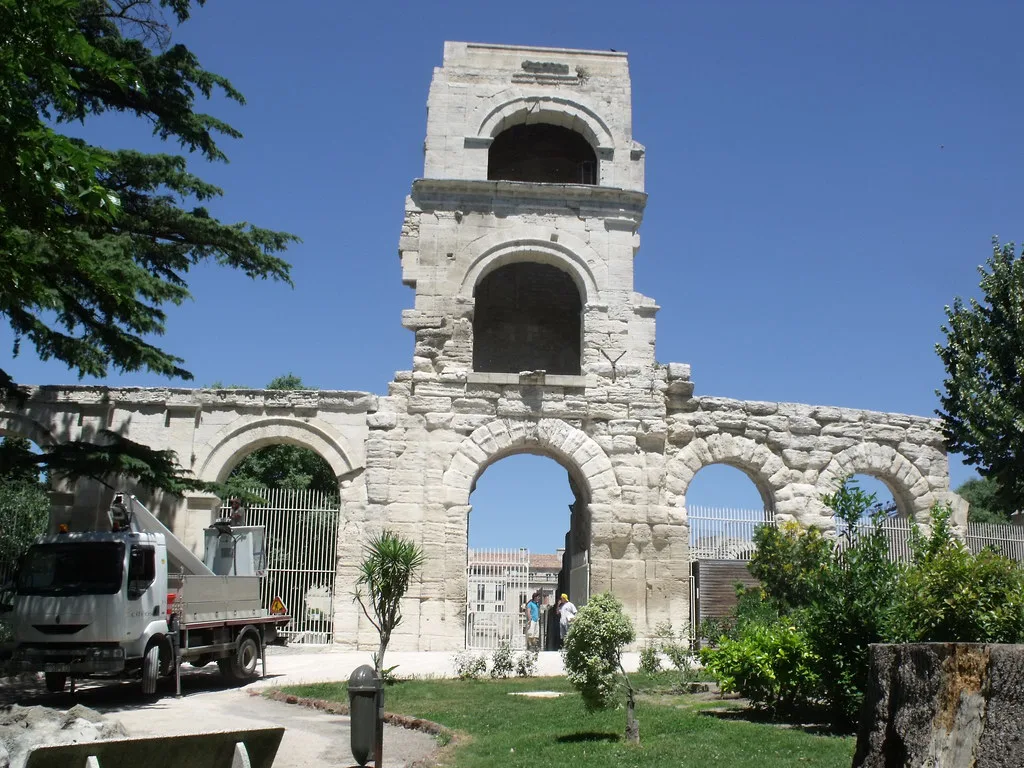
Two hours is enough for the amphitheatre and theatre, which are the best-preserved Roman buildings in town. Longer plans add the underground and outlying sites. The museum is a 15-minute walk from Place du Forum, so treat it as its own block. Cobbles, steps and midday heat slow everyone down.
- Half-day: amphitheatre, theatre, then the cryptoporticus to cool off.
- One day: add the Baths of Constantine, the Alyscamps and the Museum of Antiquity with its circus remains.
- Overnight: spend the second morning on a Roman day trip, or revisit the arena when no event is on.
Tickets, hours and event-day closures
Museum of Antiquity is open Wednesday to Monday and closed Tuesday. Entry is free on the first Sunday of each month. Confirm both on the museum's official site before you go. Euro prices, any combined pass and seasonal hours are listed by Centre des monuments nationaux. The arena still hosts bullfights and other shows, and those can limit visiting. The Arles tourism office lists the event calendar.
Give the museum its own 15-minute block, since it is a walk from Place du Forum, and never schedule it for a Tuesday.
Getting there and getting around
Arles has its own train station, and the old town is walkable. A free shuttle, Navette Navia A, has run from the station with stops by the amphitheatre and along the Rhône. Check that it still operates. The Museum of Antiquity has no parking, so leave the car outside the center. Walking from Place du Forum takes about 15 minutes.
Where to stay
Stay in the old town near Place du Forum if you want to walk to the amphitheatre and theatre at dawn or after dusk. Stay near the station if you arrive by train and want the shuttle and quick departures. Either way, the Roman sites are a short walk apart.
Mistakes to avoid and who should skip what
A few errors cost visitors the most time.
- Arriving at the museum on a Tuesday, when it is closed.
- Walking the cobbles at midday in summer without water or shade.
- Missing the underground cryptoporticus.
- Assuming every site is open all day or on event days.
- Expecting complete buildings at the baths or the circus.
Add a Roman day trip from Arles
Arles covers a full Roman day on its own. Add a day trip if you want a different kind of site. Orange has Orange's Roman theatre, a close comparison with Arles. Nearby, a Roman triumphal arch adds a second monument. For ruins of a whole town, see the ruins at Glanum. Another option is the Roman town of Vaison. Check travel times before you choose, because each trip uses most of a day. For the wider picture, browse Roman ruins across France. Lyon is covered by Lyon's Roman theatres.
Frequently Asked Questions
Are there Roman ruins in France?
Yes, and Arles is one of the best places to see them. Orange, Glanum and Vaison-la-Romaine are also in Provence. Our guide to France's wider Roman heritage covers more regions.
Related guides
Continue reading
Guides on the same trip