Last updated November 2026. A nimes roman trip centres on a compact cluster of monuments: the arena, the Maison Carrée, the Tour Magne, the Temple de Diane, the Porte d'Auguste and the Musée de la Romanité. Everything sits within about twenty minutes' walk of everything else. Pont du Gard is a separate half-day trip, so this guide sequences the city first and then helps you decide whether to add it.
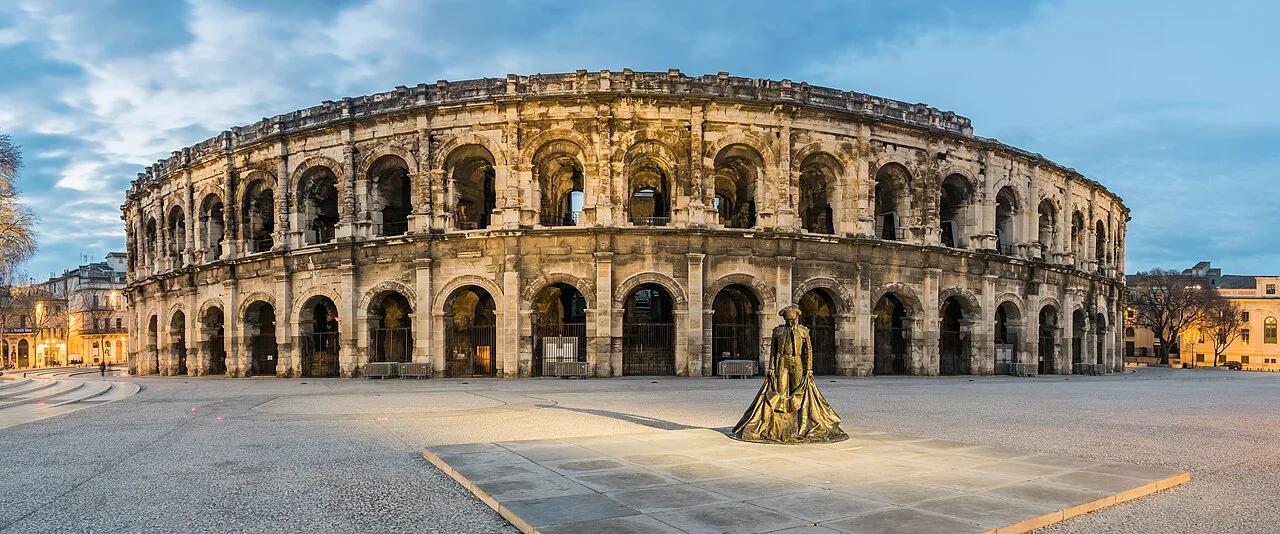
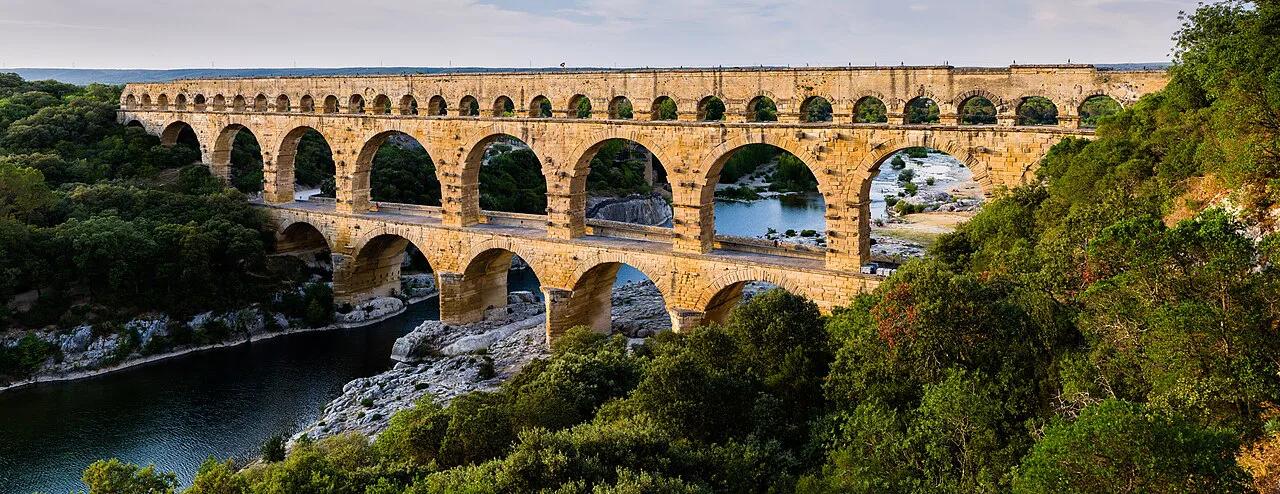
Featured image: Krzysztof Golik, CC BY-SA 4.0, via Wikimedia Commons.
Nimes Roman sites at a glance
Nîmes holds more standing Roman architecture than any other city in France, according to the Nîmes tourist office. Augustus founded the Roman city after the conquest of 121 BC, and its monuments survived because later generations kept using them. Two hours covers the outside of the main monuments. A half day lets you go inside the arena and the museum. A full day adds the gardens, the Tour Magne and a slow lunch. Pont du Gard lies about half an hour north-east, so it needs its own half day. Nîmes sits on the boundary between Occitanie and Provence, which shows in the food and the light.

The Roman sites and what each is worth
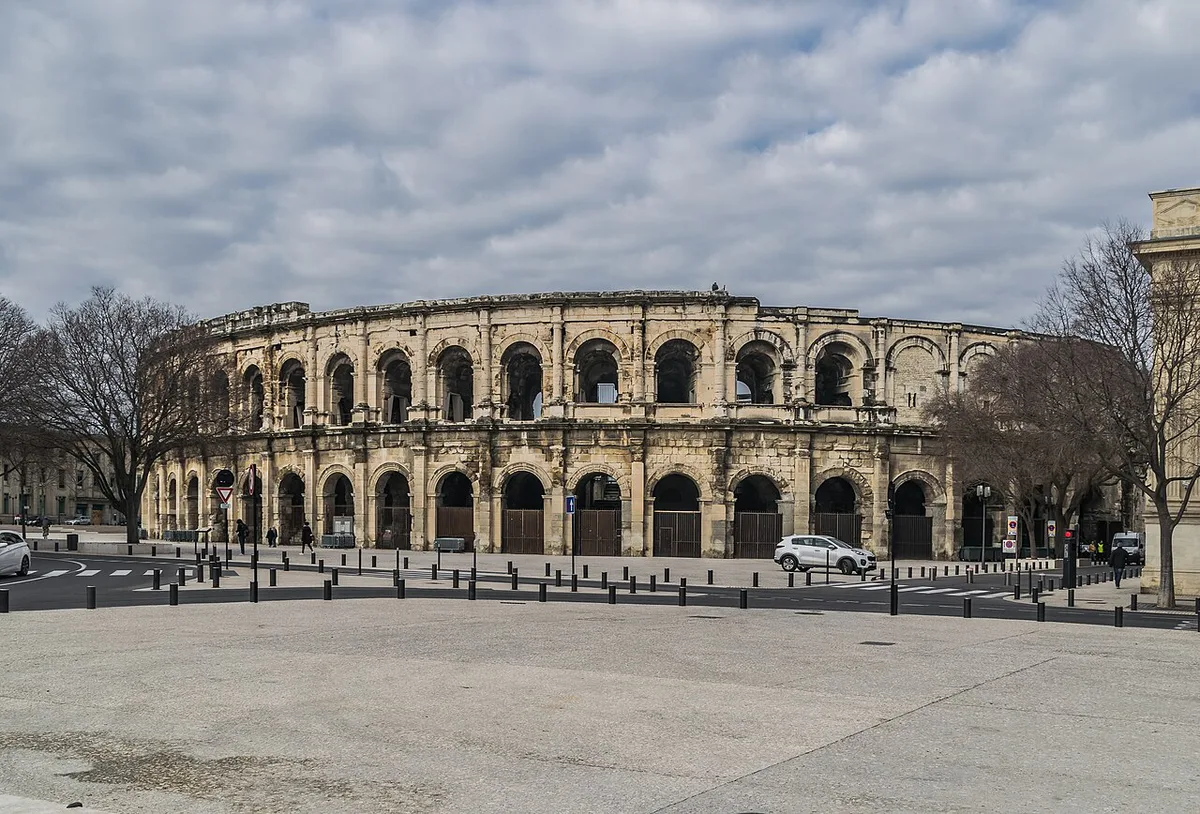
Six stops make up the core. Start with the table, then read the notes on the three that need the most planning. The Maison Carrée stands about 500 m from the arena, which is why the two pair so easily on foot.
| Site | Indoor or outdoor | Best for |
|---|---|---|
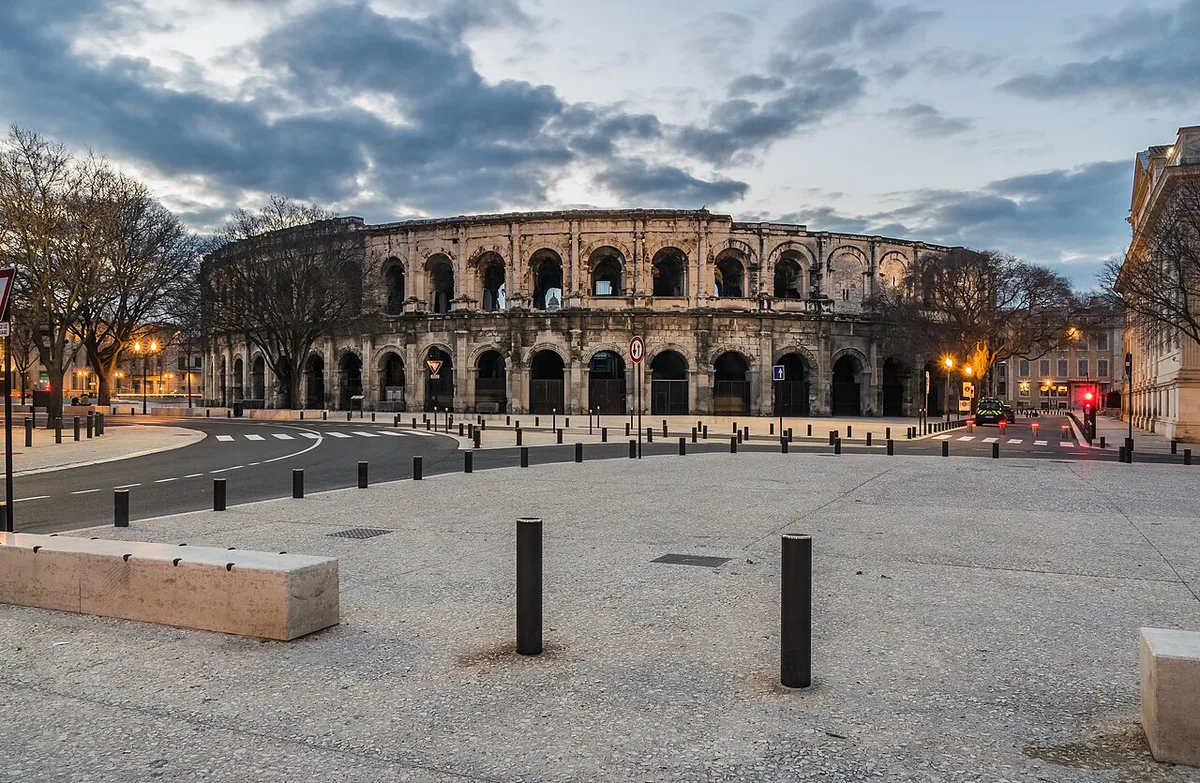
| Arena (Arènes de Nîmes) | Mostly outdoor, with shaded corridors | Everyone; the anchor of the day |
| Maison Carrée | Exterior free to view; small interior | Architecture fans and short stopovers |
| Tour Magne, Nîmes: Hours, Tickets, Climb & Pass and Jardins de la Fontaine | Outdoor, uphill | Views, shade and a slower pace |
| Temple de Diane | Outdoor, in the gardens | Ruin spotters |
| Porte d'Auguste | Outdoor, street level | A quick stop on the way in or out |
| Musée de la Romanité | Indoor, with a rooftop terrace | Families, wet days and context |
- Arena: a working venue, not a ruin. Concerts and bullfights still fill the stands, so event days change what you can enter.
- Maison Carrée: a first-century temple that survived because it served as a church, a stable, a town hall and an archive.
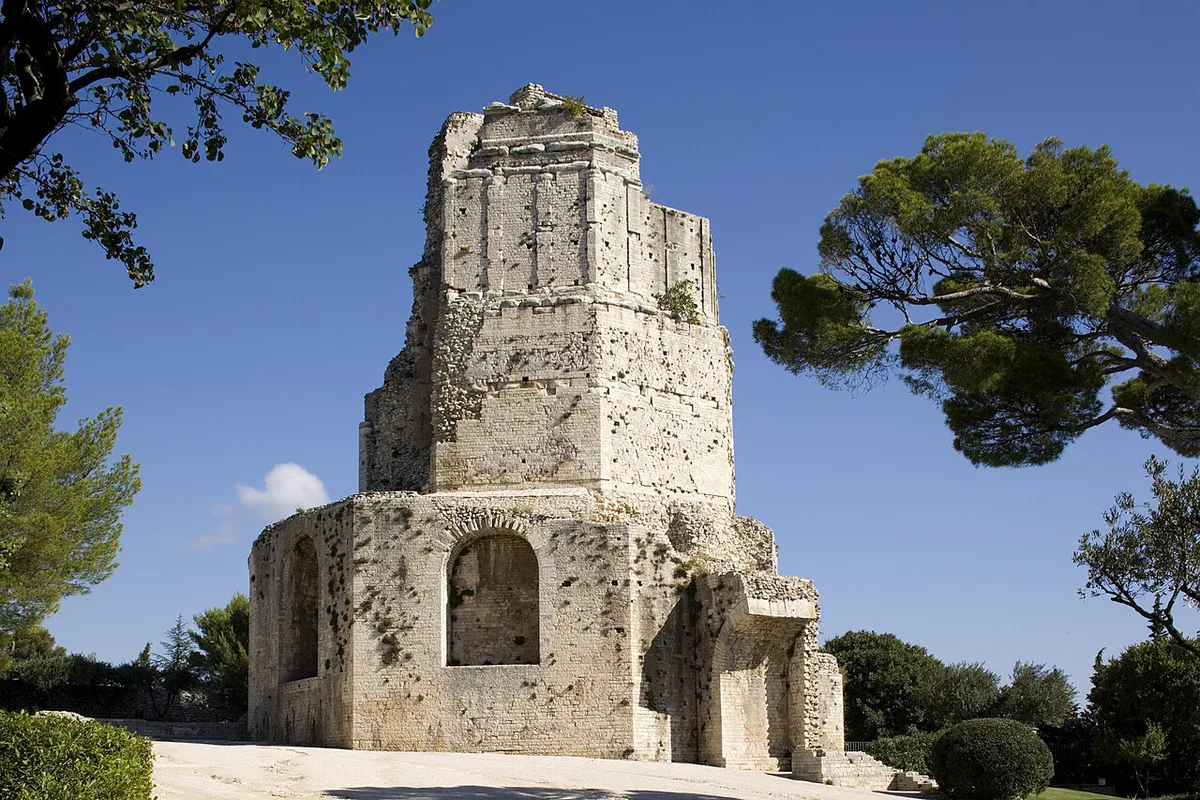
- Tour Magne: a tower from the Roman walls at the top of the Jardins de la Fontaine, with a view towards the Cévennes.
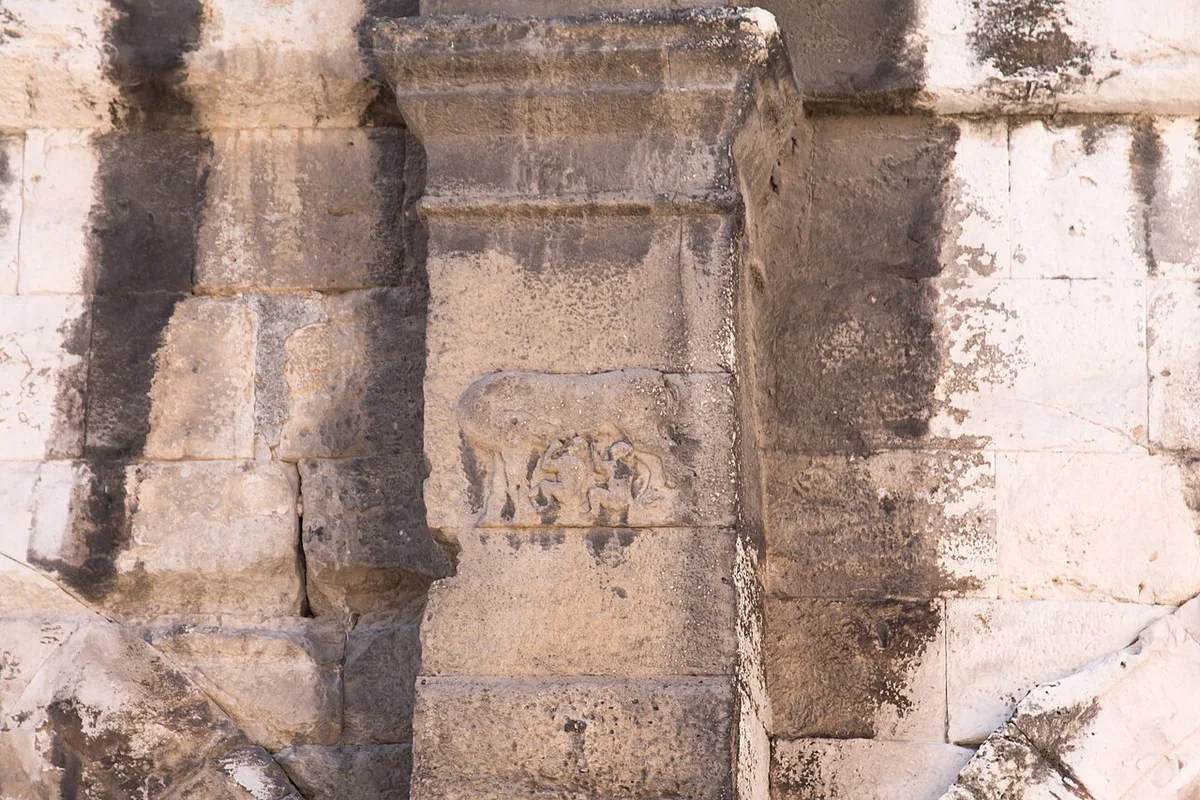
- Temple de Diane: stands in the lower gardens, and nobody is certain what it was. It may have been a library attached to the sanctuary.
- Porte d'Auguste: one of the original city gates, dated to 15 BC.
- Musée de la Romanité: faces the arena and holds the mosaics and everyday objects that explain what the monuments were for.
A walkable route and time plans
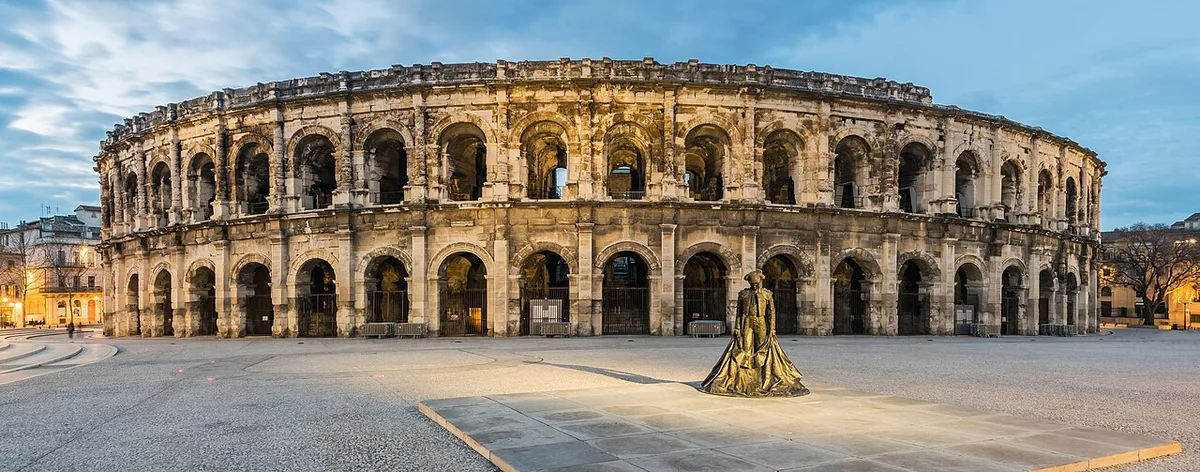
Walk the loop in this order: museum and arena, Maison Carrée, then uphill through the gardens to the Tour Magne. Doing the arena first means you tackle the biggest site while you are fresh. Ending uphill gives you shade among the trees and a view as the finishing point. The whole loop fits inside the twenty-minute walking radius around the centre.
- 2-hour stopover: walk past the arena, stand in front of the Maison Carrée, and stroll the lower Jardins de la Fontaine. Skip the interiors.
- Half day: add the arena interior and the Musée de la Romanité, whose rooftop terrace looks straight across at the amphitheatre.
- Full day: add the climb to the Tour Magne, the Temple de Diane and the Porte d'Auguste, with a long lunch in the pedestrian centre.
- Family with kids: put the museum first, because its interactive exhibits suit children, then spend the afternoon in the gardens.
- Tight budget: the Maison Carrée's exterior, the gardens and the Porte d'Auguste cost nothing to view, so pay only for the arena.
- Limited mobility: stay on the flat centre, since the climb to the Tour Magne is steep. The museum is wheelchair accessible according to its 2022–23 visitor reports, so confirm with the operator.
Tickets, passes and opening hours
Hours and prices change with the season and with events, so read them on the official pages. The Musée de la Romanité publishes its own hours and closing day. Event schedules at the arena can shut sections of it. A combined pass suits you if you plan to enter three or more paid sites. Our guide to the Nîmes Roman pass explains who it suits. If you only want the arena and a walk past the temple, single tickets are simpler. Add up the entrances you actually want before you buy.
Nîmes or the Pont du Gard?
Nîmes is the better choice when you have a single day and want several monuments on foot. Pont du Gard rewards a half day if you want one large structure and open countryside. The aqueduct bridge rises 49 m and belongs to a 50 km channel that fell only about 12 m along its length to feed Nîmes. The official Pont du Gard site lists access and ticket details.
| Factor | Roman Nîmes | Pont du Gard |
|---|---|---|
| Time needed | 2 hours to a full day | About half a day |
| Transport | Walk between sites | Roughly half an hour from Nîmes; car easiest, buses in season |
| Heat exposure | Stone streets with little shade in summer | Open ground; river swimming in warm weather |
| Best fit | Short stopovers, families, rainy days | Travelers who want one major structure |
| What you skip | The aqueduct that fed the city | The arena, the temple and the museum |
- Pont du Gard guide: the hub for the aqueduct.
- Pont du Gard from Nîmes: how to get there from the city.
- Pont du Gard from Avignon: How to Get There and Plan the Day: for travelers based on the other side.
- Pont du Gard Tickets: What to Buy, Cost and How to Book: entrance options.
- Kayaking at Pont du Gard and Swimming at Pont du Gard: Rules, Where to Swim & Safety: optional extras in warm weather.
Getting to Nîmes and getting around
Nîmes Centre station is a short walk from the arena. TGV trains from Paris take about 3 hours. Regional trains reach Montpellier and Avignon in 30 minutes each, and Marseille in 1 h 15. A separate Nîmes Pont-du-Gard TGV station sits 10 km out, so read your ticket for the station name before you board. By car, the A9 passes the city. Parking des Halles lies 240 m from the centre and Parking des Arènes 280 m, both paid. Most of the centre is pedestrian, so park once and walk. Nîmes-Alès airport has limited services, and Montpellier and Marseille are the practical airports.
When to go
Spring and autumn are the comfortable seasons. May, June, September and October bring cooler stone and softer light. July and August run well over 35 °C with little shade in the stone centre, so start at dawn or after 5 pm. September to November are the wetter months. Nîmes holds its férias twice a year, at Pentecost and in September. Expect bullfights in the arena, crowded streets, higher hotel demand and restricted arena access. Book months ahead if you want to see one, or avoid those weeks entirely.
Where to stay and eat
Stay near the Écusson, the historic centre, or by the station, and you can walk to every site. Local dishes are brandade de morue, a whipped salt cod and olive oil spread, and gardiane de taureau, a stew of Camargue bull with red wine and olives. The Musée de la Romanité has a restaurant with a view over the arena, so book if you plan to eat there.
Common mistakes to avoid
Four slips cause most of the stress on a Roman Nîmes day.
Heat is the real cost here: July and August run well over 35 °C, so midday walks in those months hit hardest.
- Arriving at the wrong station: Nîmes Centre and Nîmes Pont-du-Gard are not the same stop.
- Walking the open stone streets at midday in July or August instead of early morning or evening.
- Showing up in a féria week without bookings for rooms or the arena.
- Buying several single tickets when a pass would cover three or more paid sites.
Frequently Asked Questions
What French region is Nîmes in?
Nîmes is in Occitanie, in southern France. It sits on the boundary with Provence, which is why its food and landscape borrow from both.
What are the coolest Roman ruins to visit?
Start with the arena, which still hosts events, and the Maison Carrée, which has stood in continuous use. Add the Tour Magne for the view. Pont du Gard is the big extra if you have another half day.
Related guides

Continue reading
Guides on the same trip