Last updated November 2026: the Saintes amphitheatre is a Gallo-Roman ruin on the edge of Saintes, the Roman Mediolanum Santonum, and it makes a worthwhile half-day stop. Expect a quiet, partly overgrown site rather than a restored arena. For the wider picture, start with our guide to 14 Roman Ruins in France: Best Sites and How to Plan Your Visit, where the biggest monuments sit in the south.
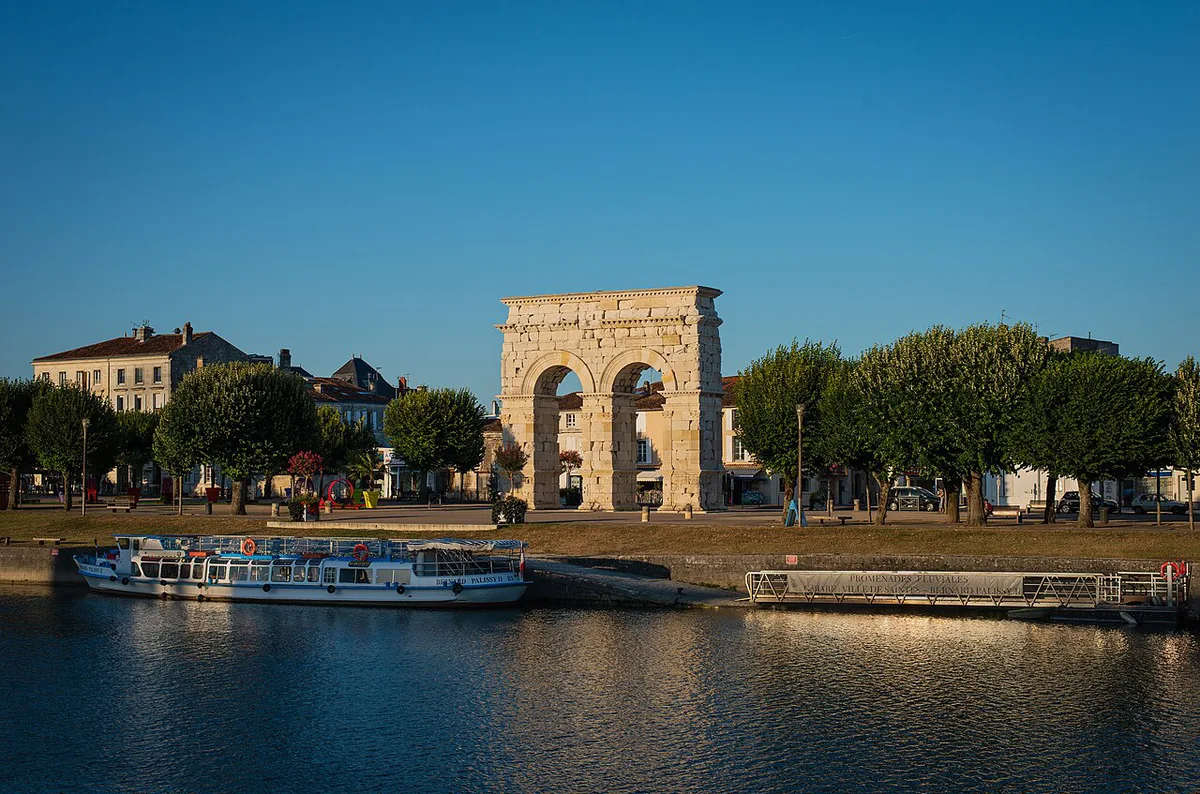
Featured image: Propre travail, CC BY-SA 2.5, via Wikimedia Commons.
What the Saintes Amphitheatre Is (and the Short Answer)
Saintes sits in Charente-Maritime, in Nouvelle-Aquitaine. Roughly 2,000 years ago it was Mediolanum Santonum, which the Saintes tourist office calls the capital of Aquitaine. Today the town keeps a cluster of classified Roman monuments: the amphitheatre, the Arch of Germanicus, the Saint-Saloine baths, aqueducts and Roman fountains. The amphitheatre is the anchor of that circuit. Go if you are touring Roman France or travelling through Poitou-Charentes and want a quiet site far from the southern crowds. Skip it if you only have time for one headline monument.

What You Will Actually See at the Saintes Amphitheatre
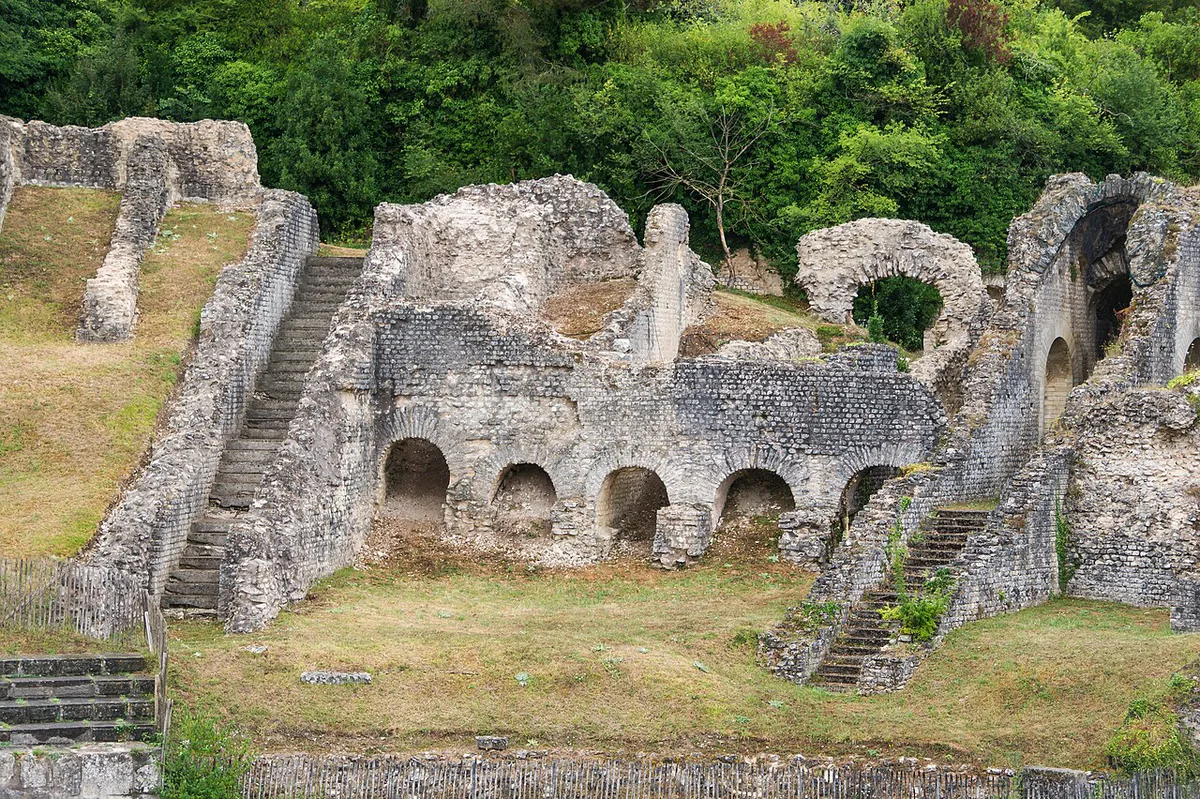
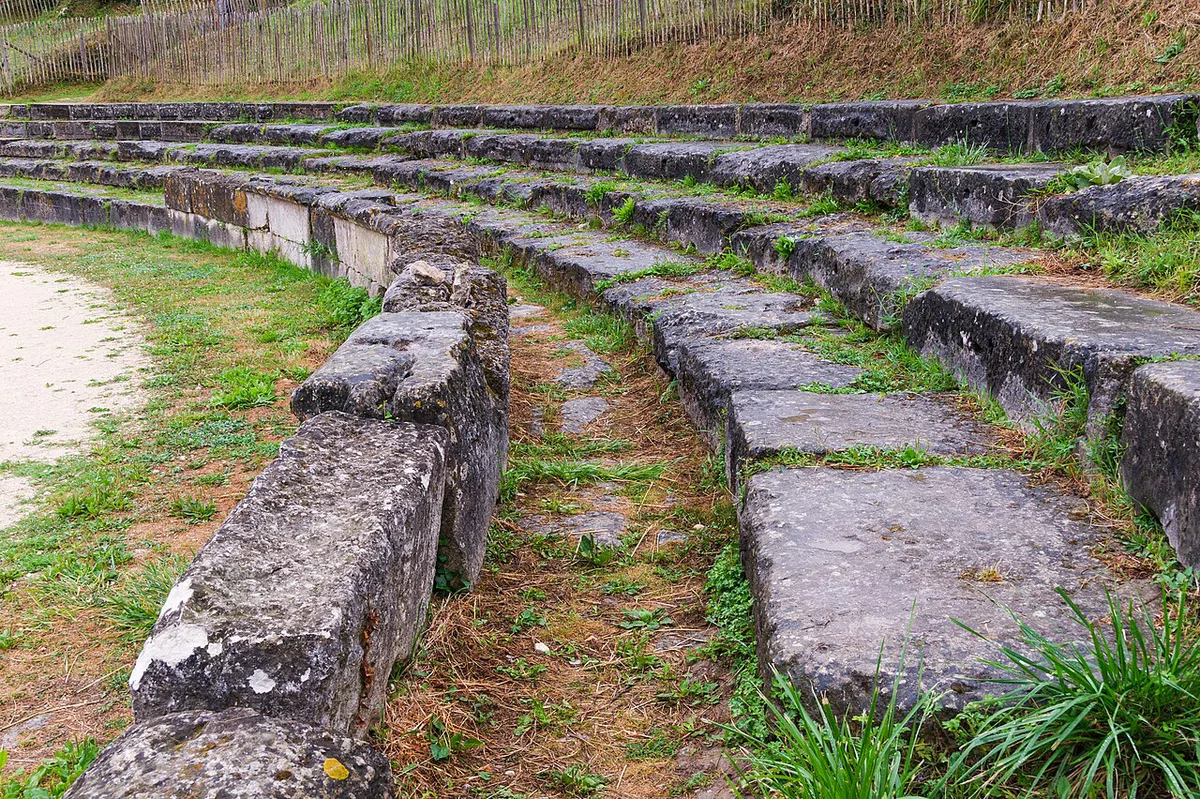
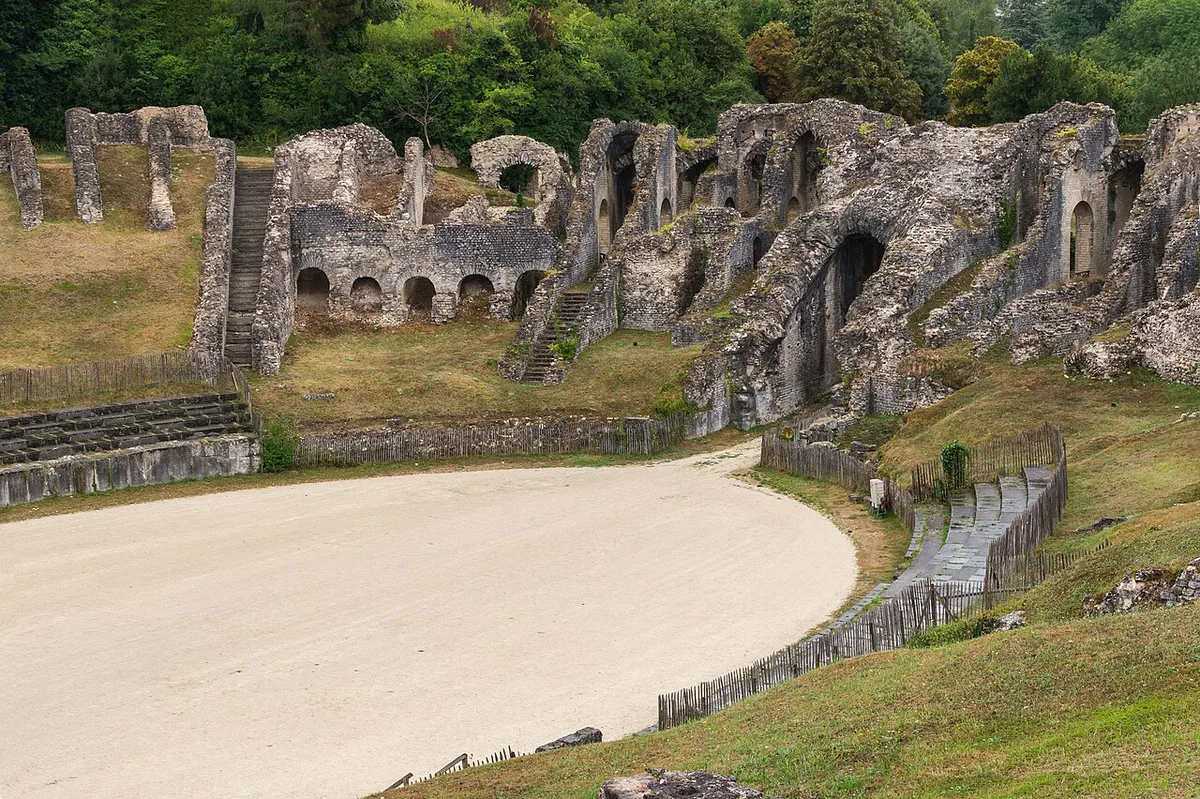
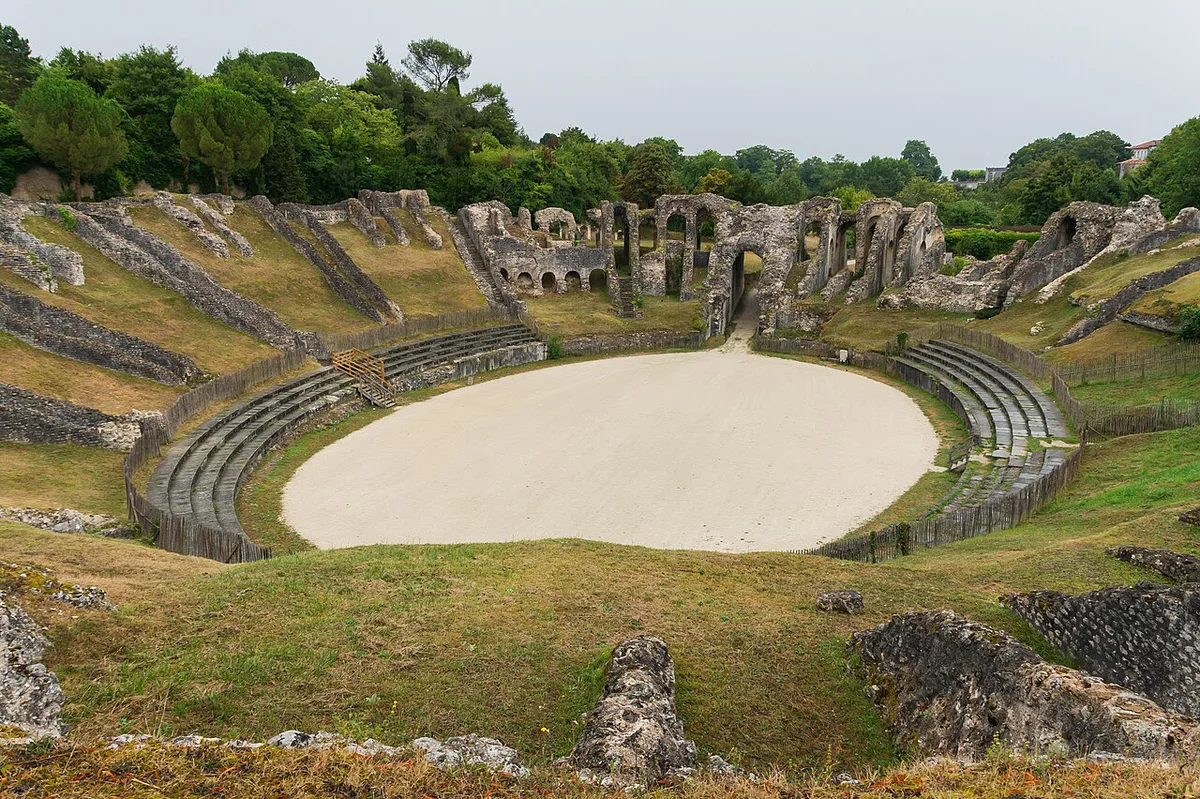
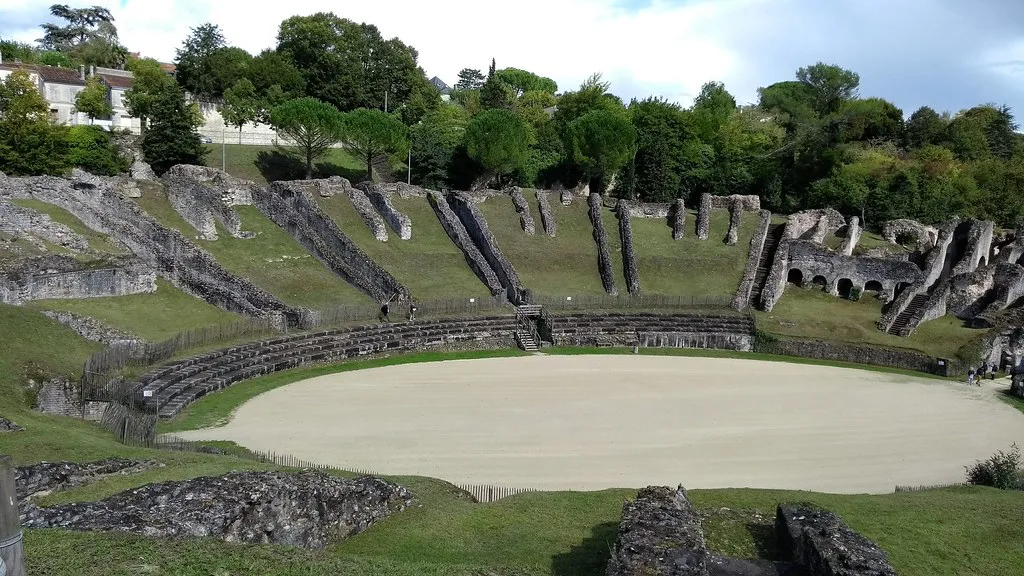
This is a ruin, not a rebuilt arena. One visitor describes vegetation covering many of its sides and says you can walk the arena, between the arches, along the old pit and up to the benches. Another visitor note says the superstructure has disappeared but the remains still give a good idea of the original shape. Local tips place it in a spot called the Vallon des Arènes, which fits the Roman habit of building on the edge of town and using the slope. One visitor says you can spot it from the cathedral tower. Treat these as visitor impressions rather than guarantees, because growth and access change between seasons.
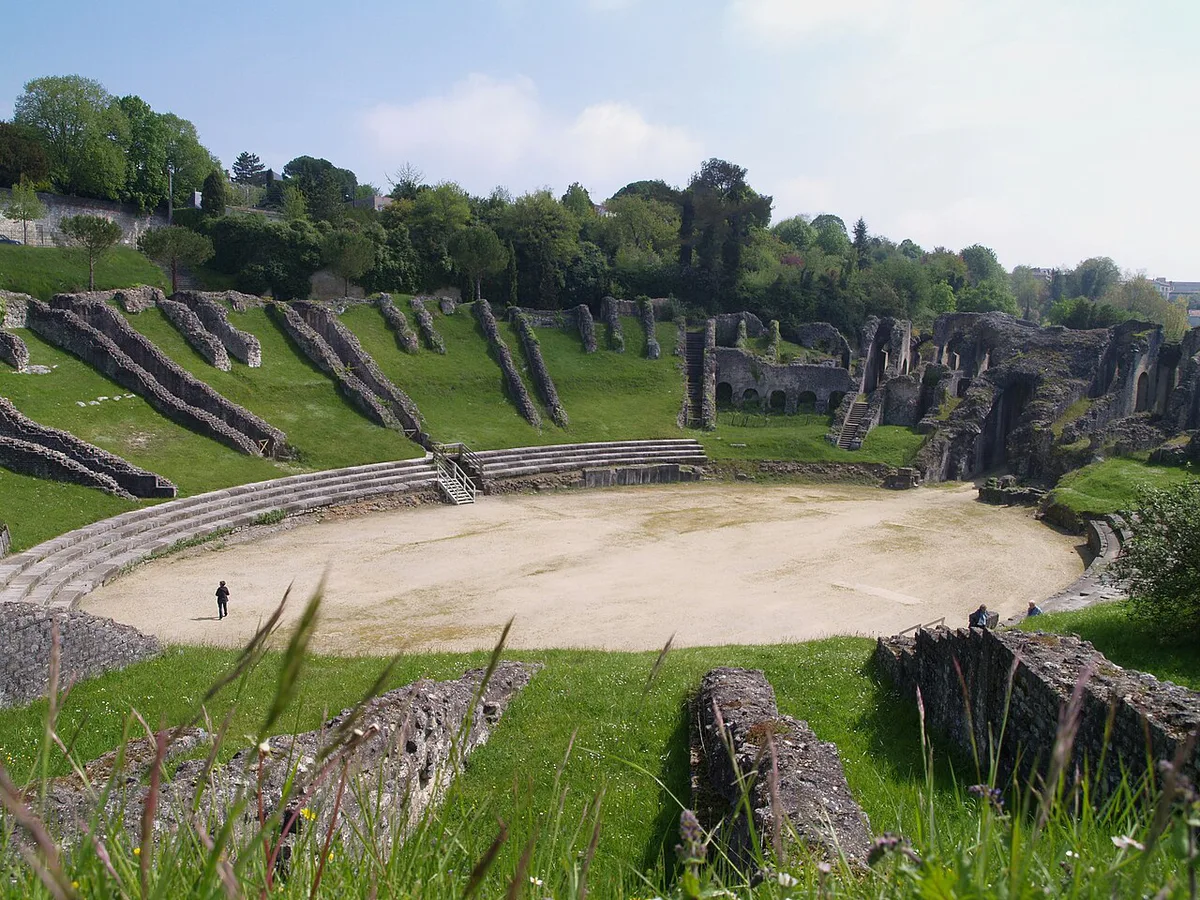
- Arena floor and the line of the old pit
- Surviving arches and stone seating
- Grass and trees growing over parts of the banks
Is the Saintes Amphitheatre Worth It? Visit If / Skip If
The answer depends on how much Roman France you are already planning to see. The table below sets out the decision. If you have seen the arena at Arles, this is a different experience: smaller in feel, greener and far quieter. Our Arles Roman monuments guide covers that restored southern comparison.
| Visit if | Skip or shorten if |
|---|---|
| You are touring Roman France or Poitou-Charentes | You only have time for one headline monument |
| You want a quiet site outside the south | You expect a restored arena with full seating |
| You can pair it with the Arch of Germanicus | You need step-free access and have not checked the site conditions |
Getting There From the Centre
The amphitheatre sits a little outside the old centre, and the address listed by visitors is Rue La Curie, 17100 Saintes. Treat the cathedral area as your starting point and head out on foot. Walking is the simplest way to arrive, since the old town is compact. Published walking loops from Saintes run from 4.27 km (1h08) to 7.23 km (1h53), which gives you a feel for how much walking a day of sights involves. None of those loops is an amphitheatre route. Parking, the exact walking distance from the station and the best approach on a bike are not established, so ask at the tourist office before you set off.
Saintes walking loops run 4.27 km (1h08) to 7.23 km (1h53), but outlying aqueduct sites need a car or bike instead.
Tickets, Opening Hours and Access
A visitor tip says the site is open to visitors all year round, but an older note mentions a 10:00 start. No fee or schedule is confirmed here, so check the Saintes tourism site for current details. Look for four things: seasonal hours, closed days, guided visits and any combined ticket. Check access conditions too, since a ruin with an old pit and benches may be uneven underfoot.
Pair the older 10:00 start note with the half-day plan, so the Arch of Germanicus fits in the same morning.
- Seasonal opening hours and closed days
- Entry price, audio or guided tour options
- Any combined ticket with other Roman sites
- Accessibility and ground conditions
How Long to Allow
These are planning estimates, not published visit times. A short stop works if you are passing through. Add the Arch of Germanicus for a half day. Plan a full day if you want the whole Roman circuit, including the museum and the aqueduct sites outside town.
| Plan | Time estimate | Getting around | Best for |
|---|---|---|---|
| Amphitheatre only | About 1 hour | On foot from the cathedral area | Travellers passing through |
| Amphitheatre plus Arch of Germanicus | Half day | Mostly on foot | First-time visitors |
| Full Roman circuit | Full day | On foot plus car or bike for outlying sites | Roman history enthusiasts |
Pair It With Other Roman Saintes Sites
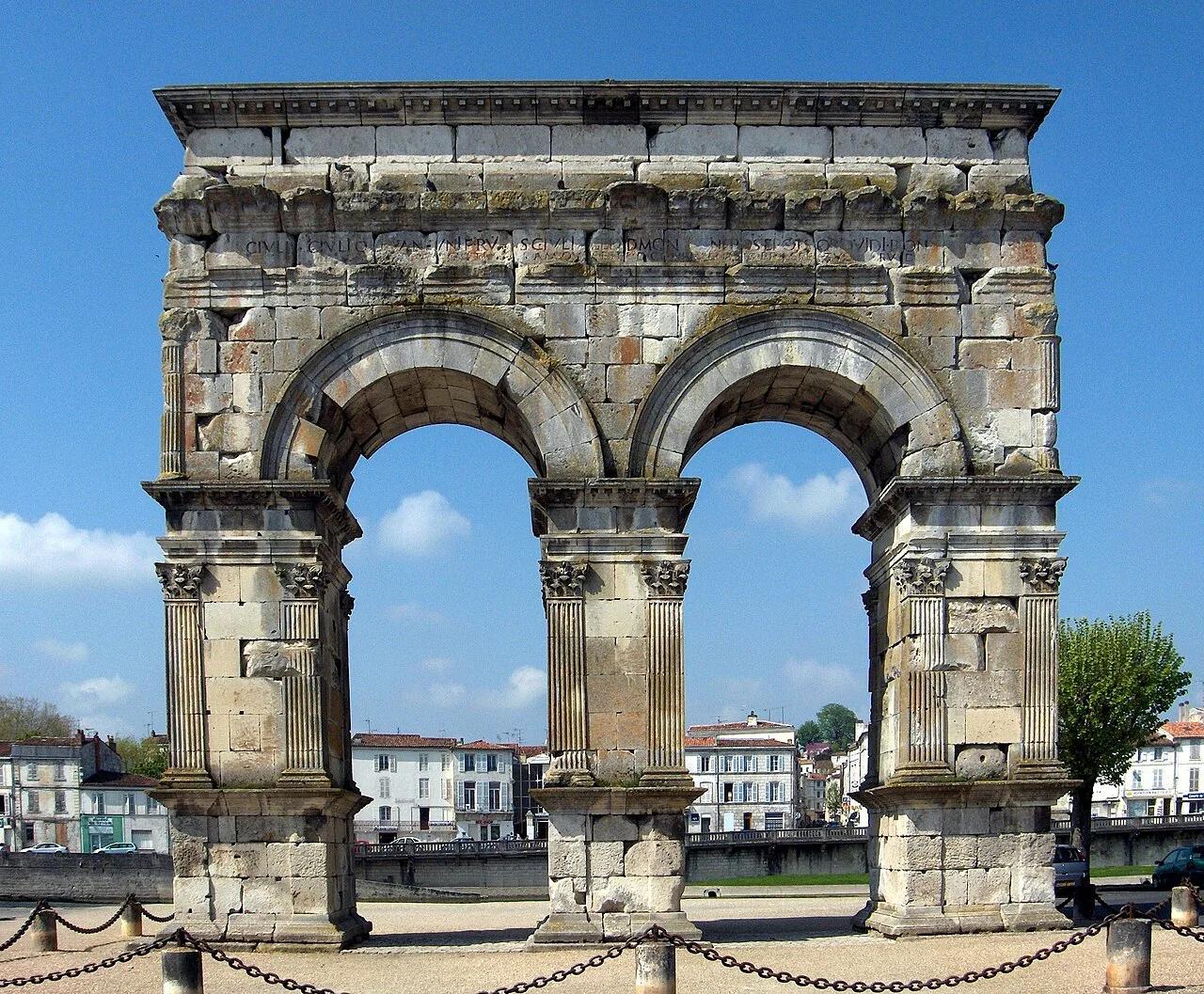
Saintes Tourisme lists the Arch of Germanicus as one of the 10 most beautiful Gallo-Roman vestiges, and it almost disappeared. Its sibling on the Rhône, the Orange triumphal arch, is a useful comparison if you travel south later. The oldest aqueduct dates to around 20 AD. Its water came from Font Morillon. The aqueduct and fountain sites at Fontcouverte and Vénérand are a few km out, so plan a car or bike rather than assuming a walk.
- Arch of Germanicus: beside the Charente, an easy add-on to the amphitheatre
- Saint-Saloine baths: part of the classified Roman heritage
- Roman aqueducts and fountains: Fontcouverte and Vénérand, a few km outside town
- Archaeological museum: a good wet-weather stop
Where to Stay and How to Get Around
Base yourself in the old town. That keeps the cathedral, the Arch of Germanicus and the amphitheatre within walking distance and leaves evenings free for the Abbaye aux Dames, which Saintes Tourisme presents as the musical heart of the city. Check the festival and events calendar before booking, since concerts can fill rooms. For a longer stay, add the Charente river, where walks, cruises and electric boat rental are on offer, plus Romanesque churches and Pineau des Charentes and cognac. The Saintonge also holds châteaux such as Panloy and La Roche Courbon.
Mistakes to Avoid and Roman France Beyond Saintes
Do not assume opening hours without checking, and do not expect a restored arena. Leave time for the Arch of Germanicus. Do not treat the aqueduct sites as walkable. If Saintes whets your appetite, Glanum and the Orange theatre sit in the south, a different region. Vaison-la-Romaine is another southern stop. Heading north along the Rhône, Lyon's Roman theatres and the temple at Vienne make a natural next step. Autun's Roman remains work for a Burgundy leg, while the Roman sites at Fréjus suit a Mediterranean stop. For an urban contrast, see Arenes de Lutece, Paris: Roman Amphitheatre Guide.
For trip-planning details, see Charente-Maritime tourism.
Frequently Asked Questions
Is Saintes, France worth visiting?
Yes, if you like Roman history, river walks and quiet old streets. Saintes Tourisme describes 2,000 years of history here, with the amphitheatre and the Arch of Germanicus as headline sights.
Related guides

Continue reading
Guides on the same trip