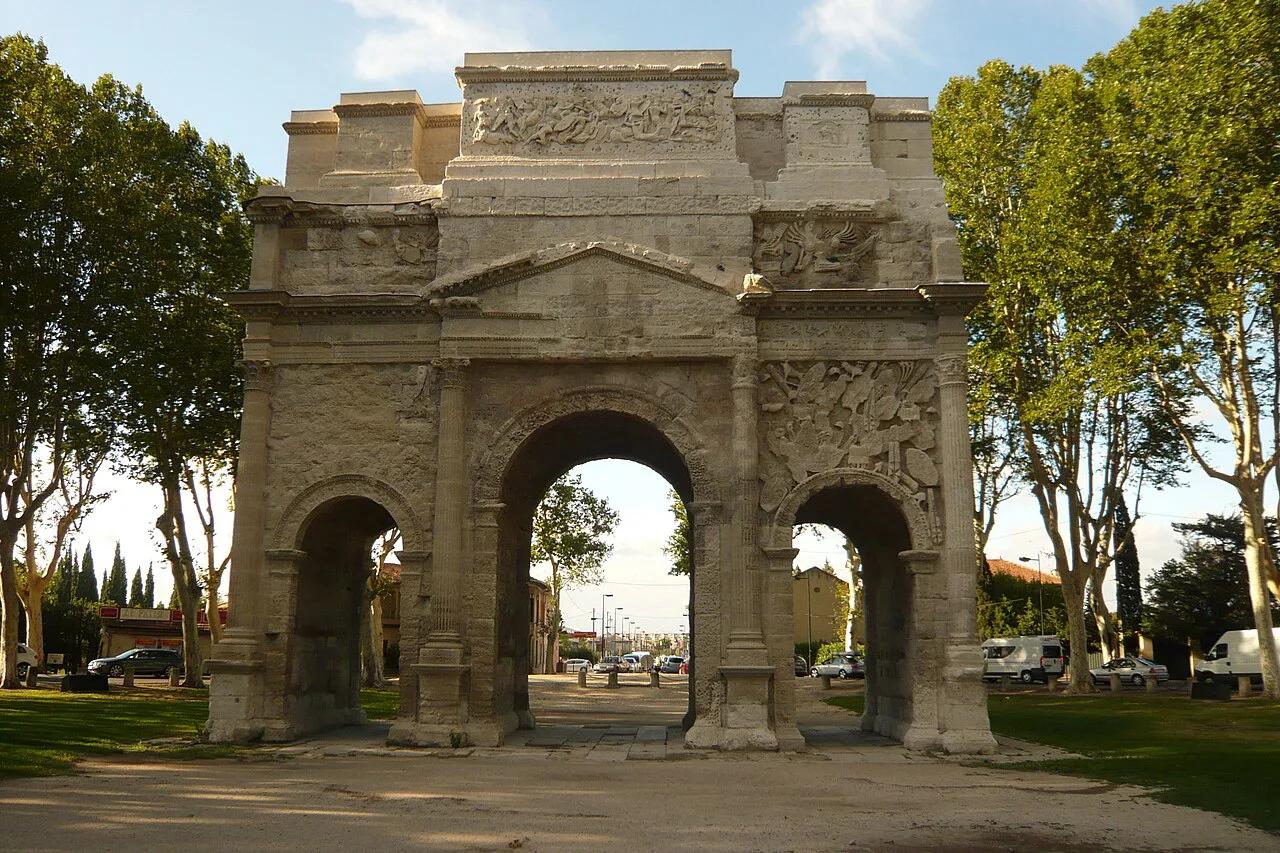
Last updated November 2026: the Arch of Orange is a Roman triumphal arch on the old Via Agrippa at the northern entrance to the town of Orange, Vaucluse. You can view it from the roadside for free, and a stop usually takes under an hour. Pair it with the Roman Theatre, which is a separate monument with its own entry, and treat the two as one short visit.
Featured image: Jane023, CC BY-SA 3.0, via Wikimedia Commons.
What the Arch of Orange is (quick answer)
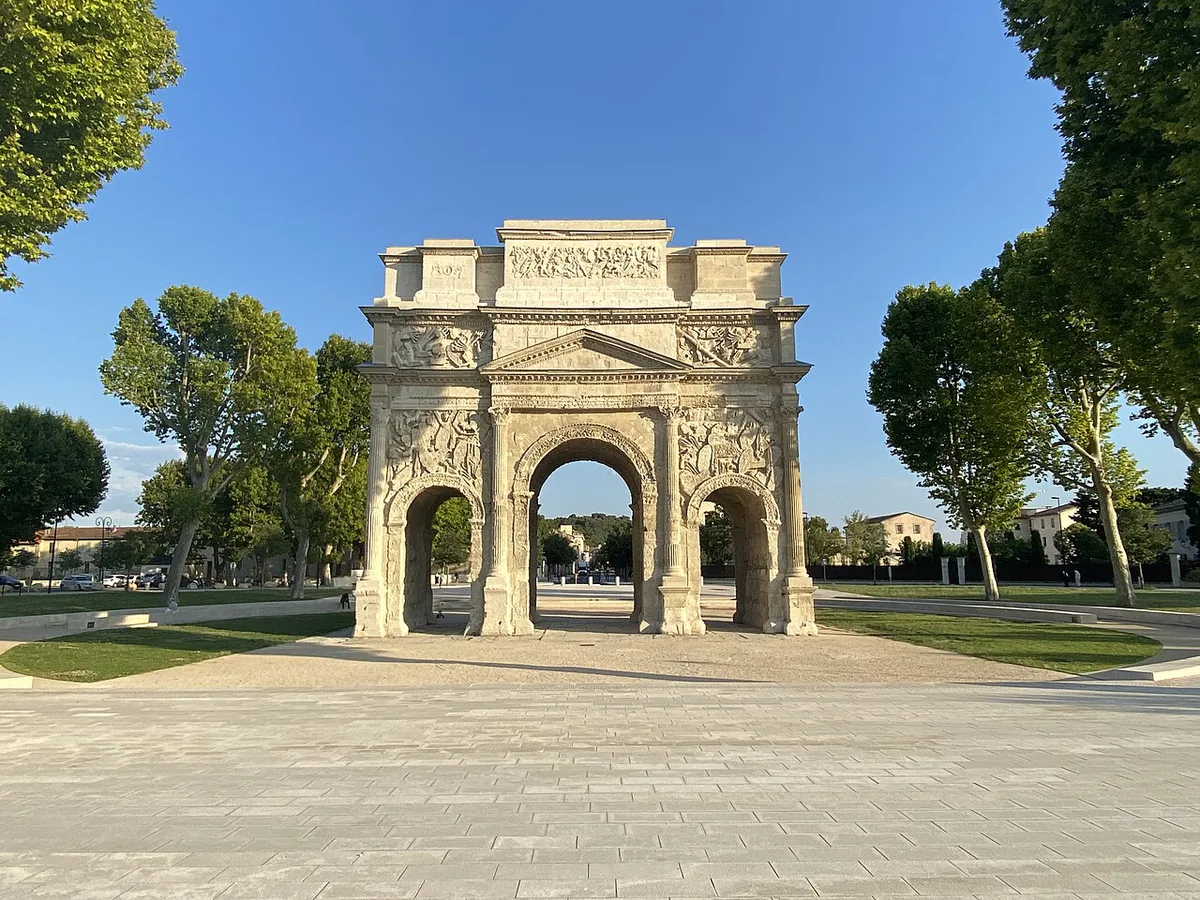
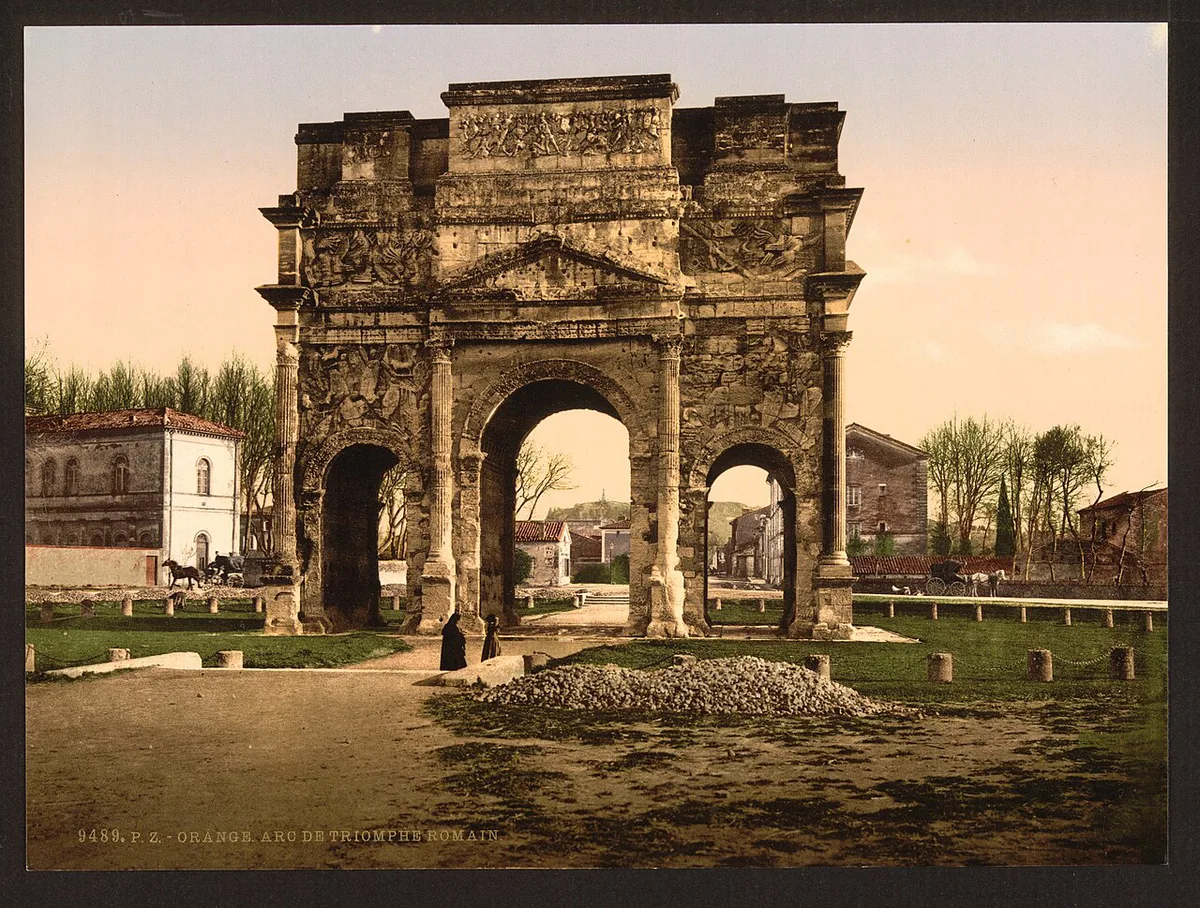
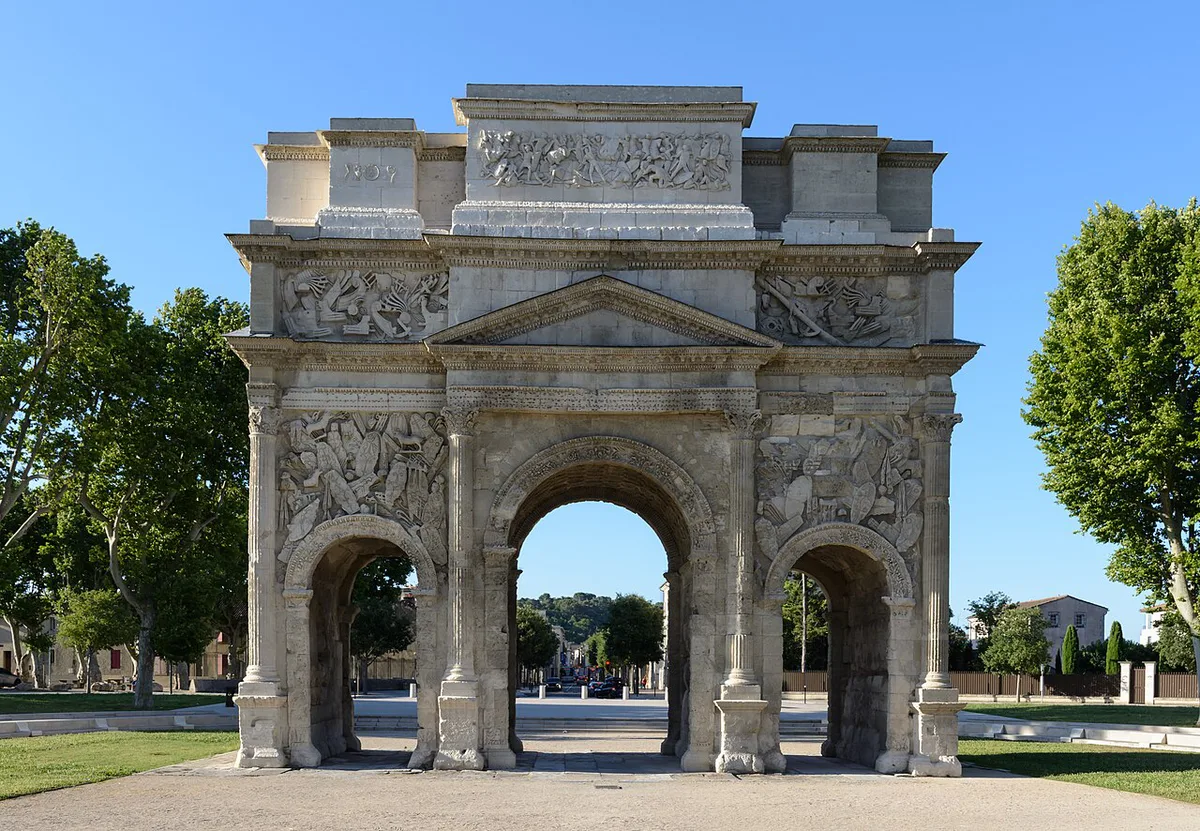
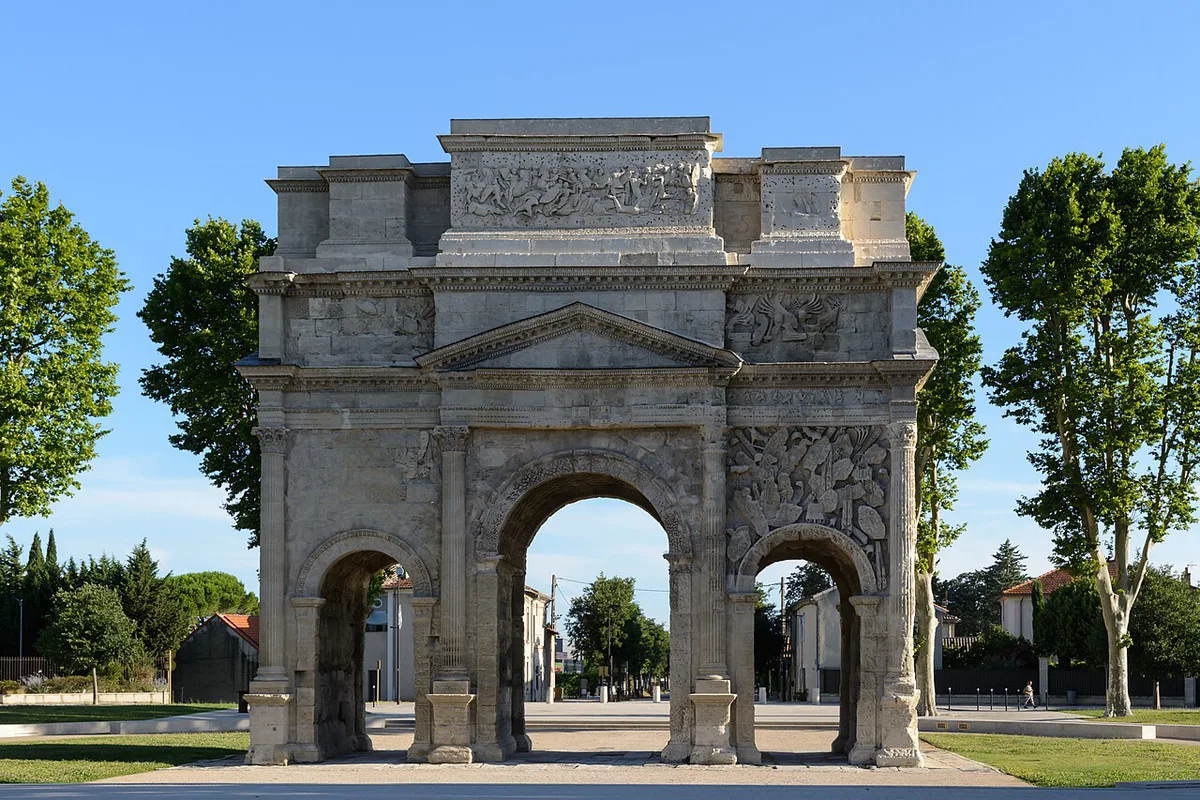
The arch is a provincial triumphal arch from the reign of Augustus, built between A.D. 10 and 25. It has three bays and low reliefs commemorating the establishment of the Pax Romana. UNESCO inscribed it in 1981 under criteria (iii) and (vi). The listing is titled "Roman Theatre and its Surroundings and the 'Triumphal Arch' of Orange", so the arch and the theatre share one World Heritage entry. Despite that, they are two separate monuments. For the national picture, start with our guide to Roman ruins in France.
What to look for on the arch
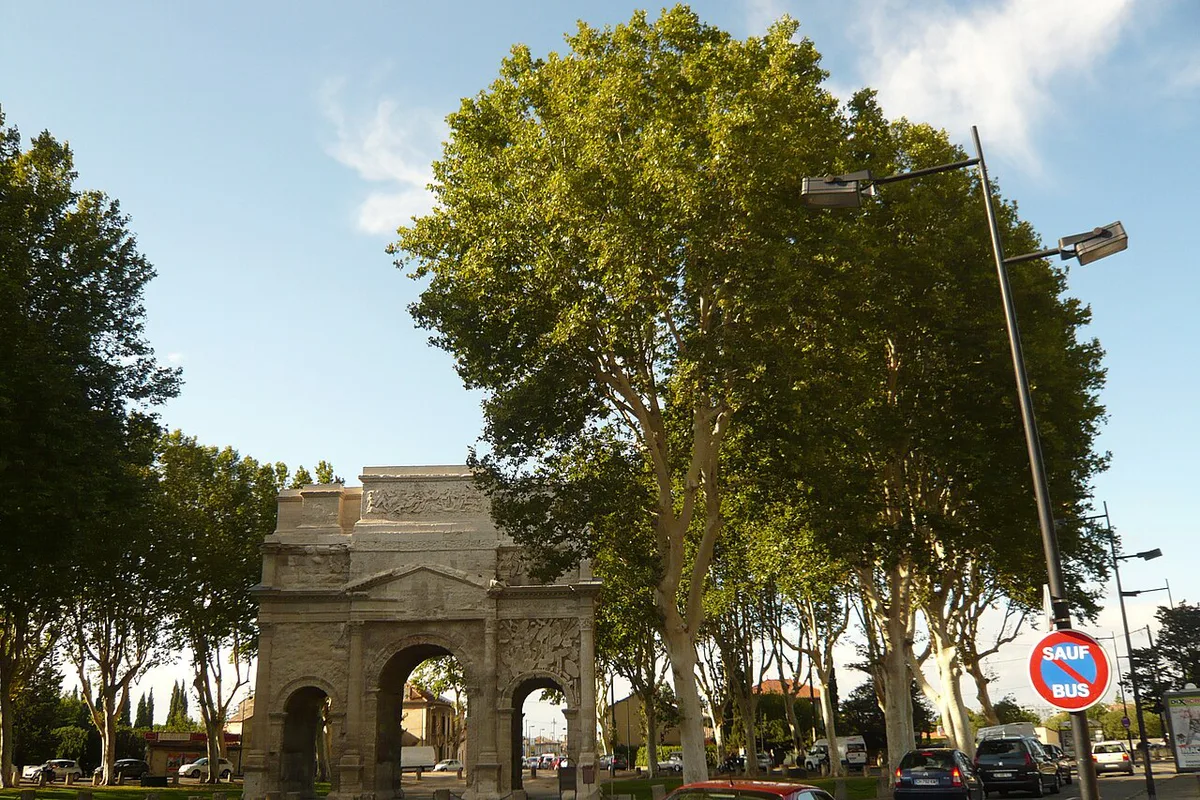
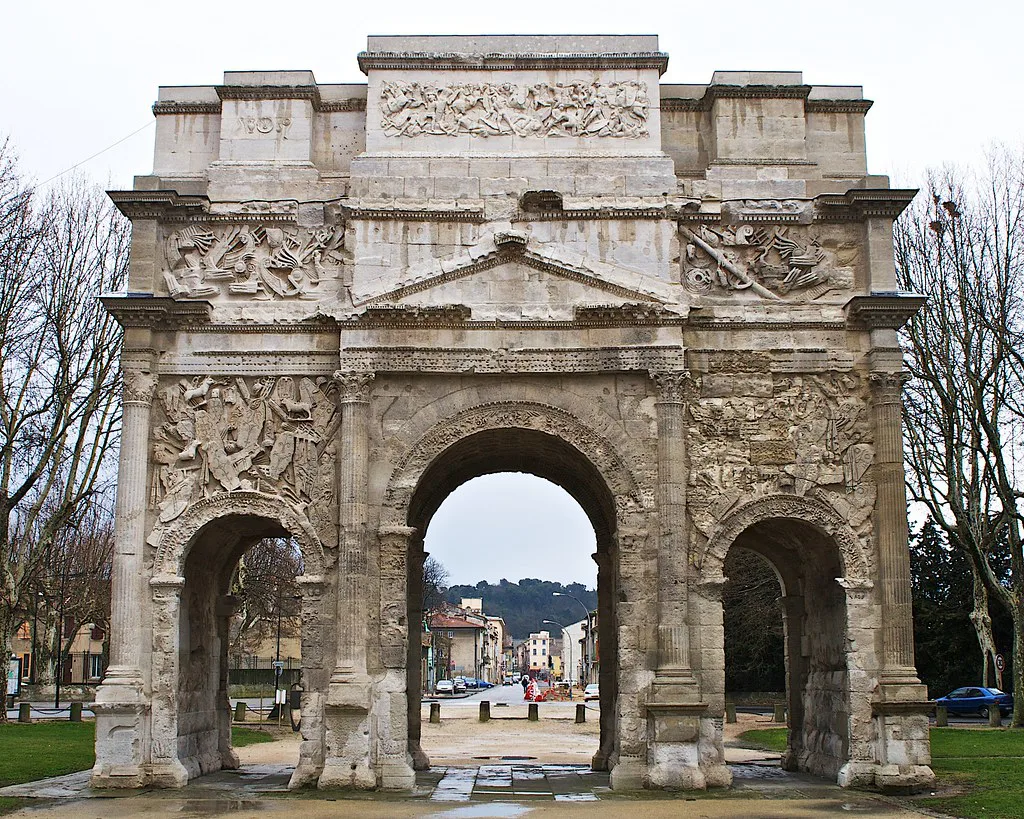
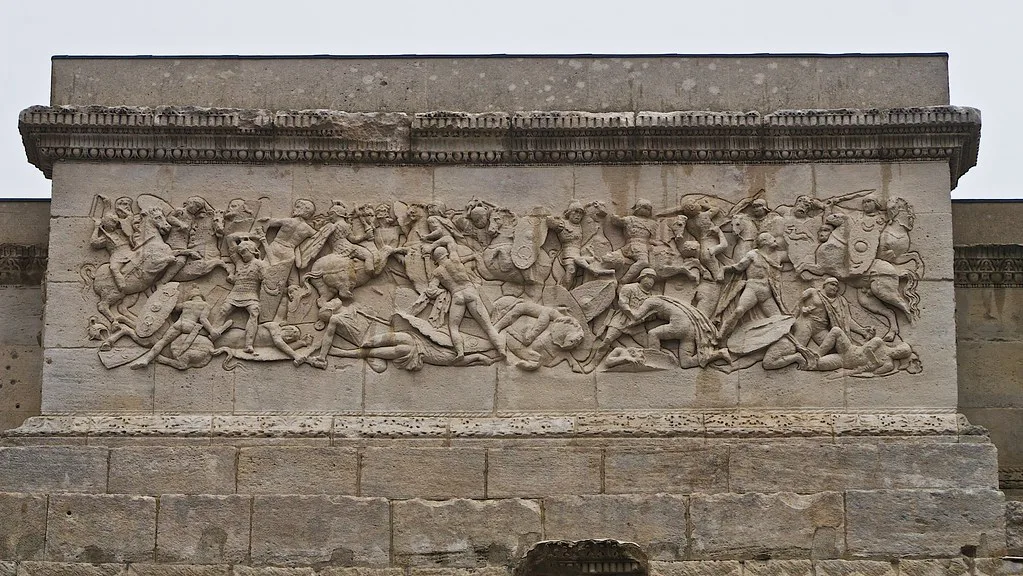
Start with the three bays: a wide central passage flanked by two smaller ones. Then look up at the low reliefs, which are the arch's main storytelling surface. They commemorate the Pax Romana, the peace Rome claimed to have established across its provinces. Scan the upper levels for the inscription and the sculpted panels. Binoculars or a camera zoom help, because the best detail sits well above street level.
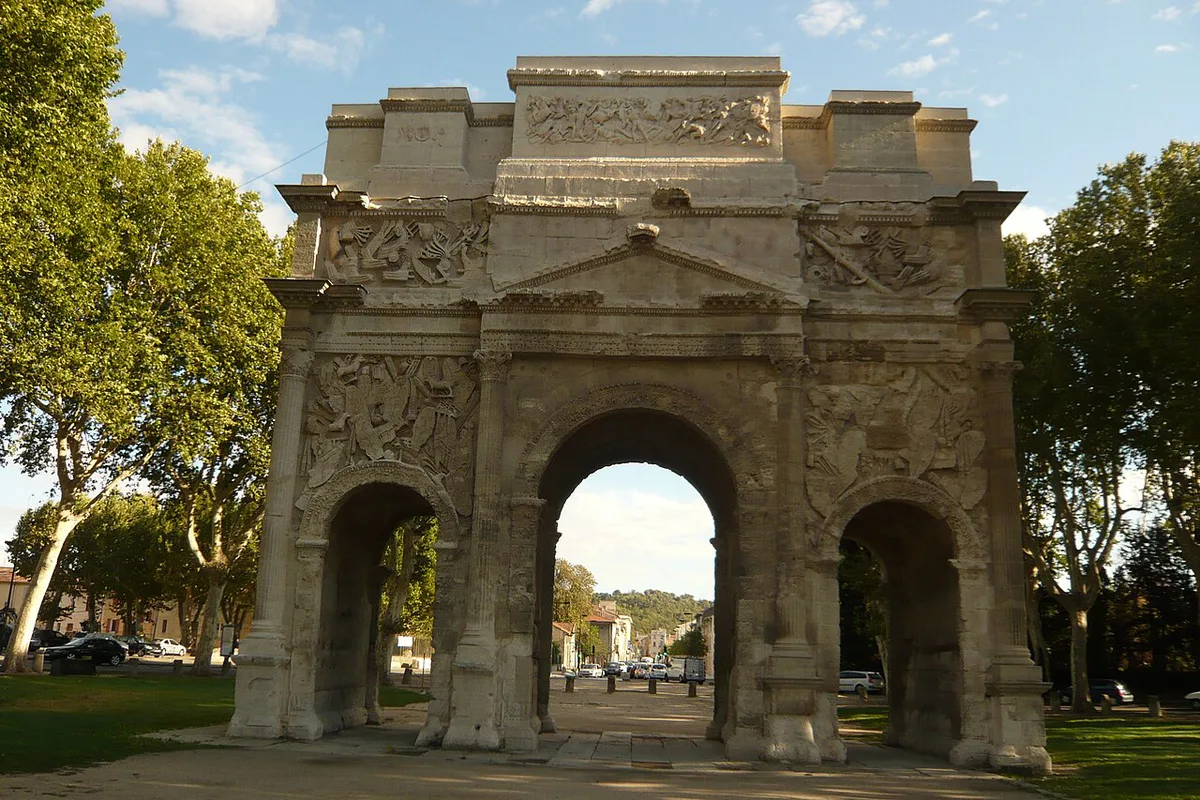
- Three bays: one large central opening and two smaller side openings.
- Low reliefs on the upper levels, tied to the Pax Romana theme.
- Inscription and sculpted panels, best read from a few steps back.
- Setting: the arch marks the old Via Agrippa at the northern entrance to Orange.
Is it worth a stop? Who should skip it
Yes, if you are already in Orange or driving the Rhône valley. The arch costs nothing to view, and it shows how Rome marked provincial towns with monuments. It also gives context for the theatre, which dates from the same broad Roman period.
- Stop if you want a free, any-time exterior view and a few photographs.
- Stop if you are building a Roman-sites road trip through Provence.
- Skip it if you have only an hour in the region and would rather see the theatre interior.
- Skip it if roadside monuments leave you cold, since there is no interior to enter.
How long to allow and best time to see it
Our planning estimate is 15 to 30 minutes for the arch alone, since it is viewed from outside. Add roughly 1.5 to 2.5 hours if you include the theatre and a walk through the old centre. Low-angle morning or late-afternoon light gives the reliefs more shadow and depth than a flat midday sun. Allow extra time on theatre event days, when access around the site can change.
Allow 1.5 to 2.5 hours for arch and theatre together. Avignon Caumont airport is under 45 minutes by road, so the drive fits easily into that plan.
| Option | Time needed | Best for | Trade-off |
|---|---|---|---|
| Arch only | 15–30 minutes | Quick photo stop on a drive through Provence | No interior and little else to do on site |
| Arch plus theatre | 1.5–2.5 hours | First-time visitors wanting both UNESCO monuments | Theatre has separate entry details to check |
| Arch, theatre and old town | 3–5 hours | A half-day Orange visit with lunch | Needs more walking and an earlier start |
Arch vs Roman Theatre: how they fit together
The theatre is the larger draw. Its facade is 103 m long (about 338 ft), and it ranks among the best preserved of the great Roman theatres. The arch stands at the northern entrance to town, while the theatre sits in the town itself. Plan to walk between them rather than drive. Do not assume one ticket covers both, because the arch needs none and the theatre has its own entry. Our guide to the Roman Theatre of Orange covers the interior, and the official theatre site holds current visiting details.
Theatre facade measures 103 m long (about 338 ft), and its own entry is separate from the free arch view.
Getting there and getting around
Orange sits in the Rhône valley, and Avignon is the usual base. Avignon Caumont airport is about 26 km (16 miles) south of Orange, under 45 minutes by road. Nîmes/Garons airport is 52 km to the southwest, and Marseille Marignane is 84 km to the southeast. Local transport varies by season, so check train and bus times with the Provence tourism guide before you travel. If you drive, look for parking in the town and walk to the arch, since roadside stopping near a busy entrance road is a poor option.
Costs, access and opening details
Viewing the arch from the roadside is free, and you can see it at any time. Theatre prices and hours change by season and by event schedule, so use the theatre's official site for current figures. Prices and hours checked November 2026 on that source were not published as fixed figures here. Step-free access to the arch is a pavement view, but check the official sites for the theatre.
Pair it with other Roman sites
Arles is the strongest next stop. Our Arles Roman monuments guide covers the arena and theatre there. Add the Cryptoporticus Arles: Visiting the Roman Underground Galleries for an underground Roman structure. Vaison-la-Romaine is another Roman town, and our Vaison-la-Romaine guide explains its ruins. South of Orange, Glanum near Saint-Rémy adds a Gallo-Roman town with its own arch. For more Roman France further afield, see Lyon's Roman theatres, the temple at Vienne and Roman Fréjus.
Frequently Asked Questions
What does a triumphal arch commemorate?
A triumphal arch marks a victory, a ruler or a major achievement. In Orange, the low reliefs commemorate the establishment of the Pax Romana under Augustus.
What are some interesting facts about the Roman Theatre of Orange?
Its facade is 103 m long, and it is one of the best preserved of the great Roman theatres. UNESCO lists it with the Triumphal Arch of Orange, inscribed in 1981.
Related guides


Continue reading
Guides on the same trip