Temple of Hephaestus, Athens: Tickets, Hours & Visit Tips
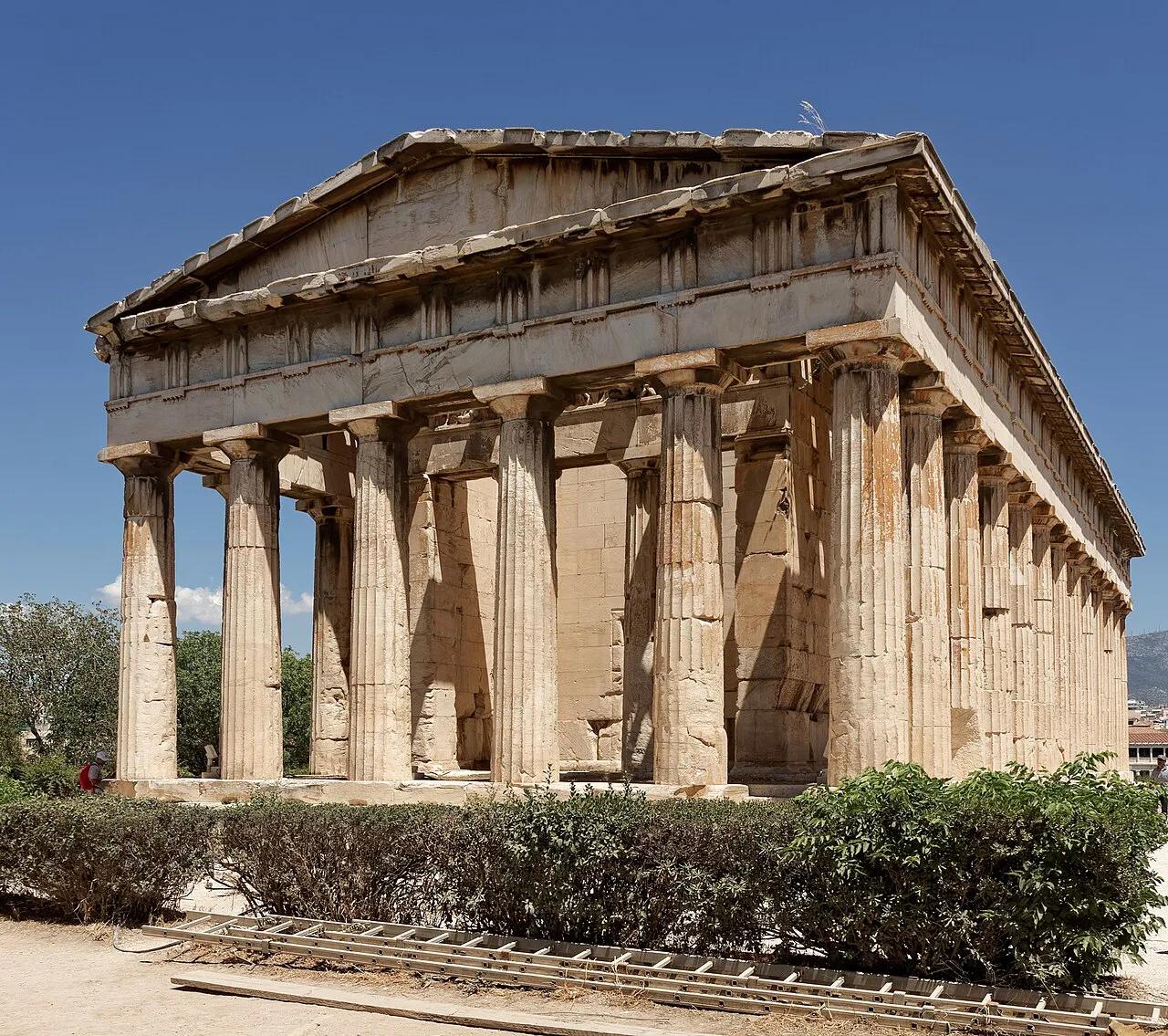
Last updated November 2026. The Temple of Hephaestus is a Doric temple on Agoras Hill, above the west side of the Ancient Agora in Athens. It is often described as the best-preserved temple of its type in Greece. Plan to reach it through the Ancient Agora archaeological site, and read on for tickets, timing and a route that fits it into a day among the city's 10 Best Ruins in Athens: Ancient Sites, Tickets & Day Trips.
Featured image: Jakub Hałun, CC BY 4.0, via Wikimedia Commons.
Where the temple stands and how to get there
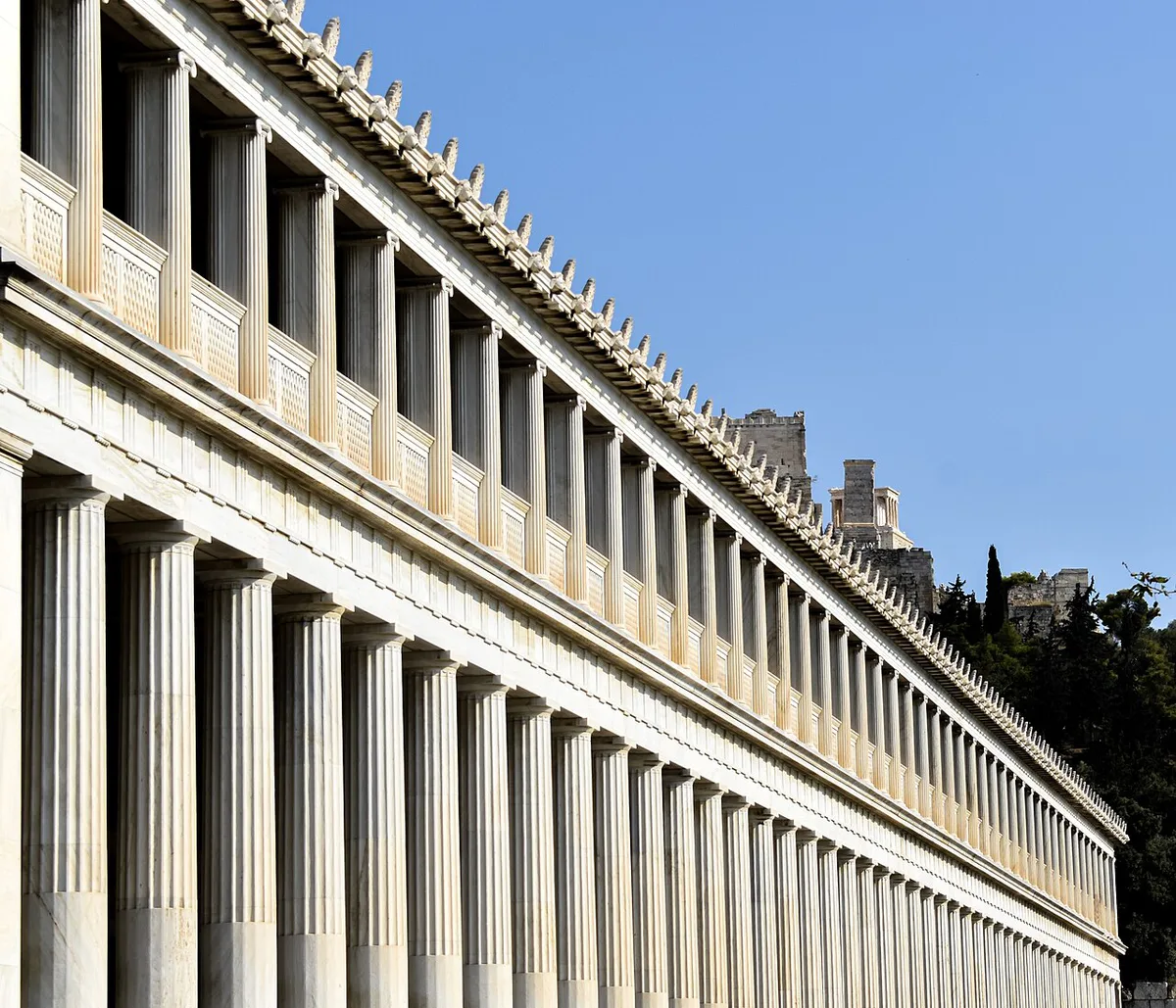
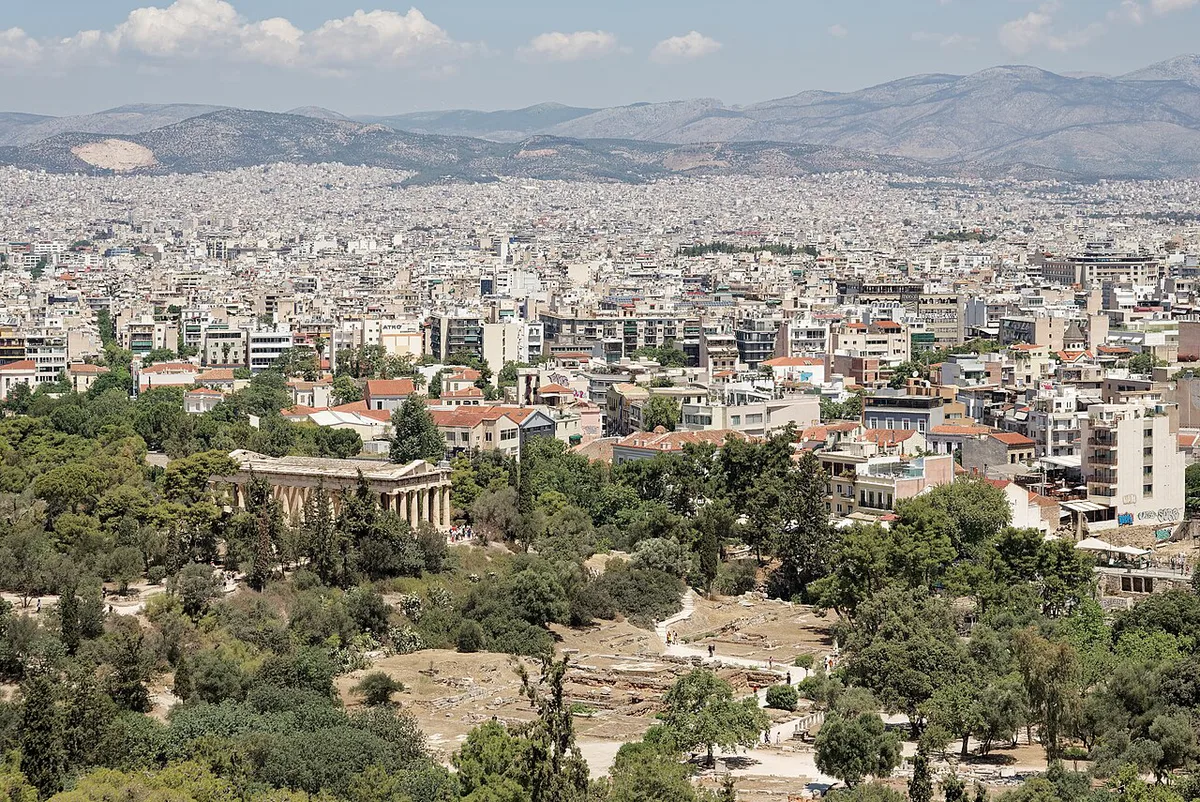
Agoras Hill rises on the western edge of the Ancient Agora, between the districts of Monastiraki and Thiseio. Both neighborhoods work as starting points, and each is a short walk from the Agora's entrances. Inside the site, a path climbs from the Agora floor to the temple. Expect uneven ancient paving and little shade on the way up. Check the official site for current access details if mobility is a concern.
Temple of Hephaestus tickets and opening hours
The temple is part of the Ancient Agora archaeological site, so you normally see it with an Agora entry. Current prices, reduced categories, seasonal hours and last-entry times are published on the Hellenic Ministry of Culture e-ticket site. Prices and hours checked November 2026 can change, and summer and winter schedules differ. If you also plan to visit the Acropolis and other major sites, compare a single Agora ticket with the Athens Combined Ticket: Does It Still Exist? What to Buy Instead. Do not assume an Acropolis entry covers the Agora without checking its scope on the official page.
How much time to plan
Allow more time than the temple's size suggests. The walk up, the circuit around the colonnade and the garden planting all take longer than a quick photo stop. The table below sets out three ways to structure the visit.
| Visit style | Who it suits | Main constraint |
|---|---|---|
| Quick look | Travelers with a tight Athens day | Rushes the walk uphill and the details |
| Standard visit | Most first-time visitors | Needs time before closing, not at the last entry |
| Full Agora visit with museum | Readers who want context for the ruins | Adds the museum in the Stoa of Attalos |
What to look at when you're there
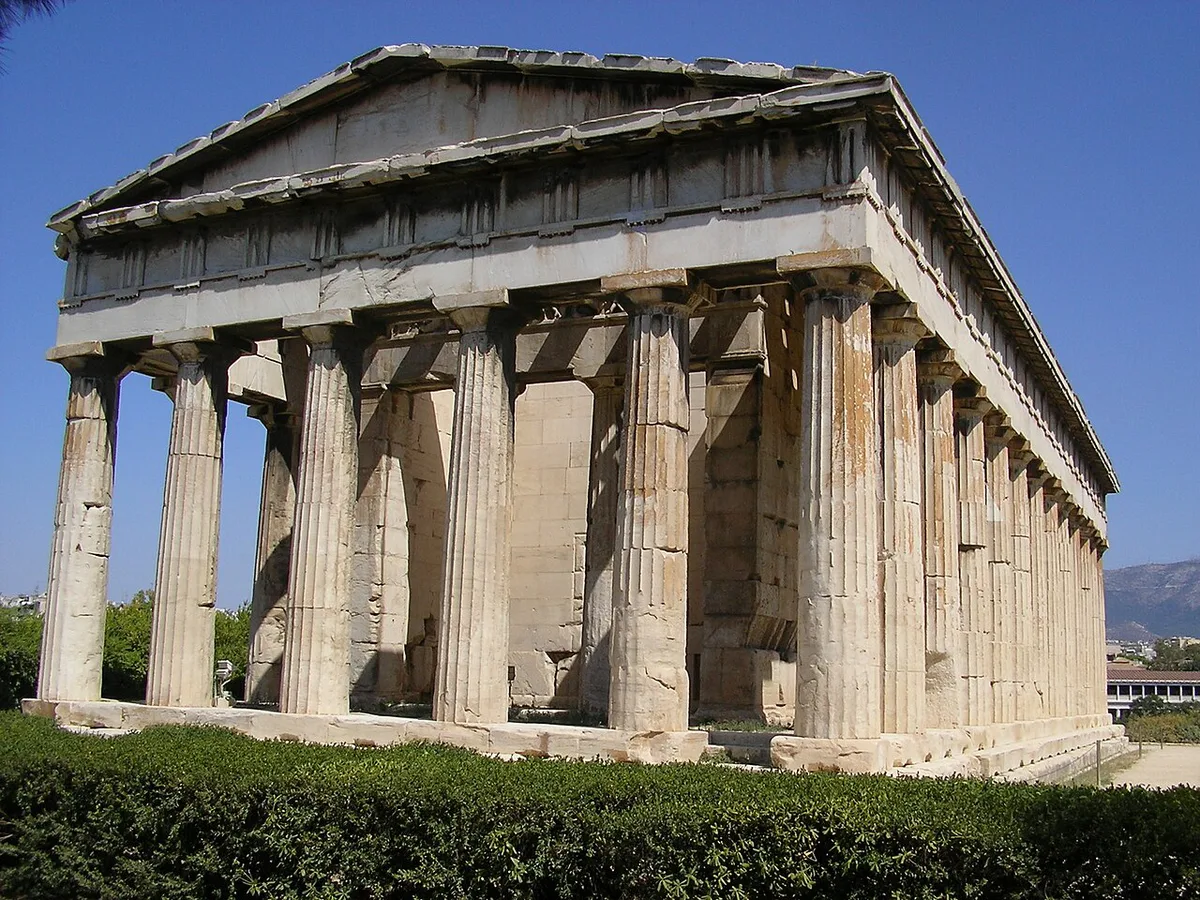
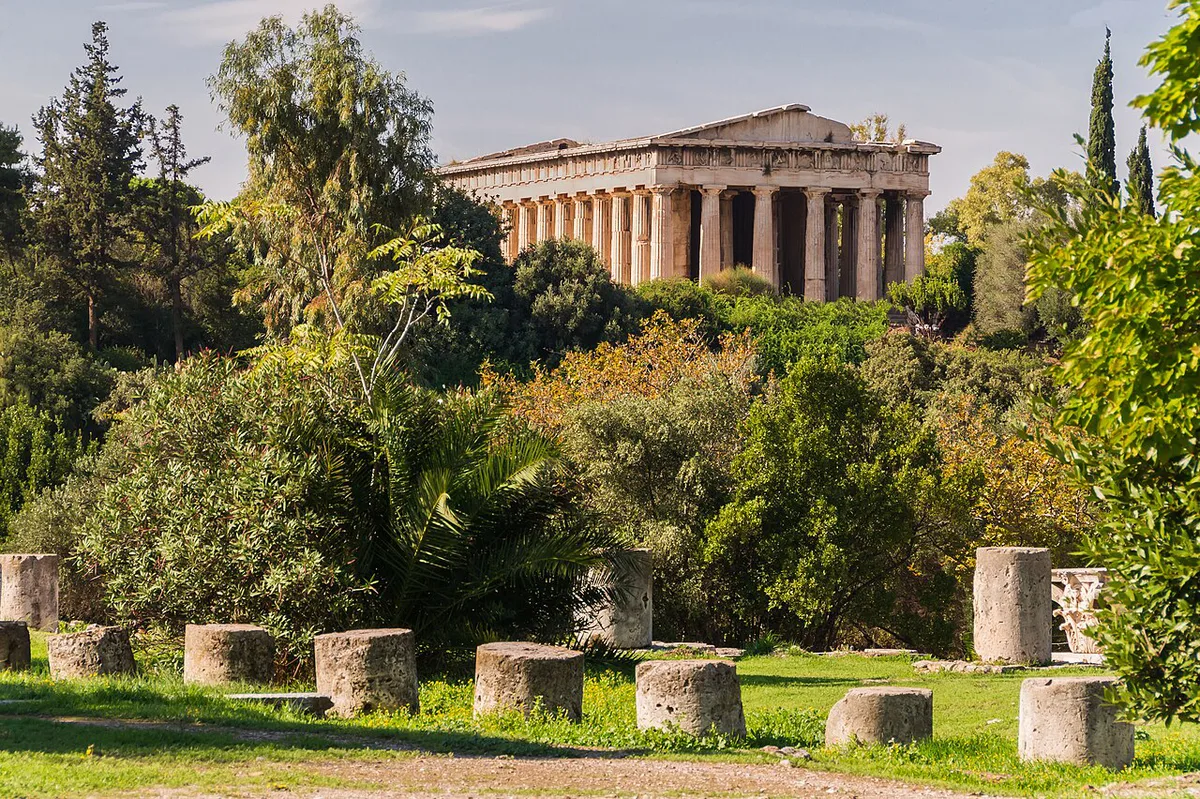
Start with the Doric exterior: a surrounding colonnade with plain, sturdy columns. Look up for the sculptural and metope details on the entablature. Walk the planted garden around the temple and notice how the building sits above the Agora floor. Do not count on entering the interior, and check the site's current rules before you go.
Spot the plain Doric colonnade knowing the temple was built between about 460 and 420 BC, long before its later years as a church.
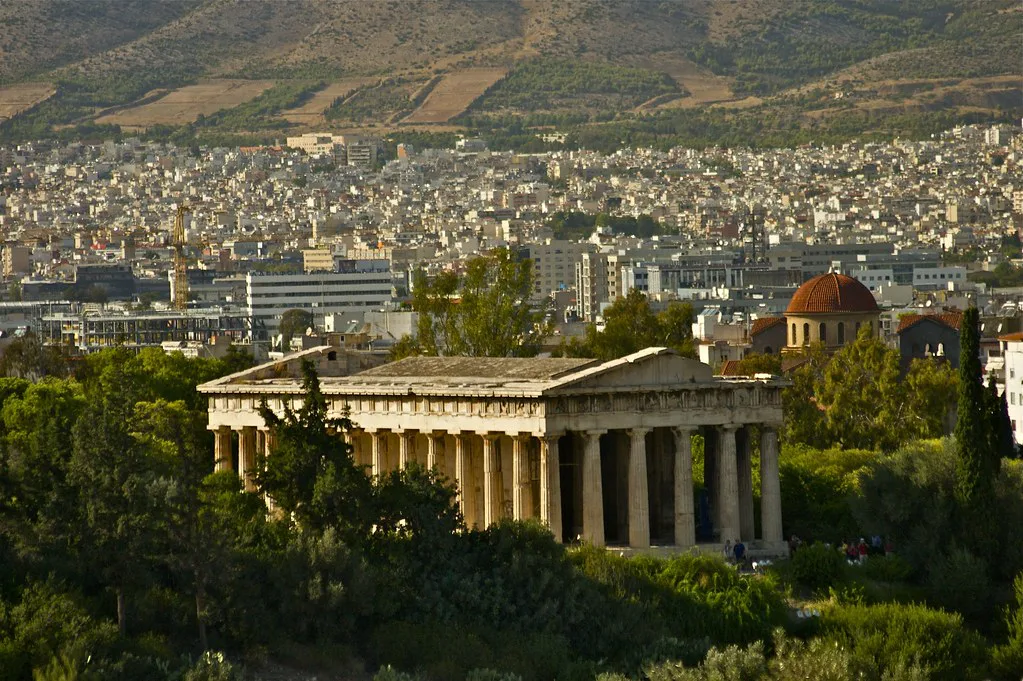
- Doric colonnade: the clearest example of the order in Athens
- Metopes and sculptural fragments on the entablature
- Garden planting around the temple platform
- Views down over the Agora floor and the Stoa of Attalos
Temple of Hephaestus vs the Parthenon: key differences
Visitors often ask which of the two to prioritize, or whether the Temple of Hephaestus is a smaller copy of the Parthenon. It is not a copy. The two were built in the same decades, but they differ in scale, condition and how you experience them.
| Feature | Temple of Hephaestus | Parthenon |
|---|---|---|
| Construction | About 460 to 420 BC | About 447 to 432 BC |
| Order | Doric | Doric, with Ionic elements inside |
| Columns on the facade | 6 | 8 |
| Columns along the sides | 13 | 17 |
| Condition | Roof and most of the colonnade survive | Heavily damaged, restoration ongoing |
| Setting | Low hill above the Agora, planted garden | Summit of the Acropolis, crowds and scaffolding |
The Parthenon is larger and carries far more sculptural fame. The Temple of Hephaestus is the better place to understand what a complete Doric temple looked like, because the roof line and the full colonnade are still readable from the ground.
How to use this when planning
- If you can only fit one, the Parthenon remains the headline site, but the Agora temple is the calmer visit.
- Seeing both in one day works well: do the Acropolis early, then walk down to the Agora for the afternoon.
- Photographs of the Parthenon often include scaffolding. The Hephaestus colonnade is usually clear of it.
For other well-preserved Doric temples in Greece, compare it with the Temple of Apollo Epicurius at Bassae in the Peloponnese, or the remains of the Temple of Hera at Olympia, which is among the oldest Doric temples in Greece.
A short history of the temple
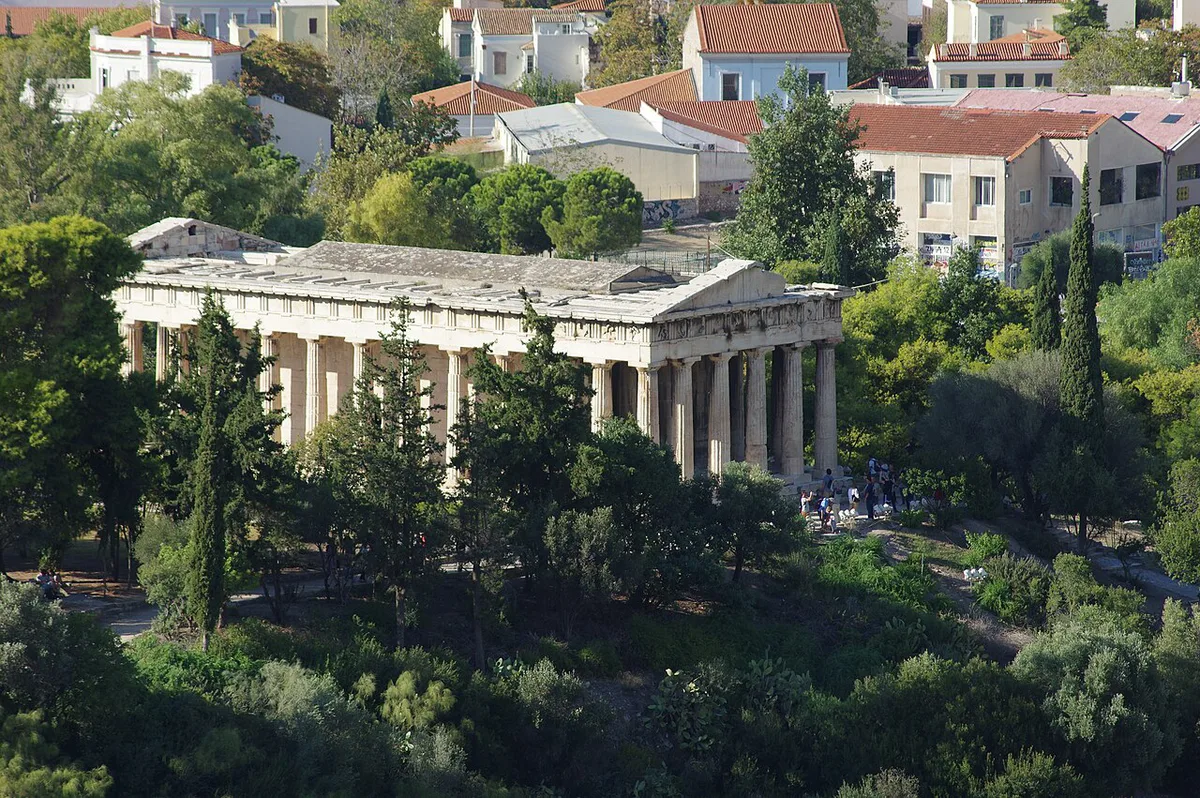
Construction is generally placed between about 460 and 420 BC. The temple is traditionally linked to Hephaestus, the god of metalworking and fire, and often to Athena as well. It has long been called the Theseion, a name tied to older ideas about who it honored. Its survival owes much to reuse. It became a Christian church around the 7th century AD, usually associated with St George. Later it served as a burial ground for non-Orthodox Christians during the Ottoman period. In 1834 it was used for a ceremony connected with King Otto's arrival. The American School of Classical Studies runs the Athenian Agora excavations, which are the best place to read the scholarly detail.
Best time to visit and photography
Aim for the first part of the day or the hours before closing, when the Agora is quieter and the heat is lower. Late-day light warms the stone, which helps photography. Do not arrive near closing time, because the climb and the circuit need unhurried time. Summer afternoons offer almost no shade on the hill.
Combine it with nearby sites
The Roman Agora is the closest paired stop, a short walk toward Monastiraki. For a rocky hill and wider views, add Areopagus Hill (Mars Hill) Athens: History, Visit Guide. Readers who want more of ancient civic life can continue to the Pnyx. For ancient theater, the Theatre of Dionysus Athens: Visit Guide, History & Tickets sits below the Acropolis. If you have more days, the Temple of Aphaia, Aegina: Getting There, Tickets and What to See is a good ruin beyond central Athens. The Eleusis Archaeological Site: Visit Guide & Mysteries, the Marathon Tomb (Tumulus of the Athenians): History & How to Visit and Brauron are other options outside the center.
Who should skip it or limit time
Limit your time if you only want a single photo of the temple and have a packed Athens day. Skip the museum if you are short on time, but know that you lose context for the ruins. Avoid treating it as a ten-minute stop. If you have time for only one site in the Agora, this is the one to prioritize.
Related guides


Continue reading
Guides on the same trip