
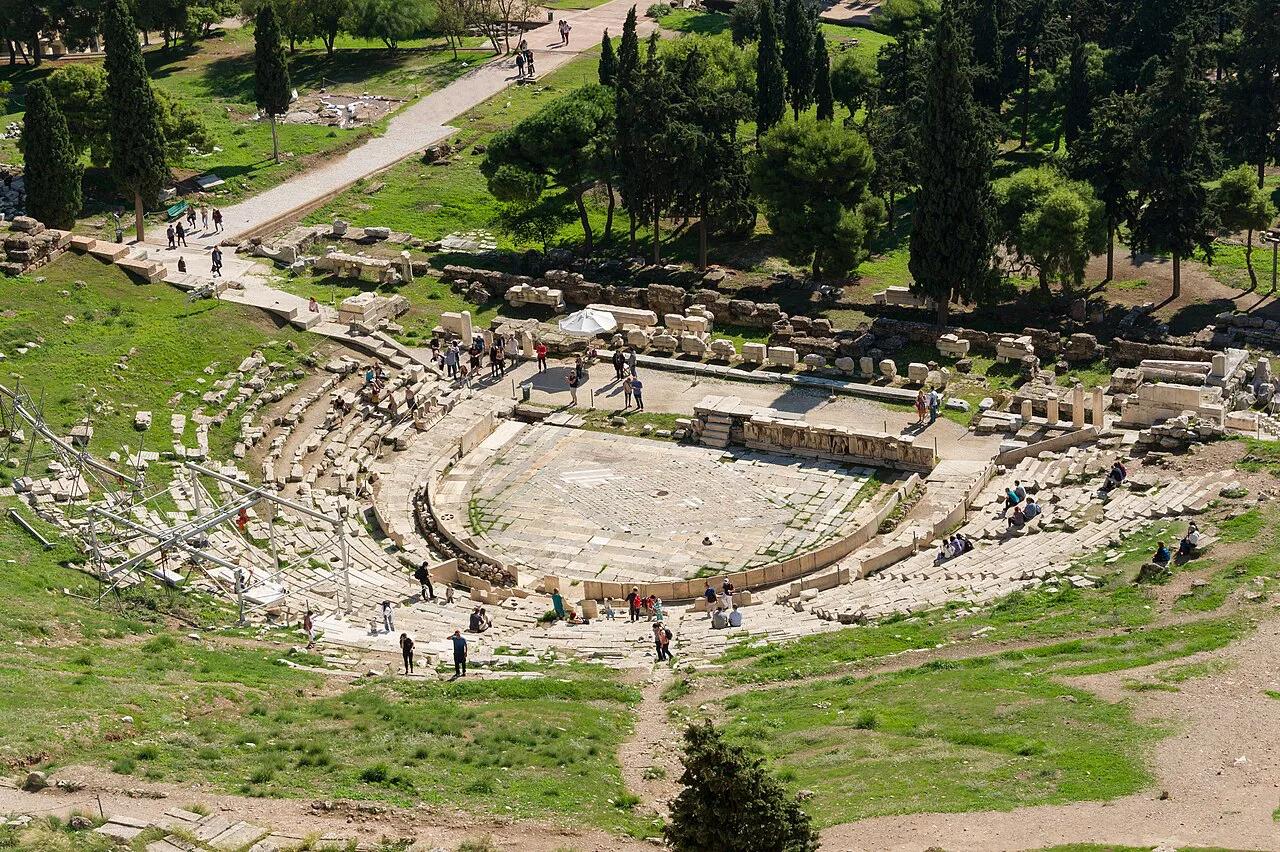
Theatre of Dionysus Athens: Visit Guide, History & Tickets
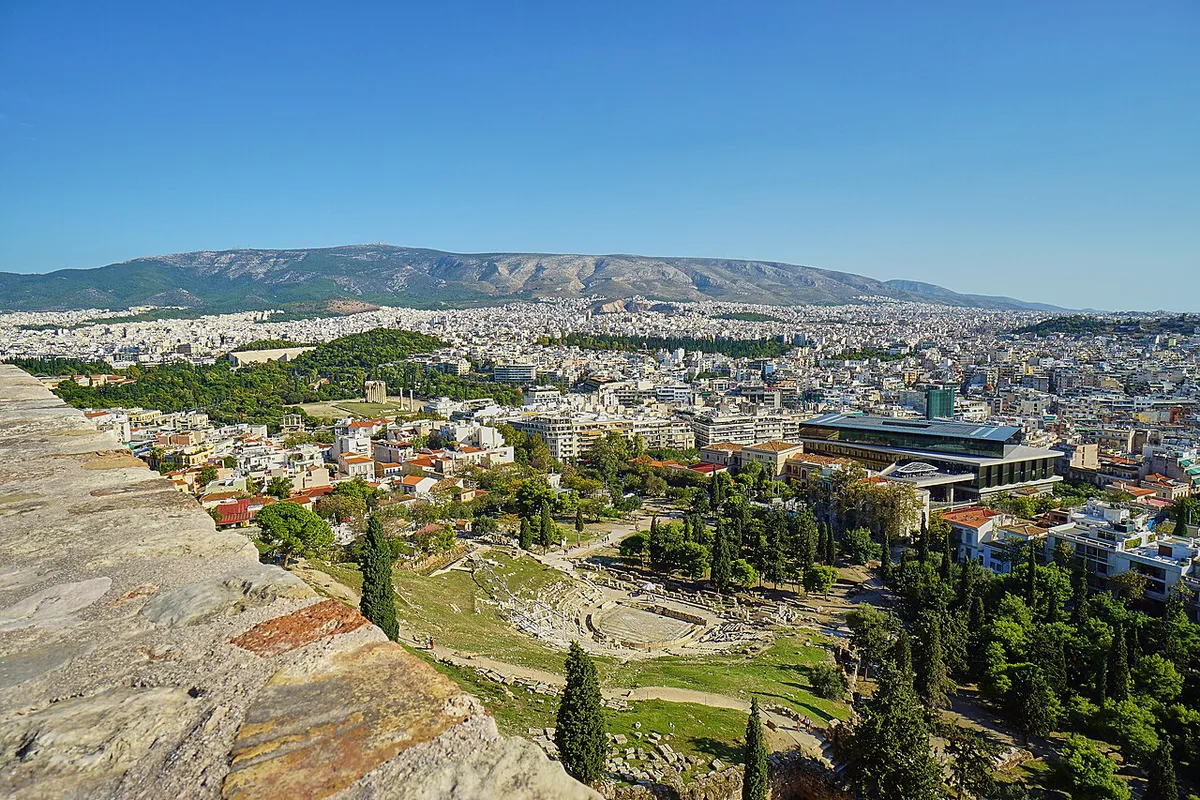
Last updated November 2026: the theatre of Dionysus Eleuthereus sits on the south slope of the Acropolis in Athens. It is widely described as the birthplace of Greek drama, and you visit it as part of the Acropolis site. This guide covers what survives, how it fits your route, and who can skip it.
Featured image: Jebulon, CC0, via Wikimedia Commons.
What the Theatre of Dionysus Is, and Why It Matters
Dionysus was the god honored at the City Dionysia, an Athenian festival where tragedies and comedies were staged. This sanctuary on the Acropolis south slope was the festival's setting, which is why drama scholars keep returning to it. Early on, the space had straight retaining walls with post grooves that supported temporary, movable structures. A stone theatre came later, and Roman-era builders altered it again. What you see today is a layered site, not a single original build. US visitors often search for the theater of Dionysus under that spelling, and it is the same place. Reviews sometimes call it the oldest theater in the world, but that is a slogan rather than a settled fact. Dating the early phase and the later stone phase is a question for scholars, so treat any single date on a plaque or blog as one reading.
Building Phases: From Wooden Seats to Roman Marble
The theatre you see developed in stages over roughly eight centuries, which explains why the stonework looks mixed. A rough sequence, with the caveat that scholars still debate exact dates:
- Early festival space (about 6th to 5th century BC): a flat dancing floor beside the sanctuary, with temporary wooden seating on the slope.
- Stone theatre (4th century BC): the Athenian statesman Lycurgus is traditionally credited with the rebuild in stone, around 330 BC. This is the phase that gave the seating its tiered shape.
- Hellenistic and Roman changes: the stage building was reworked, and the orchestra and front rows were adapted for new kinds of shows and for honored guests.
- Later Roman additions: the Bema of Phaedrus and the marble front-row thrones belong to this late layer.
The practical lesson is to read the stone, not the signboard slogan. Smooth, finely cut marble near the orchestra is usually later work, while the rougher tiers higher up are closer to the earlier form. For a better-preserved example of a Greek theatre in its classical shape, our guide to the ancient theatre of Epidaurus makes a useful comparison.
What You Can See on Site
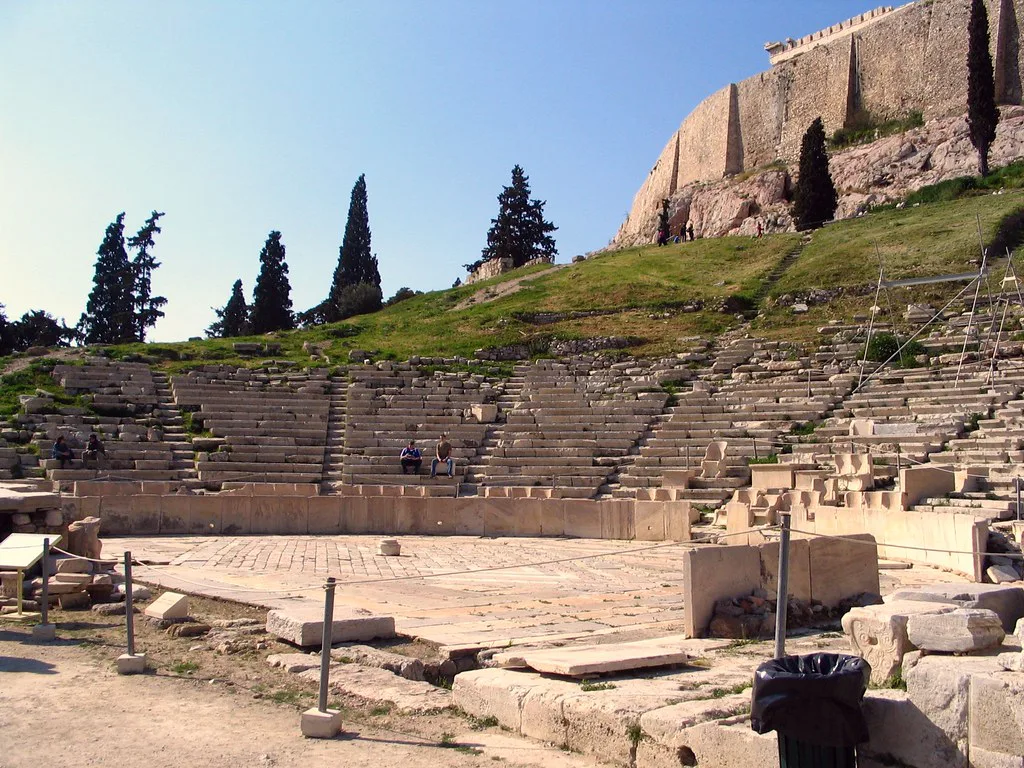
Expect a ruin you read slowly, not a reconstructed stage. Scan from the flat performance floor up toward the Acropolis wall, then look for the carved details below.
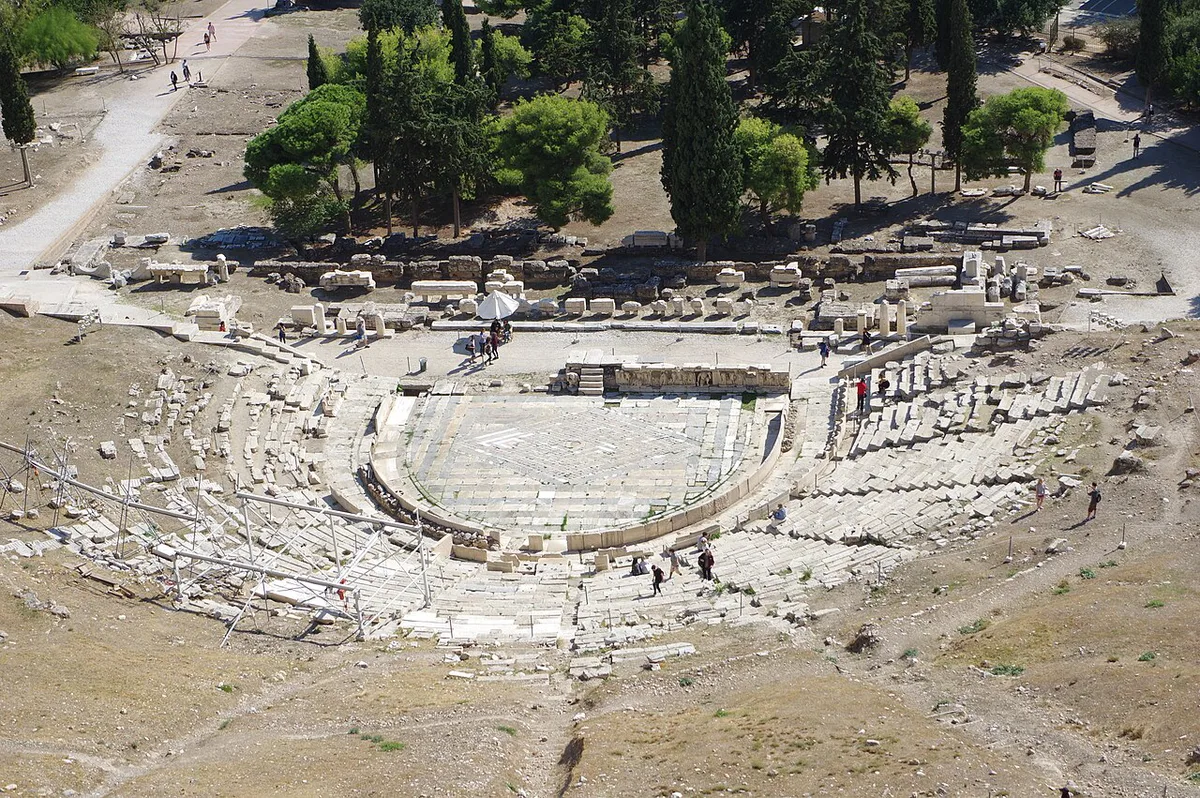
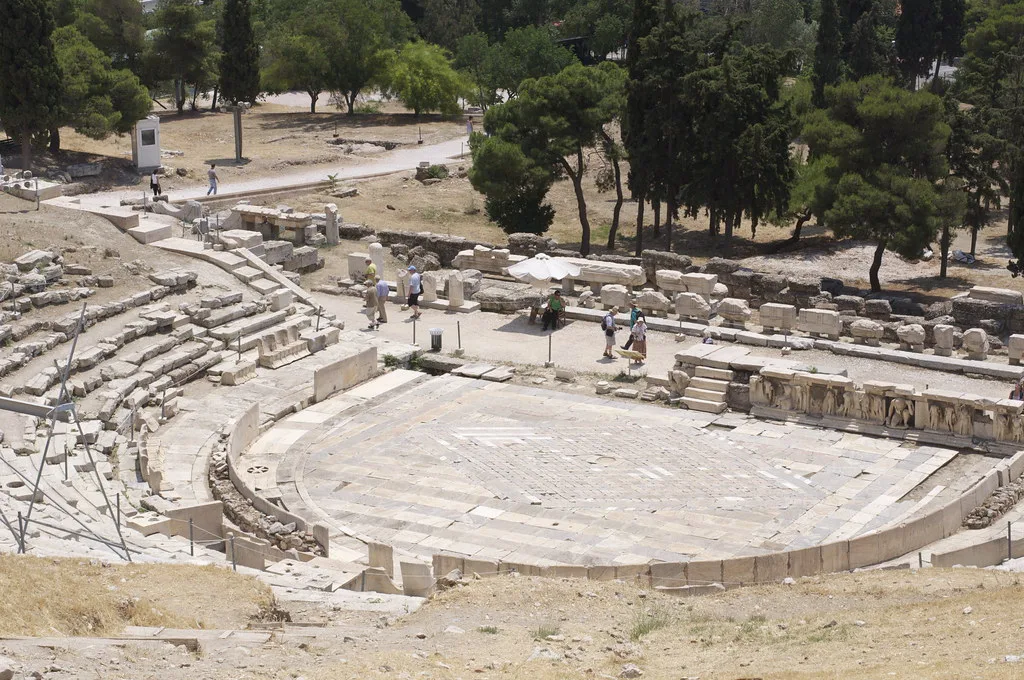
- Orchestra: the flat performance floor at the base of the seating, where the chorus performed.
- Seating: tiered rows climbing the slope. Not every row is original, so read the site plaques to see what has been restored.
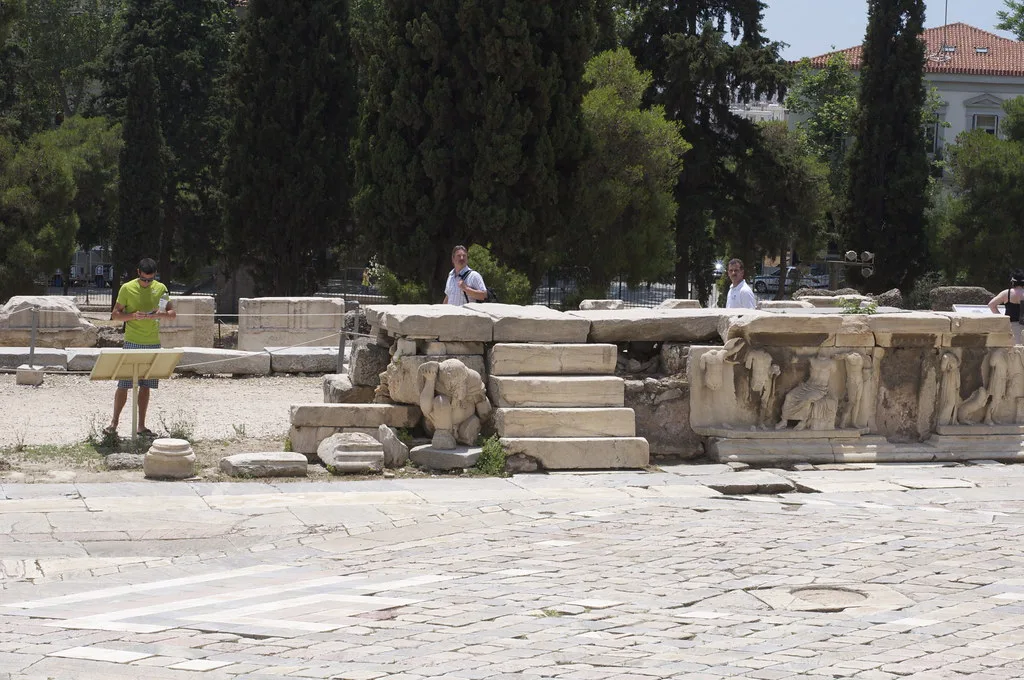
- Front-row thrones: carved marble seats from the Roman era, set aside for honored guests and officials.
- Bema of Phaedrus: a Roman-era stage platform with carved front panels, one of the clearest signs of later alterations.
- Stage building foundations: low remains behind the orchestra that show where scenery and actors' spaces once stood.
The Plays and Playwrights Linked to This Slope
The theatre matters because of what was staged here, not only because of its stones. During the City Dionysia, held in spring, Athenians watched competitions of tragedy, comedy and choral song, and the works judged here shaped later European drama.
- Aeschylus, Sophocles and Euripides: the three great tragedians whose plays were performed in the festival competitions.
- Aristophanes: the best-known comic playwright of the period, whose comedies belonged to the same festival tradition.
- The audience: citizens sat by section, and officials and priests occupied the front seats, which is why the carved thrones are such a good photo stop.
Standing at the orchestra, notice how the seating curves in toward the performance floor. The design meant that spoken lines carried up the slope without amplification. If you want to compare the acoustic experience with another ancient venue, the Argos theatre is a useful Greek counterpart, and it shows how large these civic theatres could grow.
Many of the surviving plays are available in translation, so a short reading before your visit makes the empty seats easier to picture.
Tickets, Hours and Access
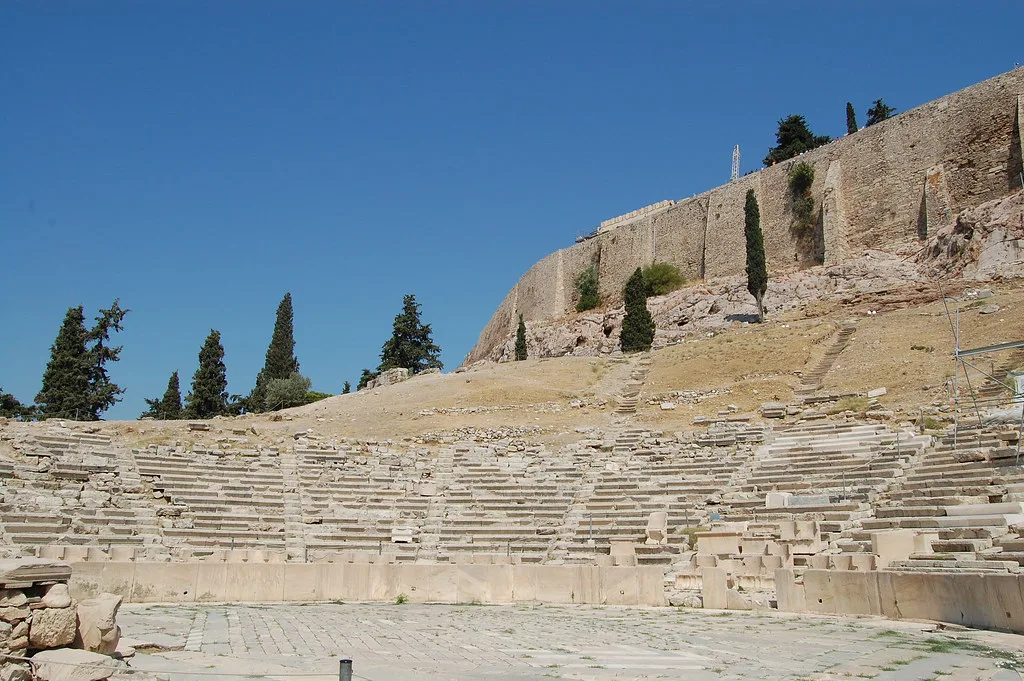
Entry is part of your Acropolis visit, so you do not buy a separate ticket for the theatre. The Ministry of Culture sells tickets on its official e-ticket site, and that page is the source for current hours, closure days and heat-related closures. Our guide to combined ticket rules explains how a multi-site pass works. General trip planning help is on the national tourism site. Prices and hours are published by the ministry and change by season.
| Question | What to know |
|---|---|
| Ticket coverage | Visited as part of the Acropolis site; see the e-ticket page for current rules |
| Entry point | Use the Acropolis entrance; the ministry lists the current gate |
| Steps and surface | Sloping ground, worn marble and uneven stone; wear flat, grippy shoes |
| Mobility | Seating areas are steep; ask staff at the gate which paths are open |
| Heat and shade | Little shade on the slope; go early or late on hot days |
Address and How to Reach the Theatre
The theatre lies on the south slope of the Acropolis, close to Dionysiou Areopagitou, the pedestrian promenade that runs below the rock. It is a short walk from the Acropolis Museum and the Plaka district.
- By metro: take Line 2 to Acropolis station, then walk uphill along the promenade for a few minutes.
- On foot: from Monastiraki or Plaka, the paths slope gently upward, so allow extra time in summer heat.
- By taxi: ask to be dropped near the Acropolis Museum and walk from there, since traffic around the rock is restricted.
Remember that you reach the theatre through the Acropolis site rather than as a stand-alone attraction, so follow the ticketing and entry details above. Gate locations and opening times can change, so confirm them on the Ministry of Culture's e-ticket page before you set out.
If you are building a wider route through Greece after Athens, our guide to the Epidaurus theatre covers a classic day-trip option from the capital.
How Long to Spend, and Where It Fits in Your Acropolis Visit
Treat the theatre as a short stop inside a longer Acropolis visit, not a separate trip. It sits on the south slope, so you pass it as you move between the summit and the lower paths. Give it enough time to find the orchestra, the front-row thrones and the Bema of Phaedrus. After that, the Parthenon and the Acropolis Museum deserve most of your energy. Visitors who have only a few hours in Athens can skim the seating and spend longer at the summit.
Worth It? Who Should Prioritize or Skip
Match the stop to your own interests and stamina.
- History and theatre fans: prioritize it. This is where the festival tradition behind tragedy and comedy took shape.
- Families: keep it short. Children usually enjoy standing on the orchestra floor and spotting the carved thrones.
- Short-stay visitors: take a quick look on your way past, and save your time for the summit.
- Visitors with mobility limits: ask at the gate about paths first. The slope and uneven marble make some areas hard.
Common Mistakes
A few errors cost visitors time or comfort here.
- Arriving at midday in summer: the slope has little shade, so go early or late.
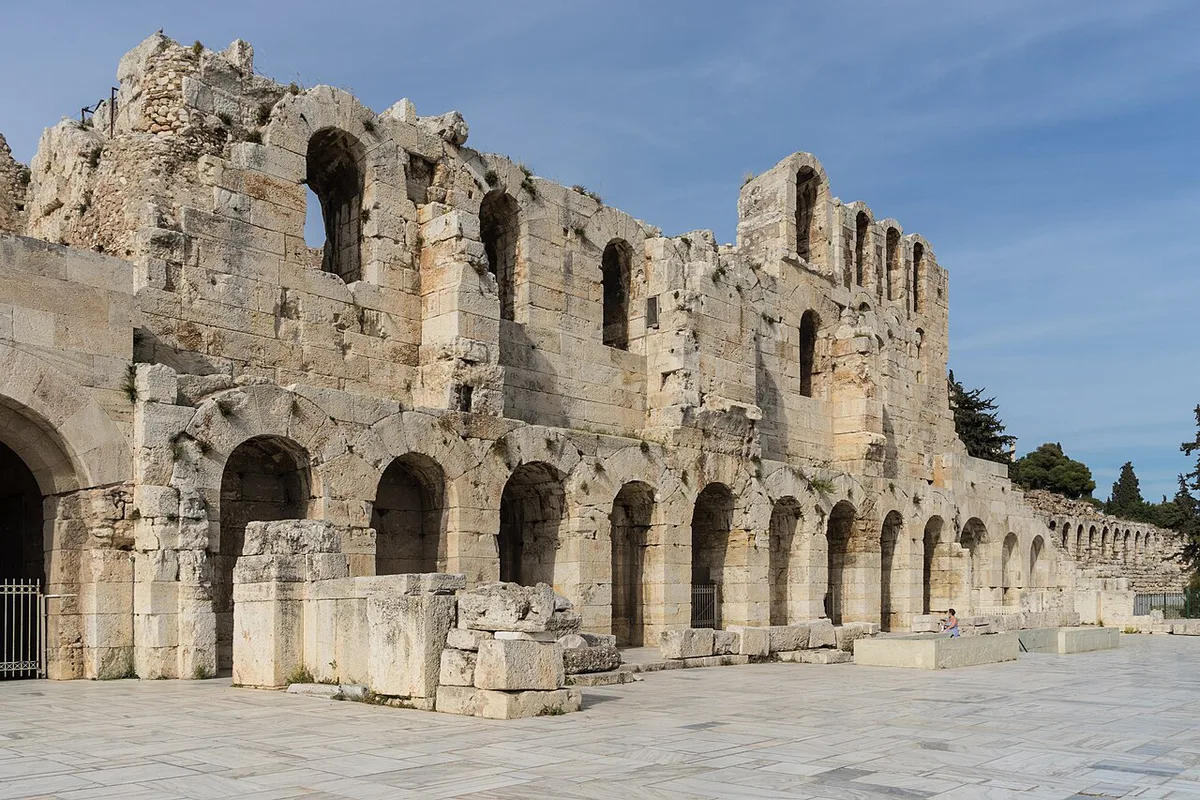
- Mixing it up with the Odeon of Herodes Atticus: that is a separate Roman-era venue, while this is the older festival theatre.
- Expecting a complete theatre: much of what you see is rebuilt or altered, so read the plaques.
- Underestimating the slope: uneven stone and steps tire you before the summit.
Nearby Ancient Sites and Next Steps
Our wider guide to Athens' ancient ruins shows how this theatre fits the city's sites. Other ancient hills are worth a look, including the rock of the Areopagus. The ancient assembly place on the Pnyx is another. Down in the lower city, the Roman Agora ruins make an easy add-on. The Hephaestus temple is another well-preserved stop. Beyond central Athens, the Aphaia temple is a full day-trip option. The Eleusis excavation site is another. The Marathon battlefield tomb and the Brauron sanctuary round out the Attica list.
Related guides



Continue reading
Guides on the same trip


