Temple of Aphaia, Aegina: Getting There, Tickets and What to See
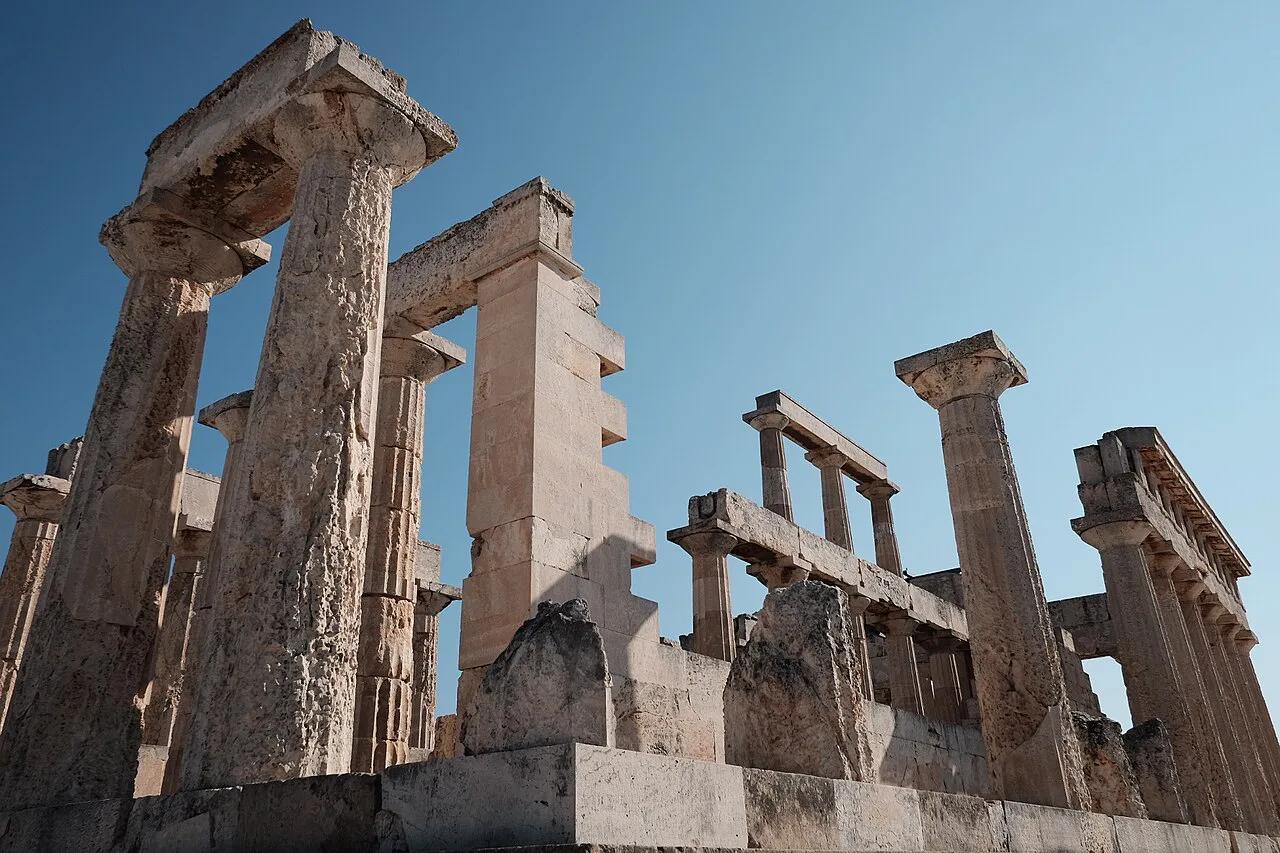
Last updated November 2026: the Temple of Aphaia is a well-preserved Doric temple of about 500 BCE on a pine-covered ridge on Aegina, facing across the Saronic Gulf toward Athens. You reach it by ferry from Piraeus, then a bus from Aegina town. It suits a half-day or full-day trip, and our guide covers transport, tickets, what you will see and how it compares with other ancient sites around Athens.
Featured image: Eric C Gardner, CC BY-SA 4.0, via Wikimedia Commons.
Is the Temple of Aphaia worth the trip from Athens?
Yes, for most visitors with a spare half day. Few ancient sites near Athens combine standing columns, a ridge-top setting and a sea crossing in one outing. Your verdict depends on how you travel.
- History and architecture fans: go. The Doric columns and their optical refinements reward slow looking.
- Families: worth it if children enjoy boats and open-air sites. Plan for limited shade.
- Short Athens stay: possible, but the trip replaces a full day in the city.
- Rushed itinerary: skip Aegina and spend the time at Athens sites that need no ferry.
How to get to the Temple of Aphaia from Athens
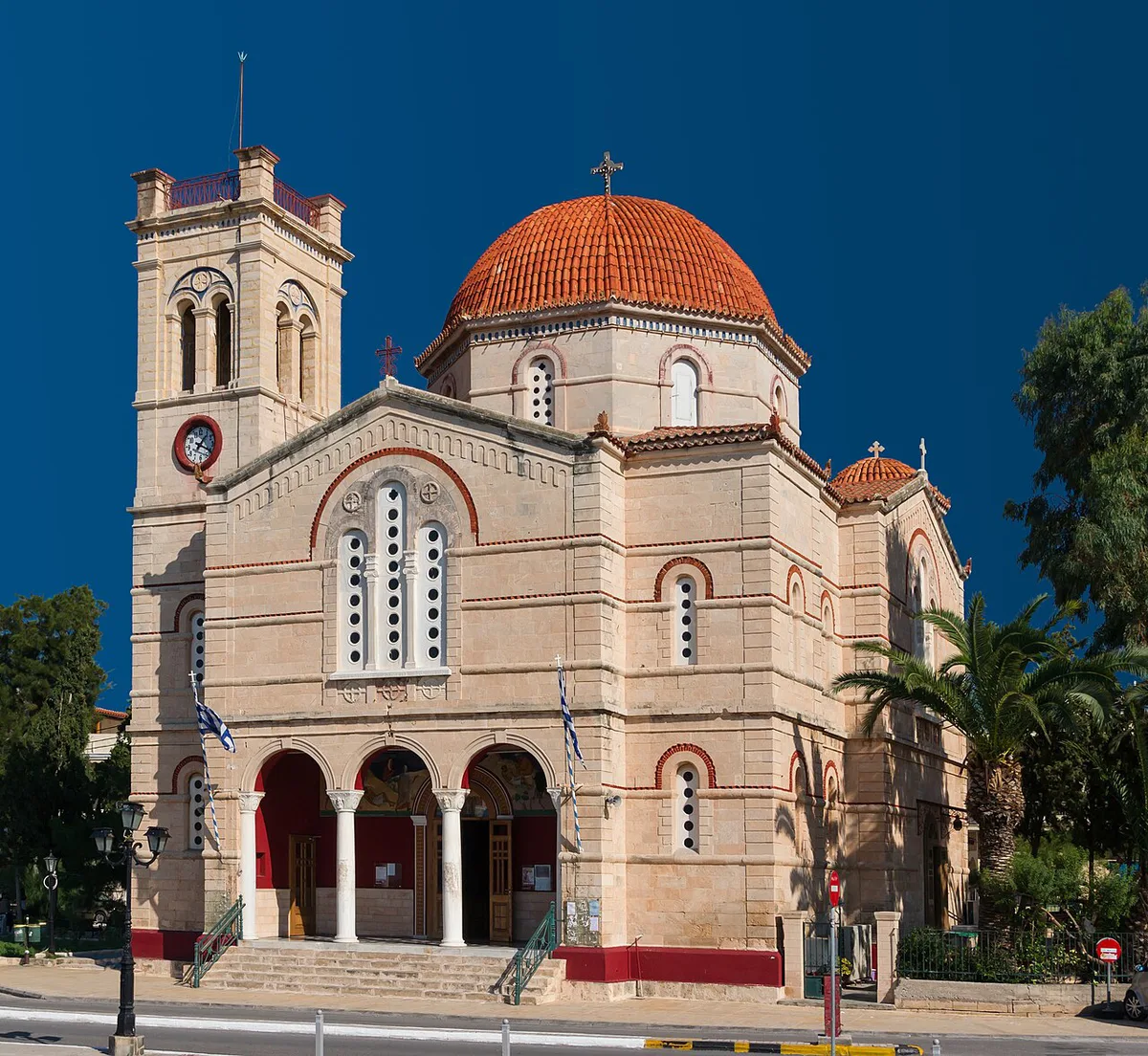
Start at Piraeus and board a ferry to Aegina. Operators run faster and slower boats on this route. Faster boats generally cost more, and slower boats take longer, so compare current timetables and fares on the operators' own sites before you choose. From Aegina town, a bus, taxi or rental vehicle takes you up to the temple. Agia Marina may offer a shorter route, but you should confirm which ports your sailing serves. The temple is not walkable from the port, so budget for onward transport. Visit Greece's Aegina page lists other sights if you want to extend the day.
| Option | Port arrival | Onward transport | Effort | Best for |
|---|---|---|---|---|
| Ferry plus bus | Aegina town | Public bus to the site | Lowest cost, fixed timetable | Budget travelers |
| Ferry plus taxi | Aegina town | Taxi to the site | Easy, higher cost | Small groups on a tight schedule |
| Ferry plus rental | Aegina town | Rental car or scooter | Most flexible, more planning | Visitors adding other island stops |
| Ferry to Agia Marina | Agia Marina | Bus or taxi | Possibly shorter, route needs checking | Anyone willing to compare timetables |
Tickets and opening hours
Admission prices and opening hours change, so check them on the Ministry of Culture e-ticket portal. Your Athens pass is a separate product, and a separate Athens pass is not assumed to cover Aegina.
What to see at the temple
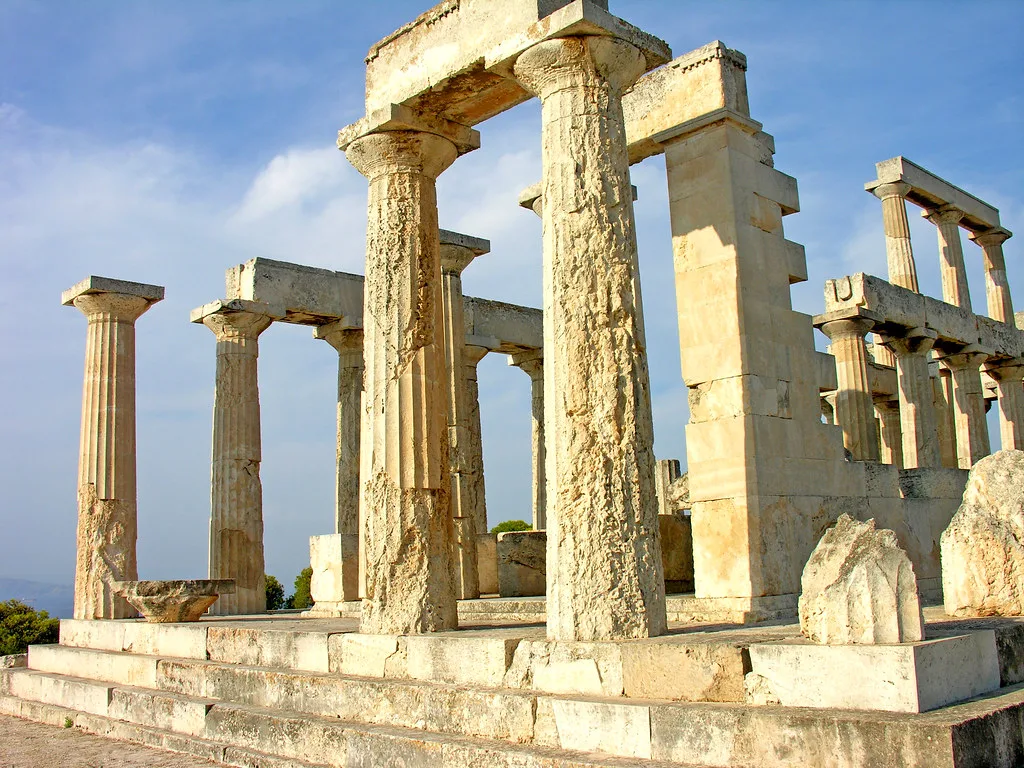
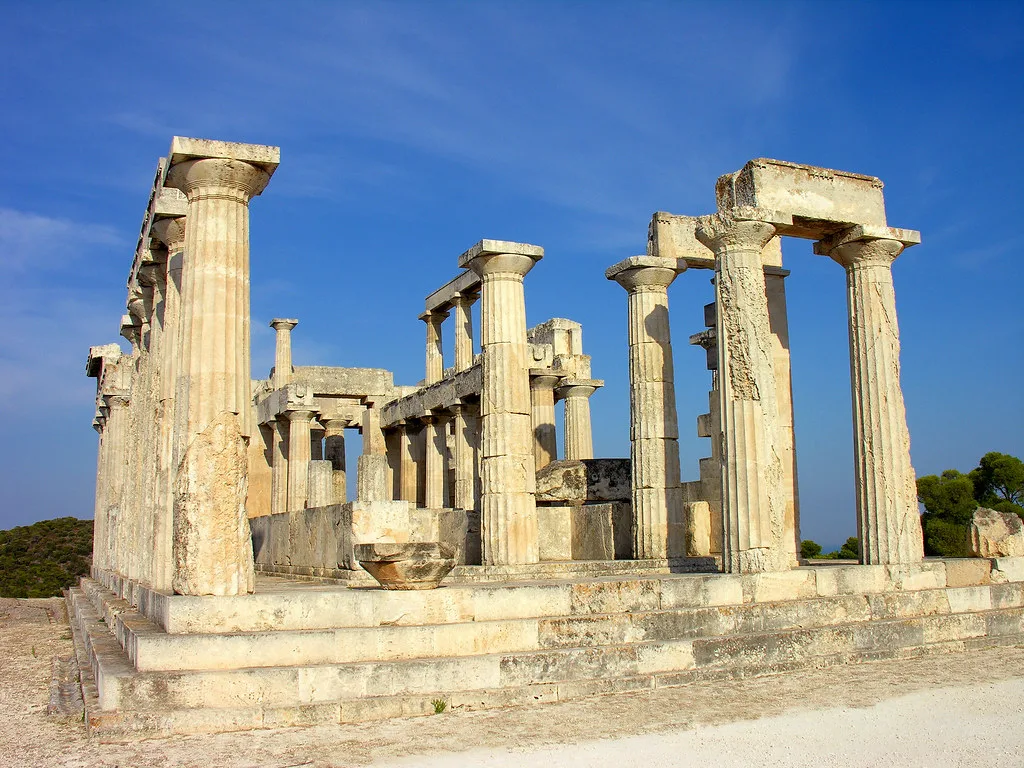
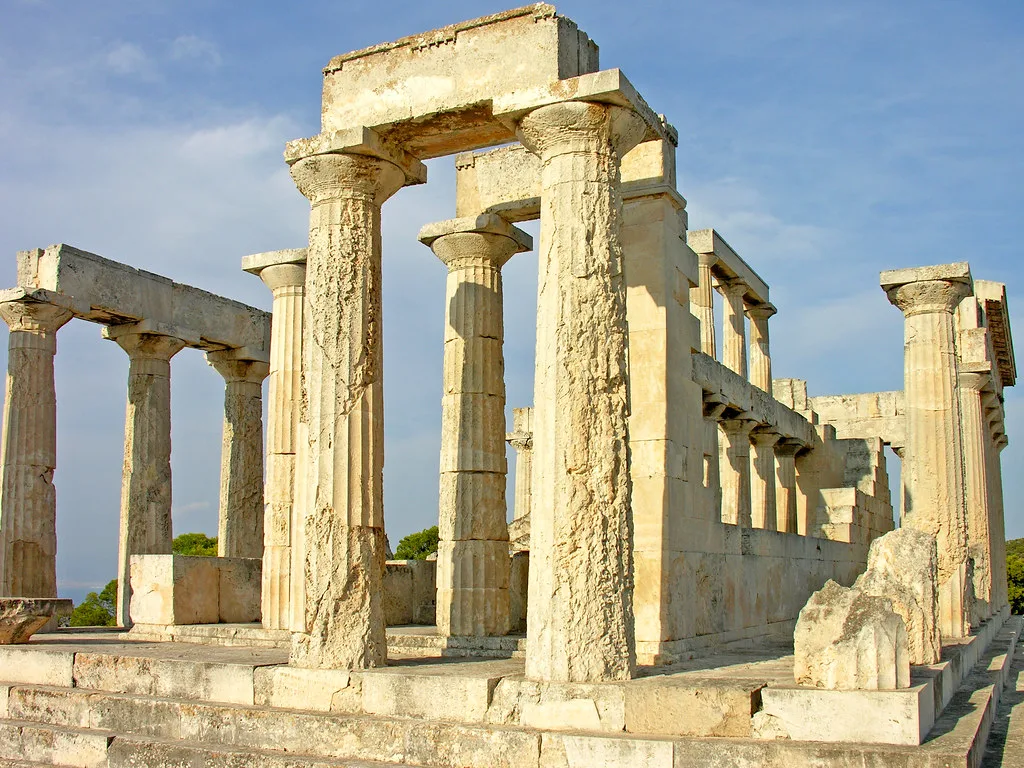
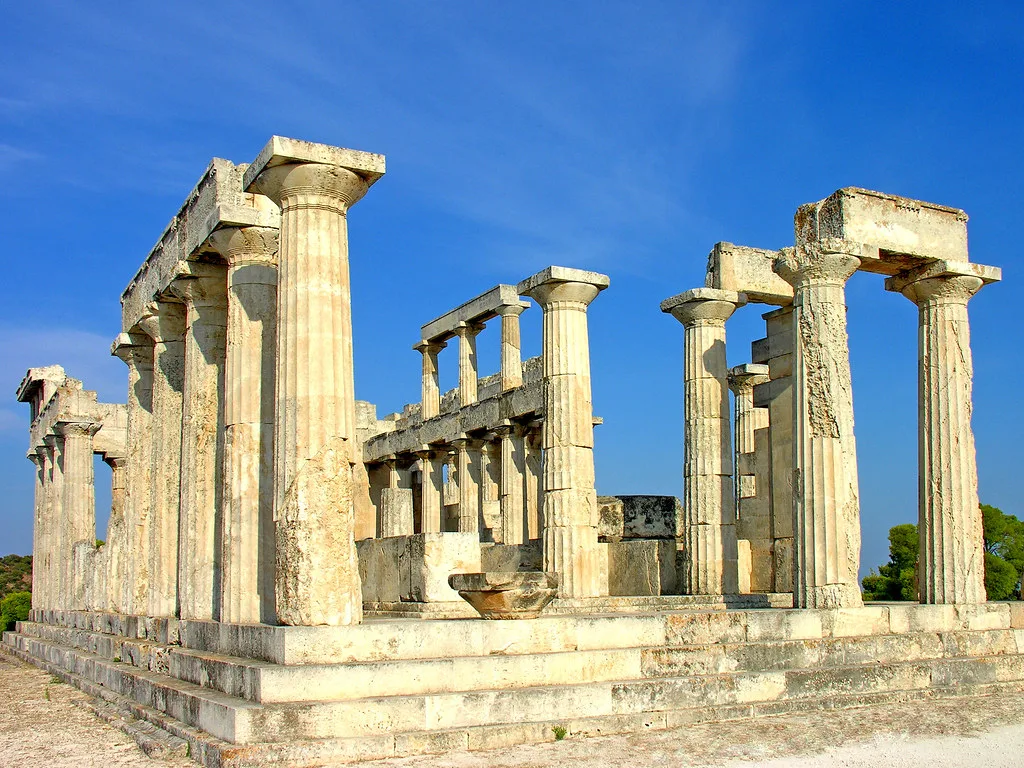
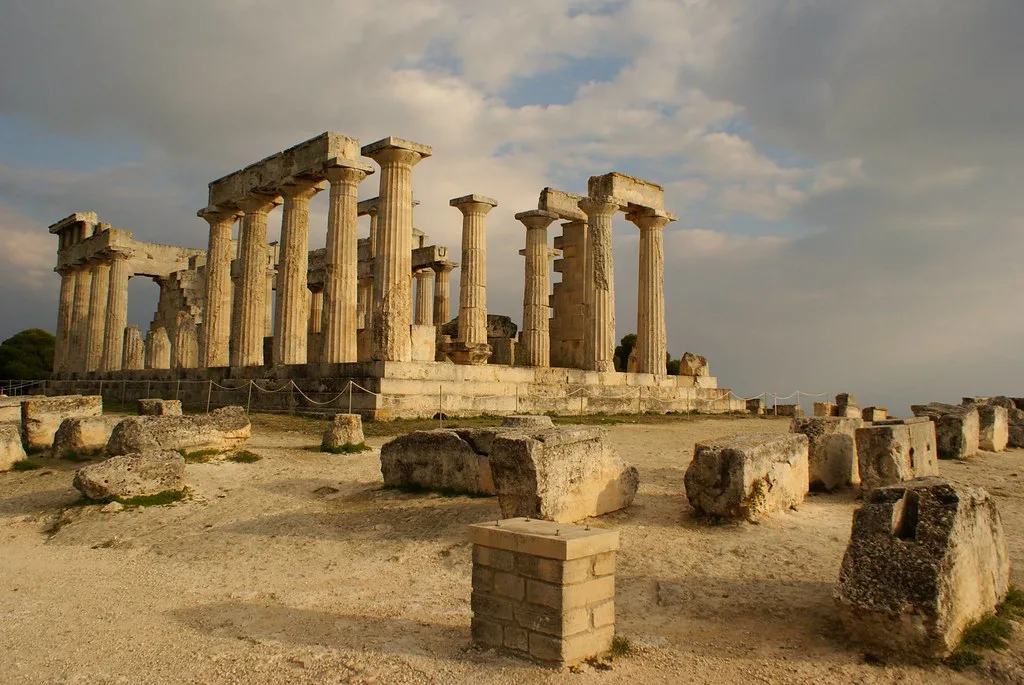
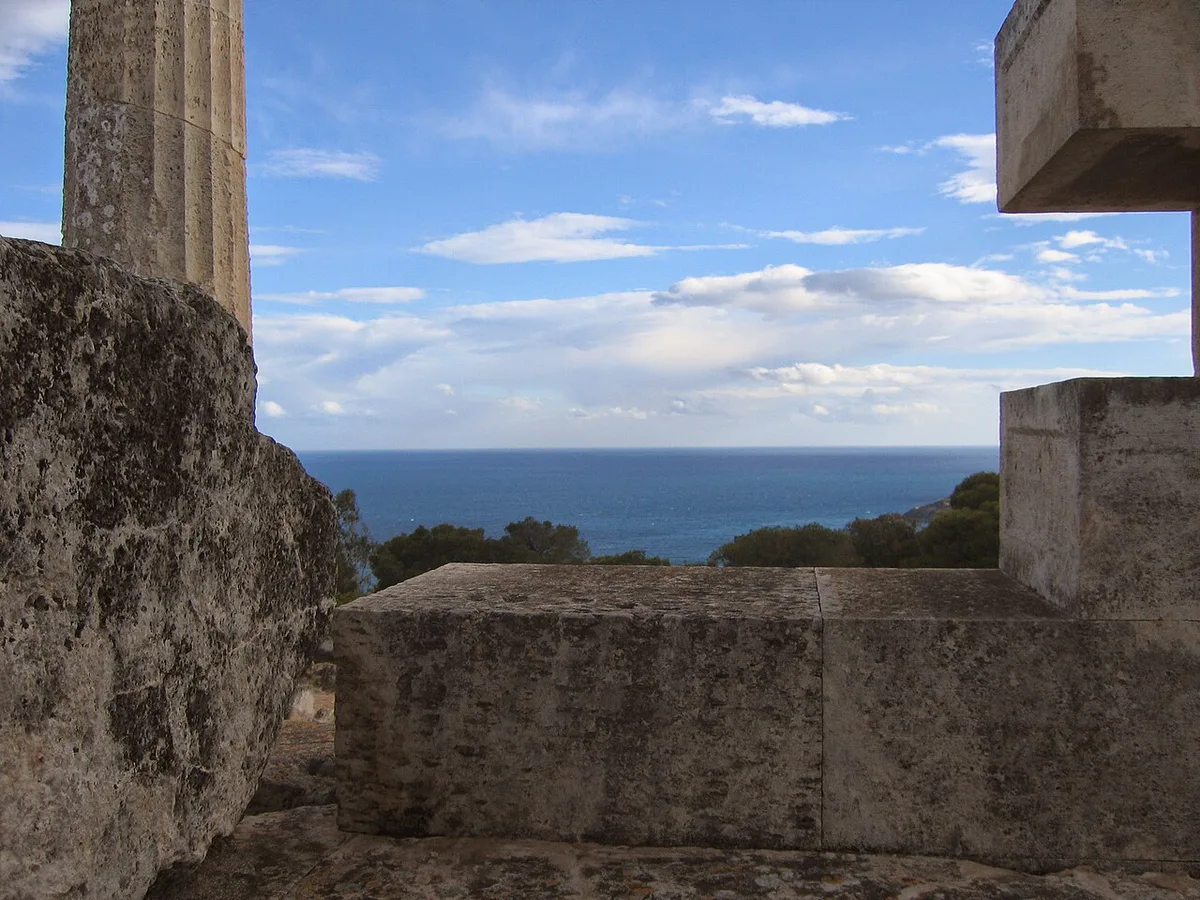
Your first impression is the setting. The temple stands on a pine-covered ridge, with views over the Saronic Gulf toward Athens. Built around 500 BCE from local limestone, it is a Doric peripteral temple with 6 columns across the front and 12 along the sides. Builders originally coated the stone in plaster and painted it. Look closely at the corner columns, which are slightly thicker than the rest. The exterior columns also lean subtly inward, a refinement that stops the building looking top-heavy. Inside the cella, the inner chamber, two tiers of columns once carried the roof beams. Their double-tier layout is one of the temple's most unusual features.
Phases of the Aphaia sanctuary: from Bronze Age to the temple you see
The standing temple is the last stage of a cult place that was used for many centuries. Knowing the sequence helps you read the foundations and platforms around the building, which look like clutter without it.
Bronze Age and Geometric beginnings
Pottery and small finds show that the ridge was in use well before the stone temple. The earliest traces belong to the Bronze Age. Organised worship is usually dated to the Late Geometric period, around the 8th century BCE, when an open-air altar area served the cult. No building from these centuries survives above ground.
The earlier Archaic temple
In the 6th century BCE the sanctuary received a first monumental temple, often called Aphaia Temple I. It was damaged by fire, and the site was then rebuilt on a larger scale. Fragments of this older phase were reused as fill in the terrace that carries the later building.
Late Archaic temple (Aphaia Temple II)
The building you visit is the Late Archaic rebuild of about 500 BCE. Its limestone platform, the 6-by-12 columns and the two-tier interior colonnade belong to this phase. The terrace, altar and the ramp on the east side were laid out at the same time, so the temple was designed together with its approach.
On site, look for these elements:
- Terrace walls: the large polygonal blocks that level the ridge for the temple.
- Altar zone: east of the temple, where ritual took place in the open air.
- Foundation traces: lower courses that do not match the standing columns, which hint at earlier building.
Dates for each phase are scholarly estimates and shift by a decade or two between publications. For a Peloponnesian temple of a later era to compare, see the Temple of Apollo Epicurius at Bassae.
Aphaia and the pediments: what is missing and where it is
Pausanias records that Aphaia was Britomartis, a Cretan companion of Artemis who vanished on Aegina. Islanders then worshipped her under a name usually read as the Invisible One. Sculptures from both pediments were found in 1811 and now stand in the Glyptothek in Munich. They show Trojan War scenes. The west pediment is Late Archaic and the east is Early Classical, so the pair shows Greek sculpture changing within a few decades. None of this is on site, so expect architecture and landscape rather than statues.
Pediment statues were found in 1811, so on Aegina you see architecture only; the statues are in Munich's Glyptothek.
Exploration and excavation history of the Aphaia temple
The temple was never lost. Travellers described the standing columns for centuries, and the site's modern story begins with the arrival of foreign antiquarians in the early 1800s.
- 1811: a group of architects and antiquarians, including the Englishman Charles Robert Cockerell and the German Carl Haller von Hallerstein, dug around the temple and uncovered the pediment sculptures.
- Sale to Bavaria: the finds were sold to Crown Prince Ludwig of Bavaria. The sculptor Bertel Thorvaldsen restored the figures in Rome before they went to Munich.
- Early 1900s: German archaeologists led by Adolf Furtwängler carried out systematic excavations. Their work clarified the building's structure and showed that it replaced an earlier temple.
- Later work: Greek archaeological services have since consolidated and conserved the monument. Check the Ministry of Culture site for current access to any fenced areas.
This history explains an oddity of the visit. The finds that made the temple famous were removed in the 19th century, and the building itself, thanks to the 20th-century excavations, is better understood than most island sanctuaries.
If the story of Greek temples and their lost sculpture interests you, the Temple of Zeus at Olympia offers a mainland parallel, with pediment figures now in an on-site museum.
Planning the day: what to combine and what to skip
Most visitors treat Aegina as a day trip from Athens. Staying overnight only helps if you want the temple in evening light. Visit in shoulder season or early or late in the day, and wear sturdy shoes for the ridge path. Carry water, because shade is limited.
- Midday heat: the ridge is exposed, so avoid the hottest hours in summer.
- Last ferry: work out the final sailing back to Piraeus before you leave Aegina town.
- Walking from the port: do not assume you can reach the temple on foot.
How the Temple of Aphaia compares with Athens-area ruins
The Doric temple in Athens is among the best-preserved in the city and needs no ferry. Aphaia asks for more time but gives you a quieter ridge setting. If you stay in the city instead, the Roman Agora fits a shorter outing.
Aphaia dates to 500 BCE, so compare it with Athens ruins by era, not only by how well preserved they are.
| Site | Time needed | Cost level | Access effort | Best for |
|---|---|---|---|---|
| Temple of Aphaia, Aegina | Half day to full day | Moderate (ferry, bus, entry) | Ferry plus onward transport | Architecture fans with spare time |
| Temple of Hephaestus, Athens | Short visit | Low | No ferry needed | Short stays |
| Other Athens ruins | Varies by site | Low to moderate | Mostly central | First-time visitors |
Other day trips outside central Athens
If Aegina does not fit, the sanctuary at Eleusis is a mainland alternative. History readers may prefer the burial mound at Marathon. A quieter option is the sanctuary at Brauron.
Temple of Aphaia FAQ
Is the Temple of Aphaia worth visiting from Athens? Yes, if you have a spare half day or full day. The temple dates to about 500 BCE and combines a standing Doric monument with a ferry trip and open island views.
Is the temple close to the Aegina ferry port? No. From Aegina town, continue by bus, taxi or rental vehicle. Do not plan to walk from the port, and check return-ferry times before leaving town.
Are the famous sculptures still at the temple? No. The pediment sculptures were found in 1811 and are now in Munich's Glyptothek. At the site, focus on the 6-by-12-column temple, its ridge setting and the views toward Athens.
Who was Aphaia? Pausanias connected Aphaia with Britomartis, a Cretan companion of Artemis. The sanctuary is dedicated to Aphaia, while its surviving architecture is the main reason to make the trip.
Related guides


Continue reading
Guides on the same trip