

Last updated November 2026: Ancient Olympia is the sanctuary of Zeus in Elis, in the western Peloponnese, and the birthplace of the ancient Olympic Games. Allow a half-day, or 2–3 hours if you compress the route below. Go for the setting, the museum and the sense of scale; skip it if you expect standing temples.
Featured image: Gary Bembridge from London, UK, CC BY 2.0, via Wikimedia Commons.
Ancient Olympia Key Facts
Most of the site is low ruins: foundations, column drums and the long stadium track. A museum visit or a guide fills in what the stones no longer show. Prices and hours checked November 2026 against published listings; the Hellenic Ministry of Culture e-ticket portal is the place to confirm current figures.
| Fact | Detail |
|---|---|
| Location | Elis, western Peloponnese |
| What it is | Sanctuary of Zeus and home of the ancient Olympic Games |
| Deities | Zeus and Hera |
| Typical visit | Half-day for site plus museum; 2–3 hours if compressed |
| Ticket covers | Site plus the museums listed under one ticket |
| Summer hours | 08:00–20:00 daily from April 1 |
| Arrival | Bus or car from Athens via Pyrgos; cruise stop at Katakolo |
5 Best Things To See At Ancient Olympia
These five stops follow the walking order we recommend. Each links to a deeper guide for the details.
1. Temple of Zeus
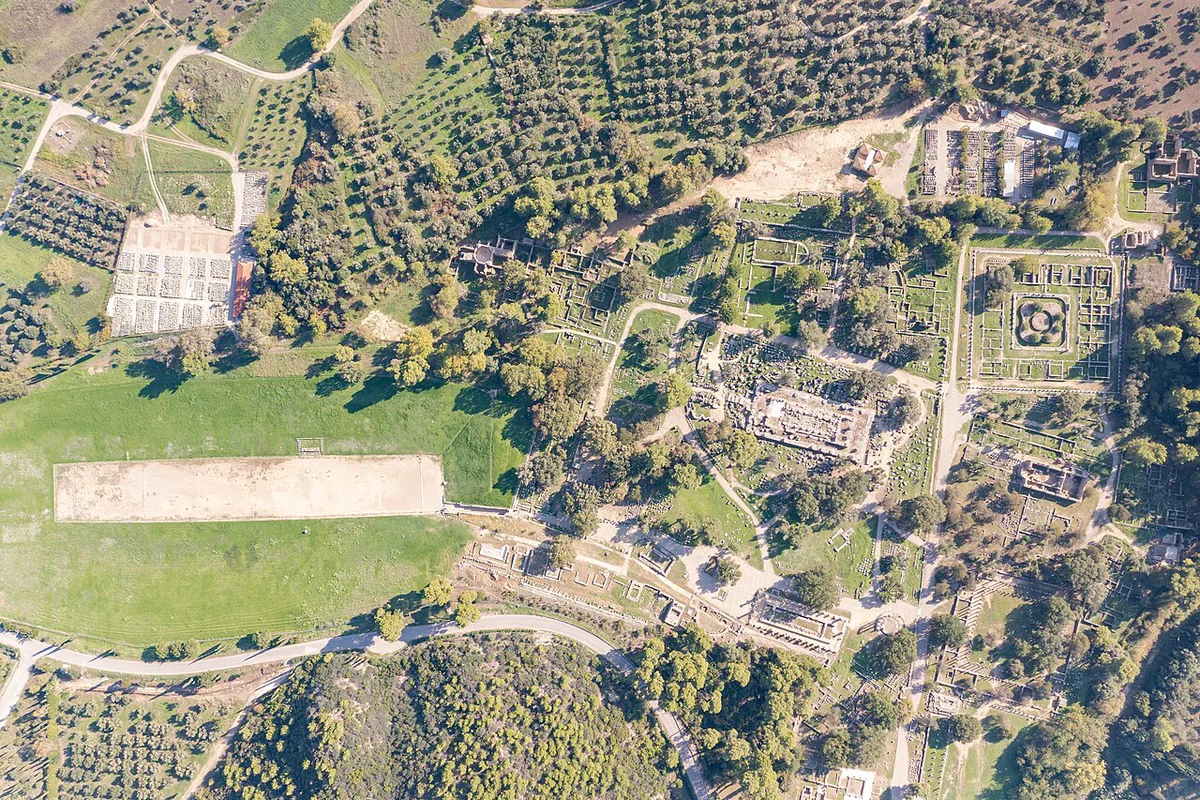
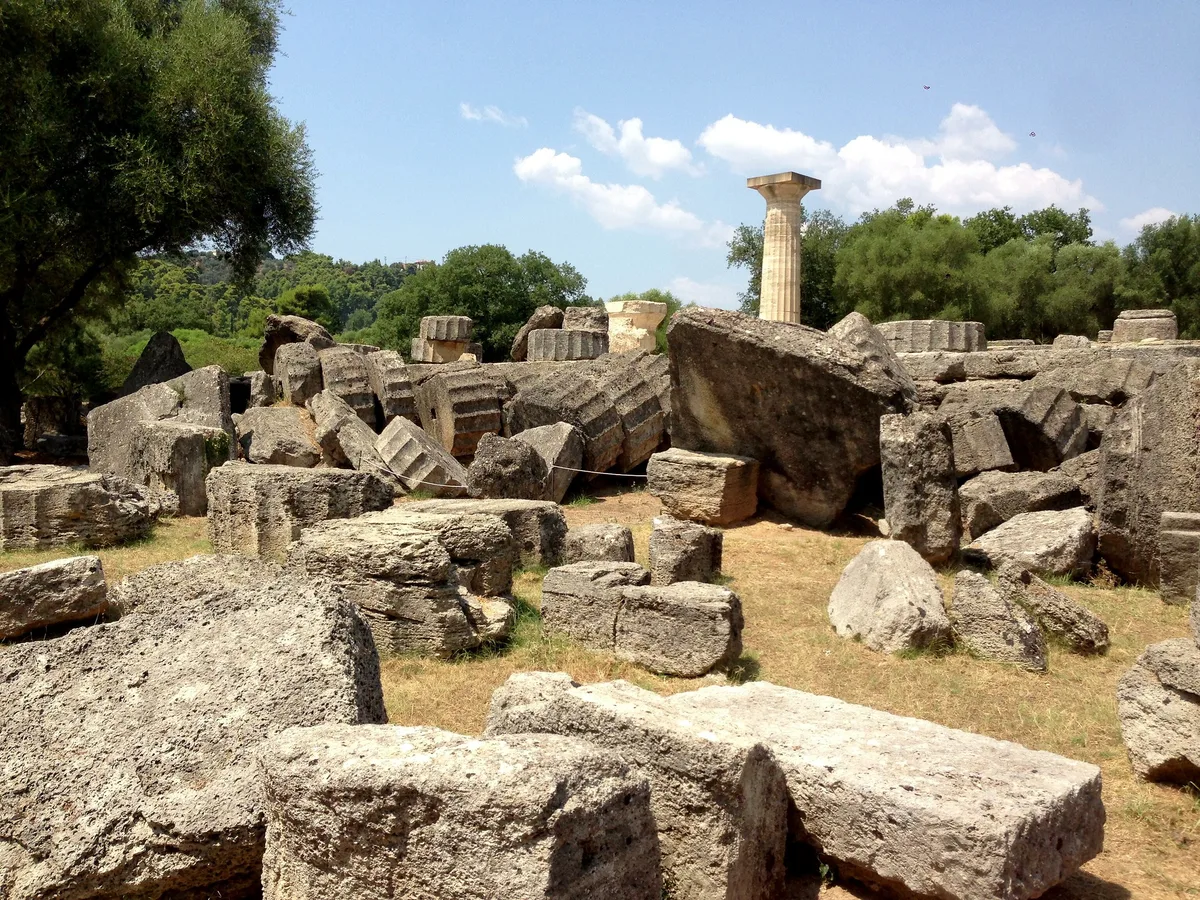
This Doric temple once held Phidias's gold-and-ivory statue of Zeus, one of the most famous works of the ancient world. Today you see the foundation platform and a scatter of fallen column drums, plus one re-erected column that shows the scale. Construction dates to around 456 BC, and the temple was repaired several times in antiquity.
Stand beside the toppled drums to judge how tall the columns were. Our Temple of Zeus guide covers what survives in more detail. Skip a long stop here if you expect a standing building; five minutes of context beats an hour of staring at stone.
2. Temple of Hera and the Olympic Flame
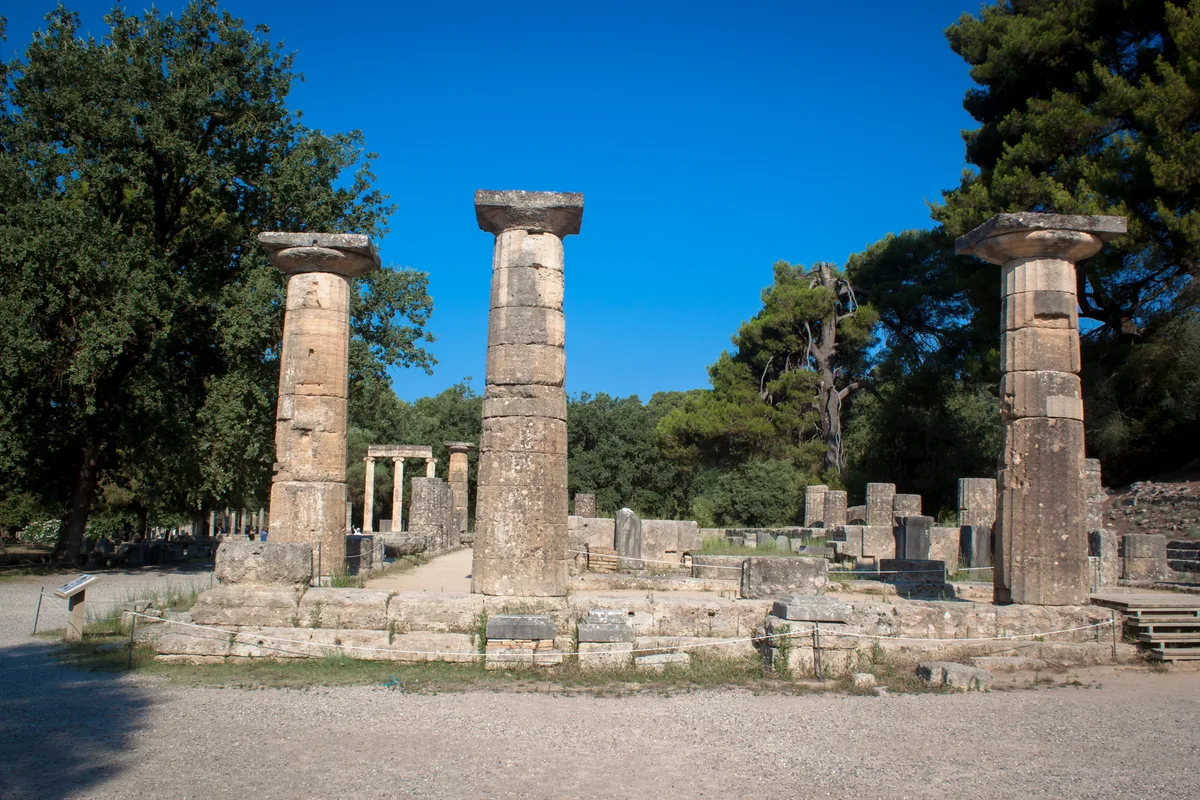
The Temple of Hera is the older of the two great temples and dates to the Archaic period, around 600 BC. It was built in the Doric order, with 16 columns along each side, and only low courses and a few columns remain. The Olympic flame for the modern Games is lit at the altar in front of this temple.
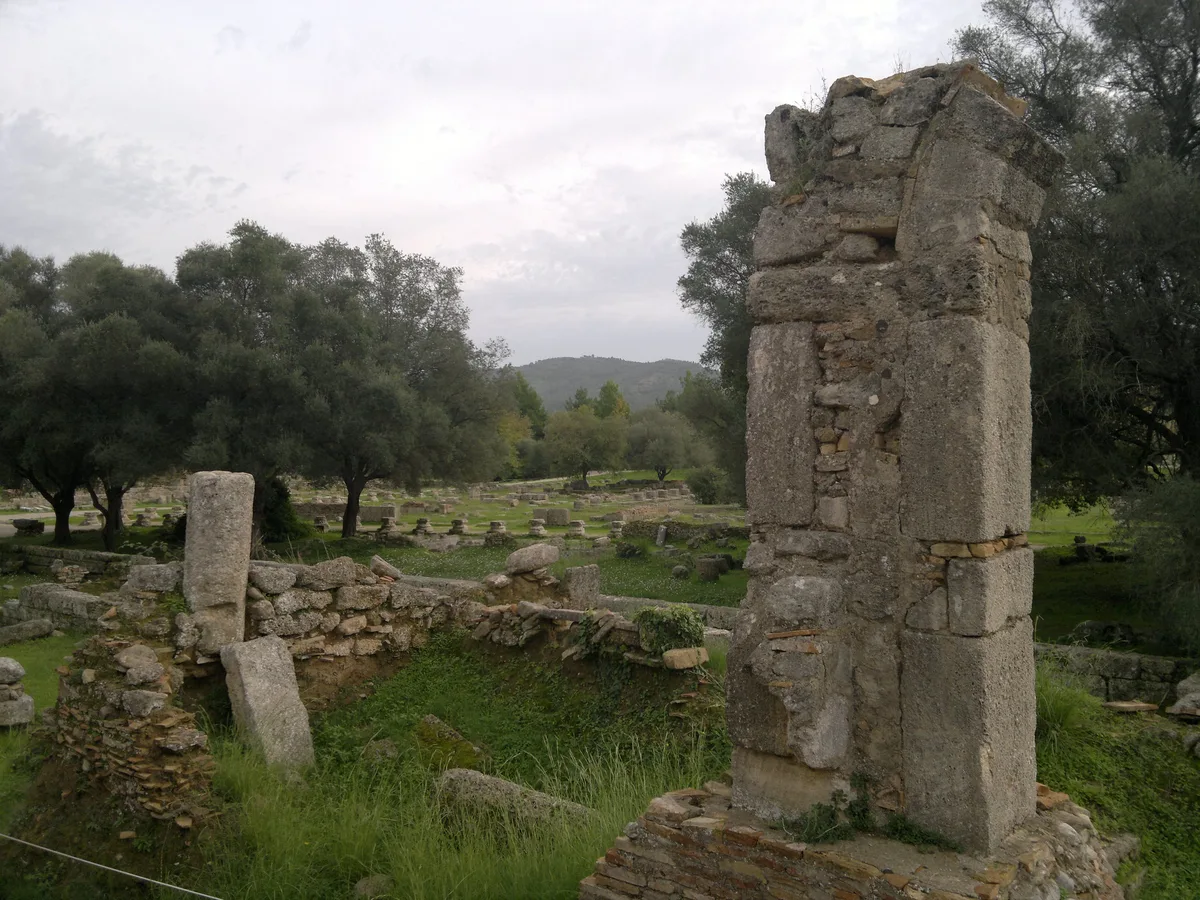
The temple also housed Praxiteles' Hermes, which you now see in the museum. Read the Temple of Hera guide before a ceremony date, if you are planning around one. Skip it if you are short on time and want the stadium instead; it is a quick stop on the way.
3. The Ancient Stadium
This is the running track where the ancient Games took place, set between grassy embankments. You walk on the bare track and can stand at the starting line. Figures near 45,000 spectators are often quoted, but no figure is settled, so treat the capacity as approximate.
It is the most atmospheric stop for photos and for picturing the Games. Our Olympia stadium guide explains the layout. Skip it only if heat has beaten you; there is no shade on the track, so save it for the end of your route.
4. Archaeological Museum of Olympia
This museum holds the finds from the sanctuary, including Praxiteles' Hermes, the best-known sculpture from the site. It opened in 1982 and arranges its galleries in a clear sequence from earliest finds to later periods. A ramp at the museum entrance is reported; the Ministry's Odysseus portal lists official access details.
Plan around 60–90 minutes for a steady walk-through, longer if you read the labels. Use the Olympia museum guide to pick the galleries worth your time. Skip it only if you already visited the major sculpture museums in Athens and have just two hours.
5. Palaestra, Gymnasium, Leonidaion and Philippeion
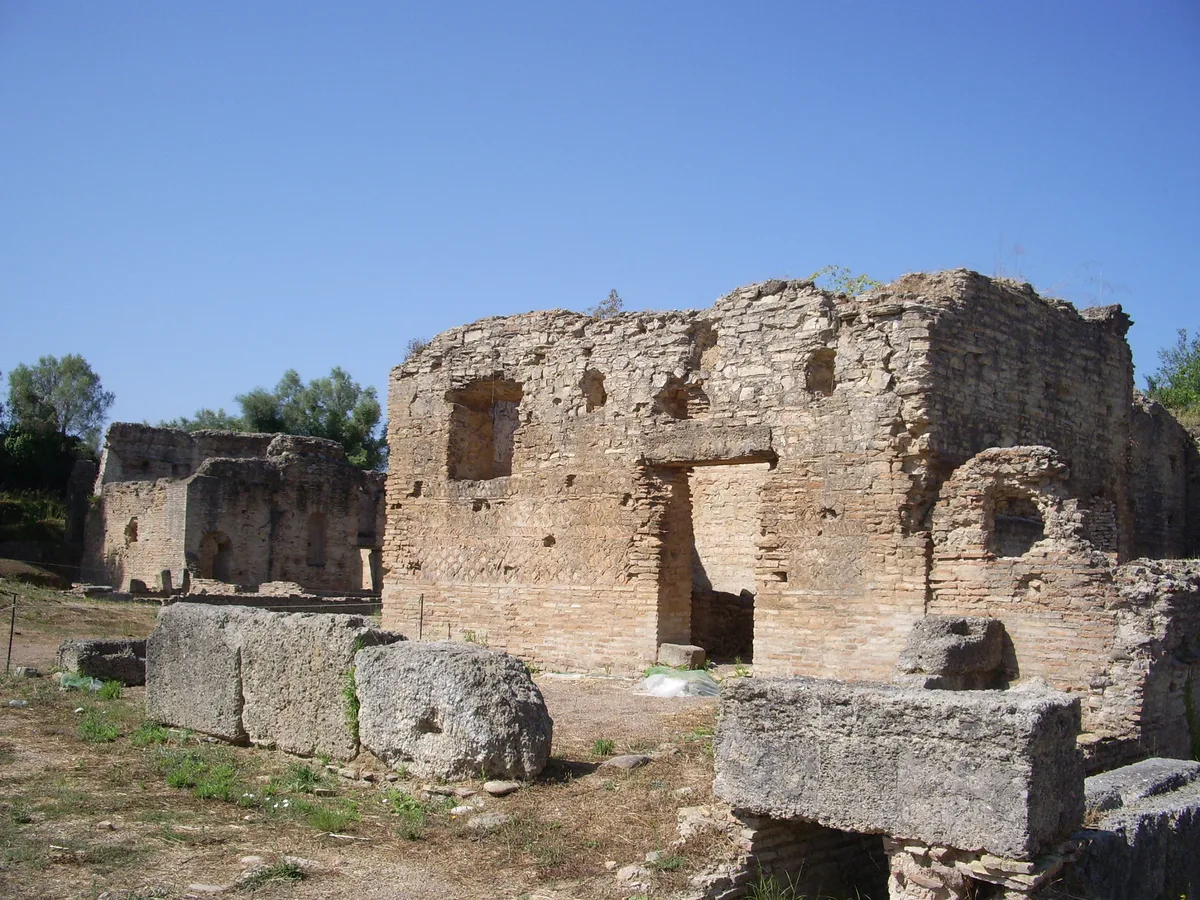
These four buildings make up the athletes' district and the western edge of the sanctuary. The Palaestra was a wrestling and training ground, and its columned courtyard still has recognizable bases. The Gymnasium stood beside it, and the Leonidaion was a large lodging building for officials and guests.
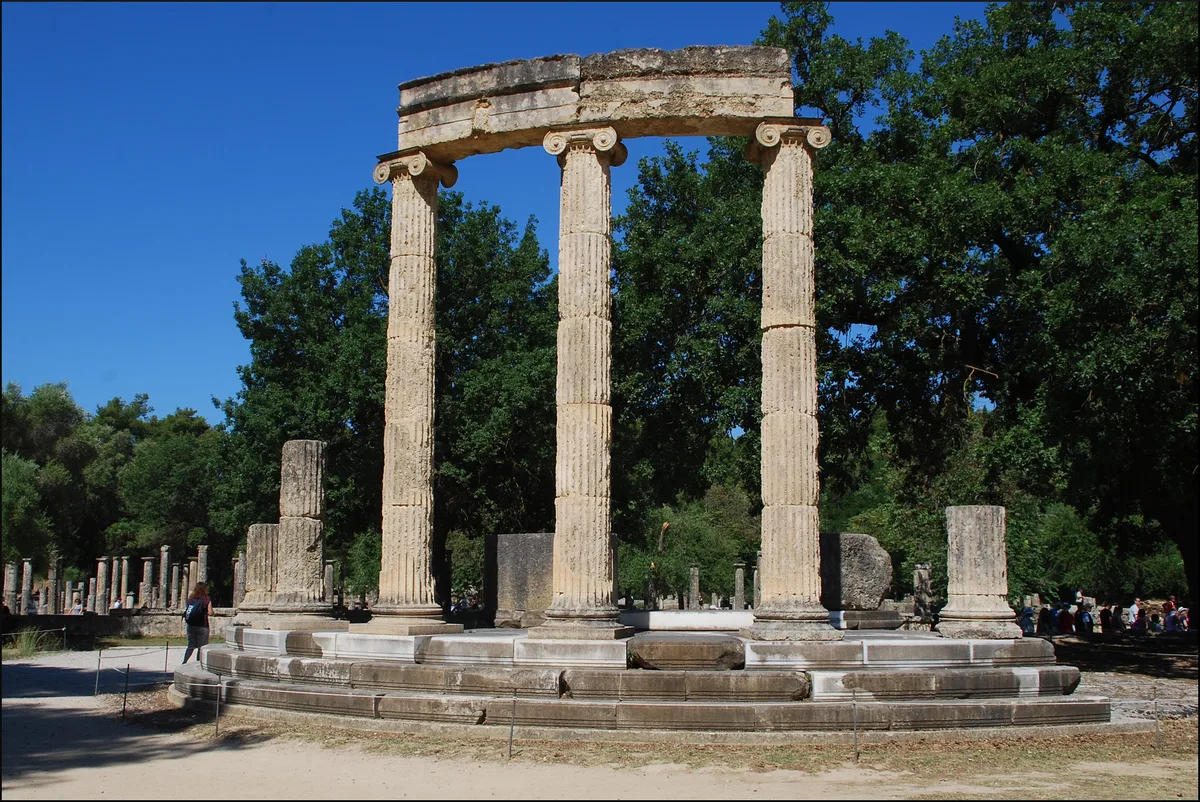
The Philippeion, a circular monument to Philip II's family, survives only as a ring of foundations and a few column bases. These stops are low on drama but high on context, since they show how training and hospitality worked. Skip the Philippeion if you are rushed; the Palaestra gives you the athletic setting in half the time.
How To Plan Your Time In Ancient Olympia
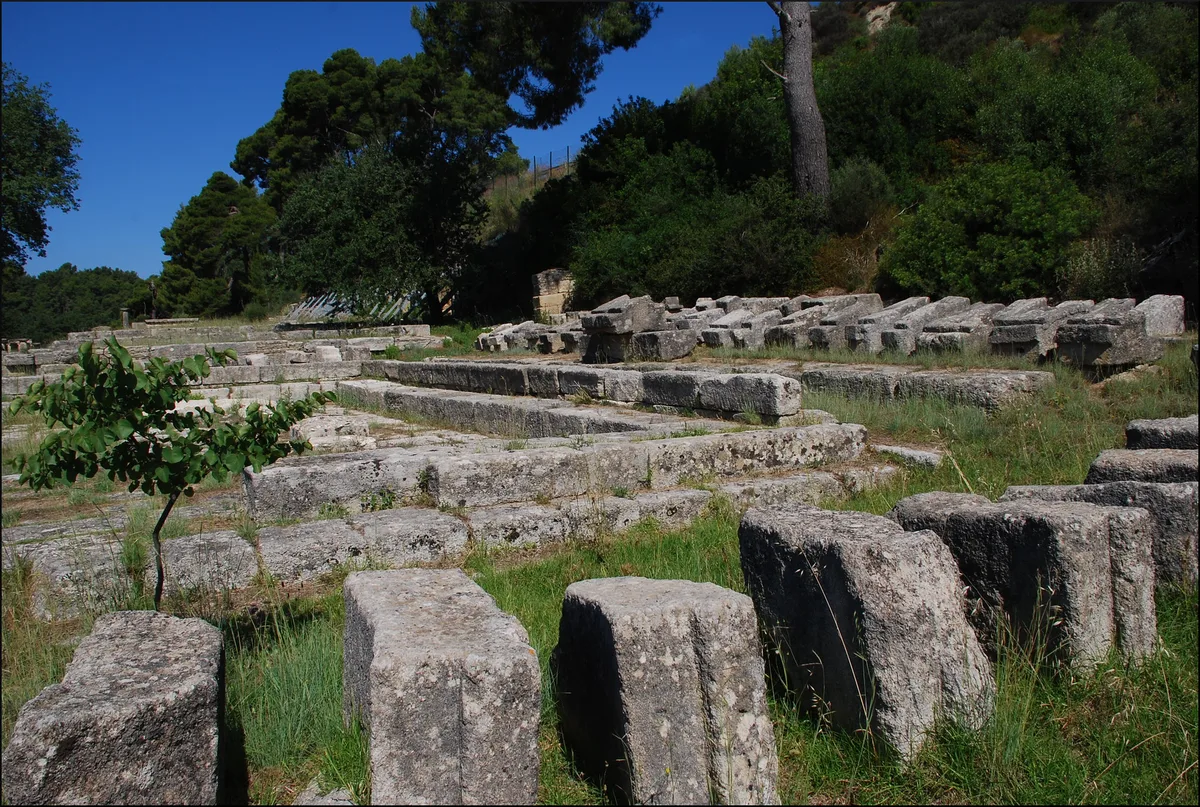
Arrive at opening and walk the site while the stone is cool, then finish in the museum when the sun is highest. This order puts exposed ruins in the morning and indoor galleries at midday. A half-day covers both comfortably, while a compressed visit of 2–3 hours drops the Philippeion and the Leonidaion. For the history behind the stadium and the Games, read our ancient Olympic Games guide before you go.
Give the museum its 60–90 minutes, since a compressed 2–3 hour visit has to fit the ruins around it.
- Entrance, then the Palaestra and Gymnasium.
- Leonidaion and Philippeion, if time allows.
- Temple of Hera, then the Temple of Zeus.
- The Altis, the sacred precinct between the temples.
- The stadium, then lunch and the museum.
Costs, Tickets, And Opening Hours
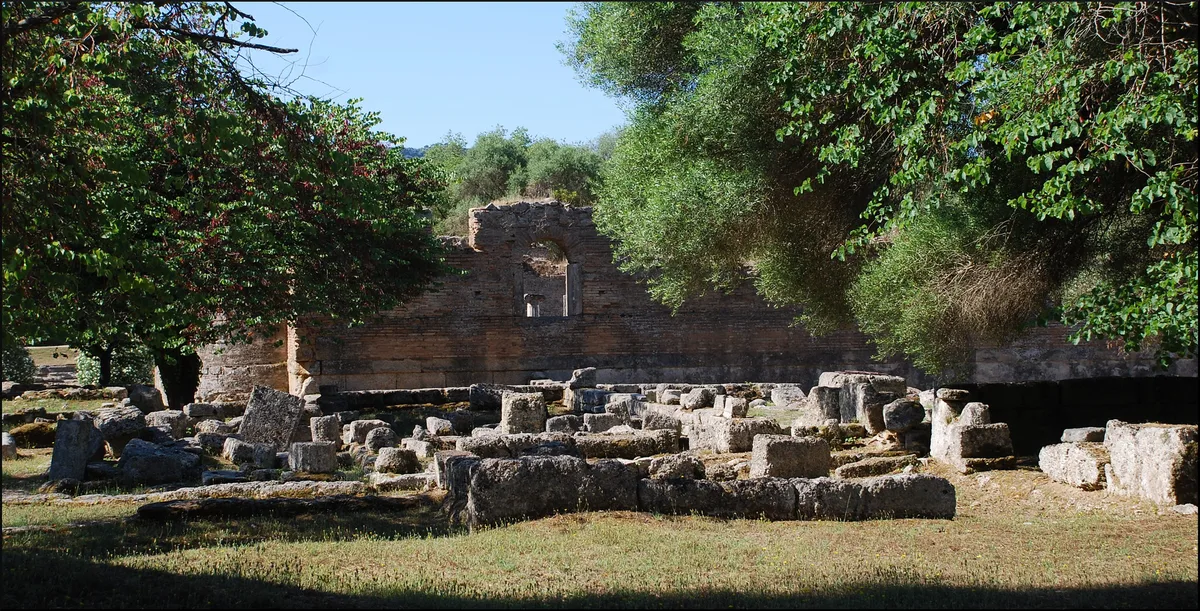
Published listings give €12 for a full ticket and €6 for a reduced ticket. One ticket covers the Archaeological Site, the Archaeological Museum, the Museum of the History of the Olympic Games of Antiquity and the Museum of the History of the Excavations. From November 1 to March 31 the ticket costs €6. Summer hours run 08:00–20:00, with last admission 20 minutes before closing. Winter hours are shorter and change between years. Free admission is listed on March 6, April 18, May 18, October 28, the last weekend of September and the first Sunday of each month from November to March. Our Olympia tickets guide explains the options, and the e-ticket portal shows the current rate.
Getting To Ancient Olympia
Athens to Olympia is roughly 290–300 km by road, and sources give 3.5 to 5 hours by car or bus. The spread comes from route choice, stops and the change at Pyrgos for bus riders. KTEL Ilias publishes the current bus timetables. Katakolo cruise port is about 34 km away, Killini about 66 km, and Patras about 117–120 km. Our Olympia from Athens guide compares the options, and the Katakolo to Olympia guide covers cruise passengers.
| Route | Time | Flexibility | Cost level | Best for | Skip if |
|---|---|---|---|---|---|
| Athens by car | Long drive; about 3.5 h quoted | High | Medium | Road trippers | You dislike long drives |
| Athens by bus | Via Pyrgos; 4–5 h quoted | Low | Low | Solo budget travelers | You need a tight schedule |
| Athens day tour | Full day | Low | High | First-timers who want a guide | You want hours on site |
| Patras | About 117–120 km | Medium | Medium | Ferry arrivals | You are starting from Athens |
| Kalamata airport | Check transfers | Medium | Medium | Flying in | You are coming from Athens by road |
| Katakolo cruise port | About 34 km | Low | Medium to high | Cruise passengers | You cannot spare half a day ashore |
| Pyrgos | Short onward hop | Medium | Low | Bus connections | You have a car |
Where To Stay And How To Get Around
Olympia is a small town, and the site is walkable from the centre. An overnight stay lets you reach the gate at opening and eat dinner in town. The Athens day trip leaves little time on site, so skip it if you want more than two hours. Restaurants, ATMs and a pharmacy are in town.
Overnight in town puts you at the gate for the 08:00–20:00 summer window, with last admission 20 minutes before closing.
Add-On Stops In The Peloponnese
Extend the trip with ancient and Byzantine stops on the same loop. Each fits a different kind of traveler.
- Ancient Messene: Visitor Guide, Hours & Tickets fits if you want more ruins with fewer crowds.
- Mystras fits if you want a Byzantine hill town after the classical sites.
- Temple of Apollo Epicurius at Bassae fits if you want a remote temple in the hills.
- Peloponnese Ancient Sites: Best Ruins and How to Plan a Visit fits if you are building a longer loop.
Many visitors pair Olympia with the Bronze Age citadels of the Argolid; our guide to Mycenae and the Argolid covers Mycenae, Tiryns and Epidaurus.
For Greek sanctuaries and temples built by colonists beyond Greece, see our roundup of Greek ruins outside Greece.
Heat, Shade And Accessibility At Ancient Olympia
Plan the exposed archaeological site for the morning, ideally around the 08:00 opening. The Temple of Zeus, Altis and stadium have little shelter. The stadium track is especially open, so leave it until last only if the heat remains manageable.
A compressed 2–3-hour visit works best when you focus on the temples, stadium and museum. Carry water before entering the site, wear a hat, and use the museum as the midday part of the route. The museum entrance has a reported ramp; check the Ministry’s Odysseus portal for current access information and any site-specific restrictions.
Do not arrive close to closing if the museum matters to you. Summer listings give last admission as 20 minutes before closing, which leaves too little time for both ruins and galleries. Start outdoors, then move indoors when the sun is strongest.
Frequently Asked Questions
What is the history of Olympia, Greece?
Olympia was a sanctuary of Zeus where the ancient Games began, traditionally in 776 BC. The Games ran until the late 4th century AD, when Roman emperors banned pagan festivals. Our ancient Olympic Games guide tells the full story.
Did the ancient Greeks have Olympics?
Yes, the ancient Greeks held the Olympic Games at Olympia every four years. They honored Zeus and brought athletes from across the Greek world. The International Olympic Committee outlines the ancient Olympic Games for the modern Games' origin.
Explore More Guides
Keep planning your trip with these guides.
Guides
- Olympia From Athens: Day Trip, Bus, Car & Tour Options
- Ancient Olympia Tickets
- Olympia Stadium, Greece
- Temple of Zeus at Olympia
- Temple of Hera at Olympia
- Archaeological Museum of Olympia
- Ancient Olympic Games: History, Events and Visiting Olympia
- Ancient Olympia Shore Excursion from Katakolo
- Ancient Messene: Visitor Guide, Hours & Tickets
- Mystras Greece
- Temple of Apollo Epicurius at Bassae
- Peloponnese Ancient Sites: Best Ruins and How to Plan a Visit
Related guides



Continue reading
Guides on the same trip

