
Areopagus Hill (Mars Hill) Athens: History, Visit Guide
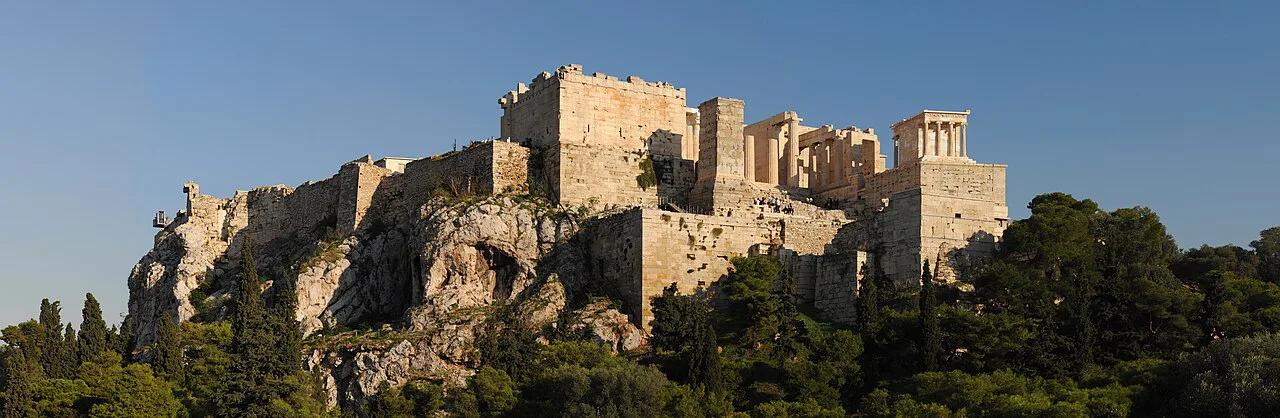
Last updated November 2026: the Areopagus is the rocky hill northwest of the Acropolis in Athens, Greece. Its name means "hill of Ares", and many visitors know it as Mars Hill. Access to the open hill is free, and this guide covers its history, Paul's speech, and how to fit it into an Athens ruins day.
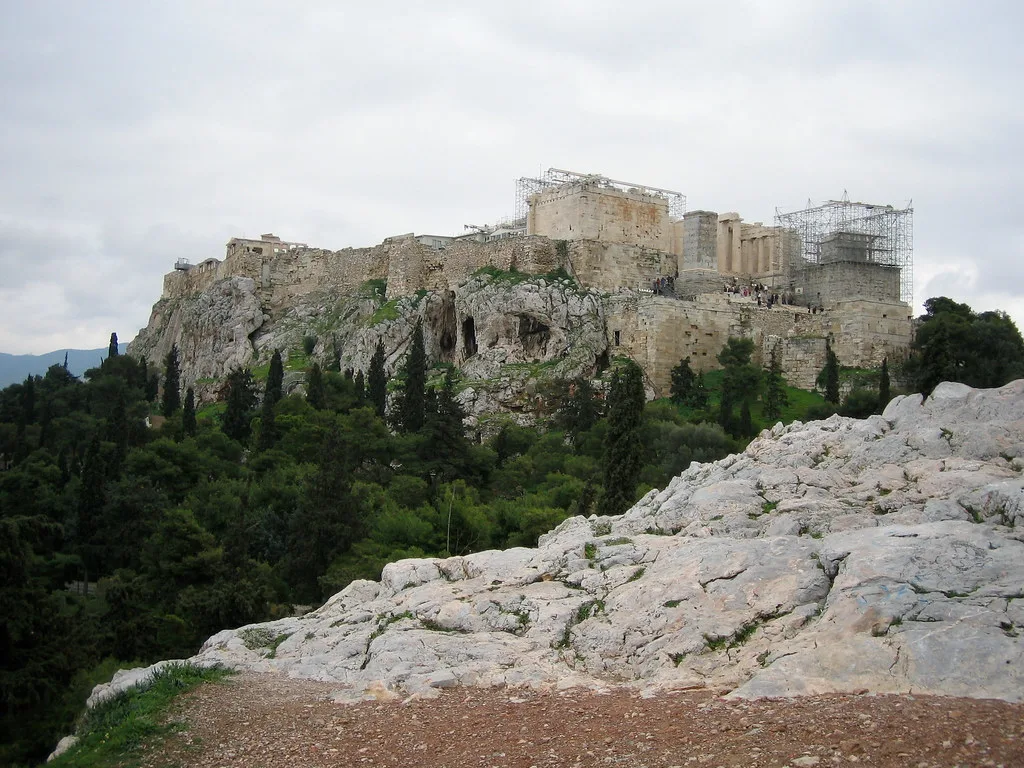
Featured image: Ggia, CC BY-SA 3.0, via Wikimedia Commons.
What Is the Areopagus?
Areopagus comes from the Greek Areios pagos, meaning "hill of Ares". Ares was the Greek god of war, and Mars is his Roman equivalent, which explains the alternate name Mars Hill. In ancient Athens the hill gave its name to a council and tribunal that met there. The American Heritage Dictionary defines the term as the highest judicial and legislative council of ancient Athens. Today the name covers both the council and the weathered limestone hill where it gathered.
Why It Matters: The Ancient Council and Paul's Speech (Acts 17)
Athenians treated the Areopagus as a place of judgment and civic authority. Their political assembly met on a different hill, which you can compare in our guide to the Pnyx assembly site. Paul's visit is the reason many travelers come. Acts 17:19-34 describes philosophers bringing him to the Areopagus to explain his teaching. He refers to an altar "to an unknown god" in Acts 17:23, and he cites the idea that people live and move and have their being in Acts 17:28. Reactions were mixed, as Acts 17:32 records. Dionysius, a member of the council, and a woman named Damaris are named among those who believed.
- Name: Areios pagos, "hill of Ares"
- Alternate name: Mars Hill
- Ancient role: council and tribunal
- Biblical link: Paul's speech, Acts 17:19-34
The Myth of Orestes and the Court of Ares
The name has a story behind it, and the earliest version is mythological rather than political. In Aeschylus' tragedy Eumenides, first staged in 458 BC, the goddess Athena sets up a court of citizens on this hill to try Orestes, who killed his mother Clytemnestra. The vote is split, Athena casts the deciding ballot for acquittal, and the hill becomes the place where homicide is judged.
That tradition matches how the council worked in later centuries. It was linked above all with trials for murder and with religious matters, which is why the hill suits the "court" label better than the "parliament" one.
- Source to read before you go: the Eumenides, the last play of Aeschylus' Oresteia.
- What to look for on site: the flat, rocky ledges near the summit, where visitors often picture the jurors sitting.
- Keep in mind: the myth explains the council's origin story. It is not archaeological evidence of how the earliest court was organised.
Where It Is and What You See
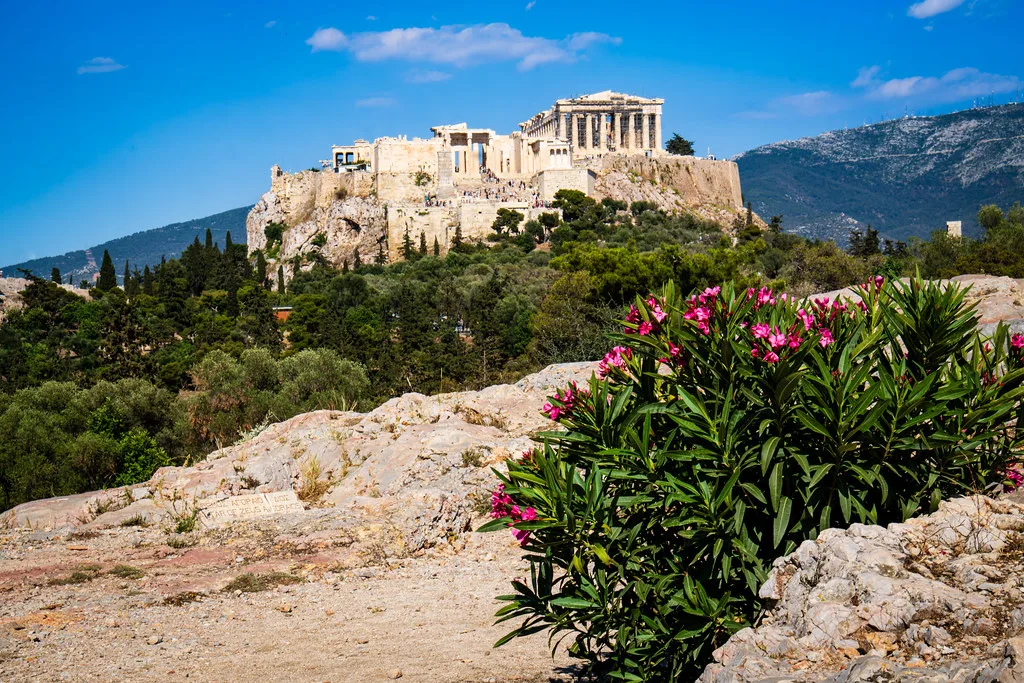
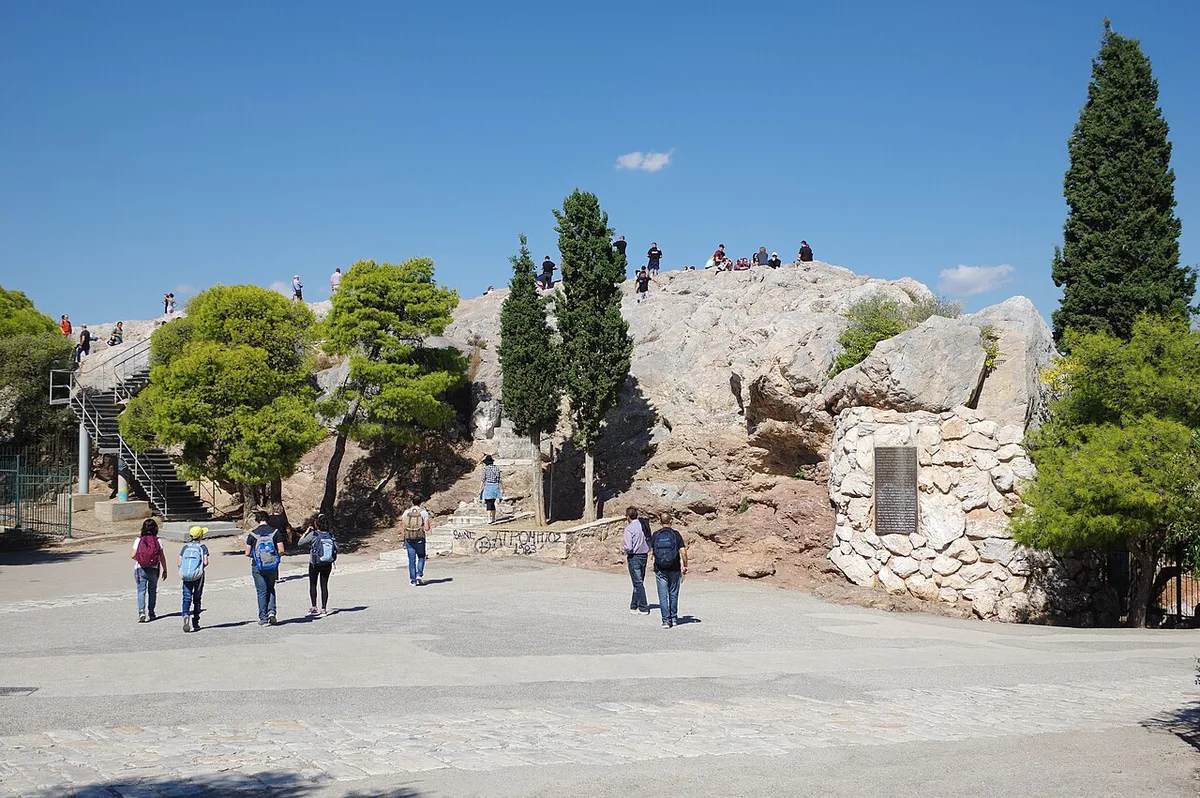
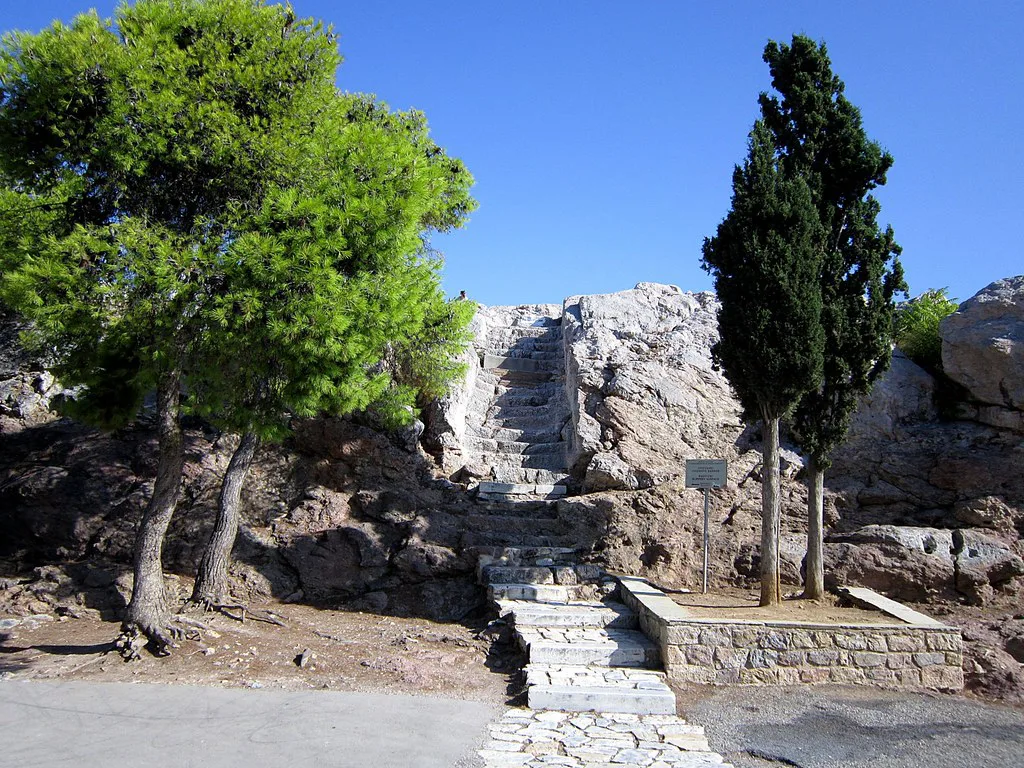
Find the hill just northwest of the Acropolis, close enough that most visitors treat it as a short add-on. You climb onto bare, pale rock. Worn stone steps lead up to the summit. From the top you look back toward the Acropolis and out over the city. Expect an open natural outcrop with little shade, not a fenced site with ruins to walk through. Pilgrims may want to look for a commemorative marker, but check current signage on arrival.

Walking to the Areopagus from the Acropolis and Metro
The hill sits beside the main approach path to the Acropolis, so you do not need a separate trip. Two metro stations are the usual starting points.
- Acropoli station (Line 2): the most direct option. Walk along the pedestrian street Dionysiou Areopagitou and follow the signs toward the Acropolis entrance. Allow roughly 10-15 minutes at a relaxed pace.
- Thissio station (Line 1): a slightly longer, flatter walk through the Thissio and Apostolou Pavlou area, which brings you to the hill from the west.
The stone steps are on the side of the outcrop closest to the Acropolis approach. Visit the hill either just before or just after you go up to the Acropolis, since the paths meet near the same entrance area. Checking the current Acropolis timetable on the Hellenic Ministry of Culture site before you set out will help you choose the order.
If you are carrying a bag or travelling with children, plan to keep both hands free on the steps rather than stopping to rummage for a bottle halfway up.
Ticket, Time and Access
Walking up the open hill is free. Entry to the Acropolis itself is a separate matter, and you can check current ticket rules at the Hellenic Ministry of Culture e-ticket portal. Plan a short stop rather than a half-day outing. Our Athens combined ticket guide explains how passes work for the paid sites nearby.
Best Time of Day to Visit the Areopagus
Because the hill is an open outcrop with no gate, you can choose your own moment. The timing matters more than at most Athens sights, since there is almost no shade.
- Early morning: cooler rock, fewer people on the steps, and soft light on the Acropolis. This is the best slot in summer.
- Late afternoon to sunset: the summit is a popular place to watch the light change over the city. Expect more people on the narrow top, and leave the descent for before dark, since the steps are uneven and there is no lighting you can rely on.
- Midday in July and August: best avoided. The pale rock reflects heat and offers no cover.
- After rain: wait for the stone to dry, as the polished surface is slick.
Winter and early spring are comfortable for the climb, but the slope is just as slippery when wet, so the footing advice above still applies.
Safety, Footing and Accessibility
Natural limestone becomes polished by centuries of feet, so it can be slippery, especially after rain. Wear shoes with real grip and avoid sandals. Summer sun hits the exposed summit hard, so carry water and avoid midday. Steep steps and uneven rock make the climb difficult for anyone with limited mobility, and no step-free route is confirmed.
Combine It With Nearby Sights
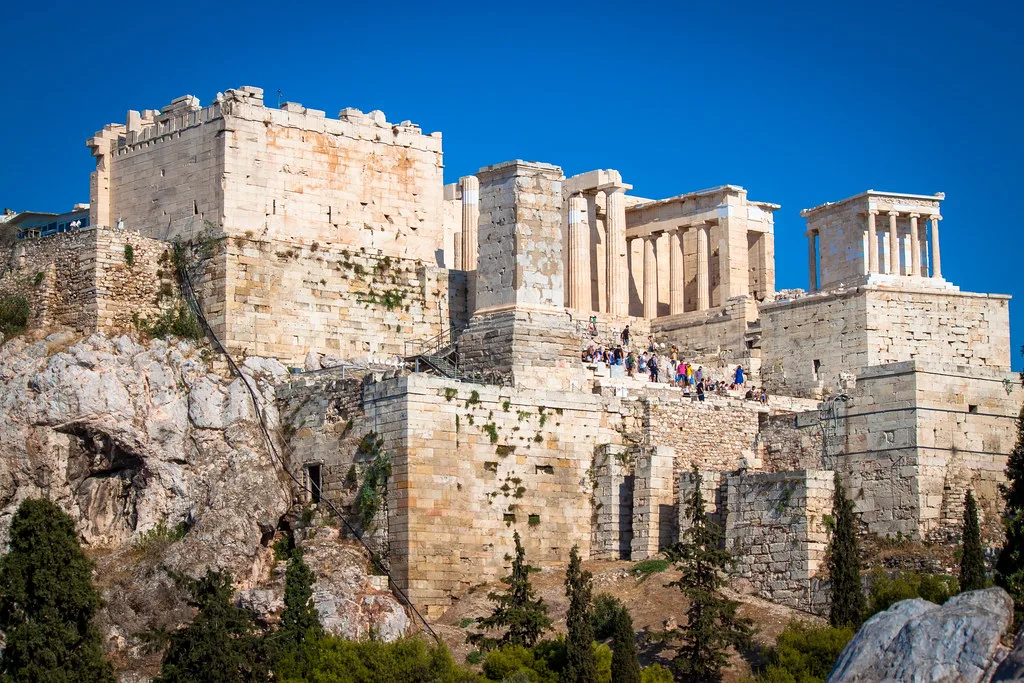
Pair the hill with the Acropolis on the same morning, since both sit in the same part of the old city. For a slower route, add the ancient civic sites. Read about the Temple of Hephaestus, Athens: Tickets, Hours & Visit Tips if you plan to explore the Agora area. The Athenian Agora excavation site offers background on the ancient marketplace and civic life. Our guide to the Roman Agora covers a later phase of the city. If you also want theater history, see the Theatre of Dionysus Athens: Visit Guide, History & Tickets. For the full picture, return to our overview of 10 Best Ruins in Athens: Ancient Sites, Tickets & Day Trips. Sites farther out in Attica, such as the Temple of Aphaia, Aegina: Getting There, Tickets and What to See, need their own day.
- Go if you are interested in ancient Athenian government, Acts 17 or city views.
- Skip it if you have limited time and the Acropolis is your only priority.
- Avoid confusing it with the Acropolis, and do not plan it as a stand-alone trip.
Related guides



Continue reading
Guides on the same trip


