Temple of Hera at Olympia: Flame, History & Visit Tips
Last updated November 2026: the temple of Hera Olympia is one of the oldest Doric temples in Greece, and it stands inside the Altis at Ancient Olympia. Dated to around 600 BC, it sits beside Hera's altar, where the modern Olympic flame is lit. Treat it as a short stop inside a longer Ancient Olympia visit, not a destination on its own.
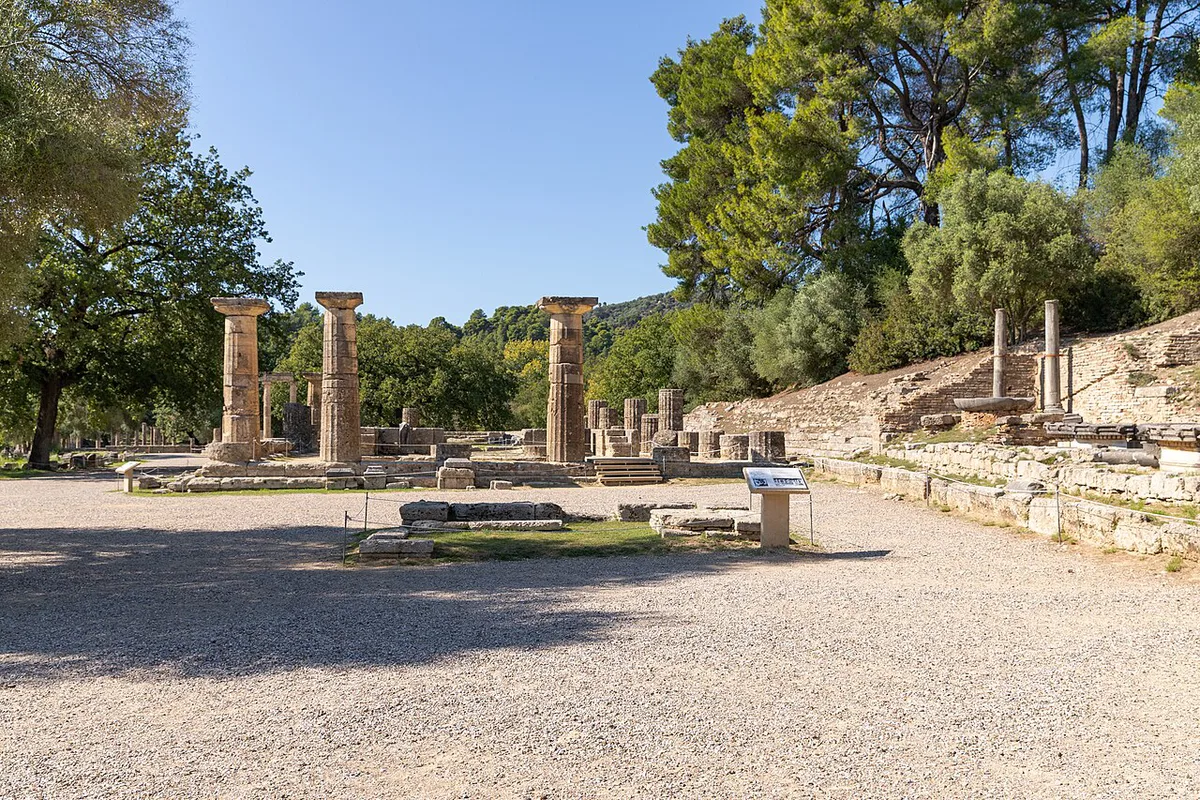
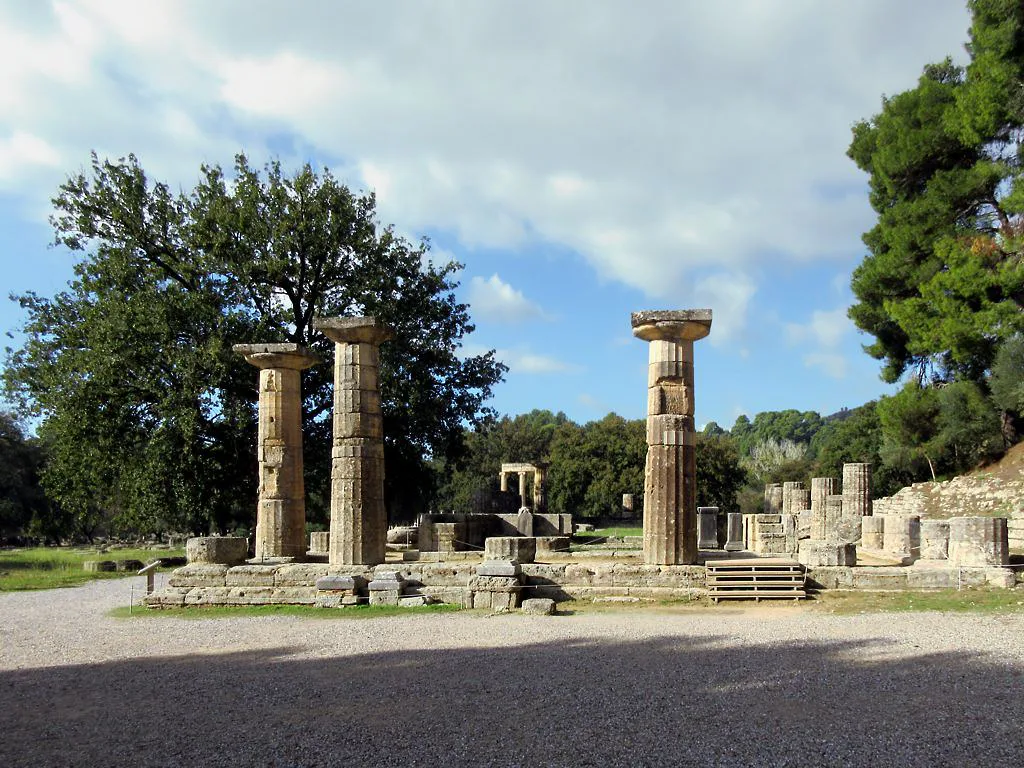
Featured image: Following Hadrian, CC BY-SA 2.0, via Flickr.
What the Temple of Hera is (and why it matters)
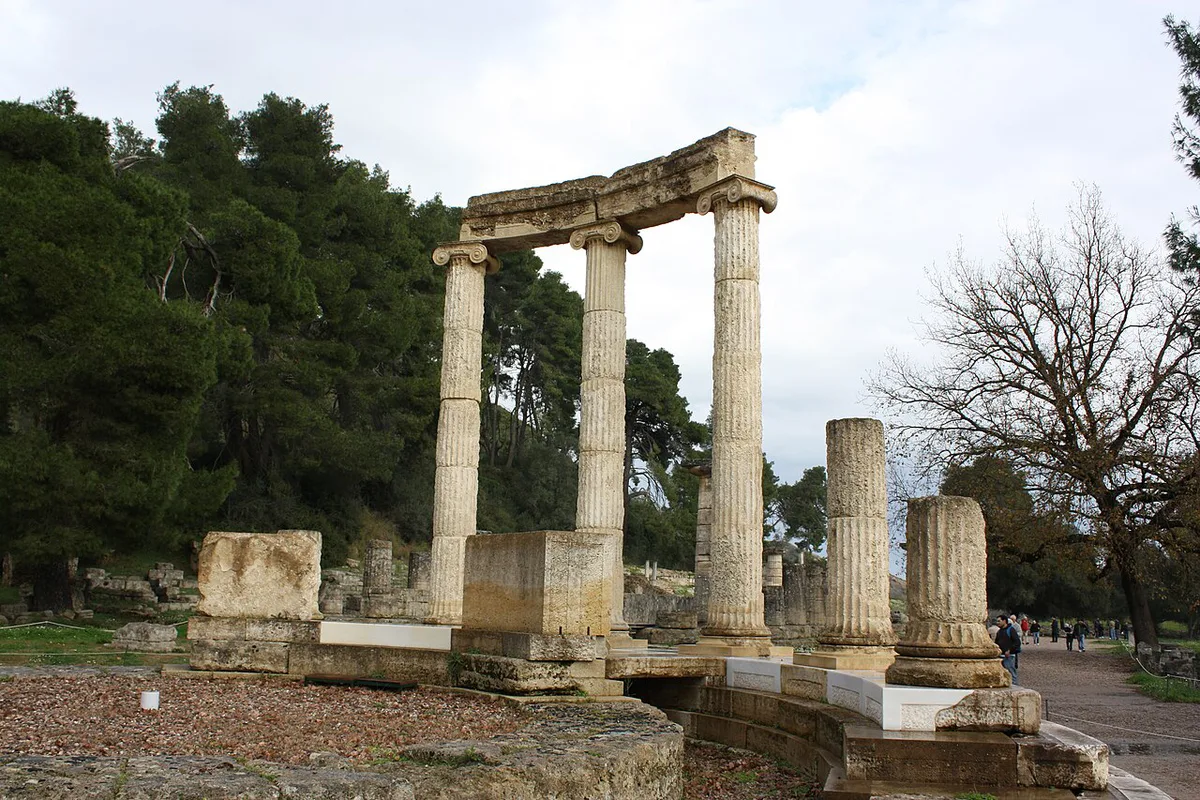
Hera, wife of Zeus, was the goddess honored here. Dating is usually given as around 600 BC, and some sources narrow it to 600–590 BC, so treat the exact decade as approximate. That makes it older than the Temple of Zeus, which was finished around 456 BC. Hera therefore had a major temple at Olympia long before Zeus received his own. The sanctuary also hosted the Heraia, a footrace for young women held in her honor. The first recorded Olympic Games date to 776 BC, and our guide to the Ancient Olympic Games: History, Events and Visiting Olympia covers how the two festivals sat side by side.
The Olympic flame and Hera's altar
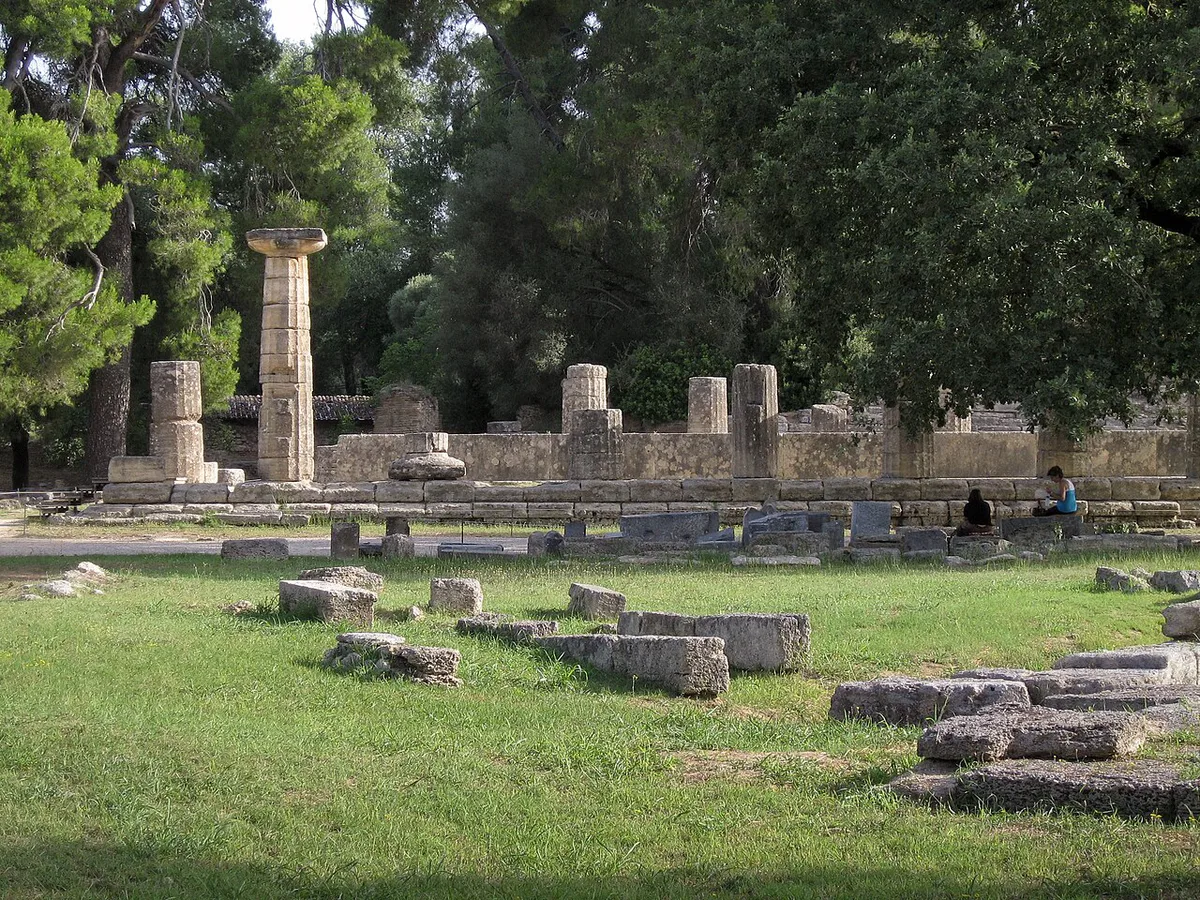
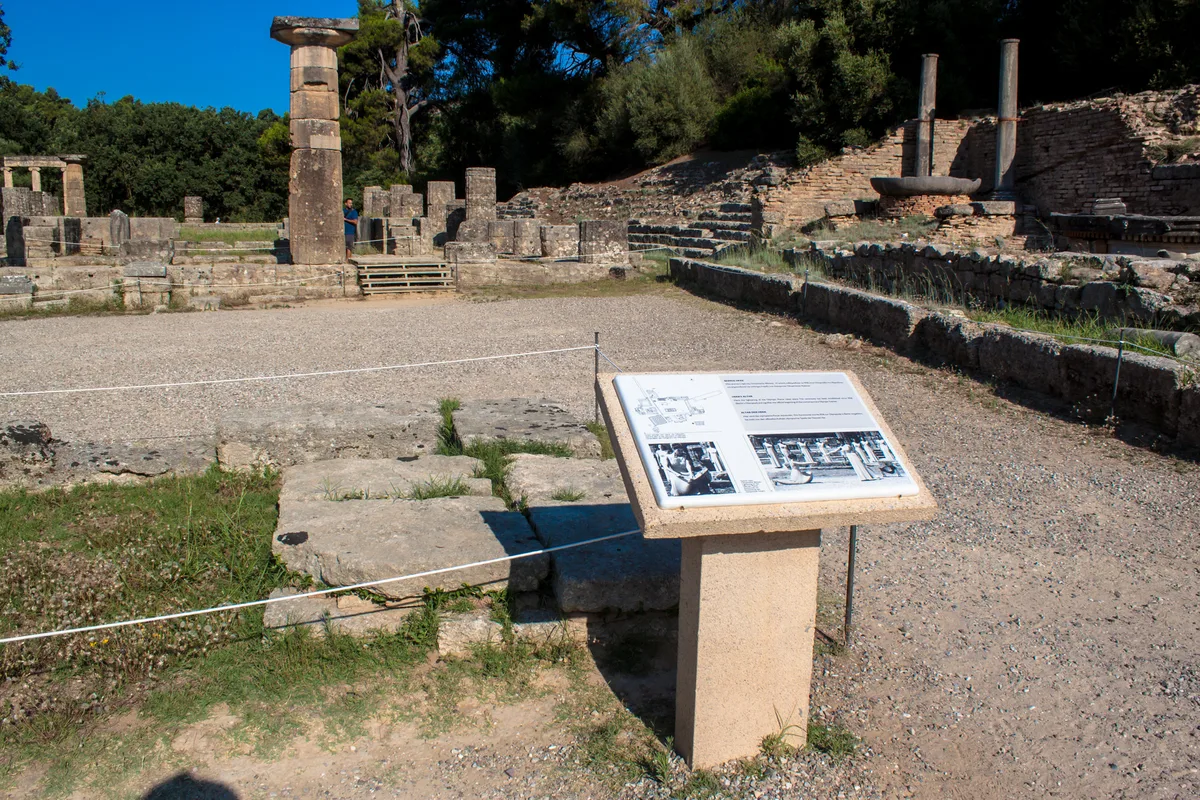
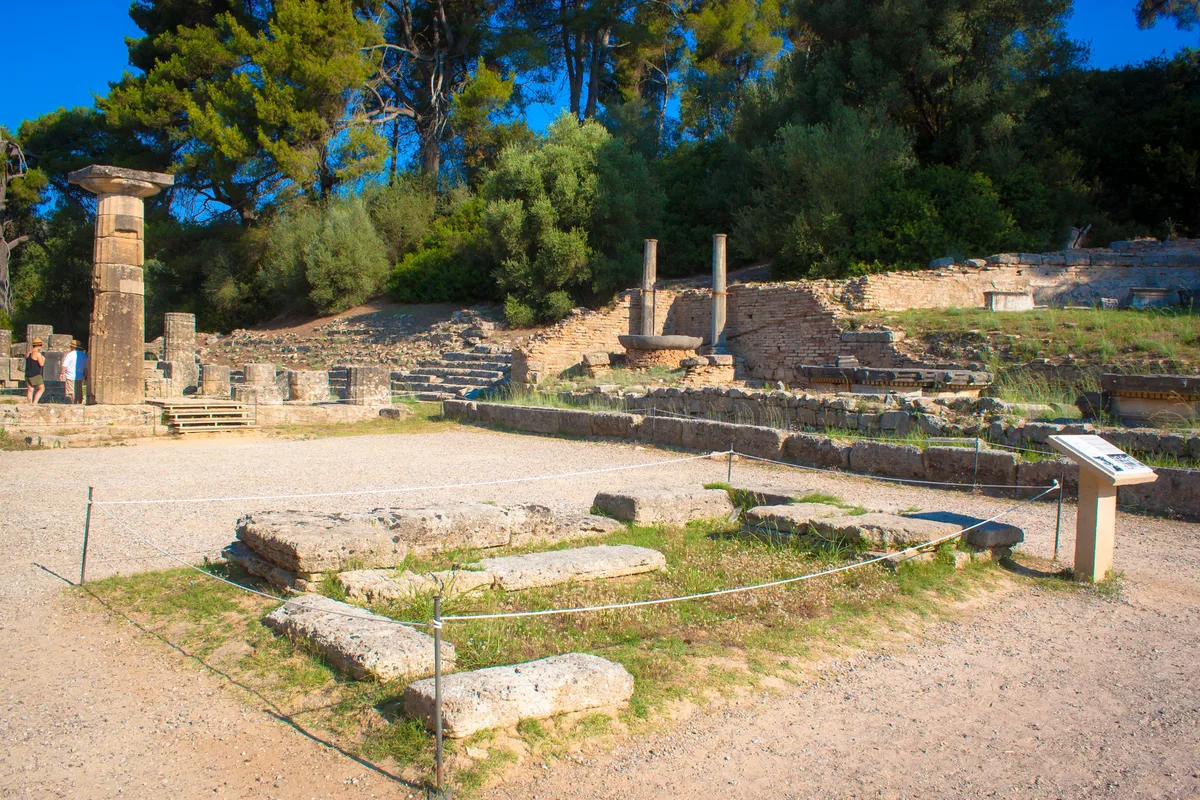
Most visitors come for the flame. Since 1936, the torch for the modern Games has been lit at Hera's altar, in front of the temple ruins. The International Olympic Committee publishes the history of the ceremony. Actresses dressed as priestesses take part, and a parabolic mirror focuses the sun's rays to ignite the flame. A rehearsal is held before the real lighting, and the real ceremony is normally closed to ordinary visitors. For any public event, ask the Hellenic Olympic Committee or the Ministry of Culture before you plan around it.
What you can actually see today
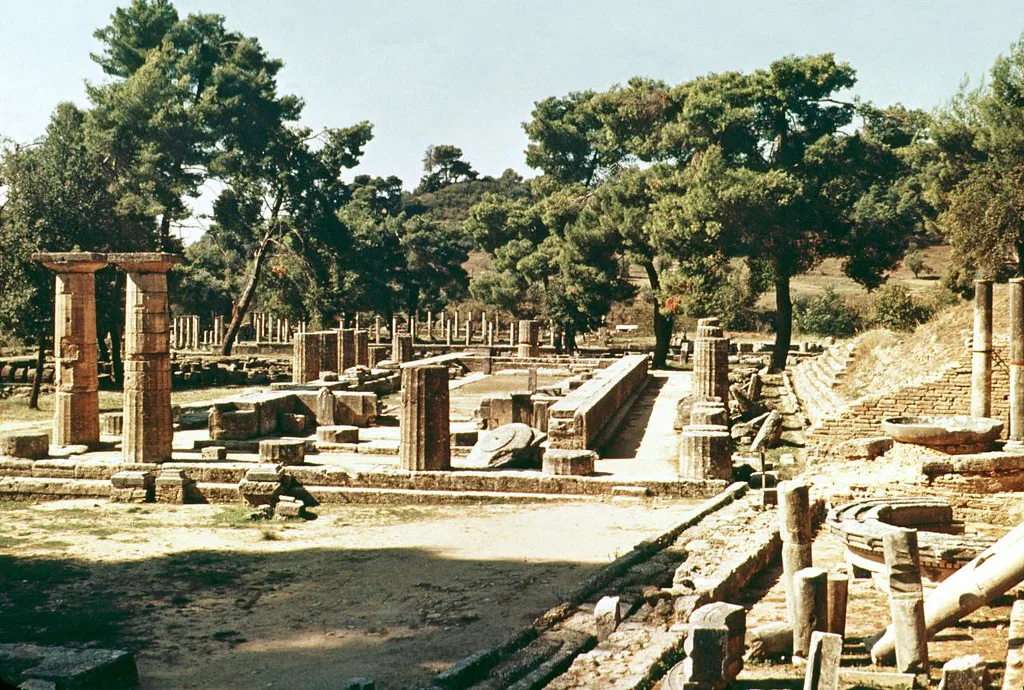
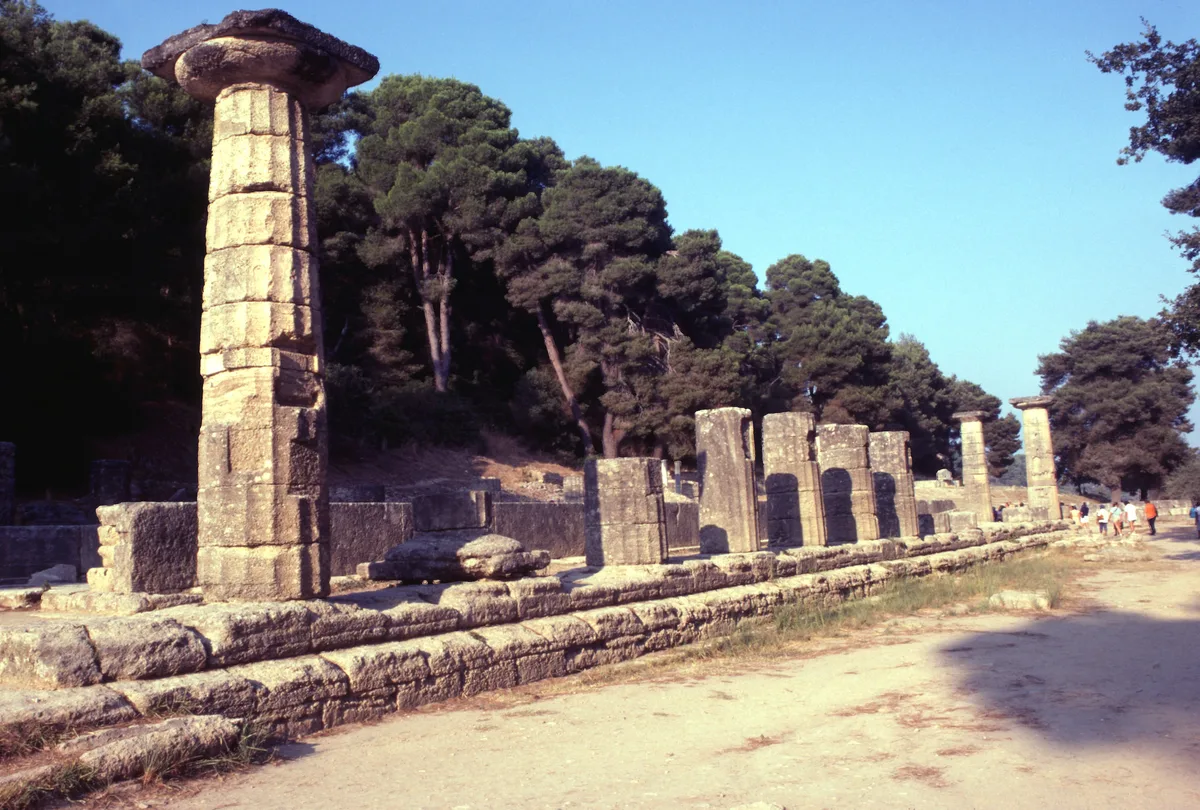
Expect a ruin, not a roofed building. Signage is thin, so these points help you read it:
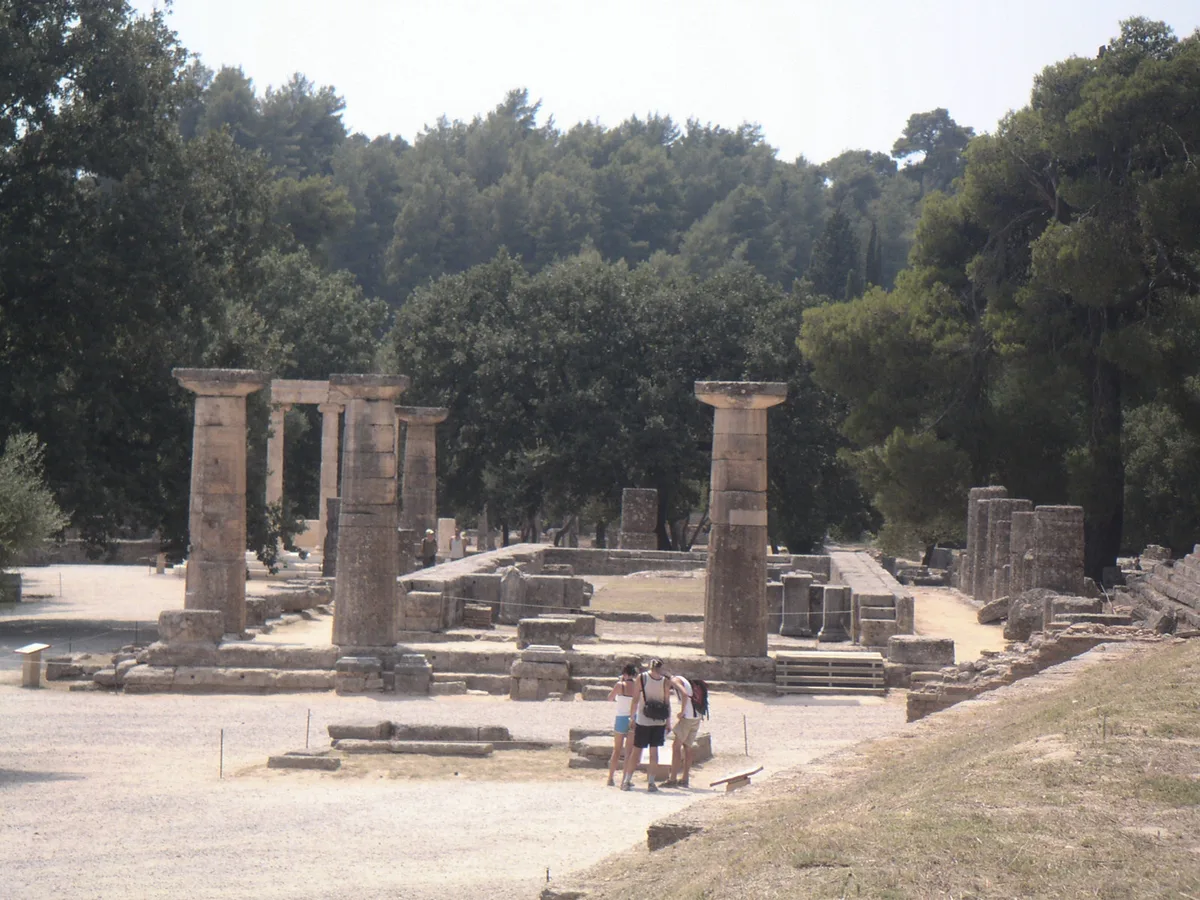
- Base and steps: the stone platform shows the temple's footprint, which is long and narrow.
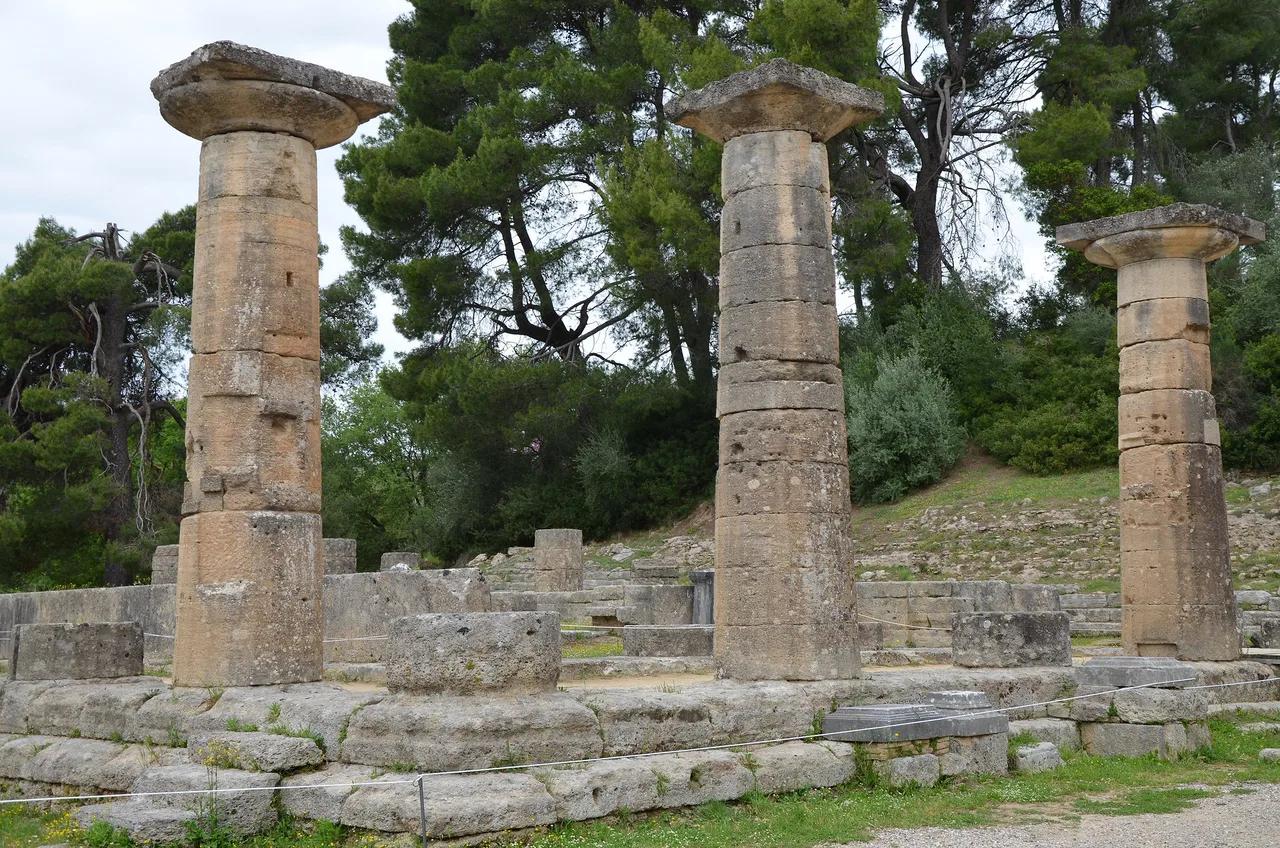
- Columns: a few shafts still stand, and they differ in thickness and style. Different ages of repair are visible, since stone replaced older wooden columns over time.
- Orientation: the temple faces the altar area, where the flame is lit.
- Setting: it sits in the Altis, the sacred enclosure that also held the Zeus temple.
- Missing sculpture: the famous Hermes by Praxiteles was found in the Heraion ruins. It is displayed in the Archaeological Museum of Olympia, not at the temple.
Design and structure of the Heraion
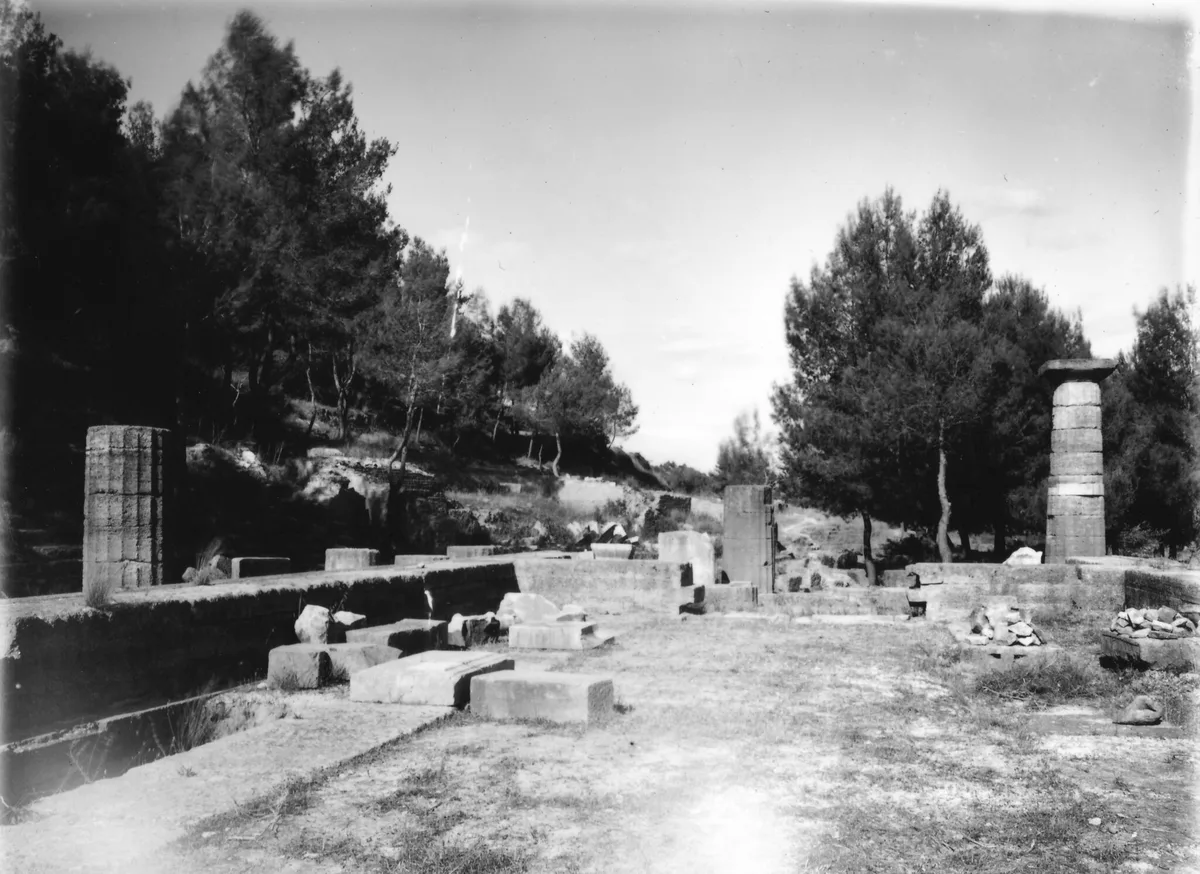
The Heraion is a good place to see early Doric architecture before the style was standardised. Its plan is long and narrow, about 50 m by 19 m, with a colonnade of 6 columns across the front and 16 along each side. That is a much more elongated footprint than the later Temple of Zeus.
- Materials: the lower walls were stone, with the upper walls built of sun-dried mud brick. The first columns are generally thought to have been timber.
- Mixed columns: the ancient traveller Pausanias reported seeing a surviving oak column in the rear chamber. Columns were replaced one by one over the centuries, which is why the surviving shafts differ in girth, flute depth and capital shape.
- Interior: a cella with a row of internal supports held the cult images, among them Hera, and the building later housed votive offerings and treasures.
When you stand at the base, compare two adjacent column drums. The mismatch is the most useful clue on the site to how the temple was maintained.
Where it fits in your Ancient Olympia visit
Allow 15–30 minutes here, which is our editorial estimate rather than an official figure. A natural route runs from Hera's temple to the Temple of Zeus, then on to the ancient stadium. Visit the museum first if you want the ruins to make sense, or last if you prefer to see the finds after the site. Start with the temples in the cooler part of the day and leave the stadium's open ground for later. Our hub page on 5 Best Things To See At Ancient Olympia (2026 Guide) lays out the full loop.
Tickets, hours and access
The temple lies within the main archaeological site, so expect no separate entry for it. Prices, combined museum tickets, free-entry days and seasonal hours are on the Ministry of Culture e-ticket portal, and our Olympia tickets guide explains the options.
Best time to visit and what to bring
Spring and autumn are more comfortable than summer, when the site has little shade. In summer, go early in the morning or in the late afternoon and avoid midday. Paths are uneven and some are hard going, so wear sturdy shoes. Bring water, a hat and sunscreen. Reviewers report no audio guides on site, so carry a guidebook or hire a guide. Tour groups from cruise ships arrive in waves, and an early start keeps the ruins quieter for photos.
Is it worth it on a short itinerary?
Yes, if you treat it as a quick stop with a story attached. It is the least imposing of the main sights. The flame link and the early Doric architecture still make it worth the walk. This table compares it with the other major stops:
Only 15–30 minutes is needed here, while the Temple of Zeus and the stadium each count as medium stops, so this fits tight schedules.
| Stop | What survives | Time needed | Who it suits |
|---|---|---|---|
| Temple of Hera | Base, a few standing columns, altar area | Short stop | Flame fans, history lovers, photographers |
| Temple of Zeus | Fallen drums and foundations of a very large temple | Medium stop | Anyone who wants scale |
| Stadium | Track and embankments | Medium stop | Families, sports fans |
| Museum | Sculpture and finds, including Hermes by Praxiteles | Longer stop | Anyone who wants context |
- Mistake: arriving at midday in summer with no shade or water.
- Mistake: skipping the museum, which leaves the ruins hard to interpret.
- Mistake: assuming a separate ticket for the temple.
- Mistake: reaching the site by cruise without allowing return time.
How the Heraion compares with other Greek temples
Seen beside better-preserved temples, the Heraion is a record of an early stage in Greek temple building rather than a showpiece. A few comparisons help you place it:
- Against the Temple of Zeus: Hera's temple is about a century and a half older, narrower and far smaller in scale. Zeus's temple was designed on a grander, more regular plan.
- Against Bassae: the Temple of Apollo Epicurius at Bassae, also in the Peloponnese, is a later 5th-century BC building with a roof shelter and a much more intact interior, so it shows what the Heraion once looked like inside.
- Against Athens: the Temple of Hephaestus is a near-complete Doric temple, useful if you want to see a standing version of the plan you can only trace at Olympia.
- Against Magna Graecia: in southern Italy, the Temple of Neptune at Paestum shows how Doric design matured, with sturdier proportions and a nearly complete colonnade.
Visit the Heraion for its age, its altar and its architectural oddities, and use these other sites to see what a finished temple looked like.
Getting to Olympia
The site is in Archaia Olympia, near the modern village of Olympia in the Ilia region. Pyrgos is the regional town and the rail and bus hub, and KTEL Ilias publishes bus timetables. Coming from the capital, read our guide to Olympia From Athens: Day Trip, Bus, Car & Tour Options. Cruise passengers should check timing in our Ancient Olympia Shore Excursion from Katakolo: Options & Timing guide. To continue your trip, see the wider Peloponnese Ancient Sites: Best Ruins and How to Plan a Visit.
Related guides


Continue reading
Guides on the same trip