
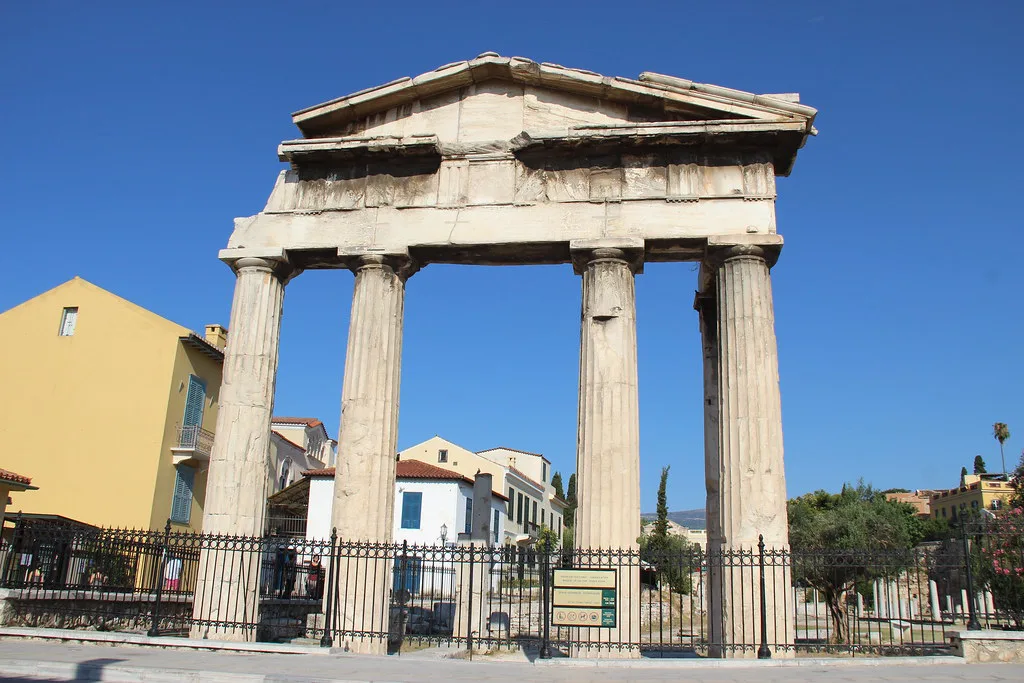
Last updated November 2026: Roman Agora Athens is the Roman-era marketplace in Plaka, below the Acropolis, and it holds the Tower of the Winds and the Gate of Athena Archegetis. Entry is ticketed separately from the Ancient Agora, at €10 for an adult. Use this guide to decide whether it earns a slot in your day, and see our wider Athens ruins hub for the other sites.
Featured image: Gary Lee Todd, Ph.D., CC0 1.0, via Flickr.
Roman Agora Athens at a Glance
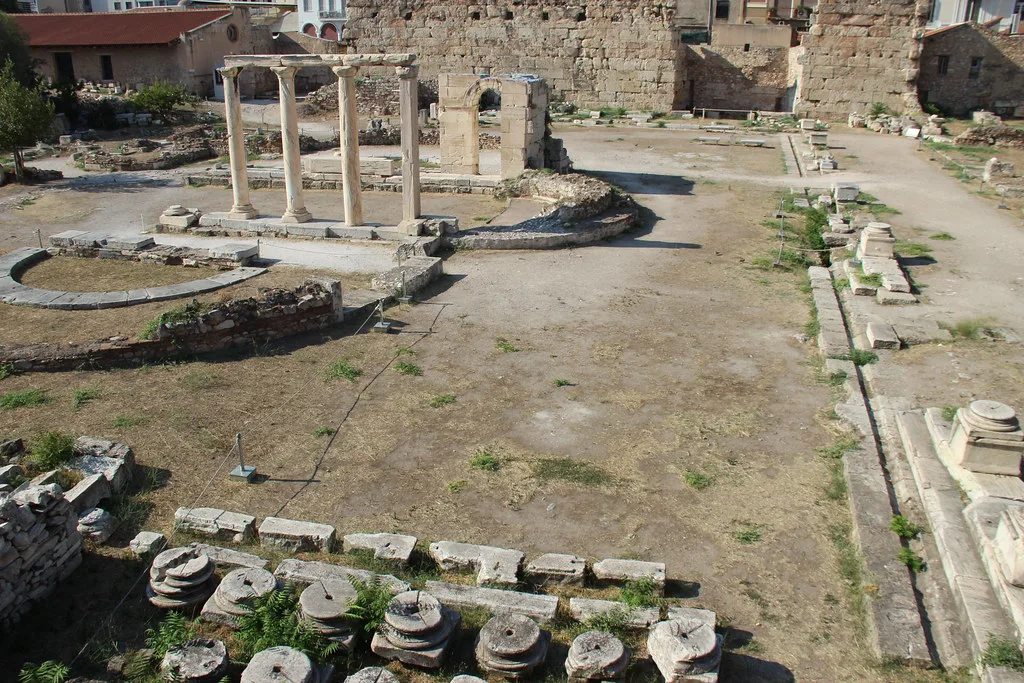
Many visitors confuse this site with the Greek Ancient Agora, which lies nearby and is a different archaeological area. Roman Agora Athens is a compact rectangular courtyard measuring about 111 x 98 m. Most visitors need 45 minutes to 1 hour, so it fits easily into a morning around the Acropolis. The address is Pelopida 3, 105 55 Athens.
- Address: Pelopida 3, 105 55 Athens
- Time needed: about 45 minutes to 1 hour
- Ticket: €10 adult, €5 reduced, timed e-ticket
- Headline sights: Tower of the Winds, Gate of Athena Archegetis, East Propylon
- Best for: Roman urban history, architecture fans and short city stops
Roman Agora vs Ancient Agora: Which to Visit
Both sites sit close together, yet they tell different stories. Athenian democracy, philosophers and the best-preserved Greek temple belong to the Ancient Agora. Roman trade, imperial planning and an octagonal clocktower belong here. Each one needs its own ticket. The Ancient Agora's headline sight is the Doric temple of Hephaestus, which has no counterpart in the Roman marketplace.
| Feature | Roman Agora | Ancient Agora |
|---|---|---|
| Era | 1st century BC to 2nd century AD | From about the 6th century BC |
| Feel | Compact open courtyard, about 111 x 98 m | Large park of about 12 hectares with a museum |
| Headline sights | Tower of the Winds, Gate of Athena Archegetis | Temple of Hephaestus, Stoa of Attalos, Altar of the Twelve Gods |
| Typical time | 45 minutes to 1 hour | Estimates range from 1.5 to 3 hours |
| Ticket | €10 adult, €5 reduced | €10 adult |
| Best fit | Roman history and short stops | Democracy, philosophy and a museum visit |
Which One If You Only Have Time for One
Pick the Ancient Agora if you have a single slot and care about democracy, Socrates or the Temple of Hephaestus. Pick the Roman Agora if you have already seen the Greek site, or want a short stop of under an hour. Visit times are estimates, and your own pace decides the real figure.
What to See at the Roman Agora
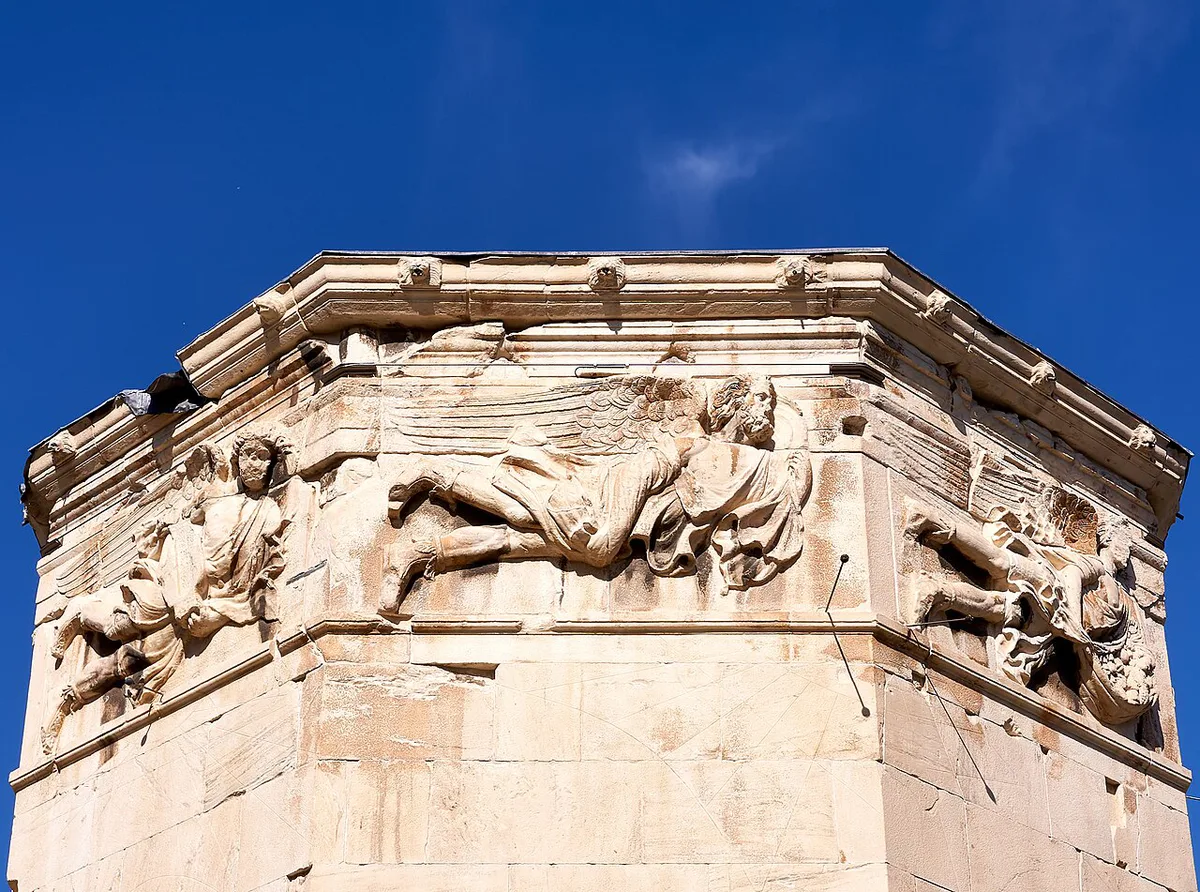
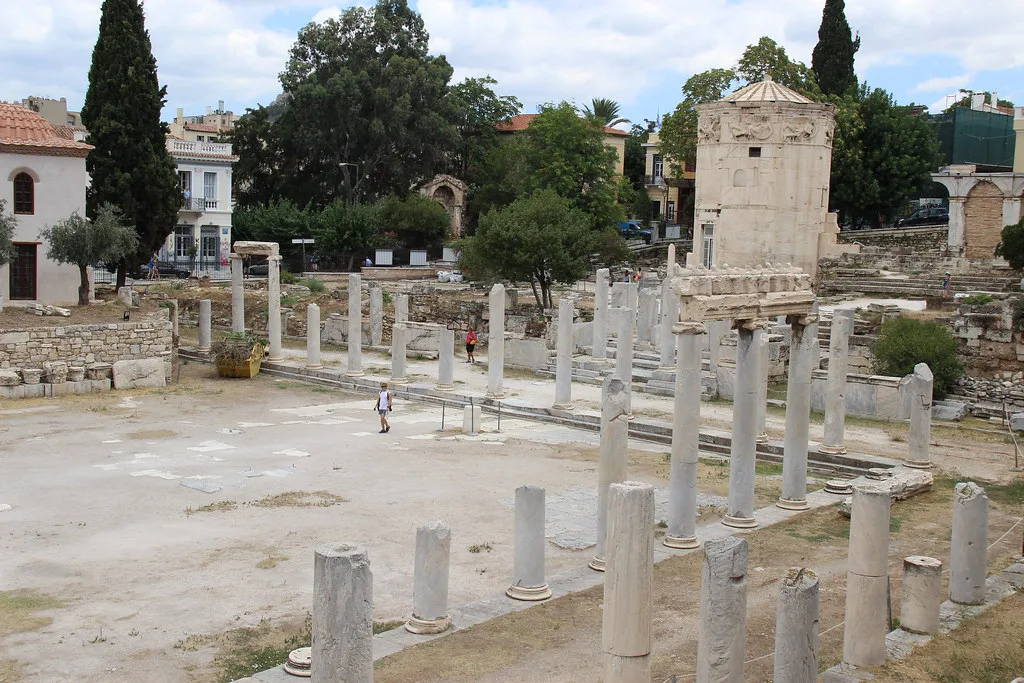
Start with the Tower of the Winds, also called the Horologion of Andronikos Kyrrhestes. This octagonal marble tower worked as a clock and weathervane, and it is considered one of the world's earliest meteorological instruments. It is the best-preserved structure on the site.
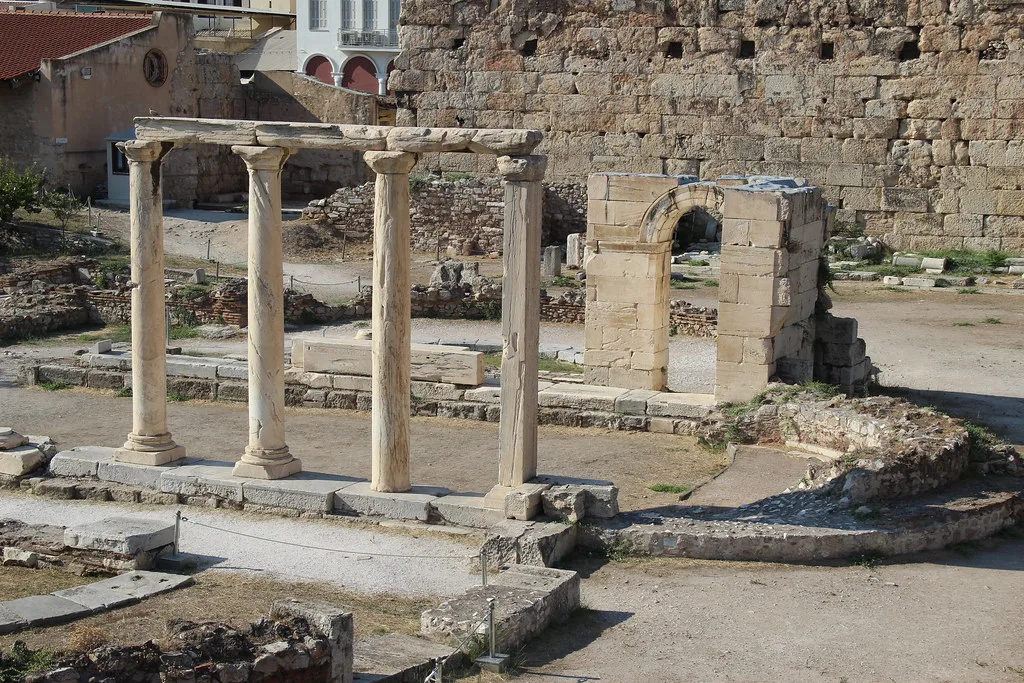
- Tower of the Winds: octagonal marble clocktower and weathervane, the main reason to come.
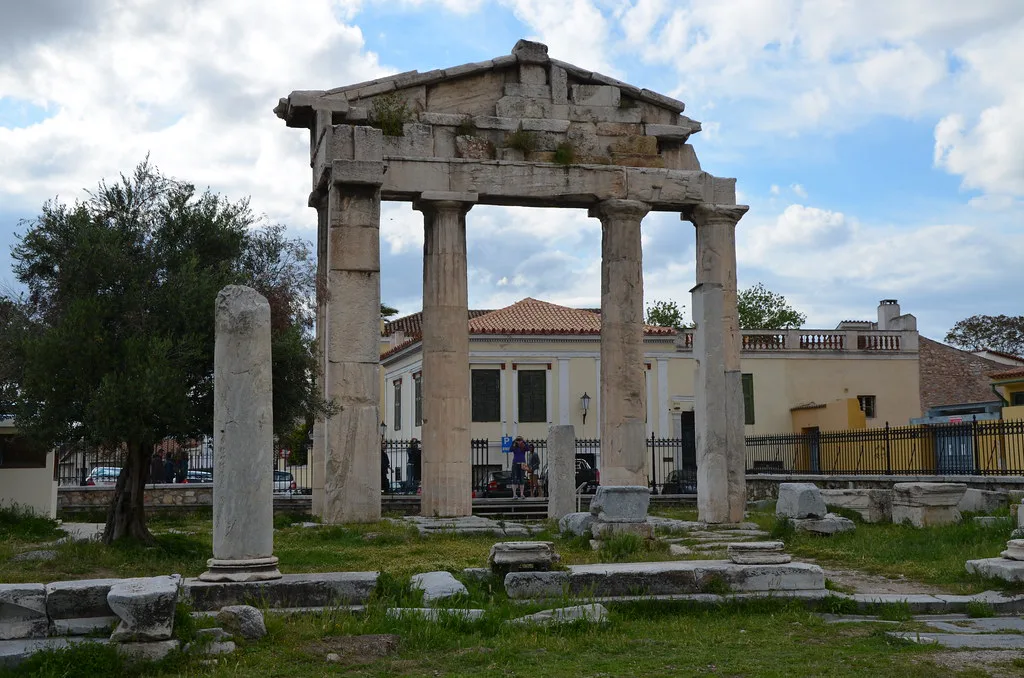
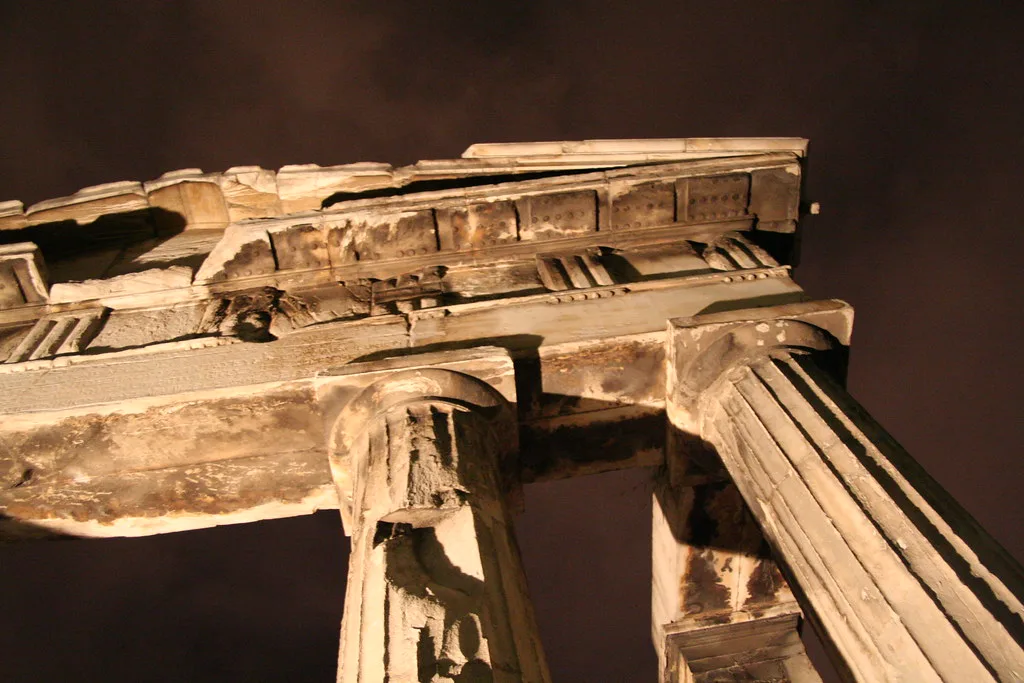
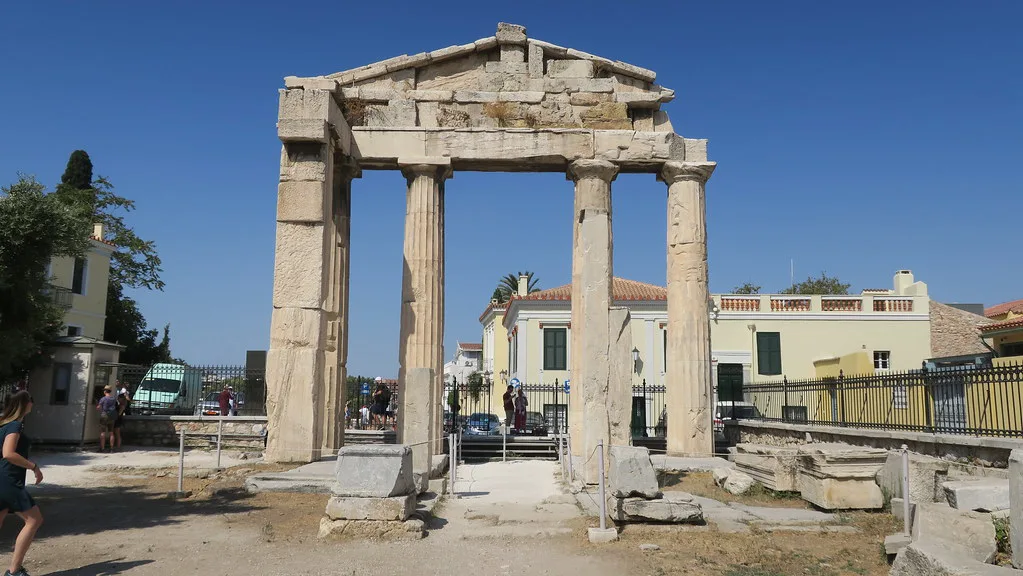
- Gate of Athena Archegetis: a Doric gateway built in 11 BCE, funded by Augustus and the Athenian people, and dedicated to Athena the Leader.
- East Propylon: a more modest Ionic-style gateway in Hymettian marble.
- Fethiye Mosque remains: a 17th-century Ottoman addition inside the courtyard.
- Open courtyard: a forum-style rectangle of about 111 x 98 m, once lined with stoas and shops.
A Short History: Roman Commerce, Invasion and Reuse
Julius Caesar funded this marketplace in the 1st century BCE, and Augustus completed it. Merchants sold olive oil, grain, wine and imported luxuries in an orderly Roman layout. That was a sharp contrast with the older Greek Agora, which had grown organically over centuries.
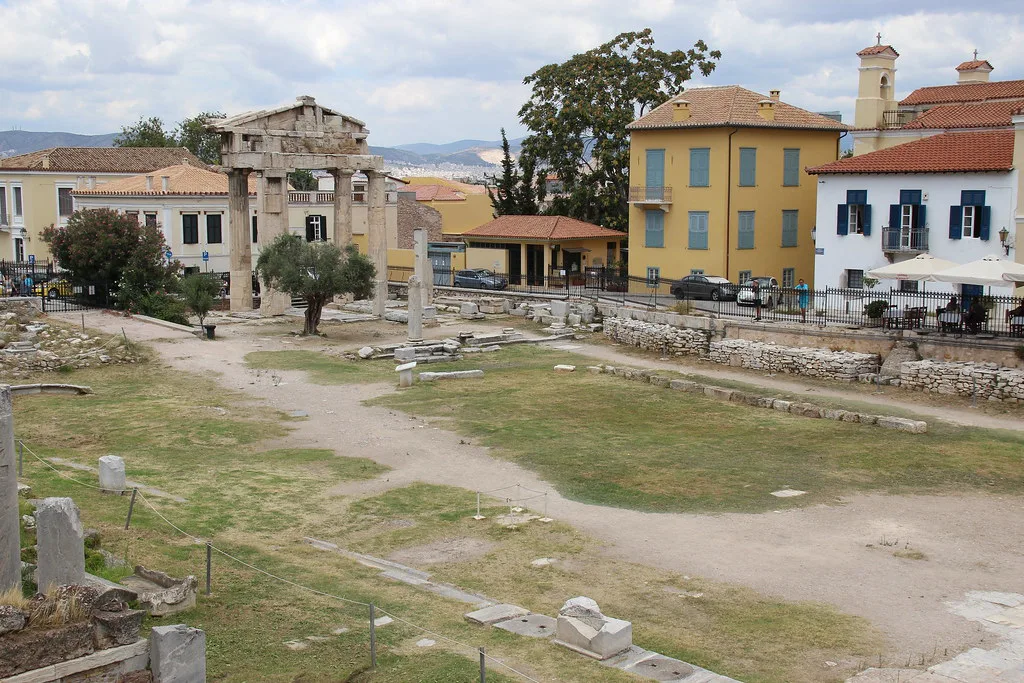
In 267 CE the Heruli sacked Athens. Reduced city walls later absorbed parts of the agora, and trade ended there. Byzantine builders reused some Roman structures as Christian basilicas. Ottoman rule then added the Fethiye Mosque in the 17th century.
Tickets, Opening Hours and Free Days
Prices and hours checked November 2026. Standard admission is €10, and reduced admission is €5. Entry is by timed e-ticket through the official Ministry of Culture e-ticket platform. Last admission is 20 minutes before closing, so a 20:00 closing means entry stops at 19:40. The site is closed on 1 January, 25 March, 1 May, Orthodox Easter Sunday and 25 and 26 December.
Winter free days fall on the 1st and 3rd Sunday, yet the site closes at 15:00 from November to March.
| Period | Daily hours |
|---|---|
| 1 April to 31 August | 08:00 to 20:00 |
| 1 to 15 September | 08:00 to 19:30 |
| 16 to 30 September | 08:00 to 19:00 |
| 1 to 15 October | 08:00 to 18:30 |
| 16 to 31 October | 08:00 to 18:00 |
| 1 November to 31 March | 08:00 to 15:00 |
- Free dates: 6 March, 18 April, 18 May, the last weekend of September and 28 October.
- Winter free days: the 1st and 3rd Sunday of each month from 1 November to 31 March.
Combined Ticket and Pass Decision Box
A €30 combined ticket is reported to cover the Acropolis, both Agoras, the Temple of Olympian Zeus, Kerameikos, Hadrian's Library and Aristotle's School. Contents have changed over the years, so check the official page before buying. Our combined ticket rules explain the details. A simple test works: buy the combined ticket only if you will use several of those sites. For the Roman Agora alone, the €10 standalone ticket is cheaper. The Turbopass Athens Flex Pass lists this site as a selectable attraction, and it counts as one of your chosen sites. Its status on other passes is unconfirmed.
How Long to Spend and When to Go
Plan 45 minutes to 1 hour inside, longer if you like reading inscriptions or photographing the tower from each side. From 1 November to 31 March the site closes at 15:00, so go in the morning. In summer the open courtyard offers little shade, and temperatures can pass 35°C. Arrive at 08:00 when gates open, or go in late afternoon before the 20:00 closing in summer.
Summer closing is 20:00, yet temperatures can pass 35°C in the open courtyard, so timing the visit matters.
Getting There and Combining Nearby Sites
Monastiraki station serves the Green and Blue lines, and Thissio serves the Green Line. Both are linked to the wider Ancient Agora area, though walking times to the Roman Agora entrance are best checked on a map. The Visit Greece Athens pages list other current visitor information. Here are three half-day sequences using only nearby sites:
- Roman Agora, then Hadrian's Library, then lunch in Monastiraki. This is a light plan with two small tickets.
- Ancient Agora first, then the Roman Agora, then Plaka for an evening walk. This is the fuller history option.
- Acropolis early, then the Roman Agora in the afternoon. Plan around heat and last admission.
Other Ancient Sites on Your List
Pair this stop with ancient hills and civic spaces elsewhere in the city. Climb the Areopagus rock for the court's setting. See where citizens met at the Pnyx assembly ground. Visit the Dionysus theatre ruins for Greek drama. Day trips reach further: the Aphaia sanctuary, the Eleusis excavations, the Marathon burial site and the Brauron sanctuary each need their own half day or more.
Mistakes to Avoid
Most problems come from assumptions about tickets and time.
- Assuming one ticket covers both Agoras. Each site has its own entry.
- Arriving close to closing. Last admission is 20 minutes before the gates shut.
- Applying the Ancient Agora's 2 to 3 hours to this smaller site.
- Planning around free dates without checking the official page first.
- Skipping the e-ticket. Entry is by timed ticket.
Worth It or Skip
Go if you enjoy Roman history, Greek-Roman architecture or the Tower of the Winds. Skip the inside if you are short of time and have already seen the Ancient Agora. You can still look at the Gate of Athena Archegetis from the street, though check that viewing option locally before relying on it.
Frequently Asked Questions
What was the Agora in ancient Athens?
An agora was a gathering place that served as a civic, commercial and religious centre. Athens had the older Greek Agora, and later the Roman Agora, built as a planned marketplace under Roman rule.
Related guides



Continue reading
Guides on the same trip

