Last updated November 2026: the temple of Apollo Epicurius stands in the mountains of Arcadia at Bassae, a UNESCO World Heritage Site attributed to the architect Iktinos. Few visitors reach it because it lies far from the main Olympia routes and realistically needs a hire car. Go if architecture is your reason for travelling, and skip it if you only have a few spare hours.
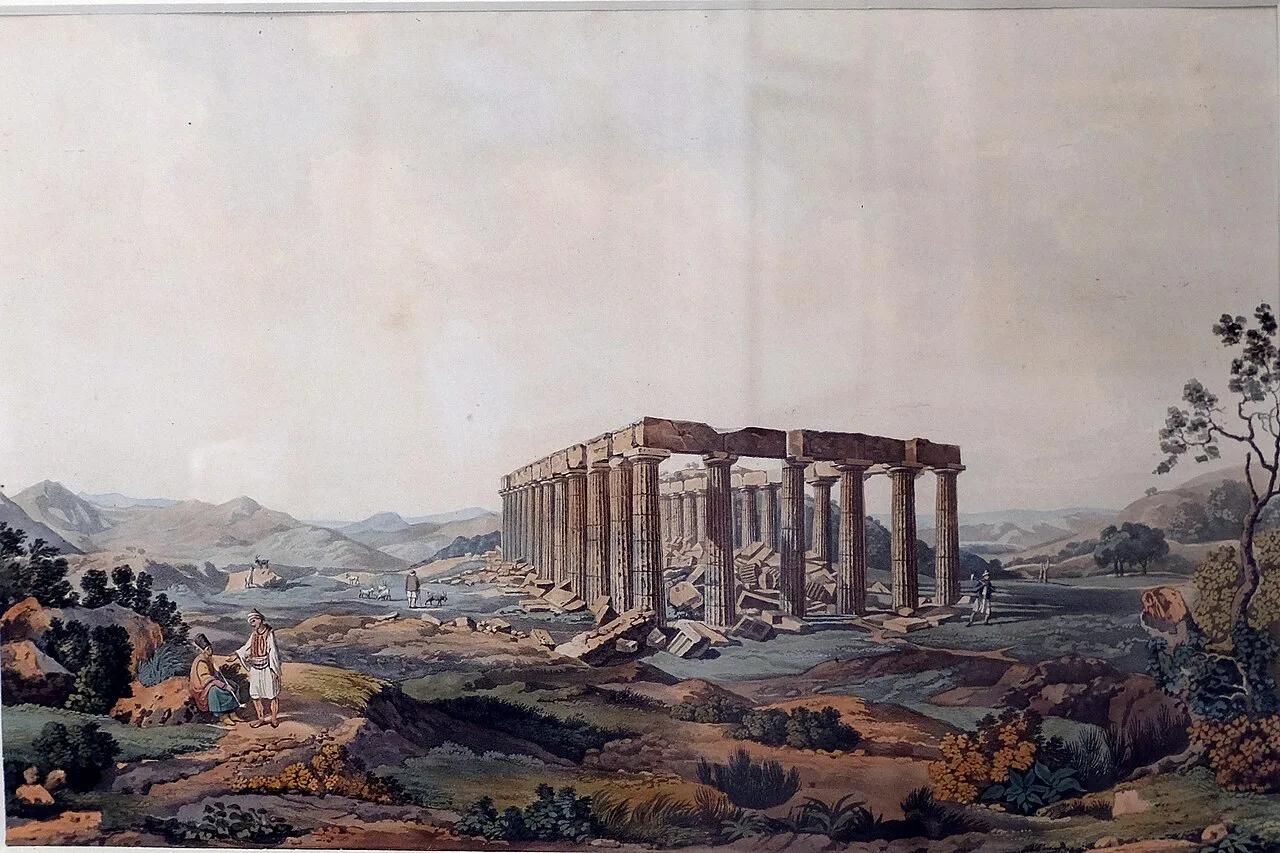
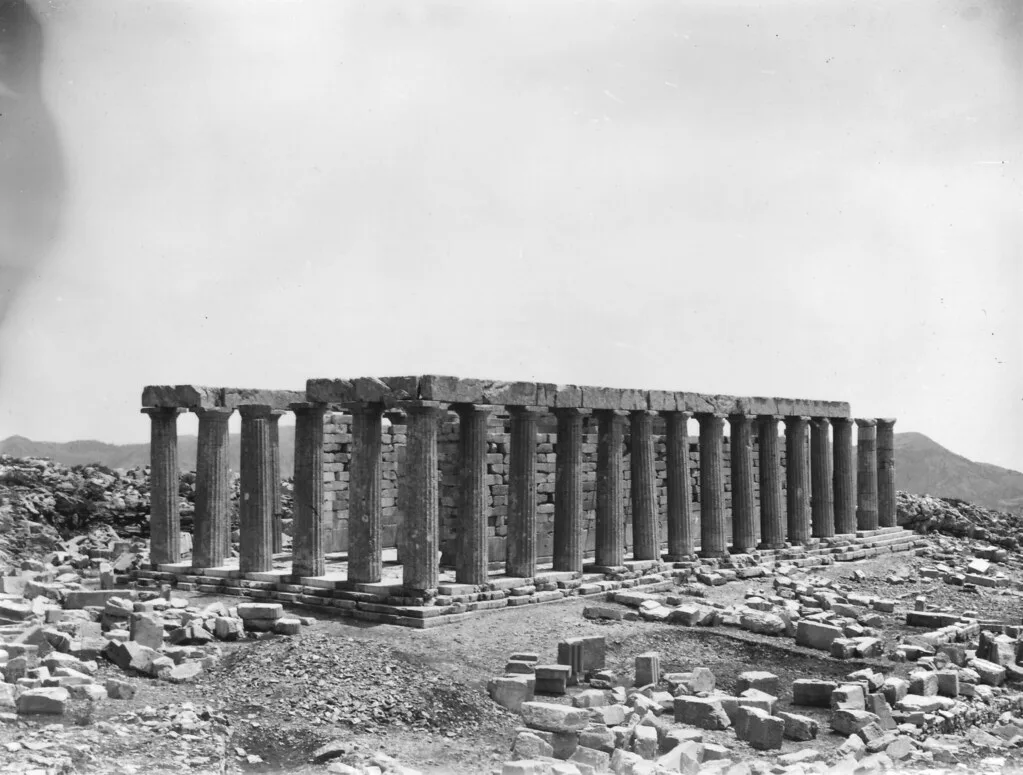
Featured image: Edward Lear, Public domain, via Wikimedia Commons.
Is the Temple of Apollo Epicurius worth the detour?
Bassae rewards travellers who care about how Greek temples were designed. Iktinos, the architect linked with the Parthenon, is credited with this building, which is dated to 420–400 BC. It was listed by UNESCO in 1986 as site 392. Expect a long mountain drive and a protective shelter over the temple, so this is not a classic open-air ruin photo stop. Use the list below to decide quickly.
- Go: architecture and UNESCO enthusiasts with a hire car and a full day.
- Go: travellers building a Messenia loop that ends near Kalamata.
- Skip: cruise passengers from Katakolo, where the drive is very likely too long for a port day.
- Skip: travellers without a car, because public transport to the temple is not something to count on.
- Skip: families with young children who have only one day around Olympia.
What the temple is and why it matters
Bassae lies in western Arcadia, in the Peloponnese, and its temple was dedicated to Apollo Epikourios. Pausanias ranked it among the finest temples of the Peloponnese for beauty and harmony, second only to the temple at Tegea. The building is attributed to Iktinos, so treat the name as a strong attribution and not a signed credit.
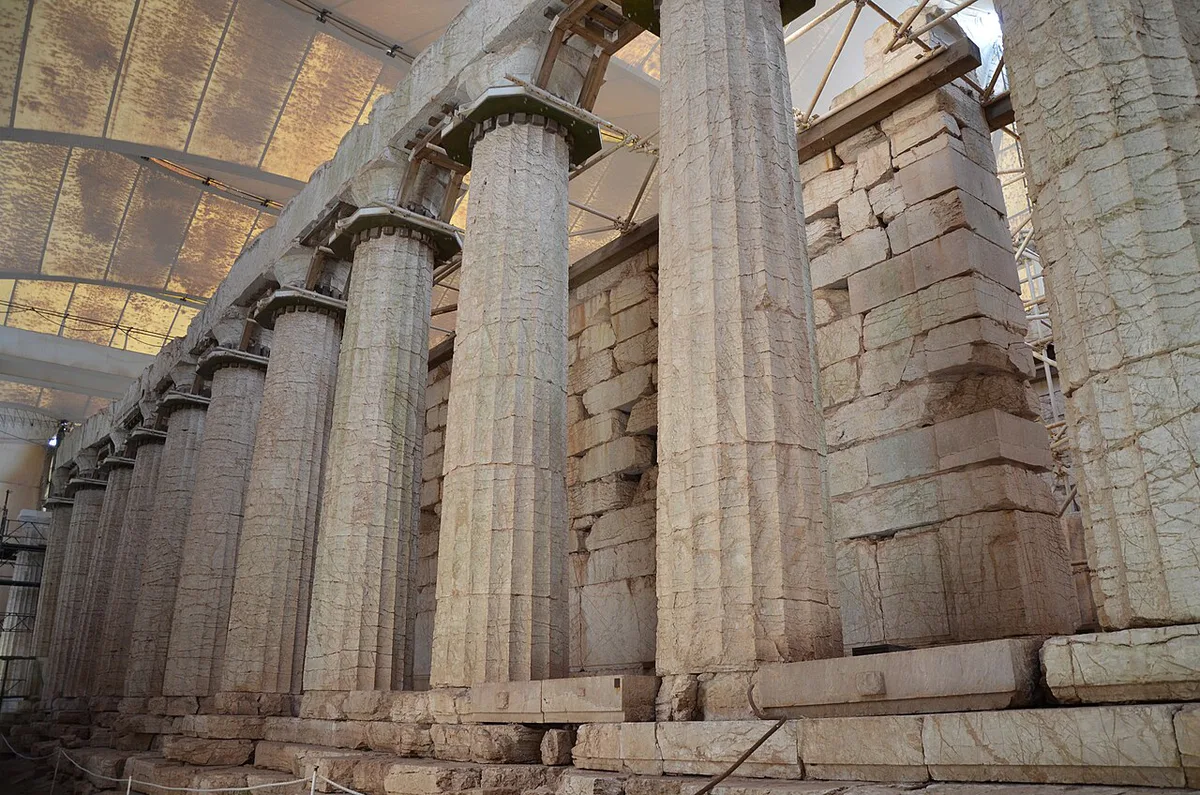
The plan is unusual. It has 6 columns on the short sides and 15 on the long sides, which gives it an elongated, Archaic look. It also faces east–west and not the usual north–south, which is a feature of several Arcadian temples. The exterior is Doric, and inside the cella ran Ionic half-columns attached to projecting buttresses.
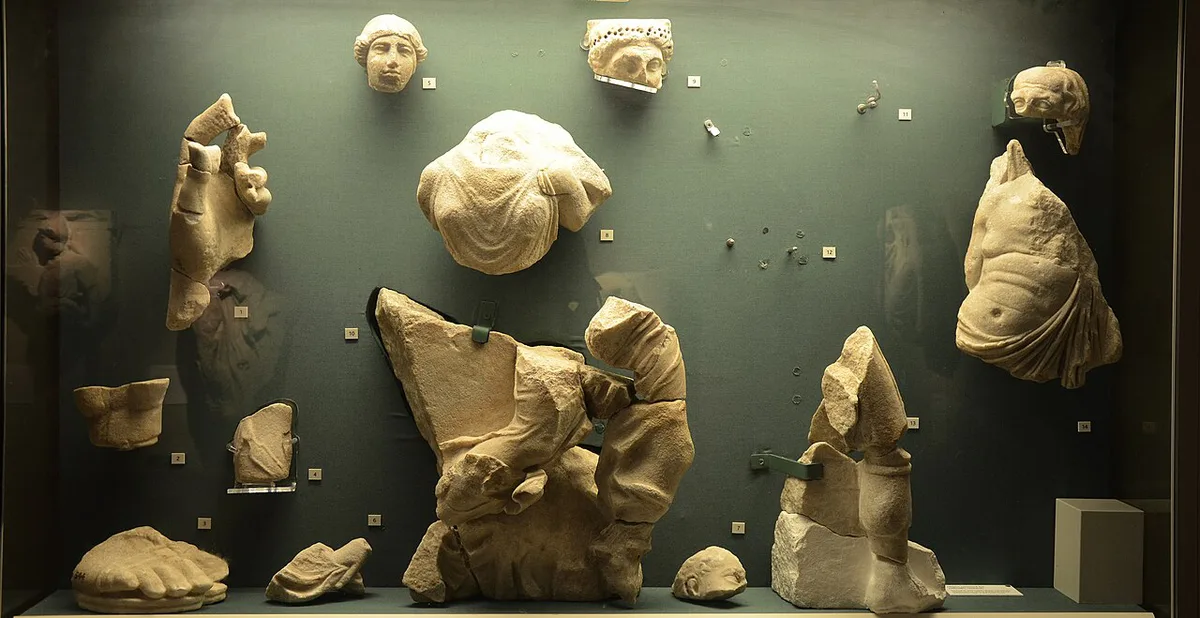
A single Corinthian column once stood between the last pair of half-columns. Its capital is recorded as the earliest known Corinthian capital in Greek architecture. Fragments of it are now in the National Archaeological Museum in Athens. Builders used local grey limestone, with marble for parts of the roof, the cella capitals and the sculpture.
For comparison, visit the Temple of Zeus at Olympia to see a standard Doric layout. Then look at the Temple of Hera for an earlier regional temple type. Bassae makes more sense after those two.
What you see today: the shelter, the setting and the frieze in London
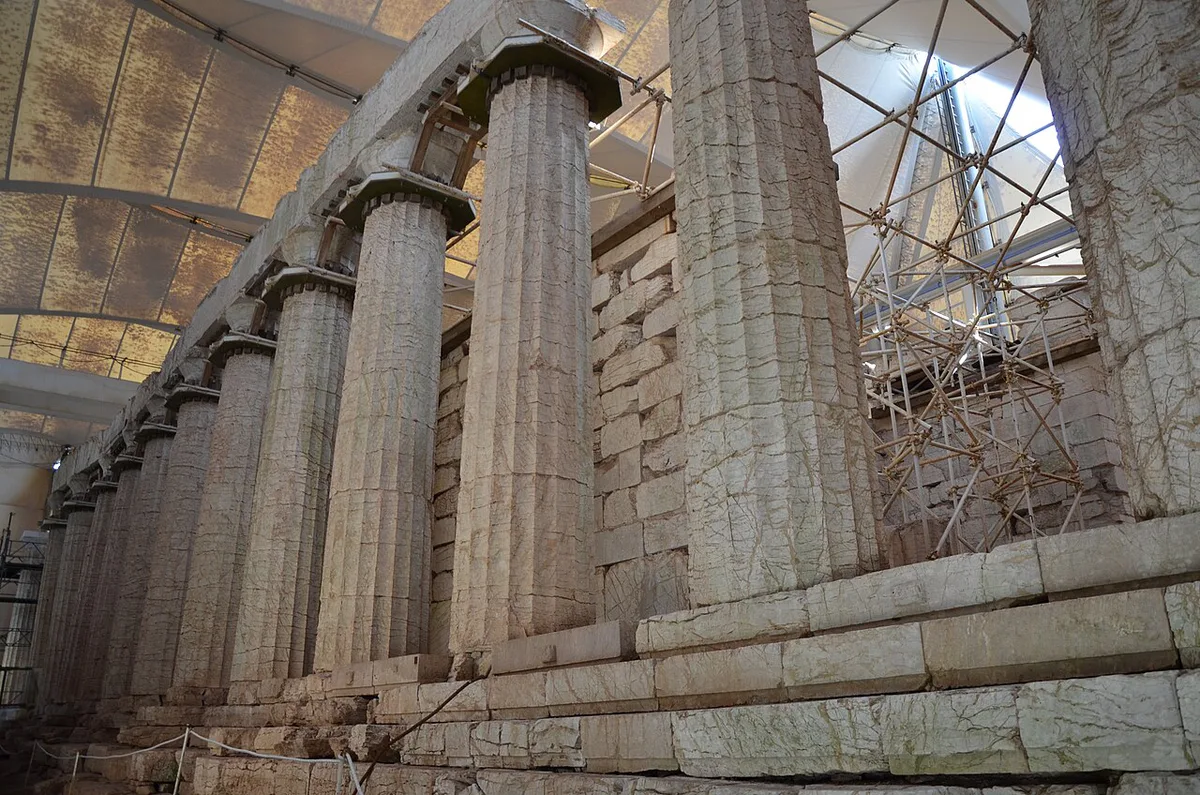
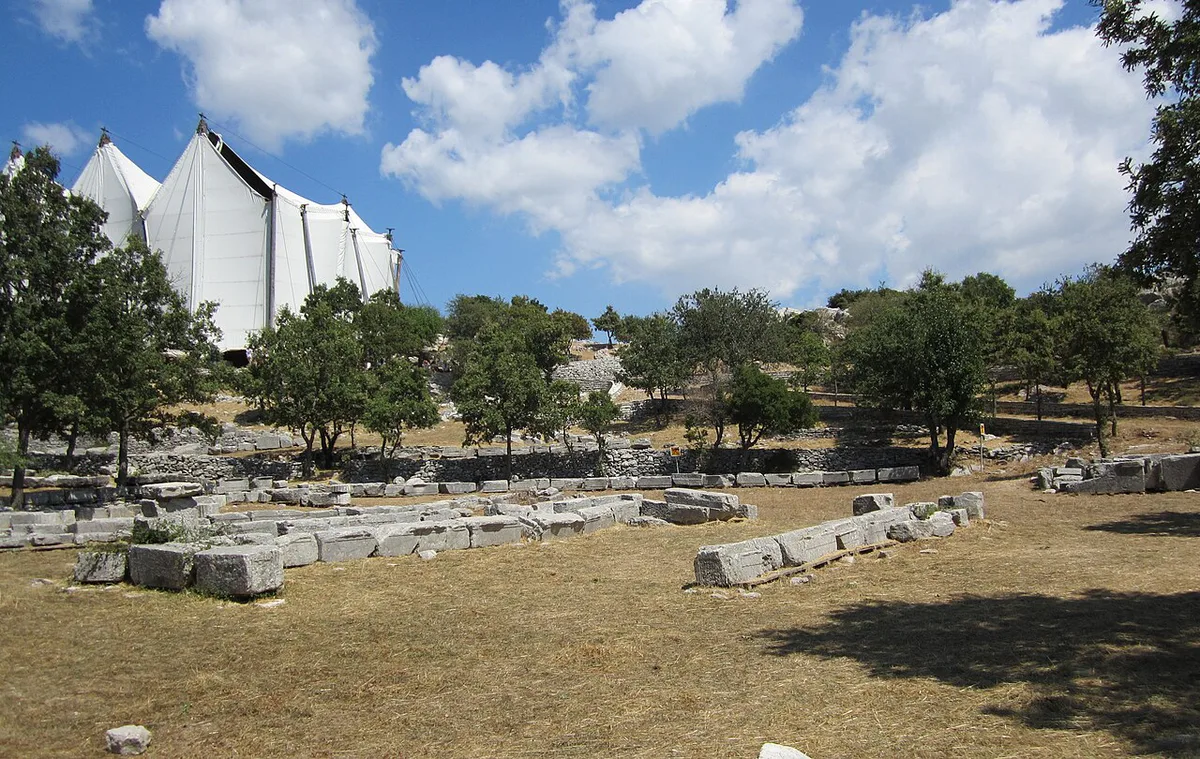
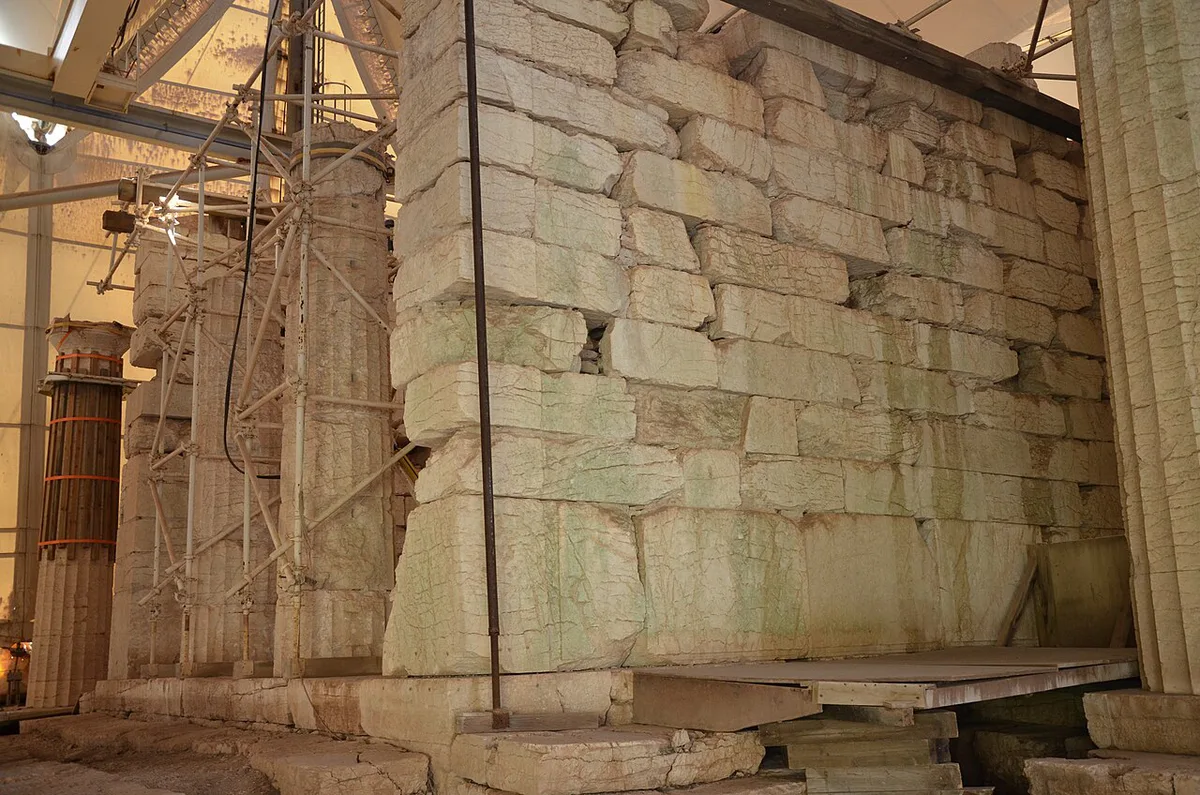
A large protective shelter was erected over the temple in 1987 to guard it against the region's extreme weather. It is planned to come down when the conservation works end. Check the current state of the works with the Ministry of Culture's Odysseus site before you drive up.
Set your expectations accordingly. You come for the proportions, the stone and the mountain setting, not for a clear view of a ruin against the sky. Photographs often show the building covered by the shelter.
The famous Ionic frieze is not on site. It was 31 metres (about 102 ft) long and made of 23 marble slabs. Twelve slabs show Greeks fighting Amazons, and 11 show Lapiths fighting Centaurs. Foreign antiquaries removed it in 1812, and it was sold to the British Museum in 1815. The original slabs are in London.
The nearest sculpture and finds from Olympia are in the Archaeological Museum of Olympia: What to See, Tickets and Visit Tips. That museum is a better stop for sculpture, because Bassae itself is about the building.
Getting to Bassae
No easy public transport serves Bassae, so a hire car is the realistic option. Roads climb through mountain country, so fill the tank before you leave the main towns. Download an offline map too, because phone signal can drop in the hills. Budget on the order of 1–2 hours of driving each way from a base such as Olympia, and check the exact time in a route planner.
If you are arriving from the capital, read our guide to the route from Athens to Olympia first. Regional buses toward Olympia are listed on the KTEL Ilias timetable site. Do not assume any of them continue to the temple.
| Route | Time | Difficulty | Suits |
|---|---|---|---|
| Drive from Olympia | Check in a route planner | Mountain road, moderate | Most visitors with a hire car |
| Drive from Kalamata | Check in a route planner | Mountain road, moderate | Messenia loop travellers |
| Drive from Athens | Long; check in a route planner | Demanding as a day trip | Overnight stay en route only |
| Guided tour | Set by the operator | Easy | Travellers without a car; availability varies by season |
| Taxi or private driver | Check with the driver | Easy | Small groups; agree the waiting time and price first |
Tickets, opening hours and practicalities
Hours and ticket prices for Bassae are set by the Hellenic Ministry of Culture and can change by season. Check the Hellenic Ministry of Culture e-ticket portal for the current fee and days. A closed gate after a 1–2 hour drive wastes a large part of your day. Do not assume an Olympia ticket covers Bassae, since the two sites are separate. Check toilets, parking and the path to the entrance with the ministry before you set off.
How much time to plan
Time on site is short compared with the drive. The temple is a single building, so most visitors need about an hour or less there, though you can stay longer if you want to study the details. The driving is what fills the day.
For a half-day plan, treat Bassae as a stand-alone trip from a nearby base. Leave early, walk the temple, and return for lunch. For a full-day plan, combine it with a second stop on the same side of the mountains and finish in Messenia.
- Half day: drive up, visit the temple, return to your base for lunch.
- Full day: leave Olympia early, visit Bassae, then continue toward Kalamata.
- Overnight: base yourself near Andritsaina and arrive when the site opens.
Combining Bassae with Olympia and the Peloponnese
Bassae works best as part of a loop and not as an out-and-back trip. Start at 5 Best Things To See At Ancient Olympia (2026 Guide), cross the mountains to Bassae, and continue south into Messenia. Many travellers then add Ancient Messene: Visitor Guide, Hours & Tickets on the same loop.
Adding Bassae to an Olympia day means 1–2 hours of driving each way, so an overnight near Andritsaina may suit you better.
If you have a few more days, the wider list of Peloponnese ancient sites helps you choose the next stop. Mystras is a longer drive and fits only a wider itinerary. Our notes on the Ancient Olympic Games: History, Events and Visiting Olympia add context for the Olympia day.
| Option | Extra time | What you gain |
|---|---|---|
| Olympia only | None | The stadium, the temples and the museum without mountain driving |
| Olympia plus Bassae | A long day or an overnight stay | One of the most unusual temple plans in Greece |
| Olympia, Bassae and Ancient Messene | Two days or more | A full loop through Arcadia and Messenia |
| Bassae from Kalamata | A full day | Easier if Messenia is your base |
Best time to visit and what to bring
Conditions at Bassae are exposed. The shelter built in 1987 exists because of the region's extreme weather, so expect wind, fog and cold on the ridge outside summer. Summer brings heat on the road and little shade at the site. The temple faces east–west, so check which light you prefer for photographs before choosing morning or afternoon.
- Wind layers, even in warm months.
- Sturdy shoes for uneven ground.
- Water and a snack, since facilities should be confirmed before you go.
- A full tank of fuel and an offline map.
- A photo of the opening hours from the ministry page.
Mistakes to avoid
Most problems at Bassae come from underestimating the trip. Avoid the following.
Do not expect the famous frieze on site, since its 23 marble slabs went to London in 1815.
- Treating it as a short hop from Olympia.
- Arriving without checking the hours and the state of the works.
- Expecting an open-air ruin without a shelter.
- Relying on phone navigation without an offline map.
- Setting off with a low fuel tank.
- Planning it as a cruise shore excursion from Katakolo. Our Katakolo to Olympia guide shows a more realistic day.
Frequently Asked Questions
What happened to the Temple of Apollo at Bassae?
After the temple was abandoned, its roof fell in and damaged the structure. Metal clasps were also removed from the stonework. The Greek Archaeological Society excavated and restored parts of it in 1902–06, and a conservation committee was founded in 1975. A protective shelter has stood over it since 1987.
Related guides


Continue reading
Guides on the same trip