

Last updated November 2026: the Roman Baths in Bath, Somerset, are a Roman bathing and temple complex built around a natural hot spring, and visitors tour the site but cannot enter the water. This Roman Baths Bath guide walks through eight sights in visit order, then covers timing, tickets, access and other Roman sites. Each practical question links to a focused guide.
Featured image: bortescristian, CC BY 2.0, via Flickr.
Quick answer: what the Roman Baths in Bath are
Roman Baths, The Pump Room, Abbey Church Yard, Bath BA1 1LZ is the address of a museum built over a Roman temple and bathing complex. Temple building began between 60 and 70 AD, and the bathing complex grew over roughly 300 years. Everything at street level dates from the 19th century, so you walk down into the Roman layers. Medieval, Georgian and Victorian additions sit on top, which makes this several eras on one site.
- Location: beside the Pump Room and Bath Abbey in central Bath, Somerset.
- Visit type: indoor and outdoor museum route over ancient ruins, with an audio guide included in admission.
- Bathing: not permitted at the Roman Baths; Thermae Bath Spa is the nearby place to soak.
- Hours: 9am to 6pm daily outside summer, closed 25 and 26 December.
- Time: allow roughly 90 minutes to 2 hours, and see our how long to allow guide for other paces.
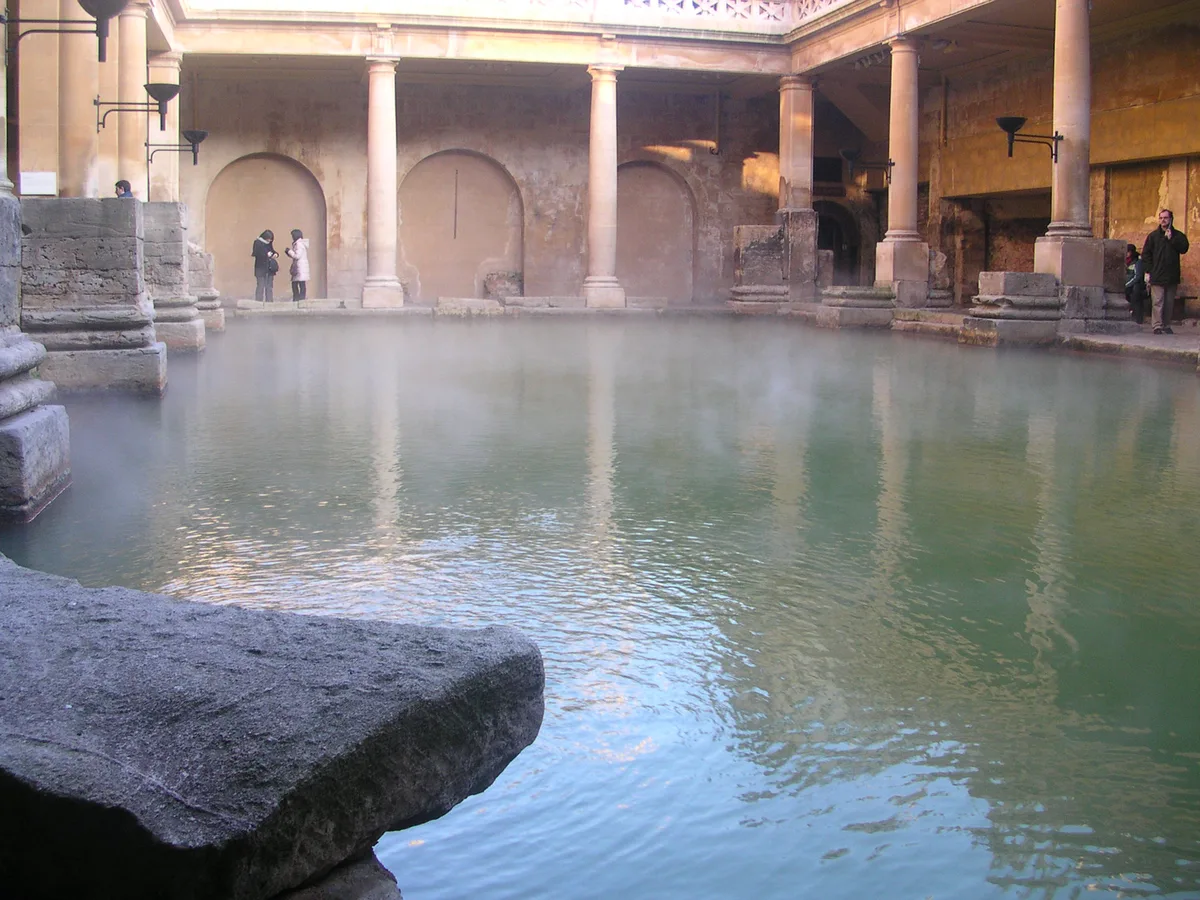
8 Things to See at the Roman Baths in Bath
Prices and hours checked November 2026. Sights below follow the usual route from the spring through the temple precinct to the museum galleries. Each entry says why it matters and who will enjoy it most.
1. The Sacred Spring
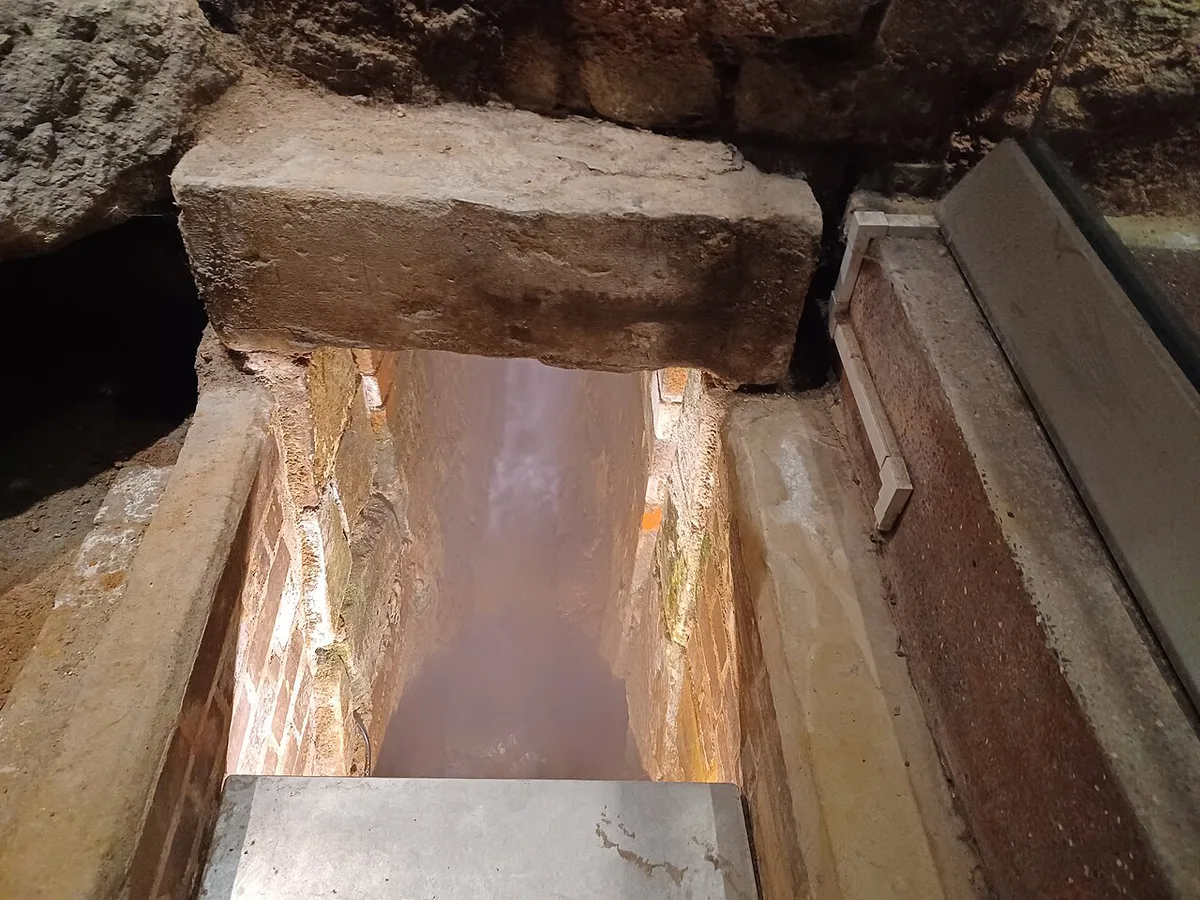
Everything at the site grows from this spring, which rises along a fault in the limestone beneath Bath. Visit Bath puts the flow at over 1,170,000 litres a day at 46°C, roughly 115°F. Rainfall on the Mendip Hills seeps down through limestone before the heated water returns to the surface.
Romans dedicated the spring to Sulis, a local goddess identified with Minerva, and threw offerings into it. Everyone passes through here, and a few minutes at the edge explains why the town exists. Skip lingering if the queue is building behind you, because the Great Bath offers a better place to pause.
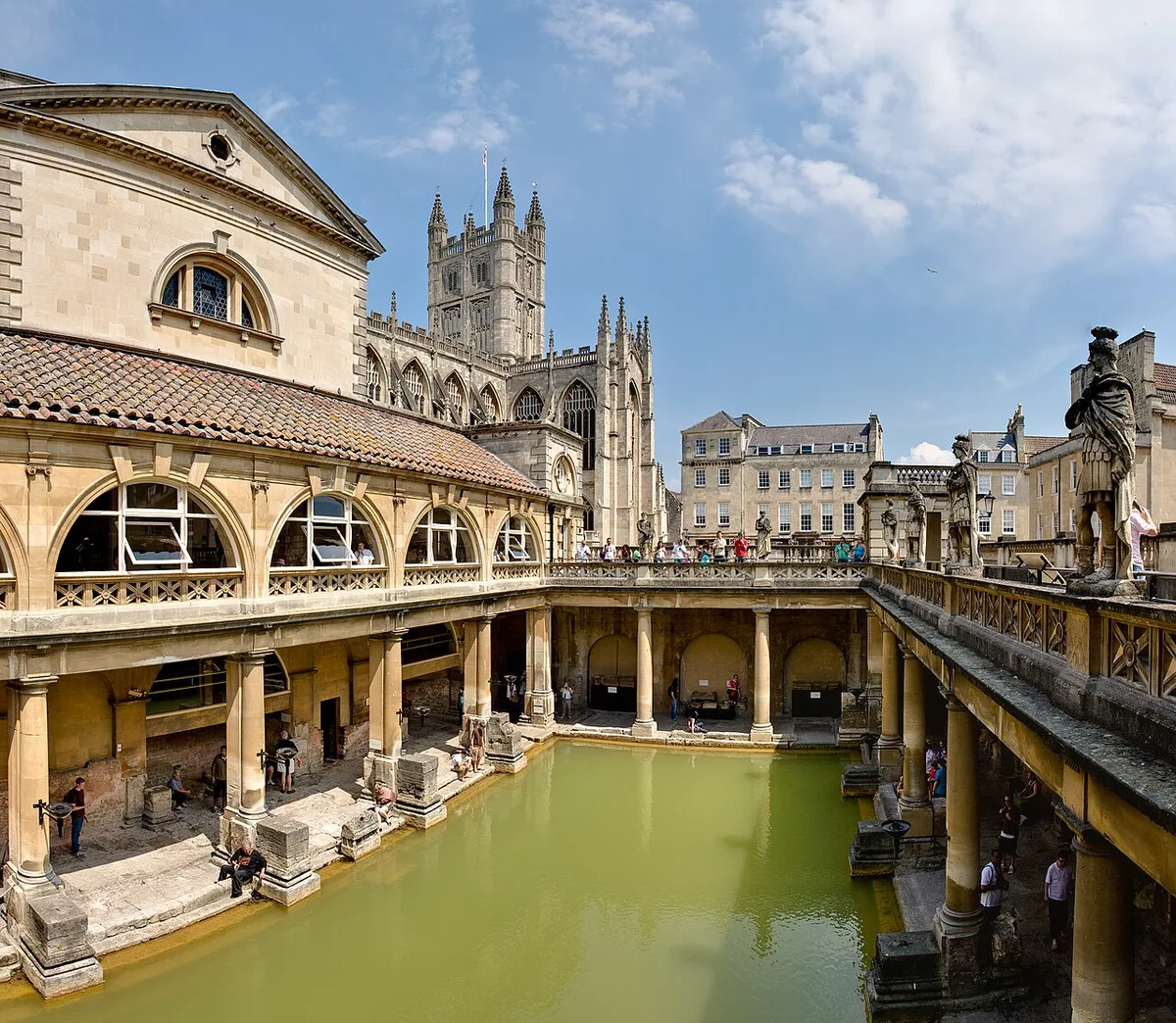
2. The Great Bath and terrace
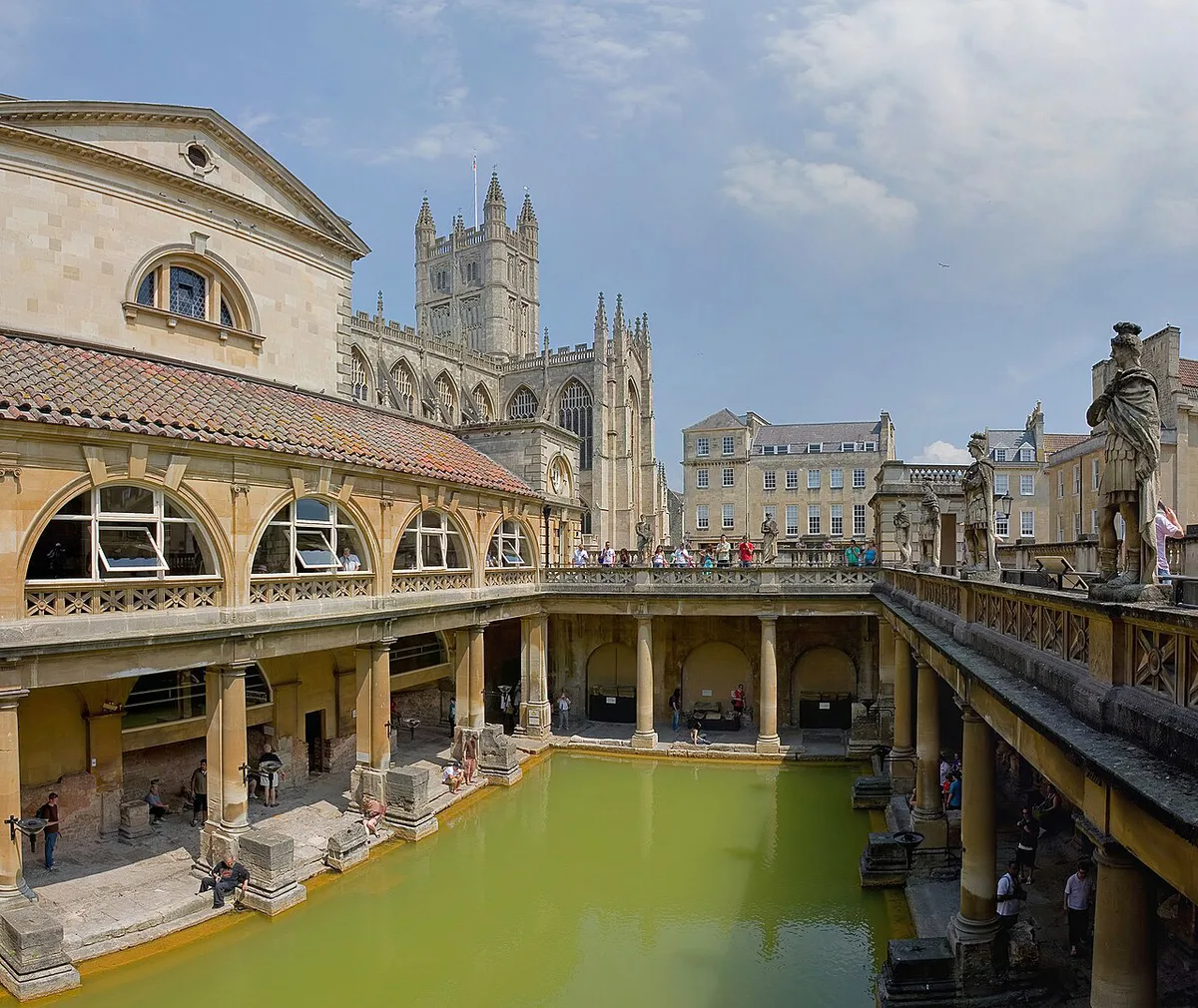
Open to the sky, the Great Bath is the image on most postcards, and its water is still fed by the hot spring. Mendip lead lines the pool, and the green water looks different in morning light and under cloud. From the terrace above, statues of Roman emperors and governors look down on the water.
Those statues are late 19th-century carvings, so they belong to the Victorian layer rather than the Roman one. Photographers and first-time visitors will enjoy it most. Nobody can enter the pool, so anyone hoping for a dip should read our swimming section below.
3. The Temple of Sulis Minerva and Gorgon pediment
Temple building dates to 60 to 70 AD, and the settlement of Aquae Sulis grew up around it. Its podium stood more than two metres above the courtyard, reached by a flight of steps. Carved pieces of the pediment are displayed in the museum, including the bearded Gorgon head that once glowered from about 15 metres up.
Scholars disagree on what the head represents, which gives guides plenty to discuss. Read the story behind the goddess behind the temple before you go. History fans will linger here, while visitors with an hour to spare can take it quickly.
4. The gilt bronze head of Minerva
Workmen found this gilt bronze head in 1727, and the official Roman Baths site calls it one of the treasures of Roman Britain. It is small, so stand close and look at the surface and the face. The discovery is described as the first major find on the site.

It rewards anyone who enjoys single objects with a story attached. Visitors rushing the galleries can still catch it within two minutes. Skip nothing else to fit it in, because it sits on the main route.
5. Curse tablets and votive coins
Visitors threw more than 12,000 coins into the spring, the largest votive deposit known from Britain. Excavators found 130 curse tablets in the sacred spring in 1979 and 1980. Many curses concern stolen clothes, since bathers left their belongings unattended.
Visit Bath describes the tablets as the personal prayers of 130 individuals. Families with older children tend to enjoy reading the grudges aloud. Visitors who dislike dense display cases may want to skim this gallery.
6. Hypocausts and the bathing rooms
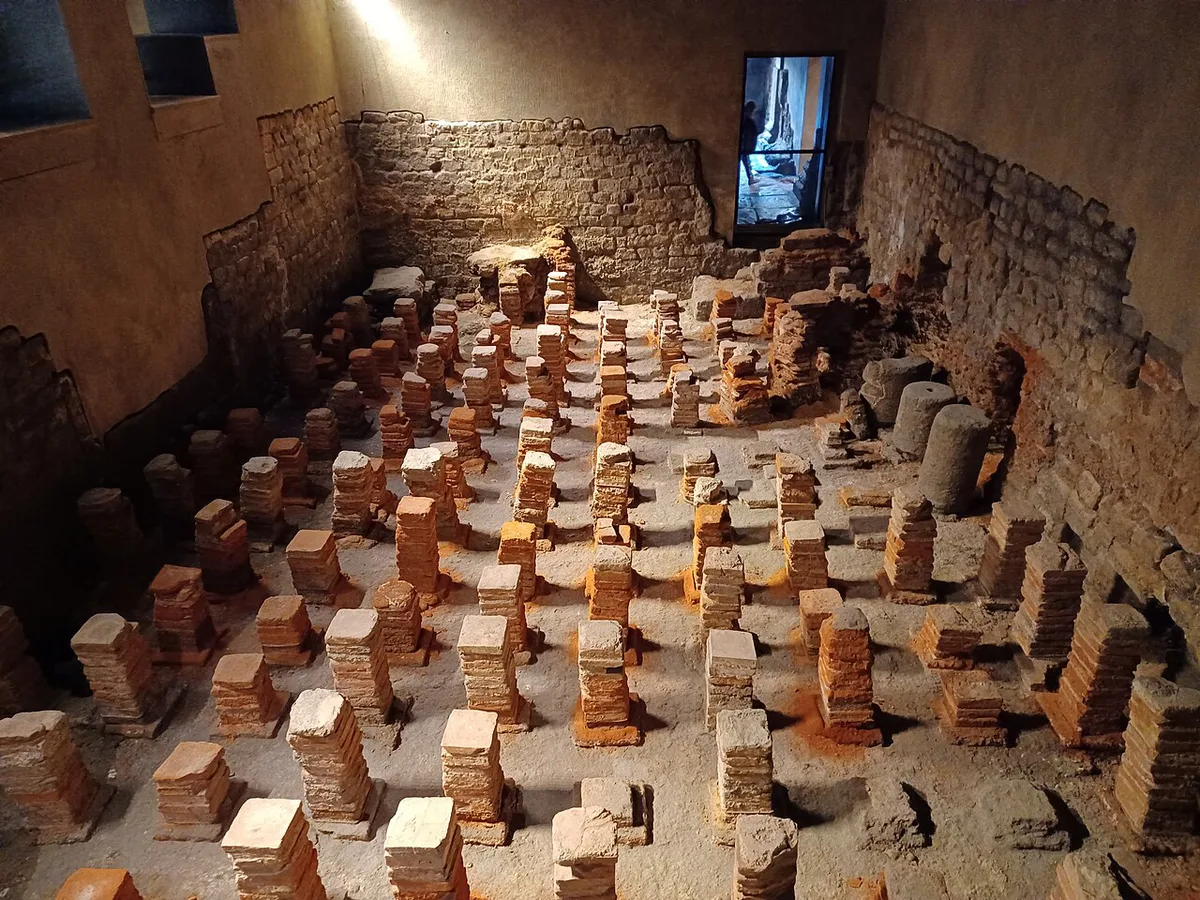
Bathers moved through a cold plunge (frigidarium), a warm room (tepidarium) and a hot room (caldarium). Under-floor heating raised the hot-room floors on small pillars called hypocausts. Digital projections of Roman bathers appear along the walls, so the empty rooms make sense.
This is the best place to understand how a Roman bathing day worked. Anyone interested in engineering will spend longer here. Visitors who want only the spring and the Great Bath can walk through briskly.
7. The Roman Gym and Laconicum
An exercise courtyard shows how Romans trained, with Trigon (a three-way catching game), wrestling and weights. Film projections bring these activities to life. Beside it sits the Laconicum, a circular steam room warmed by under-floor heating.
Visit Bath notes that ten minutes in there would have been enough. A short display covers Roman medicine and the belief in four humours. Children and anyone curious about daily life will enjoy this stop most.
8. The museum and costumed characters
Galleries hold artefacts, coins, sculptures and digital reconstructions of life in Aquae Sulis. Costumed interpreters explain bathing and beauty rituals, from oils to tweezers and pumice stones. Audio guides run in 13 languages and come with admission, and the children's guide is narrated by Michael Rosen.
The guides shape the visit, because you choose which stops to hear. Anyone who prefers silence can still follow the signed route and panels. Visitors with only one hour should treat the galleries as optional.
Can you swim or bathe at the Roman Baths?
No. Visitors tour the site and museum, but bathing is not permitted at the Roman Baths. Our swimming rules guide covers what you can and cannot do. Modern bathing happens about 0.09 miles away at Thermae Bath Spa, and at the refurbished Cross Bath. Visit Bath says you can bathe in the same natural spring water there. Both options carry their own prices, rules and booking systems, so treat them as separate outings.
| Place | What it is for | Bathing? |
|---|---|---|
| Roman Baths | Museum, ruins and Roman history | No |
| Thermae Bath Spa | Modern spa using the spring water | Yes |
| Cross Bath | Refurbished bath using the spring water | Yes |
| Pump Room | Georgian hall with a restaurant and spring water to taste | No |
How long to spend and how to structure the visit
Official sources publish no standard visit length, so the ranges below are editorial guidance only. A highlights visit suits a tight Bath day, while a standard route with the audio guide fills most of a morning. Slow visitors add the museum galleries and any special exhibition. For more detail on pacing, read our timing guide. Audio guides in 13 languages come with admission, so budget extra minutes if you want every stop.
A highlights visit runs About 60 minutes, and the audio guide, available in 13 languages, adds time if you want every stop.
| Visit style | Guide range | Best for |
|---|---|---|
| Quick highlights | About 60 minutes | Spring, Great Bath, temple pediment |
| Standard with audio guide | About 90 to 120 minutes | Most first-time visitors |
| Slow with museum and exhibition | About 150 to 180 minutes | History fans and families |
Tickets, opening hours and when to go
Ticket prices vary with the time of year and between weekdays and weekends, and the official site lists current prices. Visit Bath advises booking in advance for a reduced rate. Our ticket options page covers the choices in detail. Outside summer, doors open daily from 9am to 6pm, except 25 and 26 December. In summer, the site opens until 10pm with last admission at 9pm, listed for 20 July to 31 August in 2026 and provisional for 2027. See the daily opening hours page for updates. Torchlit afternoons run with Christmas events from 1 December 2026 to 3 January 2027, and our torchlit evening visits guide explains the atmosphere. Two offers are time-sensitive. Visitors in November or December can return in January or February for one pound a ticket. UK visitors receiving Universal Credit, Pension Credit or Employment Support Allowance can book a one-pound ticket for themselves and up to four accompanying children. The Chew Valley Hoard exhibition runs from 8 January to 14 March 2027.
Summer evenings run late, with last admission at 9pm, and the Christmas torchlit afternoons add a separate window from 1 December 2026.

| Choice | Better option | Why |
|---|---|---|
| Booking | Ahead online | Reduced rate and a secured entry time |
| Day of week | Weekday | Weekends and summer are the busiest periods |
| Time of day | Daytime for detail, torchlit for atmosphere | Christmas torchlit afternoons run 1 December to 3 January |
| Season | Winter for calm, summer for late hours | Summer opening reaches 10pm |
Roman Baths for families, accessibility and special needs
Children aged 5 and under go free, and child tickets are valid for ages 6 to 18. Family tickets save up to 50%, and Blue Peter badge holders go free. Children's audio guides come with admission. Visit Bath states the site is 90% accessible to wheelchair users, with a lift and step-free access to most areas. Disabled visitors pay the standard price, and accompanying carers go free on their own ticket in the same time slot. To book a carer ticket, call +44 (0)1225 477785. Sign language and descriptive audio guides, tactile models and Braille panels are available. Some museum routes use lower lighting, and weekends and summer get crowded. Ask customer service which areas fall in the remaining 10%.
- Plan around crowds: weekends and summer are the busiest periods.
- Expect lower lighting along parts of the museum route.
- Call customer service before booking carer tickets or special support.
- Check a quiet space request if sensory needs apply, since quiet times are listed.
Is it worth it? Who should skip or shorten the visit
For most first-time visitors, yes: few places show a temple, a sacred spring and a bathing complex in one route. Read our verdict on whether it is worth the ticket for a fuller comparison. Visitors with under an hour should shorten the visit to the spring, the Great Bath and the pediment. Anyone who only wants a soak should book Thermae Bath Spa instead. Travellers who cannot manage a long, crowded indoor route may prefer a quieter outdoor Roman site, such as those listed below.
- Mistake: expecting to bathe in the Roman Baths.
- Mistake: assuming every area is accessible; ask about the remaining 10%.
- Mistake: arriving at a peak time without booking.
- Mistake: skipping the included audio guide.
Getting there and combining it with Bath
Roman Baths sit in Abbey Church Yard, next to the Pump Room, which is 0.03 miles away. Bath Abbey is 0.04 miles away, and Thermae Bath Spa is 0.09 miles away, so a half-day plan is easy on foot. Sally Lunn's Kitchen Museum is 0.06 miles away. Bath runs a charging Clean Air Zone. Private cars and motorbikes do not pay, but owners of higher-emission vehicles generally do. For trains and buses, use TravelWest.info and the operators' own sites, since schedules change. Day-trippers can read our day trip from London guide. Check journey times and fares on operator sites before booking.
More Roman sites in England
Roman Baths show bathing and religion, while other sites show homes, towns and forts. Browse Roman sites across England for the wider picture. Our Roman villas to visit guide covers the country houses. These one-line differentiators let you choose what to add to a Bath trip.
- Fishbourne's palace offers a Roman palace rather than a bathing complex.
- Chedworth's villa is run by the National Trust, giving a country-house view.
- Lullingstone's villa adds another villa for comparison.
- Bignor villa has its own official visitor site.
- Wroxeter's Roman city shows a town layout instead of a spring temple.
- Caerleon's legionary fortress is in Wales, not England, and has its own Roman baths and the National Roman Legion Museum.
- Richborough's fort offers a military site.
- Silchester's Roman town offers another town site.
For Roman Britain's northern frontier, from Vindolanda to Housesteads, see our Hadrian's Wall guide.
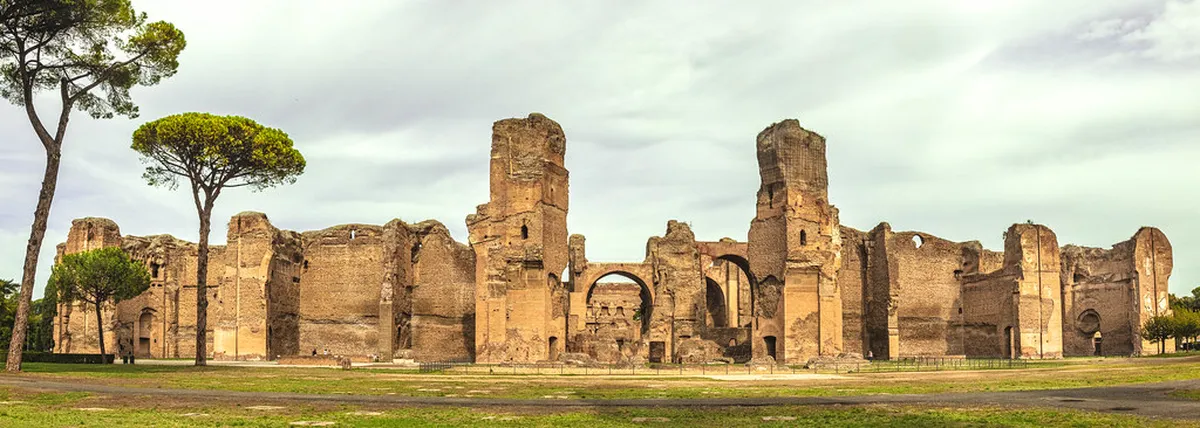
For Roman baths, theatres and towns elsewhere on the continent, see our guide to Roman ruins in Europe.
Explore More Guides
Keep planning your trip with these guides.
Guides
- Roman Baths Opening Times: Check Hours & Plan Your Visit
- Roman Baths Tickets: Where to Book and Which to Choose
- How Long to Spend at the Roman Baths (Bath)
- Can You Swim in the Roman Baths? Rules & Where to Bathe in Bath
- Roman Baths Torchlit Evenings: What to Expect and How to Plan
- Is the Roman Baths Worth It? An Honest Verdict
- Roman Baths From London: Train, Tour & Day Trip Guide
- Sulis Minerva: Bath's Roman Goddess and Where to See Her
- Roman Villas in England: Best Ones to Visit and How to Choose
- Fishbourne Roman Palace: Visitor Guide & Planning Tips
- Chedworth Roman Villa: Visiting Guide, Mosaics & Tips
- Lullingstone Roman Villa: Visitor Guide and Planning Tips
- Bignor Roman Villa: Mosaics, Visiting Tips & Getting There
- Wroxeter Roman City: What to See and How to Visit
- Roman Sites in England: Best Places to Visit and How to Choose
- Caerleon Roman Fortress: Visitor Guide to Isca
- Richborough Roman Fort: Visitor Guide, Access and What to See
- Silchester Roman Town (Calleva Atrebatum)
Related guides



Continue reading
Guides on the same trip

