
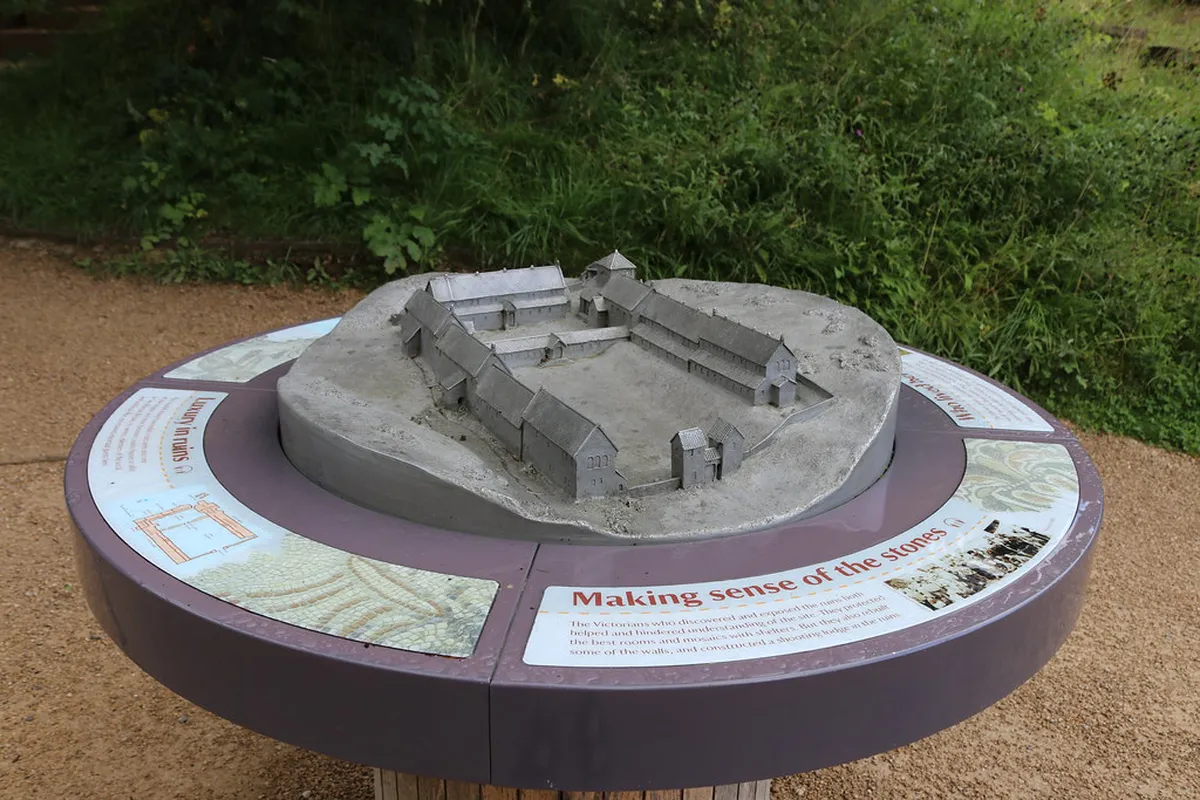
Last updated November 2026: Chedworth Roman Villa is a National Trust site in the Gloucestershire Cotswolds, near Yanworth. It is described as one of the largest and best-preserved Roman villas in Britain, with 35 exposed rooms and many mosaics. Our guide separates what you can see from what is re-buried, then covers access and trip planning.
Featured image: NH53, CC BY 2.0, via Flickr.
Chedworth Roman Villa at a glance
Chedworth is a country villa in the Cotswolds, near Yanworth in Gloucestershire. National Trust runs the site and publishes its visitor details on the official Chedworth page. Cirencester lies about 8 miles away, which makes it the natural base for context. Our guide to Roman villas in England places Chedworth among the other major sites.
- Operator: National Trust
- Location: near Yanworth, Gloucestershire, in the Cotswolds
- Scale: 35 exposed rooms, with many mosaics
- Highlights: mosaics, bath suites, a water shrine and a museum
- Not on show: the 5th-century mosaic, which is re-buried
What you can see at Chedworth
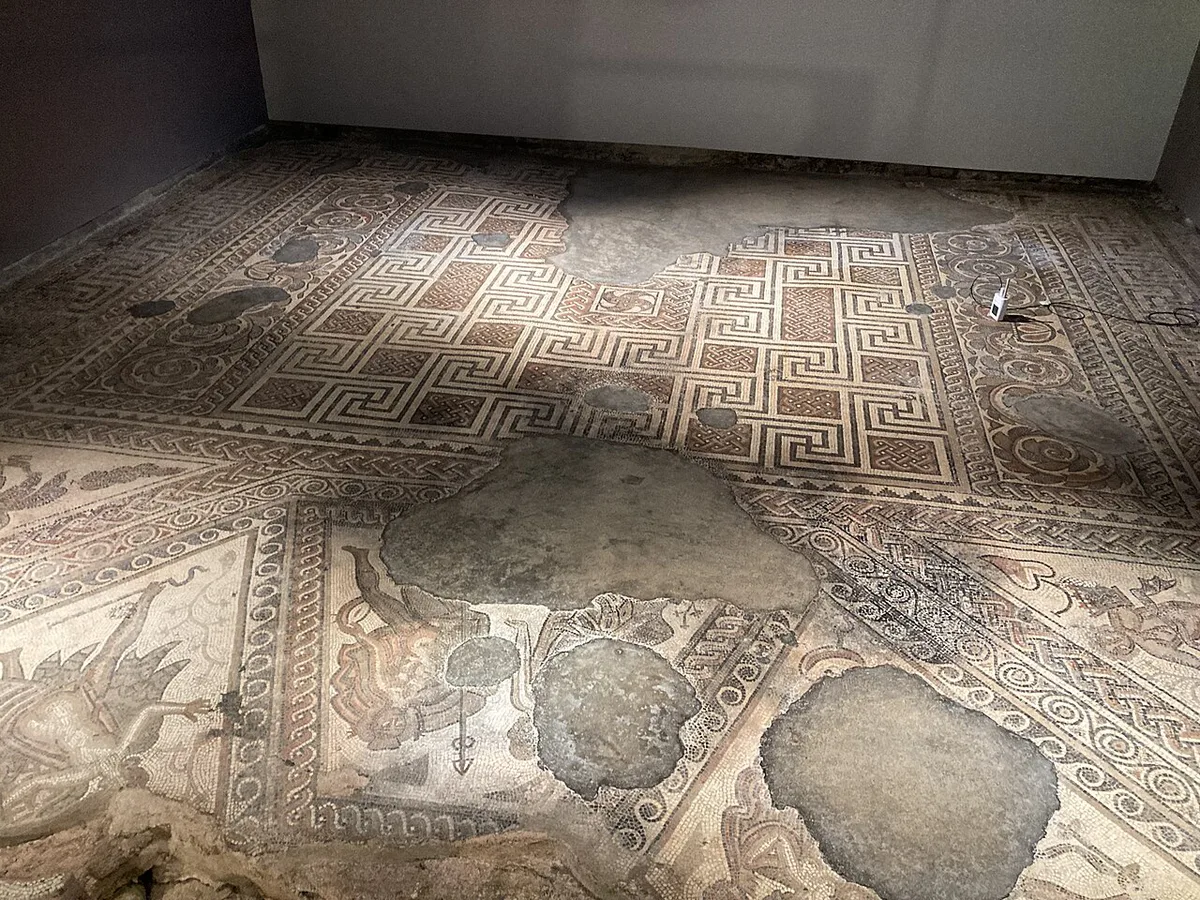
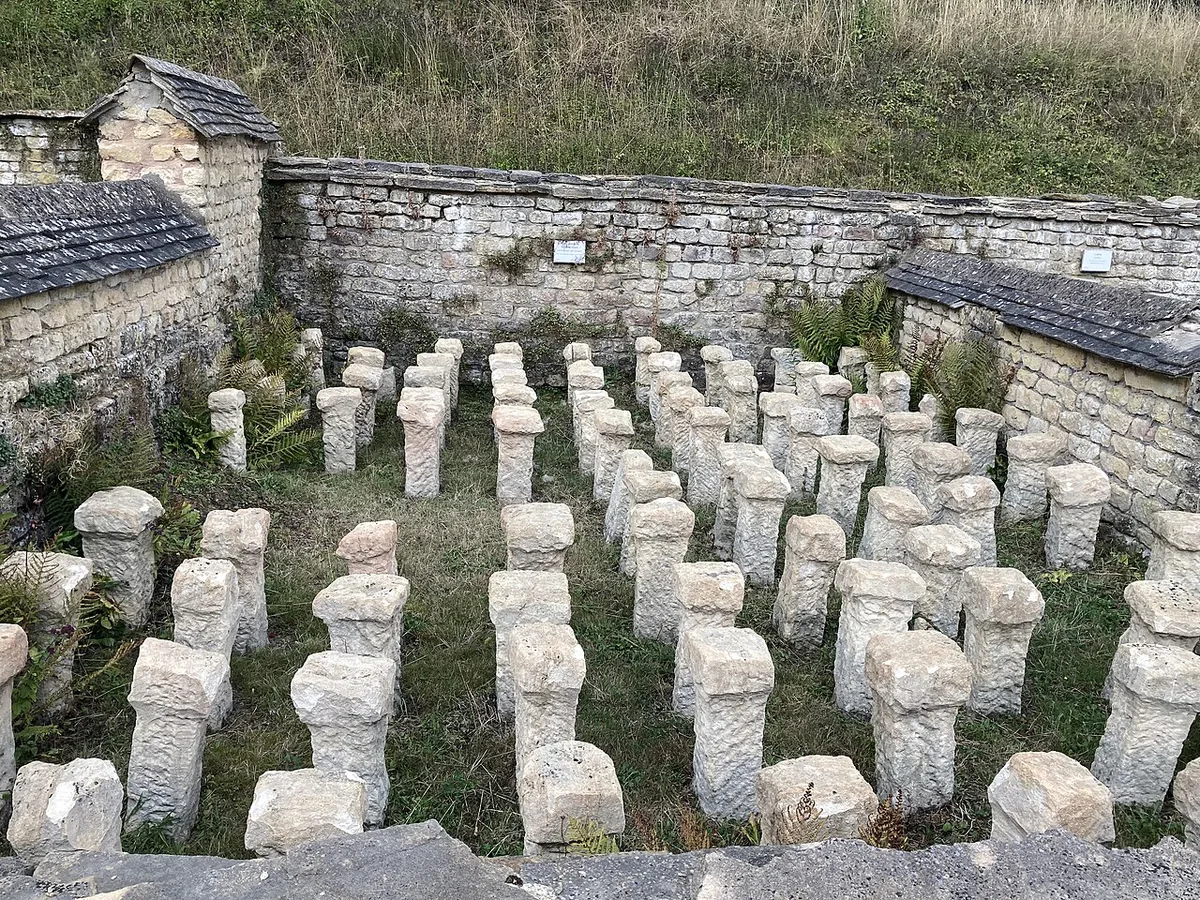
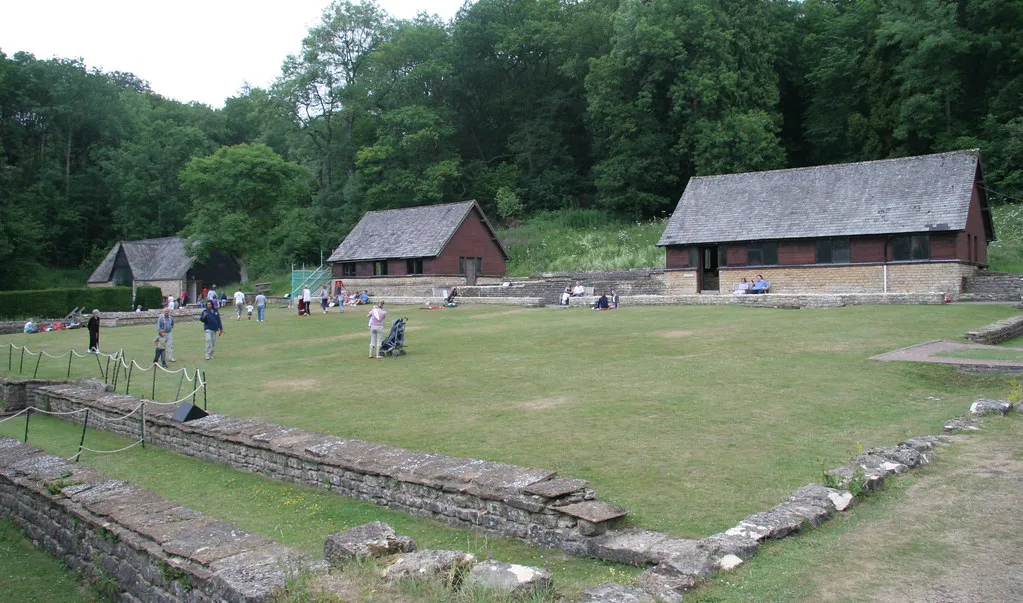
Chedworth is a villa where you walk among the excavated rooms rather than look at one headline floor. Across 35 exposed rooms, the site holds mosaics, bath suites and a water shrine. A museum shows finds from the ground. Some mosaics in the north range are covered to protect them from weather, so do not expect every floor to be open.
| Feature | Visit status |
|---|---|
| Mosaics in the exposed rooms | Part of the site visit |
| Bath suites | Part of the site visit |
| Water shrine | Part of the site visit |
| Museum finds | Inside the visitor building |
| 5th-century mosaic in Room 28 | Re-buried; photos and a 3D fly-through only |
The 5th-century mosaic and what it means
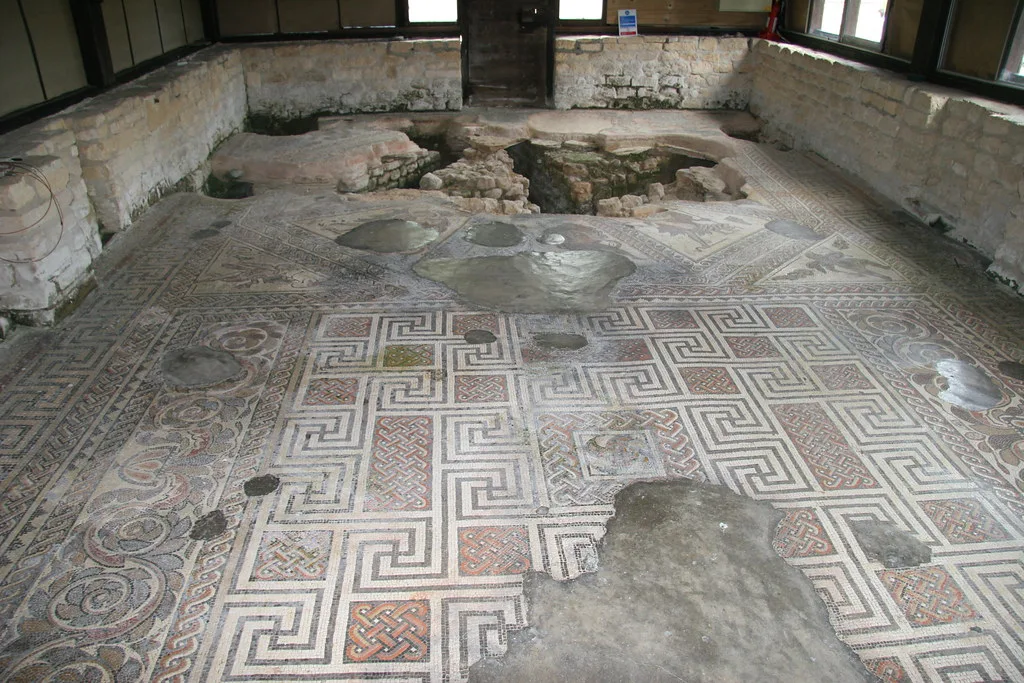
A National Trust excavation in the north range found a mosaic in Room 28. Radiocarbon dating of charcoal and bone from a foundation trench showed that a dividing wall could not have been built before AD 424. The mosaic must therefore be later than that date. The dig began in 2012 as part of a six-year research programme. National Trust archaeologist Martin Papworth reads the floor as evidence of a more gradual decline after Rome left Britain. Mosaic specialist Dr Stephen Cosh called the dating a shock, and reported that the floor is poorer than the late 4th-century work, with design mistakes. Treat this as the archaeologists' interpretation. The floor was re-buried after the work, so photographs and a 3D fly-through are the way to see it. The Trust has said it hopes to fund an augmented reality experience, so ask on arrival whether one exists now.
Visitors cannot stand on the floor dated after AD 424, since it is re-buried. Photos and a 3D fly-through show Room 28 instead.
Tickets, opening times and booking
Chedworth's prices, seasonal hours and any booking rules sit on the National Trust visit page. It is the current source for member entry and last-entry times, and winter hours often differ from summer.
How to get to Chedworth and where to park
Chedworth is rural, and the lanes around Yanworth are the main approach. Cirencester, about 8 miles away, is the nearest large town in our notes. Driving is the simplest option. Check the Trust page for the car park, the walk to the villa and any bus options before you set off.
Cirencester is about 8 miles away, and in the late 4th century it was the second-largest Romano-British town. Pair the drive with a stop there.
How long to spend and how to plan your visit
Chedworth suits a half-day, with the rest of the day for Cirencester, 8 miles away. In the late 4th century, Cirencester was the second-largest Romano-British town and capital of Britannia Prima, according to Papworth. Start with the exposed rooms and the museum. Wear shoes for uneven ground, since the site is in the countryside. Bring a rain layer, because some rooms are covered and others are open to the weather.
- Do not assume every mosaic is on show.
- Check the Trust page for access and slopes before you go.
- Look up seasonal hours in winter.
- Allow time for the museum as well as the rooms.
Is Chedworth worth it, and who should skip it?
Chedworth rewards mosaic fans and anyone curious about life in a large Roman country house. It also works for families who like exploring rooms and bath suites. Skip it if the 5th-century floor is your only reason to come, since that mosaic is buried. For a city-scale Roman experience, the Roman Baths in Bath offer a very different bathing story.
Chedworth vs other Roman villas in England
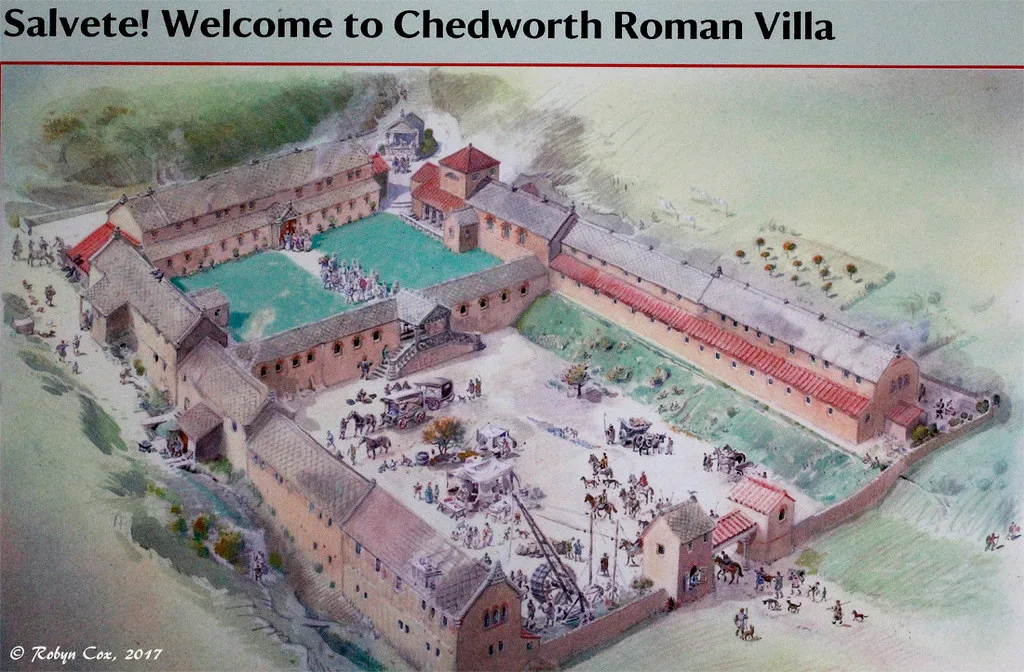
Chedworth is one of several villa visits in southern England. Our overview of Roman sites in England helps you choose a route.
| Site | Region | Why go |
|---|---|---|
| Chedworth Roman Villa | Gloucestershire, Cotswolds | Mosaics, bath suites, water shrine, museum |
| Fishbourne Roman Palace: Visitor Guide & Planning Tips | West Sussex | Large villa-palace with mosaics |
| Lullingstone Roman Villa: Visitor Guide and Planning Tips | Kent | Villa remains in the south-east |
| Bignor Roman Villa | West Sussex | Mosaics, per the Bignor guide |
| Wroxeter Roman City: What to See and How to Visit | Shropshire | Roman city rather than a villa |
Frequently Asked Questions
What is a Roman villa?
A Roman villa was a country estate with a main house, often with bath suites and decorated floors. Chedworth is an example, with 35 exposed rooms and mosaics.
What are some interesting facts about Chedworth Roman Villa?
Chedworth is among the largest Roman villas known in Britain. A mosaic in Room 28 dates to after AD 424, and it is now re-buried. Excavation began in 2012.
Related guides



Continue reading
Guides on the same trip


