Sulis Minerva: Bath's Roman Goddess and Where to See Her
Last updated November 2026: Sulis Minerva was the Romano-British goddess of Bath's hot spring, a fusion of the Celtic Sulis and the Roman Minerva. Romans named the town Aquae Sulis, “the waters of Sulis”, after her. Her gilt bronze head, temple pediment and curse tablets connect directly to a visit to the Roman Baths in Bath.
Featured image: markhillary, CC BY 2.0, via Flickr.
Who was Sulis Minerva?
Sulis Minerva was the name Romano-British worshippers gave to the goddess of the hot spring at Bath. Sulis was the local Celtic deity of the thermal waters. Minerva was the Roman goddess of wisdom. Fusing the two let Roman soldiers, officials and local Britons honour one goddess in one temple.
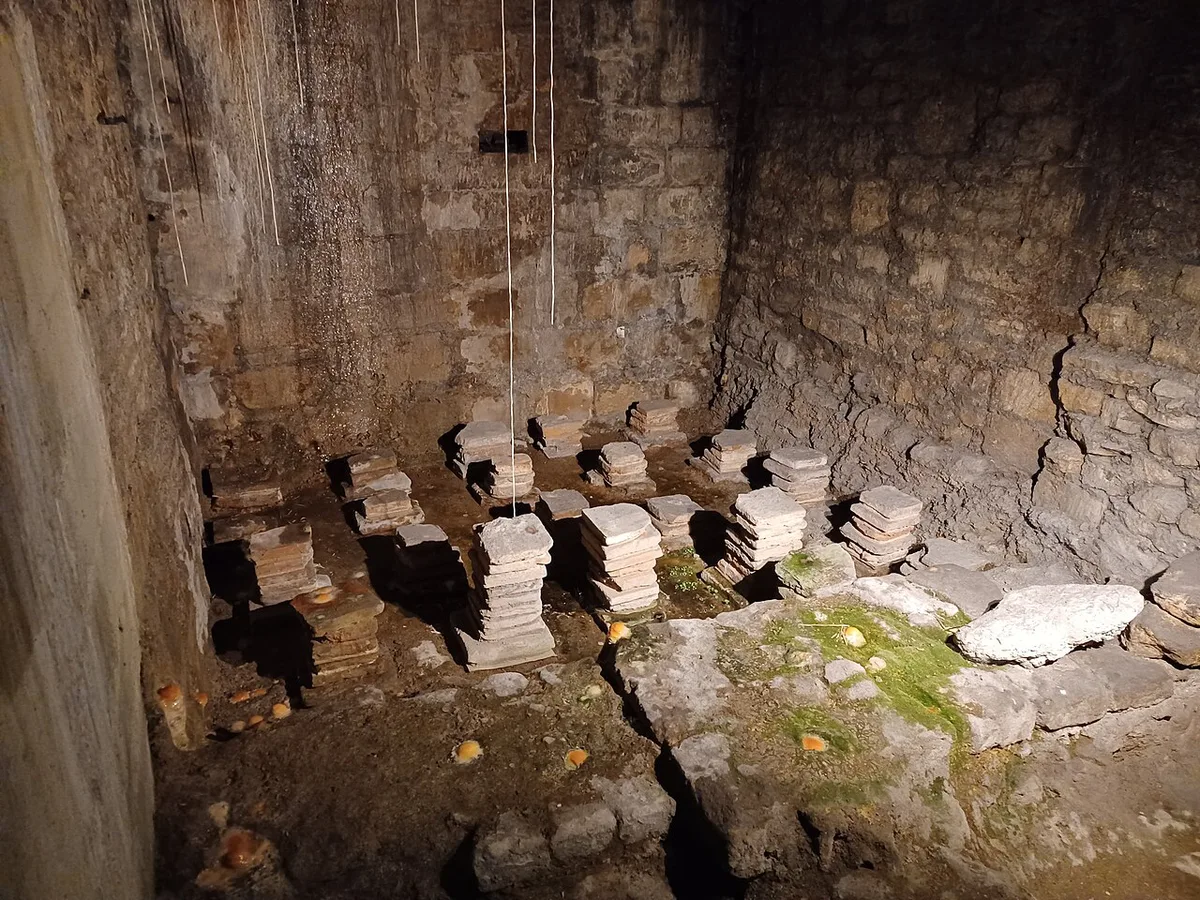
Her name puts Sulis first for a reason. Archaeologist Barry Cunliffe documented 18 Celtic Iron Age coins at the lowest levels of the site in 1988. That find suggests people honoured Sulis before Rome arrived. Scholars link the early cult to the local Dobunni tribe, though that tie is likely rather than proven.
Healing was her main role, yet she also answered curses. Of the 17 dedicatory altars and bases found at the temple, 9 name Sulis Minerva in her single or double form. Her cult stayed active until about the mid-fourth century CE.
Sul or Sulis? Name and meaning
Both spellings circulate. Many visitor websites still print Sul, the traditional reading. Scholars now prefer Sulis. A lead curse tablet found in 1979 reads “dea Sulis”, the only known example that gives the name in the nominative case. That find convinced scholars that Sulis is the full form.
A lead curse tablet found in 1979 helped settle the spelling question, and the wider collection of about 130 tablets, mostly addressed to Sulis, shows the name in daily use.
The meaning is still debated. Many linguists connect the name to Old Irish súil, meaning “eye” or “sight”. An older proposal links it to a Proto-Celtic root for “sun”, which would make her a solar goddess. Treat both ideas as theories, not settled fact.
The sacred spring and temple at Aquae Sulis
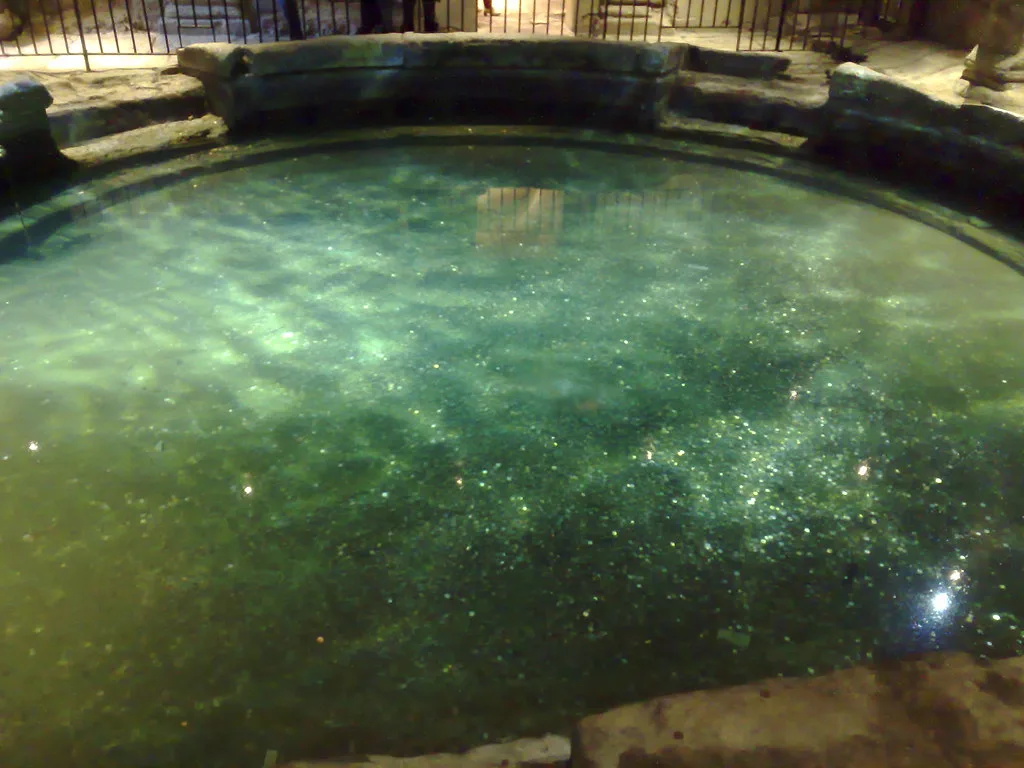
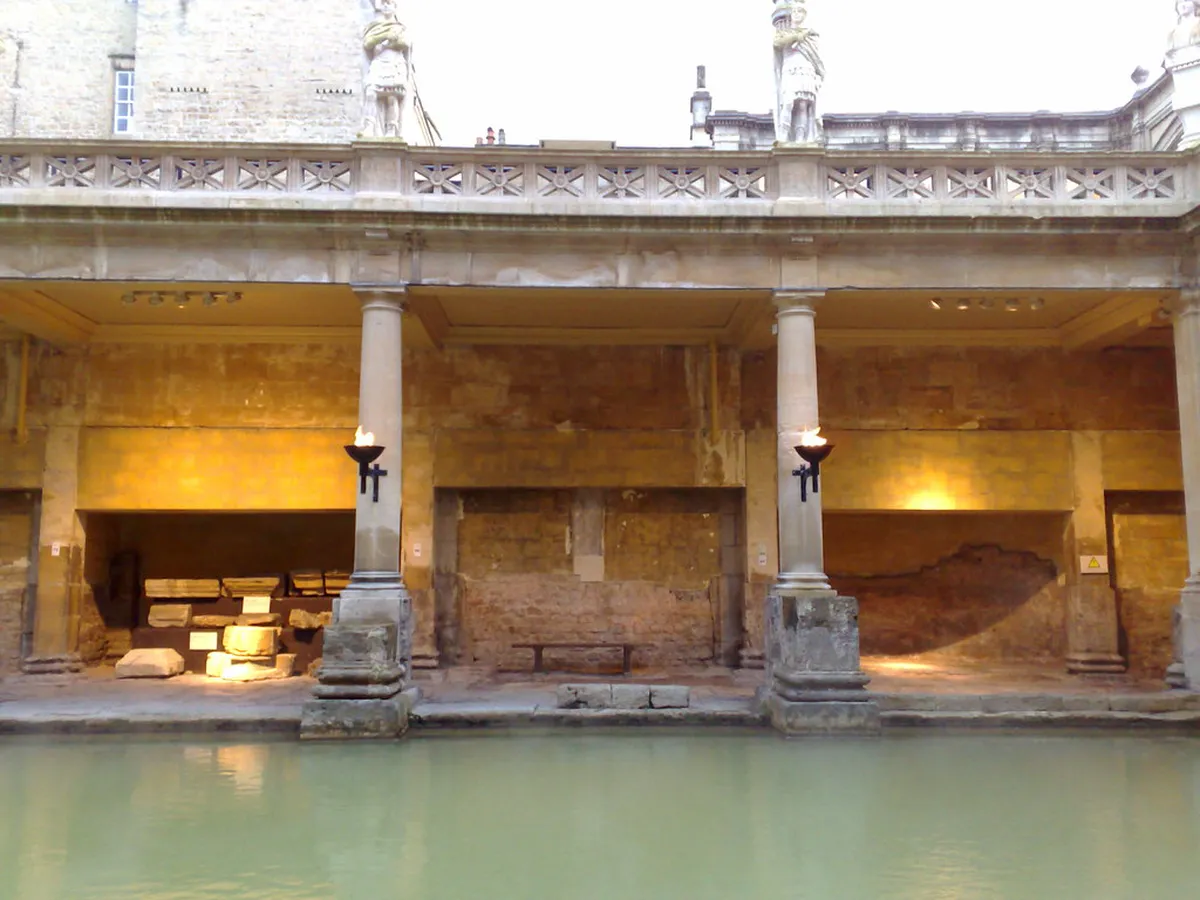
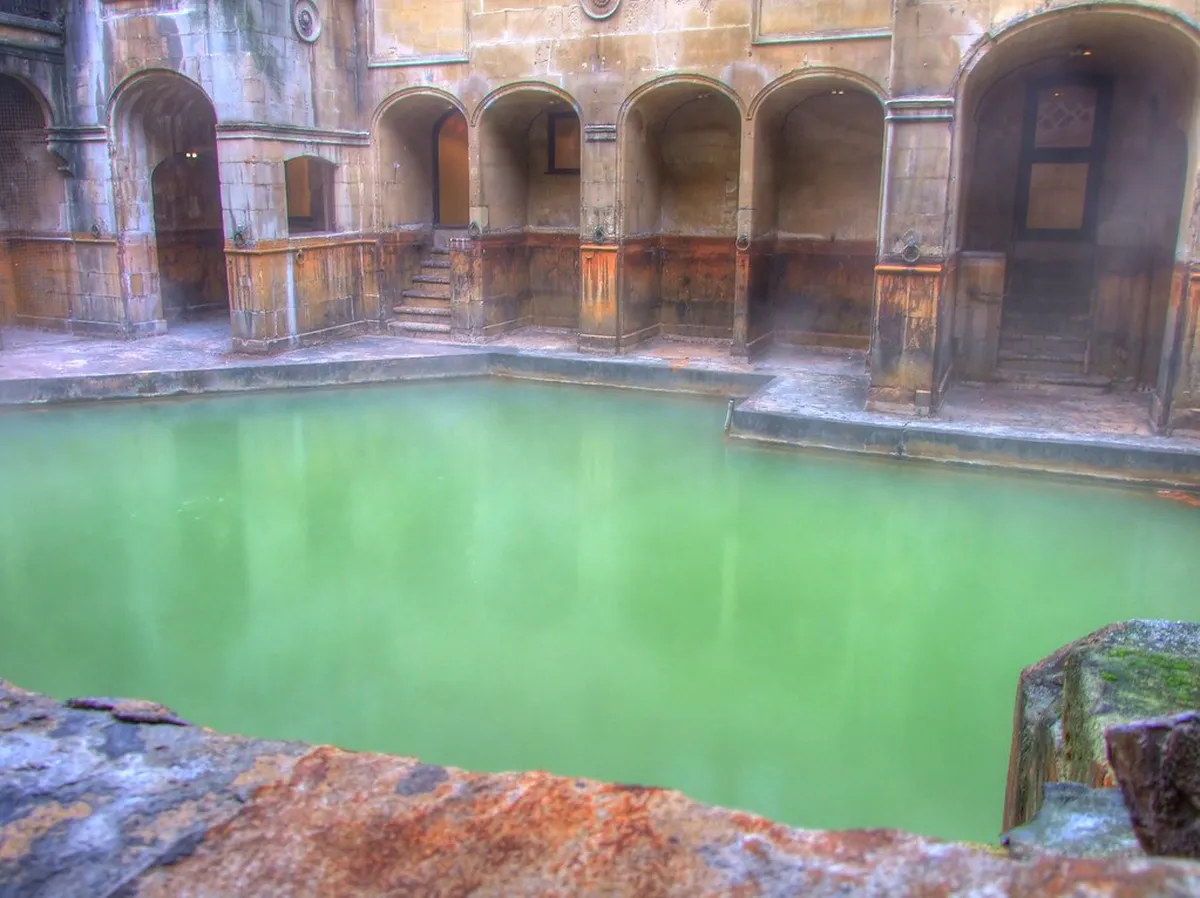
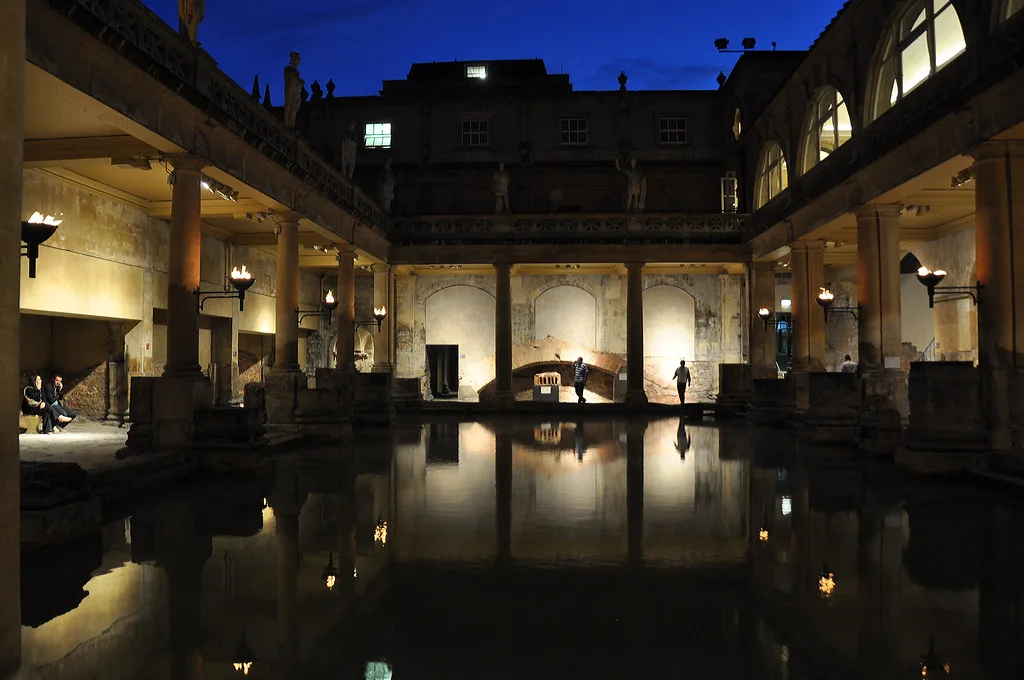
Aquae Sulis means “the waters of Sulis”, and the spring explains everything else here. Its water rises at around 46°C and still feeds the baths today. Romans treated the spring as the point where people could reach the goddess.
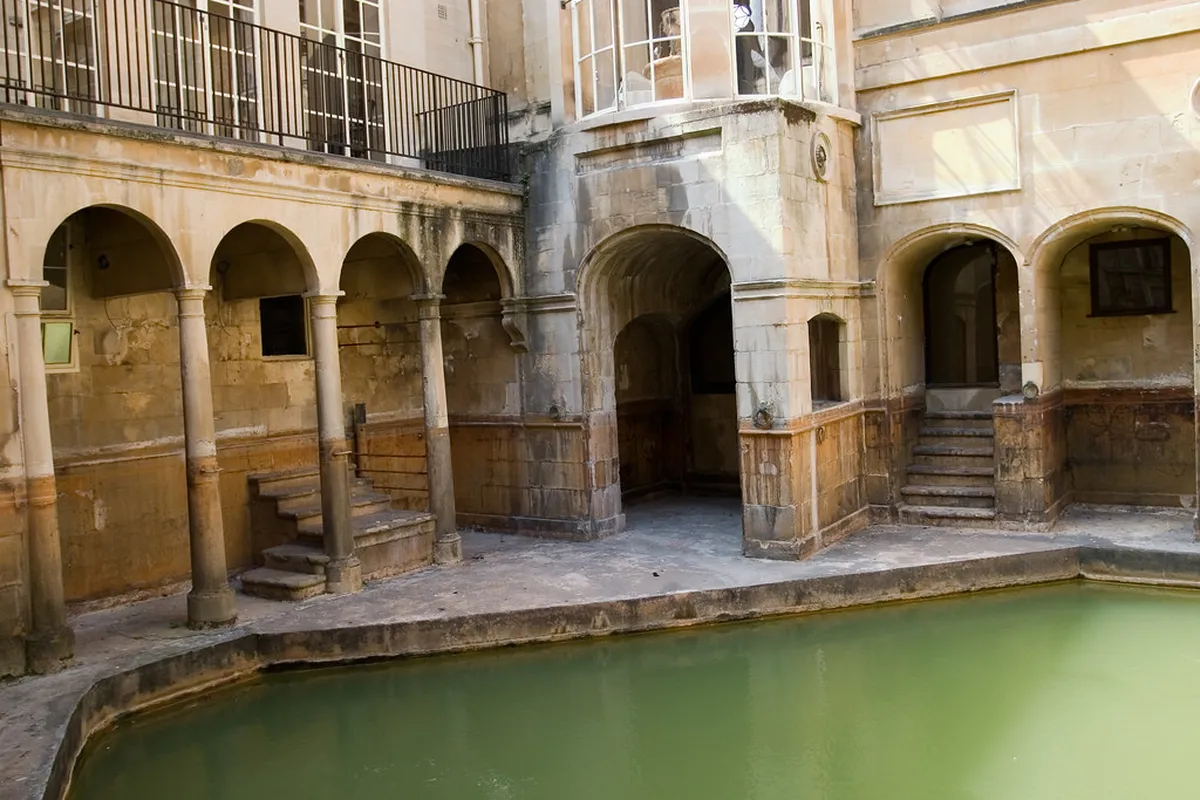
A temple stood on a raised podium beside the spring. An open-air altar sat in the courtyard around it, probably used for processions and offerings of meat and liquids. Worshippers threw offerings into the spring reservoir, and over 12,500 Roman coins and 18 Celtic coins have been recovered there. Jewellery, gemstones, bowls and pewter vessels turned up as well.
Some scholars think the pewter vessels poured spring water over visitors, so physical contact with the water mattered. Anyone hoping to bathe today should read the swimming rules at the Baths first. Modern bathing happens at Thermae Bath Spa instead.
Inscriptions name the people who served her. Gaius Calpurnius Receptus, a priest of Sulis, died aged 75 and has a tombstone listed as RIB 155. Lucius Marcius Memor, a soothsayer, left a statue base (RIB 3049) that records the only known haruspex from Britain.
Curse tablets: what Bath's visitors asked of her
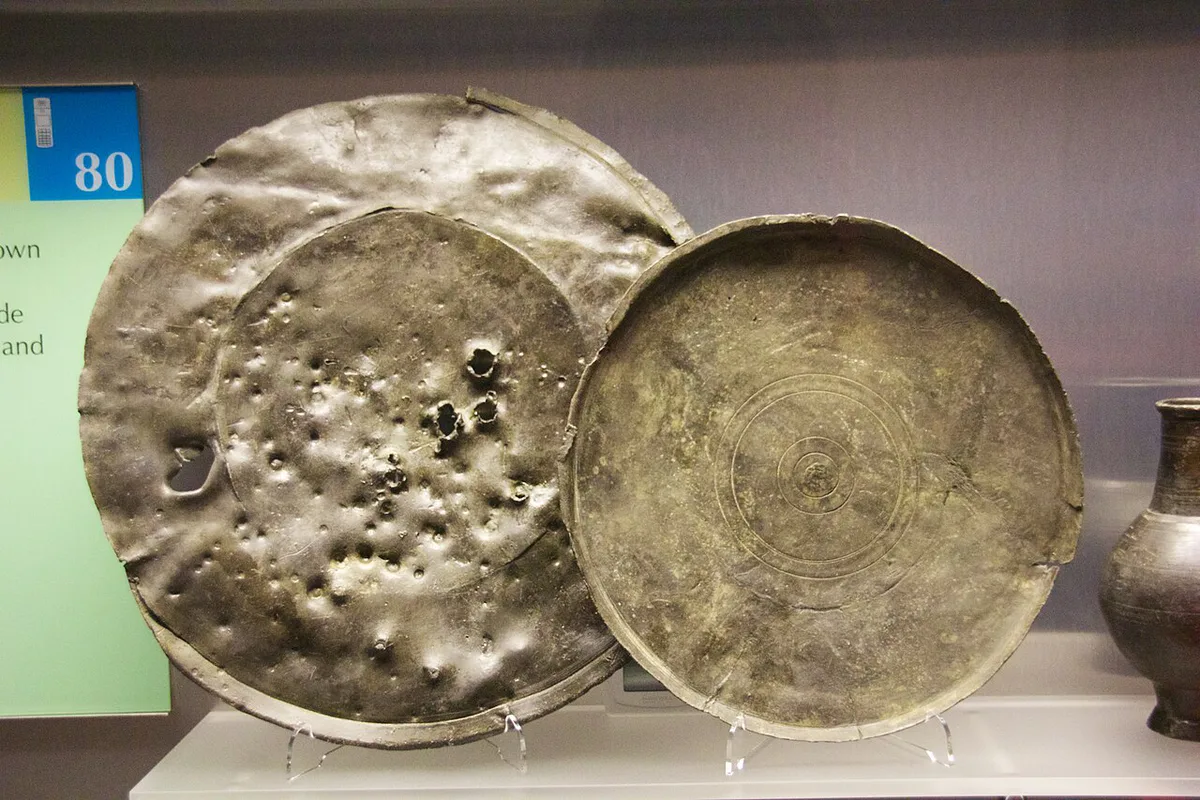
About 130 curse tablets have come from the sacred spring, and most are addressed to Sulis. Writers scratched them onto thin sheets of lead or pewter. Typical complaints concern theft of small sums of money or clothing from the bath-house.

One tablet records that Docimedis lost two gloves and asked that the thief lose their mind and eyes in the goddess's temple. The wording is formulaic and legalistic. Writers asked Sulis to deny the culprit sleep or health until the goods came back, often by dedicating them to her.
Why would a healing goddess punish thieves? Scholars note that healing and cursing often sit together at British and Gaulish springs. Both depend on a deity with power over the body.
Some texts run backwards or switch direction line by line. Tablet 94 is the only dated one, giving a day and month but no year. Handwriting across the collection runs from the second century CE to the fourth, so belief in the curses lasted at least two centuries.
What to see of Sulis Minerva at the Roman Baths
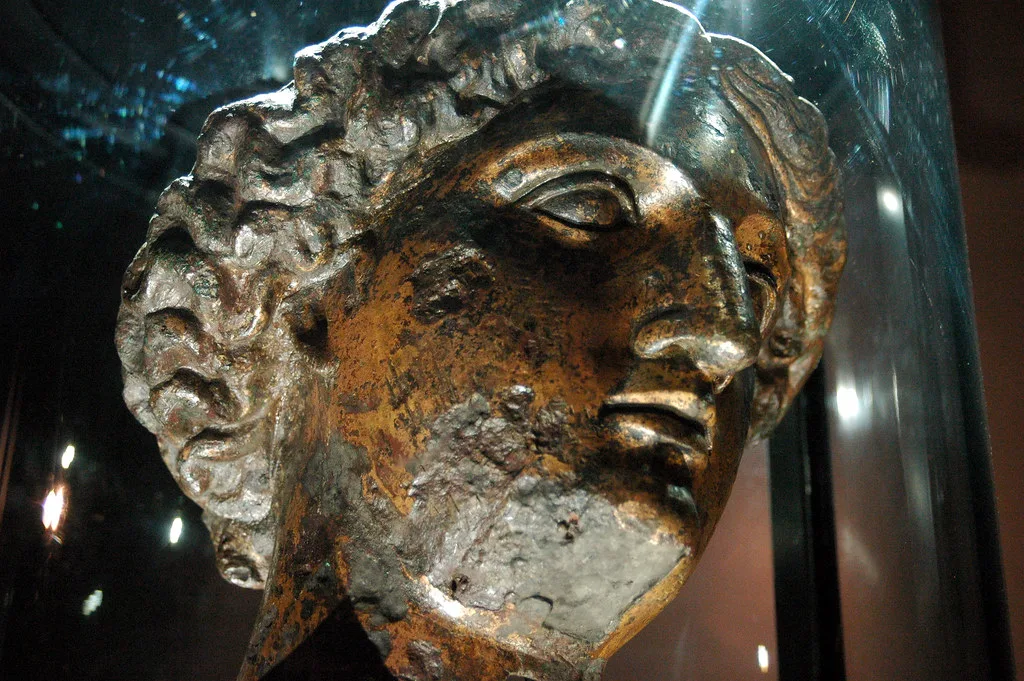
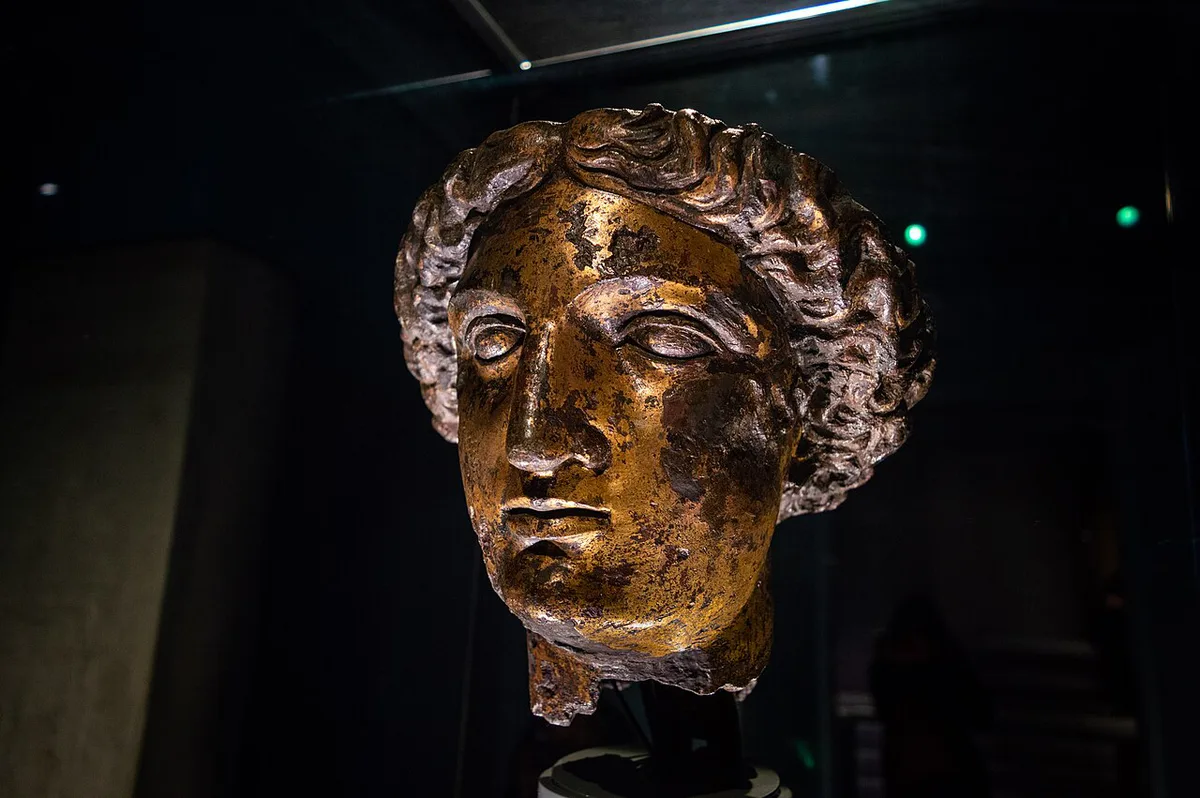
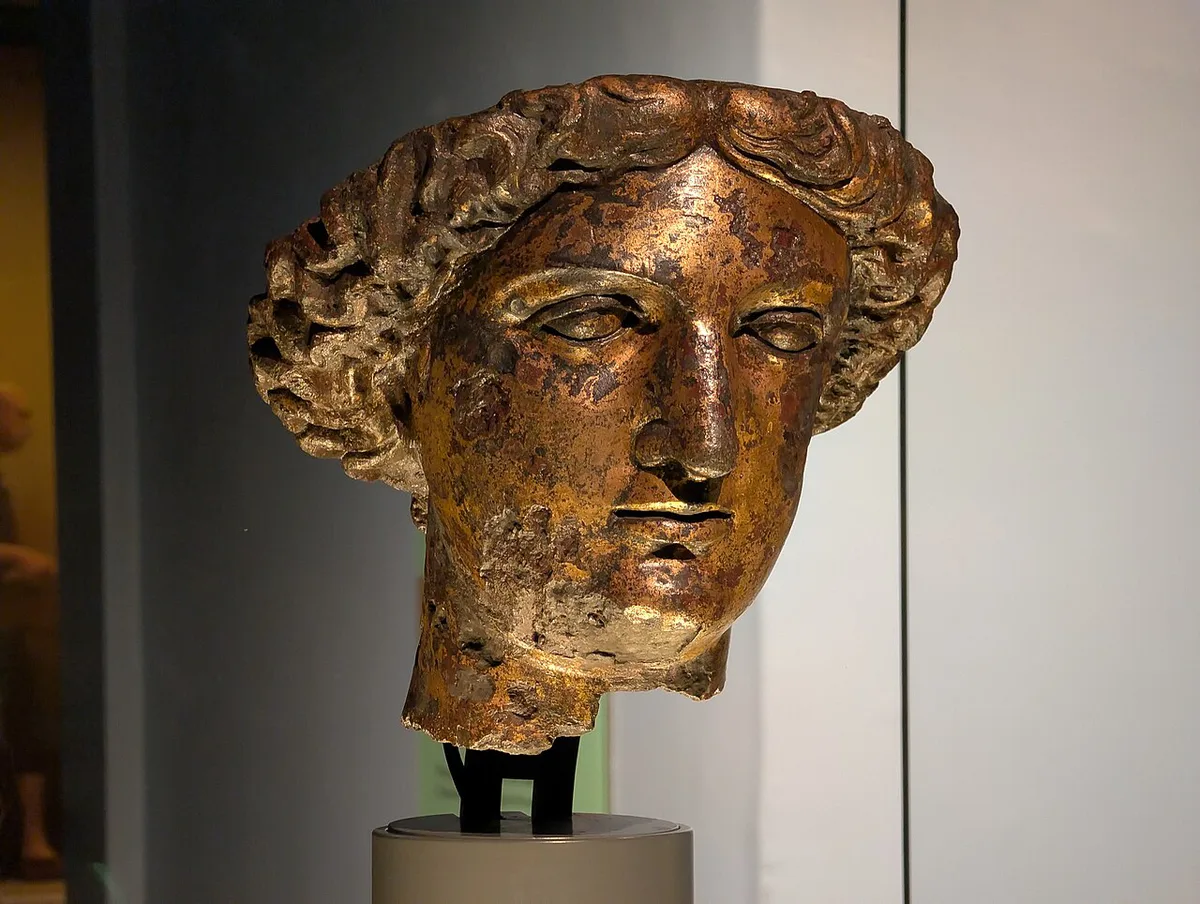
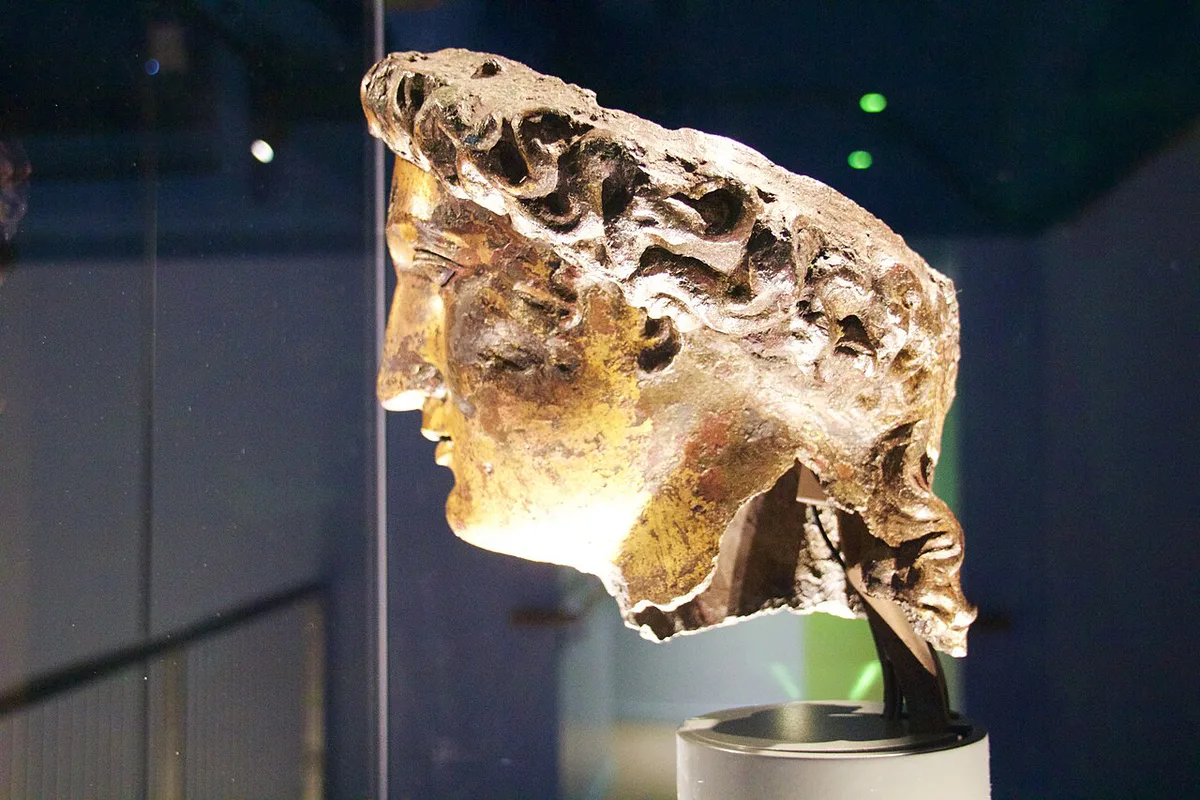
Four things carry most of the goddess story. Her gilt bronze head was found in Stall Street in 1727 and probably comes from the cult statue in her temple. Only two other gilt bronze finds are known from Roman Britain, which is why the official Roman Baths site counts it among its rarest treasures.
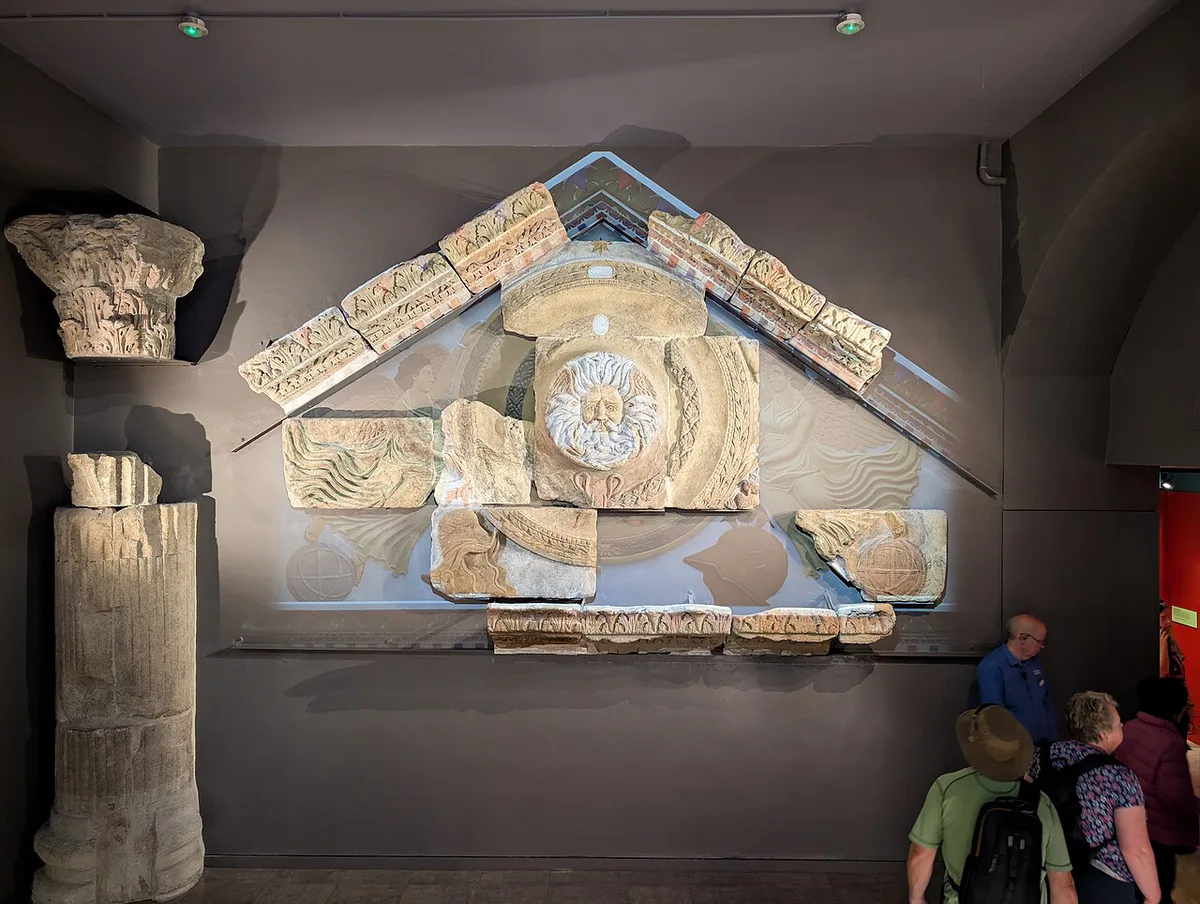
Temple pediment: found in 1790, this carving stood about 15 metres high on four fluted columns. Its central face is a Gorgon-like head, and scholars still argue over its identity. One reading links it to Minerva's breastplate, while another sees a water god.
Museum displays change, so check the collection page before you plan a route around one object. Use the main Roman Baths guide to place these objects within the full visit.
| What to look for | What it shows | Why it matters |
|---|---|---|
| Gilt bronze head | Face of the cult statue, found in 1727 | Closest thing to a portrait of the goddess |
| Gorgon pediment | Temple front, found in 1790 | Celtic and classical styles in one carving |
| Altars and inscriptions | Dedications such as RIB 146 and RIB 150 | Show the double name Sulis Minerva in Latin |
| Curse tablets | About 130 lead and pewter texts | Everyday complaints addressed to the goddess |
| Sacred spring | Hot water at around 46°C | The point of contact with Sulis |
Planning your visit around the goddess
A goddess-focused route covers the head, pediment, tablets and spring in one unhurried pass. Prices, hours and timings sit on the linked guides below.
Plan around a pediment that stood about 15 metres high on four fluted columns, since it is easy to mistake for a statue of the goddess.
- Prices: see current Roman Baths ticket options before you book.
- Hours: check Roman Baths Opening Times: Check Hours & Plan Your Visit for your travel date.
- Time: how long to allow depends on whether you rush past the head and tablets.
- Atmosphere: torchlit evening visits offer a different feel after dark.
- Access: a day trip from London is an option, and the linked guide covers the journey.
- Decision: whether the Baths are worth visiting depends on how much the goddess story matters to you.
- Mistakes to avoid: expecting a swim, hurrying past the tablets, and mistaking the Gorgon pediment for a statue of the goddess.
Sulis Minerva vs Roman Minerva: how to read the difference
Bath did not keep two goddesses side by side. It merged them. The altar from the Hot Bath reads “To the goddess Sulis Minerva Sulinus, son of Maturus, willingly and deservedly fulfilled his vow” (RIB 150).
Another altar, RIB 146, was set up by a centurion of the Second Legion Augusta and also names Sulis Minerva. Dedications to Minerva alone are common across Britain and continental Europe. Bath's double name is the local exception.
| Element | Celtic side (Sulis) | Roman side (Minerva) |
|---|---|---|
| Name | Brittonic, debated meaning | Latin, goddess of wisdom |
| Domain | Hot spring, healing and curses | Wisdom, linked to Greek Athena |
| Evidence | 18 Celtic coins, tablets in British Latin | Altars, temple podium, classical carving |
| What it tells you | Local worship came first | Rome added form and ritual |
Beyond Bath: other Roman religion and sites in England
Her name appears almost only at Bath. Outside Britain, a single inscription at Alzey in Germany is known.
For wider routes, start with Roman Sites in England: Best Places to Visit and How to Choose. Military life is the focus at Caerleon Roman Fortress: Visitor Guide to Isca. Museum details are on the National Roman Legion Museum pages.
Country-house life is the draw at Chedworth Roman Villa: Visiting Guide, Mosaics & Tips. Visit details sit on the National Trust visitor page. Mosaics and a palace layout feature at Fishbourne Roman Palace: Visitor Guide & Planning Tips. A town setting is on offer at Wroxeter Roman City: What to See and How to Visit.
Frequently Asked Questions
Is Sulis Minerva the same as Minerva?
Not quite. Minerva is the Roman goddess of wisdom. Sulis Minerva is a merger of Minerva with the Celtic goddess Sulis, worshipped at Bath. Sulis comes first in the name.
What was Aquae Sulis famous for?
Aquae Sulis was the Roman town built around Bath's hot spring and the temple of Sulis Minerva. Its name means “the waters of Sulis”. Excavation recovered about 130 curse tablets and over 12,500 Roman coins from the spring.
Related guides

Continue reading
Guides on the same trip