
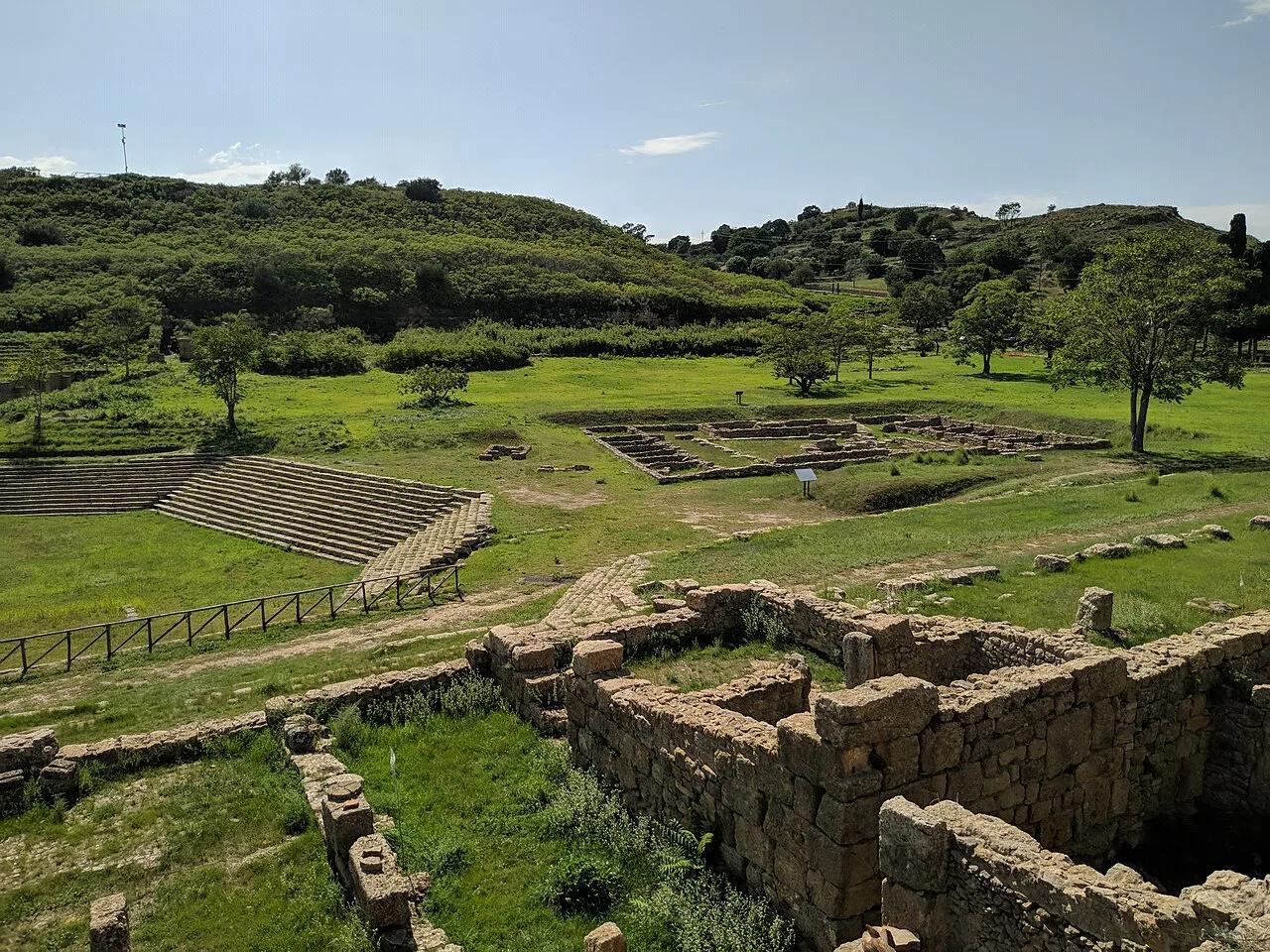
Last updated November 2026: Morgantina is a Hellenistic city in central Sicily, near Aidone, with an agora, a theatre and a museum that holds the so-called Venus of Morgantina. Pair the excavated town with the Aidone museum and you get a full inland day that looks nothing like the coastal temples. This guide covers what to see, how to sequence both visits and where to check current details.
Featured image: Ralos90, CC BY-SA 4.0, via Wikimedia Commons.
Morgantina at a Glance
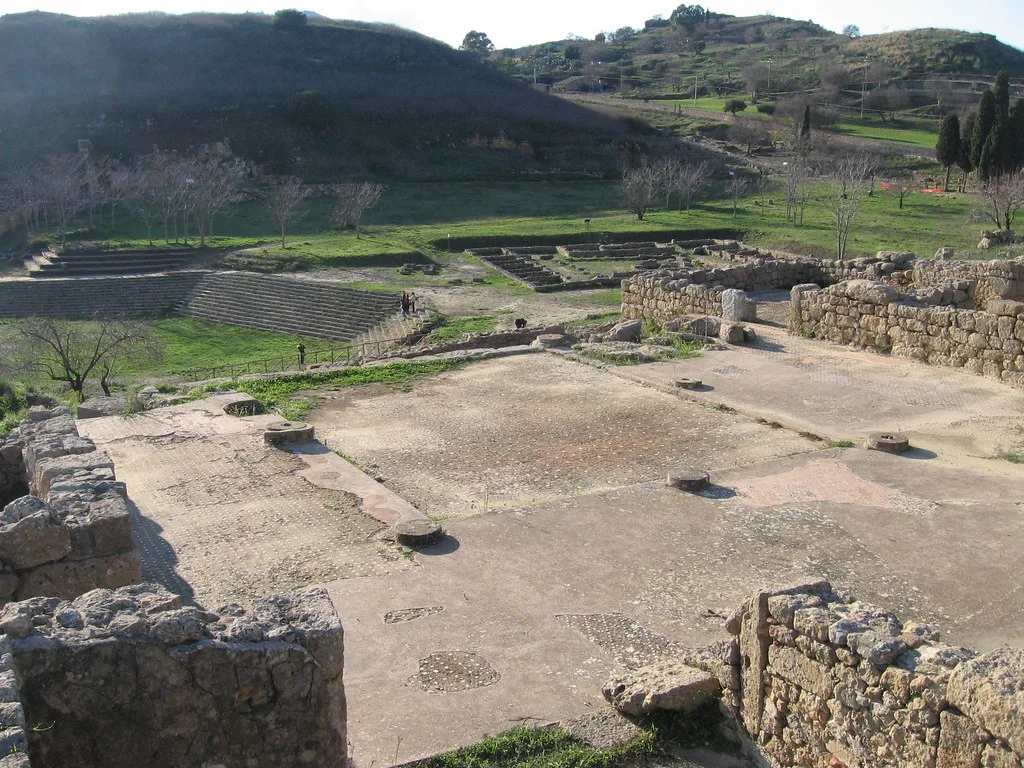
Morgantina is an excavated Hellenistic city in Enna province, in the interior of Sicily. Digs began in 1955 and have exposed a planned town rather than one standing monument. The ancient city covers 78 hectares and is entered from the west. Much of that ground is now gardens and olive groves, which gives the site its remote feel. Aidone, the modern town, lies about 2 km south of the ruins and roughly 250 m higher. Aidone also holds the museum with the finds, including the Dea di Morgantina. Museum and site are separate places, so do not expect the museum at the ruins' entrance.
| Place | What you get | Best for |
|---|---|---|
| Archaeological area | Agora, theatre and hillside houses with mosaics | Reading an ancient city laid out in open country |
| Aidone museum | Finds from the city, including the Dea di Morgantina | Objects, context and an indoor stop |
Is Morgantina Worth the Detour?
It is worth the drive if you want to read an ancient town plan rather than photograph a temple. Selinunte's temples reward you with columns against the sky. Segesta's temple does the same from a hillside setting. Morgantina asks for more imagination. You walk a market block, a stepped public square, a theatre and terraced houses, and the museum fills in what the ground cannot show. Its houses belong to the Hellenistic period, with figured floor mosaics from the 3rd century BC. Compare them with the Roman mosaics at Casale, which belong to a different era and a different kind of building. Our guide to Greek ruins across Sicily shows where Morgantina sits among the island's other Greek sites.
| If you are... | Do this |
|---|---|
| Archaeology first | Give the ruins the main part of the day and add the museum |
| Object first | Start at the museum, then visit the ruins for context |
| Short on time | Pick one place, and choose the ruins for atmosphere |
| Travelling with kids or limited mobility | Choose one museum highlight and one corner of the site; ask about ground conditions first |
What to See at the Archaeological Area
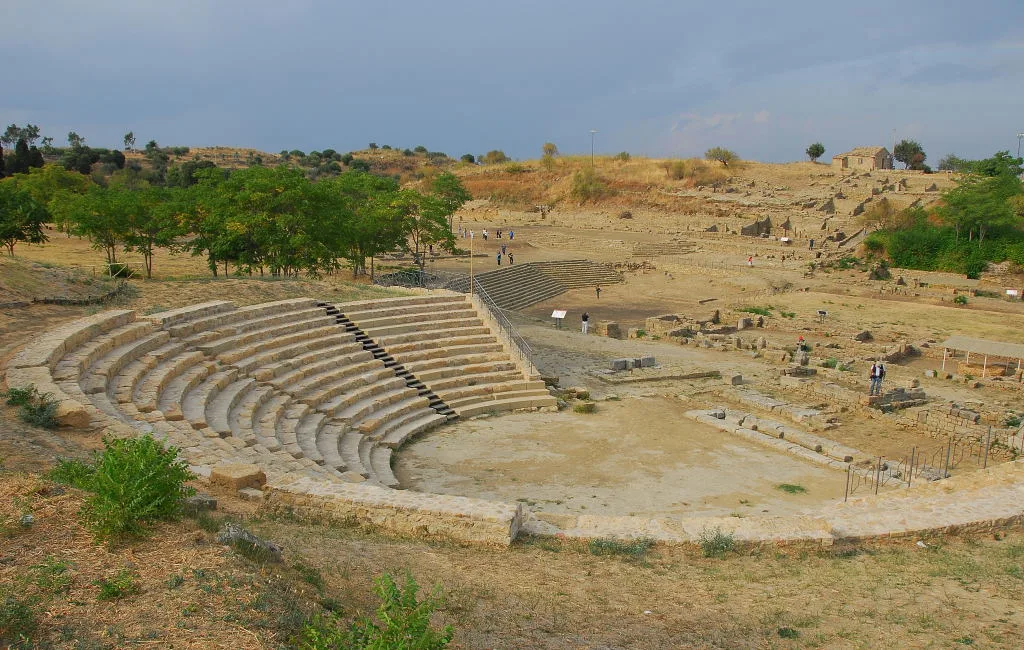
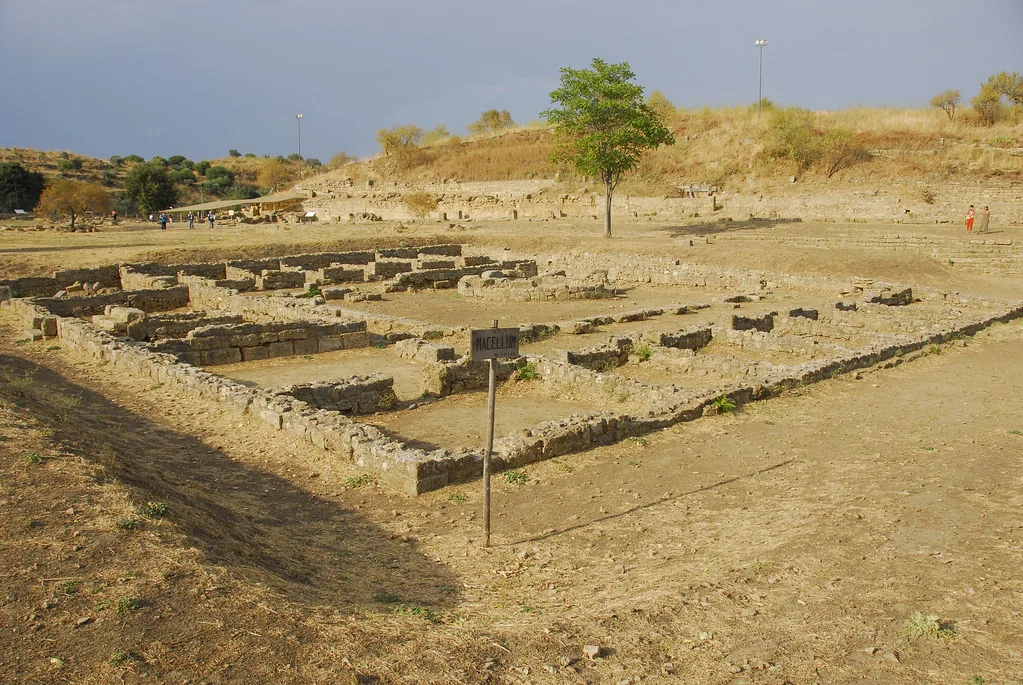
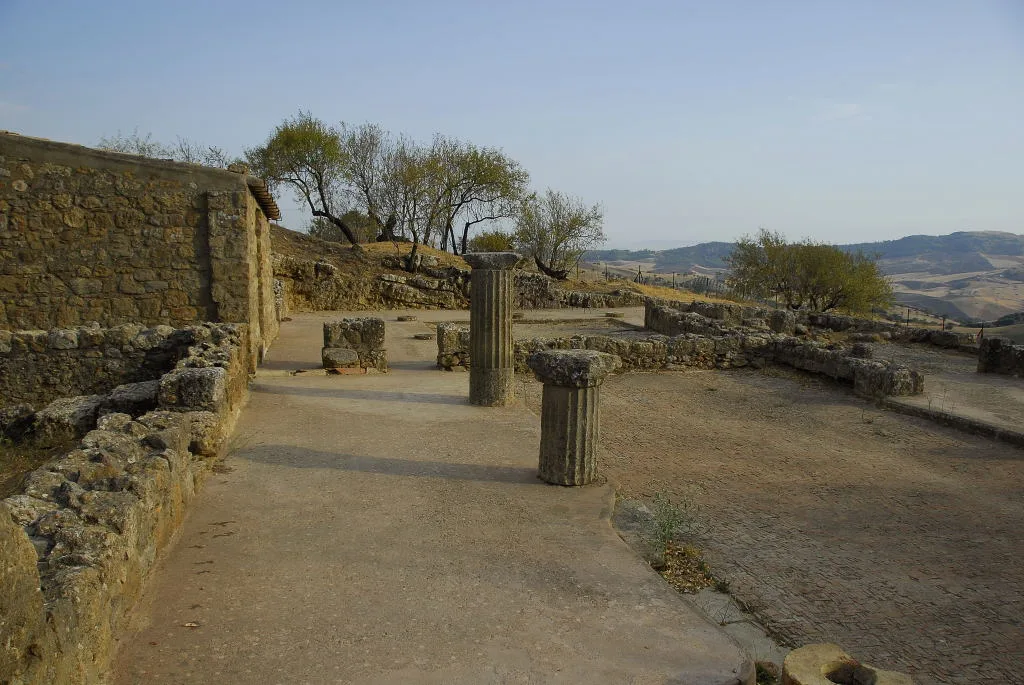
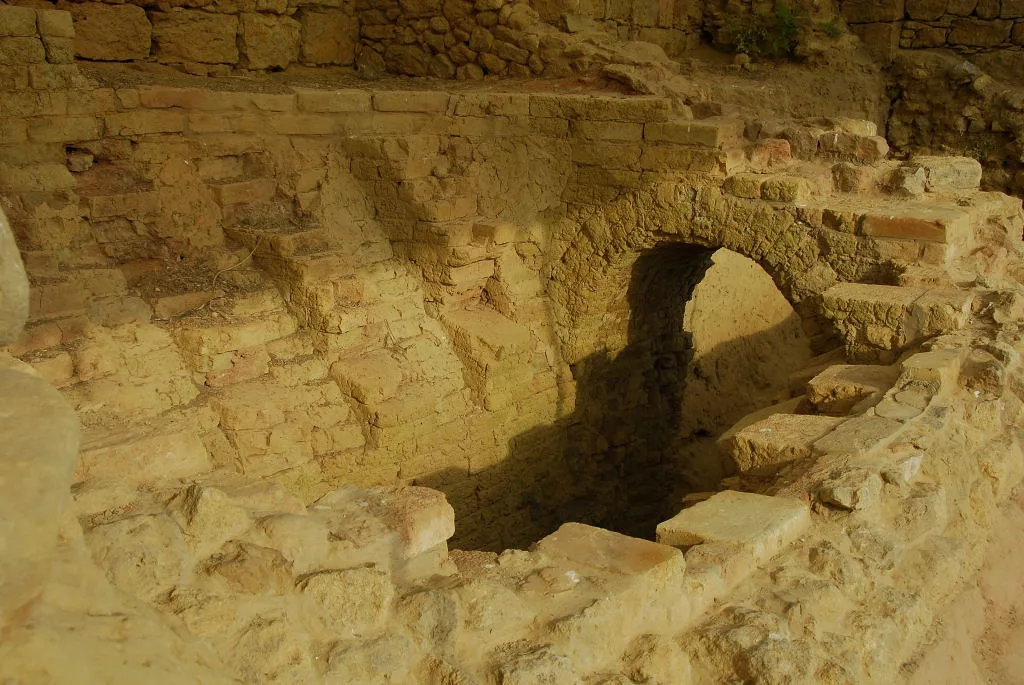
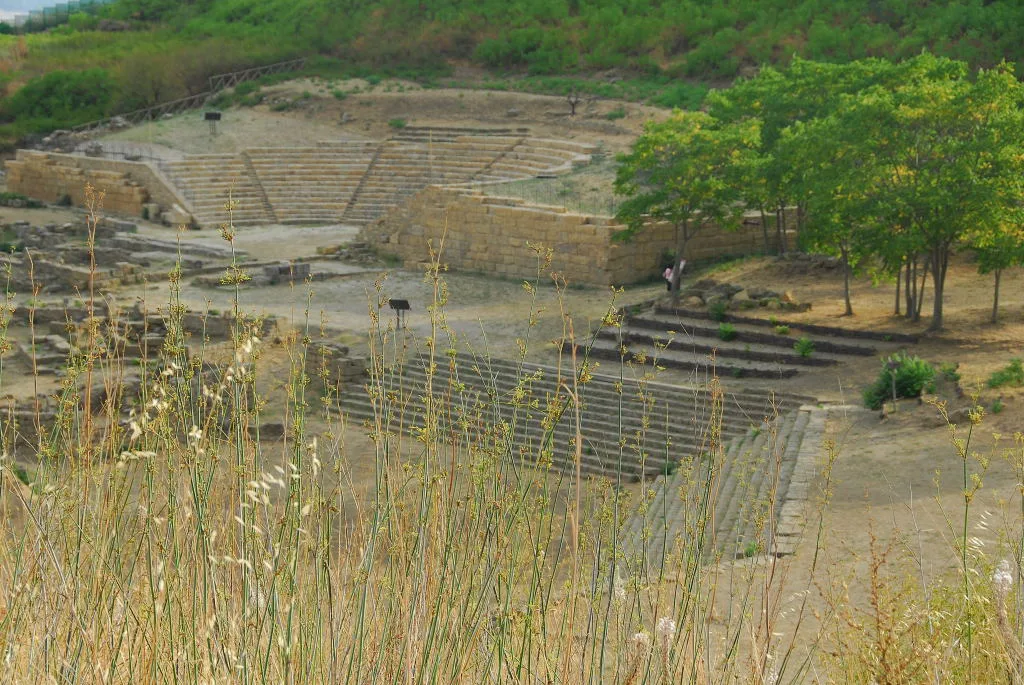
Start at the agora. This public square is laid out on two levels, joined by a three-flight stairway that also worked as seating for public meetings. Its area equals six city blocks. The upper level holds a square market block with the dividing walls between shops still visible. On the lower level sits the Greek theatre, dedicated to Dionysus and dated to the 4th century BC. Much of its stone seating and stage survives. The residential terraces rise on the surrounding hills. Their houses had paved floors and elegant columned courtyards. A separate acropolis on Cittadella hill lies about 1.5 km from the agora, and little of it remains. According to local accounts, raiders destroyed the city in 211 BC, and it was abandoned by about 50 AD. Check which parts are open on the day, because a description of a building does not guarantee you can enter it.
- Agora: two levels, a three-flight stairway and a market block with shop walls.
- Theatre: 4th century BC, with much of its stone seating and stage preserved.
- Granary and kilns: a long building faces the stage, with pottery kilns at its far end.
- Hillside houses: terraced homes with 3rd century BC figured floor mosaics.
- Western quarter: more large houses lie behind the theatre.
The Aidone Archaeological Museum and the Dea di Morgantina
The museum occupies a restored Capuchin convent on a hilltop in Aidone's historic centre. The ground floor covers Iron Age finds from the Cittadella and Bronze Age fragments from an earlier village. It also has a display on daily life, from crafts and writing to trade and local cults. Upstairs you find finds from the 6th and early 5th centuries BC. These include Sicel vases, imported Greek pottery and decorated architectural terracottas. Chamber-tomb finds include vases from Sparta, Corinth and Athens. Look too for the terracotta statuettes of Persephone from the 3rd century BC. The Dea di Morgantina is the best-known object. She returned to Italy after an international process and was shown in Aidone in 2011. The museum's own information on provenance and return is worth reading before you look at the statue. The Sicilian regional heritage portal is the place to confirm her current display and room.
How to Combine the Site and the Museum: A One-Day Plan
Visit the museum first. It explains the city's layers, so the ruins make sense when you reach them. Jot down two or three objects to look for outdoors, such as a tool or a vessel scene. Then drive the 2 km down to the site. The ruins are open ground, so plan them for the part of the day that suits the weather. Leave margin for the drive and a meal, and do not arrive at either place near closing time. If the museum is closed on your day, do the ruins first, then spend the afternoon in Aidone itself.
Aidone, the modern town, lies about 2 km south of the ruins and roughly 250 m higher. So a museum-first morning ends with a downhill drive.
| Step | Stop | Why |
|---|---|---|
| 1 | Aidone museum | Context and the Dea di Morgantina |
| 2 | Lunch in Aidone | Break before the open-air stop |
| 3 | Drive to the ruins | About 2 km, downhill from town |
| 4 | Agora, theatre, then houses | Follow the public-to-private order of the city |
| Fallback | Ruins first, then Aidone's old centre | Use when the museum is shut |
Tickets, Opening Hours, and Seasonal Timing
Published ticket prices, closing days and any combined ticket for the site and museum are not confirmed here. Check the Regione Siciliana heritage pages for current figures.
Getting There and Getting Around
Treat a car as practically necessary. From the junction for Aidone on the road toward Catania, a lane runs for 300 m to the site, passing through a cut in the hill that marks the old west gate. A bus stop in Aidone does not prove the ruins are an easy walk. The site lies 2 km away and 250 m lower, so the return to town is uphill. Without a car, check the whole journey and the last stretch before committing. Save both addresses offline before you leave Aidone. Wear sturdy shoes and bring sun protection, since the ground is open gardens and olive groves. Visit Sicily's official tourism site carries wider regional planning information.
Where to Stay and Eat Nearby
Aidone puts you next to the museum and a short drive from the ruins. Piazza Armerina is the larger base, and it is the town linked with the Roman mosaic villa. Choose by dinner options, parking and transport rather than the midpoint on a map. Check driving times between each town and each site on a current map. If you plan both Greek and Roman stops, book separate days. Casale entry tickets are worth sorting out in advance if you add that visit.
| Base | Strength | Trade-off |
|---|---|---|
| Aidone | Closest to the museum and the ruins | A smaller town with fewer evening choices to compare |
| Piazza Armerina | Convenient for the Roman mosaics | A longer drive to Morgantina; check the time on a map |
Common Mistakes to Avoid
Most problems come from treating Morgantina as an add-on. Give it its own day, and treat the other sites below as separate trips.
- Assuming the museum is at the ruins' entrance. It is in Aidone.
- Arriving near closing time and trying to see everything.
- Slotting Morgantina in as a short stop between two other sites.
- Expecting rebuilt structures. You see foundations, stone seating and mosaics.
- Skipping the museum's smaller objects after the Dea di Morgantina.
- Relying on a bus stop in Aidone to reach the ruins on foot.
After Morgantina: More Ancient Sicily
Once the inland day is done, other ancient sites make natural follow-ups. Add the Greek city at Himera for another Hellenistic-era contrast. Try Heraclea Minoa's ruins for a coastal setting. Consider Tindari's ancient site as well. Solunto's archaeological park suits a Palermo-based trip. The Motya site and Pantalica's ancient site round out the list.
Related guides



Continue reading
Guides on the same trip



