
Selinunte Guide: Greek Temples, Tickets & How to Visit
Last updated November 2026: Selinunte was a Greek colony on Sicily's south-west coast, and its ruins now form a large archaeological park in the comune of Castelvetrano, Trapani province. Allow at least half a day, and a full day if you want the acropolis and the Manuzza hill. This guide covers what to see, how to split your time, and how the park compares with other Greek sites across Sicily.
Featured image: Alun Salt, CC BY-SA 2.0, via Flickr.
Selinunte at a glance
Selinunte, called Selinus in antiquity, sits between the Cottone and Modione river valleys. The site covers about 377 hectares (roughly 930 acres), which makes it a sprawling visit rather than a single-temple stop. Modern settlements nearby are Marinella di Selinunte to the east and Triscina di Selinunte to the west. Coordinates for the park read 37°35′1″N 12°49′29″E.
- Where: south-west Sicily, comune of Castelvetrano, Trapani province
- Managing body: Parco Archeologico di Selinunte
- Best for: visitors who want scale, sea views and several temple groups
- Time needed: half a day minimum, a full day for every zone
A short history of Selinus
Selinus was a city of Magna Graecia, founded in 628 BC according to the usual dating. Its earliest temples date from around 550 BC. Before 409 BC the city may have held about 30,000 people, not counting enslaved residents. It was destroyed and abandoned around 250 BC and never resettled. That abandonment is why the temple groups survive as open ruins rather than under a modern town. For deeper background, the Sicilian Region heritage portal is the official starting point.
What to see: the temples and zones
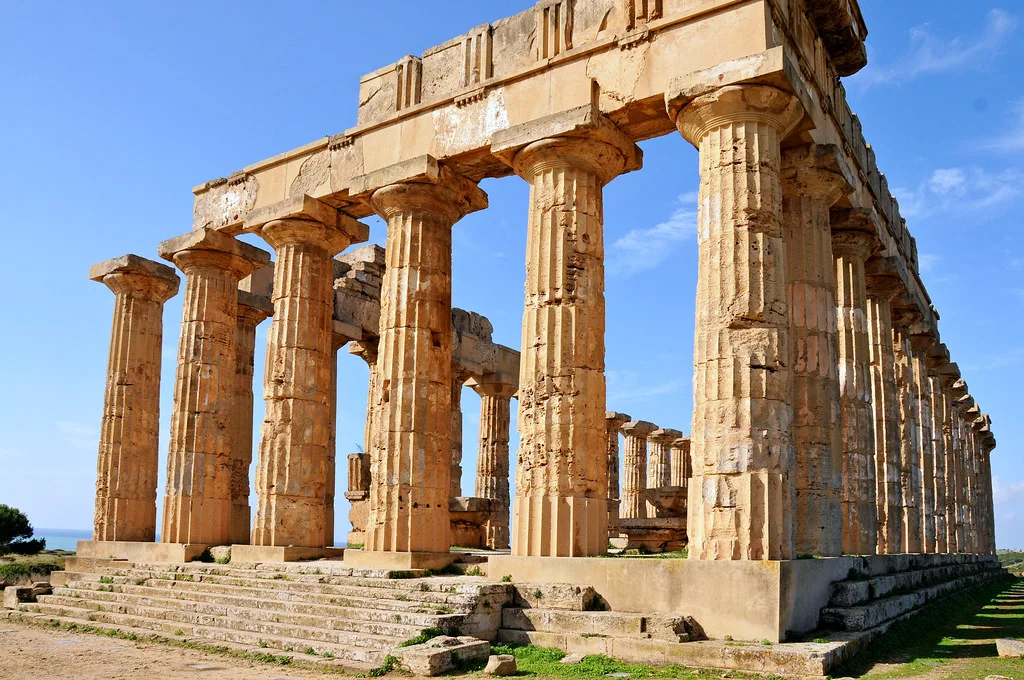
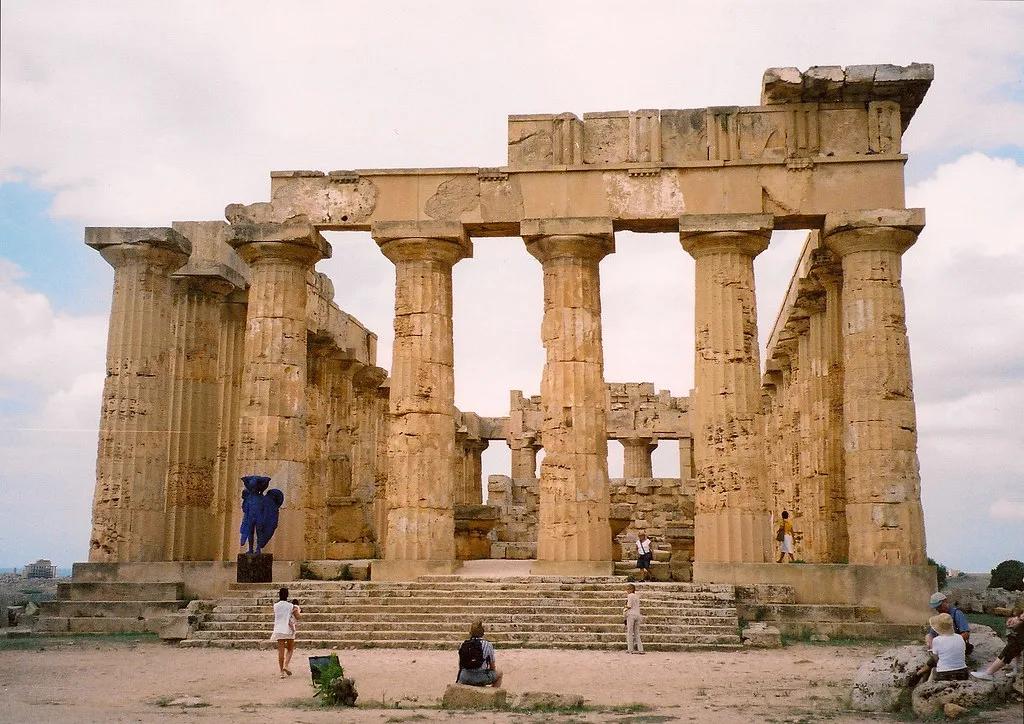
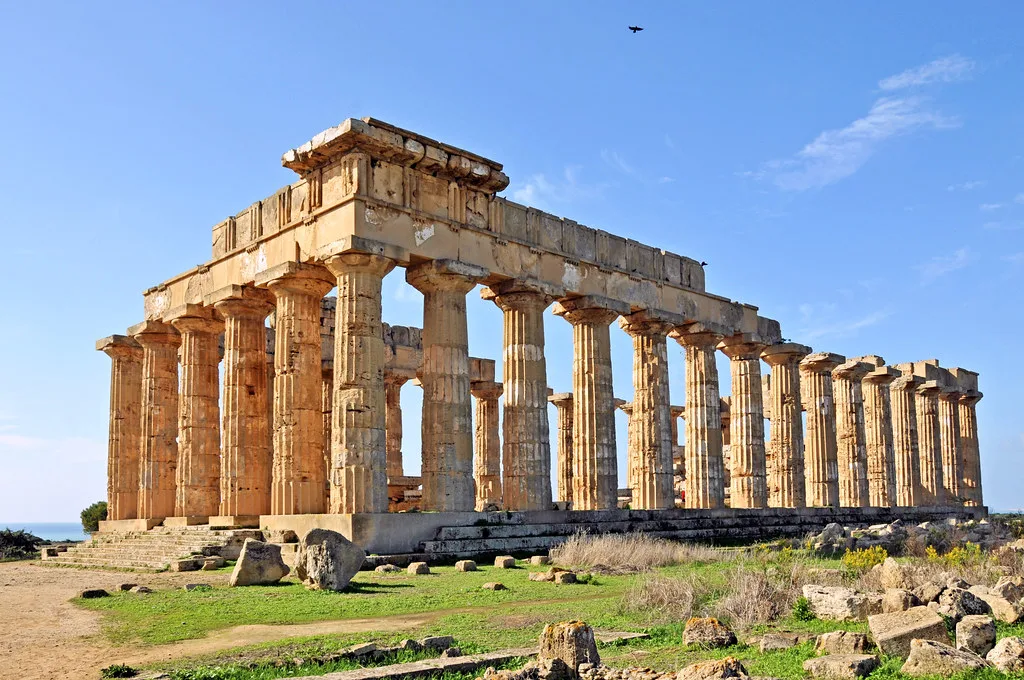
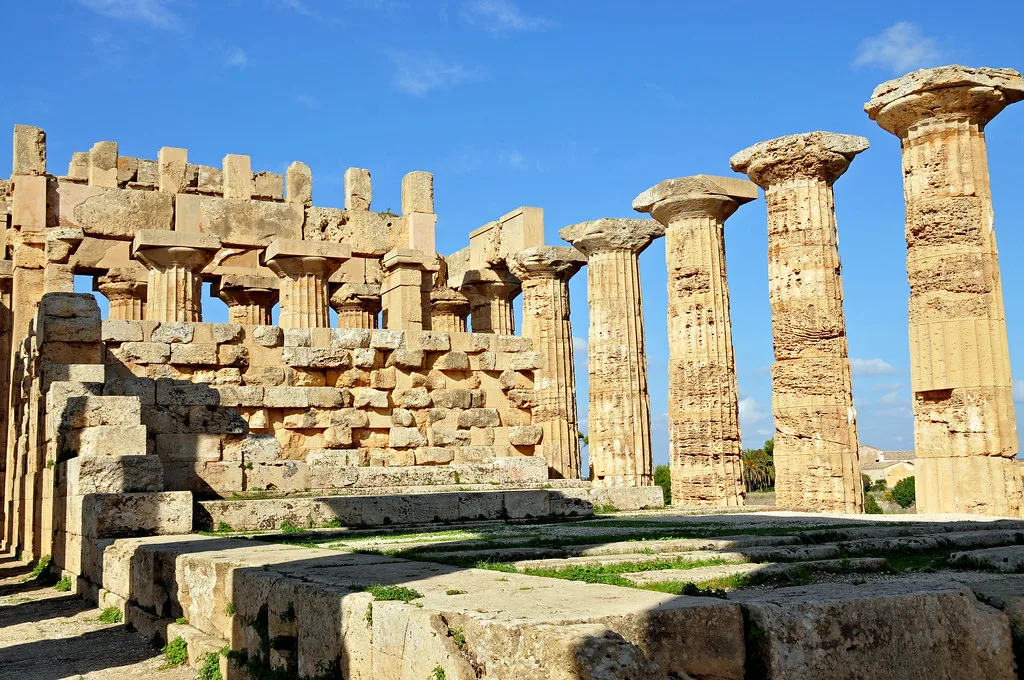
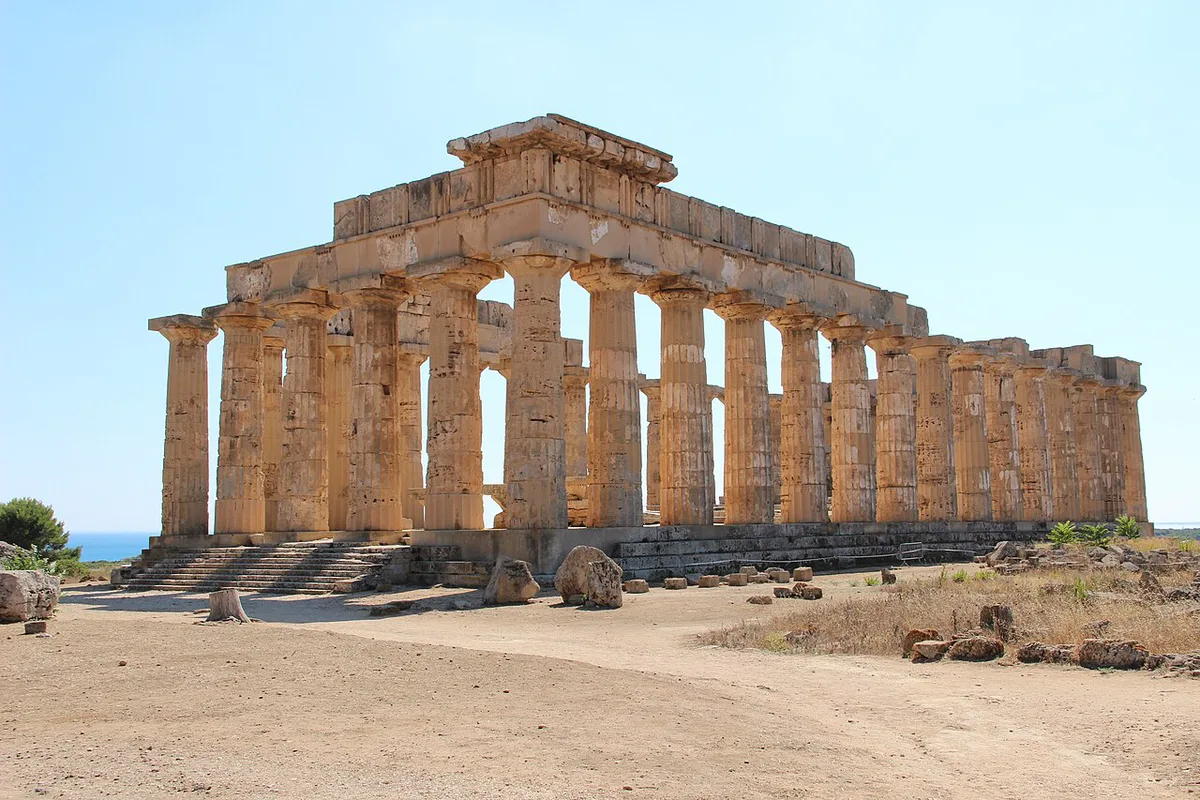
The ancient city stood beside the sea on two heights joined by a narrow saddle. The southern part holds the acropolis, laid out around two crossing streets. Five temples there carry the letters A, B, C, D and O. Temple E, captioned as the Temple of Hera, is the building most often pictured. Temples E, F and G belong to the eastern hill, so confirm each letter's location on the park map at the ticket office. North and inland, Manuzza hill held the residential grid on a Hippodamian plan. Two necropolises, Gaggera-Bagliazzo and Manuzza, lie in that northern zone. Cave di Cusa, the quarry area, is a few kilometres away and is often missed, so check its access separately.
- Eastern hill: Temples E, F and G
- Acropolis: Temples A, B, C, D and O
- Manuzza hill: residential grid and necropolises
- Cave di Cusa: quarry area outside the main park
Temple by temple: what each ruin looks like
The letters on the park map are easier to place once you know what each building is. This is a quick field guide to the ones most visitors ask about.
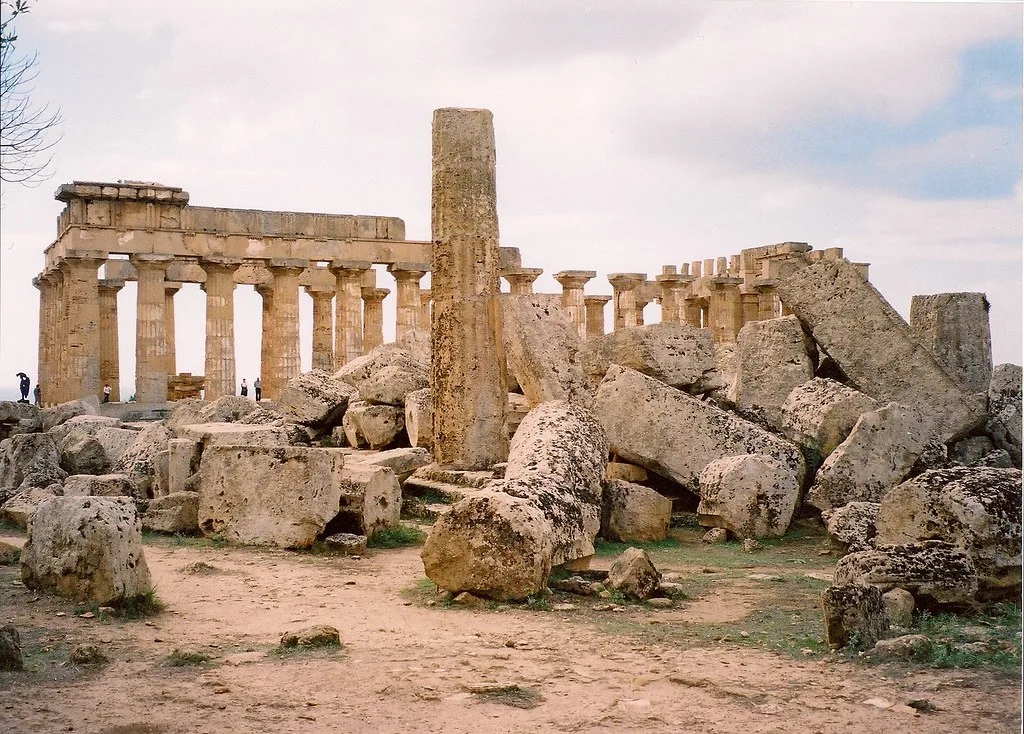
- Temple E: the most photographed building, with a standing colonnade. Much of it was reassembled from fallen blocks in the 20th century, so it looks more complete than its neighbours.
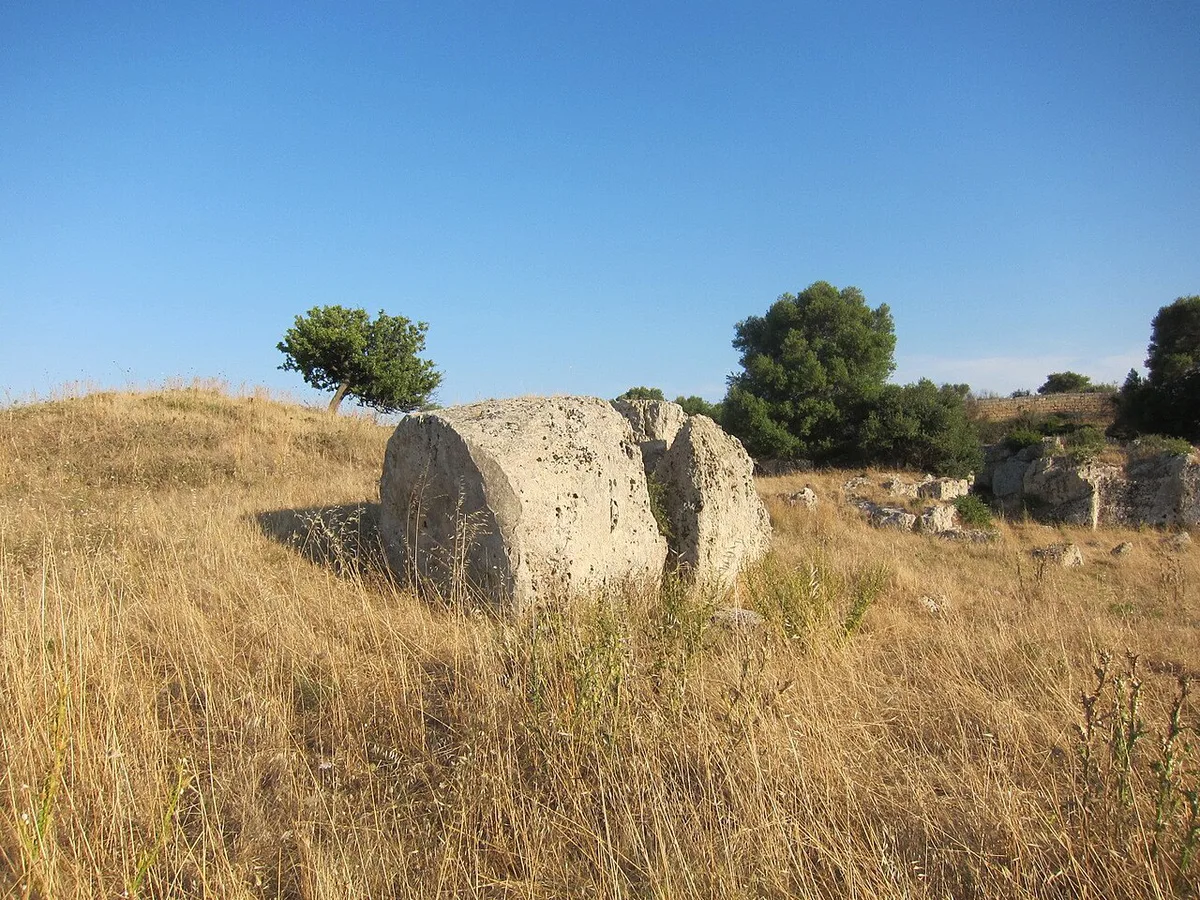
- Temple G: on the same eastern hill, never finished. It was among the largest temples in the Greek world, and today it is a field of enormous collapsed drums and capitals. It is worth walking round to judge the scale.
- Temple F: the smallest and most ruined of the eastern trio. Allow only a short stop.
- Temple C: the main landmark of the acropolis, with a few re-erected columns. Its carved metopes are no longer on site.
- Temples A, B, D and O: mostly foundations and fallen stone. They are interesting for the layout of the sacred area, not for photographs.
Where the carvings went
The best-known sculpted metopes from Selinunte are displayed in the Antonio Salinas Regional Archaeological Museum in Palermo, not at the park. If sculpture matters to you, pair a visit to the ruins with the museum, or see it first so you know what to imagine on the empty temple fronts.
Cave di Cusa
The quarry is where the column drums were cut. Many were left half-detached or already carved when work stopped, which makes it an unusually direct view of how a Greek temple was built. Confirm access and opening times before you go, as it is separate from the main park.
How to plan your time
The park's size sets your schedule. Plans below are our editorial suggestions, not official routes.
At 377 hectares, the park is too large for a quick stop, so a half-day plan should focus on the eastern hill, acropolis and a look toward Manuzza.
| Time | Zones | What to cut |
|---|---|---|
| 2 hours | Eastern hill temples and the acropolis | Manuzza hill, necropolises, quarry |
| Half day | Eastern hill, acropolis, a look toward Manuzza | Cave di Cusa |
| Full day | All zones plus the quarry if open | Nothing, but rest in the midday heat |
Tickets, hours and access
Hours, last entry, closing days and ticket prices are set by the park and change by season. Check the Visit Sicily portal and the park's own site before you travel.
Getting there and getting around
A car is the simplest way to reach the park and to cover the distances between zones. Buses and organised tours also serve the area, so check current operators before planning around them. Day-trippers from the regional capital should read our route from Palermo for the full plan. Inside the park, expect long walks on open ground. Ask at the entrance whether a shuttle or cart service is running.
Enter 37°35′1″N 12°49′29″E in your map app, then ask at the entrance about a shuttle or cart before facing the long walks on open ground.
Where to base yourself
Your base shapes how early you can start. Marinella di Selinunte puts you next to the ruins. Castelvetrano is an inland town with more everyday services. A day trip suits visitors with a tight itinerary.
| Base | Advantage | Trade-off |
|---|---|---|
| Marinella di Selinunte | Beach village beside the ruins; early start before the heat | Quieter in the evening |
| Castelvetrano | Inland town with shops and restaurants | Needs a car or taxi to reach the park |
| Day trip from Palermo or Trapani | No change of hotel | Long day; less time on site |
Beyond the ruins: beach, olives and local food
Selinunte works well as a full day with a break in the middle. The park closes its gates on a schedule, but the coast outside does not, and the area has a few local specialities worth building a meal around.
- Swim at Marinella di Selinunte: the village beach lies right beside the archaeological area. A swim after the acropolis is the easiest way to avoid the midday heat on the open ground.
- Castelvetrano olives: the green Nocellara del Belice olives, eaten at table, come from this district. They are a good thing to try with an aperitivo or to buy as a souvenir.
- The name itself: selinon is the Greek word for wild celery, which the city used as an emblem on its coins. It is a neat detail to look for in the museum cases in Palermo.
Eating
Marinella has seafood restaurants close to the ruins, while Castelvetrano offers more everyday trattorie and bakeries. Opening hours vary by season and many places close between lunch and dinner, so check before you plan a late lunch.
A simple full-day rhythm
- Arrive when the park opens and cover the eastern hill and acropolis while it is cool.
- Leave the park for lunch and a swim at Marinella.
- Return for Manuzza and the necropolises if your ticket and the opening hours allow, or finish with the sunset light on the temples from outside the gate.
Best time to visit, and what to bring
Summer heat is the main problem, because the ruins are exposed and shade is limited. Go early in the morning or late in the afternoon, and consider spring or autumn instead. Bring water, a hat, sun protection and sturdy shoes for uneven stone. Mistakes to avoid are arriving at midday in July, planning only one hour, skipping the acropolis and ignoring the last-entry time.
Selinunte vs. other Sicilian Greek sites
Selinunte is the sprawling option. Visitors who prefer one compact site should read our Segesta temple guide. Segesta can also be reached on a day trip from Palermo. Closer to Selinunte, Eraclea Minoa Guide: Greek Ruins and Beach in Sicily and Motya add a coastal Greek and Phoenician layer. For a north-coast colony, see Himera.
| Site | Layout | Best for |
|---|---|---|
| Selinunte | Large park with several zones | A full day among temple groups and sea views |
| Segesta | Compact site | A shorter visit centred on one temple |
| Heraclea Minoa | Coastal site | A shorter add-on near Selinunte |
Related guides



Continue reading
Guides on the same trip


