
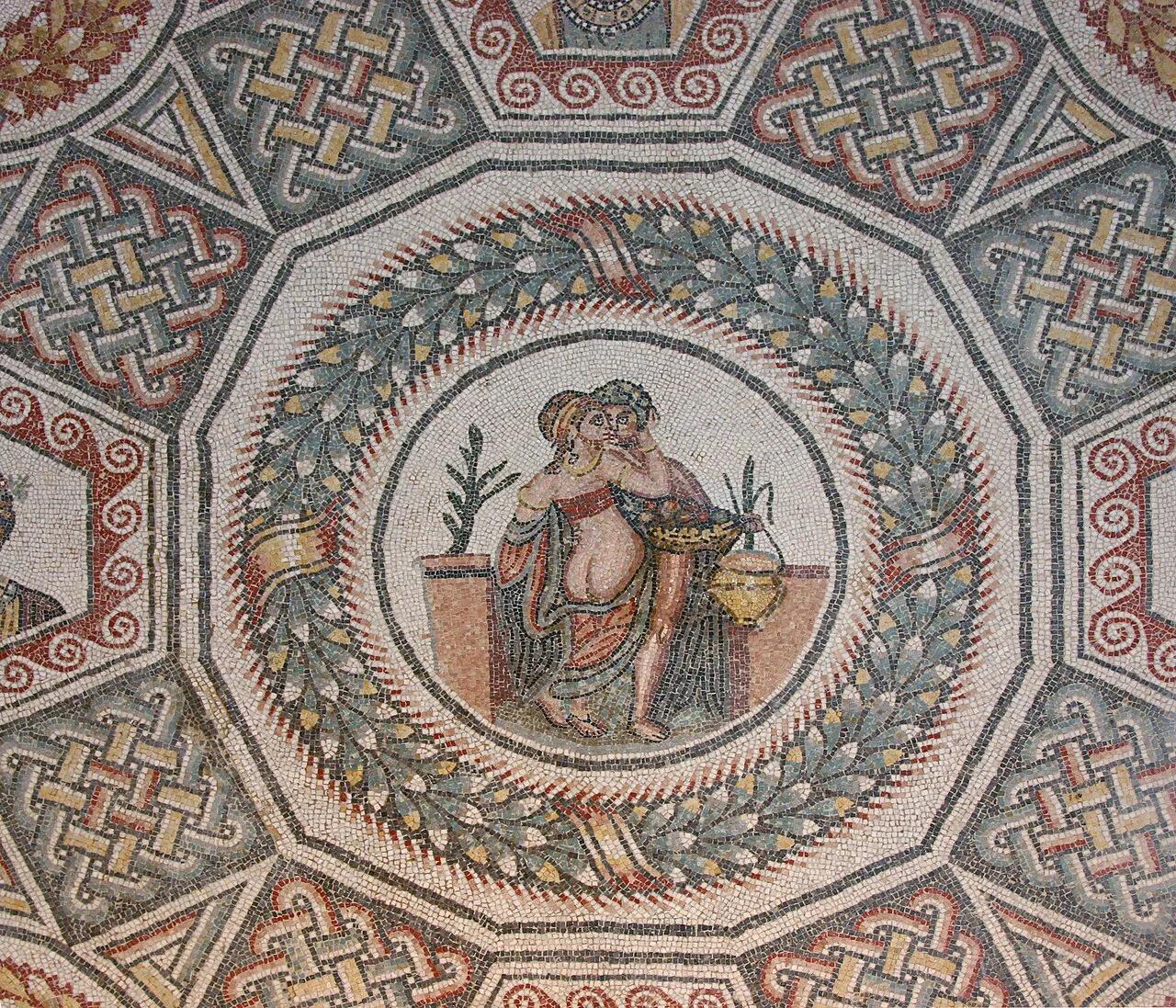
Last updated November 2026: Villa Romana del Casale is a late Roman villa near Piazza Armerina in central Sicily, known for about 3,500 m² of floor mosaics. UNESCO listed it in 1997, and it suits mosaic and Roman-history fans who can spare half a day or more from the coast. Nothing here is Greek, so it works as the inland, Roman contrast stop beside Sicily's Greek temple sites.
Featured image: José Luiz, CC BY-SA 4.0, via Wikimedia Commons.
Villa Romana del Casale at a glance
Villa Romana del Casale was the country residence of a very wealthy owner in the early 4th century AD. It sits in the Gela river valley on the slopes of Mount Mangone, in the province of Enna. Mosaic and opus sectile floors cover about 3,500 m², and UNESCO inscribed the site in 1997. Landslide and flood deposits covered the villa, which is why the floors survive in such good condition. Visitors walk through a monumental entrance, baths, a peristyle garden, dining halls and long hunting corridors. Management belongs to the Parco archeologico di Morgantina e della Villa romana del Casale, an institute of the Sicilian regional heritage administration. From the coast, plan on a half day or more.
| Detail | Answer |
|---|---|
| Location | Near Piazza Armerina, Province of Enna, central Sicily |
| Period | Early 4th century AD |
| UNESCO | Inscribed 1997, reference 832, criteria i, ii and iii |
| Mosaic area | About 3,500 m² of mosaic and opus sectile floors |
| Managed by | Parco archeologico di Morgantina e della Villa romana del Casale |
| Booking | Not required; buy at the ticket office |
| Official site | villaromanadelcasale.it |
Is Villa Romana del Casale worth the trip?
Go if you love Roman mosaics, collect UNESCO sites or already sleep in central Sicily. Skip it if you have a short coastal stay or no interest in archaeology. Craftsmen from African centres such as Carthage, Hippona and Caesarea worked here, according to Visit Sicily's description of the mosaics. Expect company, because the park's own figure is about 350,000 annual visitors, given without a year. Your real cost is time: an inland day rather than a quick stop.
- Best fit: mosaic fans, Roman-history readers, UNESCO collectors and anyone already based near Enna or Piazza Armerina.
- Probably skip: a short coastal stay, or a trip where archaeology is not the point.
- Set expectations: this is a Roman residence, not a Greek temple.
How to get there from Piazza Armerina or the coast
Piazza Armerina is the nearest town, and the villa lies about 3 km (roughly 2 miles) from it. The official site mentions a shuttle to and from Piazza Armerina. Italia.it reports buses from Piazza Falcone Borsellino and from the Villa Romana hotel on Piazza Alcide De Gasperi. Operators and seasons change, so confirm both on the official site. Sleeping in Piazza Armerina gives you an earlier start and evening options in town. A day trip from Palermo, Catania or Agrigento means more time on the road, so check a live map for drive times. Tours and bundled transfers are covered in our ticket and tour guide.
Published hours run 09:00–19:00 in summer time and until 17:00 in standard time. Since operators and seasons change too, check last entry against your bus or tour time.
| Option | Best for | Trade-off |
|---|---|---|
| Bus or shuttle from Piazza Armerina | Overnight guests in town | Cheapest, least flexible |
| Car or rental from the coast | Palermo, Catania or Agrigento bases | Most flexible, longest drive, paid hourly parking at the villa |
| Organised tour or private driver | No car, little planning time | Easiest, costs most, fixed schedule |
Tickets, free days and opening hours
Prices and hours checked November 2026. Full admission is €14 for visitors over 25, including over-65s. Young visitors aged 18 to 24 pay €7. Minors, teachers and people with disabilities enter free. No advance booking is required, so you buy at the ticket office. You can pay by cash or card, but American Express is not accepted. Parking is paid and charged by the hour. Free days fall on the first Sunday of each month and on five fixed dates, listed below. Published hours run 09:00–19:00 in summer time and until 17:00 in standard time, so confirm last entry on the official site. A combined ticket covers the park's other sites, including Morgantina's archaeological area. Full price rules and bundles live in our ticket guide.
Young visitors aged 18 to 24 pay €7. That is half the €14 full fare, so check the free-day dates before you buy.
- First Sunday of every month
- 8 March (women only)
- 10 March
- 25 April
- 2 June
- 4 November
- Other free days may be set during the year
What to see: the mosaics ranked
This ranking is our editorial assessment, built for a visit with limited time. Italia.it describes the walking sequence in four steps. You start at the monumental entrance, where a horseshoe courtyard leads to the baths. Next come the peristyle and the rooms around it. After that you reach the ovoid peristyle and the triclinium. You finish with the Great Hunt corridor and the Little Hunt.
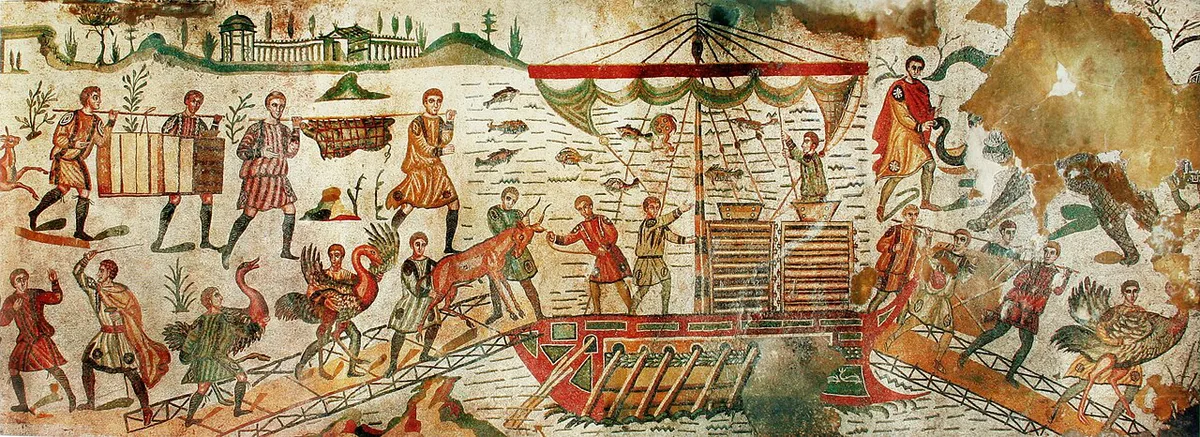
- 1. Great Hunt corridor: the ambulatory mosaic shows wild animals being captured and shipped from Africa, including caged prey and a ship.
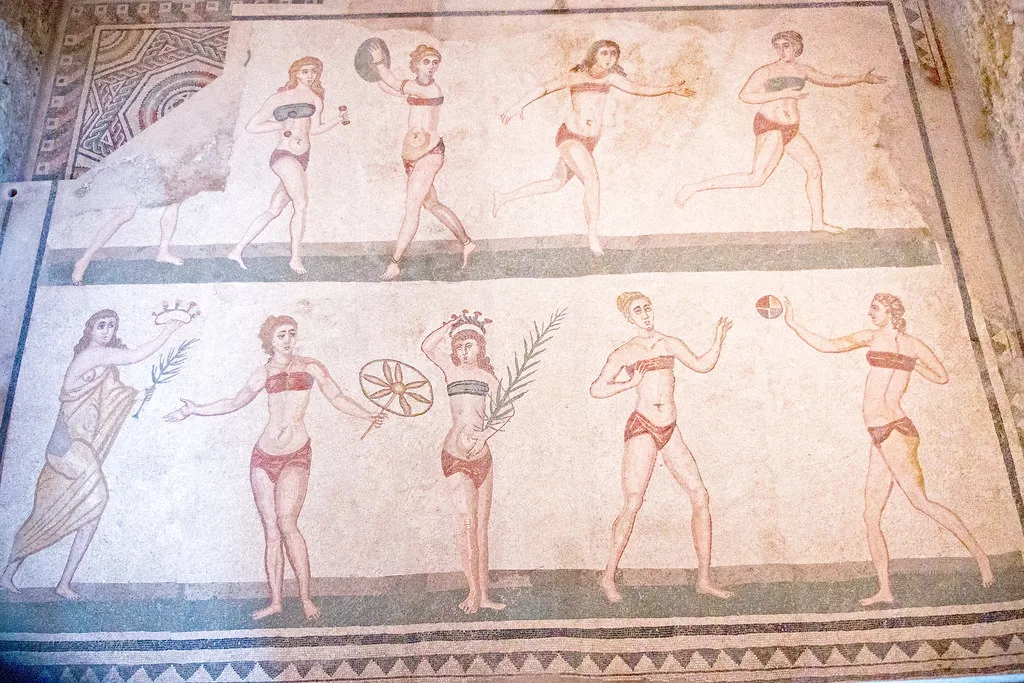
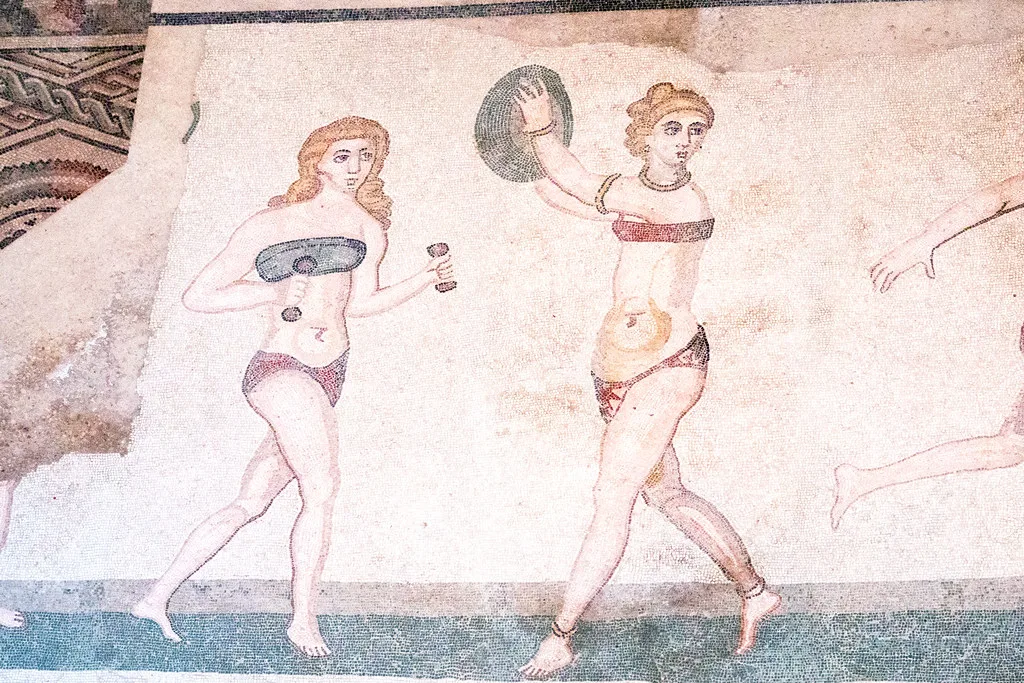
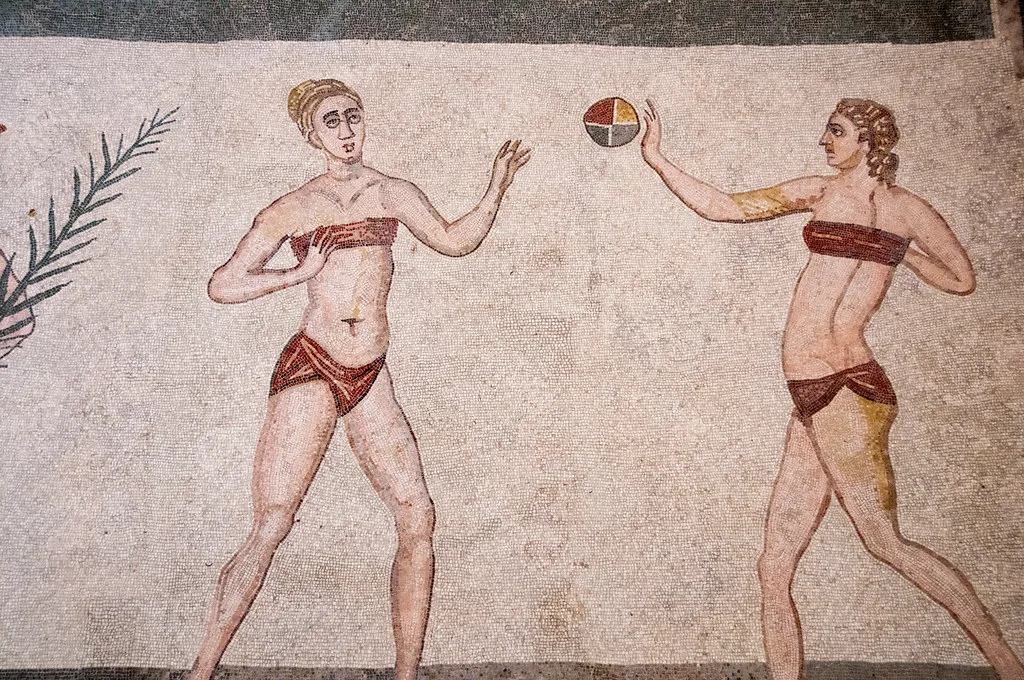
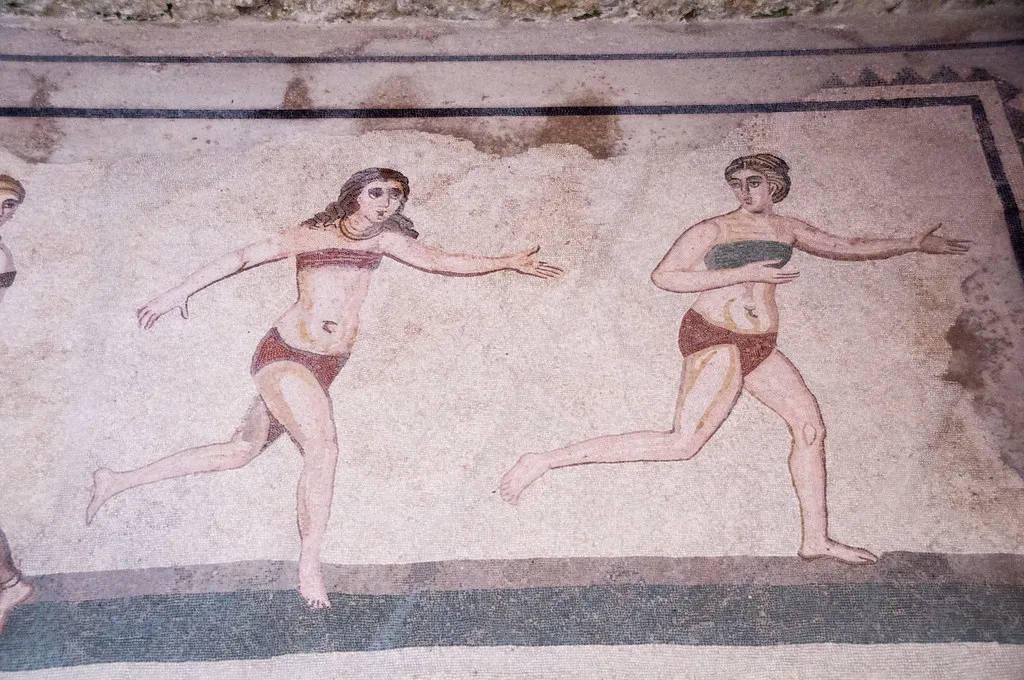
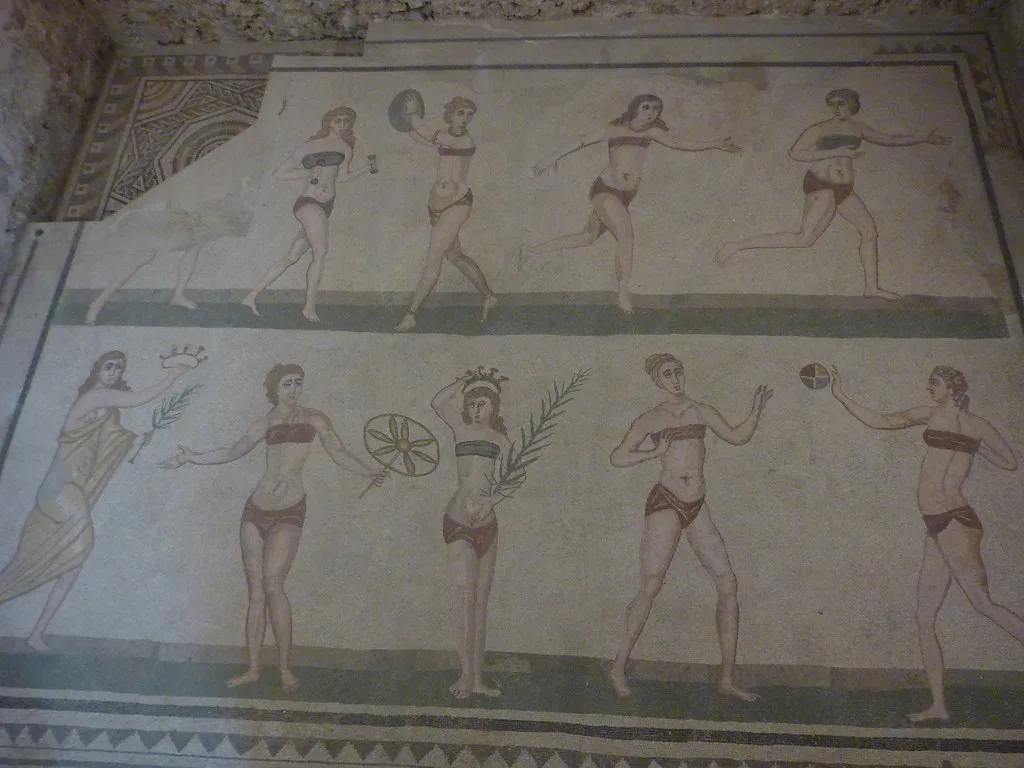
- 2. Athletics mosaic, the so-called 'bikini girls': women compete in discus, weight-lifting, running and ball games, and Italia.it calls it one of the few representations of female sport in antiquity.
- 3. Little Hunt: men hunt with dogs to capture a variety of game, in a well-preserved scene.
- 4. Diaeta of Orpheus: Orpheus plays the lyre beneath a tree and tames animals with his music.
- 5. Triclinium: the three-apsed dining hall shows the enemies of Hercules' twelve labours, the Giants and the myth of Lycurgus.
- 6. Basilica: a polychrome opus sectile floor of marbles from around the Mediterranean, described as the richest decoration in the villa.
A short history in five points
Sources differ on exact dates, so treat the numbers here as ranges. The visible villa dates to the early 4th century AD. Paolo Orsi made the first professional excavations in 1929, and Gentili's 1950–60 campaign ended with a protective cover over the mosaics. UNESCO listed the site in 1997.
- Setting: the villa was the master's residence of a large agricultural estate, built over an older rustic villa.
- Owner: scholars still debate whether it belonged to an imperial figure such as Maximian, a senatorial aristocrat or possibly Maxentius.
- Survival: a landslide or mud flow covered the villa. One source cites abandonment in the 12th century, and another cites flooding around 1000 AD.
- Excavation: Cultrera worked there in 1935–39, and a large medieval settlement turned up in 2004, followed by further rooms.
- Listing: UNESCO recognised the mosaics in 1997 under cultural criteria i, ii and iii.
Planning your visit: time, route and mistakes to avoid
No source gives an official visit length, so plan in relative terms. A protective cover shelters the mosaics. Accessibility details are on the official site, and people with disabilities enter free.
| Approach | What to prioritise | Who it suits |
|---|---|---|
| Short visit | Great Hunt corridor, athletics mosaic, Little Hunt | Day trippers on a tight schedule |
| Slow visit | Add the baths, peristyle, Orpheus room, triclinium and basilica | Mosaic and Roman-history fans |
- Assuming you must pre-book: the official site says you only need to go to the ticket office.
- Missing a free day, or arriving on one: the first Sunday of the month may be crowded, which is our inference.
- Using summer hours in winter: closing time changes with the clock, so a late-afternoon plan can fail.
- Expecting a Greek temple: this is a Roman residence.
Combining the villa with other stops
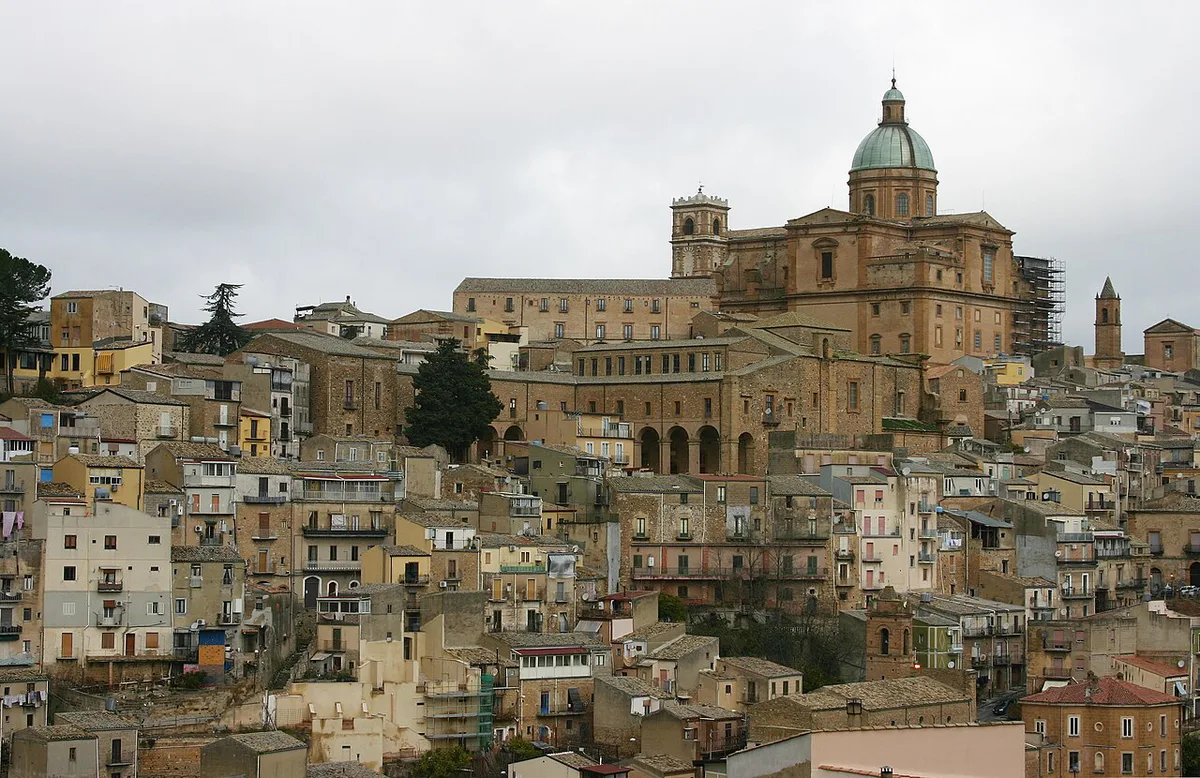
In Piazza Armerina, the Cathedral stands at the highest point of town. In the same square, Palazzo Trigona dates to the late 17th century. It rises over four levels and houses the Museum of the City and Territory. The official park also manages the Aidone archaeological museum and Morgantina, which makes Greek-era Morgantina the obvious pairing. For wider routes, our guide to Sicily's Greek temple sites shows how the villa fits between coastal ruins. Palermo-based travellers can try a Selinunte day trip from Palermo. Another option is a Segesta day trip from Palermo. For the temples themselves, read about the temples at Selinunte. Segesta has its own page on Segesta's temple. Pantalica is a UNESCO neighbour of the villa, and Pantalica's rock-cut necropolis suits a separate day.
Frequently Asked Questions
How long does it take to see Villa Romana del Casale?
No official visit length is published. A short visit covers the Great Hunt corridor, the athletics mosaic and the Little Hunt. A slow visit adds the baths, Orpheus room, triclinium and basilica, and from the coast the whole trip needs half a day or more.
Is Piazza Armerina worth visiting?
Yes, if you want to pair it with the villa. Its Cathedral stands at the highest point of town, and Palazzo Trigona in the same square houses the Museum of the City and Territory.
Related guides



Continue reading
Guides on the same trip



