
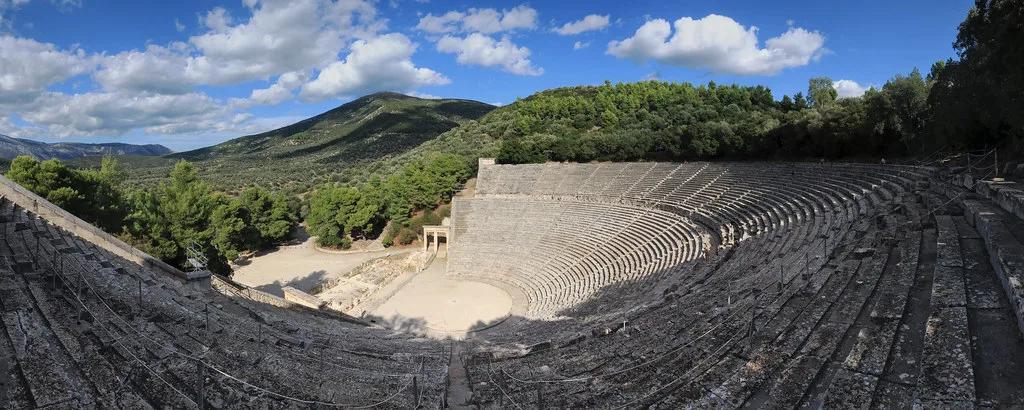
Ancient Greek Theatres: Best Sites to Visit and How to Plan
Last updated November 2026: ancient Greek theatres are hillside bowls with a circular orchestra, built into the slope so rows of seats rise around the performance floor. Epidaurus is the best-preserved, the Theatre of Dionysus and the Odeon of Herodes Atticus anchor Athens, and Delphi, Dodona and Delos reward a longer trip. Greek-style theatres also survive in Sicily and Turkey, and our guide to Europe's ancient ruins puts them in wider context.
Featured image: ju.seg, CC BY-SA 2.0, via Flickr.
Best Ancient Greek Theatres: The Short List
Epidaurus was built in the late 4th century BC inside the sanctuary of Asklepios, a healing and religious center. It is the usual answer to which ancient Greek theatre is best preserved. Athens gives you two theatres within walking distance of each other. Delphi and Delos add a mountain setting and an island crossing.
- Epidaurus: best preserved, with the strongest reputation for acoustics.
- Athens: the Theatre of Dionysus on the Acropolis slope, plus the Odeon of Herodes Atticus.
- Delphi: a steep theatre set above the Temple of Apollo.
- Delos: a Cycladic island theatre dating to 244 BC.
What Makes a Theatre Ancient Greek
A Greek theatre has a theatron, the seating area, cut into a hillside rather than raised on arches. Its orchestra is a full circle where the chorus danced. A low stage building, the skene, stood behind it. Roman builders favored a semicircular orchestra and a taller, more ornate stage wall. Many surviving Greek sites were extended under Rome, so you often see both phases in one place. Our comparison of how Greek and Roman ruins differ covers the wider contrast. For fully Roman examples, see Roman theatres across Europe.
- Seating follows a natural slope instead of freestanding vaults.
- A circular orchestra points to the Greek phase.
- A semicircular orchestra and a tall stage wall point to Roman rebuilding.
- Marble seating in a theatre with older origins is often a later upgrade.
Which Ancient Greek Theatre Should You Visit?
Match the theatre to your situation. A first-timer in Athens needs no car, while Epidaurus and Delphi work best as day trips. Island hoppers should look at Delos and Milos. The table sets out the trade-offs.
| Site | Best for | Getting there | Time on site | Skip if |
|---|---|---|---|---|
| Theatre of Dionysus, Athens | First-timers | Walk from central Athens to the Acropolis south slope | About 45 minutes | You only want a fully preserved bowl |
| Odeon of Herodes Atticus, Athens | Evening performances | Acropolis area, on foot | 30 minutes outside show nights | No performance is scheduled |
| Epidaurus | Preservation and acoustics | Bus or car from Athens or Nafplio | 1.5 to 2 hours | You have no time for a day trip |
| Delphi | Mountain views | Day trip by bus or car from Athens | 1 to 2 hours with the sanctuary | You dislike steep stairs |
| Dodona | Quiet sites | Car from Ioannina | About 1 hour | You rely on public transport |
| Delos | Island-hoppers | Ferry from Mykonos | Half a day for the whole island | Sea conditions look rough |
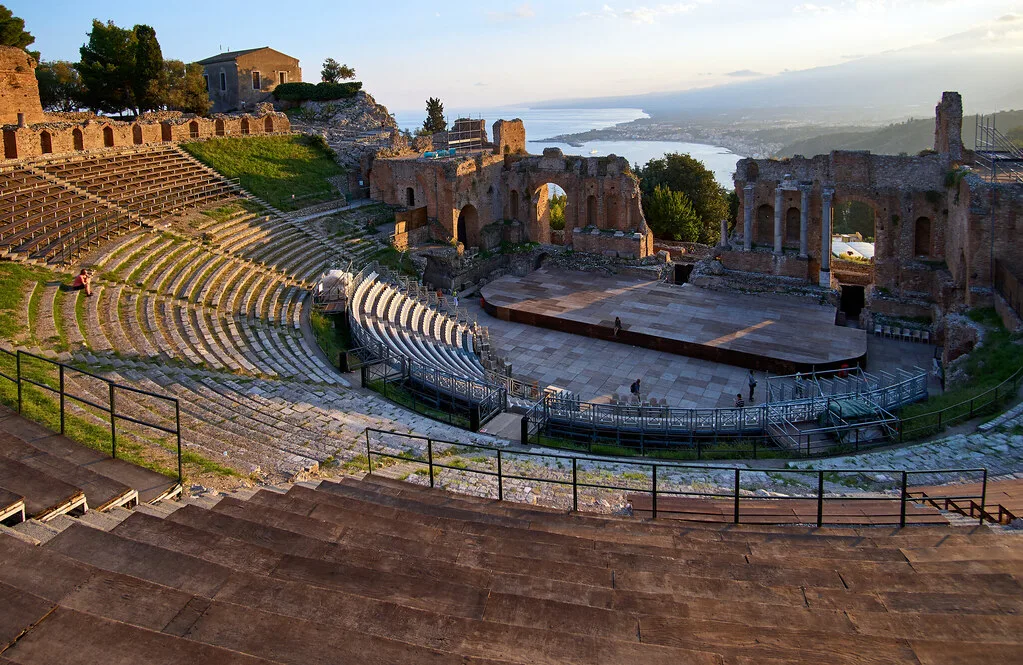
| Taormina | Sicily itineraries | Town access on Sicily's east coast | About 1 hour | You are not in Sicily |
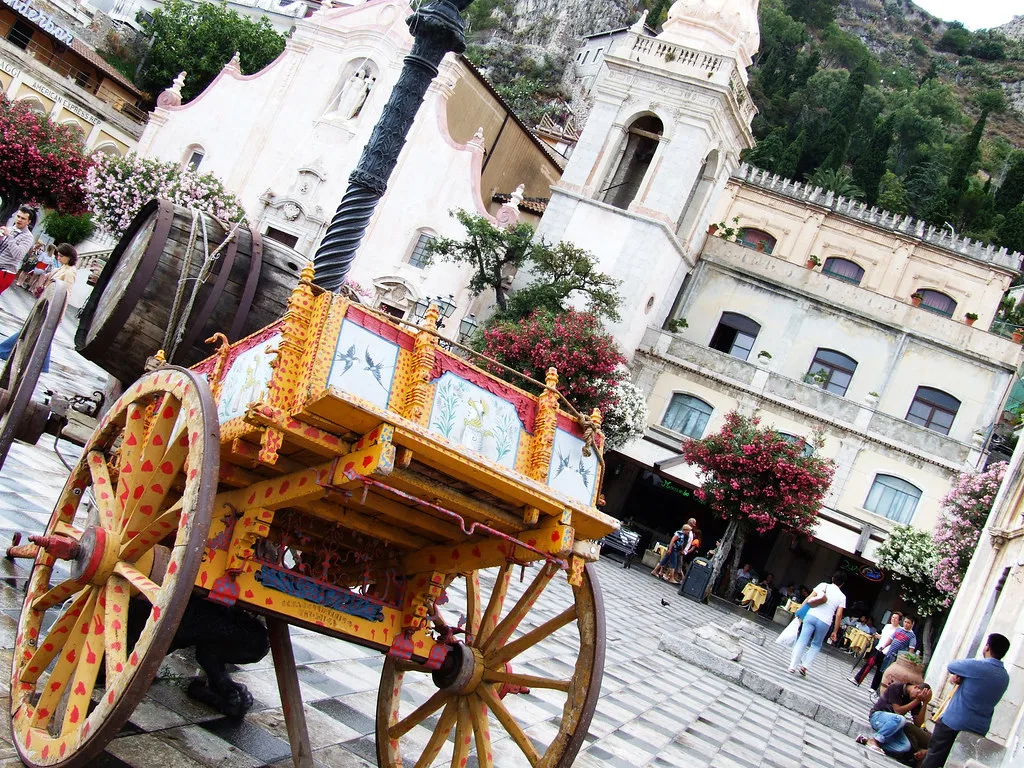
Greek Mainland Theatres
Epidaurus rises in the Argolid, not in Athens. Its fan of limestone seats sits among pines inside the Asklepios sanctuary. Its acoustics are famous, and researchers still argue over why voices carry so well. Treat any single explanation as a theory, not settled fact. Reach it from Athens or Nafplio by bus or car, and see our arenas built for gladiator games if you want the other kind of ruin.
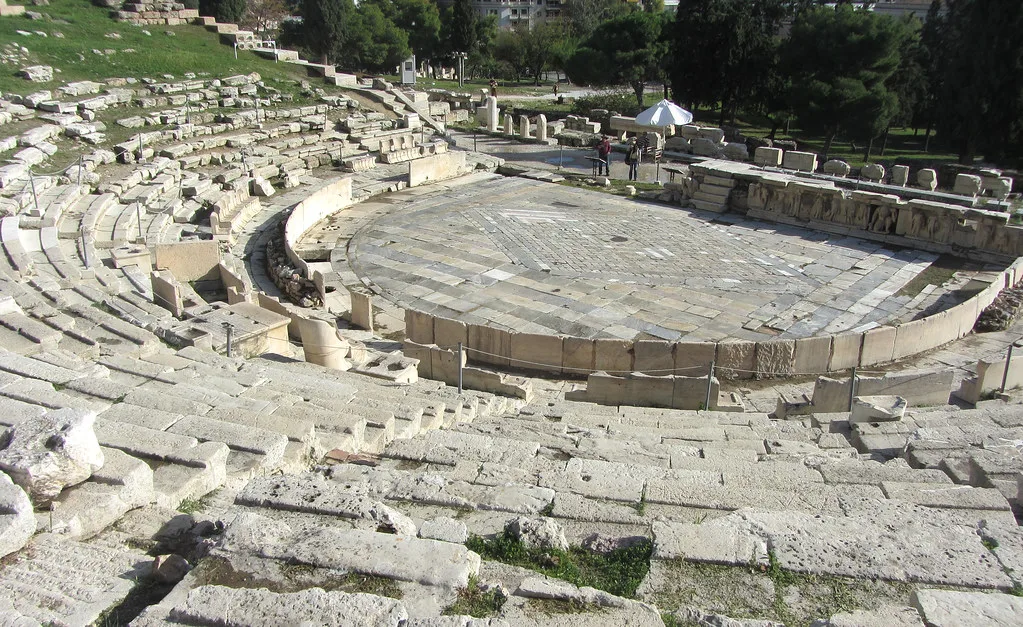
Athens holds two theatres. The Theatre of Dionysus on the Acropolis south slope dates to the 4th century BC and hosted the City Dionysia festival. Capacity estimates run to about 17,000. The Odeon of Herodes Atticus was built in AD 161 and reopened in 1955 after rebuilding. It is a Roman-era building, so compare it with the Roman theatre examples elsewhere in Europe. It is the main venue for the Athens and Epidaurus Festival.
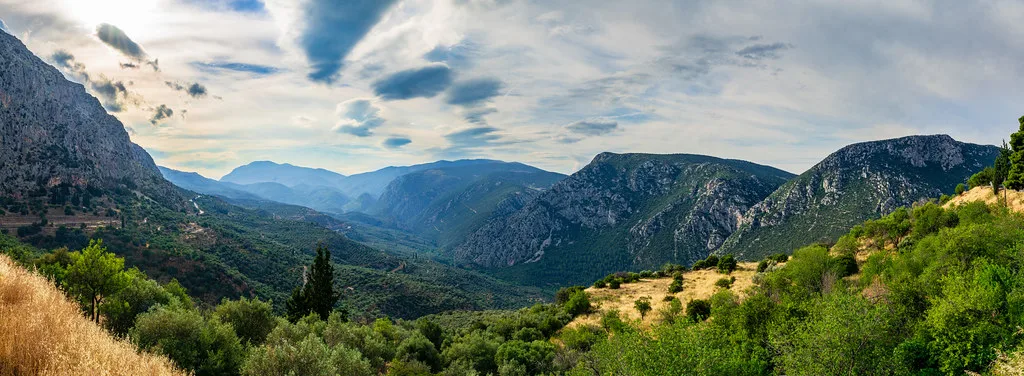
Delphi's theatre has 35 rows and held about 5,000 people in antiquity. It sits just above the Temple of Apollo and looks over the valley. Dodona lies 22 km from Ioannina. Estimates for its capacity range from 15,000 to 17,000, which makes it one of the largest in Greece.
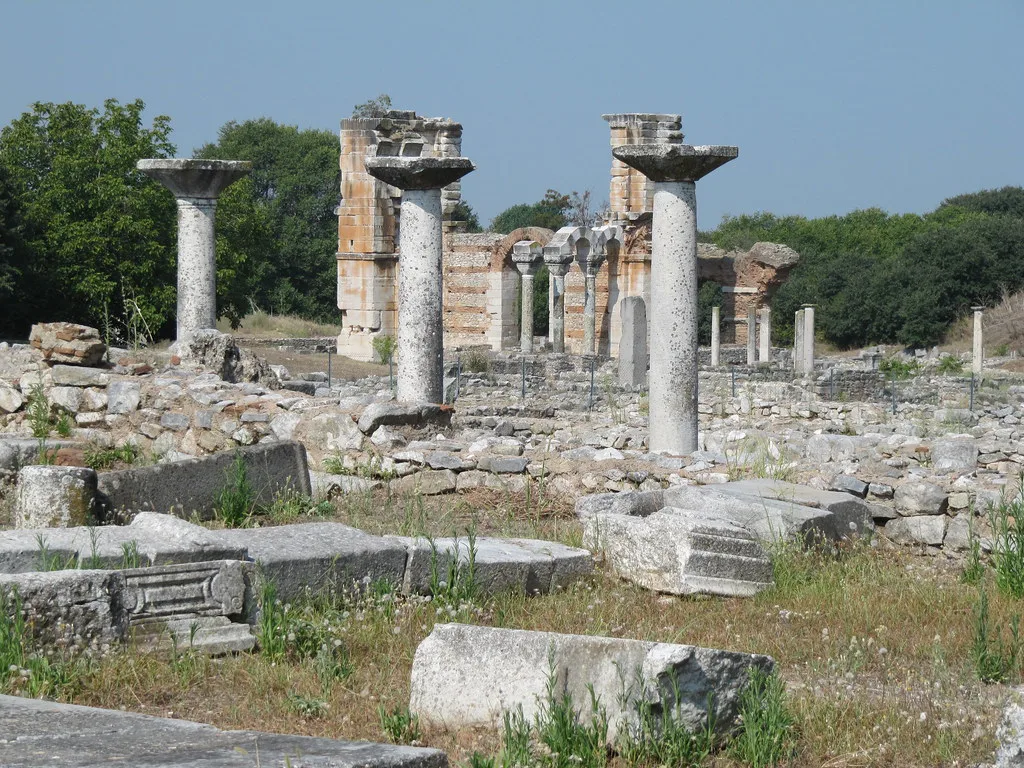
Philippi near Kavala was reshaped under Rome. Dion in Pieria hosts summer performances, so check the program. Messene is worth adding if you are already exploring its ancient city.
Island Theatres: Delos, Milos, Kos and Lemnos
Delos dates to 244 BC and held around 6,500 people. Reach it by ferry from Mykonos and plan half a day. Milos has a theatre near the village of Trypiti, dating to the 3rd century BC and rebuilt in marble under Rome. Estimates suggest it held up to 7,000 people. It is a short hike up from the bay, with views over Milos Bay.
Kos has an Odeon, a smaller roofed hall rather than an open theatre. It dates to Roman times, around the 2nd or 3rd century AD, and has 18 rows of seats. Hephaistia on Lemnos is a 5th century BC site that was excavated in the 20th century and partly reconstructed. Treat it as a remote stop, and check access before you travel.
Greek Theatres Outside Greece
Taormina in Sicily began as a Greek colony and was extended under Rome. It looks toward Mount Etna and hosts film, theatre and dance festivals. Side on Turkey's south coast was founded by Greeks in the 7th century BC. Its theatre seats over 15,000, by common estimates, and shows heavy Roman work. Our guide to Greek-founded sites abroad lists more of these places.
Tickets, Hours and Seasonal Timing
Hours, ticket rules and closures for Greek sites are published on the Ministry of Culture's Odysseus archaeological sites portal. Prices and hours change by season, so check it before you go. Summer midday heat is intense on bare stone seating. Aim to arrive at opening time, and bring water and a hat. Performance nights at Epidaurus and the Odeon of Herodes Atticus use their own tickets and seating, and early arrival helps because of steep access. Get program dates from the festival or venue site, not from a general listing.
Built in AD 161, the Odeon of Herodes Atticus hosts evening shows on separate tickets, so plan that purchase separately.
Planning a Route
For one day from Athens, pick Epidaurus or Delphi, not both. Both involve several hours of travel each way by bus. A three-day plan could use Athens on day one, Epidaurus and Nafplio on day two and Delphi on day three. For islands, base yourself in Mykonos for Delos or in Milos for its hillside theatre. Dodona suits travelers based in Ioannina, who should rent a car for the 22 km trip. When the heat or the crowds are heavy, choose the quieter Milos or Dodona sites.
Mistakes to Avoid
A few errors cost visitors time and comfort.
- Visiting at midday in summer, when the stone seats are hottest.
- Assuming a performance is on without checking the festival program.
- Skipping the site museum, which explains the theatre's phases.
- Treating Roman rebuilds as original Greek work.
- Wearing smooth-soled shoes on steep, worn steps.
Seeing a Performance in an Ancient Theatre
A performance changes the practical rhythm of a theatre visit. The Odeon of Herodes Atticus was built in AD 161 and reopened in 1955 after reconstruction. It is used for the Athens and Epidaurus Festival, while Epidaurus also hosts festival performances. These evenings use separate tickets from daytime archaeological-site admission.
Do not expect to explore every part of a venue before a show. Audience access is directed to assigned seating, and the worn stone steps can be steep in low light. Arrive early enough to find your entrance and seat without rushing. Check the official festival or venue programme before building an itinerary around a performance.
Taormina also hosts film, theatre and dance events, and Dion has summer performances. A daytime ruins visit remains worthwhile when no event is scheduled. The Theatre of Dionysus is the better Athens choice for ancient Greek theatre history, since it dates to the 4th century BC. The nearby Odeon is the stronger choice for an evening atmosphere.
Frequently Asked Questions
Where did Greek theatre begin?
Greek theatre grew out of festivals for the god Dionysus in Athens. The Theatre of Dionysus on the Acropolis south slope hosted the City Dionysia in the 4th century BC.
Related guides
Continue reading
Guides on the same trip