
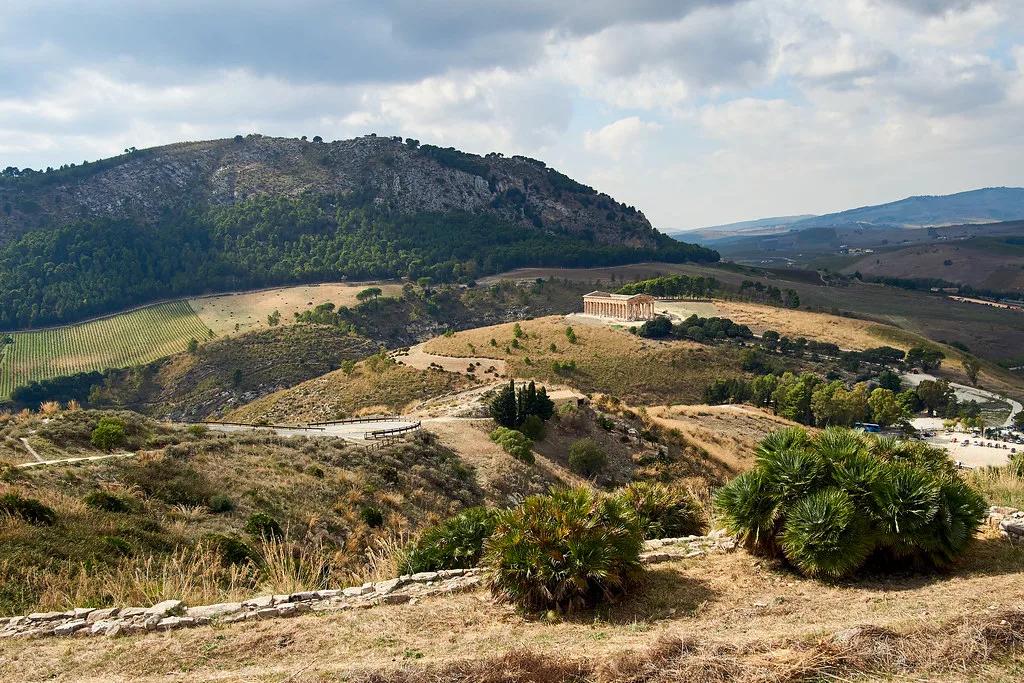
Last updated November 2026. Segesta is an Elymian city, not a Greek colony, in northwest Sicily. Its unfinished Doric temple and hilltop theatre make a half-day visit that suits Greek-temple fans, photographers and day-trippers from Palermo. Use our guide to Greek ruins in Sicily to see where Segesta fits among the island's other ancient sites.
Featured image: Radek.Kucharski, CC BY 4.0, via Flickr.
Segesta at a glance
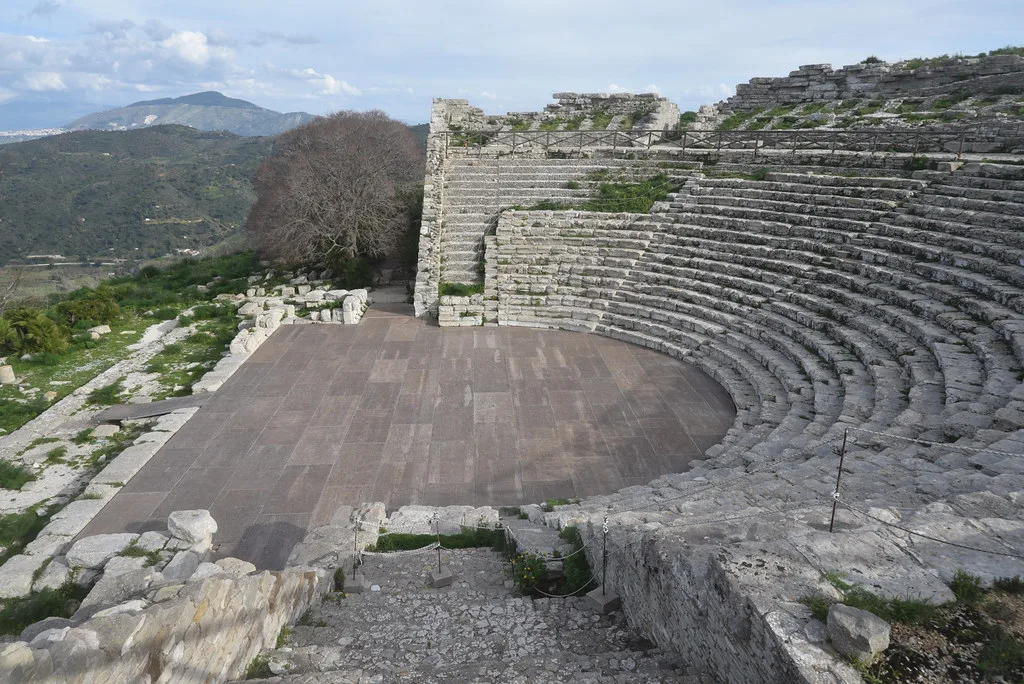
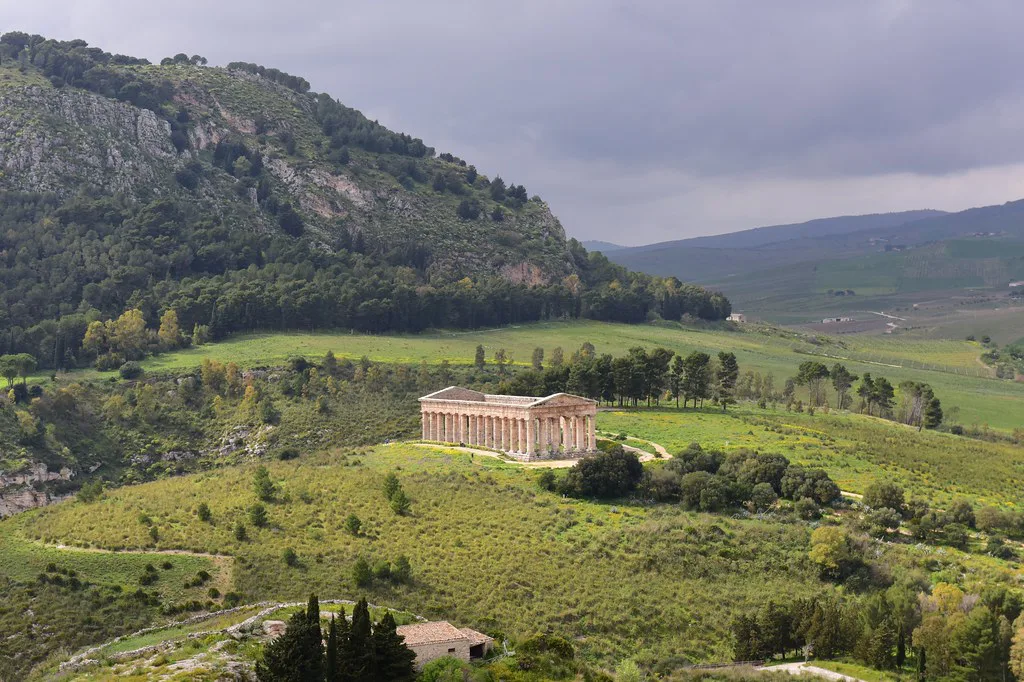
Segesta is a ruined city founded by the Elymi, on Monte Barbaro in the Calatafimi-Segesta municipality. Sources place it about ten kilometres from Alcamo and from Castellammare del Golfo. Two monuments survive in good condition: a Doric temple dated to around 430 BC and a theatre partly cut into the hillside. Nobody lives on the site today.
- What it is: an Elymian hilltop city with a temple and a theatre.
- Where it is: northwest Sicily, near Alcamo and Castellammare del Golfo.
- Who it suits: temple fans, photographers and anyone based in Palermo, Trapani or Castellammare.
- Time to allow: a half-day with travel, longer if you add a second stop.
Is Segesta worth visiting?
Yes, if you want a temple in open country with few other buildings competing for attention. Segesta is smaller than its old rival, so it asks for less time. Skip it only if you have a single ruins day and choose Selinunte's larger temple complex instead. Segesta and Selinunte fought over their border for generations, which makes visiting both a neat story. Our overview of Greek ruins in Sicily compares the full list.
| Segesta | Selinunte | |
|---|---|---|
| Scale | Two main monuments | Large site with many temples |
| Setting | Hilltop, inland | Coastal |
| Effort | Short visit, some climbing | Longer visit, more walking |
| Best for | A compact half-day | A full day of ruins |
What to see: the temple and the theatre
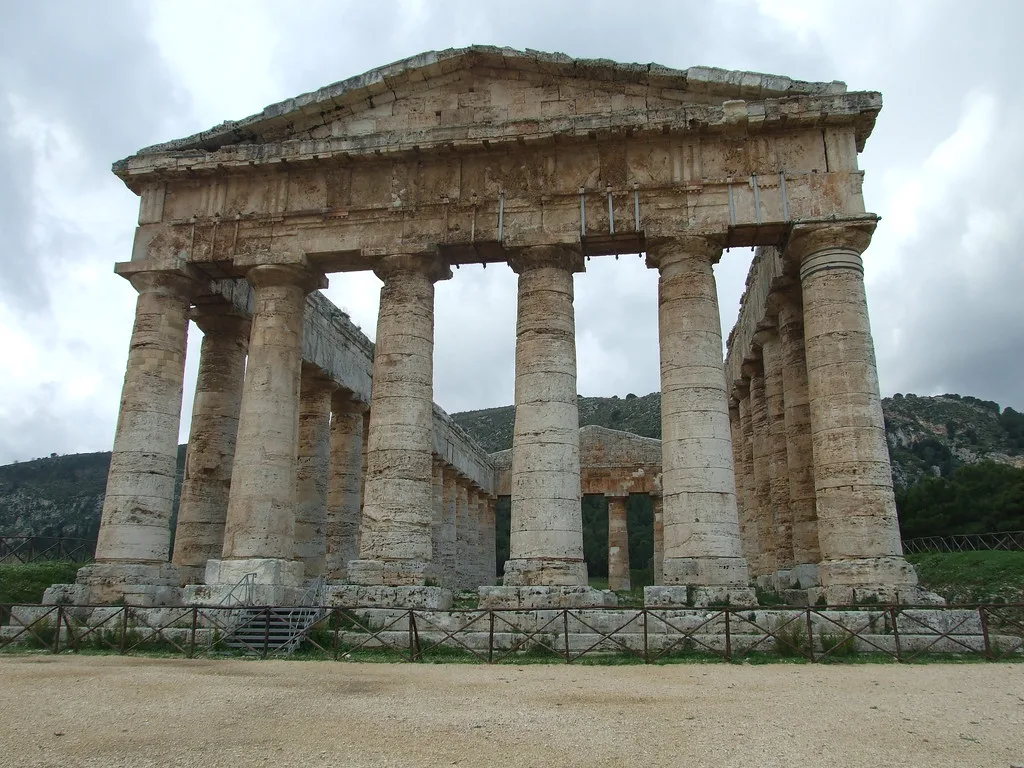
Temple and theatre are separate stops, so plan for both. Seeing only the temple is the most common way to shortchange the visit.
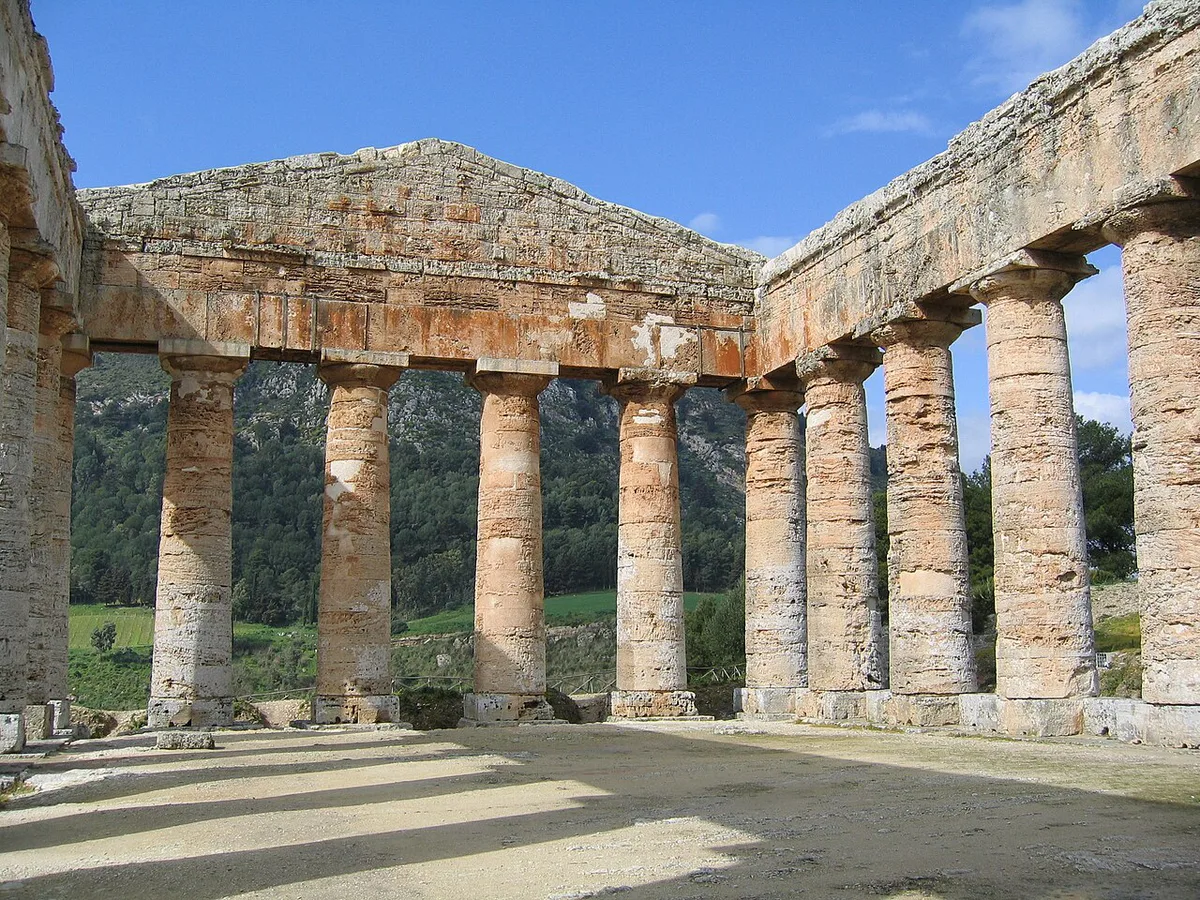
- Doric temple: dated to around 430 BC and never completed. One account links it to the period of Segesta's alliance with Athens. It stands alone in a green, empty landscape.
- Theatre: sits at the top of the mountain and is partly carved into the rock. Views sweep toward Castellammare del Golfo.
- Medieval remains: after the Arabs were expelled, the Normans built a castle here. It was later expanded and became the centre of a medieval village.
Why the Segesta temple looks unfinished
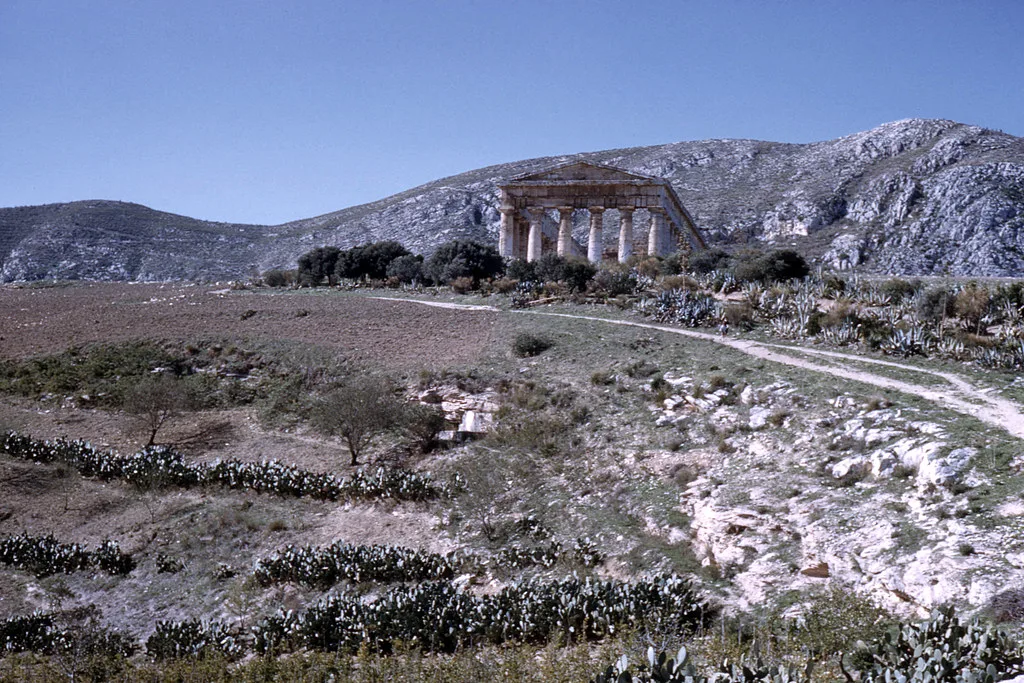
The temple's incomplete state is the main thing to look for once you are standing in front of it. Reading the stonework tells you more than the date alone does.
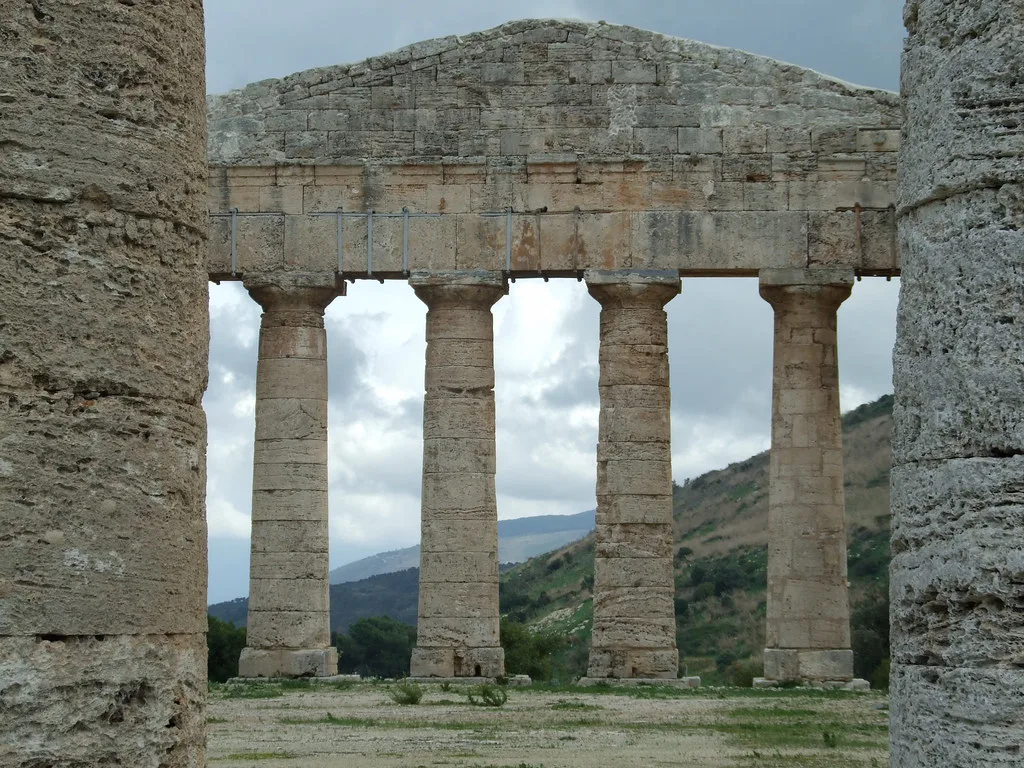
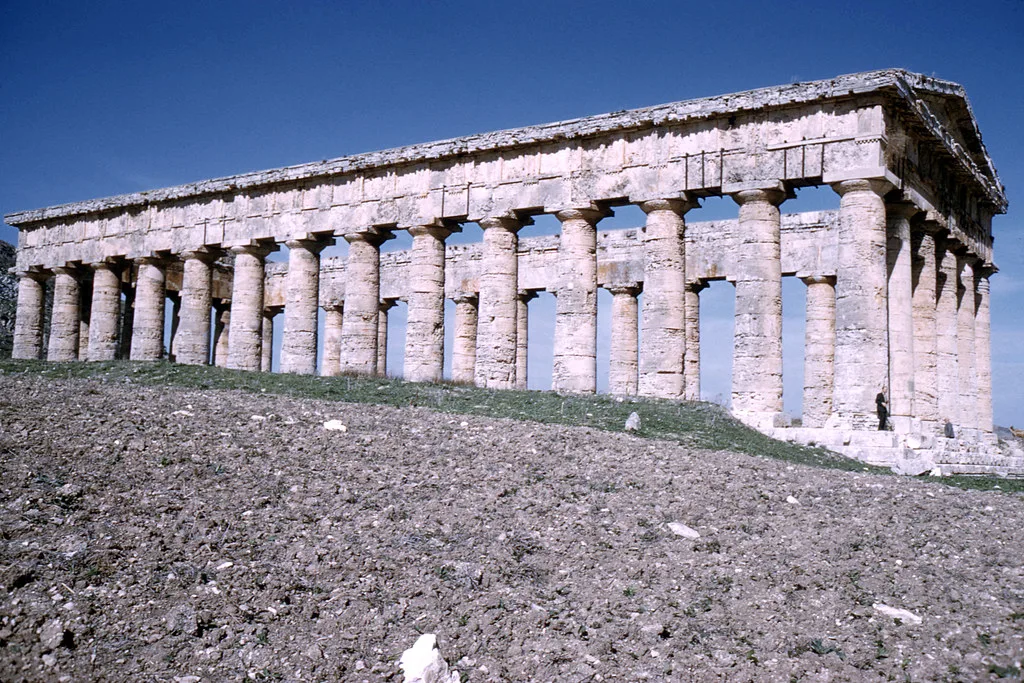
- No roof and no inner chamber. The colonnade stands, but there is no cella (the enclosed room of a finished Greek temple) and no sign of a roof. Many archaeologists read this as evidence the building was never completed, not that it was lost.
- Unfluted columns. The Doric columns are smooth. In a finished temple the shafts would normally be carved with vertical grooves as a last step.
- Lifting bosses. Look at the lower blocks for small projecting knobs. Builders left these to haul the stones into place, and they were meant to be chiselled off at the end.
- The peristyle. The outer ring of columns is the part that survives, which is why the temple reads so clearly as a single frame against the sky.
Walk once around the whole colonnade before you take photos. The side views show the missing cella most clearly, and the hillside behind gives a cleaner background than the car park side.
For comparison, the Doric temple at Paestum keeps much more of its original structure, while Segesta's value is its isolation and its raw, work-in-progress state.
A short history of Segesta
The founding date is unknown, but documents show the city was inhabited by the 4th century BC. Tradition, citing Thucydides and Virgil, says Trojan refugees founded it. Treat that as myth. Border wars with Selinunte began in 580 BC, and Segesta asked Athens for help in 414 BC. Carthage destroyed Selinunte in 409 BC. Agathocles of Syracuse destroyed Segesta in 307 BC. It surrendered to Rome in 260 BC and kept free status. Vandals attacked in the 5th century, and the historian Tommaso Fazello relocated the site in 1574.
Athens was asked for help in 414 BC, the same era one account ties to the temple's date of around 430 BC.
How to plan your time at Segesta
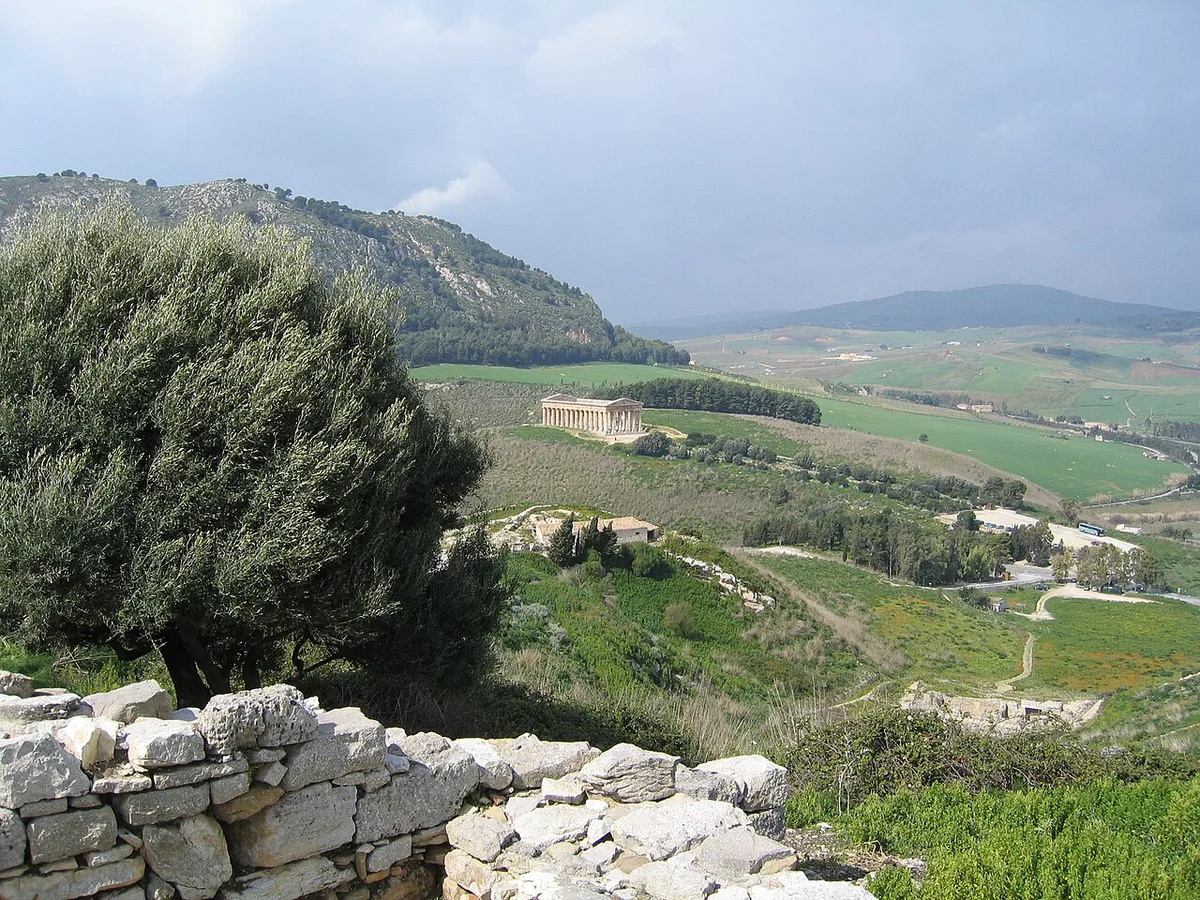
Morning or late afternoon works best, because the site is exposed and summer heat is a real risk. Wear shoes with grip for the path up to the theatre. Bring water, and decide before you leave the car how you will get back to it. Figures below are our estimates, not official timings.
| Plan | What you see | Time estimate |
|---|---|---|
| Temple only | Doric temple and photos | Short stop |
| Temple plus theatre | Both monuments and the views | Half a morning or afternoon |
| Half-day with a stop | Both monuments plus Erice or Castellammare del Golfo | Most of a day |
Summer performances at the Segesta theatre
The hilltop theatre is still used as a stage. In most summers, classical drama and music are programmed there, usually in July and August, with performances starting in the evening so that the audience watches the light fade over the valley and the Gulf of Castellammare.
If you want to combine a daytime visit with an evening show, plan around these points:
- Check the programme first. Dates, ticket prices and start times change every year. Use the official Parco Archeologico di Segesta channels and the Sicilian Region cultural heritage portal rather than third-party resellers.
- Plan your return trip. A show ends after dark, and the road back toward Palermo or Trapani is winding. Book a base nearby, or agree on a designated driver before you go.
- Dress for the hill. Evenings on the exposed summit can be breezy even after a hot day. Bring a light layer and shoes with grip for the path.
- Expect a different visit. On performance evenings, parts of the theatre may be closed to casual wandering, so do not treat it as your only chance to see the stage in daylight.
If you are more interested in the ruins than in a show, avoid performance dates in peak summer. Then you can walk the theatre without staging, seating and crowds in the way. For another Doric temple in a very different setting, compare Segesta with the Temple of Hephaestus in Athens.
Tickets, opening hours and costs
Hours, ticket prices and any shuttle between the car park and the theatre change by season. Check the Sicilian Region cultural heritage portal for current figures.
Getting to Segesta from Palermo
Palermo is the usual base for a day trip. Driving gives you the most freedom, while buses and tours trade flexibility for less effort. Our Segesta from Palermo guide covers routes and logistics. Taxis are the simplest and the dearest.
| Option | Flexibility | Effort | Relative cost |
|---|---|---|---|
| Self-drive | Highest | Moderate | Mid |
| Bus | Low | Moderate | Cheapest |
| Organised tour | Low | Lowest | Mid to high |
| Taxi | High | Low | Highest |
Pairing Segesta with other stops
Erice, Trapani and Castellammare del Golfo are the natural add-ons in the northwest. Erice shares a Trojan founding myth with Segesta, which makes the pairing coherent. Ruins fans can continue south to Selinunte on a separate trip from Palermo. Coastal route ideas include Motya's island ruins, which are managed by Fondazione Whitaker. Do not try to fit more than one extra stop into the same day.
Where to stay near Segesta
Palermo, Trapani and Castellammare del Golfo all work as bases. Castellammare del Golfo is nearest, based on the distances above. Palermo offers the most transport choices. For broader trip ideas, see Visit Sicily's regional pages.
Related guides



Continue reading
Guides on the same trip


