
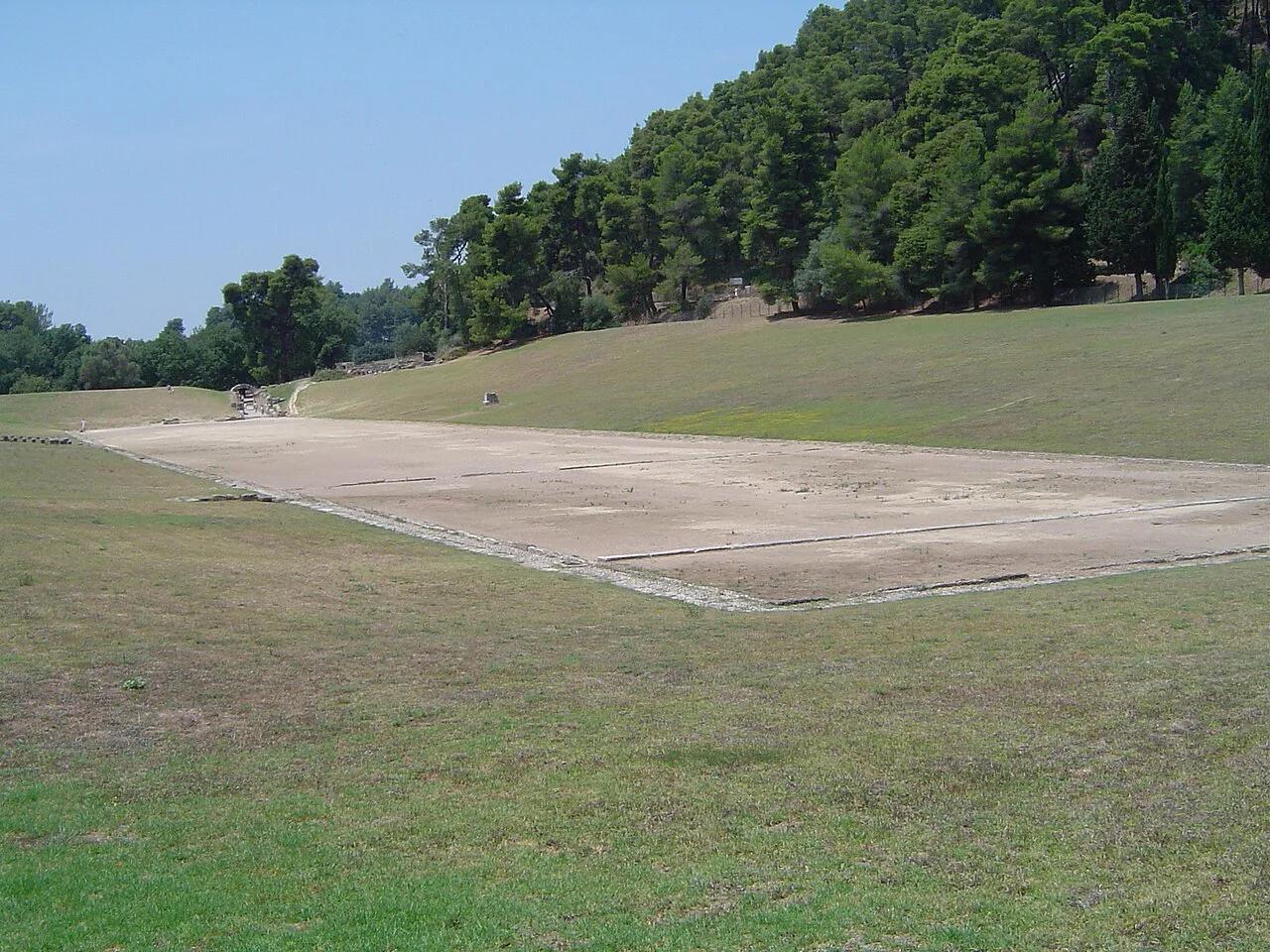
Last updated November 2026: the Olympia stadium is the ancient footrace track inside the Ancient Olympia archaeological site in the Peloponnese, Greece. It is not a modern sports venue. If you want the Athens Olympic Stadium or another modern arena, this is the wrong page. Below you get what survives on the ground, where it sits, and who should skip the walk.
Featured image: Dwaipayanc, Public domain, via Wikimedia Commons.
What the Olympia stadium is (and isn't)
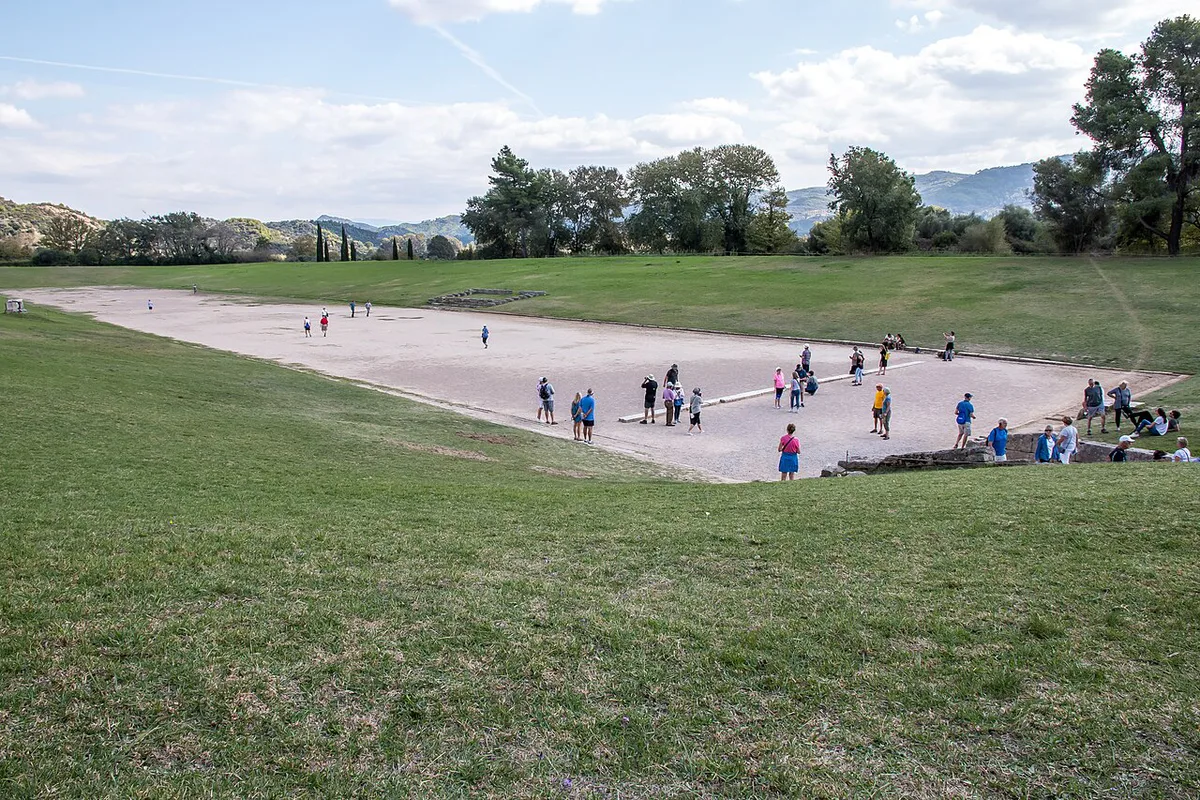
This is the ancient track where footraces were run at the sanctuary of Olympia. It is an open, grassy running strip with earth banks on either side. It is not a Colosseum-style bowl of stone seats. Searches for "olympia stadium" also return modern venues, such as the Olympic Stadium in Athens and recent Winter Olympics arenas. Those have no connection to this site. For the history of the contests held here, read our guide to the Ancient Olympic Games: History, Events and Visiting Olympia. The International Olympic Committee also publishes background on the ancient Games.
Where it sits in the Ancient Olympia site
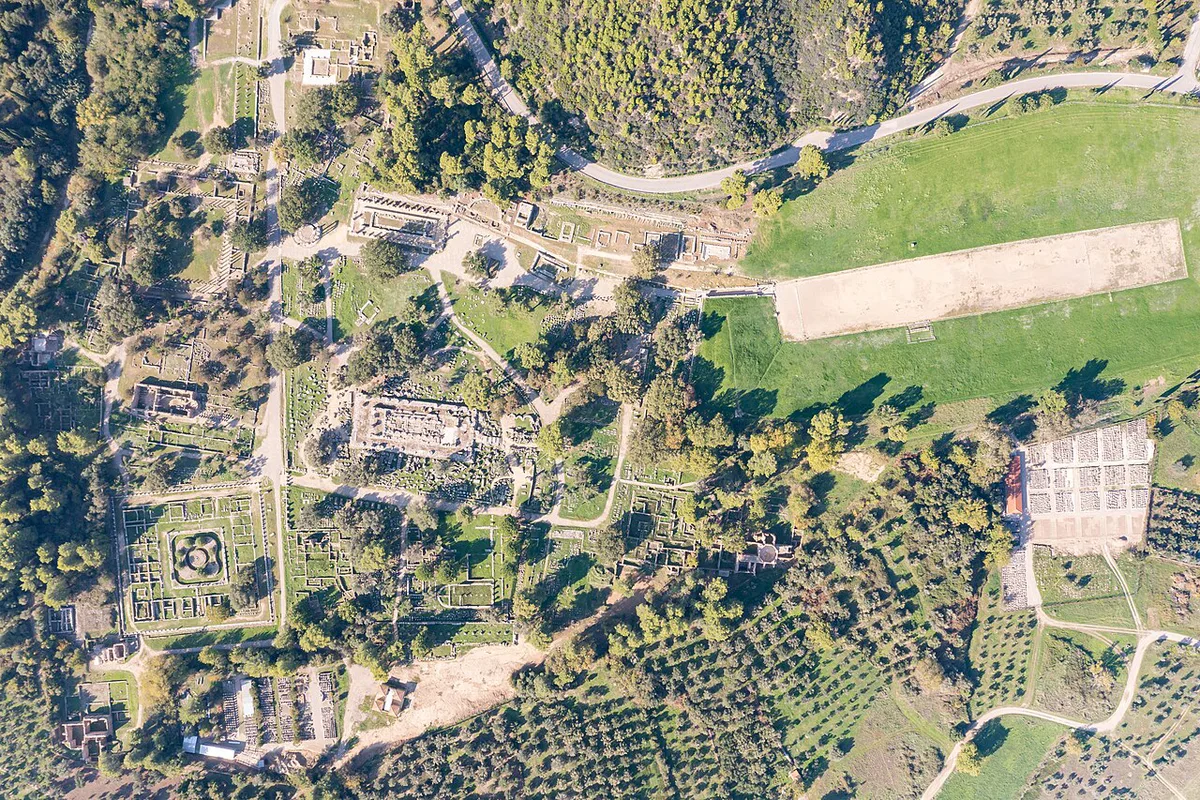
Ancient Olympia is a sanctuary with the stadium at its far side. You reach the track through a vaulted entrance passage, known as the krypte, that leads out of the sanctuary. Most visitors walk past the Temple of Zeus and the Temple of Hera on the way. That position makes the stadium a clear decision point. You either commit to the extra walk or turn back toward the exit. Our Ancient Olympia guide covers the full site layout. Check the site map you receive at the gate for the exact route.
Stadium size, capacity and how it was built
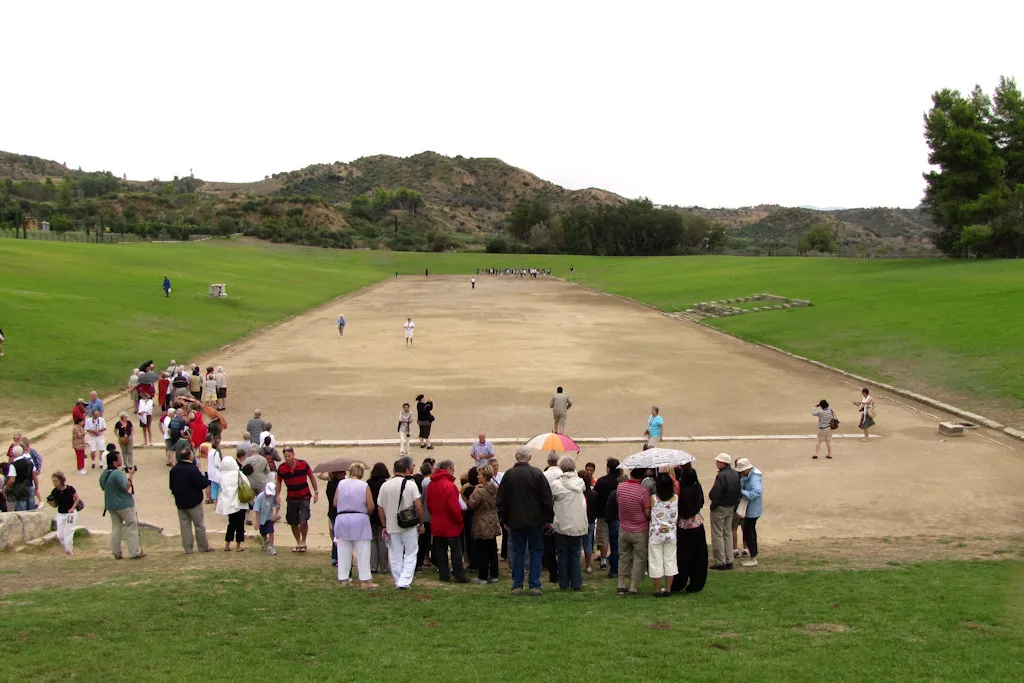
The ancient track you walk today took its final form in the 4th century BC, after earlier versions were shifted eastward away from the sacred precinct. The numbers explain why it feels so open.
- Running length: roughly 192 m, which is the ancient stadion distance of about 600 Greek feet. The word "stadium" comes from this unit.
- Width: around 28 m, enough for a row of runners at once. Grooved stone sills at each end gave them a fixed start and finish line.
- Capacity: the grass banks are thought to have held tens of thousands of spectators, often put at around 40,000-45,000. Nearly everyone stood or sat on the ground, with no stone seating for the crowd.
- Judges: the Hellanodikai, the umpires of the Games, had a dedicated place on one side. Across the track stood an altar of Demeter, whose priestess was the only married woman allowed to watch.
This is why the site feels so different from a Roman-era stadium with stone tiers. Plovdiv's Roman stadium in Bulgaria is a useful contrast: it was built with seating, whereas the Greek track at Olympia relied on earth banks.
What you will actually see
Start with the passage itself. You step out of the krypte onto the track, which is a pleasant surprise after the ruins behind you. Stone starting and finishing lines survive at the two ends of the running strip. Grassy embankments flank the track, and there is no built seating. A judges' area is marked along one side. Interpretation on the ground is light, so read up before you arrive. This suits sports and history fans, runners who want to stand on a start line, and families with children who need open space. It can disappoint visitors expecting a monument with carved detail.
Modern events and the Olympic flame at Olympia
The track is more than a ruin. It has been used again in modern times, which is worth knowing before you arrive.
- 2004 shot put: during the Athens Games, the men's and women's shot put competitions were held here. Spectators sat on the grass banks as in antiquity, and it was the first time in centuries that an Olympic event had been staged at the site.
- The flame: the Olympic flame for each Summer and Winter Games is lit in front of the Temple of Hera, using a parabolic mirror and the sun's rays. The ceremony then leads to the stadium, where the first torchbearer sets off. These ceremonies are scheduled well ahead of a Games, so expect closures or crowds on the day and check the official site before you travel.
- Casual running: many visitors want to try the track themselves. Rules on running or entering the grass change, so ask the staff at the entrance rather than assuming.
If you are standing at the start line, it helps to know that the 2004 events used the same ground as the ancient contests. That gives the plain grass strip more meaning than its appearance suggests.
Time, access and who should skip it
Allow the stadium as a short add-on to the temples, not a separate outing. The ground is uneven, shade is scarce, and summer heat builds quickly on the open track. Visitors with limited mobility should ask the ticket desk about the current accessibility notes. The Ministry of Culture's Odysseus archaeological site pages list official site information. Skipping the stadium makes sense if you have a tight return time. Cruise passengers on a short stop should read our Ancient Olympia Shore Excursion from Katakolo: Options & Timing plan before deciding.
| Option | Time needed | Effort and heat | Best for | Ticket implication |
|---|---|---|---|---|
| Stadium only | Shortest of the three | Low walking, high sun exposure | Runners, sports fans, tight schedules | Covered by site entry |
| Full site | Half a morning or more | Moderate, uneven ground | Most first-time visitors | Main site ticket |
| Site plus museum | Longest of the three | Moderate, with indoor relief | History-focused visitors | Check combined-ticket options |
Tickets and opening hours
Hours and last-entry rules change by season, and this page carries no fixed figures. Check the Hellenic Ministry of Culture e-tickets page for current prices and hours. Our Olympia tickets guide explains combined entry with the museum.
Getting here and fitting it into a trip
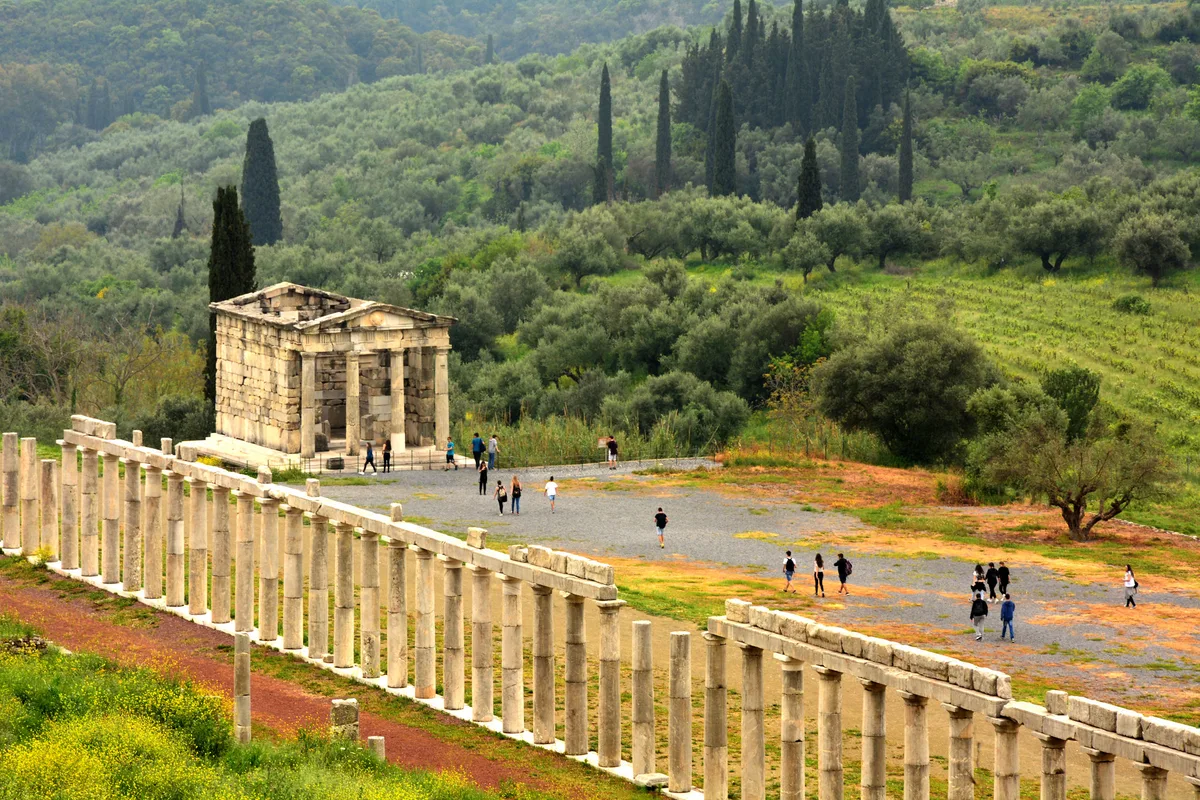
Ancient Olympia is a long day trip from the capital, so read our Olympia From Athens: Day Trip, Bus, Car & Tour Options route plan first. Local buses are listed on the KTEL Ilias timetable pages. A sensible order is the stadium first in the cooler morning hours, then the temples, then the Archaeological Museum of Olympia. Treat that as a suggestion, not a rule. For a wider loop, see our Peloponnese Ancient Sites: Best Ruins and How to Plan a Visit overview. Further stops include Ancient Messene: Visitor Guide, Hours & Tickets and Mystras.
Mistakes to avoid
Most disappointments here come from planning, not from the site itself.
- Walking the open track at midday in summer without water or a hat.
- Going to the museum first and having no time or energy left for the stadium.
- Expecting a Colosseum-style structure instead of a grassy track.
- Confusing it with modern Olympic venues in Athens or elsewhere.
- Assuming you can run on the track. Ask staff about the current rules first.
Related guides



Continue reading
Guides on the same trip


