
Temple of Zeus at Olympia: What Survives & How to Visit
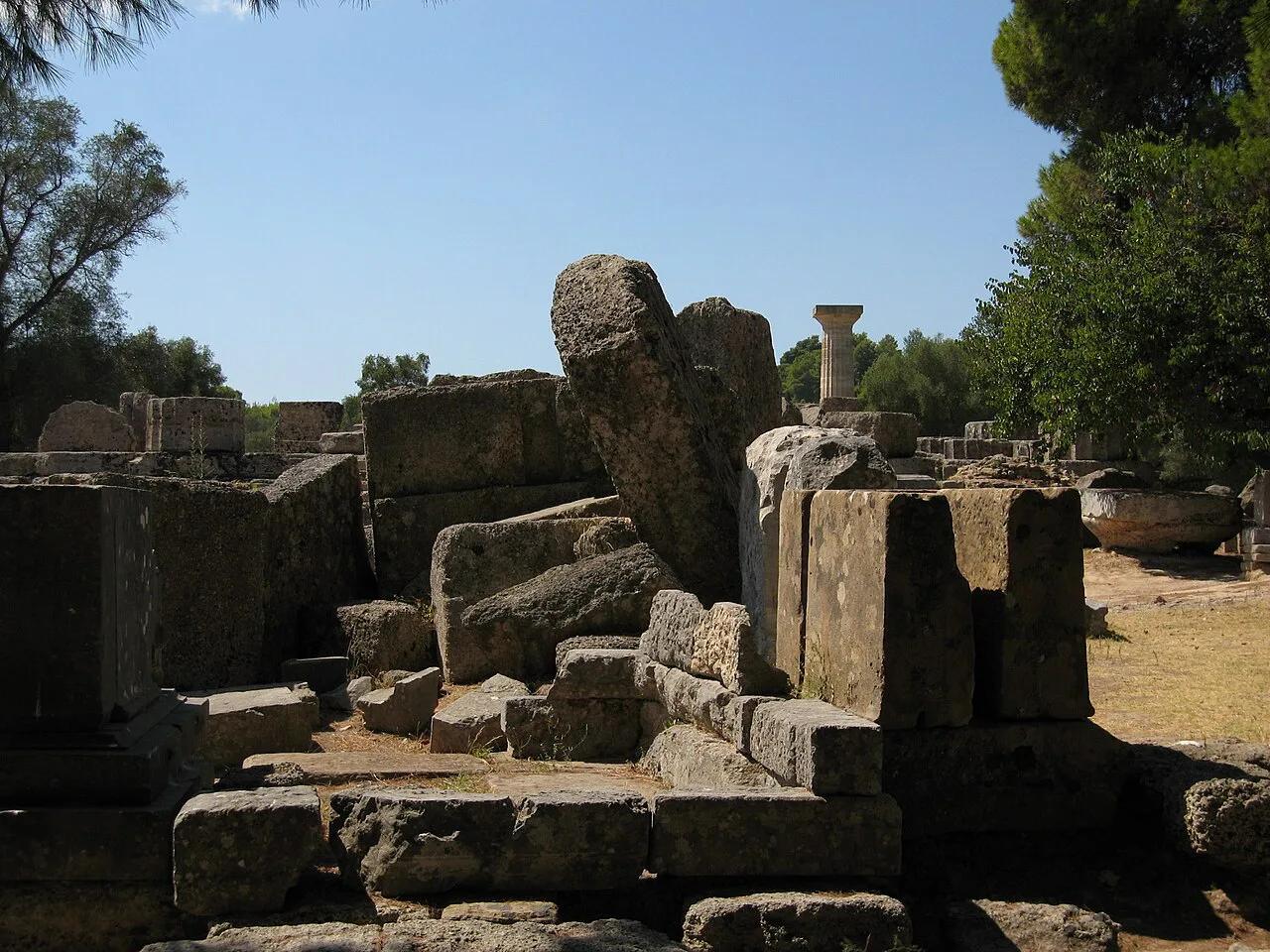
Last updated November 2026. The temple of Zeus at Olympia is a ruin in the Altis sanctuary of the Ancient Olympia archaeological site in Ilia, western Peloponnese. You see it as a stepped foundation, fallen column drums and one re-erected column, not as a standing temple. Athens has a different temple with a similar name, so check which one you need before you book anything.
Featured image: troy mckaskle from SF Bay Area, CC BY-SA 2.0, via Wikimedia Commons.
Temple of Zeus at Olympia: The Quick Answer
This temple stood in the sanctuary of Olympia and held the cult statue of Zeus by Pheidias. You visit it inside the larger Ancient Olympia archaeological site, with no separate entrance. Plan on ruins and imagination rather than an intact building. Athens is a different trip, as the table shows.
Athens holds the other Zeus temple, and 15 standing columns, with a sixteenth fallen in 1852, give a fuller view. Olympia offers one re-erected column instead.
| Temple of Zeus, Olympia | Temple of Olympian Zeus (Olympieion), Athens | |
|---|---|---|
| Location | Elis, Ilia, western Peloponnese | Central Athens |
| What you see | Foundation, fallen column drums, one re-erected column | 15 standing columns, with a sixteenth fallen in 1852 |
| Visited as | Part of the Olympia site and museum day | Its own Athens site |
| Choose it if | You want the Olympic Games sanctuary | You want a city stop beside the Acropolis area |
What Survives at the Temple Today
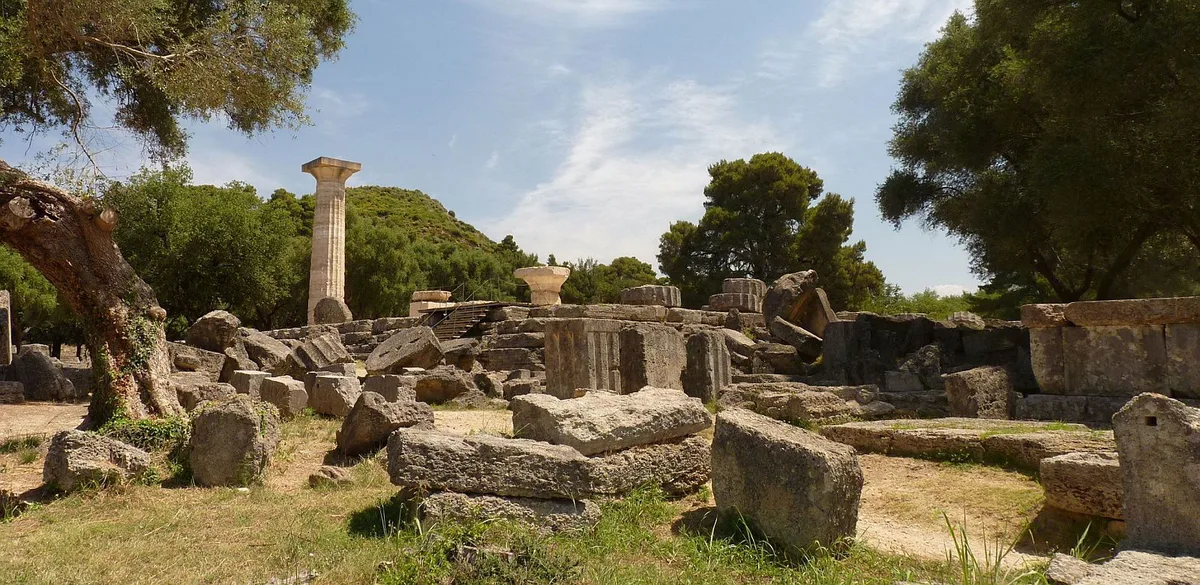
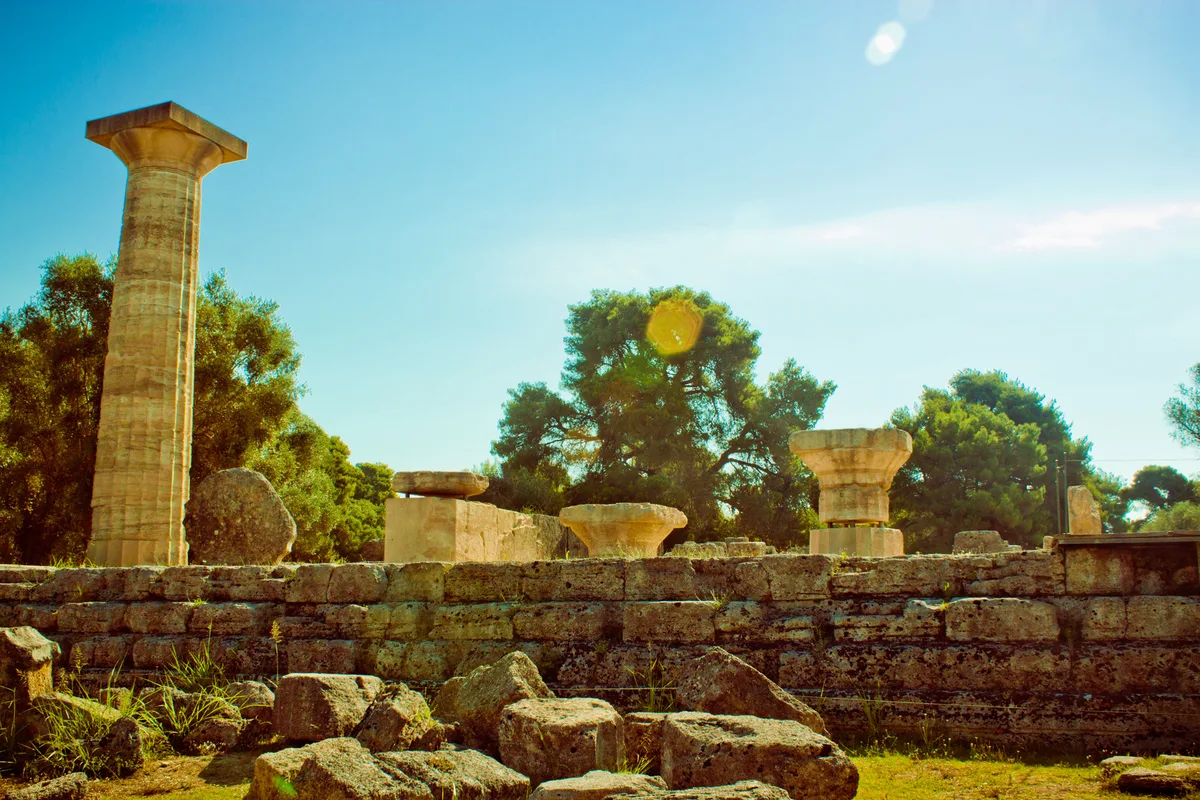
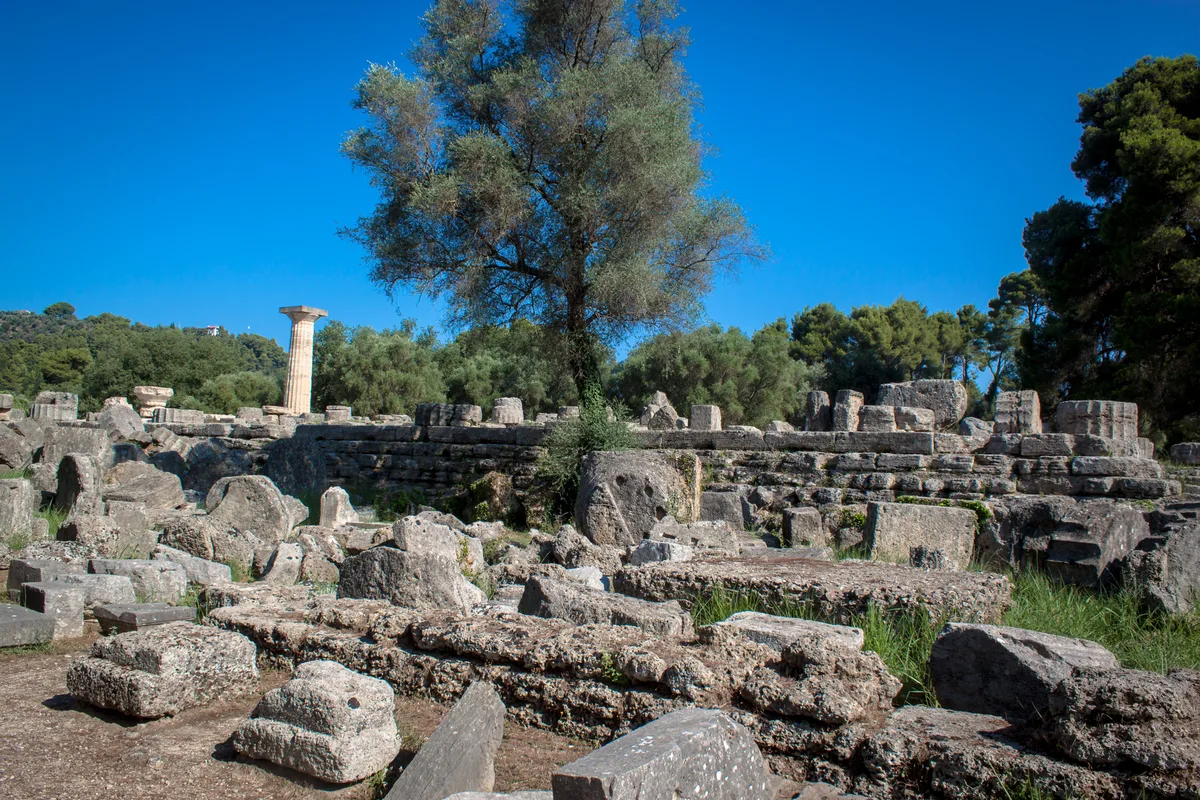
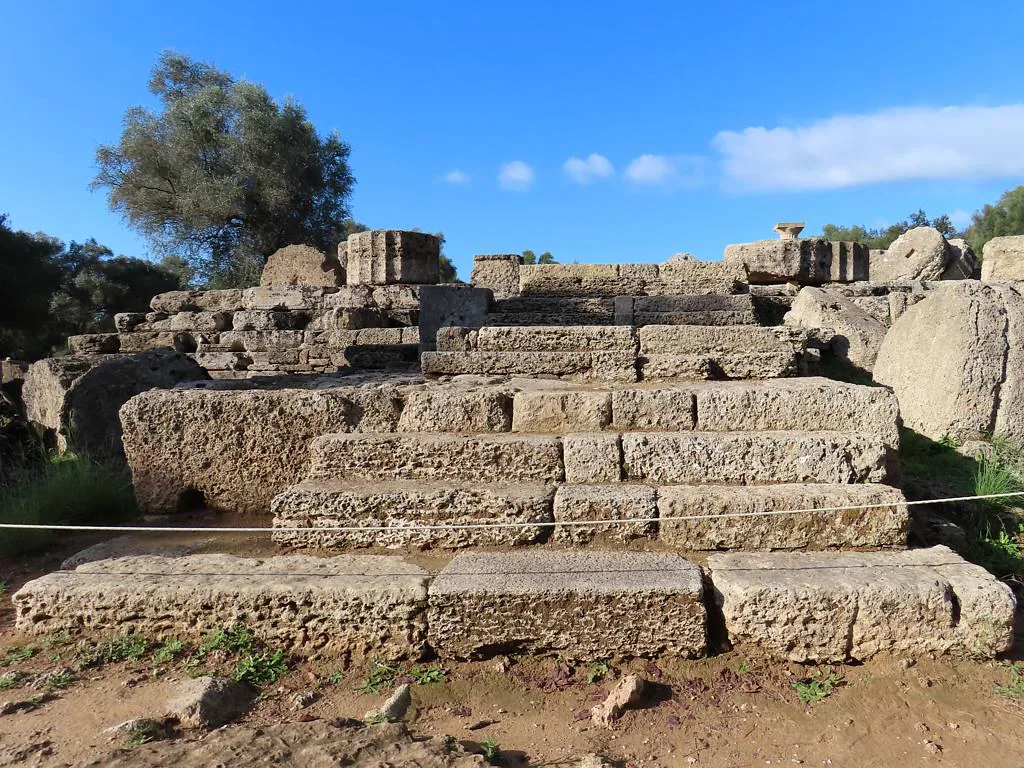
The Doric temple was built in the 5th century BC and is attributed to the architect Libon. Today the stepped platform marks its footprint inside the Altis. Huge drum sections of the columns lie where they fell. One column has been re-erected, and it gives the only vertical reference for the building's scale. Stand beside it and the size of each drum becomes clear.
- Foundation and stepped base: the clearest outline of the building.
- Fallen column drums: stacked and scattered along the platform.
- The single re-erected column: your scale marker and best photo spot.
History and the Pheidias Statue
Ancient writers described a seated statue of Zeus by Pheidias inside the temple. Ancient tradition counted it among the Seven Wonders of the Ancient World. The statue is lost, so no original survives to see in Greece or abroad. What you take away from the site is the setting, not the object. For the festival that drew pilgrims here, read our guide to the Ancient Olympic Games: History, Events and Visiting Olympia. The International Olympic Committee also covers the Games' ancient background.
Built in the 5th century BC, the temple's statue is lost, so the setting is what you actually study.
How the Temple Was Built: Libon's Doric Design
The temple was raised in roughly 470-456 BC by the Elean architect Libon, using spoils from Elis's victory over neighbouring Pisa. It followed the severe Doric style of the early classical period, with no ornament beyond the sculpture.
- Plan: a peripteral Doric temple with 6 columns across the front and 13 along the sides, roughly 64 m long and 28 m wide.
- Material: local shelly limestone, coated in fine stucco to give the surface a marble-like finish. Only the roof tiles and the sculptures were of marble.
- Columns: about 10 m high, which is why a single drum reaches past your waist.
- Interior: a two-storey colonnade inside the main hall framed the seated statue of Zeus, which Pheidias made later, around 435 BC.
The temple was a deliberately plain, monumental building. It was meant to dominate the Altis rather than decorate it. For a comparison with another Peloponnese Doric temple of the same century, see the Temple of Apollo Epicurius at Bassae, which has a very different, roofed setting in the mountains of Arcadia.
What the sculptures showed
The carved programme told stories of order and heroic effort:
- East pediment: the chariot race between Pelops and King Oenomaus, the mythic origin of the Olympic contest, with Zeus at the centre.
- West pediment: the battle of the Lapiths and Centaurs, with Apollo standing calmly in the middle.
- Metopes: twelve panels over the porch entrances, one for each Labour of Heracles.
Where the Temple's Sculptures Are Now
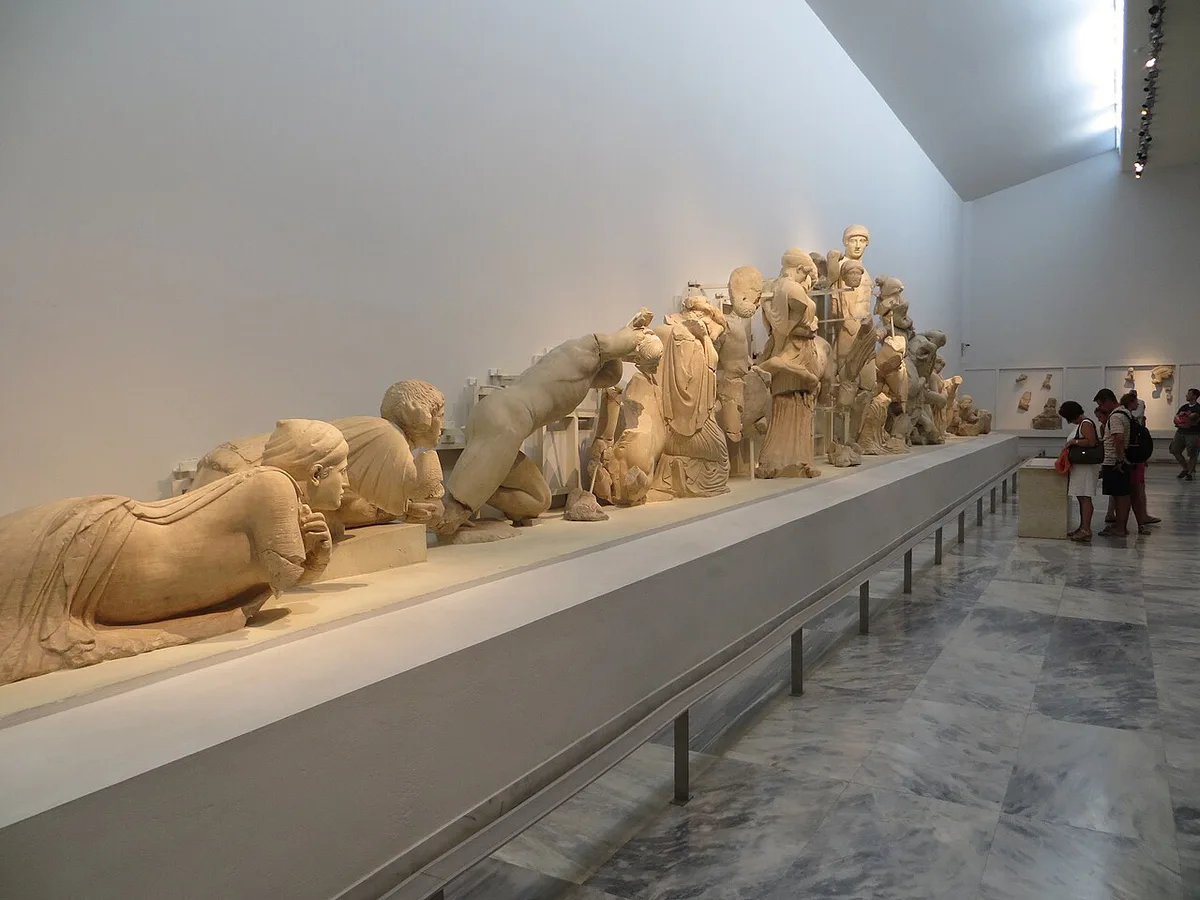
The temple's carved pediment and metope sculptures are not on the platform. They are displayed in the Archaeological Museum of Olympia, a short walk from the ruins. Visit both and the empty platform starts to make sense. Skip the museum and you see only the rubble.
Collapse and Rediscovery of the Temple
The temple stood for about a thousand years before it fell. Earthquakes in the 6th century AD brought down the columns, and over time the ruins were buried under silt from the nearby Alpheios and Kladeos rivers. That burial is why the drums lie in neat rows where they fell, rather than being carried off for building stone.
- 1829: the French Expédition de Morée made the first dig at the temple. Several metope fragments went to the Louvre in Paris, which is why a few panels from the Labours are not in Olympia.
- From 1875: the German Archaeological Institute began systematic excavation of the whole Altis, led by Ernst Curtius. The pediment and metope sculptures were recovered in this campaign.
- Since then: the site has been studied and conserved rather than rebuilt. The single re-erected column is a partial reconstruction made from original drums.
Keep this in mind when you stand at the platform. What you see is a deliberate presentation of an excavated ruin, with the fallen drums left as found. Allow time to read the site signs, then walk to the museum to see the recovered sculptures that once crowned the building.
Tickets, Opening Hours and Time Needed
Hours and prices change by season, and we have no current figure to quote here. Check the Ministry of Culture e-ticket portal for the current rate and closing time. Our Olympia ticket guide covers what the entry includes. Official site details are also listed on Odysseus.
How to Get There: Athens, Katakolo or Overnight
Your choice sets how long you can spend among the ruins. Bus timetables from KTEL Ilias are at ktelilias.gr.
| Option | Time on site | Cost level | Friction |
|---|---|---|---|
| Day trip from Athens | Shortest, with a long travel day | Moderate | Early start, late return; see Olympia From Athens: Day Trip, Bus, Car & Tour Options |
| Cruise stop from Katakolo | Limited by the ship's schedule | Low to moderate | Tight return time; see Ancient Olympia Shore Excursion from Katakolo: Options & Timing |
| Overnight in Olympia | Longest, with early or late light | Highest | Fewest transfers; best for the museum and the temple |
How to Fit It Into Ancient Olympia
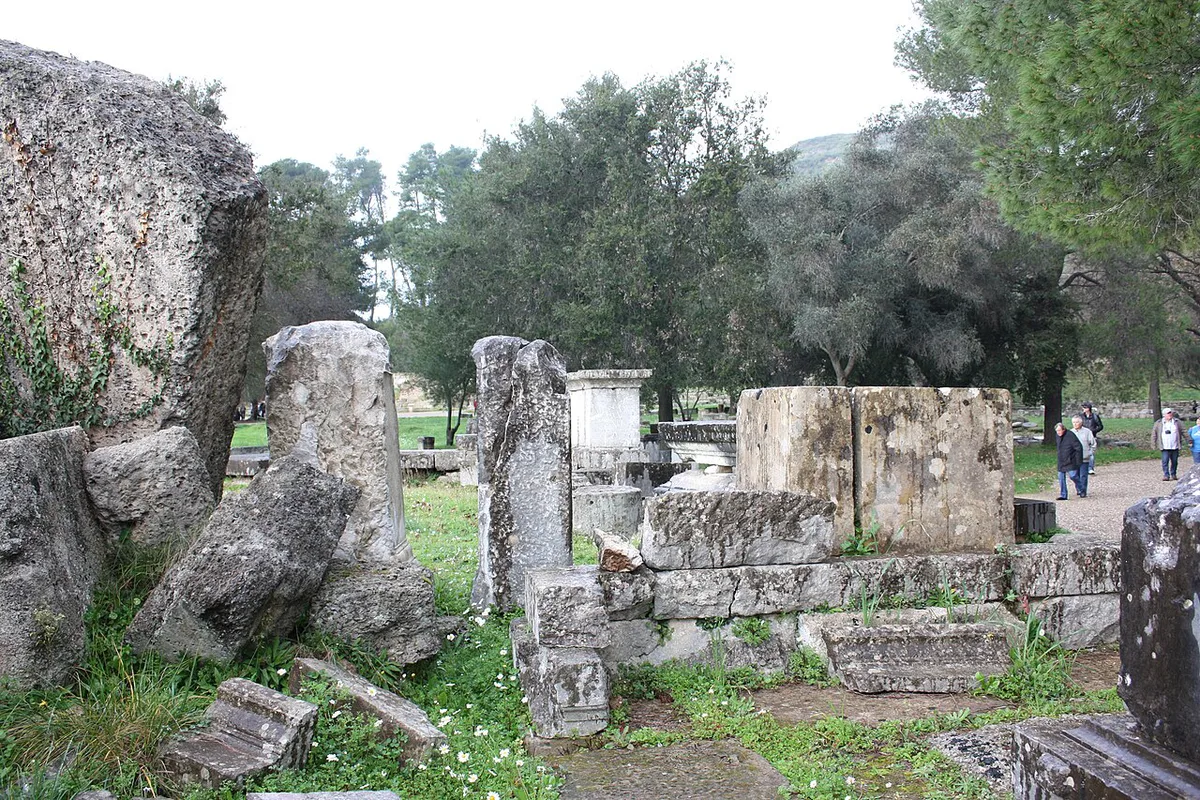
Start with the Temple of Zeus, then move to the nearby Temple of Hera. Finish on the track at the Olympia Stadium, Greece: Ancient Track Visit Guide, then end at the museum while you are still fresh. This order puts the ruins before the sculptures that explain them. After Olympia, more ancient Peloponnese sites make a natural extension.
Mistakes to Avoid
Most problems come from timing and mix-ups.
- Arriving near closing time and rushing the temple and museum.
- Skipping the museum, where the temple's sculptures are displayed.
- Booking Athens Olympieion tickets by mistake.
- Walking the open site at midday in summer, when shade is scarce.
- Following a narration without checking the site layout.
Related guides



Continue reading
Guides on the same trip


