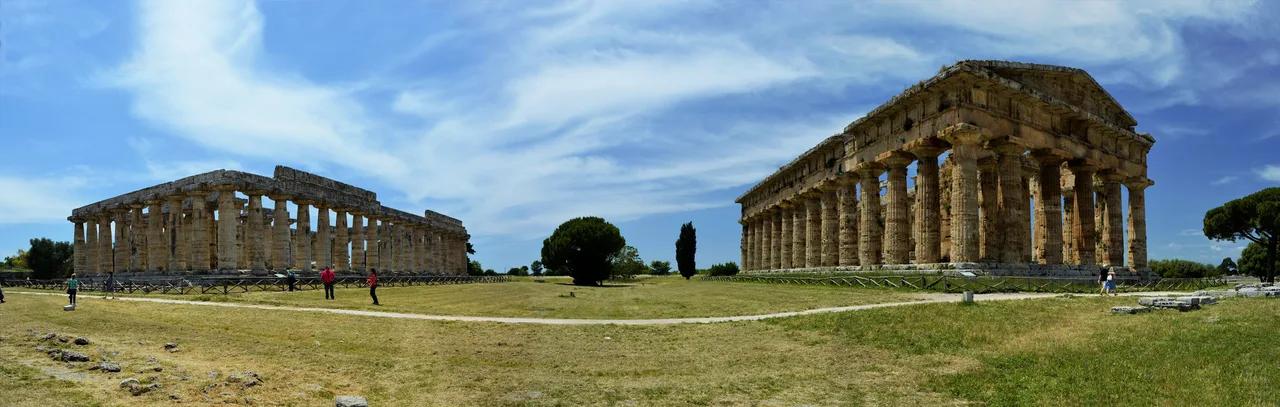
Last updated November 2026. The Temple of Neptune at Paestum is a large Doric temple of the Greek city Poseidonia, built in the 5th century BC. Its name is traditional, and scholars now generally attribute the building to Hera. This guide covers what to look at, how the three temples differ, and how to fit the visit into a day from the Paestum archaeological park.
Featured image: JohnGGM, CC BY 2.0, via Flickr.
Temple of Neptune at Paestum: what it is
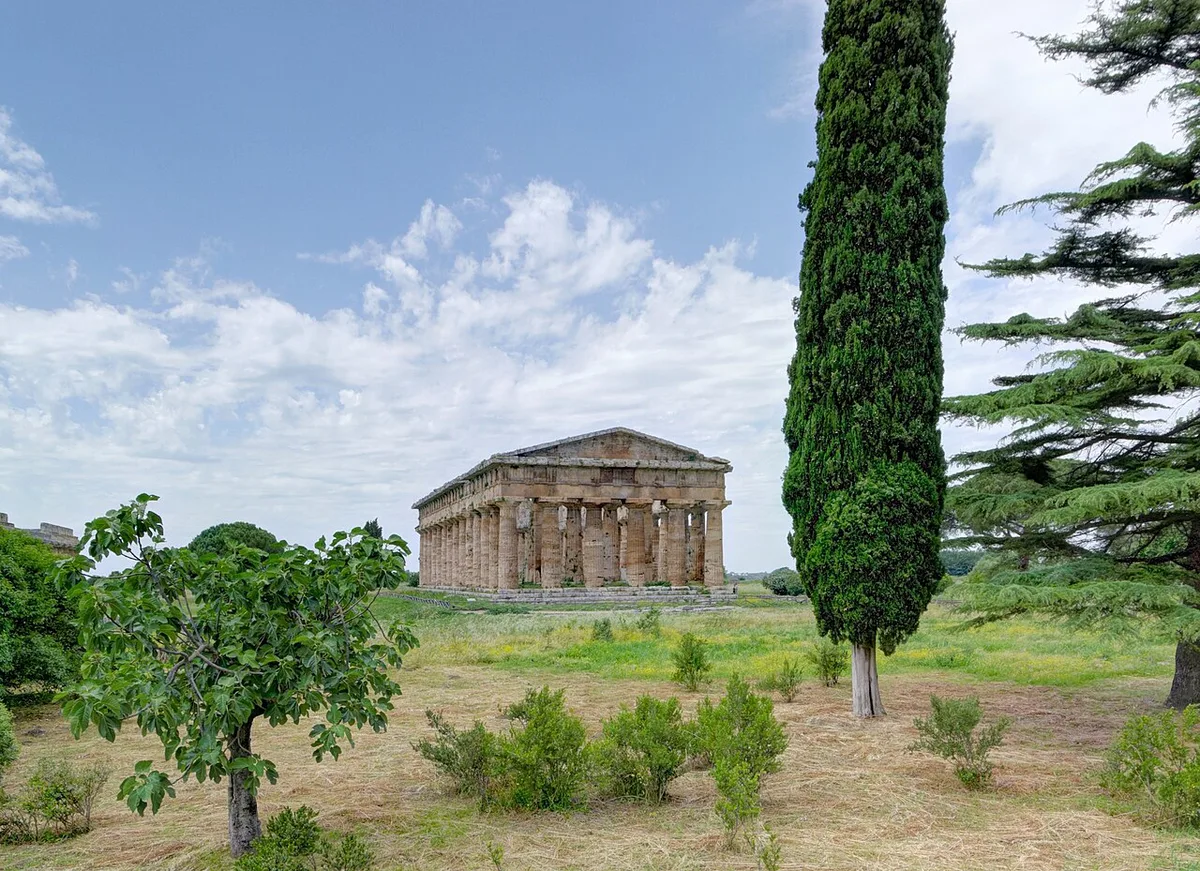
Poseidonia was a Greek colony, and its Doric temples stand inside the Paestum park in Campania. The "Neptune" label dates from earlier centuries of travel writing. It is still the name on most signs, maps and tickets. Current scholarship generally reads the building as a second temple of Hera, called Hera II. Treat "Temple of Neptune" as the popular name and "Hera II" as the working identification. The official park and museum site is the best place to see how the park itself names it.
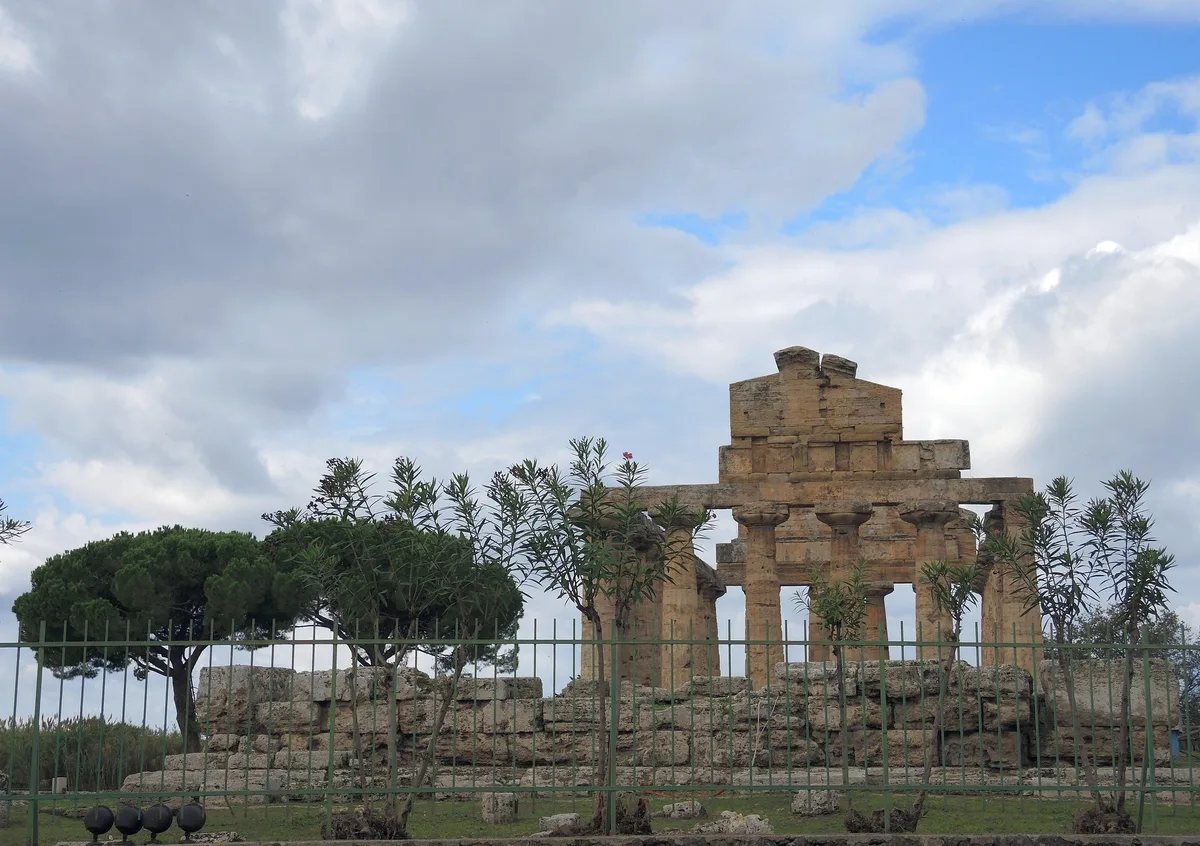
Neptune, Hera I, Hera II and Athena: which temple is which
Paestum has three major Greek temples, and their names overlap. This table sorts the labels you will meet on maps and in guidebooks.
| Traditional name | Modern identification | Visitor takeaway |
|---|---|---|
| Temple of Neptune | Hera II | The largest and most complete of the three. Start here. |
| Basilica | Hera I | The earlier Hera temple. Its columns are more worn. |
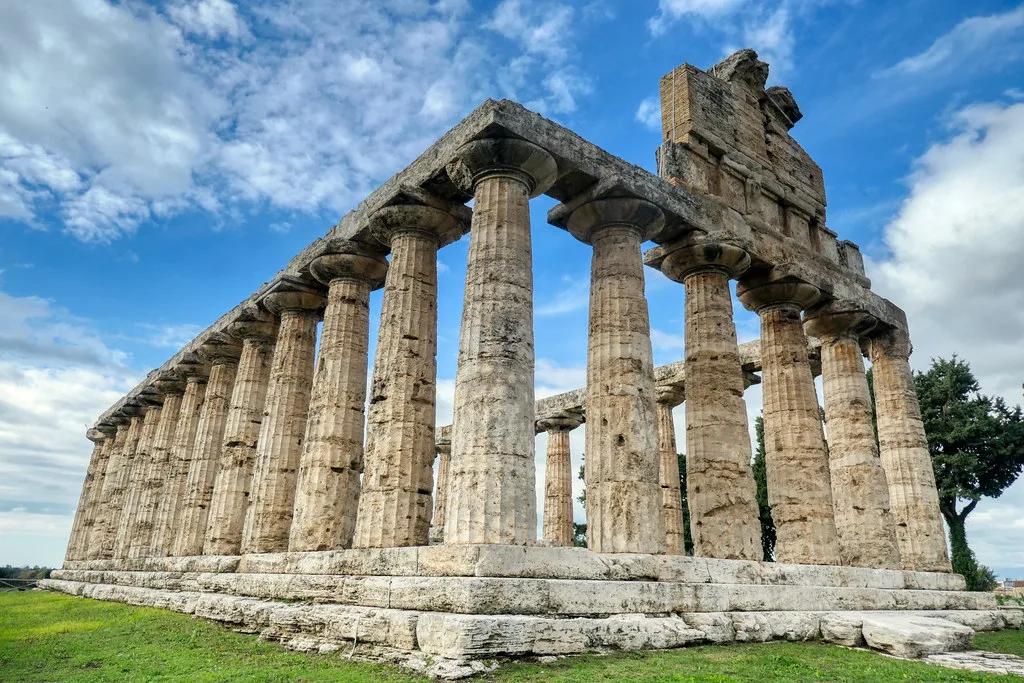
| Temple of Athena | Athena | Stands apart from the other two. Worth a separate look. |
What to look at up close
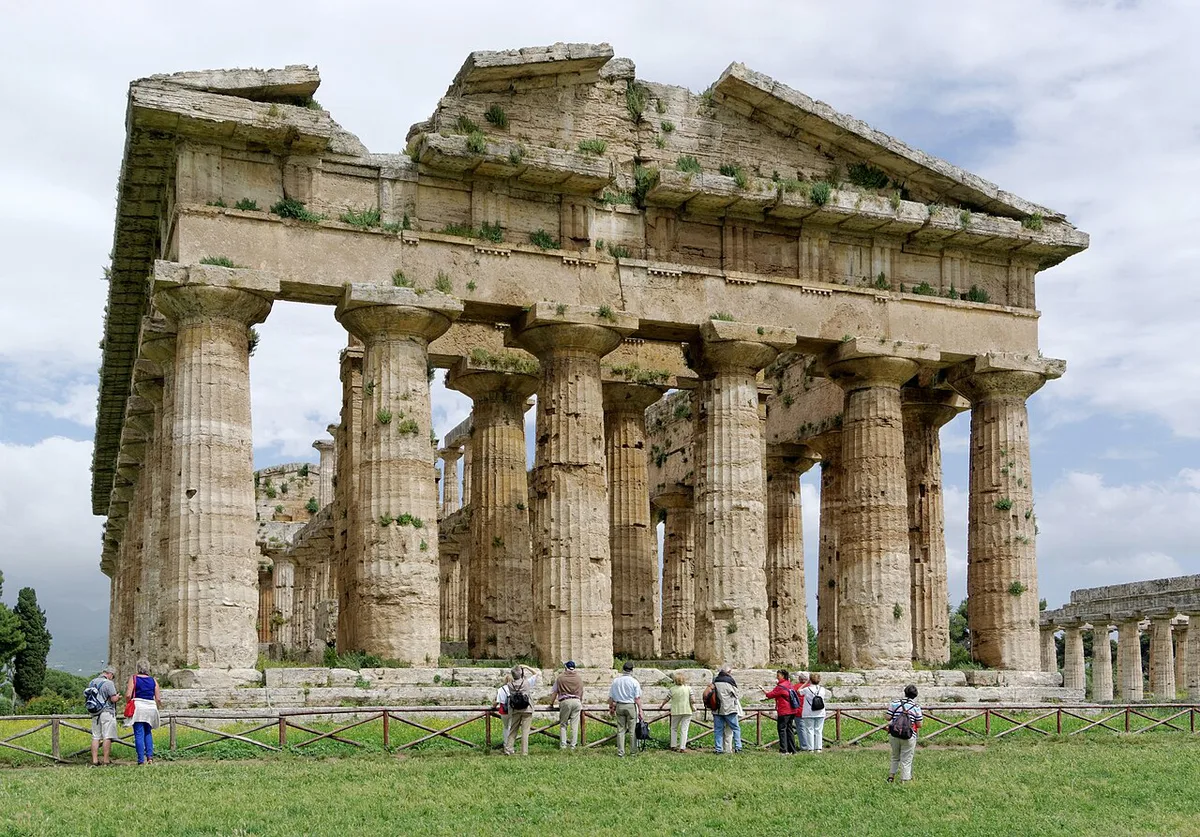
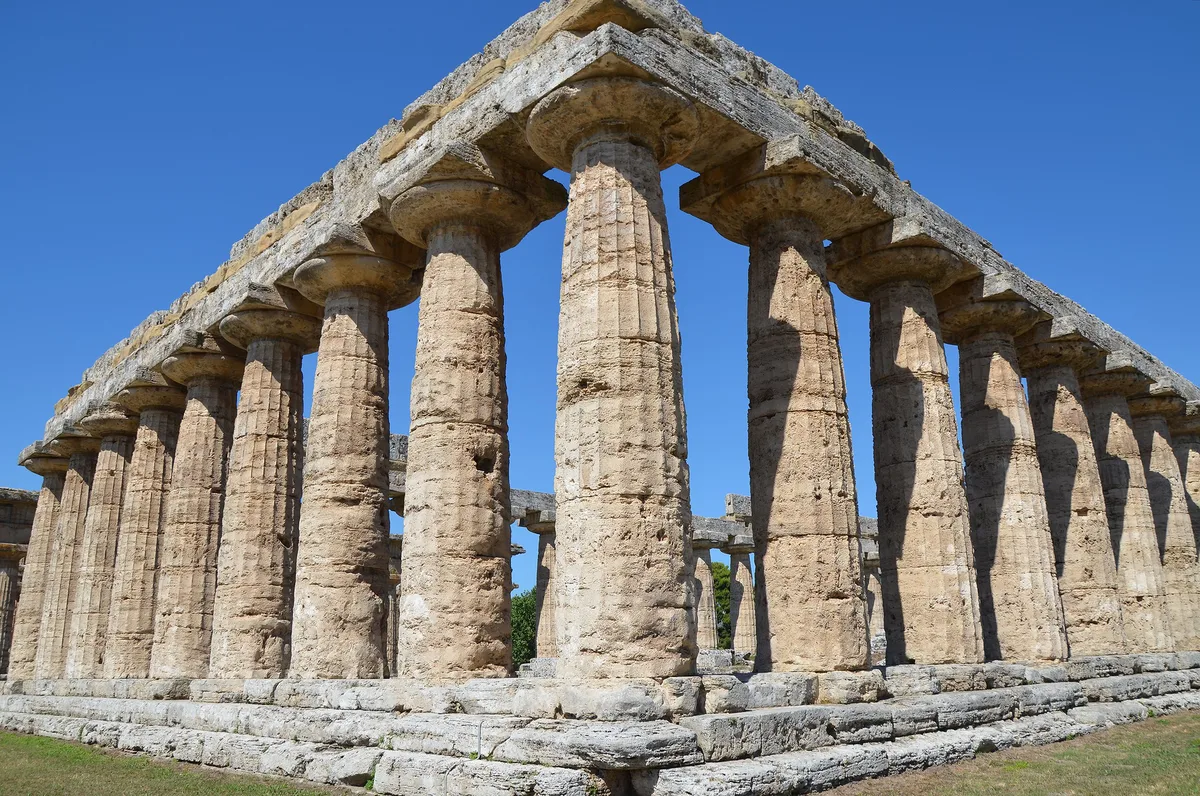
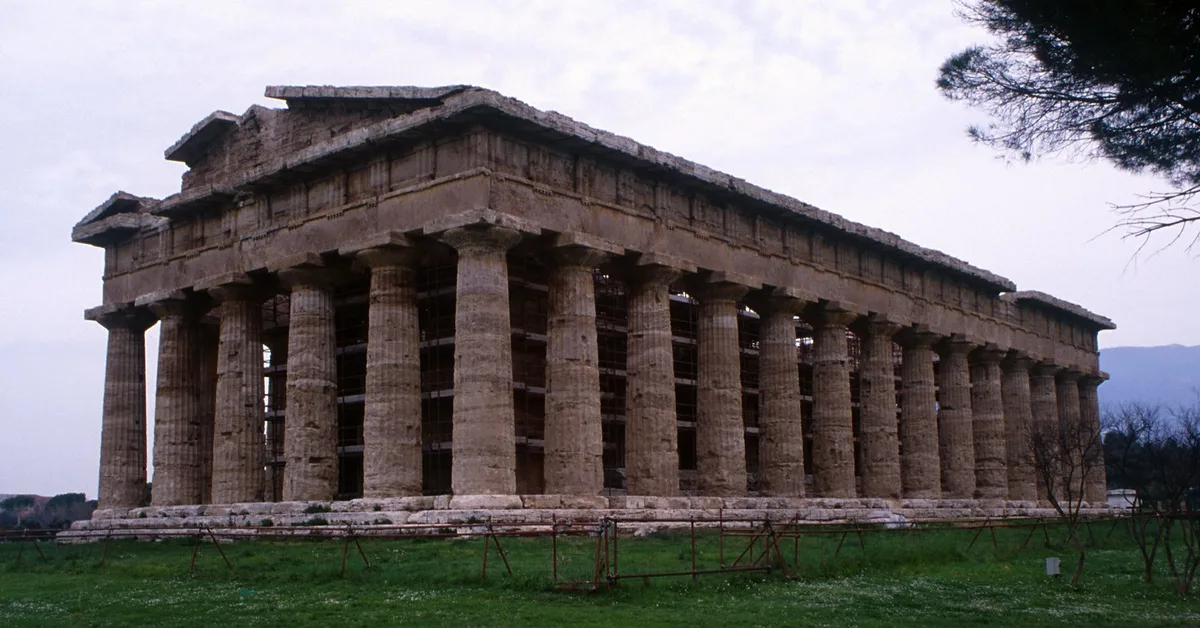
Start with the Doric columns. They have no base, and the shafts are fluted and taper upward. Above them, check the entablature, the horizontal band that carries the roof line. Walk the full perimeter and watch how the colonnade lines up from different angles. Look at the stone surface too. Its weathering shows how long the temple has stood in open air.
- Columns: plain Doric capitals and fluted shafts.
- Entablature: the beam and frieze band above the columns.
- Perimeter: the colonnade changes character at each corner.
- Stone: pitted and weathered, with a warm tone in low light.
Seeing it: access, tickets and hours
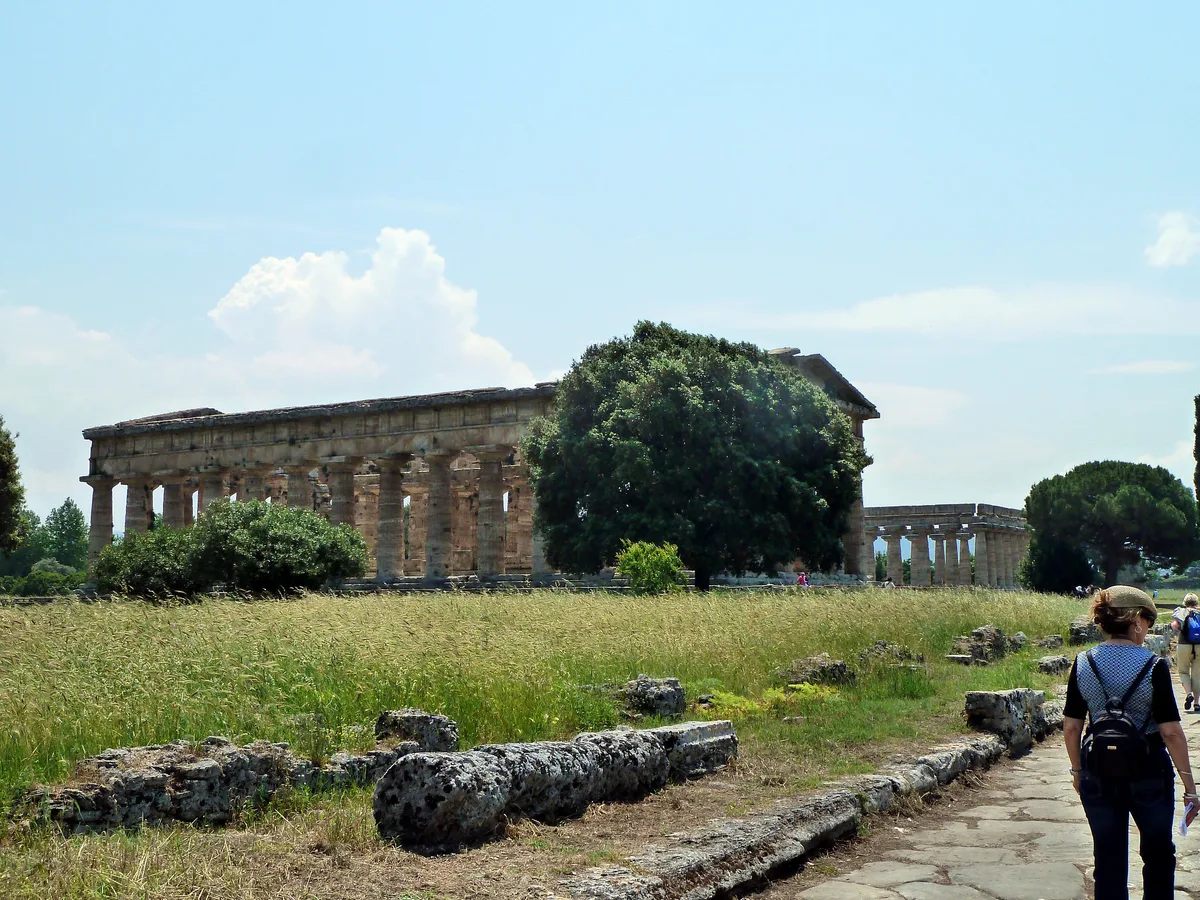
Plan to view the temple from the paths around it. Visitors generally do not enter the cella, so do not budget time for an interior visit. Entry runs through the archaeological park, which also holds the other temples. The Paestum ticket guide explains the ticket structure. Current prices, hours and any scaffolding are listed on the Parco Archeologico di Paestum e Velia site, and they change by season.
Best time and light
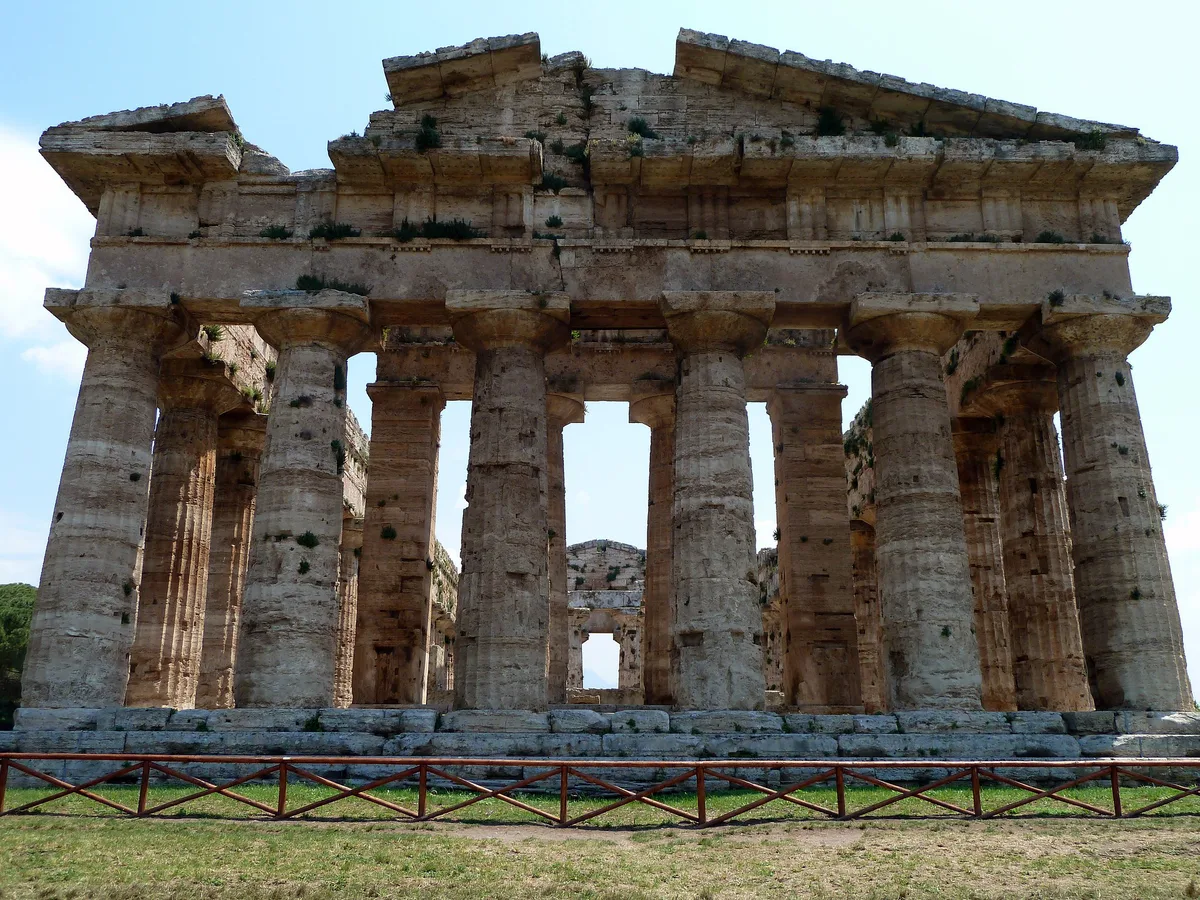
Early morning and late afternoon give softer light and cooler walking. Low sun brings out the fluting on the columns and warms the stone. Midday in summer means heat, glare and little shade across the open site. Shoulder seasons trade shorter days for easier walking. Photograph the temple from several sides, because the angle changes the look of the colonnade.
How much time to allow
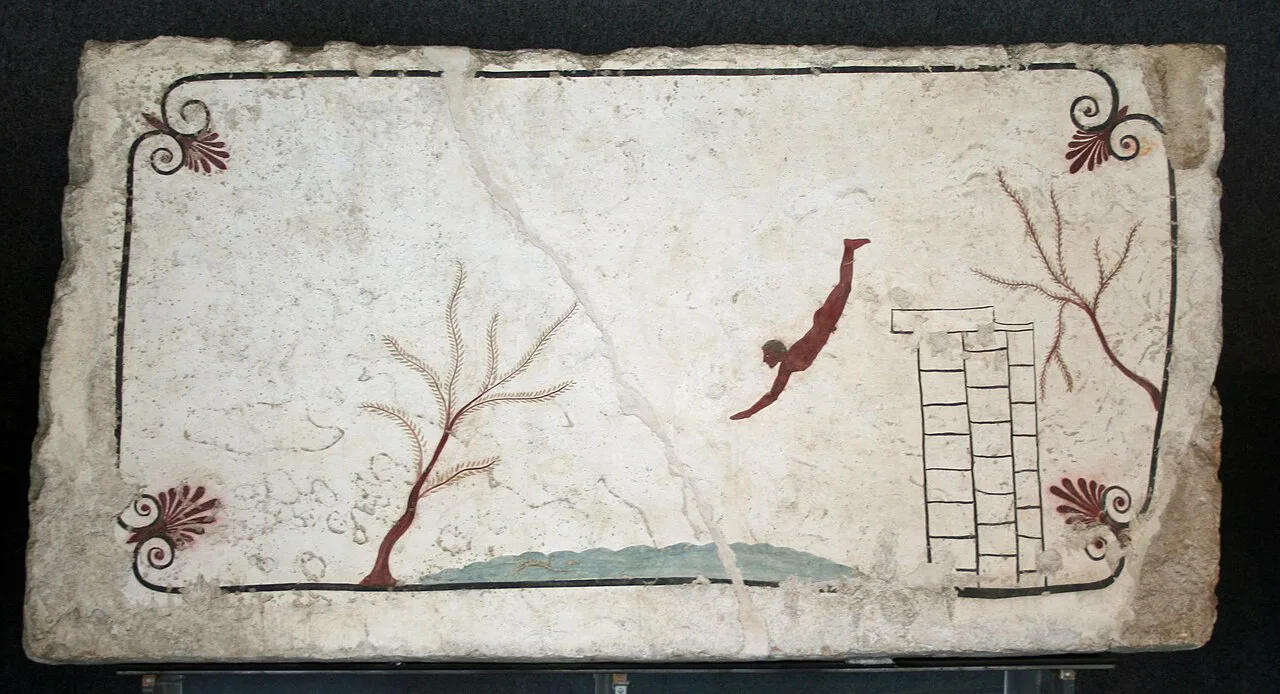
A temple-only visit is quick, and a full walk through the three temples takes longer. Adding the Paestum Museum: Tomb of the Diver, Tickets & Visit Tips turns it into a half-day. Skipping the museum is a common mistake, because it holds finds from the site that explain what you saw outside. For transport, see getting to Paestum from Naples. Day-trippers from Salerno should read the Salerno route. Travelers based on the coast can use the Amalfi Coast route. Check the last return service before you settle in for the afternoon.
45 minutes covers the Temple of Neptune alone, but a half-day is the realistic plan once the other temples and the museum join in.
Is it worth it? Who should skip
Anyone interested in Greek architecture should go. Our full Paestum value verdict weighs the trade-offs in detail. Skip or shorten the visit in these cases:
- Tight Amalfi Coast schedule: the transfer eats much of a day.
- Families with young children: the site is open, with limited shade.
- Extreme heat or limited mobility: paths are uneven and exposed.
- Mistakes to avoid: arriving at midday in summer, expecting to enter the temple, and missing the last train or bus.
Pair it with
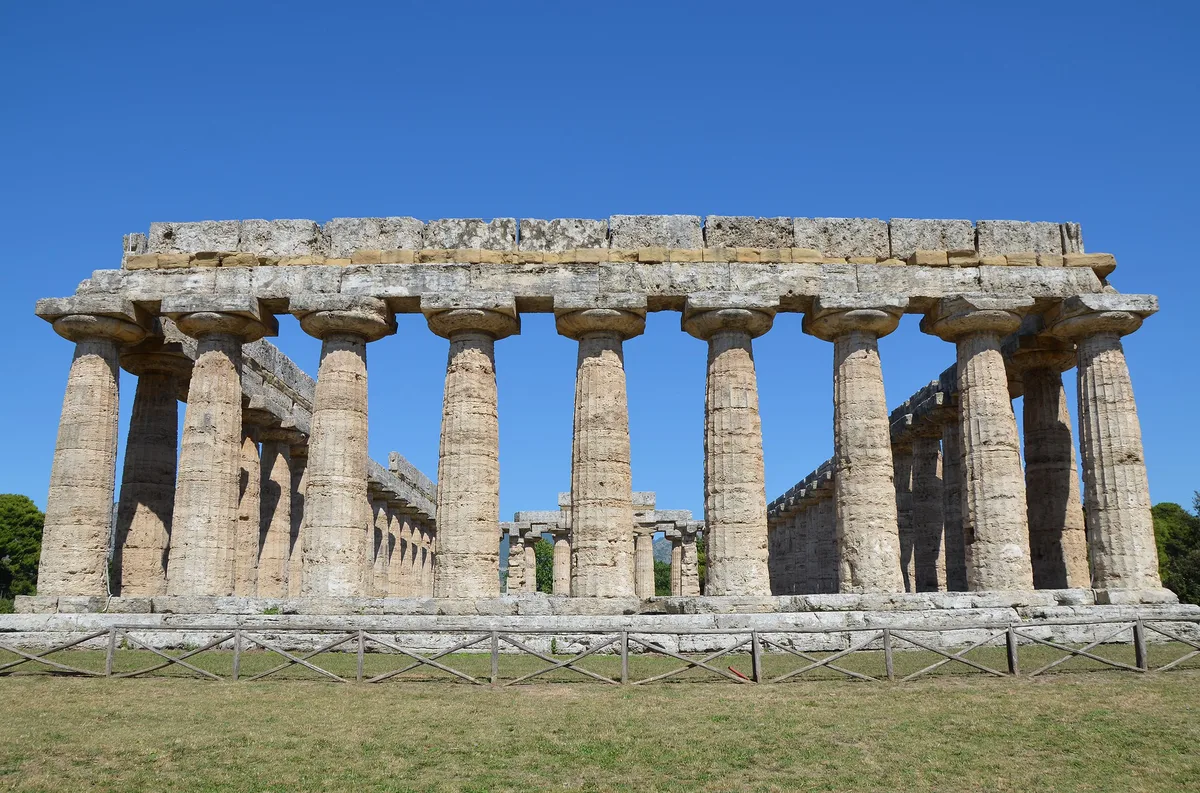
Combine the temple with the museum and the other two temples for a full picture of Poseidonia. For context across the country, read our guide to Greek Temples in Italy: Paestum and Where to Go. Another Greek city in Campania is described in the guide to Velia, which the same park administers.
A realistic time plan for the temple and museum
Allow 45 minutes if you want to focus on the Temple of Neptune alone. This gives time to walk its perimeter, study the Doric columns from several angles, and pause for photographs. It does not leave much room for the other monuments or for a slow circuit of the park.
Set aside a half-day for the temple, the other two major temples, and the Paestum National Archaeological Museum. The museum provides the archaeological context that the open-air ruins cannot show on their own. Start with the temples if light and heat are your priority. Visit the museum afterwards if you need shade or want to understand the finds connected with Poseidonia.
Check the park's seasonal closing time before deciding the order. Leave a margin for the walk between the archaeological area and the museum, as well as your return train or bus.
Related guides

Continue reading
Guides on the same trip