
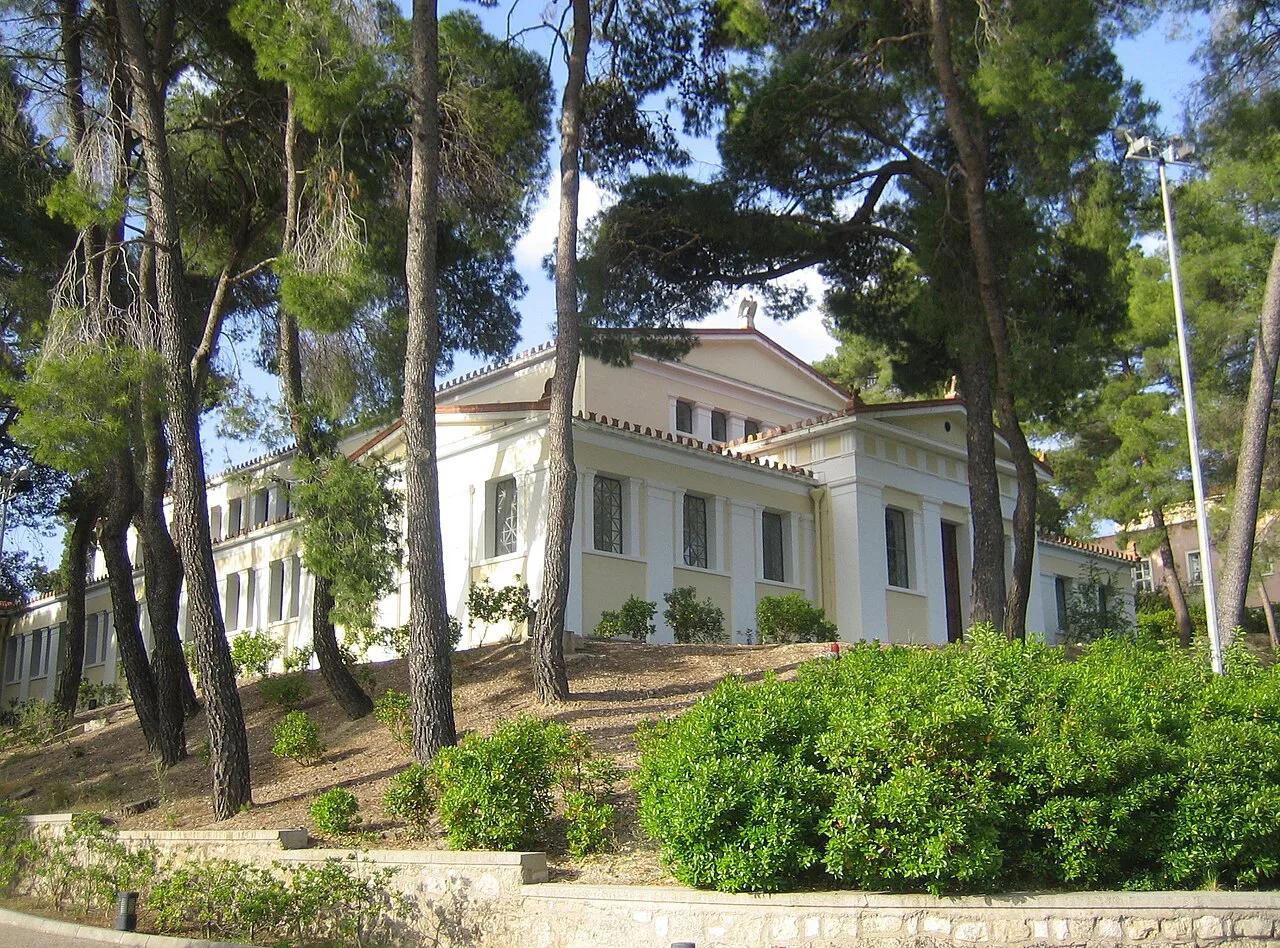
Ancient Olympic Games: History, Events and Visiting Olympia
Last updated November 2026: the ancient Olympic games were a religious and athletic festival held at Olympia in honor of Zeus every four years, traditionally dated from 776 BC. They continued until the late 4th century AD. Jump to the visiting section for what you can still walk through at Olympia today.
Featured image: Tomisti, CC BY-SA 4.0, via Wikimedia Commons.
How the ancient Olympic games started
Tradition dates the first Games to 776 BC, the year ancient lists first record a winner. That winner was Coroebus of Elis, a cook who won the sprint. Scholars treat 776 BC as a traditional date, because athletic contests probably took place at Olympia earlier. Games came every four years in late summer at the sanctuary of Zeus. Greeks called that four-year span an Olympiad and used it to date events. A sacred truce, the ekecheiria, protected travelers heading to the sanctuary. Sources describe it as running one month before and one month after the festival. Olympic bodies still cite that Olympic truce tradition today.
Who could compete, and who could not
Any free-born Greek man could enter. Women, slaves and non-Greeks were barred as competitors. Athletes had to reach Elis a full month early for supervised training, and late or unfit entrants were turned away. Men competed nude, a practice called gymnos that gave us the word gymnasium. Ancient writers say married women could not watch, and tradition holds that offenders faced being thrown from Mount Typaion. Those writers also name one exception, a priestess of Demeter Chamyne with a reserved seat. Treat the punishment as ancient tradition rather than a documented case.
The events: from one sprint to a full programme
Early Games had a single race. Over time the programme grew to cover running, combat and horse events. Here is how the main events compare.
| Event | Distance or format | What made it distinctive |
|---|---|---|
| Stadion | 192 metres (about 210 yards) | Original event and the most prestigious |
| Diaulos | 384 metres (about 420 yards) | Double stadion, one turn at the far end |
| Dolichos | About 4-5 km (roughly 2.5-3 miles) | Long-distance race |
| Pentathlon | Five disciplines | Sprint, long jump, discus, javelin, wrestling |
| Wrestling | Won by three throws | No time limit |
| Boxing | No rings, no rounds | Bouts ended by knockout or surrender |
| Pankration | Wrestling plus boxing | Few restrictions; biting and eye-gouging banned |
| Hoplitodromos | Sprint in armor | Runners carried helmet and shield |
| Chariot races | Four-horse and two-horse | Held on a hippodrome, with frequent crashes |
Prizes and glory
Officially, an Olympic winner received an olive wreath cut from the sacred grove at Olympia. Real rewards came at home. Cities honored victors with statues, public privileges and commissioned poems, and many of Pindar's surviving odes celebrate Olympic winners. Later writers list specific meals and cash grants, but the amounts and the famous anecdotes about wrestlers and boxers vary by source. Sculpture from the sanctuary survives in the Olympia museum collection.
Cheating, fines and the Zanes
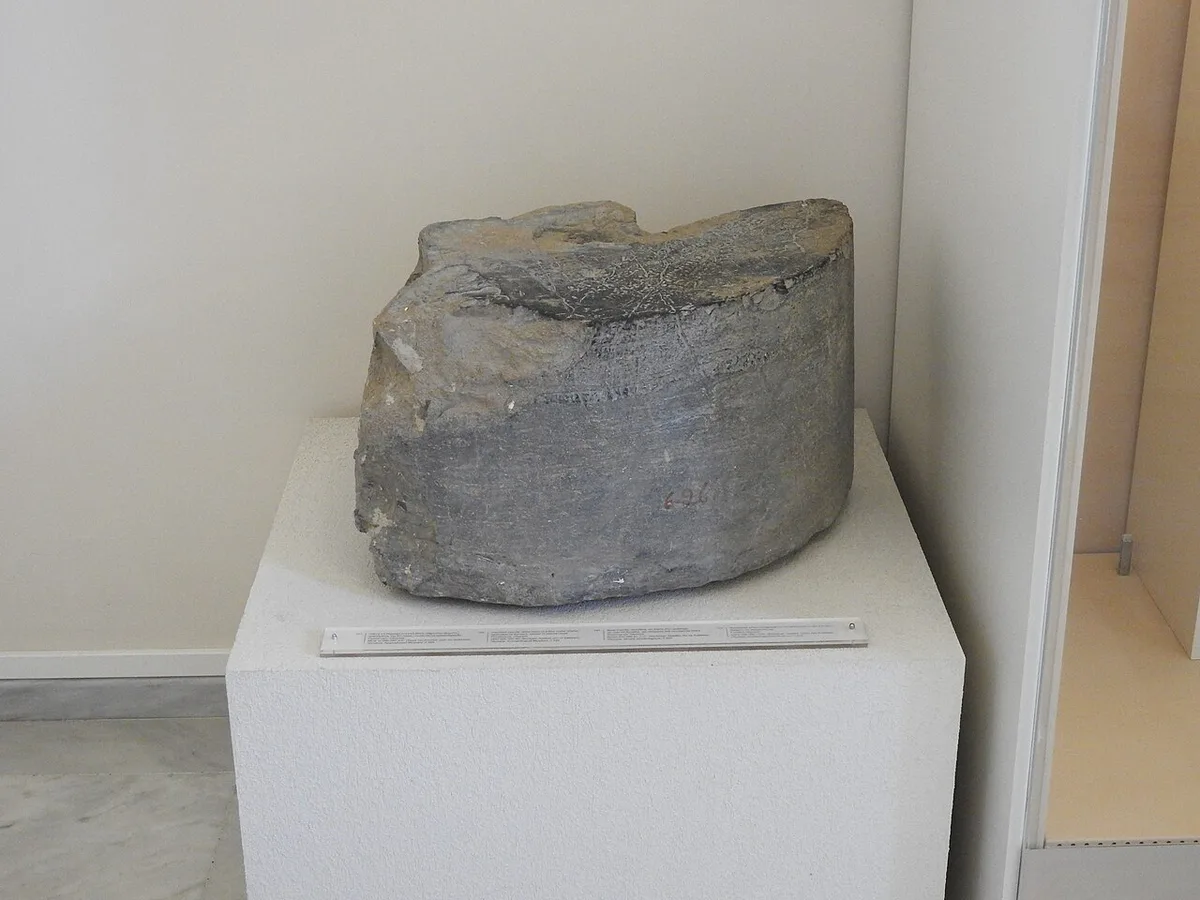
Athletes bribed opponents and, according to ancient writers, sometimes misrepresented their home cities. Fines paid by offenders funded bronze statues of Zeus called Zanes. Each carried an inscription naming the cheat and the offense. Accounts count about 16 of them by Roman times. Their stone bases line the approach to the ancient stadium, so you can see them on the way in.
How the Games ended
Roman rule did not stop the Games. Emperors including Nero used them for political show. Most accounts date the end to 393 AD, when Theodosius I banned pagan festivals, though some sources give 383 AD. Temples were ordered dismantled in 426 AD under Theodosius II. Earthquakes and river flooding later buried the sanctuary in silt. German archaeologists began systematic excavation in 1875. Pierre de Coubertin then led the modern revival, and the first modern Games took place in Athens in 1896. A torch relay from Olympia began with the 1936 Berlin Games.
Visiting Olympia today
Olympia lets you match each story above to stone. Start with the site, then finish in the museum. Walk into the stadium through the same tunnel athletes used. Look for the Zanes bases on the way. Ruins are laid out across one archaeological site, so the table below maps topics to places. Hours and closures are posted on the Ministry of Culture site page. Prices and hours checked November 2026 should still be confirmed there before you travel. Full ticket and hours detail is in our ticket and hours guide.
| Story from the Games | What to look for | Where |
|---|---|---|
| Races and the athletes' entrance | Stone starting lines and the entrance tunnel | Stadium |
| Cheating and fines | Statue bases of the Zanes | Approach to the stadium |
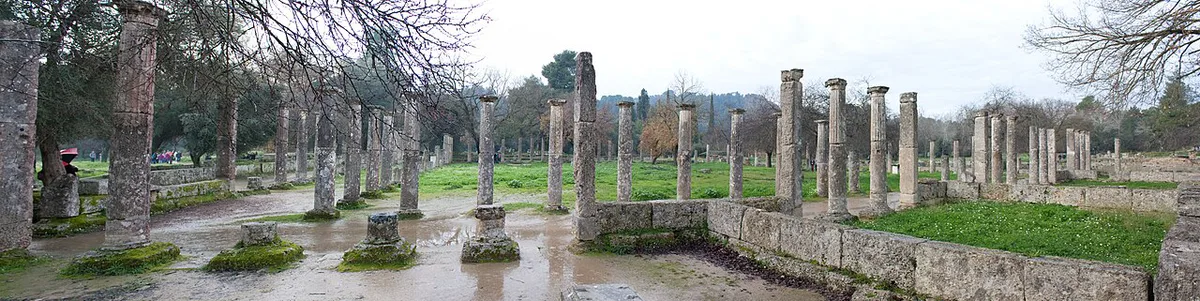
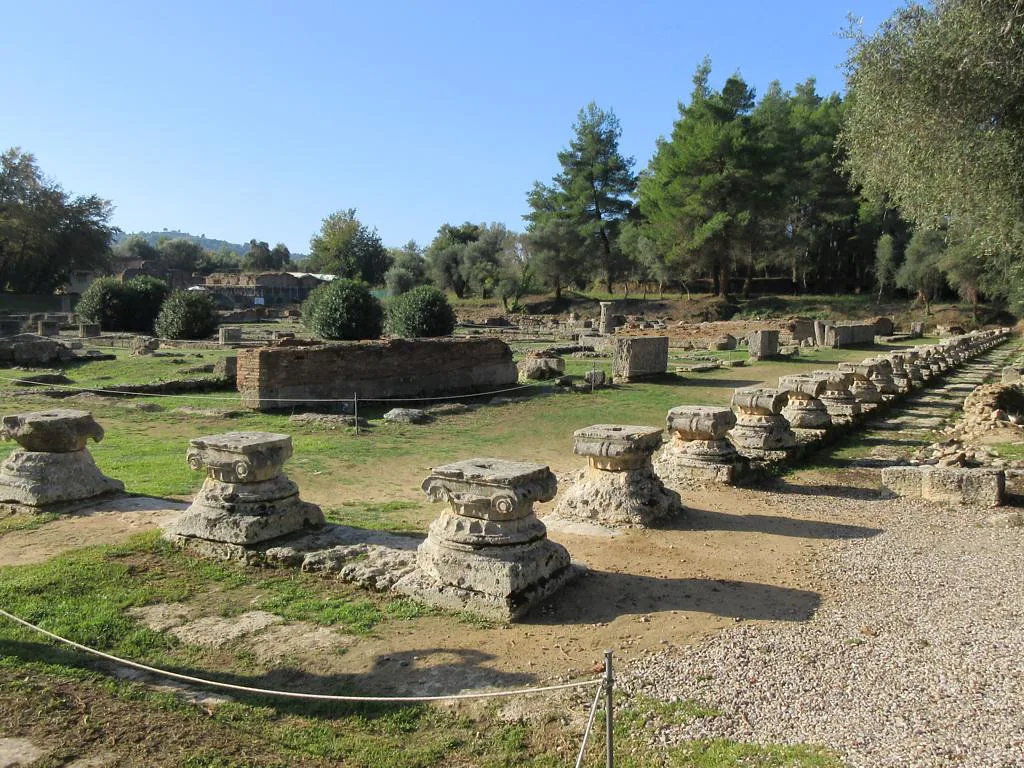
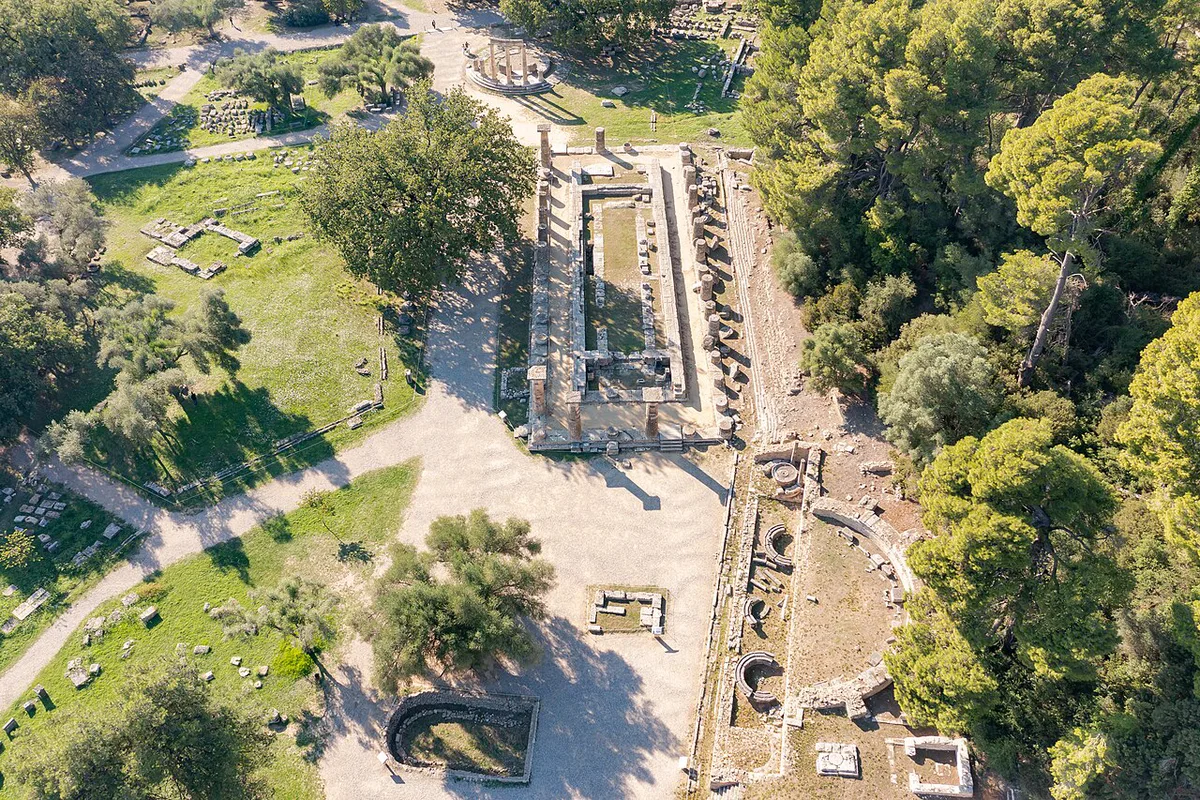
| Zeus and the sanctuary | Foundations with fallen columns | Temple of Zeus |
| Older cult worship | Partly upright columns | Temple of Hera |
| Training | Wrestling school and exercise halls | Palaestra and Gymnasium |
| Sculpture of the cult statue | Workshop where Phidias carved the giant Zeus | Phidias's workshop |
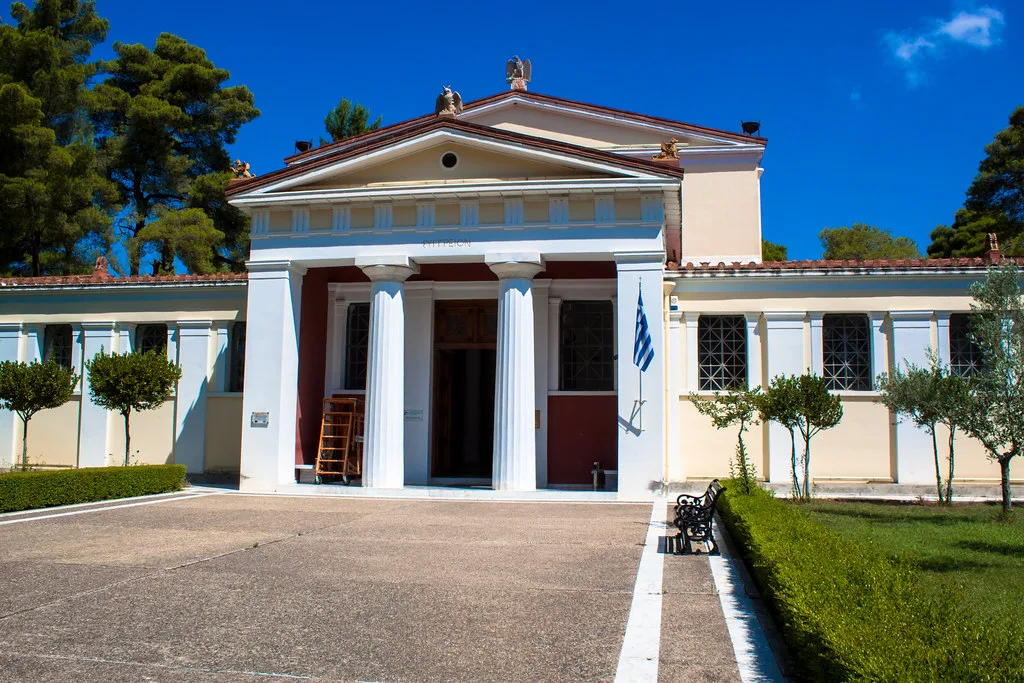
| Prizes and art | Hermes of Praxiteles and temple pediments | Archaeological museum |
- Zeus temple foundations: the columns are down, but the plan is easy to read.
- Hera temple columns: older than the Zeus temple and partly upright.
Time, route and who should skip what
Olympia sits in the western Peloponnese, about 4 hours' drive from Athens and about 90 minutes from Patras. Our guide to getting there from Athens covers the options. Bus timetables are on the KTEL Ilias site. Cruise passengers should read the Katakolo shore-excursion guide before booking. A day trip from Athens is possible but means about 8 hours of driving round trip. Book timed entry through the Ministry e-ticket portal where available.
From Athens, a day trip means about 8 hours of driving round trip, so Patras, about 90 minutes away, is the easier base.
| Route | Time | Trade-off |
|---|---|---|
| Car from Athens | About 4 hours each way | Flexible, but a long day |
| Car from Patras | About 90 minutes | Easiest drive to the site |
| Bus | Check KTEL Ilias timetables | Cheaper, but tied to departure times |
| Cruise from Katakolo | Depends on port time | Tight window; museum may get skipped |
Mistakes to avoid and who can skip
Midday in summer is hot, and shade across the site is limited. Surfaces are uneven, so mobility-limited visitors should plan shorter loops. Readers who only want the history can skip the visit and stop here. After Olympia, our Peloponnese ancient sites guide lists other stops. Messene is a natural extension via Ancient Messene: Visitor Guide, Hours & Tickets.
- Skipping the museum: it holds the Hermes of Praxiteles and the temple pediments.
- Treating the site as a field of ruins: use the table above to give each stop a story.
- Booking a tight cruise window: allow time for both the site and the museum.
- Arriving at midday in summer: start early to beat the heat.
Frequently Asked Questions
What was the first modern Olympic game?
The first modern Games took place in Athens in 1896. Pierre de Coubertin led the revival.
Who is called the father of the Olympics?
Pierre de Coubertin is called the father of the modern Olympics. He pushed for the 1896 revival in Athens.
Who was the very first Olympian?
Tradition names Coroebus of Elis, a cook who won the sprint in 776 BC. Scholars treat that date as traditional.
Related guides



Continue reading
Guides on the same trip


