Last updated November 2026: the Mycenaean civilization was the Late Bronze Age culture of mainland Greece, centred on palace sites such as Mycenae, Tiryns and Pylos. It flourished c. 1400–1100 BC and wrote an early form of Greek in Linear B. This guide explains what it left behind and which sites let you walk through it, starting with the hilltop citadel of Mycenae.
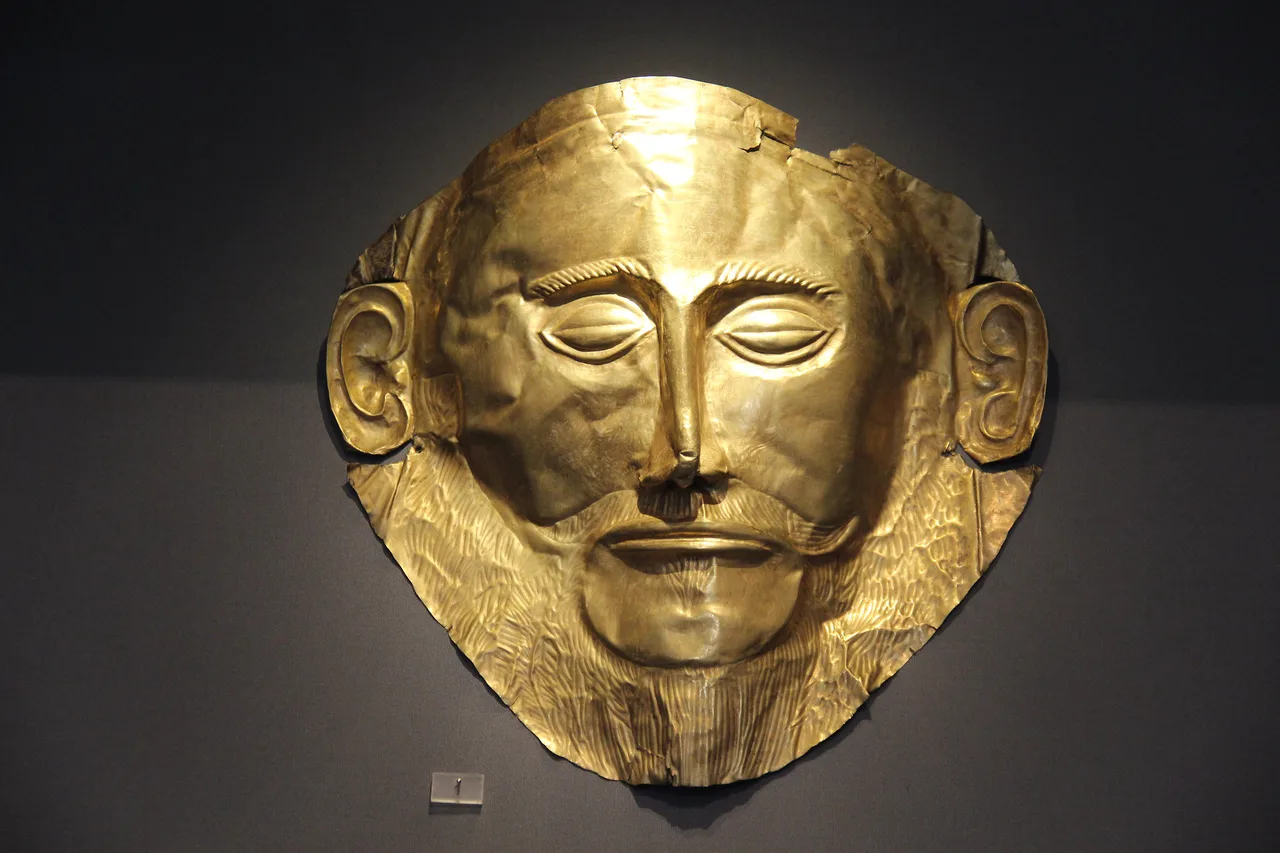
Featured image: George E. Koronaios, CC BY-SA 4.0, via Wikimedia Commons.
What was the Mycenaean civilization?
Mycenaean culture belongs to the Late Bronze Age of mainland Greece, roughly c. 1400–1100 BC. Its power was concentrated in fortified palace centres, and Mycenae in the Argolid region of the Peloponnese gave the culture its name. Each palace ran a local state, collected goods and kept records. Scholars use the label "Mycenaean Greece" for the whole network, and the UK spelling "civilisation" is equally common.
- Era: Late Bronze Age, c. 1400–1100 BC
- Region: mainland Greece, with a core in the Argolid
- Key centres: Mycenae, Tiryns and Pylos
- Writing: Linear B, an early form of Greek
- End of the palace era: around 1100 BC
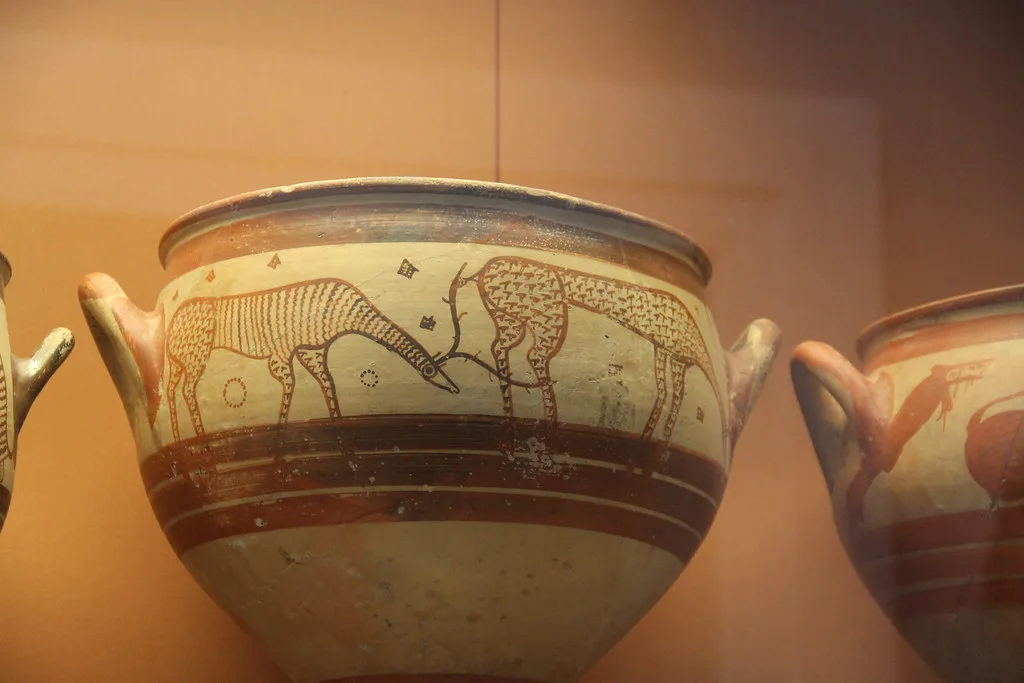
Mycenaean timeline: from the shaft graves to the end of the palaces
The Mycenaean world did not appear fully formed. Archaeologists place it in the Late Helladic period, the Late Bronze Age phase of mainland Greece, and the dates below are approximate.
| Period (approx.) | What happens |
|---|---|
| c. 1700-1600 BC | Wealthy burials appear on the mainland, a sign that powerful local elites are emerging. |
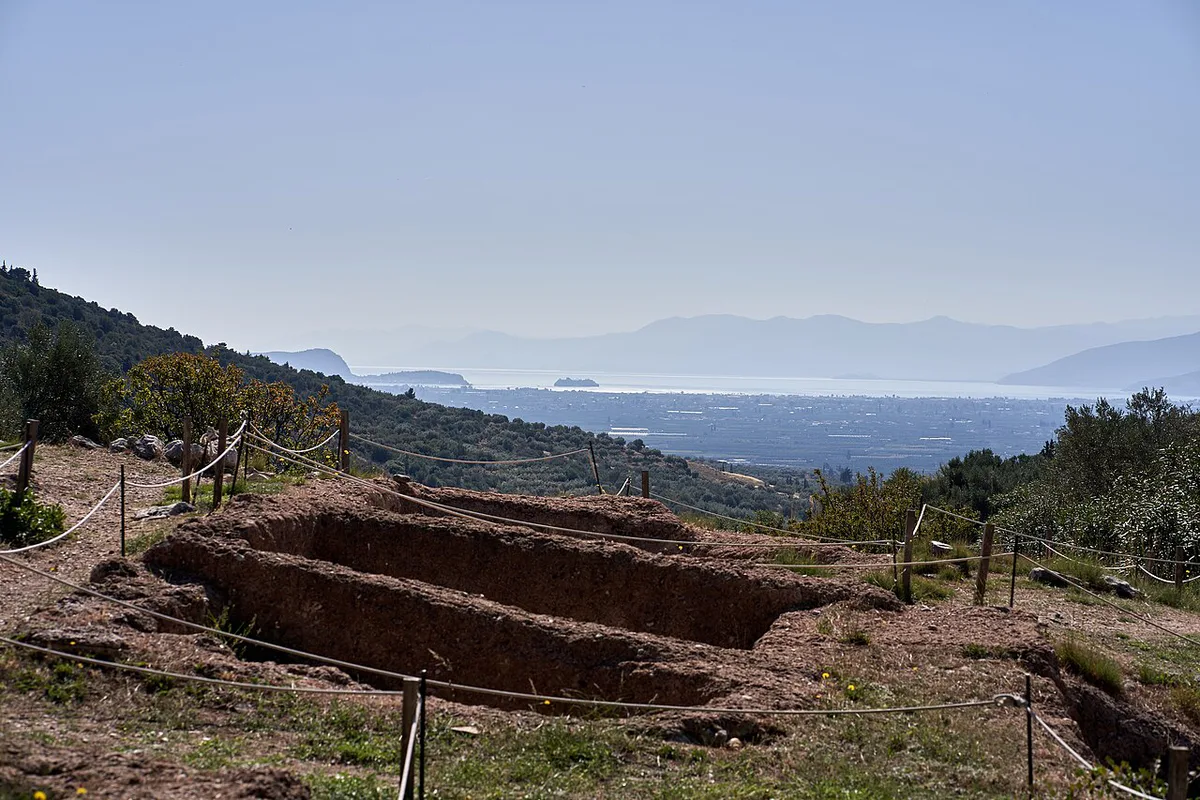
| c. 1600-1500 BC | The shaft graves of Grave Circle A at Mycenae hold weapons, gold and masks. Contact with Minoan Crete is strong. |
| c. 1400 BC | Mainland Greeks take over much of the Aegean trade network. Linear B appears on the mainland, adapted from Crete's Linear A. |
| c. 1350-1250 BC | Palaces and citadels are rebuilt on a grand scale. The Cyclopean walls and the Lion Gate at Mycenae belong to the later part of this phase. |
| c. 1200-1100 BC | Palaces are destroyed or abandoned and the palace system ends. |
This sequence explains what you see on a visit. The grave circle at Mycenae is older than the palace and gate around it. The tholos tombs belong to the centuries of greatest wealth. Reading the site in that order makes the ruins easier to follow.
Key features: palaces, Linear B, tombs and fortifications
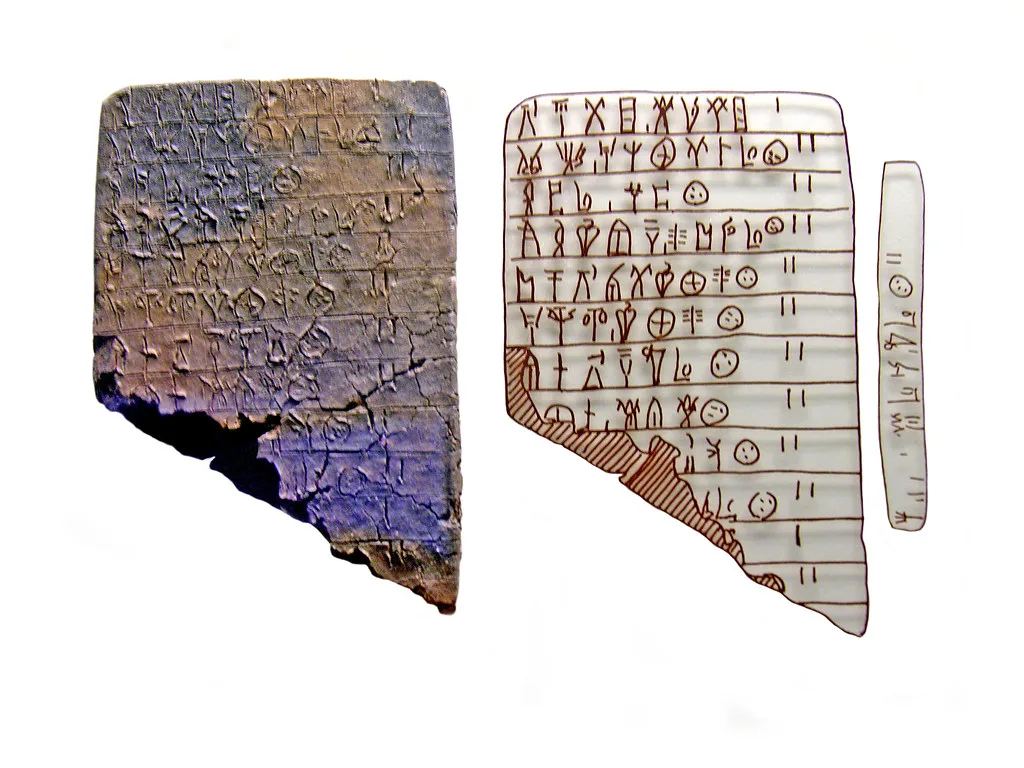
Palatial states are the first defining feature. Officials at each palace tracked goods and workers, and they wrote on clay tablets in Linear B. Linear B records an early form of Greek, so it links these sites directly to later Greek history.
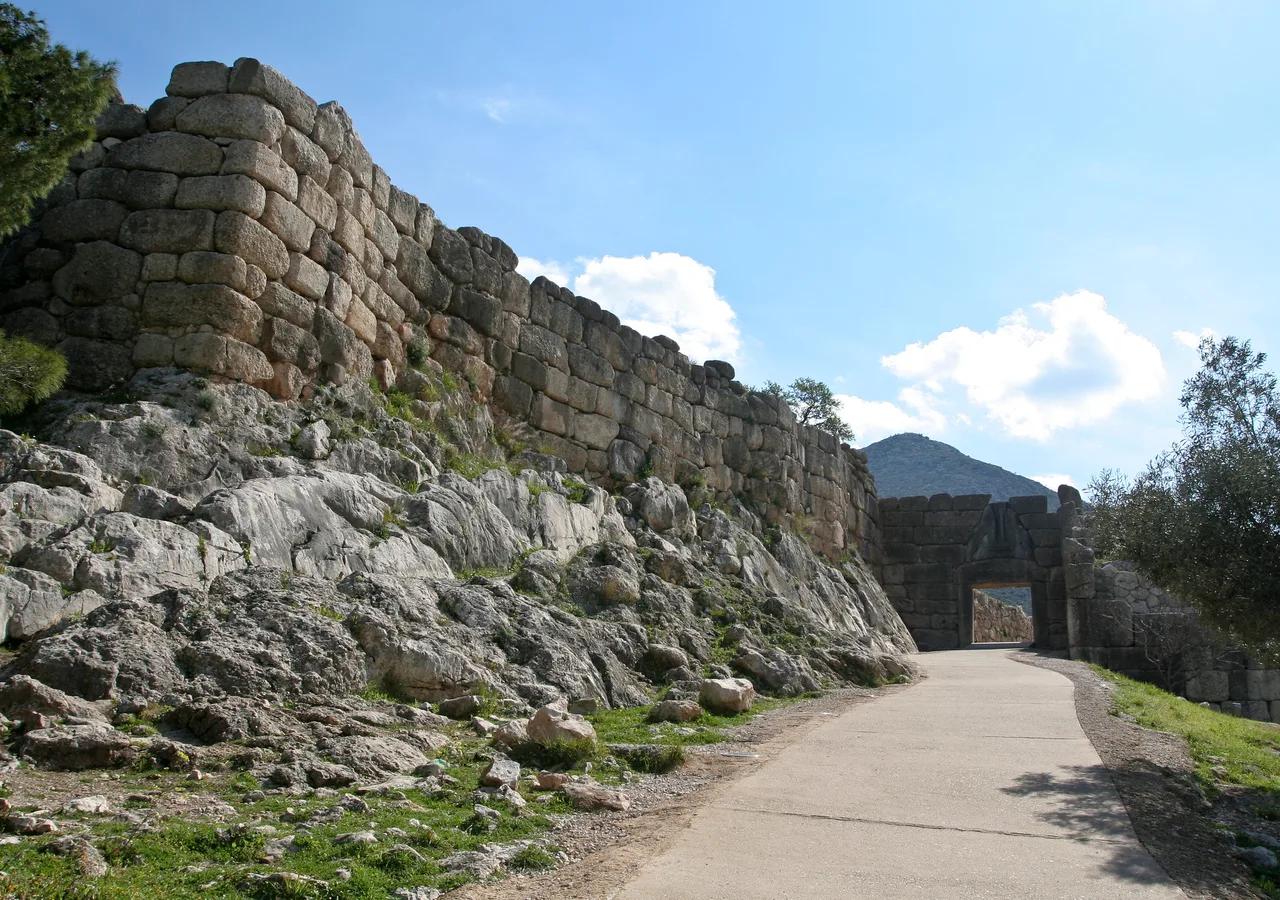
Monumental building is the second feature. Fortress walls of huge stones, often called Cyclopean masonry, still guard Mycenae. You enter through the Lion Gate, where two carved lions face each other above the doorway.
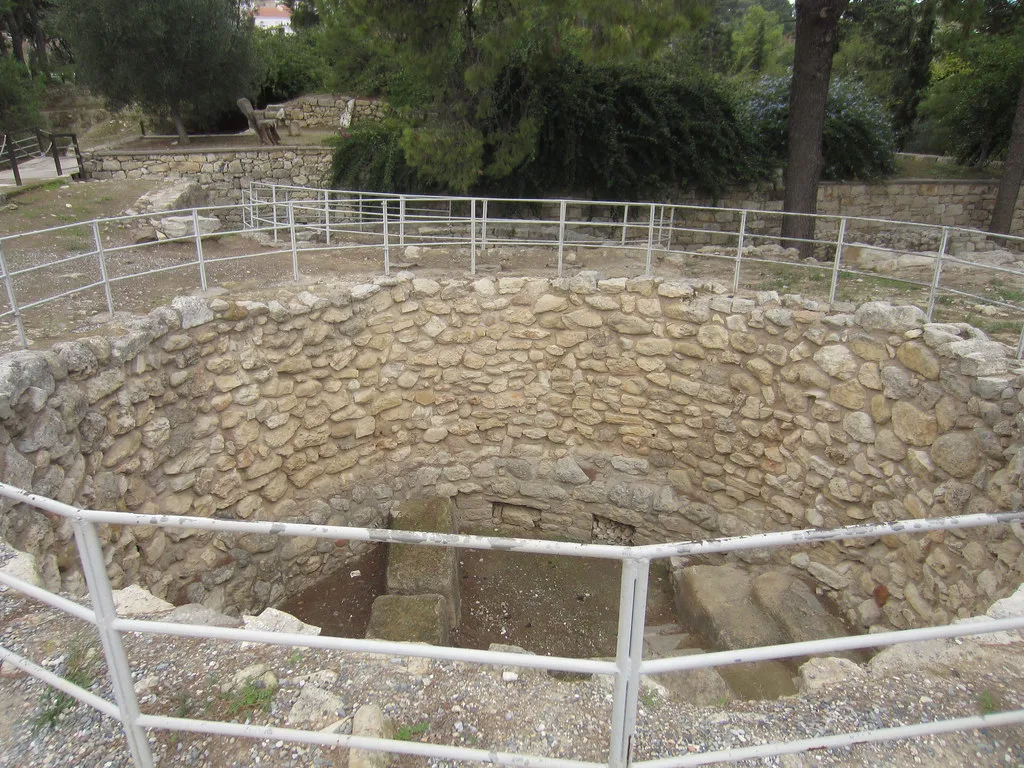
Tholos tombs, also called beehive tombs, are the third feature. The best-known example near Mycenae is the Treasury of Atreus tholos tomb. Names such as Atreus and Agamemnon come from legend, and archaeology has not proved that they belonged to real individuals. The same caution applies to the gold funerary mask linked to Mycenae. Homer's epics were composed long after the palaces fell, so treat them as echoes of the Bronze Age rather than a record of it.
How Linear B was deciphered and what the tablets record
Linear B stayed unreadable until 1952, when the English architect and amateur linguist Michael Ventris showed that it records an early form of Greek. He worked with the Cambridge scholar John Chadwick, and the result was published in 1953. Before that, many scholars had assumed the script wrote a non-Greek language.
The tablets are not literature. They are administrative records baked or dried on clay, and they list:
- Livestock, grain, olive oil and wine
- Textiles and the workers who produced them
- Bronze, chariots and weapons
- Offerings to gods, including names later familiar in Greek religion such as Zeus and Poseidon
Many tablets survive because the fires that destroyed a palace hardened the clay. The largest archive from the Peloponnese came from the Palace of Nestor at Pylos, excavated by Carl Blegen's team from 1939. The tablets show a ruler called the wanax at the top of a bureaucratic state, with officials supervising districts and craft workers.
That is why Linear B matters more than its dry content suggests. It shows the palaces as organised economies, and it ties them to the later Greek language. It tells us nothing about Agamemnon or the Trojan War.
Mycenaean vs Minoan: what's the difference?
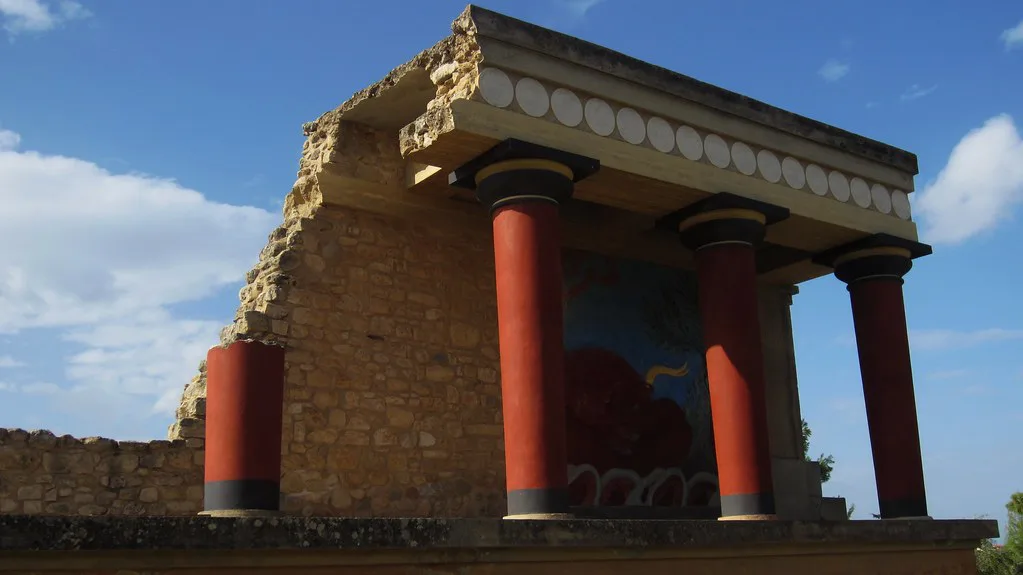
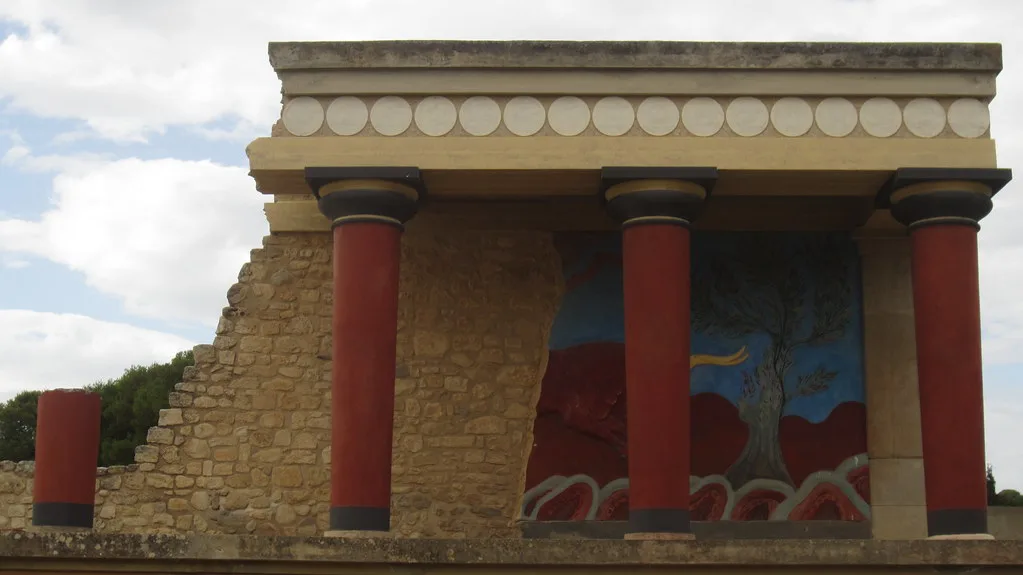
Minoans lived on Crete, while Mycenaeans held the mainland. The two cultures overlapped in time and traded with each other, but their palaces and scripts differ. Crete's best-known palace is Knossos, and that site belongs on a separate itinerary.
| Point | Minoan | Mycenaean |
|---|---|---|
| Geography | Crete | Mainland Greece |
| Palaces | Open, sprawling complexes such as Knossos | Fortified hilltop citadels such as Mycenae and Tiryns |
| Writing | Linear A, still undeciphered | Linear B, an early form of Greek |
| Best-known visit | Knossos | Mycenae |
Where to see Mycenaean civilization sites in Greece
Argolid sites give the clearest picture, and the Ministry of Culture page on Mycenae describes the main monuments. Many of the finest objects are in Athens. Check the National Archaeological Museum in Athens for the current display of the famous gold mask and other grave goods.
| Site | What you see | Best for |
|---|---|---|
| Mycenae | Lion Gate, palace ruins, grave circle | First-timers and history fans |
| Treasury of Atreus | A large tholos tomb | Architecture lovers |
| Tiryns | Massive fortified palace walls | Second site on the same trip |
| Mycenae museum | Finds from the site, shown on the hill | Families who want context |
- Time-poor: Mycenae plus its on-site museum.
- History buff: Mycenae, Tiryns and the Athens museum.
- Families: Mycenae first, then a shorter stop at fortified Tiryns.
How to plan a Mycenaean day trip from Athens
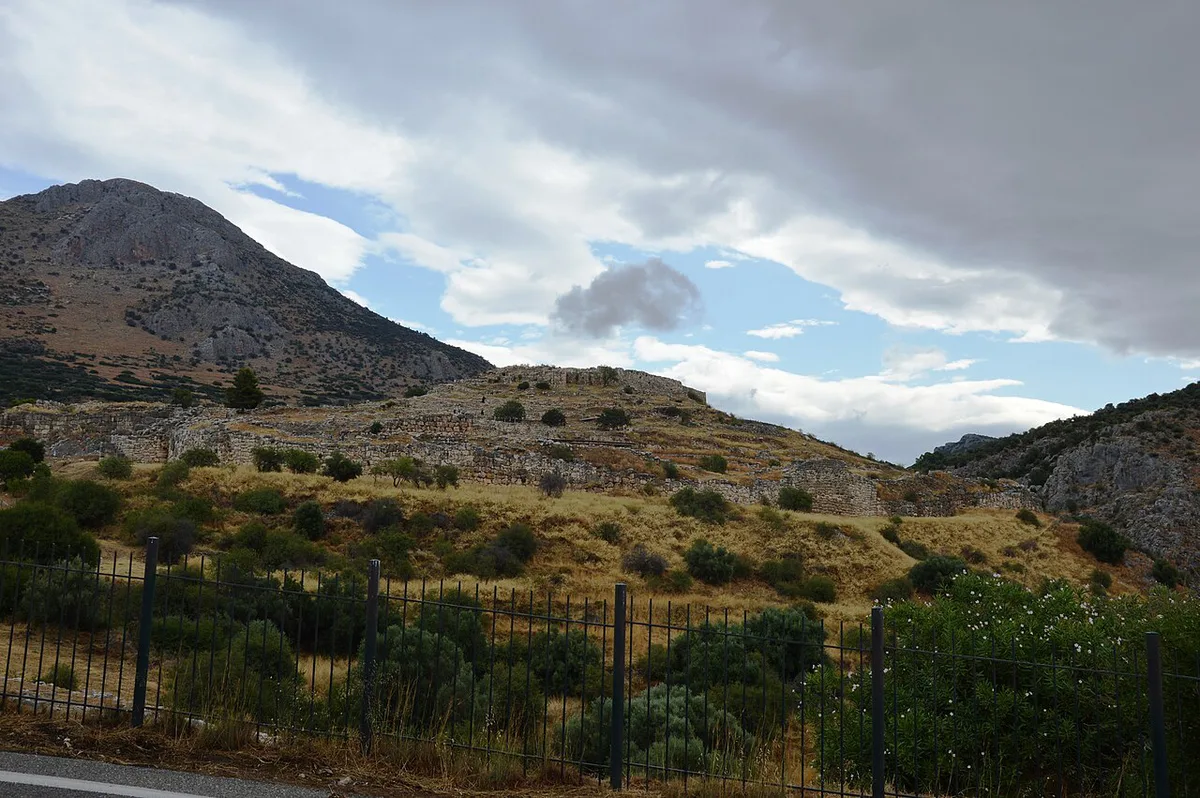
Mycenae lies in the Argolid, so most visitors go by rental car, guided tour or regional bus. Our Athens to Mycenae route guide compares the options. The KTEL Argolidas site lists current bus services. Admission rules change, so see our Mycenae ticket guide and the official e-ticket portal for current prices and hours.
A car makes it easiest to chain Mycenae with Tiryns. Hilltop sites are exposed, so bring sun protection, water and sturdy shoes, and go early in summer. Add-ons in the same region are not Mycenaean sites. They include the ancient theatre at Epidaurus, Ancient Corinth: What to See, Time Needed and How to Visit and Nemea. Skip the day trip if you want a city-style outing, because these are ruins on hillsides.
Why did the Mycenaean civilization collapse?
Palace life ended around 1100 BC, and scholars still debate why. No single cause has been proven. Later centuries are often called the Greek Dark Ages, though many historians contest that label. What survives today is the stone: walls, tombs and gateways at sites like Mycenae.
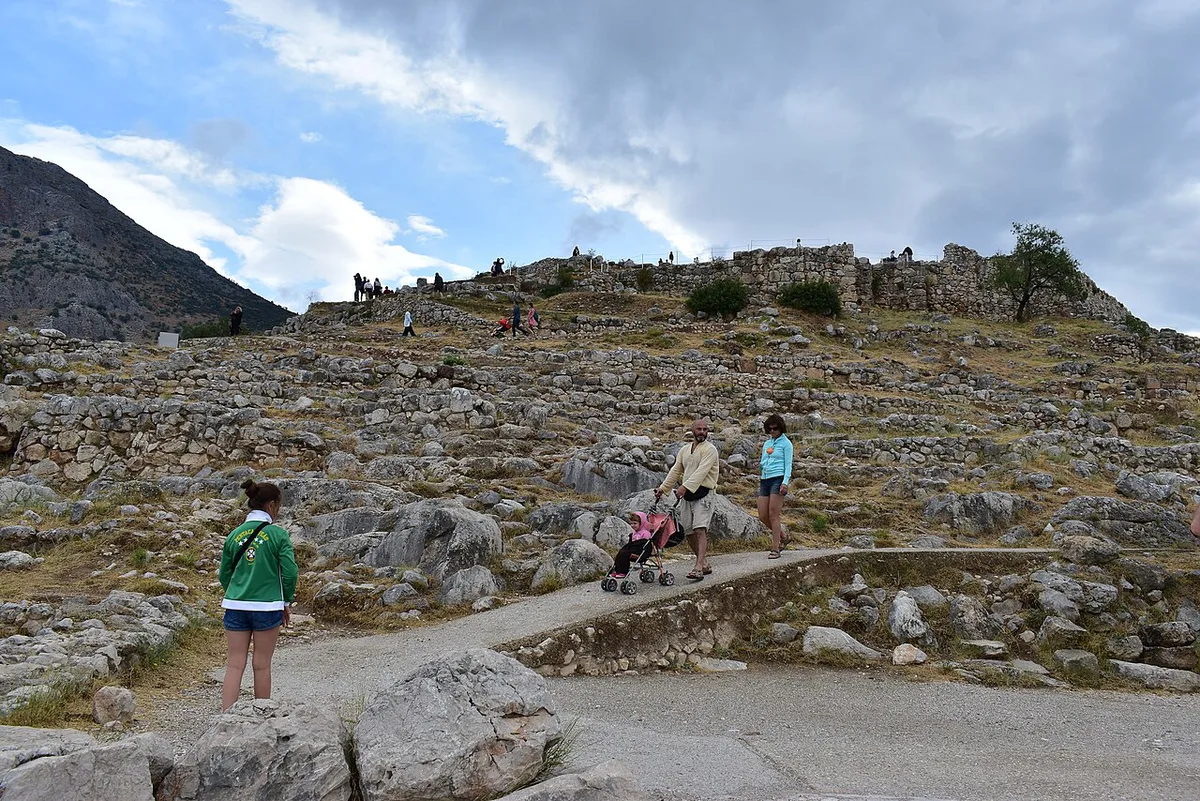
Palace life ended around 1100 BC, so visitors to Mycenae see stone walls and tombs rather than wooden roofs or furnishings.
What to expect when visiting Mycenaean ruins
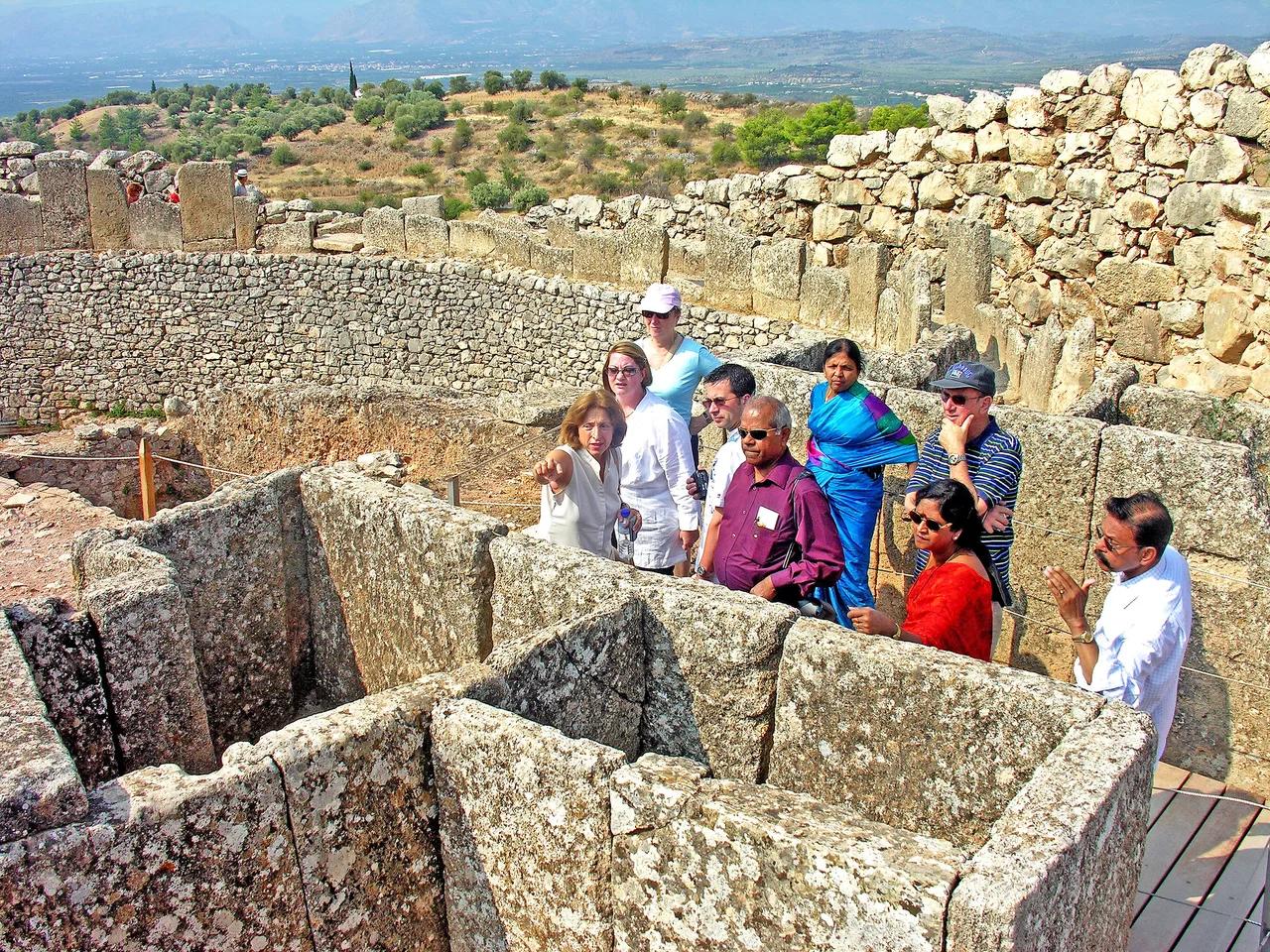
Mycenaean sites are archaeological landscapes, not reconstructed towns. At Mycenae, plan to read the citadel through its surviving gateways, walls, grave circle and palace foundations. The Lion Gate is the most immediate landmark. The Treasury of Atreus is nearby but separate from the citadel experience.
These remains date from a palace culture that flourished around 1400–1100 BC. Palace life ended around 1100 BC, so most wooden roofs, rooms and furnishings are gone. The appeal lies in the scale of the fortifications and tombs, rather than intact interiors.
Start with the on-site museum if you want objects to explain the ruins. Then walk the citadel and allow time for uneven terrain and exposed slopes. Wear sturdy shoes, carry water and use sun protection in warm weather. Check the National Archaeological Museum in Athens before planning around the famous gold mask, because major grave goods are held there rather than at the hilltop site.
Related guides

Continue reading
Guides on the same trip