Ancient Corinth: What to See, Time Needed and How to Visit
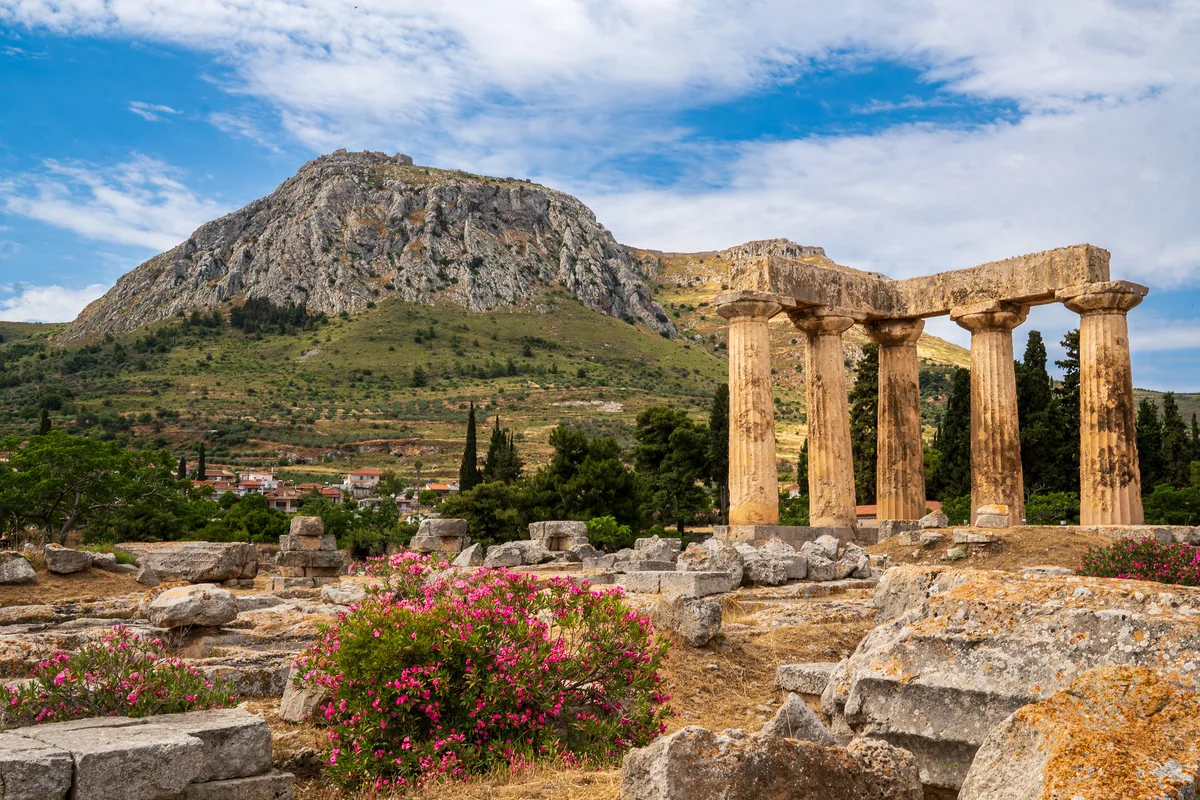
Last updated November 2026: ancient corinth is the excavated Greek and Roman city on the Peloponnese, set below the fortress rock of Acrocorinth. Its 6th-century BC Temple of Apollo, Roman forum and on-site museum fill a visit of about two hours. It works best as an add-on to a Mycenae, Epidaurus or Nemea day rather than as a stand-alone Athens half-day.
Featured image: Berthold Werner, CC BY-SA 3.0, via Wikimedia Commons.
Ancient Corinth at a Glance
Ancient Corinth lies on the Peloponnese side of the Isthmus of Corinth, beneath Acrocorinth. Roman forces under Mummius destroyed the old city in 146 BC. Roman colonists later refounded it, so much of what you walk through is Roman rather than Classical Greek. Allow about two hours for the ruins and the museum together. Roman forums and early Doric architecture are the draw here. Skip it if you have only a few hours in Greece or care solely about Bronze Age sites.
- Full ticket: €8, reduced: €4, covering both the site and the museum.
- Main highlights: Temple of Apollo, Roman forum, Peirene Fountain, theatre and museum.
- Suggested time: about 2 hours for the ruins and museum (our editorial estimate).
- Best pairing: a Mycenae, Epidaurus or Nemea day, plus the Corinth Canal.
What to See at Ancient Corinth
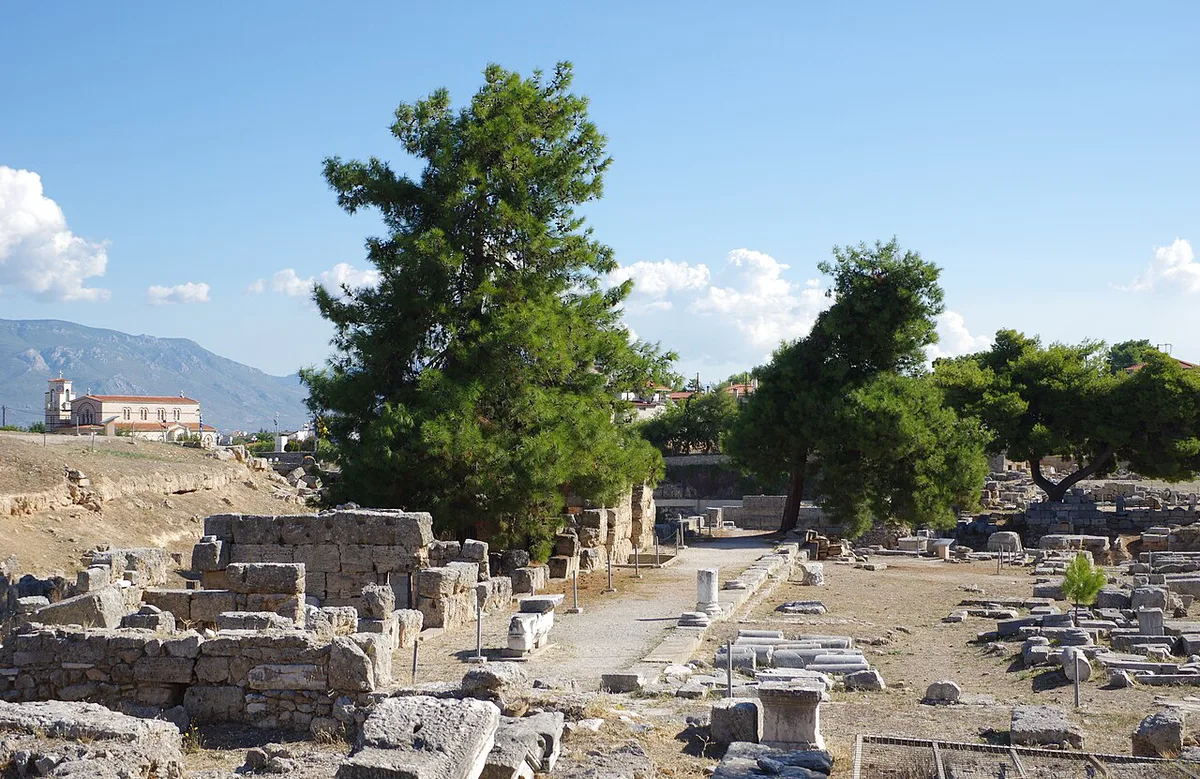
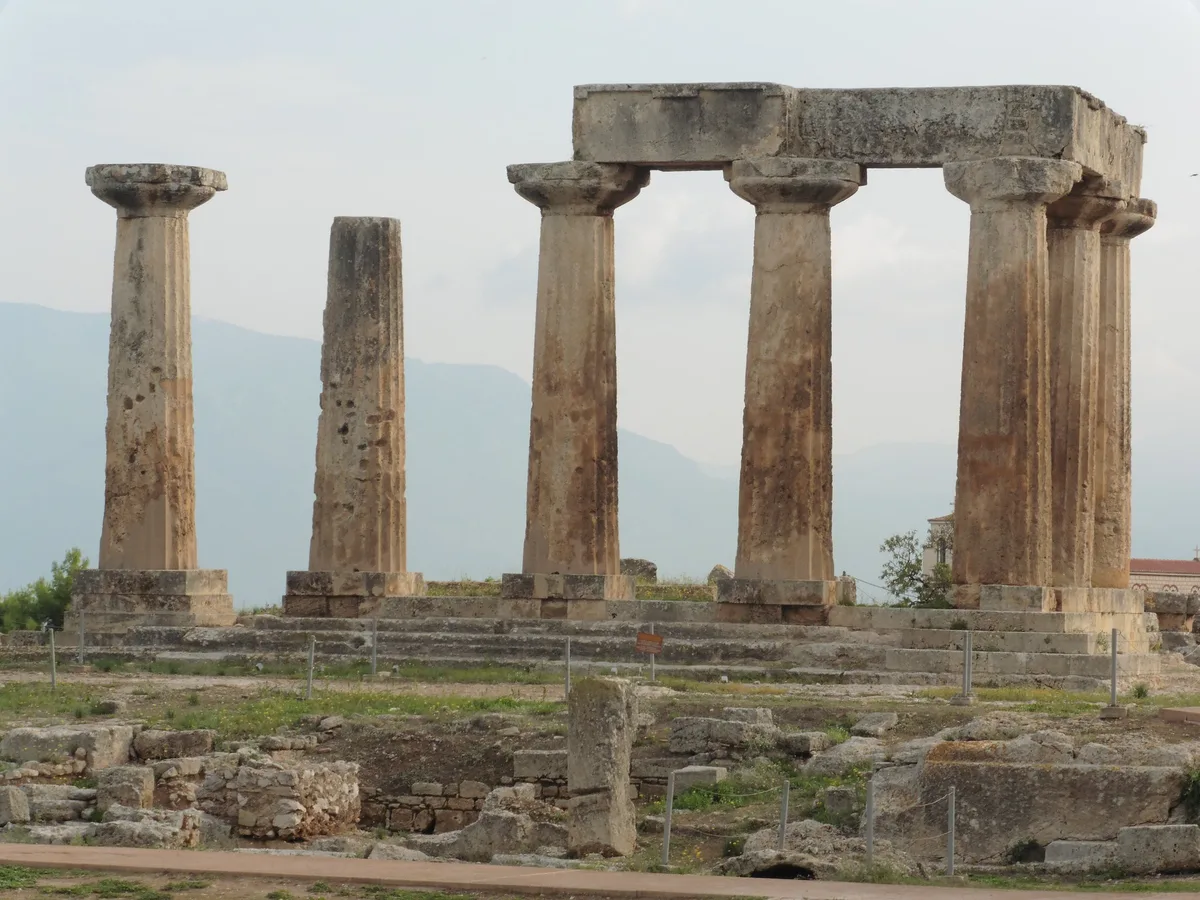
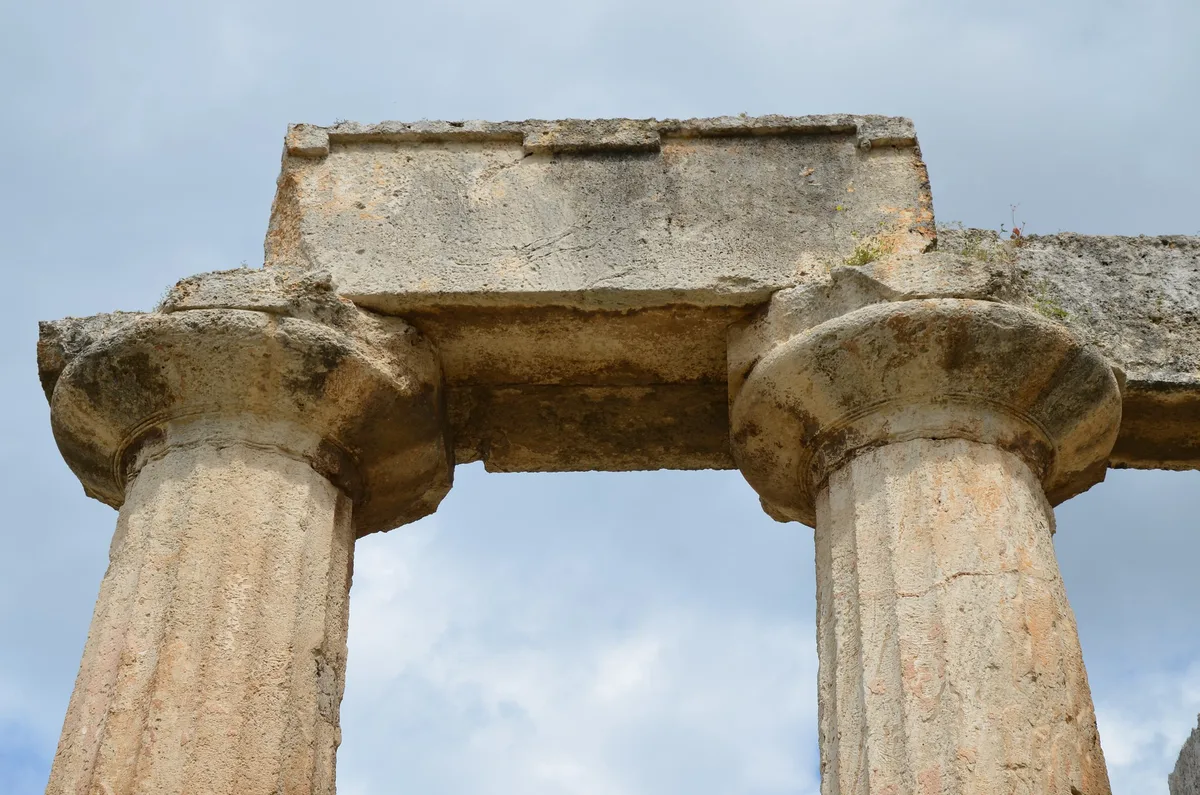
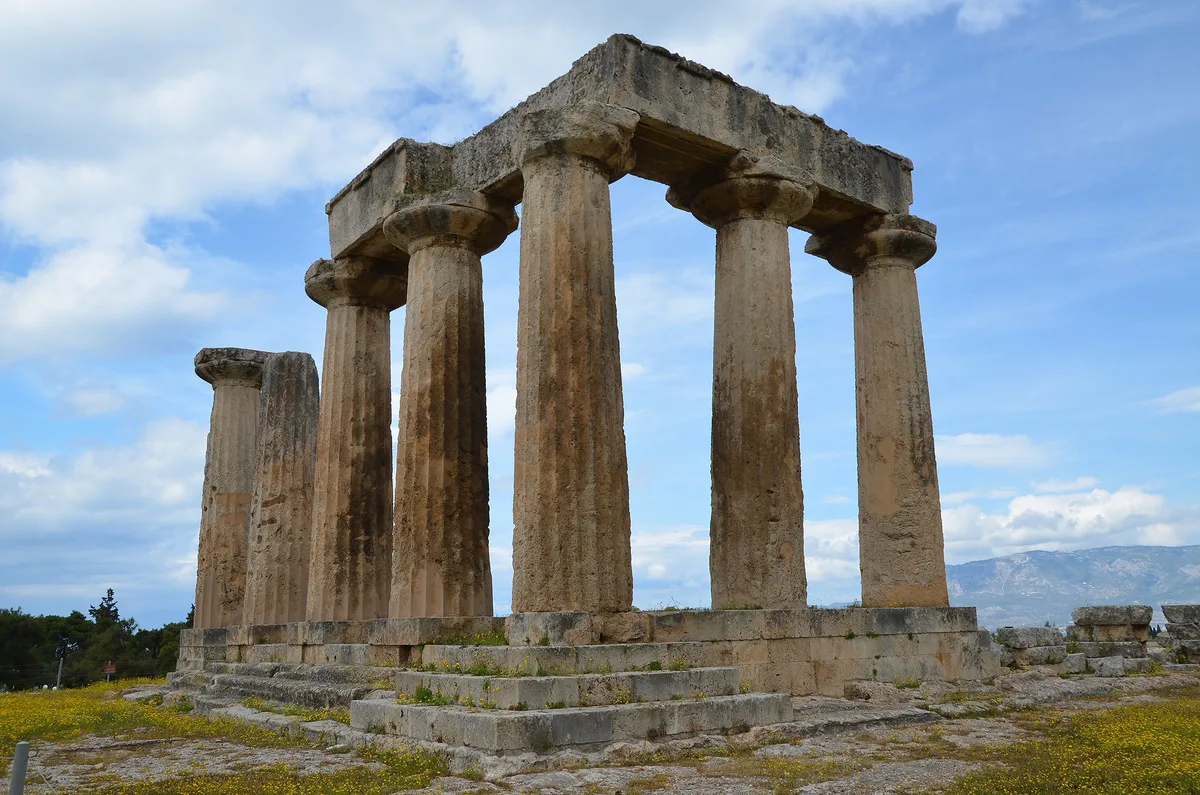
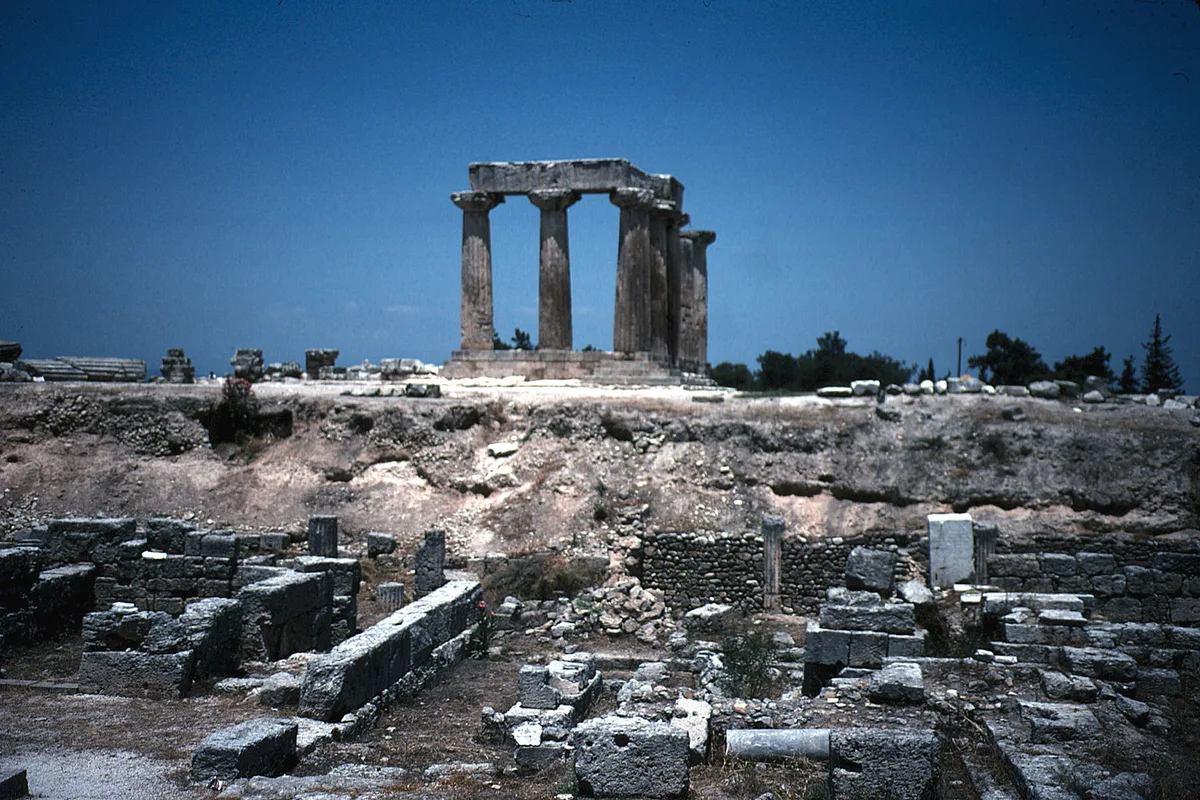
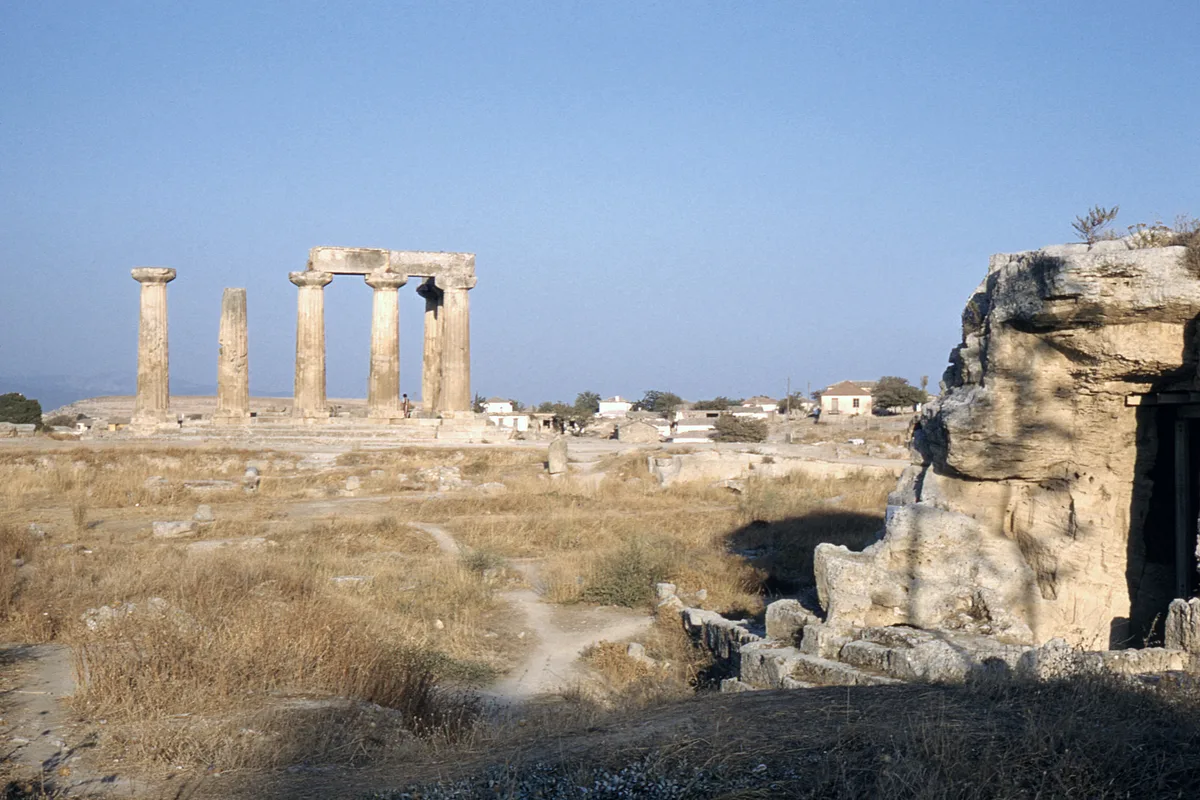
Start with the Temple of Apollo on its rocky hill. Built around 560 BC from local limestone, it is one of the earliest Doric temples on the Greek mainland. Its colonnade once held 42 monolithic columns, each over 7 m (about 23 ft) high. Only part of that colonnade stands today, but the surviving columns are the best-preserved structure on the site. Later layers sit on top of it: a Byzantine basilica on the northeast part of Temple Hill, then an Ottoman residence over the eastern end.
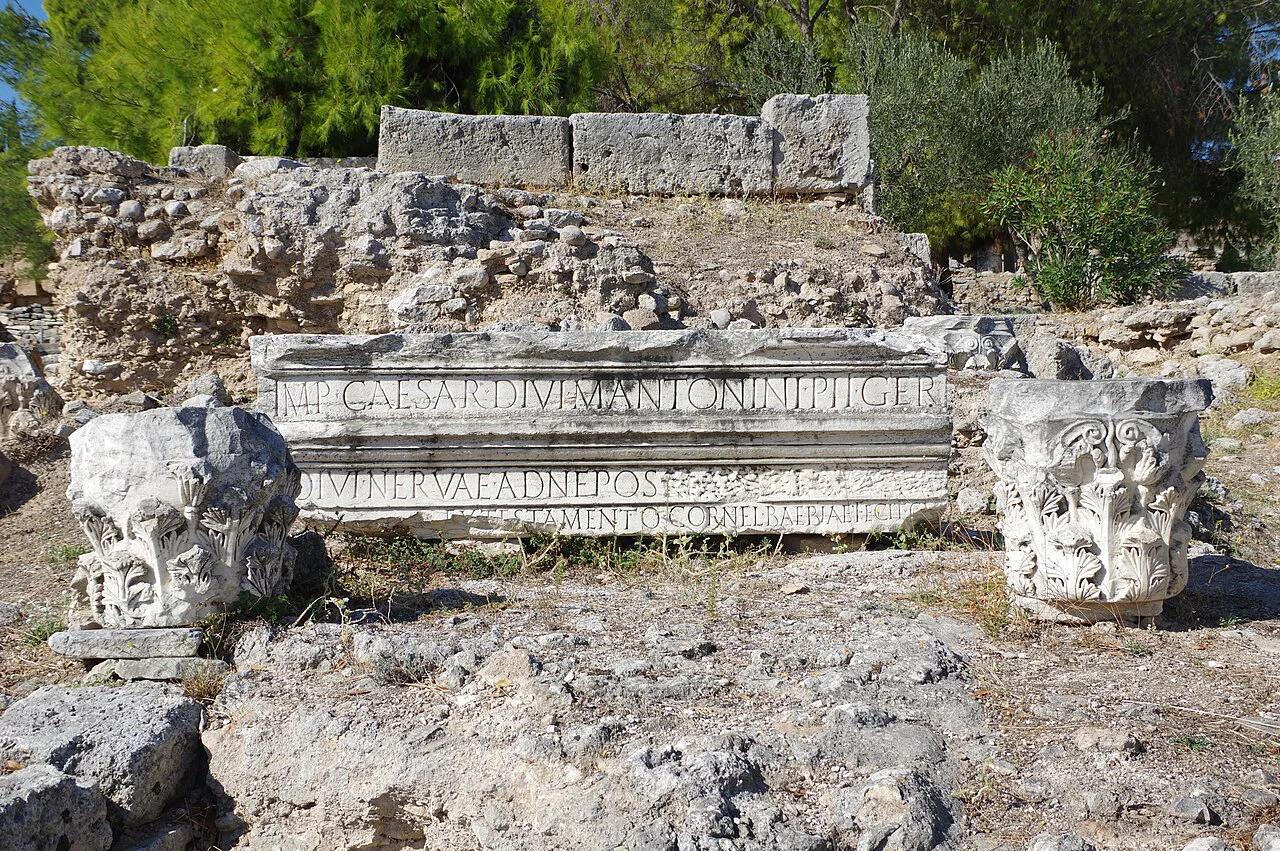
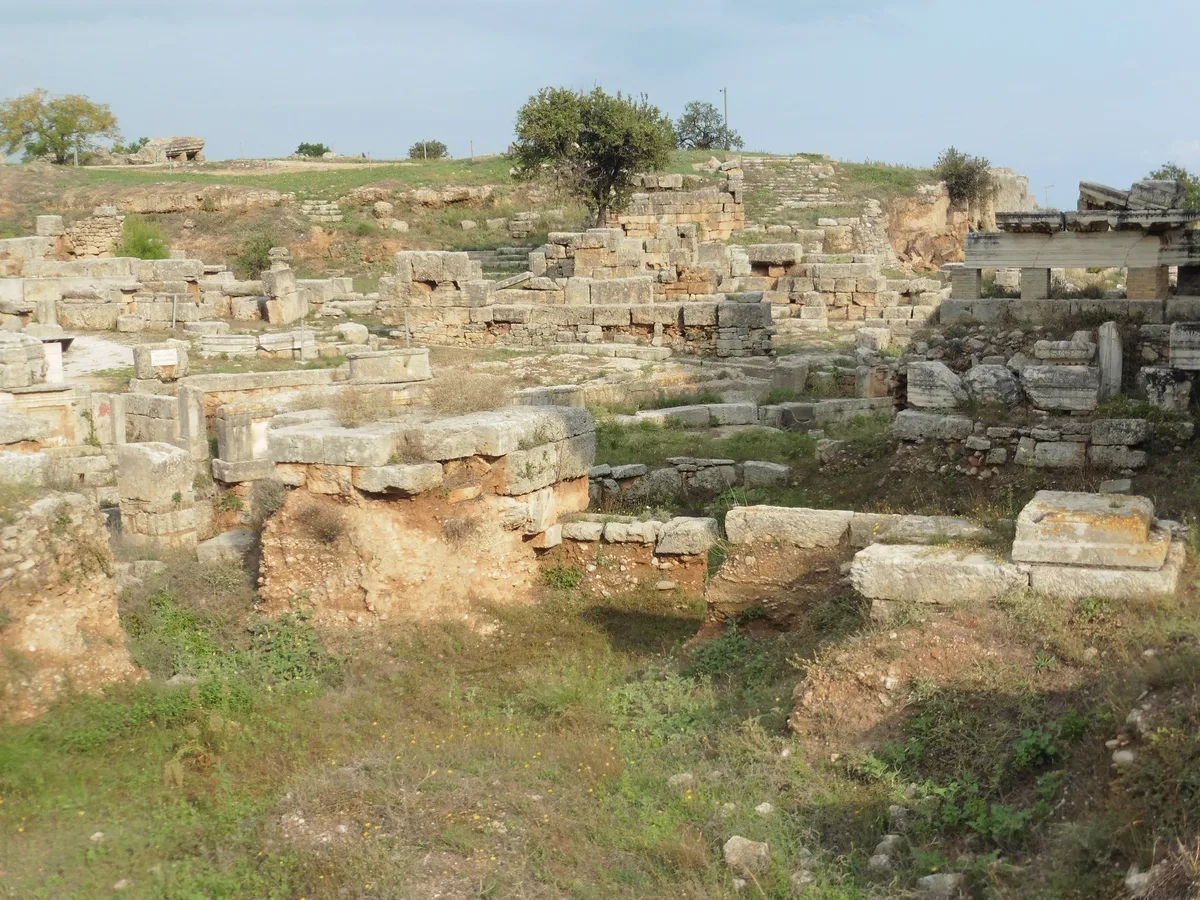
The Roman forum needs more imagination, because you are reading foundations, steps and platforms rather than standing buildings. Look for the Erastus inscription, whose letters were once filled with bronze. Erastus appears in Paul's letter to the Romans as the city's director of public works. That single line is the shortest route into Corinth's Biblical layer.
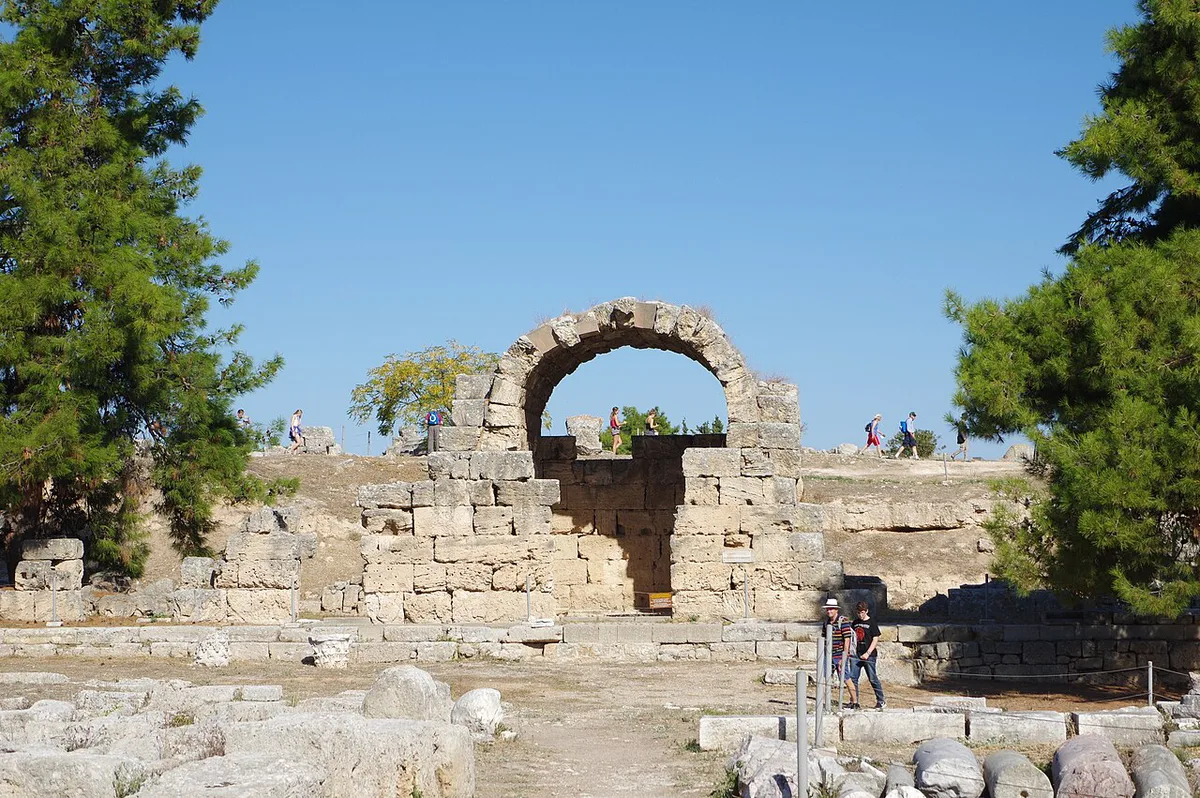
The Peirene Fountain is a spring-fed structure that stays one of the oldest recognisable features of the city. The Roman odeon dates to the 1st century AD, and the theatre was begun late in the 5th century BC. Near the forum, the Heroon of the Crossroads preserves a small walled enclosure from the 6th century BC. Finish in the on-site museum, which your ticket already covers. For earlier background, read about the Bronze Age Mycenaean world, since Corinth's earliest layers precede the classical city.
Acrocorinth: Worth the Climb?
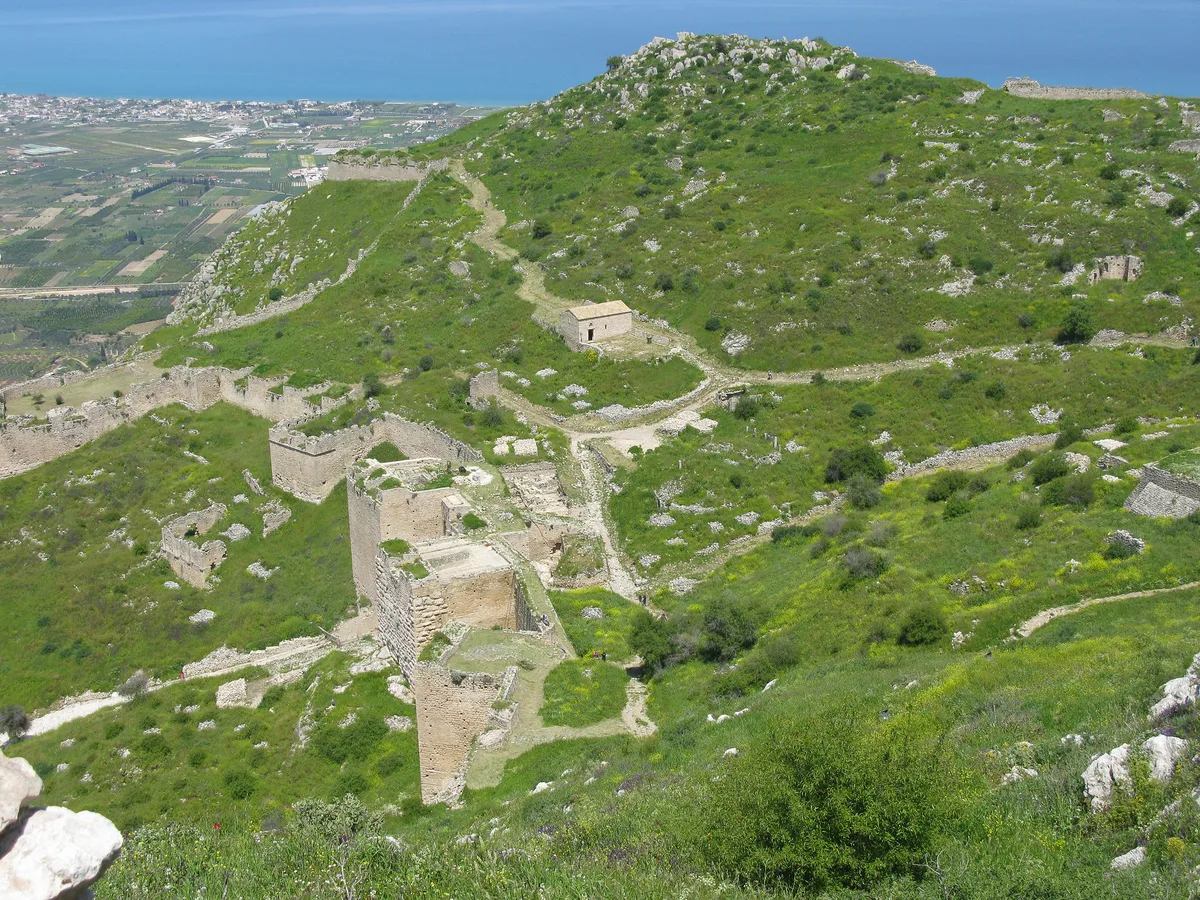
Acrocorinth is the acropolis of the ancient city and one of Greece's major medieval fortress sites. Three circuit walls ring the hill, and the Temple of Aphrodite once crowned its highest point. Macedonians, Venetians and Ottomans all held it in turn. It is a separate visit from the ruins, with its own effort, exposure and time needs. Check the Ministry of Culture site listing for its separate opening hours before you plan around it.
Climb it if you are fit, have a car and arrive early on a clear day. Do only the ruins if you are on public transport or travelling with small children. Skip it in midday summer heat, because there is almost no shade on the walls.
- Ruins: flat paths, partial shade near the museum, about 2 hours.
- Acrocorinth: steep, fully exposed, best with a car, add several hours.
- Both: only worth combining on a full day with an early start.
How Long to Allow
These time budgets are our editorial estimates, not official figures. They assume you start at the ancient site rather than in the modern town. Cut the later items first if the day slips.
A full day of 6 to 8 hours is tight without an early start, since Acrocorinth's steep, fully exposed climb adds several of those hours.
| Visit tier | Time | What fits |
|---|---|---|
| Quick stop | About 1.5 hours | Temple of Apollo, forum, a short museum pass |
| Half day | 3 to 4 hours | Full ruins, museum, plus the Corinth Canal |
| Full day | 6 to 8 hours | Ruins, museum, Acrocorinth walls and the Canal |
Tickets, Opening Hours and Free Days
Prices and hours checked November 2026. A full ticket costs €8 and a reduced ticket costs €4, and either one covers the site and the museum. Hours change with the season, so confirm them on the Hellenic Ministry of Culture e-tickets page before you travel. From April 19 to August 31 the site opens 8:00 to 20:00. From November 1 to January 2 it runs 8:30 to 15:30, so a late arrival can lose the whole visit. Closed days are January 1, March 25, May 1, Easter Sunday and December 25 and 26.
Winter hours of 8:30 to 15:30 cut the day short, so the free first Sundays from November to March are worth an early arrival.
Free entry applies on March 6, April 18, May 18 and the last weekend of September. It also applies on the first Sunday of each month from November 1 to March 31. Visitors up to 18 with ID enter free.
| Period | Opening hours |
|---|---|
| April 19 to August 31 | 8:00 to 20:00 |
| September 1 to 15 | 8:00 to 19:30 |
| September 16 to 30 | 8:00 to 19:00 |
| October 1 to 15 | 8:00 to 18:30 |
| October 16 to 31 | 8:00 to 16:00 |
| November 1 to January 2 | 8:30 to 15:30 |
Getting to Ancient Corinth from Athens
Athens to the modern town of Corinth is roughly an hour by road. The ancient site is a separate place from the town, and that last leg is the friction point. Without a car, plan a bus or train to Corinth, then a local bus or taxi onward. Check operator pages for current timetables rather than trusting dated listings. For Argolid-side services, start with KTEL Argolidas bus services.
- Car: the most flexible option, and the only practical way to add Acrocorinth.
- Bus or train: cheaper, but the town-to-ruins leg needs a taxi or local bus.
- Guided tour: fixed timings, no transfers, and often combined with Mycenae.
Combining Corinth with Mycenae, Nemea, Epidaurus and the Corinth Canal
A workable day runs Athens, Corinth Canal, ancient Corinth, then Mycenae or Nafplio, or the reverse. The canal was started in 1881 and completed in 1893. It is about 6,343 m long, so a short roadside stop is enough. Our day trip from Athens to Mycenae guide covers the longer leg. Compare entry on the Mycenae ticket page before you buy.
Cut in this order when time runs short: Acrocorinth, then the canal stop, then the museum. Keep the Temple of Apollo and the forum. Add ancient Nemea only on a full day. The theatre at Epidaurus is a good comparison with Corinth's theatre. For more Argolid sites, see the fortress at Tiryns and the theatre in Argos. If Mycenae is your main goal, start at the citadel of Mycenae.
Best Time to Visit
Arrive at opening, 8:00 in most of the year, when the light is soft and the site is cool. Summer midday is the hardest slot, since the ruins are mostly exposed. In winter, hours shrink to 8:30 to 15:30, and October 16 to 31 closes at 16:00. Plan a morning arrival then, and treat the afternoon for the canal or a meal.
Related guides


Continue reading
Guides on the same trip