
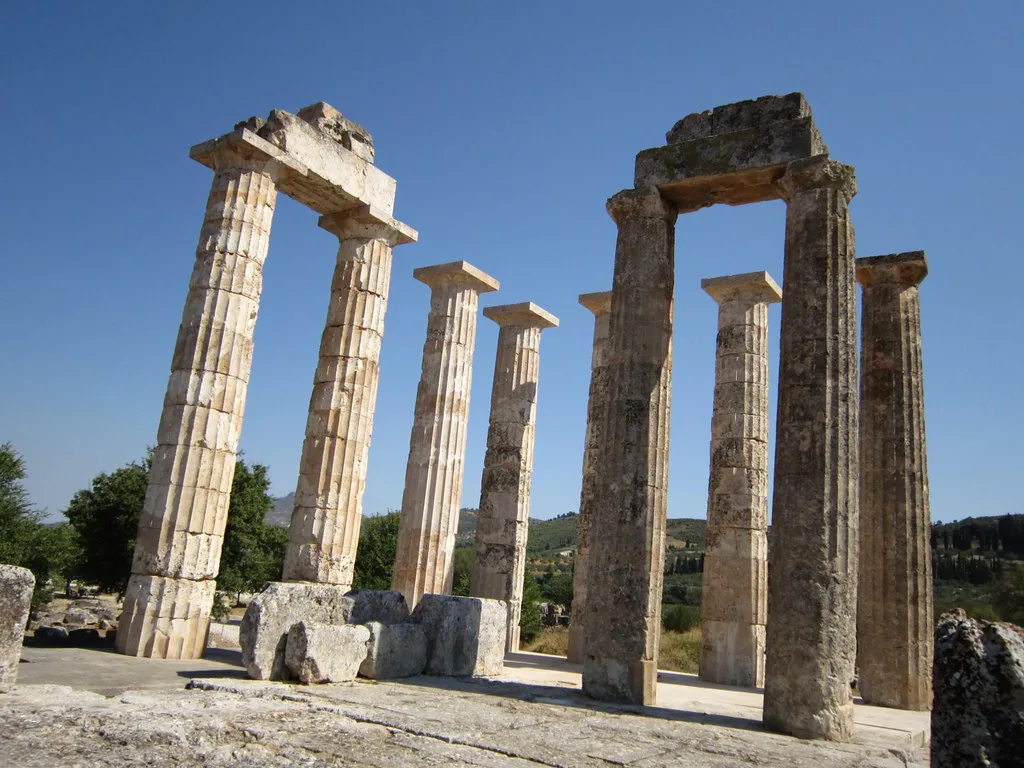
Last updated November 2026: Nemea is a village and archaeological area in the northeastern Peloponnese, home to the ancient sanctuary of Zeus and the stadium of the Nemean Games. It sits a short drive from Mycenae, so it suits a half-day add-on to an Argolid archaeology trip. Mythology fans, sport-history buffs and families with kids who want to race on an ancient track get the most from a stop here.
Featured image: kameraadpjotr, CC BY 2.0, via Flickr.
What Nemea Is and Why Visit
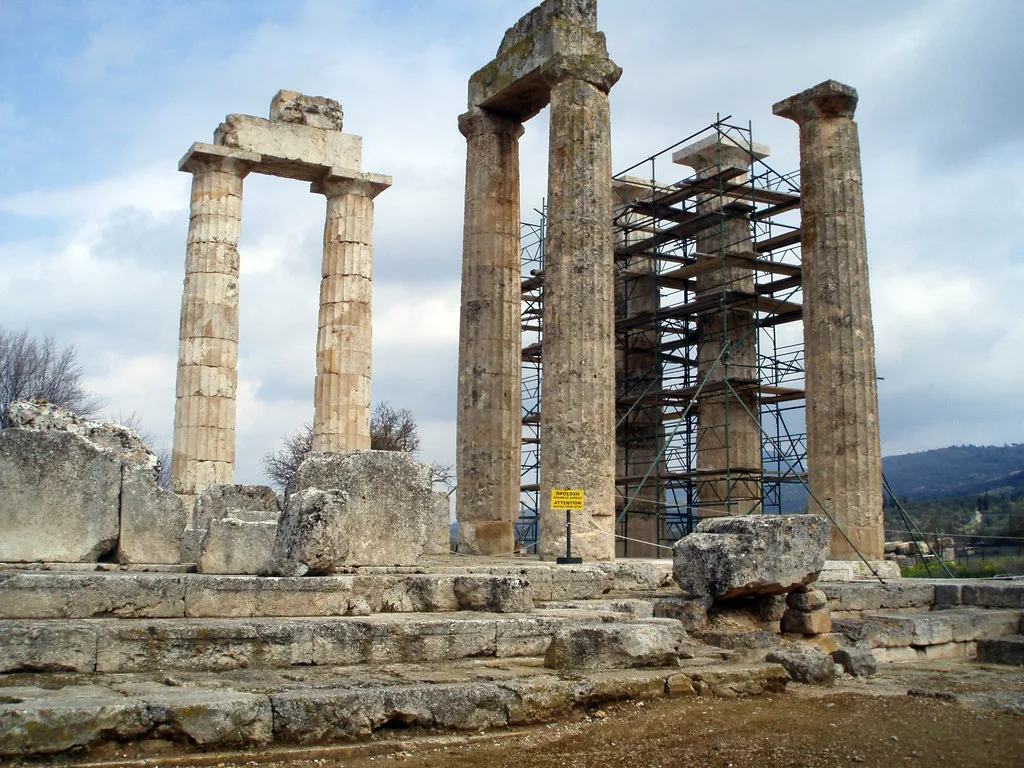
The sanctuary was one of the four Panhellenic Games sites of ancient Greece, alongside Olympia, Delphi and Isthmia near Corinth. Games honoring Zeus were held here every two years, and winners received a wreath of wild celery. Myth ties the place to Heracles, who was sent to kill the Nemean Lion, a beast with impenetrable skin, as the first of his labors. Nearby Aidonia holds Late Bronze Age cemeteries dated to the 15th to 13th centuries BCE, which shows people lived here long before the Games. For that earlier world, read our guide to Mycenaean Civilization: History, Key Sites and Visits.
Aidonia's cemeteries date to the 15th to 13th centuries BCE, which pairs well with a Mycenae visit's Bronze Age story.
History of the Nemean Games and the Site's Rediscovery
The Nemean Games ran on a two-year cycle, in the first and third years of each Olympiad, which is why the sanctuary is tied to a long list of Panhellenic victors. The wild-celery wreath given to winners was a prize of honor, not of money. Over time the Games fell out of Nemea's hands and were later held at Argos, as noted elsewhere in this guide, and the sanctuary slowly emptied.
The ruins were buried under centuries of silt and soil. Early 20th-century excavations by an American team from the University of Cincinnati opened the temple area. Large-scale work began in the 1970s under the University of California, Berkeley, which uncovered the stadium and the surrounding buildings. Much of what you walk past today was recovered in those decades.
The Games today
The Society for the Revival of the Nemean Games restarted the competition in 1996. It is held every four years, and visitors in tunics can run the ancient track. Dates change, so check the Society's current schedule before planning a trip around it.
What to See at the Sanctuary and Museum
Start at the Temple of Zeus, where a few standing columns mark the sanctuary's centre. Sources describe the temple as a 6x12-column Doric building, and you can still read its footprint on the ground. Beside it sit the bathing facilities used by athletes and the ruins of guest and dining quarters. The Ministry of Culture's official page for the archaeological site describes the monuments and the excavated area.
- Temple of Zeus: the surviving columns and the temple platform at the heart of the sanctuary.
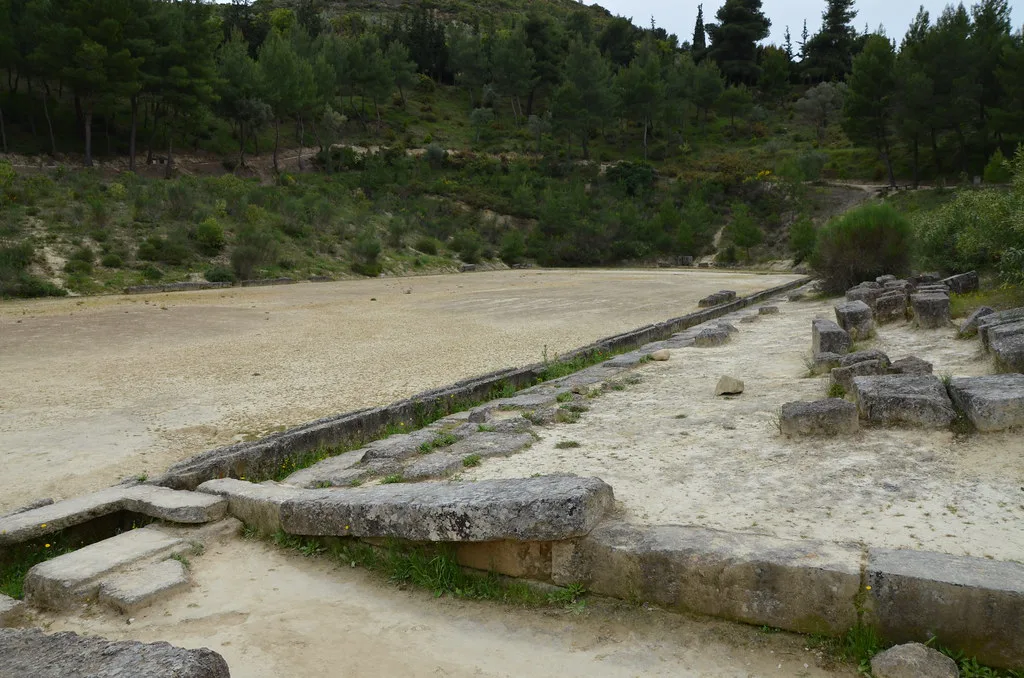
- Stadium: the running track, with its vaulted entrance tunnel that athletes walked through.
- Bath complex: the athletes' washing rooms, a practical reminder that the Games lasted several days.
- Heroon of Opheltes: a shrine tied to the founding legend of the Games.
- Site museum: models of the sanctuary, pottery from the Mycenaean period and finds from the early Christian settlement.
Temple of Zeus, Stadium and Oikoi: What Each Ruin Shows
Walking the site in order makes the layout clearer. Each area answers a different question about how a Panhellenic festival worked.
- Temple of Zeus. The Doric temple dates to roughly the late 4th century BCE and replaced an earlier archaic building. A small number of columns stand, some re-erected, and the stepped platform shows how large the cella was.
- Oikoi. These are the long, narrow buildings near the temple, usually read as dining or hospitality halls. They help explain how delegations and officials were housed and fed during the festival.
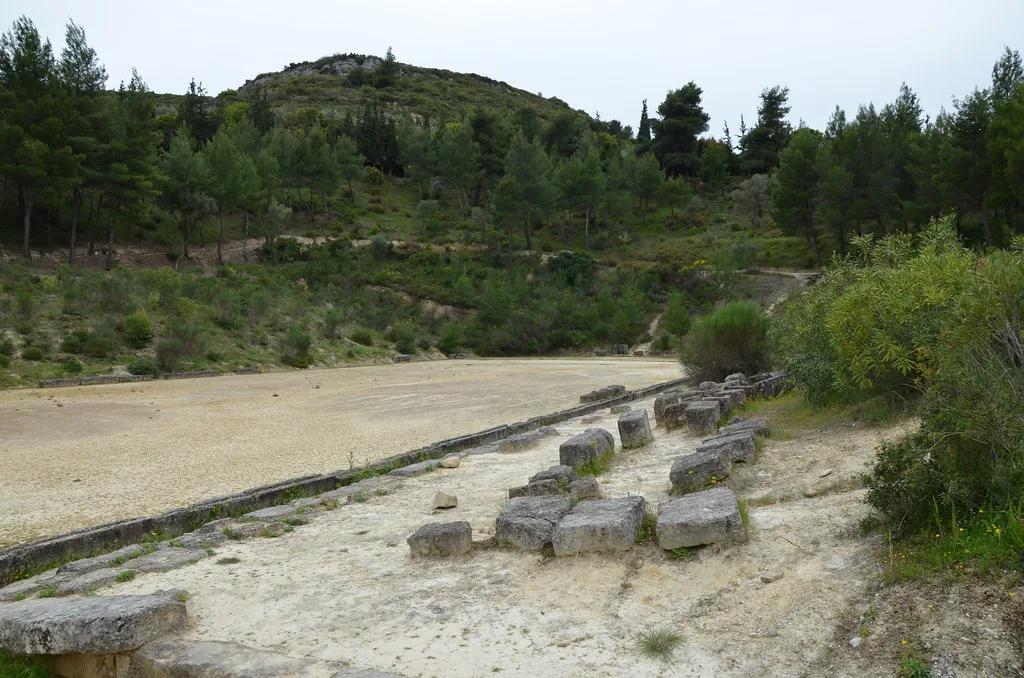
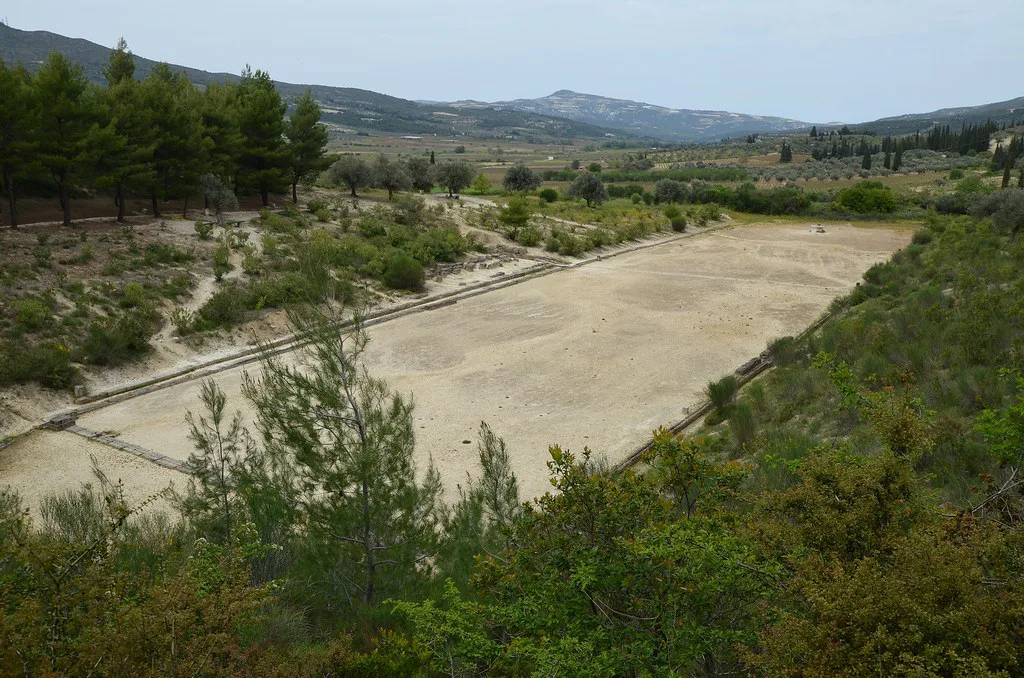
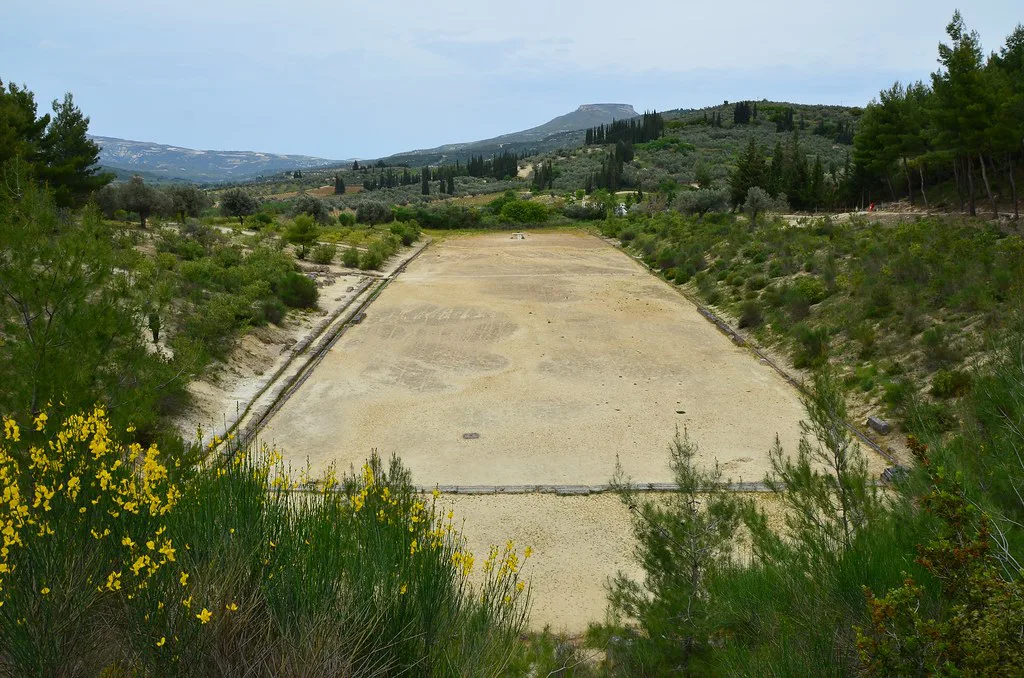
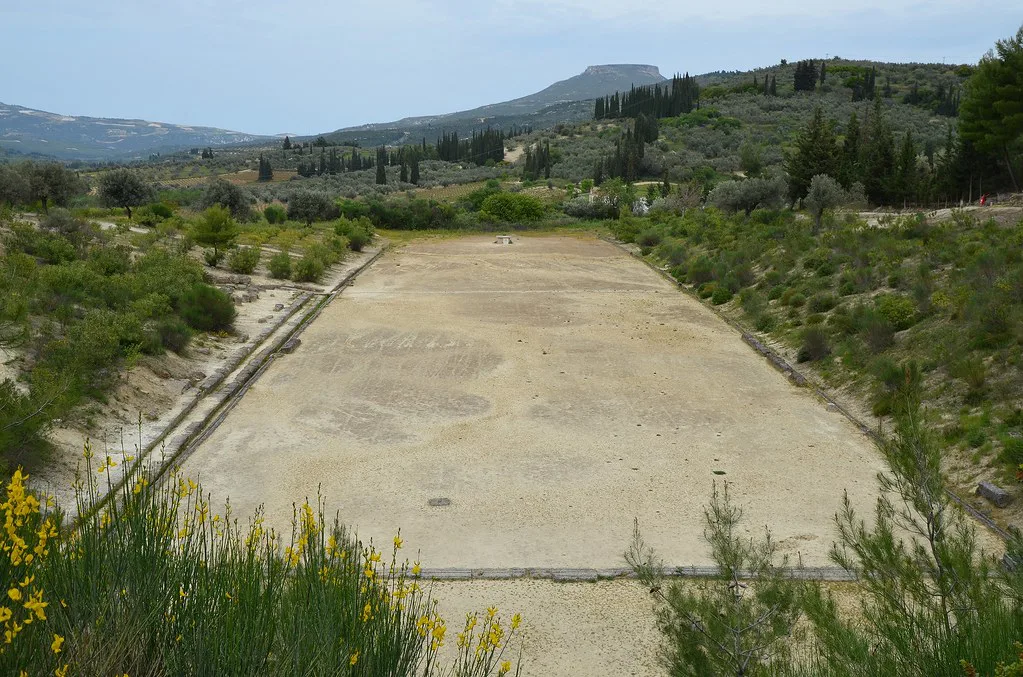
- Hellenistic stadium. The track was moved to this location in the late 4th century BCE. There were no stone seats; spectators sat on earth banks. Look for the stone starting line and the drainage channel running beside the track.
- Vaulted entrance tunnel. This is the best-known feature. Athletes scratched graffiti into the walls, including names, and you can still look for them if the light is raking across the stone.
Allow about 45 minutes for the sanctuary and stadium, plus time in the museum. The ground is uneven and the stadium track is open to the sun, so wear closed shoes and bring water.
Is Nemea Worth It? Who Should Go or Skip
Go if you want a quiet site with space to walk the stadium and picture the Games. Skip it if your time is short and you only want the headline ruins, because Nemea is far smaller than Mycenae. In our editorial assessment it works best as a second stop, paired with a major site rather than a trip of its own. The table below compares four Argolid and Corinthia options by judgement, not by measured figures.
| Site | Effort to reach | Time needed | Crowds | Best for |
|---|---|---|---|---|
| Nemea | Needs a car or a taxi | Short half-day stop | Quiet | Myth and sport-history fans, families |
| Mycenae | Easy by tour or car | Half-day or more | Busiest of the four | First-time Greece archaeology |
| Ancient Corinth | Easy by road | Half-day | Moderate | Roman and Greek layers in one site |
| Epidaurus | Easy by car or tour | Half-day | Busy in season | Theatre and acoustics |
How to Get There and Plan Your Time
A car is the practical choice, because the site and village are not on a convenient rail line. Public transport is limited, so check the KTEL Argolidas bus services for any current route before relying on one. If you are starting from the capital, our guide to Mycenae from Athens covers the wider route. Add Nemea on the same day only if you leave early. A sensible order is Mycenae in the morning, then Nemea after lunch, with the stadium and museum taking the rest of the afternoon. Summer shade is thin on the stadium track, so aim for morning or late afternoon in July and August. Dedicate a separate day to Ancient Corinth: What to See, Time Needed and How to Visit or Epidaurus rather than cramming all three.
Tickets, Opening Hours and Costs
We do not have a current fare or hours table we can stand behind, and hours change by season. Check the Ministry of Culture e-tickets portal for the live listing. Nemea does not share a ticket with Mycenae, so compare it with Mycenae ticket options when budgeting a combined day.
Where to Eat, Stay and Taste Wine
Nemea is a village stop, not a base. Nafplio or the area near Mycenae offers more lodging choice and easier evenings. The surrounding area is known for Agiorgitiko red wine, so a winery or taverna lunch makes a pleasant addition if you have spare time. Opening arrangements for wineries vary, so book ahead.
Photos and What to Look For
Shoot the Temple of Zeus columns low, with the sky behind, for scale. Frame the stadium tunnel from the track so the vault leads the eye into the dark. Inside the museum, the sanctuary model shows the whole layout at a glance. Suggested alt text: "Standing Doric columns of the Temple of Zeus at ancient Nemea" and "Vaulted entrance tunnel of the Nemea stadium". For a different Argolid angle, compare with the ancient theatre at Argos, the city that hosted the Games when they left Nemea.
Hold the camera low by the 6x12-column Doric building so the standing columns read clearly against the sky.
Pair this with our broader tourism attractions guide for the full city overview.
Frequently Asked Questions
Who is Nemea in Greek mythology?
Nemea is a place, not a person. It is linked to the Nemean Lion, which Heracles killed in the first of his twelve labors. The lion's lair was said to lie near the sanctuary.
Is Nemea, Greece worth visiting?
Yes, if you enjoy quiet ruins and can add it to a Mycenae day by car. Skip it if you only have time for one major site. Epidaurus and Mycenae offer larger sights.
Related guides



Continue reading
Guides on the same trip

