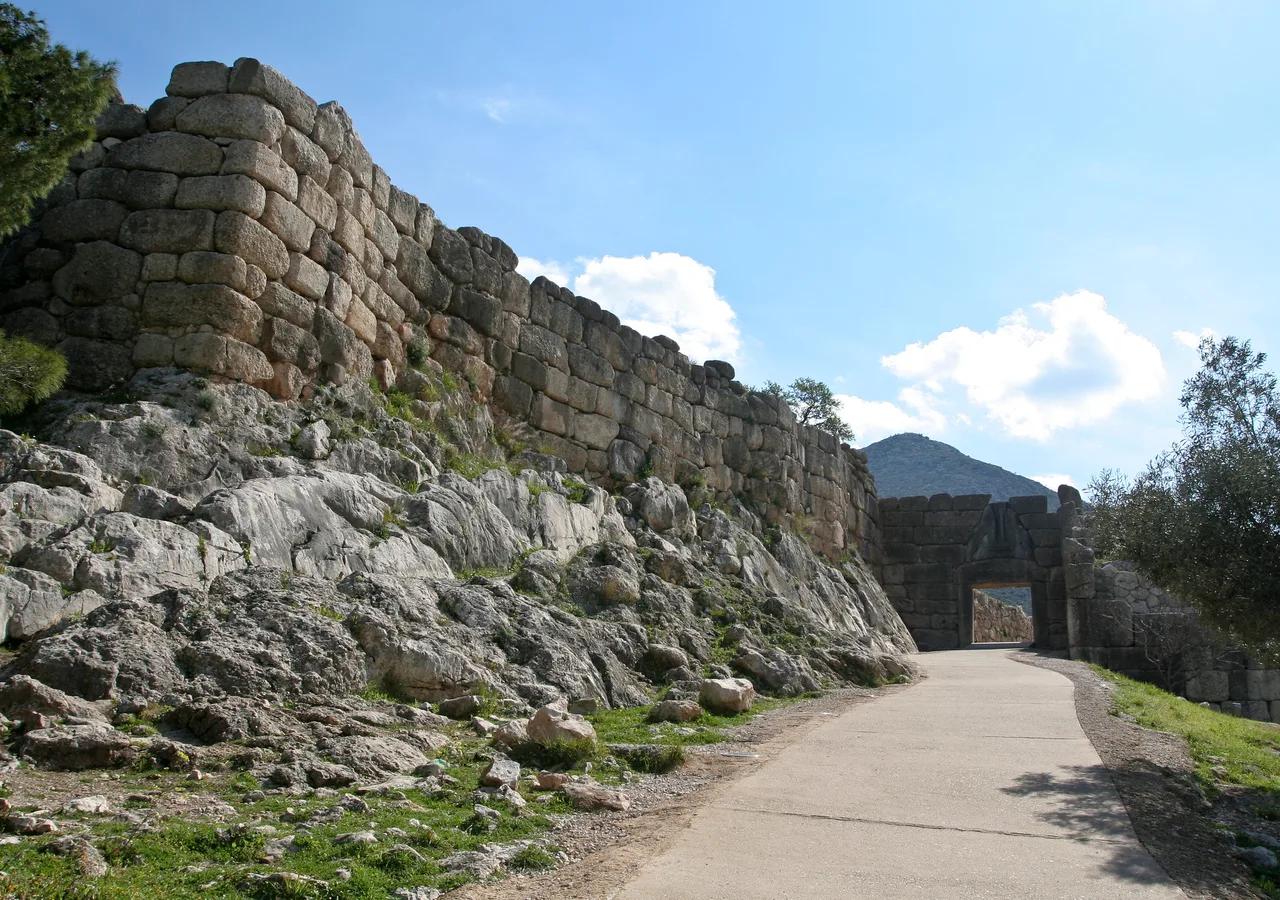
Last updated November 2026: the Lion Gate Mycenae is the main entrance to the Mycenae citadel in the Argolid, in the Peloponnese. Its relief of two lionesses flanking a central column is generally dated to the Late Bronze Age, around the 13th century BCE. It is the first monument you meet inside the Mycenae archaeological site, and this guide covers what survives, how it works and how to visit it.
Featured image: Sharon Mollerus, CC BY 2.0, via Flickr.
What the Lion Gate Is, and Why It Matters
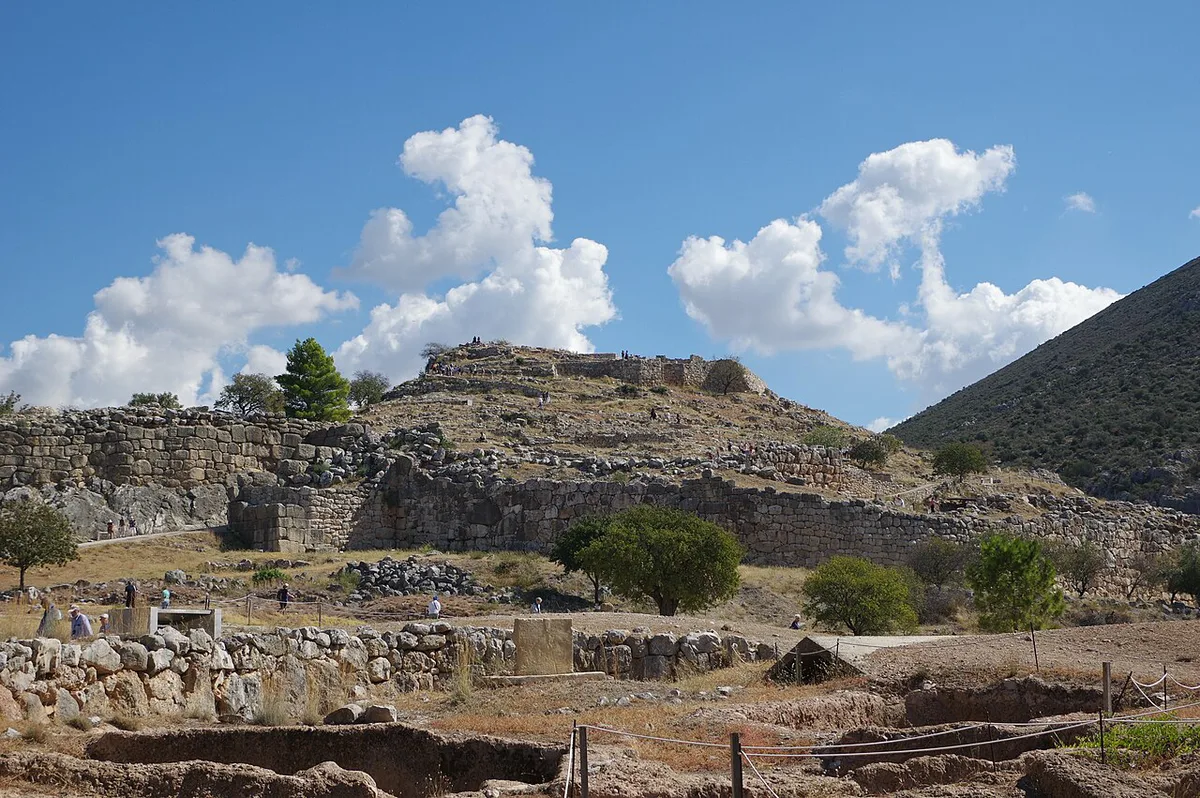
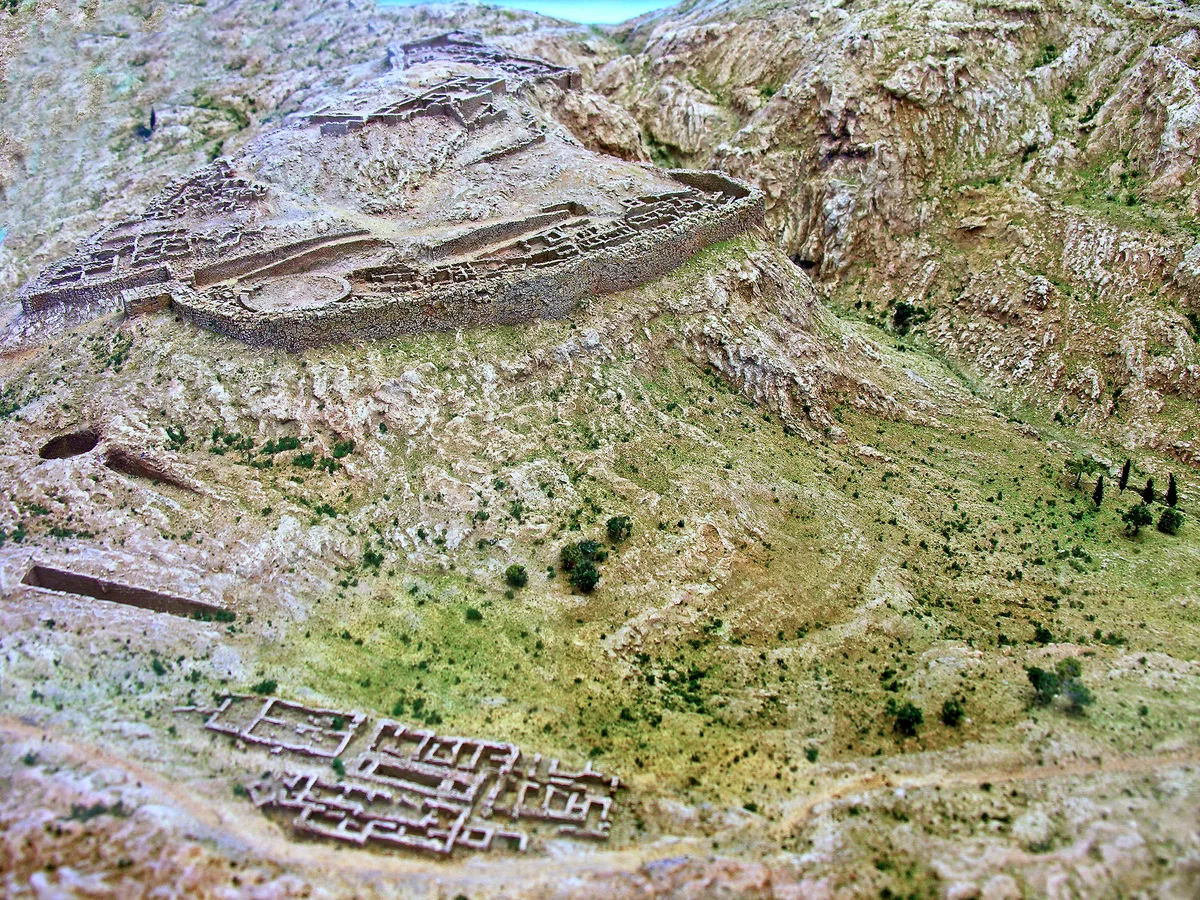
Mycenae was a fortified Bronze Age centre, and this gate was its principal doorway. Scholars generally date the gate and its relief to the 13th century BCE, so the stone has stood for more than 3,000 years. Its relief is the best-known surviving sculpture from the citadel. Greece's Ministry of Culture describes the wider Mycenae site and its fortifications on its official heritage pages.
- What it is: the main entrance to the Mycenae citadel, set in the massive Cyclopean walls.
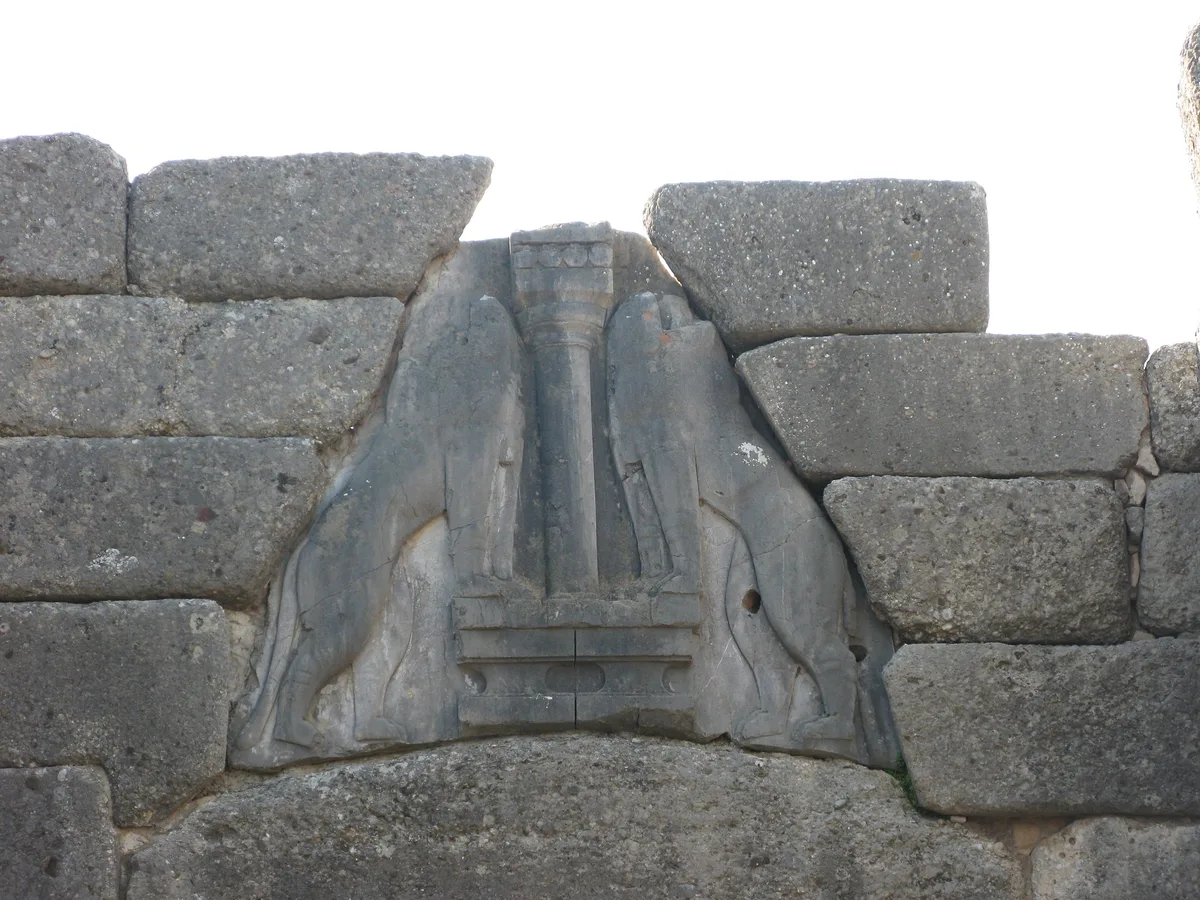
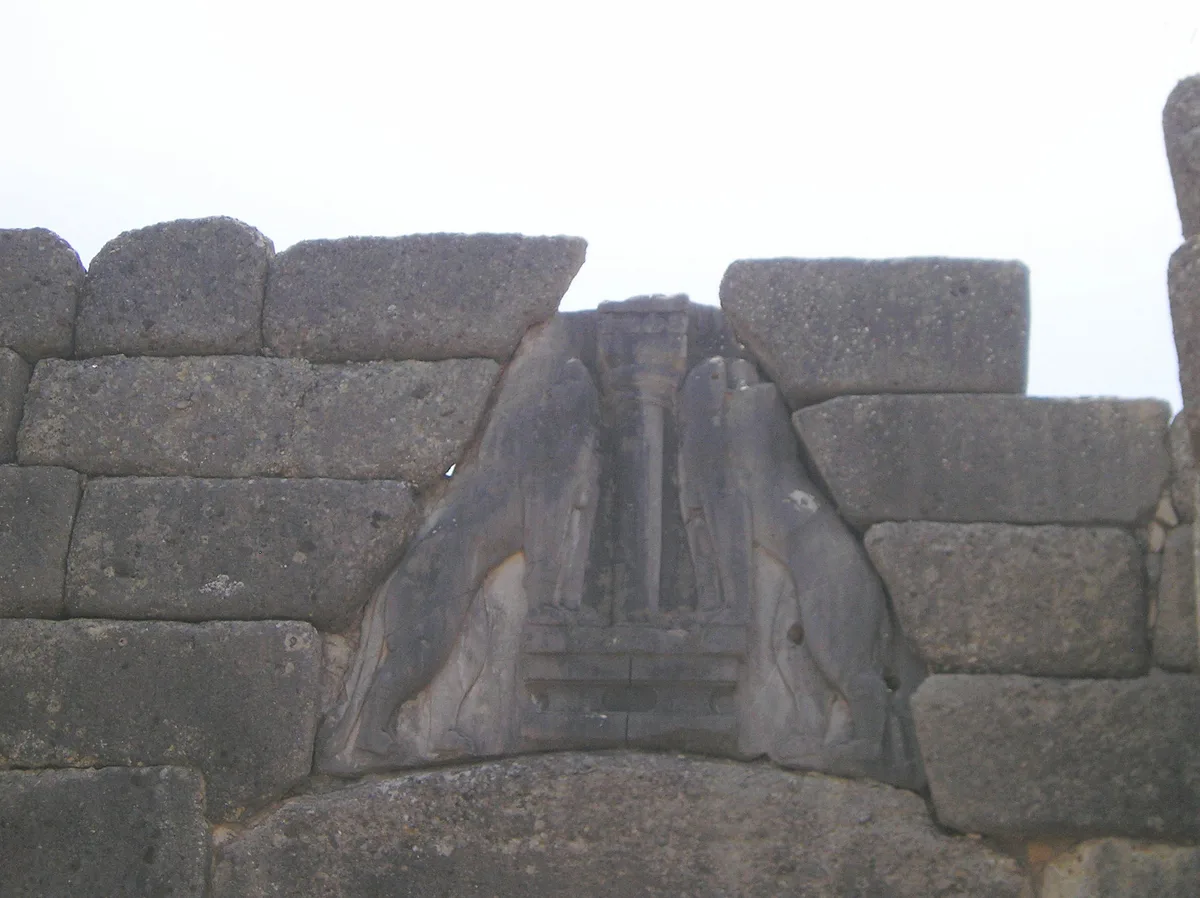
- What it shows: two lionesses facing a central column on a triangular slab.
- Why it matters: it is the clearest picture of how Mycenaean rulers presented power.
- What is missing: the lions' heads, which do not survive.
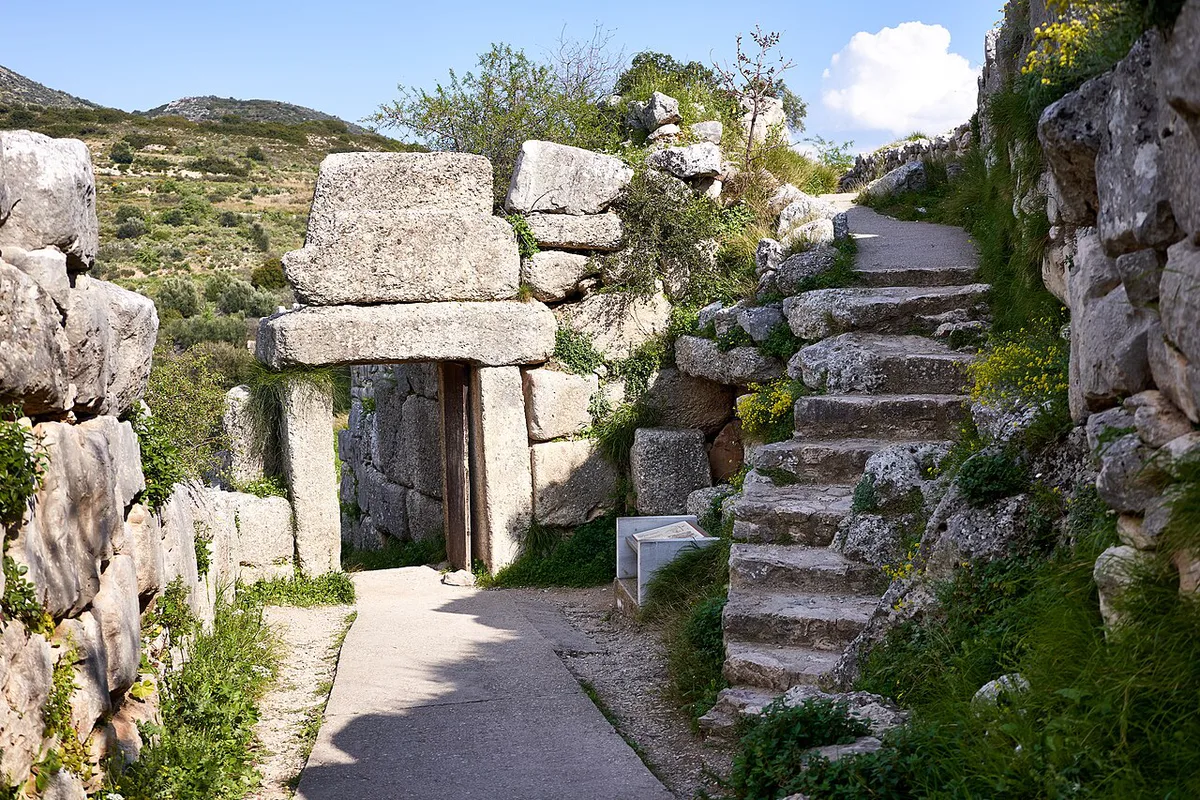
How to Reach the Gate Inside the Mycenae Site
You do not need to search for the gate. Once you pass the ticket point, the path leads uphill to it, and the approach is a stone ramp with uneven, worn surfaces. Wear shoes with grip, because polished limestone gets slippery. Shade is thin on the slope, so bring water in warm months. For admission details, read our Mycenae ticket guide. Official tickets are sold through the Ministry of Culture e-ticket channel. Coming from the capital? Our Athens to Mycenae route guide covers transport. Allow about 15 minutes at the gate itself if you only want the essentials.
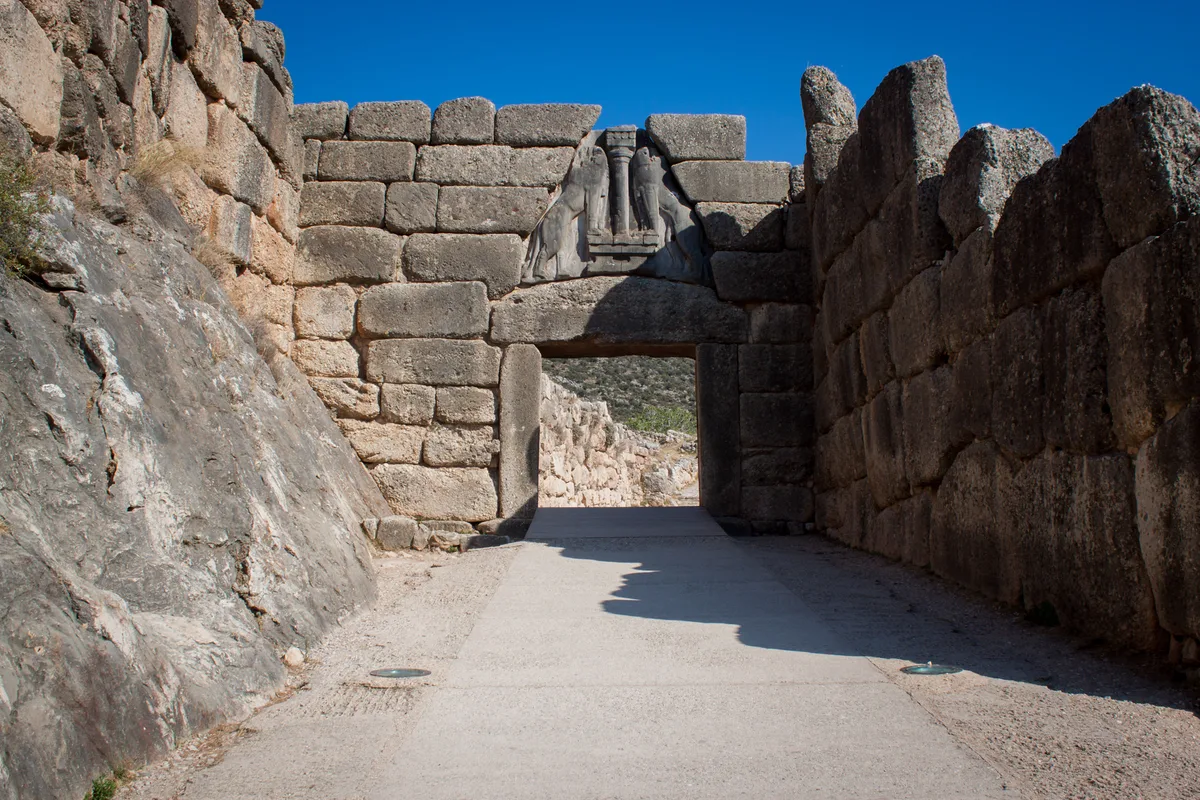
- Start at the ticket point and follow the path uphill toward the citadel walls.
- Walk the ramp slowly and watch the wall rising on your side.
- Stop below the gate and look up at the relief from the ground.
- Pass between the jambs and notice how thick the opening is.
- Stand just inside and look back at the gate from the interior.
What You Are Looking At: The Relief
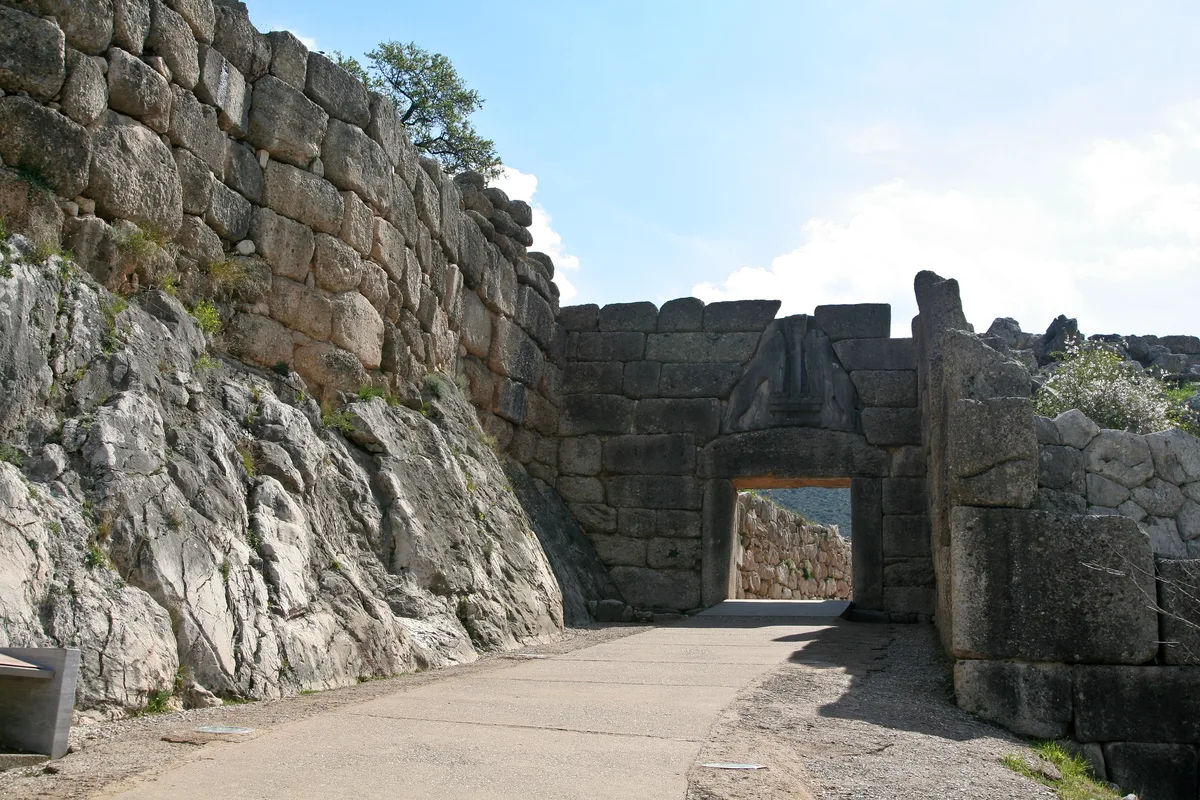
Above the lintel sits a triangular limestone slab. On it, two lionesses stand on their hind legs with front paws resting on a pair of low bases. Between them rises a single tapering column. You can see all of this from the ground, though photographs often flatten the depth. Details such as fine surface carving are easier to read in close-up photos than from the path. Two points are scholarly inference, not observed fact. First, the heads are thought to have been carved separately and attached, which would explain why none remain. Second, the column is usually read as a symbol of a shrine, a palace or divine protection. Treat both ideas as hypotheses.
How It Was Built: Cyclopean Masonry and the Relieving Triangle
Mycenaean builders stacked huge, roughly shaped limestone blocks without mortar. This style is called Cyclopean masonry. The doorway itself uses two upright jambs and a single massive lintel across the top. Above the lintel, builders left an open triangle in the wall. That gap, called a relieving triangle, lets the wall's weight pass around the lintel instead of pressing down on it. The relief slab was then fitted into the gap.
| Feature | What to look for on site | What it shows |
|---|---|---|
| Cyclopean walls | Irregular, very large blocks with gaps filled by smaller stones | Defence built with human labor and careful planning |
| Lintel | The single long block across the doorway | Builders could span an opening with one stone |
| Relieving triangle | The triangular space above the lintel, filled by the relief | Engineering that protects the beam from the wall's load |
| Relief slab | Two lionesses and a column | A statement of identity at the entrance |
| Jambs | Thick vertical stones on each side | A deep, controlled passage, not a casual opening |
A Gate Designed for Defence
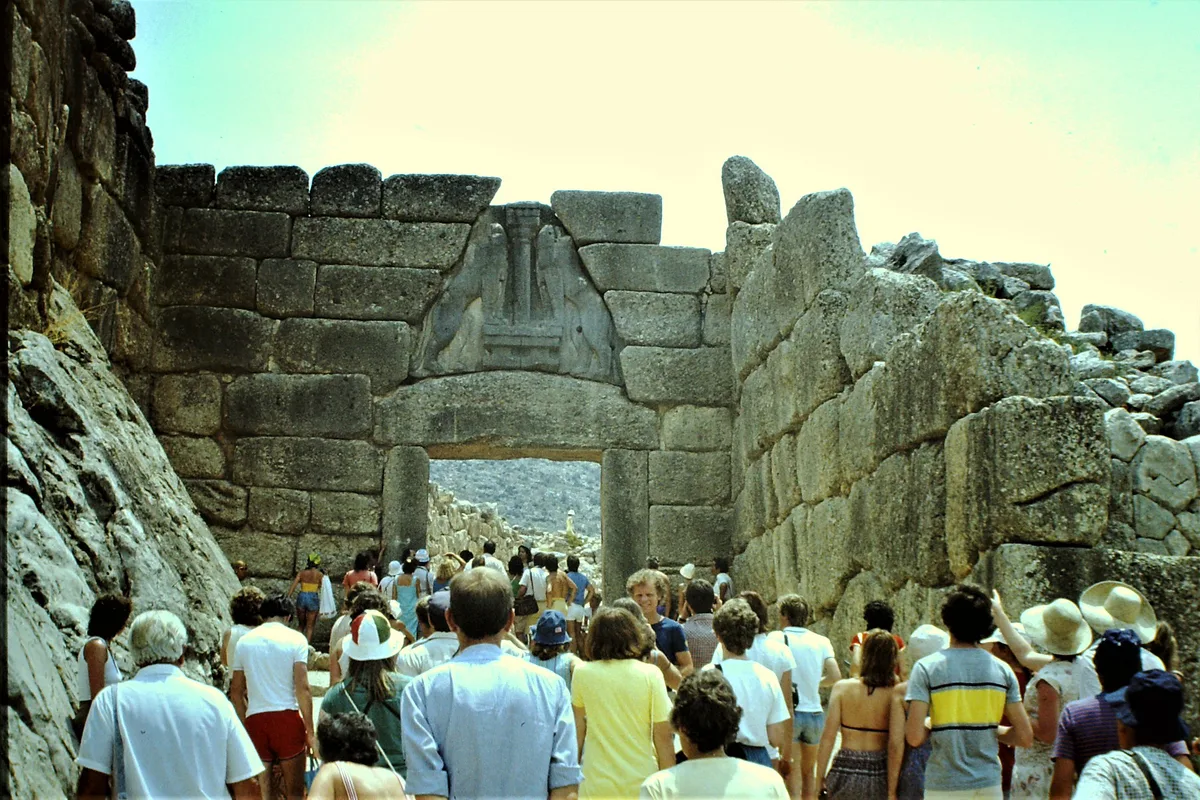
Approaching the gate means climbing a narrow ramp. A projecting bastion stands beside it, so anyone arriving walks along a wall. Defenders on the walls could watch the whole approach. One interpretation says the layout exposed an attacker's unshielded side, since shields were typically carried on the left arm. Treat that as an interpretation, not a settled fact. What you can verify yourself is the funnel shape. The ramp narrows, the bastion looms, and the doorway is small compared with the walls around it.
Myth, Legend and Later Names
Later Greeks linked Mycenae with King Agamemnon, the leader in Homer's epics. They also believed the walls were raised by the Cyclopes, one-eyed giants, because the blocks looked too large for human builders. Both ideas are later tradition. They are not archaeological findings, and the site's date range comes from excavation. Visiting is more rewarding if you keep legend and evidence apart. For the real society behind the stones, read about Mycenaean civilization and its rise.
Best Time and How Long to Spend
Early visits usually mean fewer people on the ramp and easier photos, but the light can be flat. Later in the day, side light brings out the relief's carving, though tour groups may fill the approach. Summer sun is strong on the exposed slope, so cooler months are more comfortable. These timing patterns are general trade-offs, so check opening hours on the official site before you travel. A quick pass takes about 15 minutes. Add time if you want to read the walls and look back from inside.
A quick pass takes about 15 minutes. Go early for fewer people, and choose footwear for the slick, uneven ramp on the way up.
- Mistake to avoid: treating the gate as the whole site, when the citadel lies beyond it.
- Mistake to avoid: expecting to see the lions' heads.
- Mistake to avoid: arriving with no time left for the interior.
Who Should Prioritize the Gate (and Who Can Skip the Detail)
Everyone passes through the gate, so the real question is how long to linger. Use the table to decide.
| Traveler | What to do at the gate |
|---|---|
| History enthusiast | Spend extra time on the masonry, the lintel and the relieving triangle |
| Family with children | Point out the lionesses and the missing heads, then move on |
| Mobility-limited visitor | Expect a slope and uneven stone; ask staff about the current access arrangements |
| Day-tripper on a tight schedule | Take 15 minutes for the gate, then head inside the citadel |
| Photographer | Shoot the relief from the ground, then the view back from inside |
What to See Next
Once you are through the gate, keep going into the citadel. Other sites expand the story afterward.
- Treasury of Atreus: Visit Guide to Agamemnon's Tomb: a large Mycenaean tomb nearby.
- Mycenae Archaeological Museum: What to See and Plan: finds from the site.
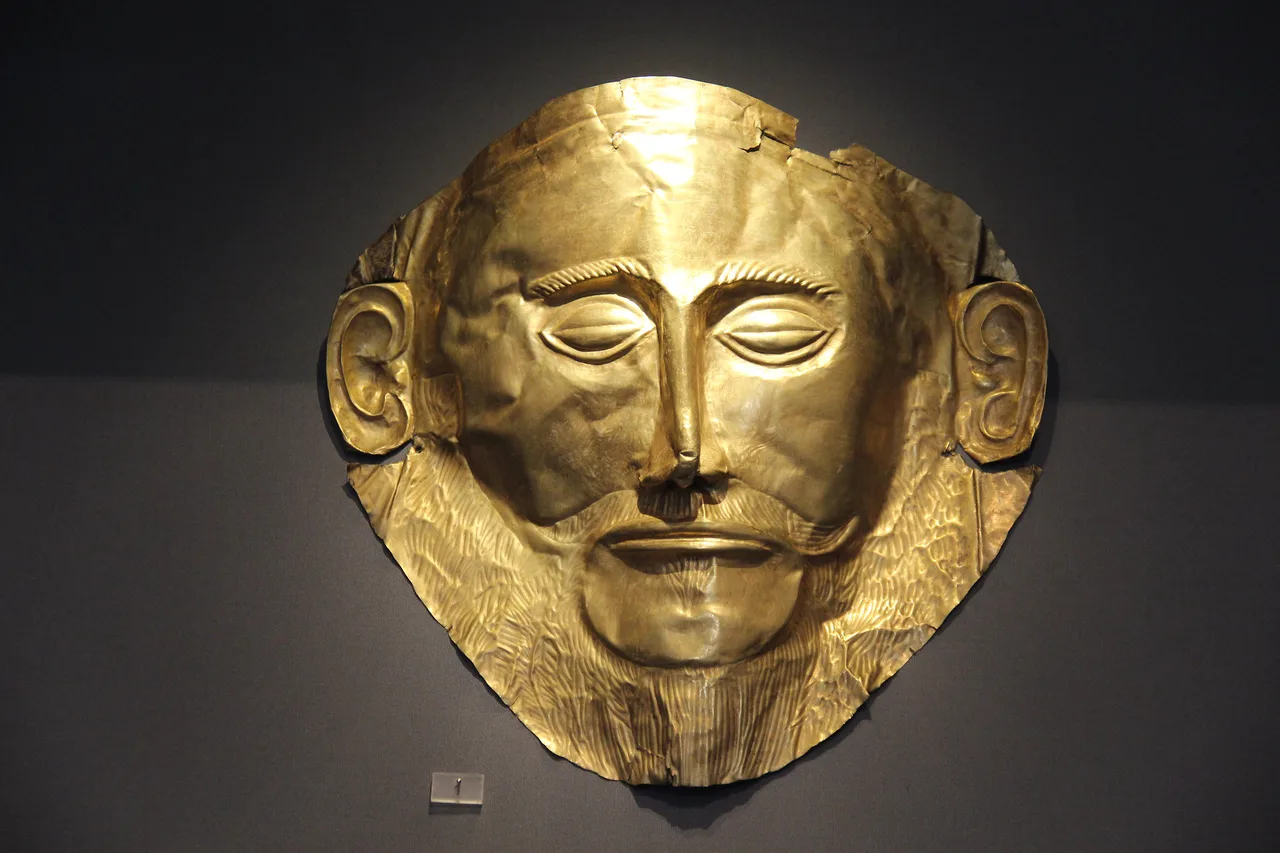
- Mask of Agamemnon: Where to See It & Who It Really Was: the famous gold mask, which belongs to legend more than to a named king.
- Tiryns: another Bronze Age fortress in the Argolid.
- Epidaurus Ancient Theatre: Visitor Guide & Day Trip Tips: a classical theatre in the same region.
- Ancient Corinth: What to See, Time Needed and How to Visit: a Greek and Roman site on the way toward Athens.
- Nemea: a stadium and temple site among vineyards.
- Argos Ancient Theatre, Greece: Visit Guide and Day-Trip Tips: a large ancient theatre in the nearby town.
Frequently Asked Questions
What is the meaning of the Lion Gate?
The relief is usually read as a statement of power and protection at the citadel's entrance. The central column is often interpreted as a symbol of a shrine or divine guardianship. Scholars treat these readings as hypotheses.
What was Mycenae in ancient Greece?
Mycenae was a fortified Late Bronze Age centre in the Argolid, in the Peloponnese. Its rulers built the citadel walls and the Lion Gate. Later Greeks tied the place to Agamemnon, which is legend, not archaeology.
Related guides

Continue reading
Guides on the same trip