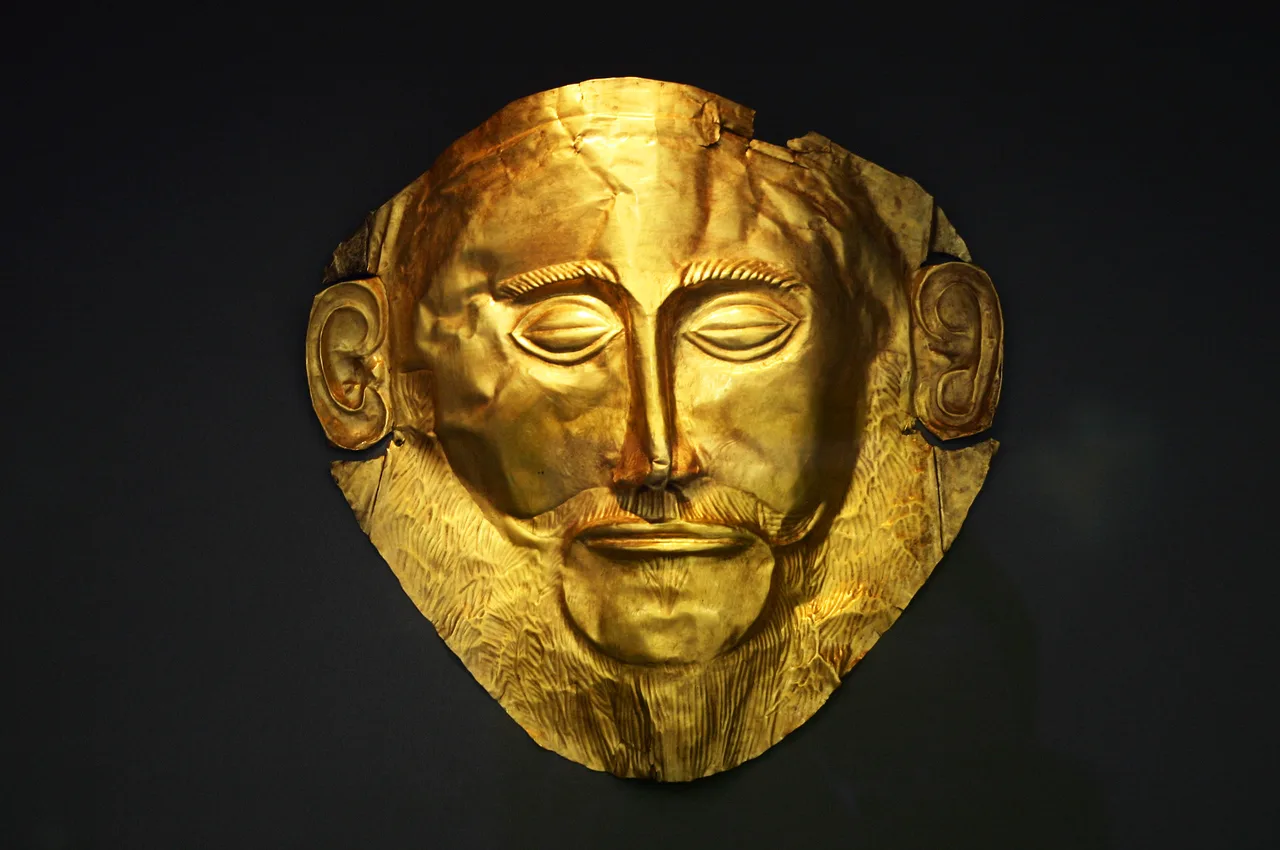
Mask of Agamemnon: Where to See It & Who It Really Was
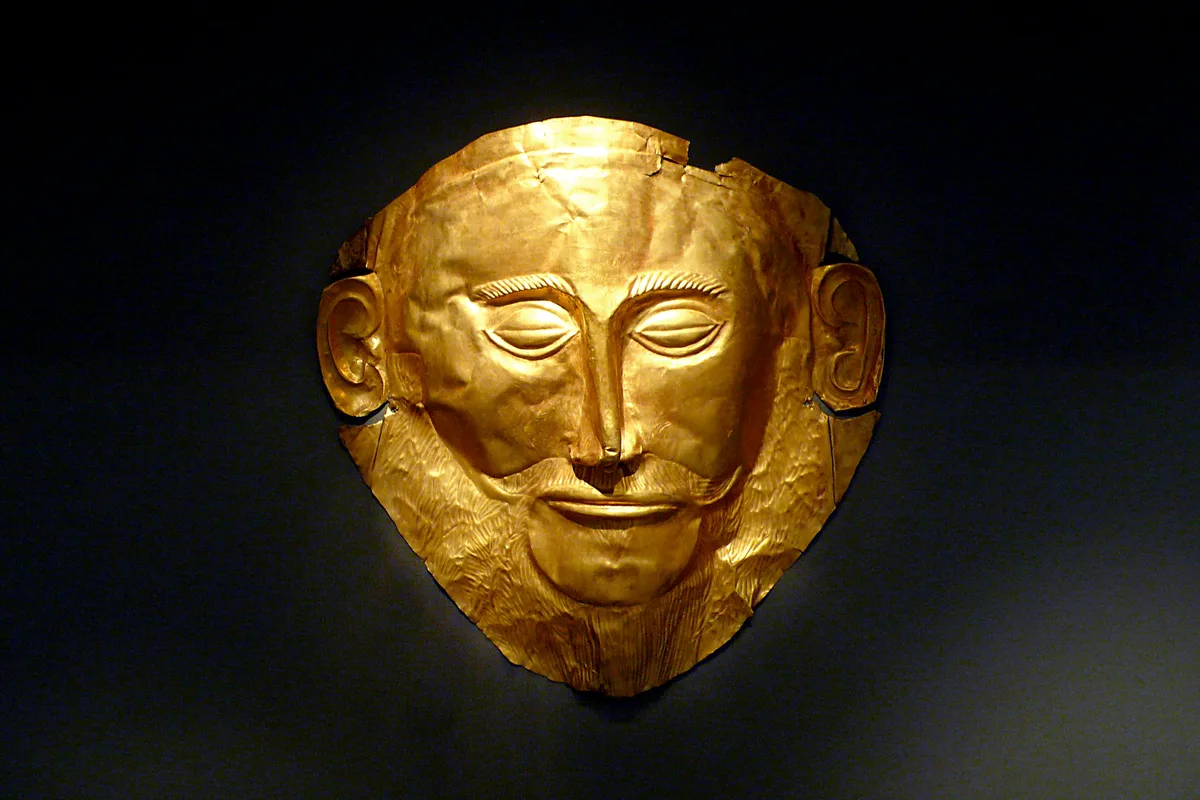
Last updated November 2026: the mask of Agamemnon is a gold funerary mask that Heinrich Schliemann found at Mycenae in 1876. It is displayed in the National Archaeological Museum in Athens, not at Mycenae. Scholars date it to about 1550–1500 BC, so it is not the face of Homer's king.
Featured image: Christian Stock, CC BY 2.0, via Flickr.
Quick answer: what the mask is and where it is
The mask is a hammered gold face from a shaft grave at the Mycenae citadel. Schliemann named it after Agamemnon, the Homeric king of Mycenae. The name stuck, although the occupant's identity is unknown. If you want to see the original, plan a stop in Athens rather than the Argolid.
- What: gold funerary mask, hammered gold, Mycenaean culture
- Found: Mycenae, by Heinrich Schliemann, 1876
- Date: about 1550–1500 BC (scholarly dating)
- Where it is now: National Archaeological Museum, Athens
- Common mistake: expecting to see it at the Mycenae site
Where to see the Mask of Agamemnon
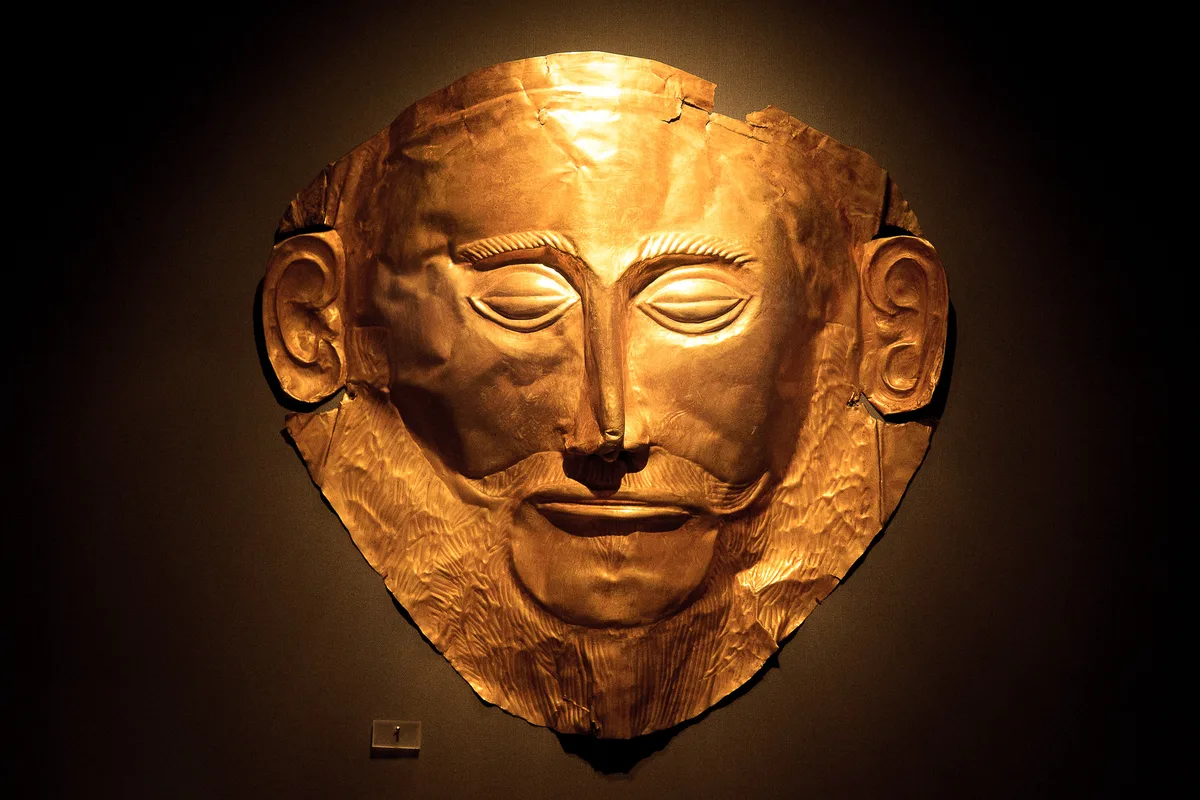
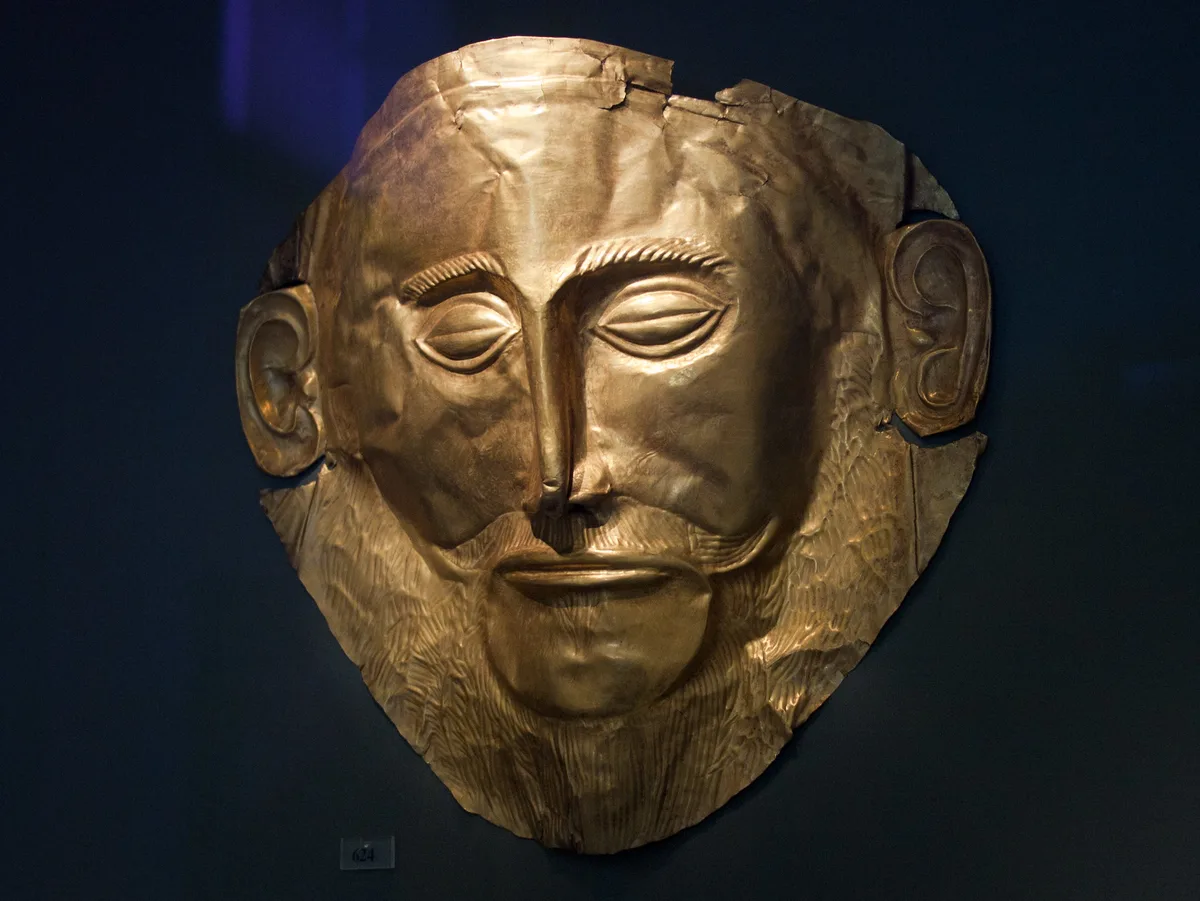
The original is in the National Archaeological Museum in Athens, alongside other Mycenaean funerary finds. The museum label reads "Mask of Agamemnon, 1550–1500 BC. Gold." Opening hours, ticket prices and gallery layout change, so use the museum's official website for current details. Look for the Mycenaean collection first, since the mask is one of its headline objects. Allow time for the other grave goods in the same display, because they put the mask in context.
Is it really Agamemnon's face?
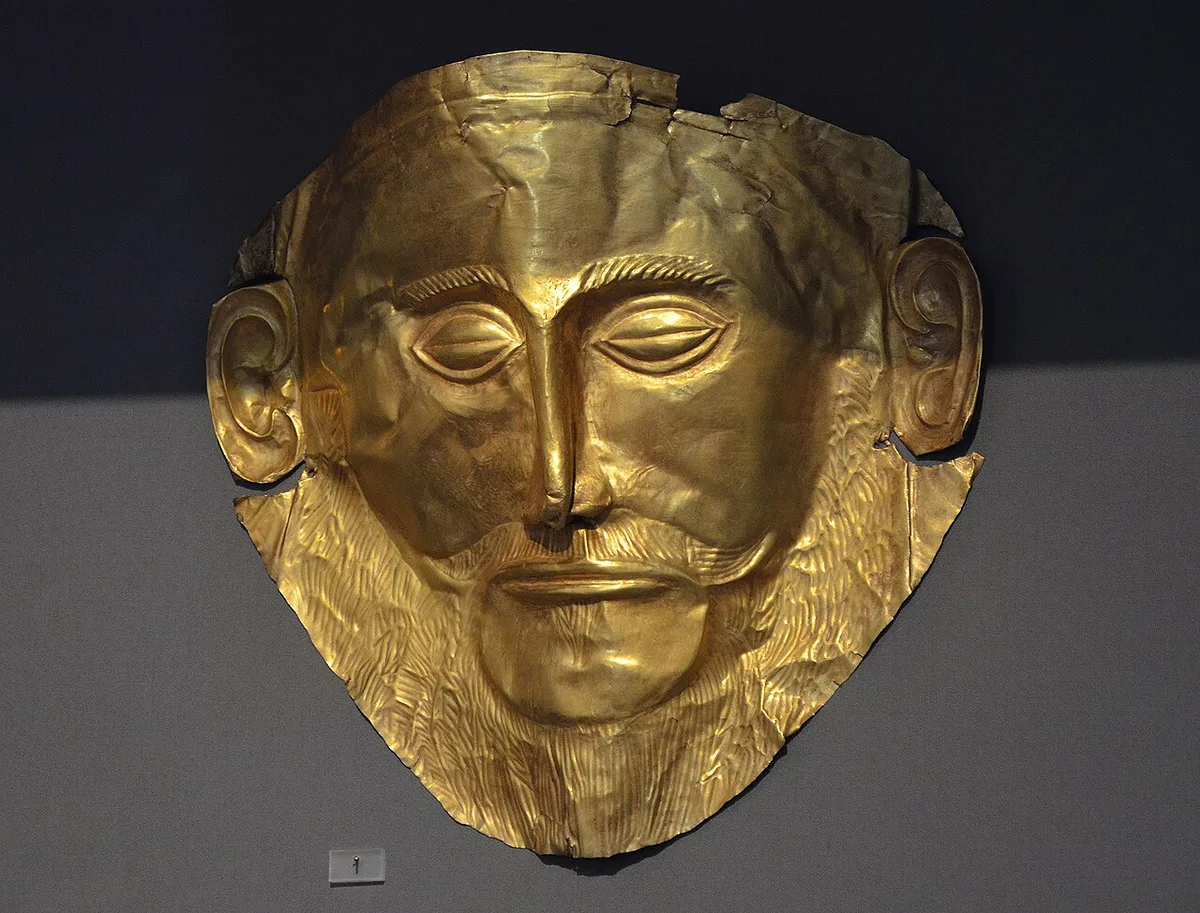
Almost certainly not. Schliemann believed he had found the burial of the legendary king, his charioteer and their companions. Later study placed the mask at about 1550–1500 BC. That is roughly 300 years before the era usually associated with the Trojan War. The Ministry of Culture's Mycenae site record is the place to check the official description of the site. For wider context on the people who made it, see our guide to Mycenaean Civilization: History, Key Sites and Visits.
Because the mask predates the Trojan War era by about 300 years, read the Athens display as Bronze Age history rather than Homer.
- Myth: Schliemann saw the face of Agamemnon, king of Mycenae in Homer's epic.
- Evidence: the dating falls well before the Trojan War era, and the occupant's name is lost.
- Why the name persists: Schliemann's label became the one every museum caption and guidebook recognizes.
- Caution: treat "almost certainly not Agamemnon" as the scholarly view, not as a claim about the mask being fake.
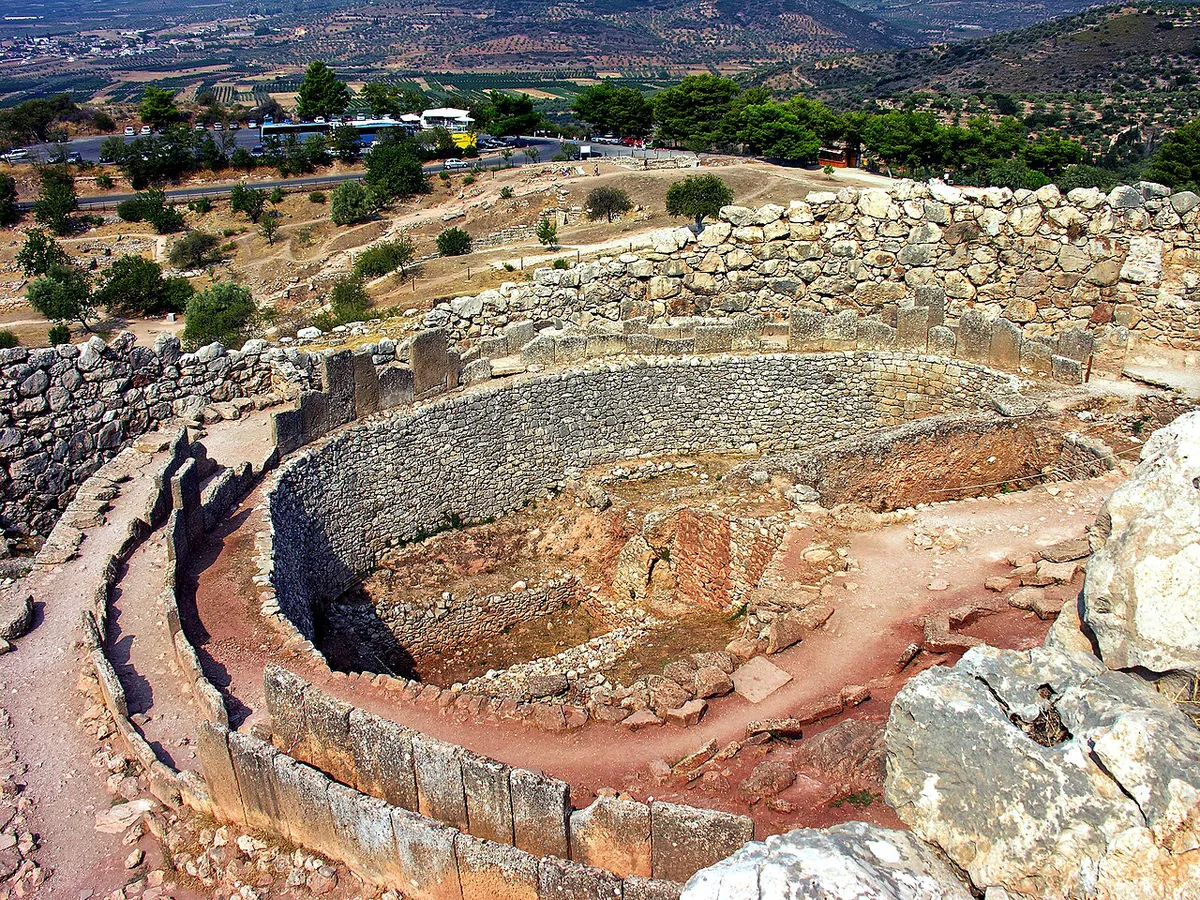
Where it was found: Mycenae and Grave Circle A
Schliemann excavated the shaft graves of Grave Circle A inside the Mycenae citadel. The grave goods included gold jewelry as well as masks. Today you can walk the citadel and enter through the Lion Gate. Do not confuse the shaft graves with the Treasury of Atreus: Visit Guide to Agamemnon's Tomb. That is a separate tholos tomb, sometimes called the tomb of Agamemnon, and the mask did not come from it. At Mycenae you see the empty graves and the architecture. The gold itself is in Athens.
Other gold masks and grave goods from Grave Circle A
The Mask of Agamemnon was not a lone find. Schliemann's 1876 dig in Grave Circle A produced five gold face masks from the shaft graves, and the one now named after Agamemnon came from Grave V. The others differ in detail. Several are rounder and less detailed, and one is often described as lion-like. Seen together in Athens, they show how much the face on the famous mask was an individual portrait style rather than a standard design.
The same graves held a wider set of objects that are worth finding in the Mycenaean gallery:
- Gold and silver vessels: cups and rhyta, including the Silver Siege Rhyton with its battle scene, from Grave IV.
- Inlaid daggers: bronze blades decorated with hunting scenes in gold, silver and niello.
- Jewelry and sheet-gold ornaments: beads, diadems and small cut-out discs that were sewn onto clothing or shrouds.
- Weapons: swords and daggers laid beside the dead, which point to a warrior elite.
Allow extra time for these cases, because the mask is the headline object but the surrounding grave goods explain who was buried at Mycenae and how wealthy they were. Gallery arrangement and labelling can change between visits, so ask at the information desk or check the museum's official website if you want to find a specific object.
At the Mycenae site you can stand at the circle where these finds were made. Nothing from the graves is displayed there, so the gold is only in Athens.
What the mask looks like up close
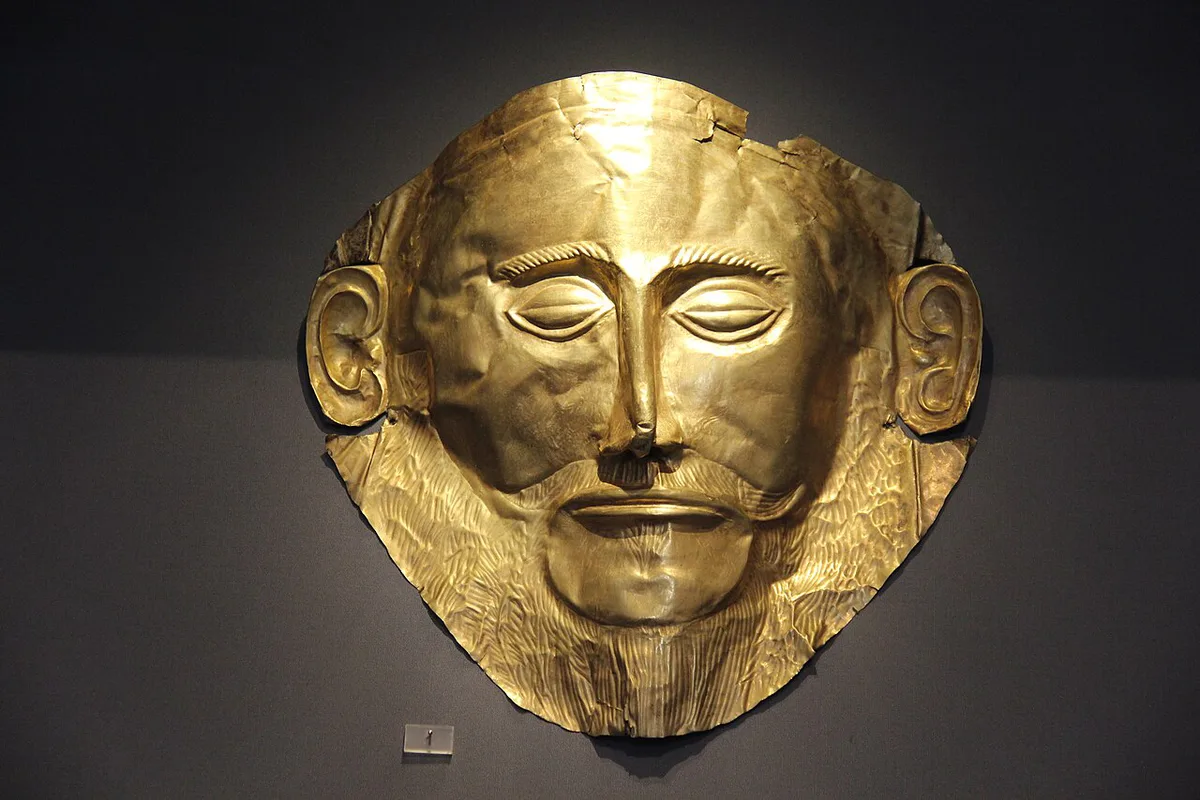
Knowing what to look for makes the Athens display more rewarding. The mask is a thin sheet of gold, hammered into relief and then worked with fine detail. It stands roughly 26 cm tall, so it is larger and flatter than most photos suggest.
- Face: a broad, solemn face with a straight nose, clearly modelled eyebrows and closed or heavy-lidded eyes.
- Hair: a moustache and a neat beard, with the hair-like lines chased into the metal.
- Ears: small and flat, with fine holes around the edge where the mask was probably attached to a burial shroud or the body.
- Surface: some dents and creases from more than 3,000 years underground, which are part of its character.
Schliemann's famous claim
Schliemann found the mask in Grave V of Grave Circle A in 1876. He is widely reported to have telegraphed that he had "gazed upon the face of Agamemnon". That line explains the name still printed on museum labels. As the sections above explain, the mask is far older than the Trojan War era, so the quote belongs to the history of archaeology rather than to the evidence.
Photographing it
The mask sits behind glass, so reflections are the main problem. Stand at a slight angle to the case, switch off your flash and shoot from a short distance. Museum photography rules can change, so check the signs in the gallery or the museum's official website before you start.
What you see at Mycenae vs in Athens
Use this table to decide which stop answers your question. Neither stop replaces the other.
| Place | What you see | Best for |
|---|---|---|
| National Archaeological Museum, Athens | The Mask of Agamemnon and other shaft-grave finds | Seeing the gold in person |
| Mycenae site | Grave Circle A, the Lion Gate, the citadel walls | Seeing where it was found |
| Mycenae museum | Finds held at the site; see our Mycenae museum guide for what is on display | Local context, not the famous mask |
| Treasury of Atreus | A large tholos tomb | Mycenaean architecture |
How to combine Athens and Mycenae
Visit the Athens museum first, so the objects are fresh in your mind. Then travel to Mycenae and see the graves they came from. Our guide to getting from Athens to Mycenae covers transport options. Plan Mycenae Tickets: What's Included, Booking and Tips before you go. For bus services in the Argolid, check KTEL Argolidas. If you have extra time, Tiryns is a natural addition in the same region. Ancient Corinth: What to See, Time Needed and How to Visit and Nemea also fit a longer Peloponnese route. For shorter trips, doing Athens and Mycenae on separate days saves rushing either.
Frequently Asked Questions
Why is the Mask of Agamemnon significant?
It is one of the best-known objects of Mycenaean civilization. Schliemann's 1876 discovery at Mycenae brought wide attention to Bronze Age Greece. Its name also shows how myth shaped early archaeology.
Is there proof that Agamemnon was real?
The mask does not provide it. Scholars date the mask to about 1550–1500 BC, earlier than the era linked to the Trojan War. Agamemnon remains a figure of Greek epic, and the buried man's identity is unknown.
Related guides


Continue reading
Guides on the same trip