
Last updated November 2026. The Treasury of Atreus is a monumental beehive (tholos) tomb just outside the citadel of Mycenae, and it is often called the Tomb of Agamemnon. That name is later legend, and nobody knows who was buried inside. Add it to a Mycenae visit if you want to stand inside a Mycenaean dome. Skip it only if you have time for the citadel alone.
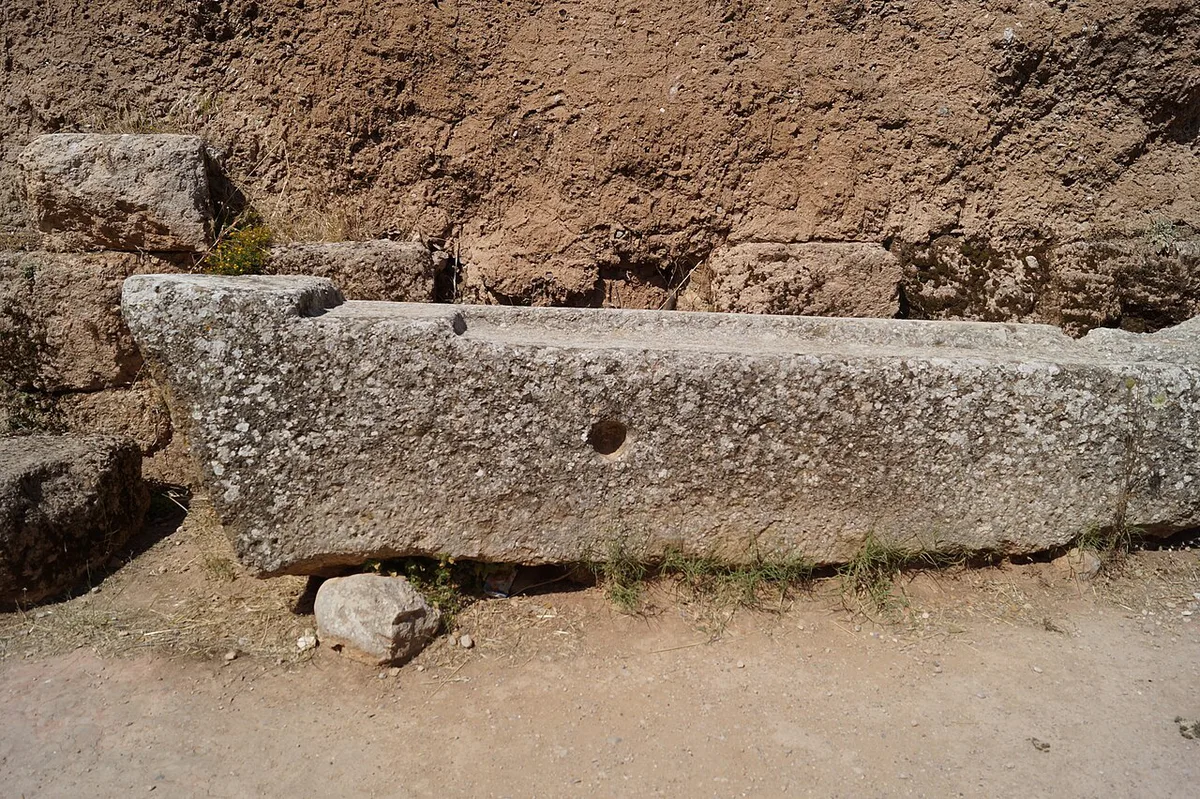
Featured image: Berthold Werner, CC BY-SA 3.0, via Wikimedia Commons.
What the Treasury of Atreus is (and why it's called Agamemnon's Tomb)
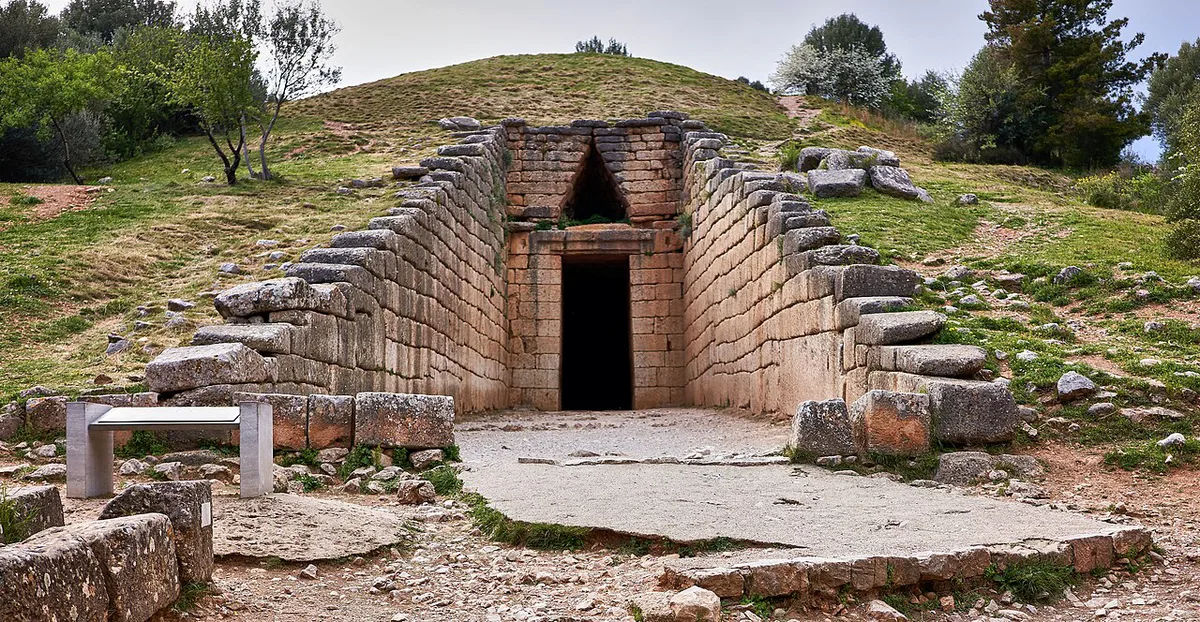
It is a Mycenaean tholos tomb: a circular chamber with a corbelled, beehive-shaped dome, reached by a long open passage. Visitors know it by two traditional names, the Treasury of Atreus and the Tomb of Agamemnon. Both come from later tradition rather than from evidence found in the tomb. The Ministry of Culture entry for the monument is the official reference for its description.
- Type: tholos (beehive) tomb of the Mycenaean era
- Location: on its own approach road outside the Mycenae citadel
- Names: Treasury of Atreus, Tomb of Agamemnon (both traditional)
- Occupant: unknown
What you'll see inside
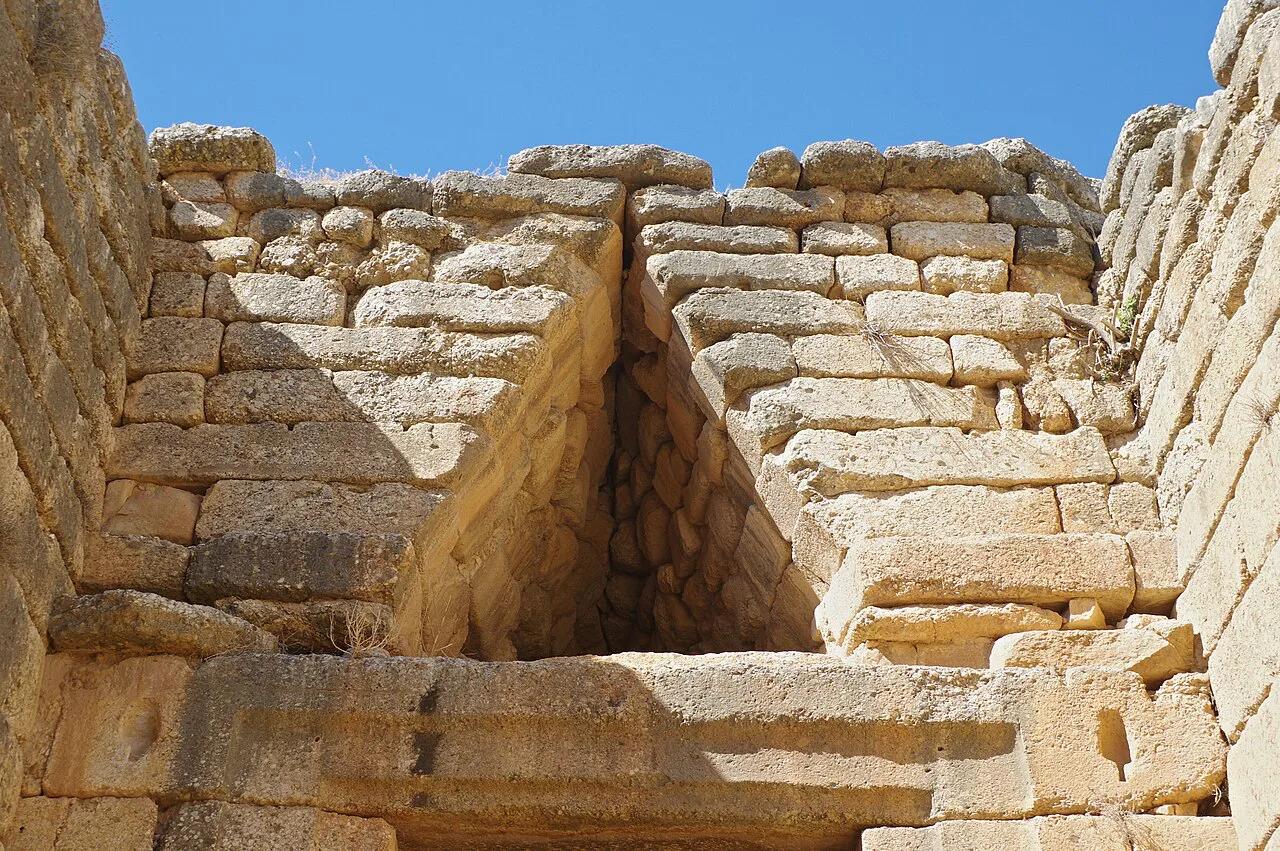
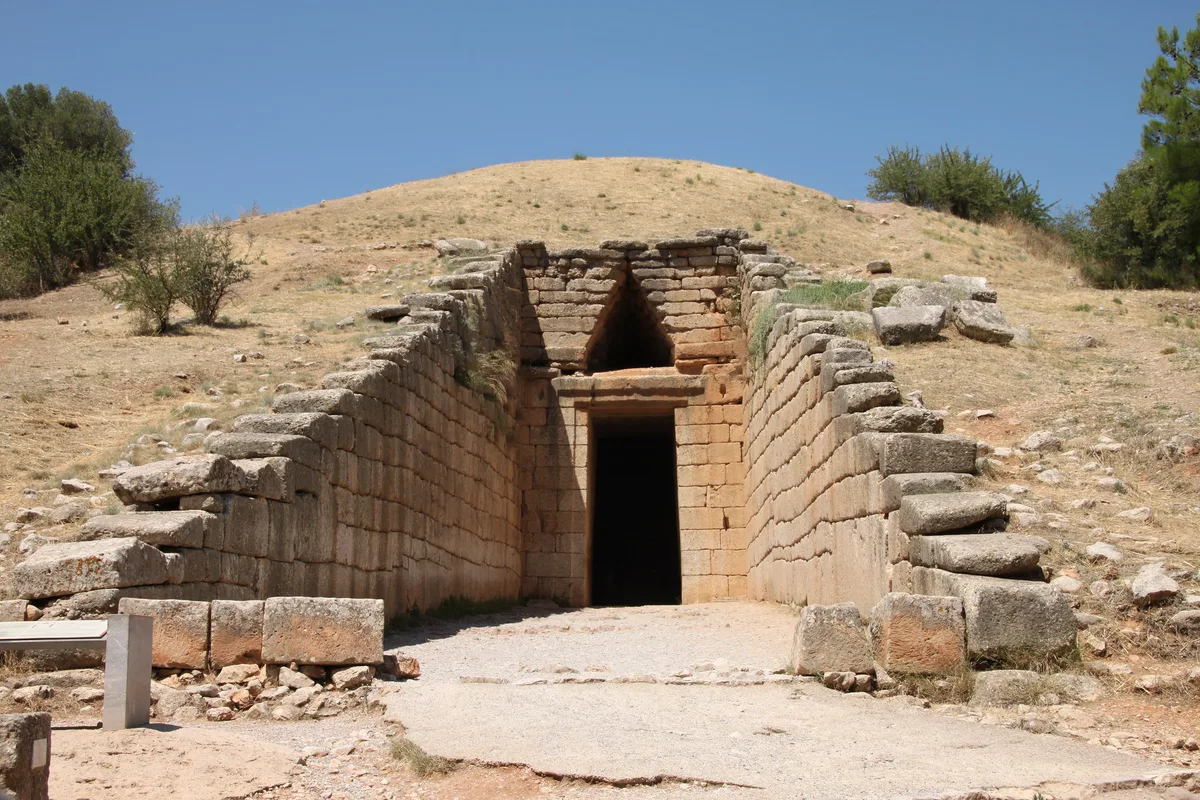
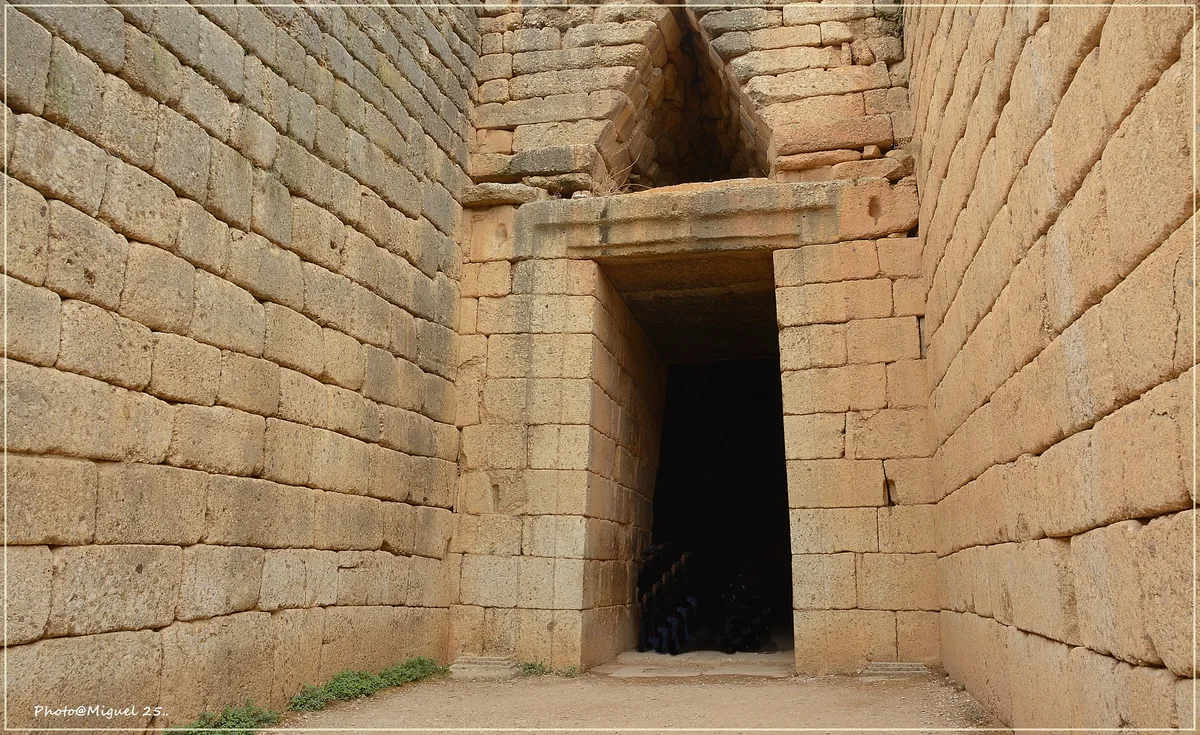
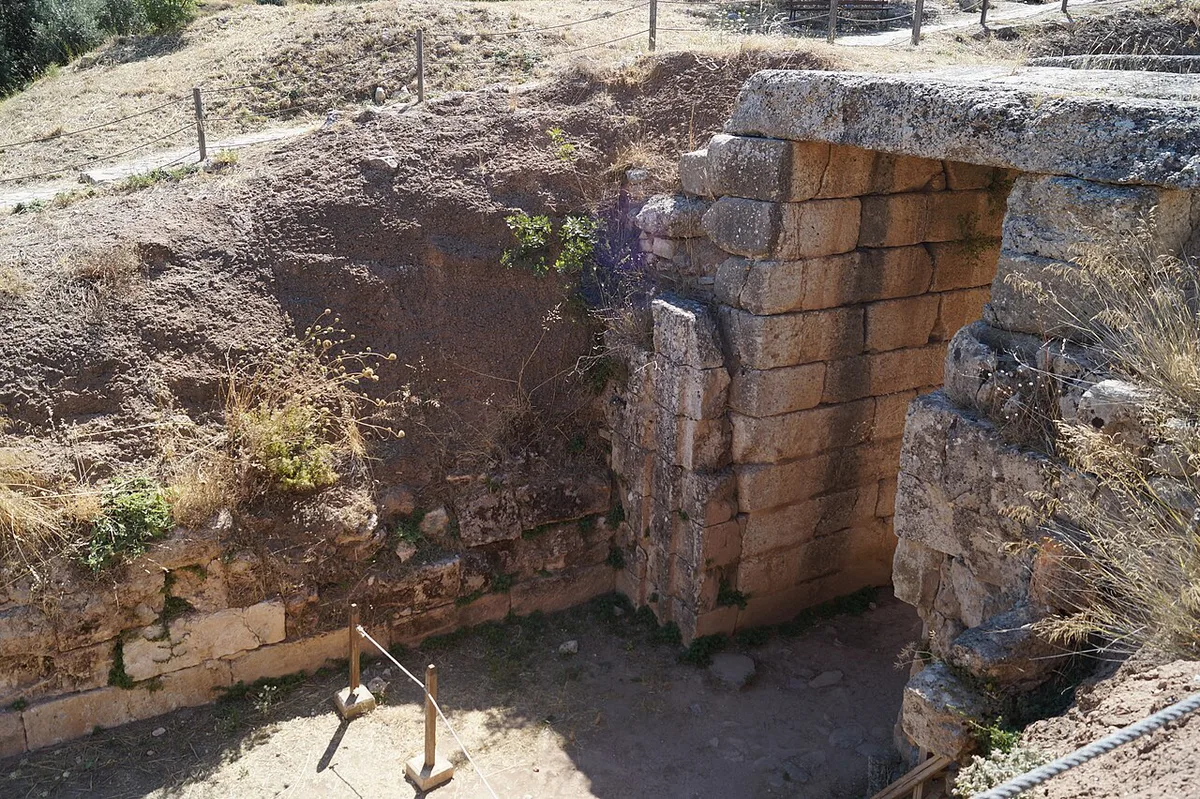
You walk first along the dromos, the long unroofed entrance passage cut into the hillside. It ends at a monumental doorway topped by a massive lintel block. Beyond it lies the tall interior dome, built from stacked rings of stone. A smaller side chamber opens off the main room. Plan to look rather than touch, since the site is protected and rules on access can change.
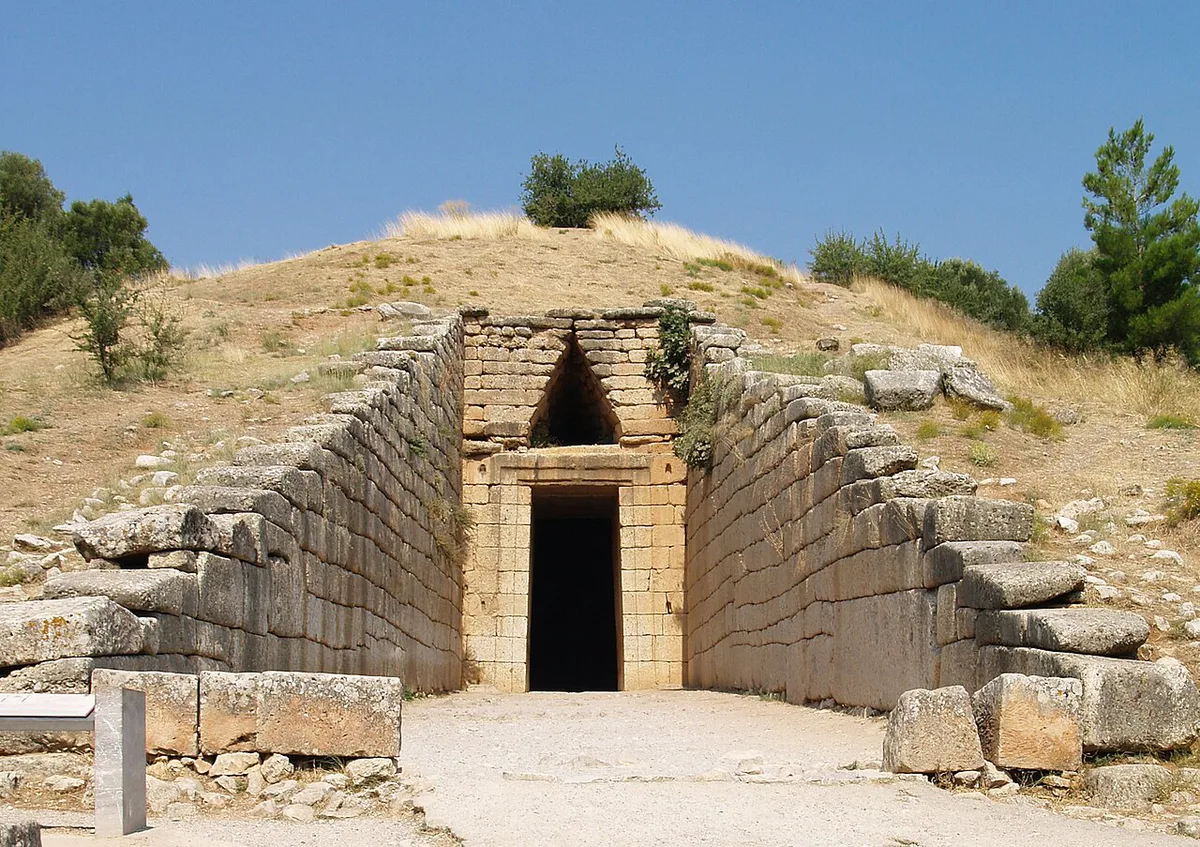
Myth vs archaeology
Later Greeks linked the great tombs of Mycenae to the house of Atreus and to Agamemnon, and the "treasury" label reflects a belief that such structures stored wealth. Archaeology supports neither idea. Some popular accounts date the tomb to around 1250 BC, but treat any single date as an estimate. For the real finds from the period, read about the Mask of Agamemnon: Where to See It & Who It Really Was, which belongs to the shaft graves rather than to this tomb. Wider context sits in our guide to Mycenaean Civilization: History, Key Sites and Visits.
Popular accounts date it to around 1250 BC, yet the Mask of Agamemnon comes from the shaft graves, not this tomb.
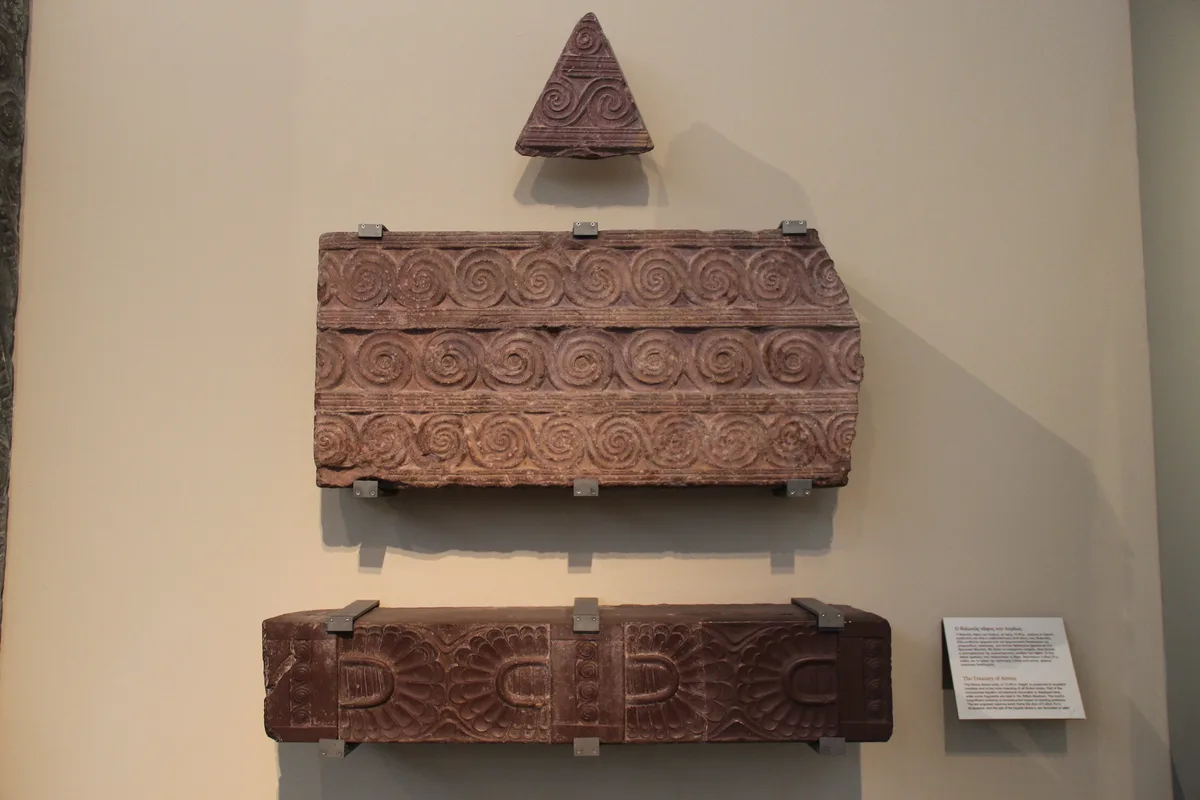
How it was built
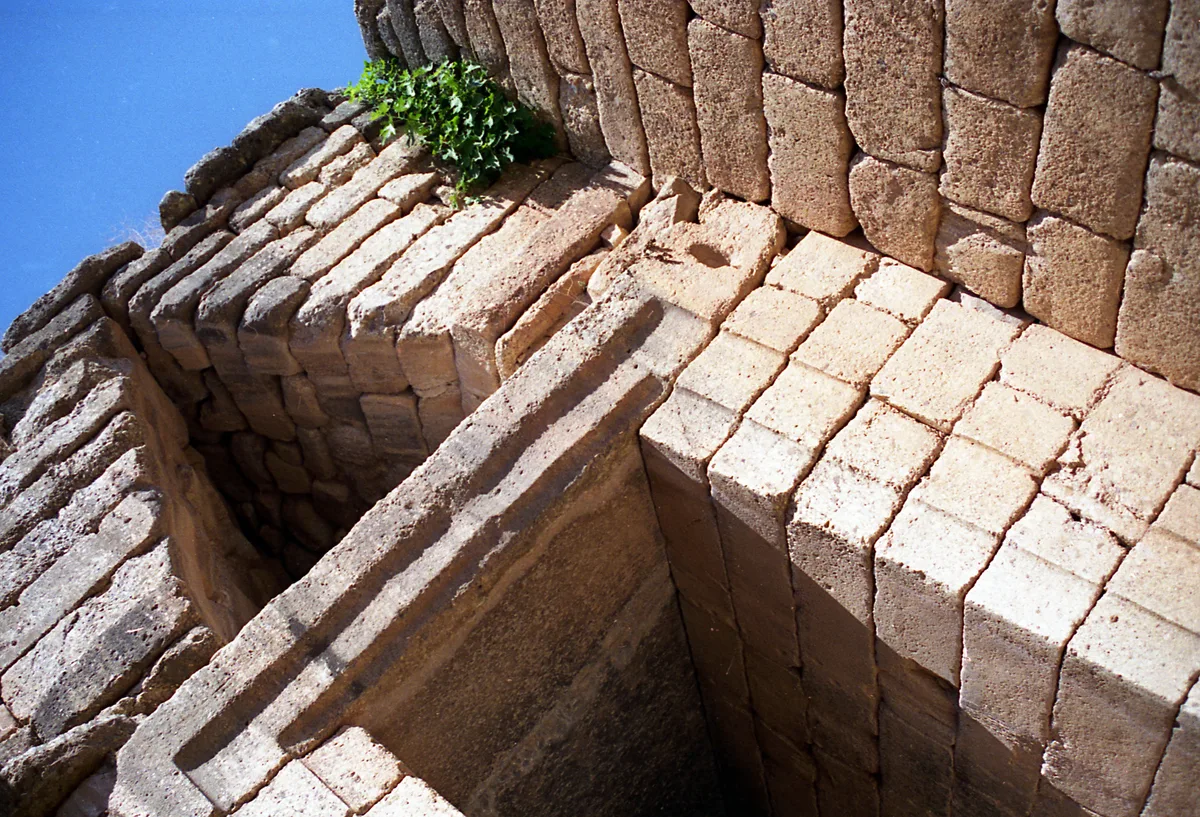
Builders laid each ring of stone slightly inward of the one below until the rings met at the top. This technique is called corbelling, and it needs no true arch. A relieving triangle above the doorway takes weight off the lintel. Popular figures for the lintel weight and the dome height vary between sources, so rely on the site's own information boards for measurements.
Sources cite a lintel of about 120 tonnes, yet dome figures vary, so check the site's boards before quoting numbers.
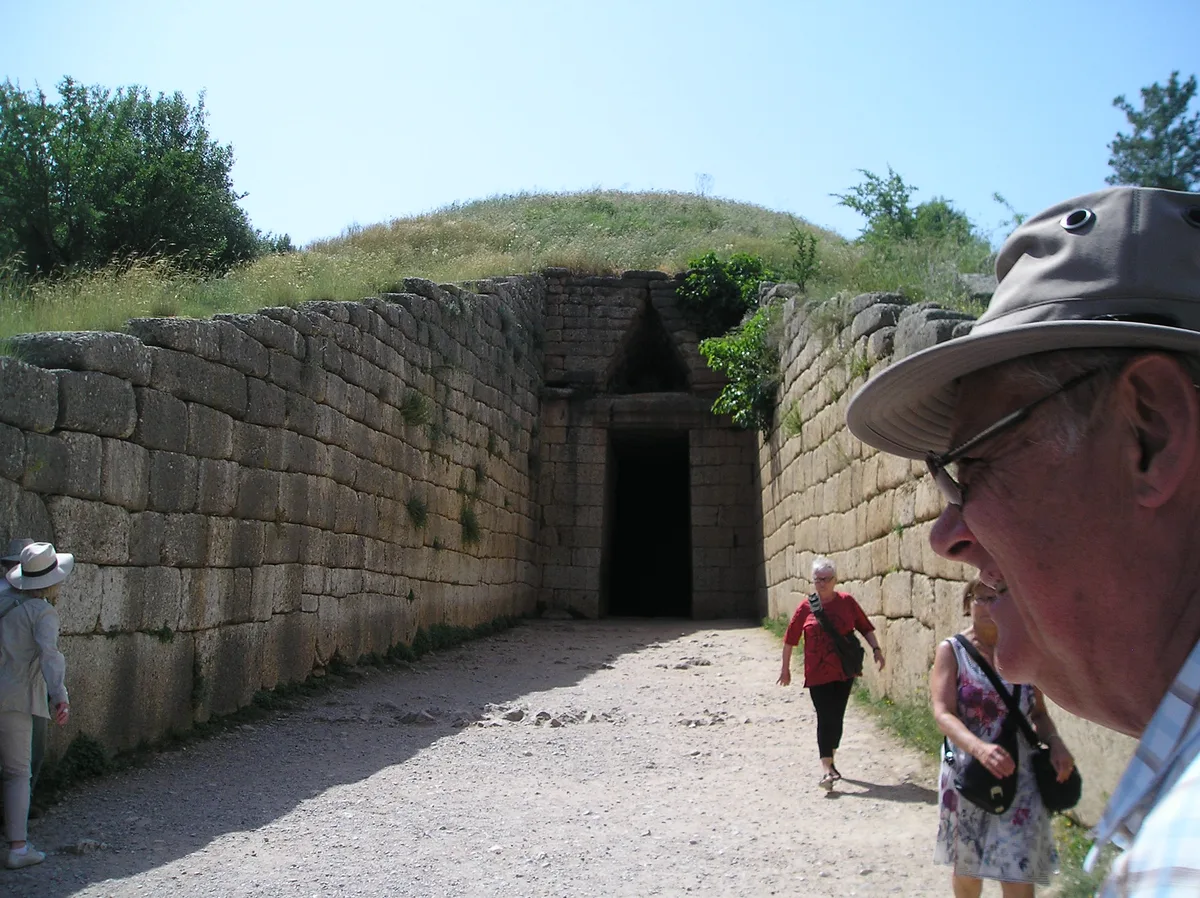
Tickets, opening hours and access
Hours and ticket rules change by season, so check the official monument page before you travel. Buy entry through the Ministry's e-ticket service, and see our Mycenae tickets guide for how entries fit together.
Getting there and how long to allow
No verified journey times are published here, so confirm them with your operator or driver. For bus options, start with KTEL Argolidas, and read how to reach Mycenae from Athens for the wider route.
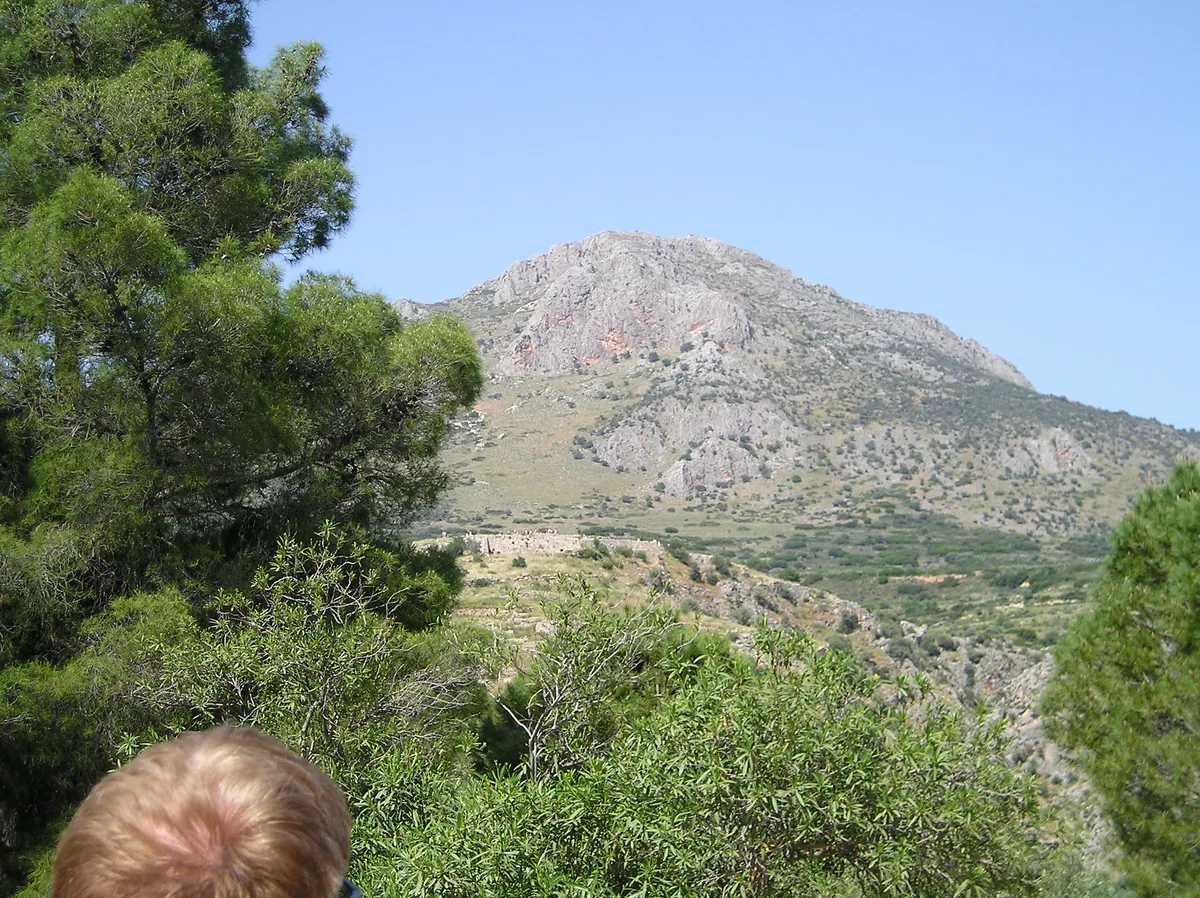
Photographing the tomb and moving around the dromos
The approach is easy, but the interior is short on light, so a few small choices make the visit smoother.
- Footing: the dromos is an open passage cut into the hillside with an uneven stone surface. Wear shoes with grip rather than sandals. Anyone using a wheelchair or walking aid should ask the site staff about current access before the trip, since arrangements change.
- Light for photos: the dromos is bright and the chamber is dim, so cameras and phones struggle with both at once. Take the wide shot of the doorway from the dromos first, then step inside and let your eyes adjust before photographing the rings of the dome.
- Crowds: the chamber is small, and tour groups fill it quickly. Arriving at opening time, as in the half-day plan above, gives you the best chance of an empty doorway shot.
- Sound: the dome gives the chamber a noticeable echo. Visitors often speak quietly, and tour guides usually brief groups outside before entering.
- Respect the barriers: do not climb on the walls or lean on the stonework. The site is protected, and the staff may ask you to step back.
Allow time to walk the full length of the dromos slowly. Seeing the doorway grow as you approach is the best way to grasp the scale described above.
Treasury of Atreus vs the rest of Mycenae
The tomb gives you something the citadel cannot: an intact interior you can enter. The citadel gives you the setting, including the Lion Gate. Choose by what you most want to see.
- See it if you want to walk inside a surviving Mycenaean dome.
- Pair it with the Mycenae museum if you want the finds behind the legends.
- Skip it only if you have time for the citadel alone.
- Extend the day with Tiryns if you are staying in the Argolid.
Other tholos tombs near Mycenae and in Greece
The Treasury of Atreus is the best preserved of the nine tholos tombs usually counted at Mycenae, but it is not the only one. Knowing the others helps you decide how much of the hillside to cover.
- Tomb of Clytemnestra: another large tholos on the same road, a short distance below the citadel. Its name is later legend, as with the Treasury. The tomb is older, usually placed in the 13th century BC. Its dome has been heavily restored and it is less intact than the Treasury.
- Lion Tomb and the Tomb of the Genii: smaller, earlier tholoi among the cluster of tombs around Mycenae. They are worth a glance if you are walking the road, but they do not match the Treasury's scale.
- Treasury of Minyas at Orchomenos (Boeotia): a Mycenaean tholos with a decorated side chamber, usually visited on a route towards Delphi.
- Vaphio tomb (Laconia): a smaller tholos, known mainly for the gold cups found there, which are now in the National Archaeological Museum in Athens.
If you only have time for one tomb, make it the Treasury of Atreus. Its doorway, dromos and unbroken dome are what the other tombs lack. Check on the day which of the smaller tombs are open, because access to some of them varies.
Mistakes to avoid and a sample half-day plan
Midday sun on the open dromos is the usual trap, so start early. Do not assume the tomb and the citadel share one gate or one queue. Here is an order that works.
- Start at the Treasury of Atreus while the light is soft and crowds are thin.
- Move on to the citadel and the Lion Gate.
- Finish at the museum, where shade and context are easy to find.
The tomb’s remarkable scale
The Treasury of Atreus is usually dated to about 1250 BC, near the end of the Mycenaean palace period. Its scale helps explain why it remains the best-known tholos tomb at Mycenae. Frequently cited estimates put the main dome at roughly 13.7 metres high and about 14.3 metres across.
The doorway is equally striking. Accounts often describe its lintel as weighing about 120 tonnes. Builders eased the weight above it with a relieving triangle, then created the chamber by laying successive stone rings inward. The result is a corbelled dome, not a true arch.
Pause near the entrance before going inside. The dromos frames the doorway and makes the shift from open hillside to enclosed stone especially clear. Measurements vary among published descriptions, so use the monument’s information panels for the current interpretation.
Related guides



Continue reading
Guides on the same trip


