
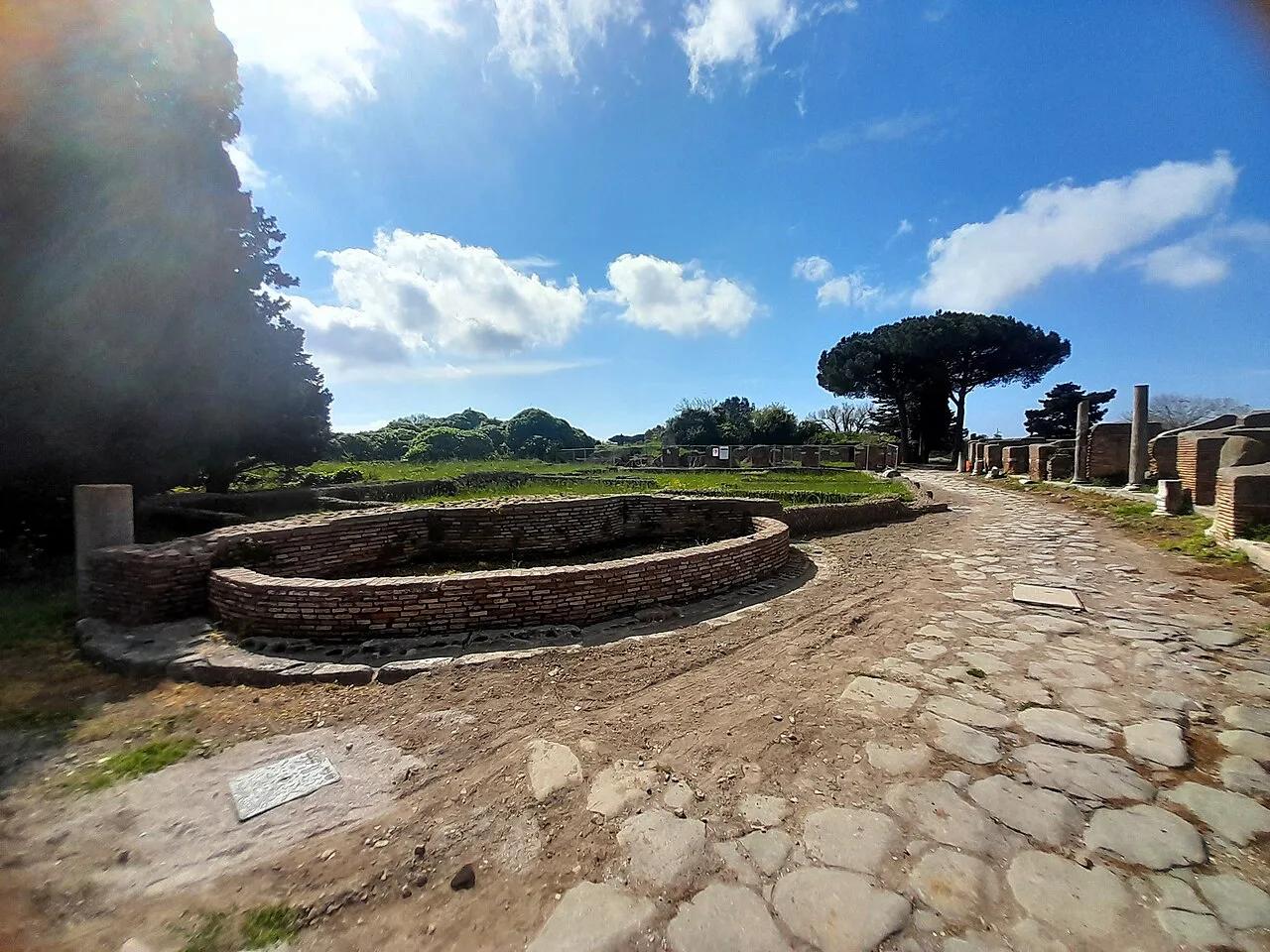
Last updated November 2026: Ostia Antica is the best preserved Roman town within easy reach of Rome. Few places in Europe qualify as whole towns, so this guide sorts its picks into whole towns, towns still lived in, and single near-intact monuments. For a living city, go to Split; for one almost untouched temple, go to Nîmes; for a Spanish pairing, combine Mérida and Tarragona.
Featured image: Mac9, CC BY-SA 4.0, via Wikimedia Commons.
Best Preserved Roman Town: How We Judge
Roman towns rarely survive whole, so four things decide each ranking. Original fabric counts for more than reconstruction. A complete street plan or building outranks scattered columns. Sites still used daily add atmosphere, and low crowds make ruins easier to read. Age matters less than survival: Maison Carrée dates to 4–7 AD and still stands nearly whole, while Saalburg's fort was rebuilt in 1897–1907. Pompeii and Herculaneum are the other benchmark whole towns, and our Europe-wide Roman sites overview places them alongside the rest of Italy.
7 Best Preserved Roman Towns and Sites in Europe
Hours and fares change, so check each official site before you book. Italica and Empúries make strong follow-ups in Spain. Vaison-la-Romaine, Xanten and Aquincum also reward a stop if your route passes them.
1. Ostia Antica, near Rome (whole town)
Ostia Antica was Rome's river port, and you can walk its paved streets between shops, bath complexes and apartment blocks. Original brick walls rise above head height in many places, and the layout reads like a real town rather than a single monument. Look for the theatre and the baths, then follow the main street to see how the town fitted together.

Current hours and tickets sit on the Ostia Antica archaeological park site. Allow a long, unhurried visit and carry water, because shade is limited. Skip it if you only have a short window in Rome and want one compact highlight.
2. Diocletian's Palace, Split (living town)
Diocletian's Palace was built c. 295–305 CE as the emperor's retirement residence, and Split grew up inside its walls. UNESCO listed it in 1979, and shops, restaurants and apartments still occupy the Roman structure. Start at the Peristyle, the colonnaded courtyard that served as the ceremonial entrance to the imperial apartments.
Diocletian's octagonal mausoleum became St. Domnius Cathedral, and extensive cellars mirror the layout of the upper floors. Walking the streets costs nothing, though individual sites inside charge separate fees. Skip it if you want empty ruins and quiet, because this is a busy working city.
3. Maison Carrée, Nîmes (standout monument)
Maison Carrée in Nîmes is often described as the best preserved Roman temple, and it has stood almost whole since 4–7 AD. It honors Gaius and Lucius Caesar, the grandsons and adopted heirs of Augustus. Corinthian columns line a deep front porch, and the limestone building measures 26.42 by 13.54 m (about 87 by 44 ft) on a 2.65 m (about 9 ft) podium.
That deep porch is the quickest way to tell a Roman temple from a Greek one. Pair it with the Roman theatre in Orange for a Provence route. Skip it if you want a whole town, because this is one building and a short stop is enough.
4. Porta Nigra, Trier (standout monument)
Porta Nigra in Trier is a Roman city gate built around 170 AD, one of four entrances to Augusta Treverorum. Builders joined its sandstone blocks with iron clamps instead of mortar, and two four-storied semicircular towers flank an inner courtyard. A hermit monk named Simeon lived in the gate in the 11th century, and after his death in 1035 it became a church.
Napoleon ordered it restored to its Roman form in 1804, which is why you see a gate rather than a church today. It is often called the best preserved Roman city gate north of the Alps. Skip it if you expect a Roman street grid, because the gate stands largely on its own.
5. Mérida Roman Theater, Spain (living town)
Mérida was Emerita Augusta, capital of the Roman province of Lusitania, founded by Augustus to house veterans. Agrippa built the Roman Theater in 16–15 BCE, and it seated about 6,000 spectators. Its double-tiered, columned stage backdrop with Corinthian capitals is the main sight, and the Roman Bridge runs 792 m (about half a mile).
Several monuments sit within the town, so plan a full day and check the official site for combined tickets. Performances of the International Festival of Classical Theater use the stage, and other Roman theatres give a useful comparison. Skip it if you only want a single monument, because Mérida rewards a multi-site day.
6. Tarraco Amphitheater, Tarragona (living town)
Tarraco was capital of Hispania Tarraconensis, and its amphitheater overlooks the Mediterranean. Built in the 2nd century AD, it measures 130 by 102 m (about 427 by 335 ft) and held about 15,000 spectators. Builders carved the stands into bedrock along the seaward slope, so the setting does half the work.
Foundations of a 6th-century Visigothic basilica and a 12th-century church lie on the arena floor. UNESCO inscribed the Archaeological Ensemble of Tarraco in 2000, and the Tarraco Viva festival is usually held in May. Compare it with amphitheatres elsewhere in Europe. Skip it if stairs are a problem, because parts of the site involve climbing.
7. Conimbriga, Portugal (excavated town)
Conimbriga lies 16 km (about 10 miles) from Coimbra, so plan your transfer before you go. Romans arrived in 139 BC, and the city peaked in the 1st and 2nd centuries with a forum, baths and an aqueduct. Excavators have uncovered only about 10% of it, yet its mosaics rank among Europe's best preserved.
House of Fountains covers 569 m² (about 6,100 sq ft) with floors showing hunting scenes and Bacchus. House of Cantaber had 40 rooms and an advanced heating system. Skip it if you rely on public transport or want a living town around the ruins.
Comparison: Whole Town, Living Town or Single Monument
Use this table to match each site to your trip. Ticket models and access details marked "check official site" change by season.
Only about 10% of Conimbriga has been excavated, yet its mosaics rank among Europe's best preserved.
| Place | Type | Preservation | Ticket model | Access | Best for |
|---|---|---|---|---|---|
| Ostia Antica | Whole town | Streets, baths and theatre, mostly original | Paid; check official site | Day trip from Rome | Reading a Roman street plan |
| Split | Living town | Palace walls and Peristyle, in daily use | Free streets; some sites paid | Walkable in the old town | Atmosphere and food |
| Nîmes | Standout monument | Temple nearly intact | Check official site | Walkable in the city | One perfect building |
| Trier | Standout monument | Gate largely intact | Paid; check official site | Walkable in the city | Roman defensive design |
| Mérida | Living town | Theater, bridge and other monuments | Combined ticket; check official site | Walkable in the city | Theatre lovers |
| Tarragona | Living town | Amphitheater cut into bedrock | Paid; check official site | City walk, seaside | Sea views and arenas |
| Conimbriga | Excavated town | Mosaics, houses, forum | Paid; check official site | About 16 km from Coimbra | Mosaics and quiet |
| Saalburg | Reconstruction | Rebuilt fort on original foundations | Paid; check official site | Check official site | Families and learners |
How to Choose and Combine Sites
Choose by what you want to see: a street plan, a living city or one near-perfect building. In Provence, pair Nîmes with Orange, where the Roman theatre still hosts performances. In Spain, combine Mérida, Tarragona and Segovia over several days. At Segovia, the Roman aqueduct rises about 98 ft (30 m) on 167 arches across two tiers, and our guide to Roman aqueducts compares it with others. Segovia Tourism lists local visiting details. Around Rome, give Ostia Antica its own day trip rather than squeezing it between other stops.
Mistakes to Avoid
Do not mistake a reconstruction for an original. Saalburg in Germany was rebuilt between 1897 and 1907 on its original foundations, which suits families and learners but is not untouched Roman fabric. Do not expect a town where only a monument stands, as in Nîmes or Trier. The Grottoes of Catullus in Sirmione are a ruined villa, not a town, and some sites close on Mondays, so check closed days. Avoid midday heat at shadeless sites such as Ostia Antica. When you are ready to compare traditions, see Roman versus Greek ruins. Our wider guide to ancient ruins covers the rest.
Saalburg was rebuilt between 1897 and 1907, which places it below original Roman fabric in these rankings.
Frequently Asked Questions
What is the best preserved Roman amphitheater?
Tarragona's amphitheater and Verona Arena both survive well, but they differ. Tarraco is cut into bedrock above the sea and held about 15,000 spectators. Verona Arena still hosts performances.
What are some famous Ancient Roman places to visit?
Ostia Antica is the best whole-town option near Rome. Split's Diocletian's Palace and Mérida work well as living towns. Nîmes and Trier suit shorter stops built around one monument.
Related guides

Continue reading
Guides on the same trip