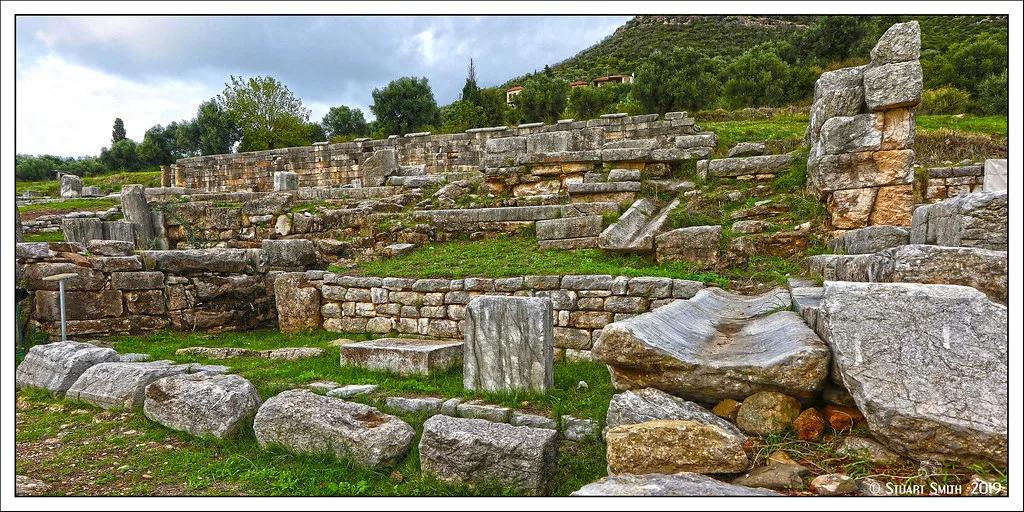
Last updated November 2026. Ancient Messene is a large Hellenistic and Roman-era city in Messenia, about 25 km (16 miles) north of Kalamata, and it rewards anyone who likes ruins you can walk through. Full admission is €15, and a car is the realistic way to reach it. Read on for a route through the site, seasonal hours, and how it fits a wider Peloponnese trip.
Featured image: Stuart Smith., CC BY-SA 2.0, via Flickr.
Is Ancient Messene worth visiting?
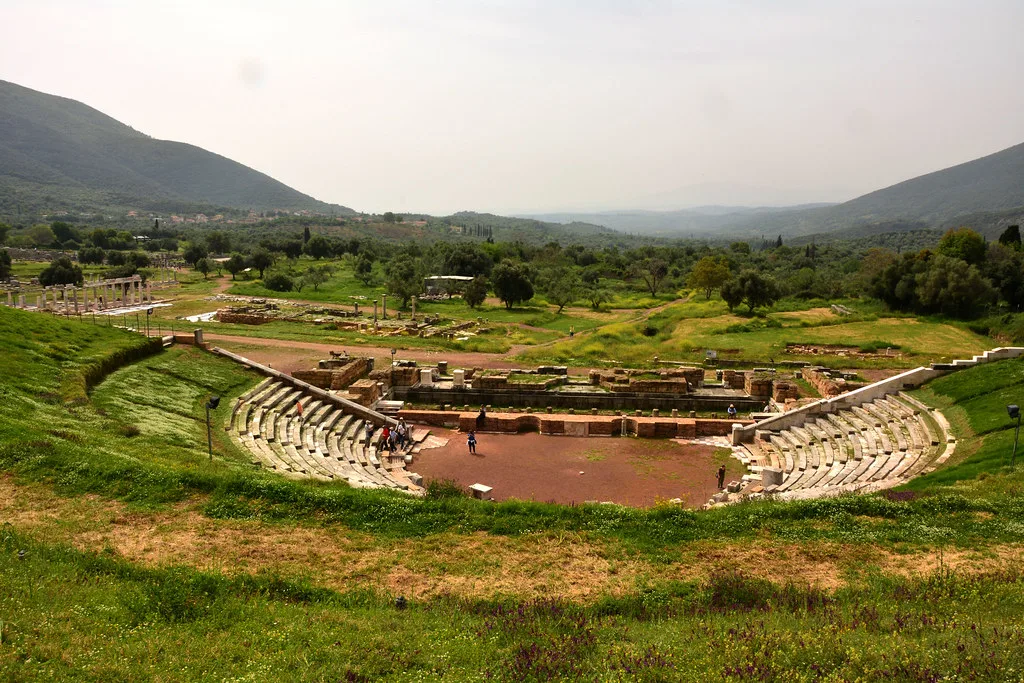
Yes, if you want a whole ancient city rather than a single temple. The archaeological park covers about 400 stremmata, roughly a third of the original city, and the Odeon, Asclepieion, Stadium and Theatre are all excavated. Excavations began in 1987, according to the Ministry of Culture's site listing, and they still continue. Go if you enjoy open ground, long walks between monuments and a site that feels like a town plan. Skip it if you have under two hours or need a short, paved, step-free visit. Terrain is large and uneven, and only the visitor WC is listed as adapted for people with disabilities. Compared with Olympia, Messene asks for more driving and more walking. In return it gives you a different part of the Peloponnese and a site that suits a slower pace.
What to see at Ancient Messene
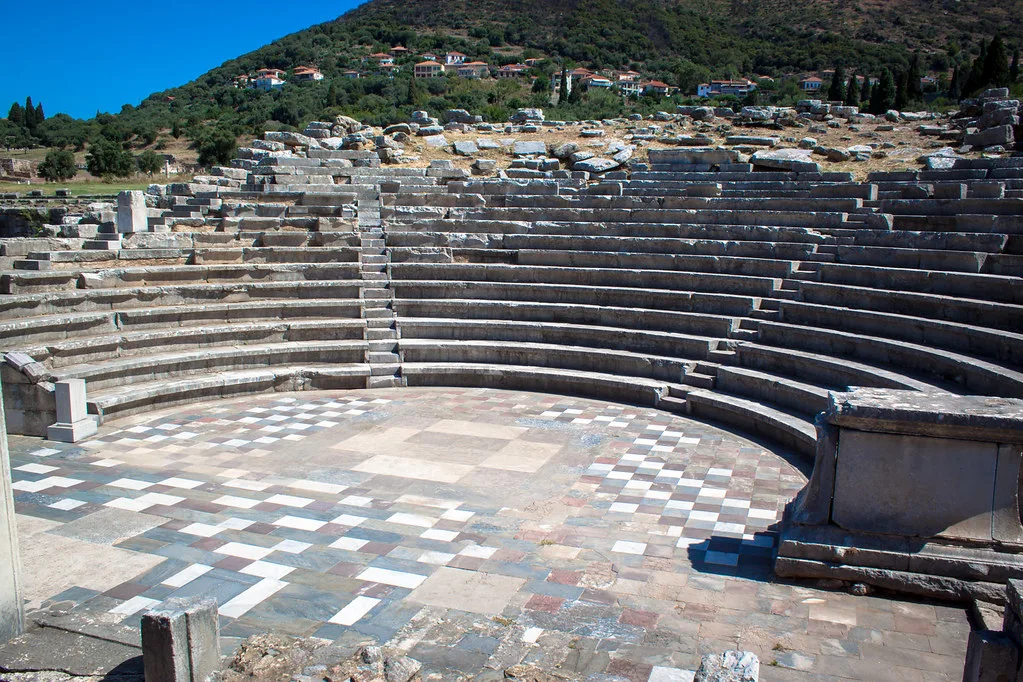
Follow the monuments in a loop rather than ticking off a list. Pausanias described many of these buildings, which is why the site is often read against his text. Each stop below has one clear thing to look for.
- Odeon: one of the best-preserved buildings in the park and a good first stop.
- Asclepieion: a sanctuary complex built around a courtyard, and the centerpiece of the visit.
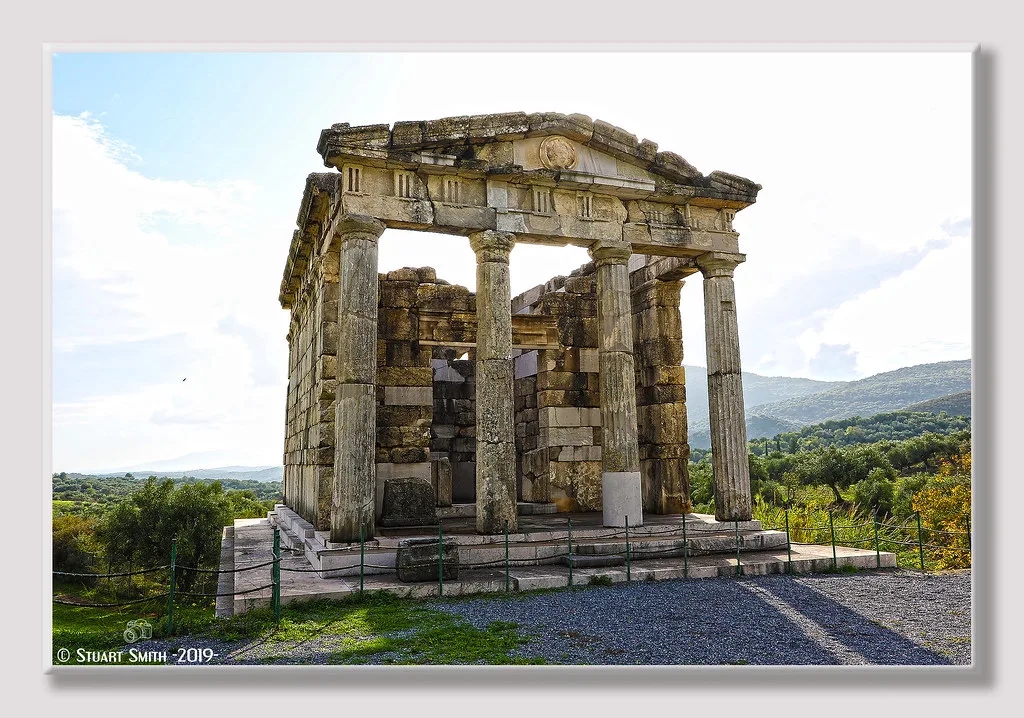
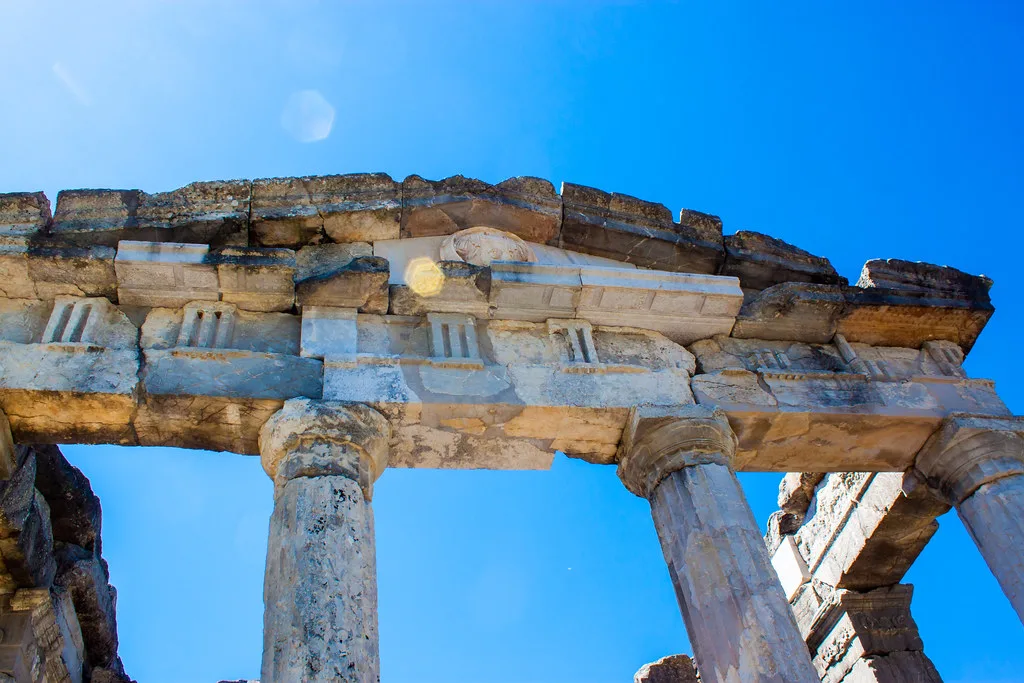
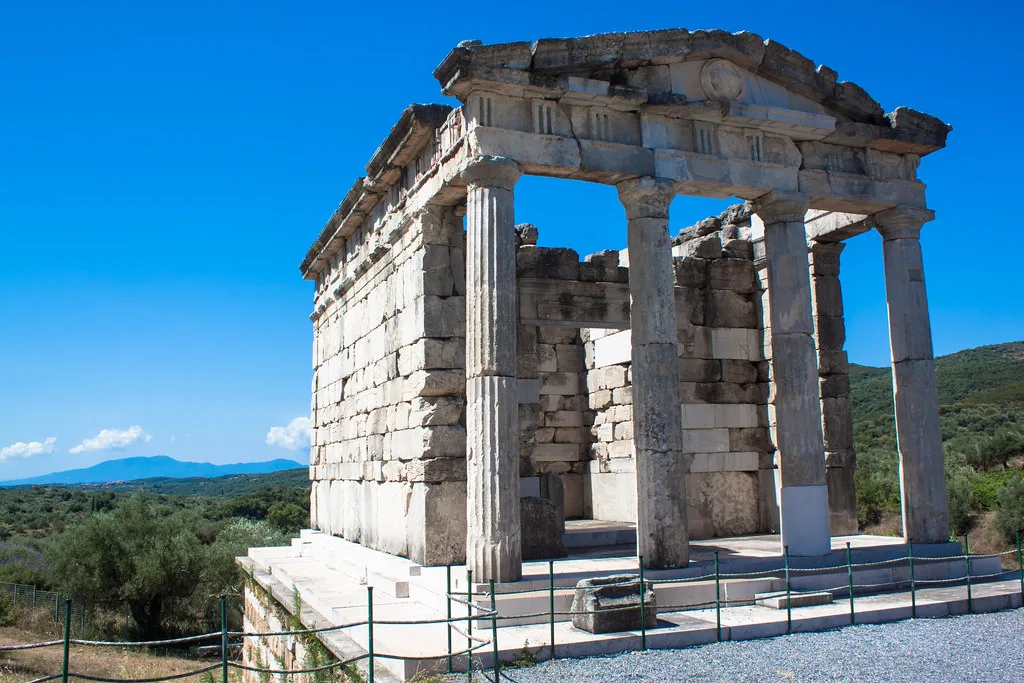
- Stadium with Heroon: a long running track with a complete funerary monument at one end.
- Theatre and Ecclesiasterion: seating for civic gatherings and performances.
- Gymnasium and Sanctuary of Zeus: the public and religious core of the city.
- Fountain of Arsinoe: a reminder that water control shaped the whole settlement.
- Early Christian house church and basilica: later phases that show the city did not end with antiquity.
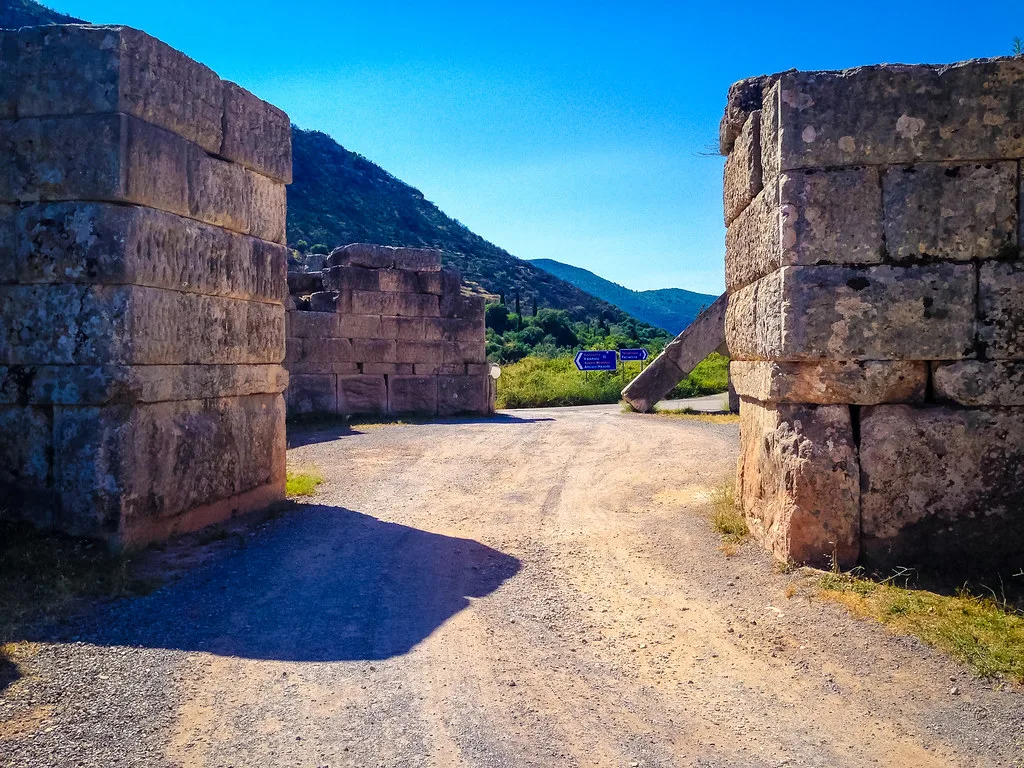
- Arcadia Gate and wall: the outer fortifications, with a wall circuit of about 9 km and heights of 7–9 m.
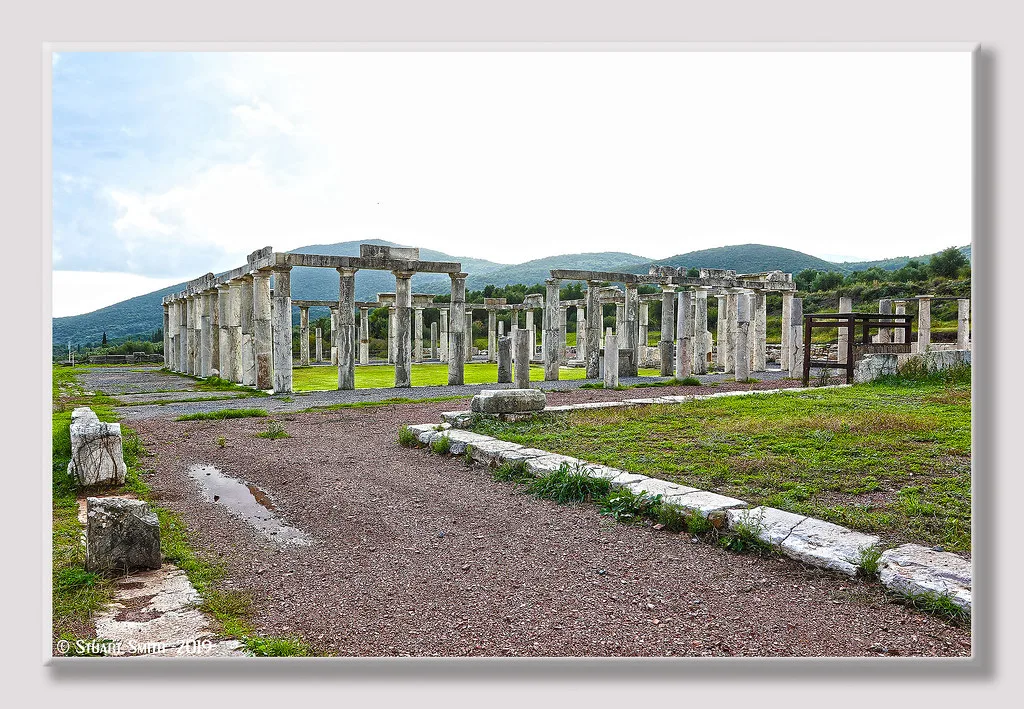
How long to allow at the site
These durations are editorial estimates, since no official source gives a visit time. A highlights visit of about 1.5 to 2 hours covers the Odeon, Asclepieion and Stadium. A standard visit of around 3 hours adds the Theatre, Gymnasium and Fountain of Arsinoe at an easy pace. A full visit of 4 hours or more adds the Arcadia Gate and a stretch of the wall. In summer the site stays open until 20:00, so you can start late in the day. Bring water, a hat and sturdy shoes, because shade is limited and the ground is uneven. In winter the gates close at 15:30, so aim to arrive by 09:00 to fit a standard visit.
| Visit length (editorial estimate) | Time | Best for | What you skip |
|---|---|---|---|
| Highlights | 1.5–2 hours | Short stops, hot days | Gate and wall |
| Standard | About 3 hours | Most visitors | Outer wall circuit |
| Full | 4+ hours | Keen walkers, photographers | Very little |
Tickets, opening hours and free days
Full admission is €15 and the reduced ticket is €8, as listed by the Ministry of Culture. Prices and hours checked November 2026. You can buy online through the Hellenic Ministry of Culture e-tickets portal. Last admission is 20 minutes before closing, which means 15:10 in winter and 19:40 in peak summer. Winter hours run from 1 November to 31 March, and the site is closed every Tuesday in that period. Summer hours are listed as daily. Free admission applies on 6 March, 18 April, 18 May, 28 October and the last weekend of September. Hellenic Heritage also lists free entry on the first and third Sunday of each month from 1 November to 31 March. The site is closed on 1 January, 25 March, 1 May, Easter Sunday and 25–26 December.
Free entry falls on the first and third Sunday from 1 November to 31 March, yet the site is closed every Tuesday in that period.
| Period | Hours | Notes |
|---|---|---|
| 1 April–31 August | 08:00–20:00 | Daily |
| 1–15 September | 08:00–19:30 | Daily |
| 16–30 September | 08:00–19:00 | Daily |
| 1–15 October | 08:00–18:30 | Daily |
| 16–31 October | 08:00–18:00 | Daily |
| 1 November–31 March | 08:30–15:30 | Closed Tuesdays |
- Arriving after last admission, especially in winter.
- Assuming summer hours apply from November.
- Planning a Tuesday visit between November and March.
- Starting a summer walk at midday without shade or water.
- Expecting public transport to reach the gate.
Getting there and getting around
Ancient Messene sits about 25 km north of Kalamata, and Hellenic Heritage lists the drive at 40 minutes. Pylos is about 60 km to the west. The site has its own parking, a café or restaurant and a shop. Public transport to the gate is not documented, so a car or a taxi is the realistic option. Check the regional operator, KTEL Ilias, only for general timetable information. Inside the park you walk, and the distances between the Asclepieion, Stadium and Theatre are long enough that you will want good shoes. In winter, a 15:30 close turns this into a morning trip from Kalamata. Plan to leave town by 08:00 so you reach the gate soon after it opens.
Hellenic Heritage lists the drive at 40 minutes. Add that to a 15:30 winter close, and a Kalamata base leaves a tight morning window.
Where to base yourself
Kalamata has the most services and sits about 40 minutes by car from the site. Mavromati, the village beside the ruins, makes sense if you want to be at the gate when it opens. Pylos suits you if Nestor's Palace is also on your list, and it lies about 60 km from Messene. For general regional planning, Visit Greece's Messenia pages are a useful starting point. Choose Kalamata for flexibility and Pylos for a coastal route. Check what Mavromati offers in your travel month before you rely on it.
How Messene fits a Peloponnese route
Messene works as a half-day or full-day stop on a Kalamata base. Pair it with Pylos and Nestor's Palace if you want a Bronze Age and Hellenistic pairing in one trip. Olympia lies in a different part of the Peloponnese, so treat it as an optional extension rather than a neighbor. Our guide to Peloponnese ancient sites helps you compare the options. For a larger, better-known complex, read about 5 Best Things To See At Ancient Olympia (2026 Guide). Messene's stadium also pairs well with background on the Ancient Olympic Games: History, Events and Visiting Olympia. If you want another remote stop, Bassae is a separate trip, so check the map before combining them. Medieval fans may prefer Mystras on a different day.
| Site | Best for | Effort to reach |
|---|---|---|
| Ancient Messene | Walkable city plan, fewer buildings per stop | Car from Kalamata, about 40 minutes |
| Olympia | Famous sporting sanctuary and museum | Separate part of the Peloponnese |
| Mystras | Medieval hill town | Separate day trip |
| Bassae | Remote temple | Check route before combining |
A short history, for context
Messene was founded in 369 BC by the Theban general Epaminondas, after the Spartan defeat at Leuctra in 371 BC. The site had earlier been Ithome, a stronghold in a long struggle with Sparta. The city flourished in Hellenistic and Roman times. The earthquake of AD 365 damaged it badly. From the fifth century it was rebuilt as a Christian city and seat of a bishop. A village continued on the site into modern times, and today's Mavromati occupies the former upper city. Systematic excavation began in 1895, and a more intensive program started in 1987. The site won a Europa Nostra award in 2011. Our Olympia pillar guide gives a useful contrast with a sanctuary-focused site.
Frequently Asked Questions
What was Messenia known for?
Messenia was home to the Bronze Age palace at Pylos, which controlled the region politically and economically. Later, Epaminondas founded Messene there in 369 BC, and its walls and public buildings are still visible.
Related guides


Continue reading
Guides on the same trip