Rotunda of Galerius, Thessaloniki: Visit Guide and Tips
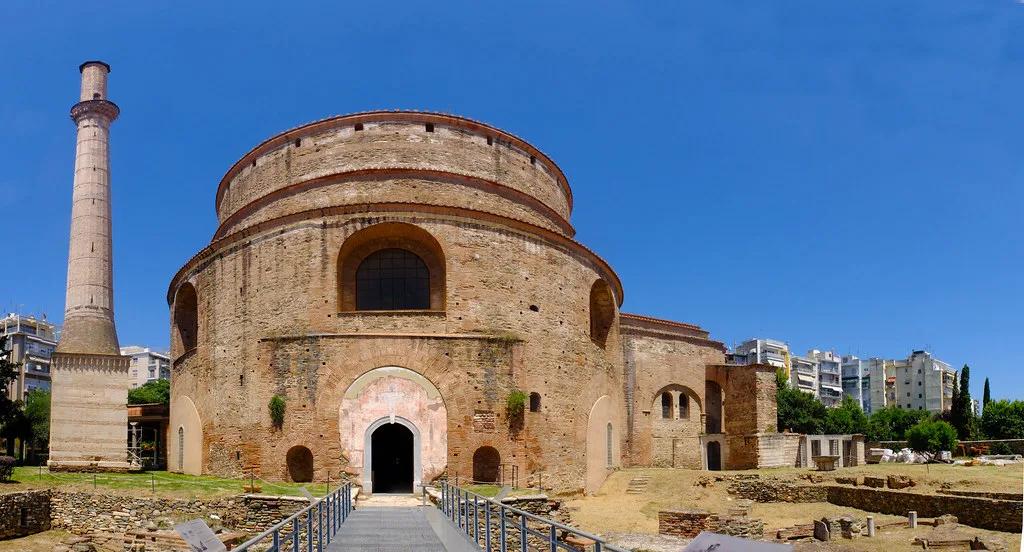
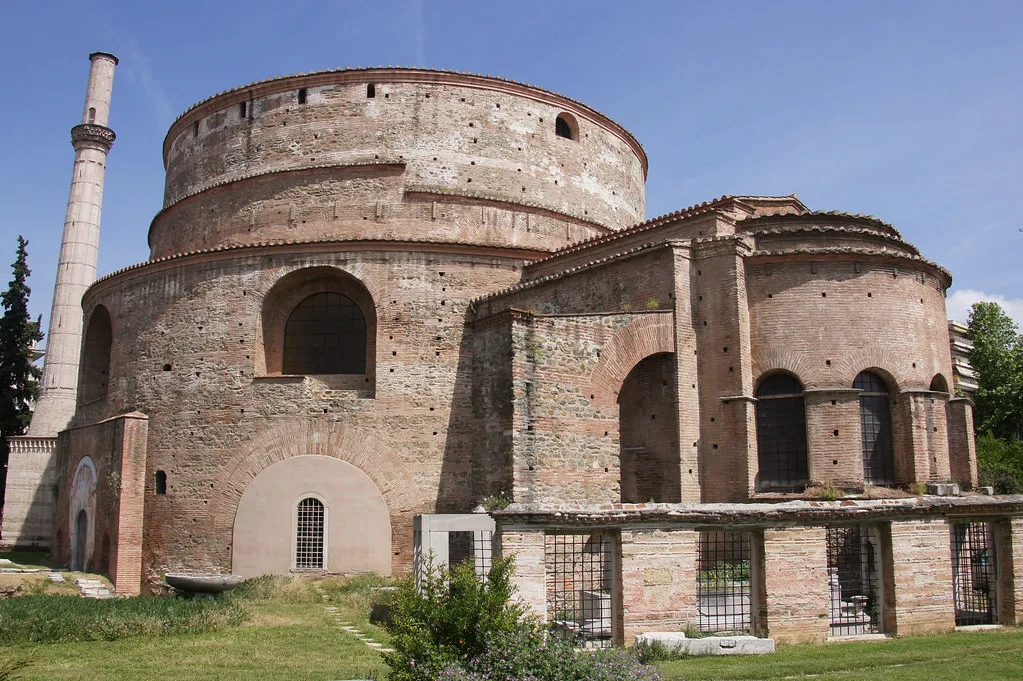
Last updated November 2026. Rotunda Thessaloniki is shorthand for the Rotunda of Galerius, also called the Church of Agios Georgios, an early fourth-century Roman monument in central Thessaloniki. It belongs to the UNESCO-listed Paleochristian and Byzantine monuments of Thessaloniki, inscribed in 1988, and stands about 125 m (410 ft) from the Arch of Galerius.
Featured image: keironoshea, CC BY 2.0, via Flickr.
Rotunda Thessaloniki at a glance: is it worth a stop?
Short verdict: worth it for anyone who likes buildings that changed purpose several times. Rotunda of Galerius is a cylinder of brick and masonry roughly 24.5 m (80 ft) across. Over roughly 1,700 years it has served as a Roman monument, a church, a mosque and a church again. Early Christian mosaics survive in the dome and in several vaults. Readers drawn to mosaics and layered architecture should prioritise it. Anyone chasing Macedonian royal tombs can treat it as a short stop between bigger plans. Our walk below pairs it with the Arch of Galerius, 125 m (410 ft) away, and the palace remains.
Rotunda history in plain language
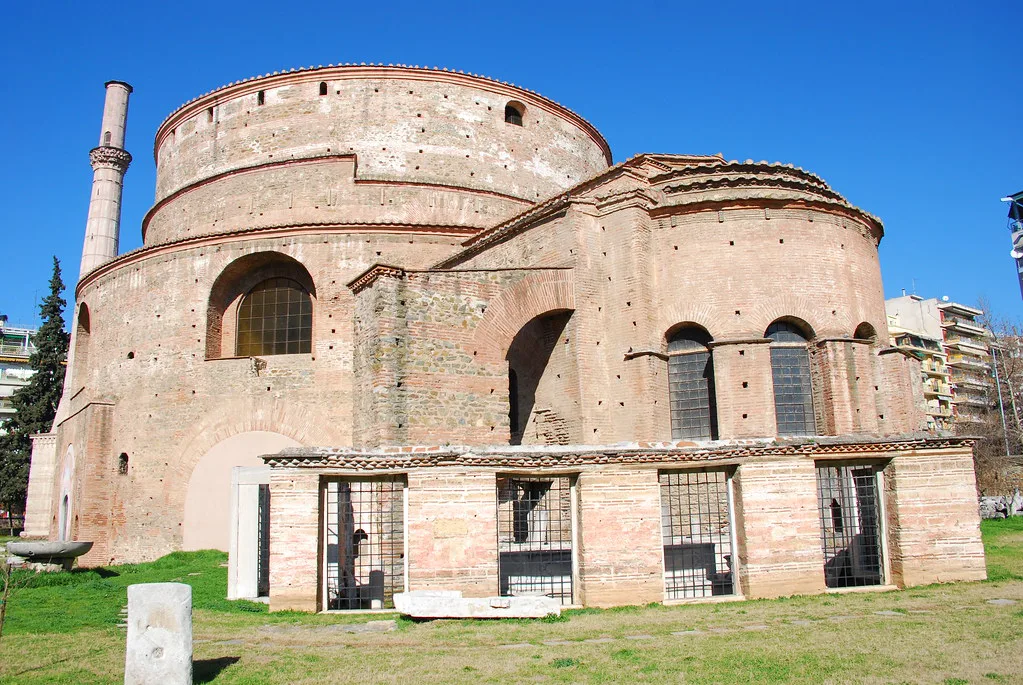
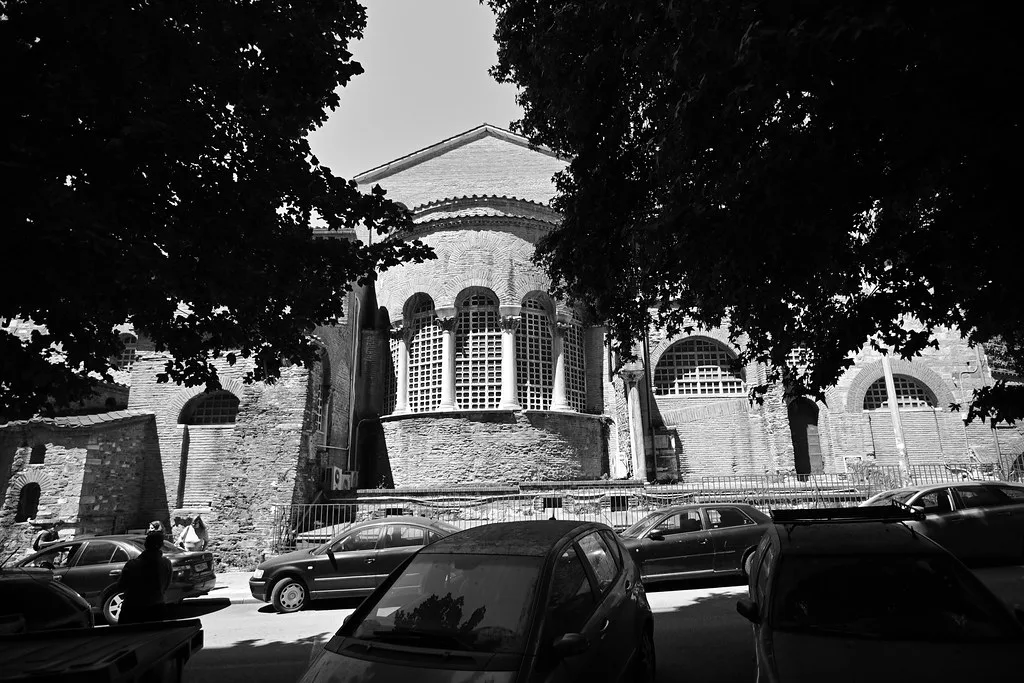
Galerius, a Roman tetrarch, commissioned the building in the early 300s. Dates in published accounts range from about AD 300 to 306. Original purpose is still debated. Some scholars read it as a mausoleum. Others argue for a temple, noting that Galerius was buried at Felix Romuliana in Serbia. Treat both readings as open questions. Emperor Theodosius I ordered its conversion into a church in the late 4th century. Worship continued for over 1,200 years, largely under a dedication to the Archangels, until the Ottomans took the city. From about 1523 to 1590 it served as the city's Metropolitan Church, after Hagia Sophia became a mosque. In 1590 it became a mosque, and a minaret was added. Greece captured the city in 1912, and Orthodox officials reconsecrated the building as a church. Minaret and all, it then passed into excavation work from 1914, and by 1917 it had been converted into a Macedonian Museum. An earthquake in 1978 damaged the structure, and restoration followed. Today it is a monument under the Greek Ministry of Culture, with Orthodox access on some festival days. Timeline below condenses the layers.
- Early 300s: Galerius builds the circular structure as part of an imperial precinct linked to his palace.
- Late 4th century: conversion to a Christian church under Theodosius I, with a sanctuary and ambulatory added.
- 1590: conversion to a mosque, with a minaret added.
- 1912: Greek capture of the city and reconsecration as a church.
- 1978: earthquake damage, followed by restoration.
Rotunda vs Arch of Galerius vs palace remains
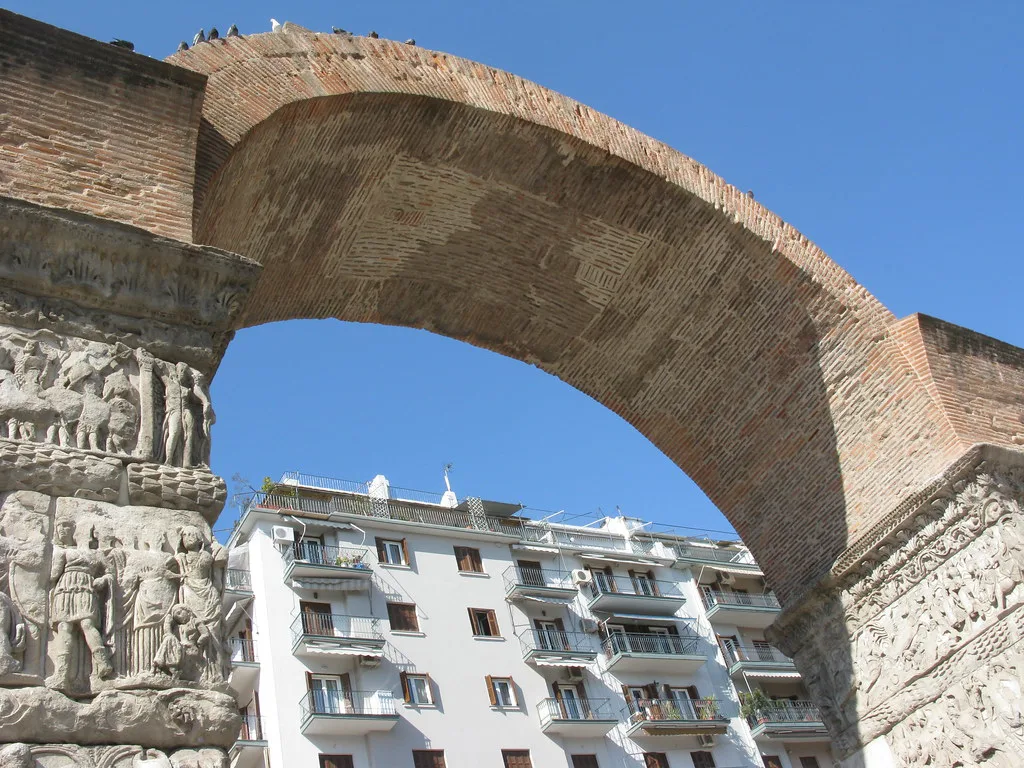
Three monuments form the Galerian complex. Arch of Galerius stands where Egnatia and Dimitriou Gounari streets meet. Rotunda lies 125 m (410 ft) to the northeast. Palace remains sit about 235 m (770 ft) southwest of the Arch. One road once linked all three through the Arch. Because the Arch sits between the other two, the route is a straight line of roughly 360 m (about 1,180 ft) end to end. Arch stands in the open and can be seen from the street. Exterior views of the Rotunda come free with a walk past, but the interior follows monument hours. Excavated palace remains need their own access check.
| Stop | What it is | Time to allow (editorial estimate) | Entry | Best for |
|---|---|---|---|---|
| Arch of Galerius | Roman triumphal arch on Egnatia Street | 10–15 minutes | Outdoor monument, seen from the street | Relief panels and a quick photo stop |
| Rotunda of Galerius | Domed Roman building, later church and mosque | 20–30 minutes | Interior follows monument hours | Mosaics, dome and layered history |
| Palace remains | Excavated imperial palace area | 45–60 minutes | Check access with the Ministry of Culture | Mosaic floors and the Octagonal Room |
| Macedonian day trip | Royal tombs and palaces outside the city | Most of a day | Site tickets at the destination | Readers who prefer Macedonian royal history |
Arch of Galerius and palace remains: the rest of the complex
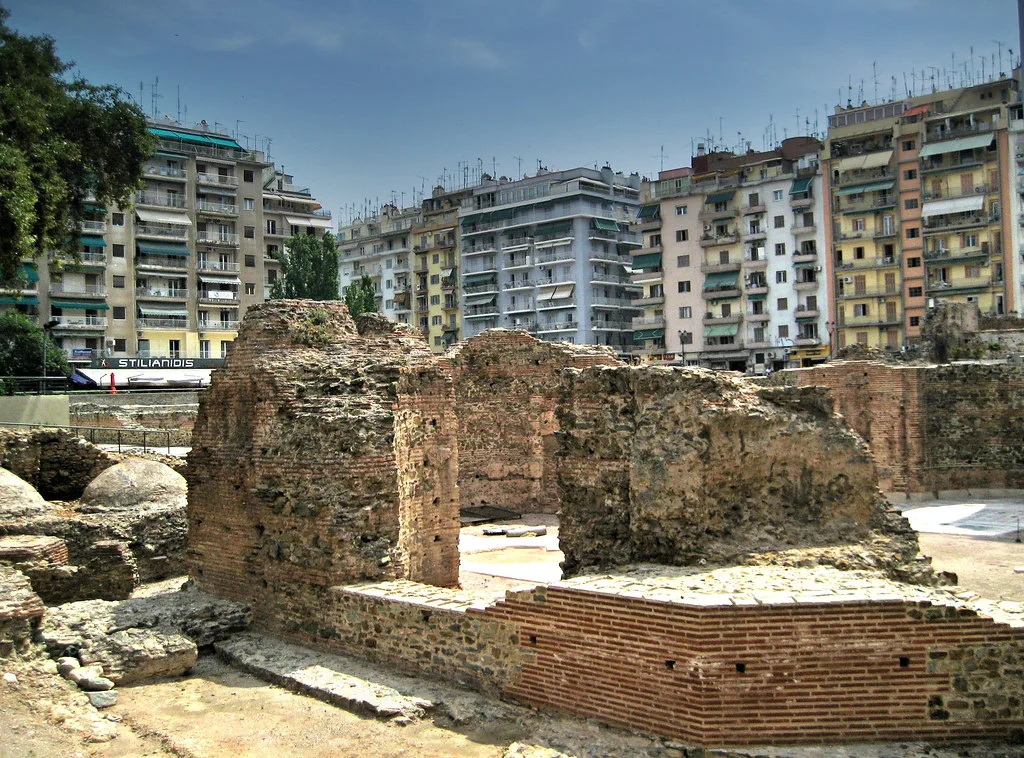
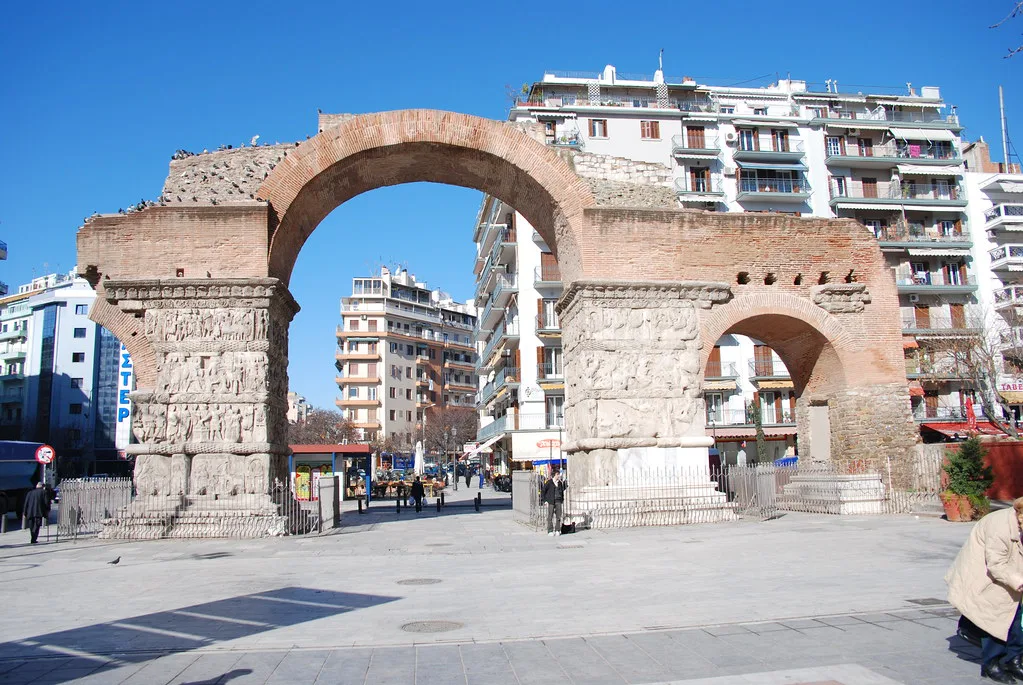
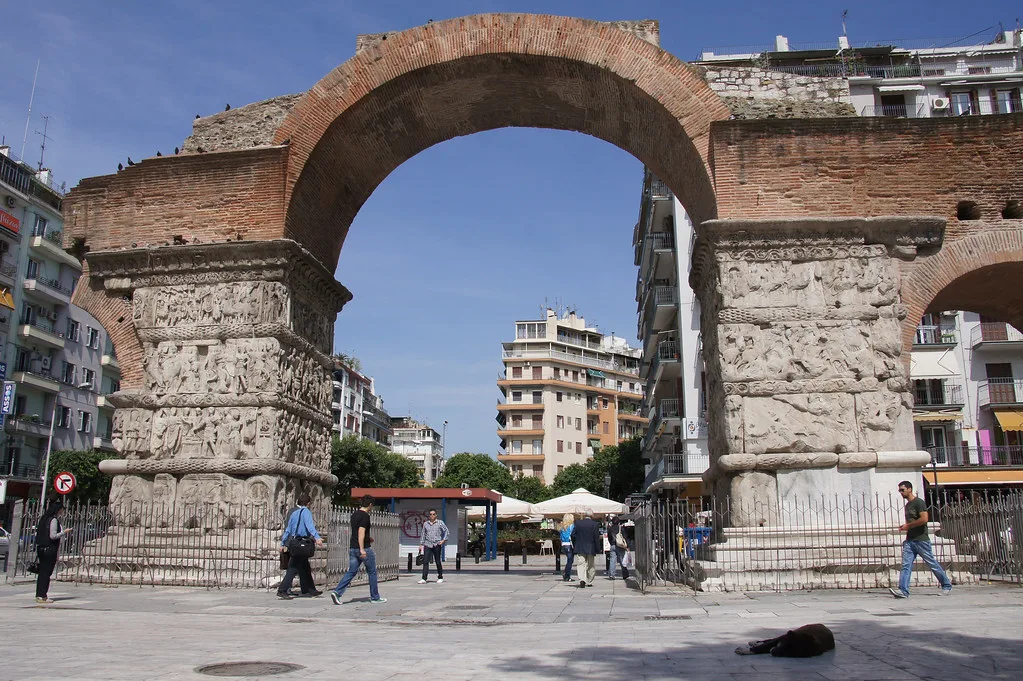
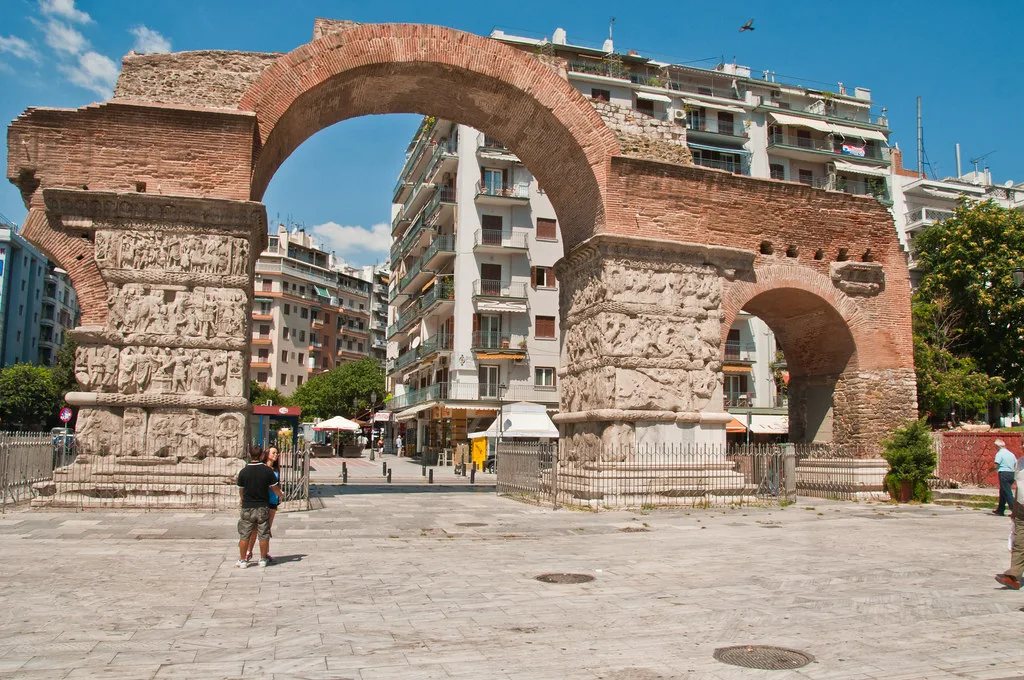
Arch of Galerius celebrates a victory over the Sassanid ruler Narses, shown in marble relief panels. Work ran through 298 and 299, with dedication in 303. Central opening was 9.7 m (32 ft) wide and 12.5 m (41 ft) high. Only three of the eight pillars survive, along with parts of the masonry cores. Two pillars flanking the central passage keep sculpted marble slabs showing Galerius's campaigns. Look for the panel where Galerius, on horseback, attacks Narses with a lance. After Ottoman times the meaning faded, and the Arch was variously linked to Constantine, Philip II of Macedon or Alexander. Danish archaeologist Karl Frederik Kinch identified the dedication to Galerius in a monograph published in 1890. Excavations southwest of the Arch uncovered substantial palace remains. Expansive mosaic areas survive in several rooms. An Octagonal Room sits at the southwest end of the excavated area. Scholars once thought it a mausoleum, though it may have been a monumental entrance to the palace. Beside the palace to the northeast lay a hippodrome.
Inside the Rotunda: what to look for
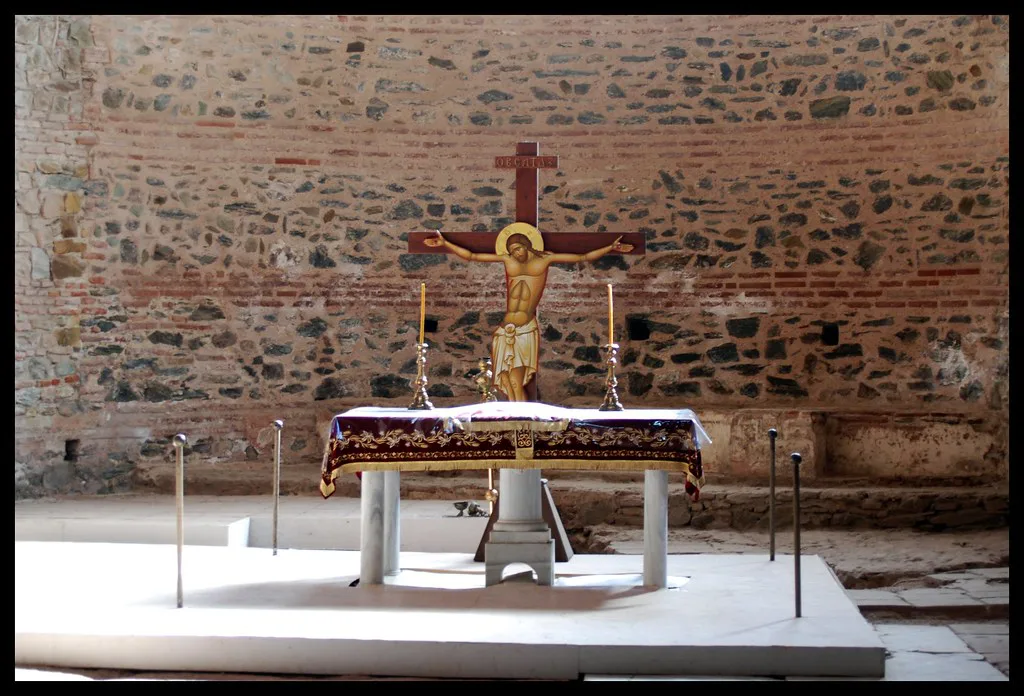
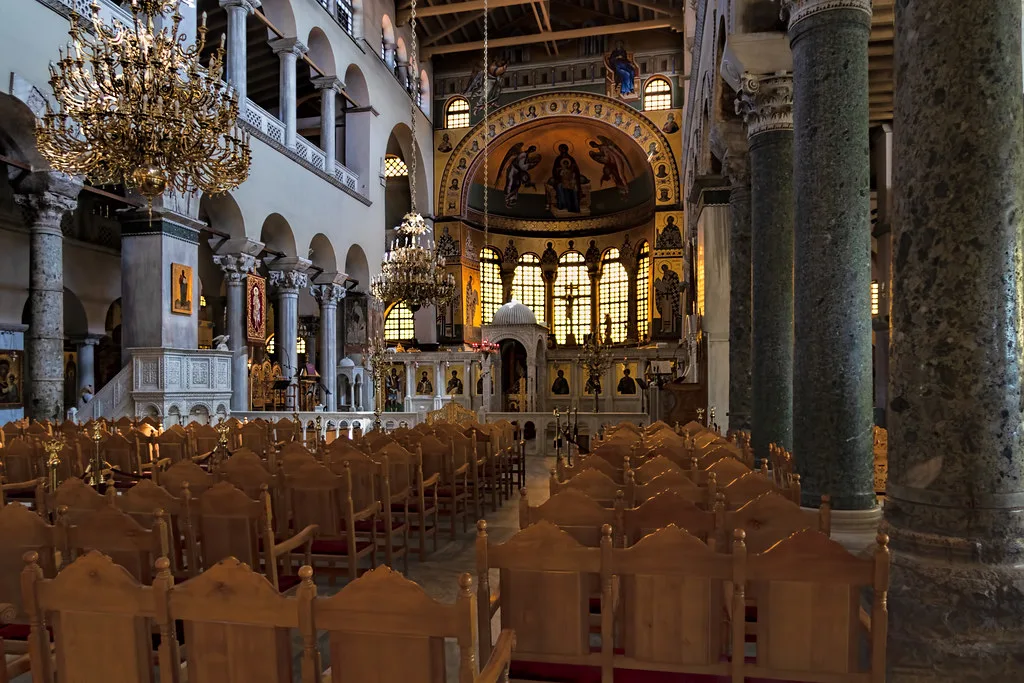
Start with scale. Interior is 24.5 m (80 ft) across, with walls over 6 m (20 ft) thick. Those walls helped the building withstand Thessaloniki's earthquakes. Brick dome peaks at roughly 30 m (98 ft). Eight large recesses break the wall, giving the effect of massive pillars between them. Mosaics once covered the dome and barrel vaults entirely, and only part survives. Walk the circle slowly and use the checklist below.
Inside, the 24.5 m (80 ft) span is more than twice the 9.7 m (32 ft) central opening of the Arch down the road.
- Dome mosaic, lowest zone: eight panels with ornate two-storey architectural backdrops and a line of roughly fifteen martyrs in prayer, each labelled with a name and a festival month.
- Dome mosaic, upper zones: pairs of sandalled feet on grass, three surviving angel heads, a phoenix and a triple glory of stars, leaves and a rainbow. The figure of Christ is lost.
- Eastern panel: a painted imitation of mosaic by the Italian artist Rossi in 1889, filling a section of dome that collapsed.
- Vault mosaics: birds, fruit and flowers, plus a gold cross on a silver ground in the south recess.
- Minaret: an Ottoman addition built inside the footprint of the destroyed ambulatory.
- Ambulatory traces: a closed walkway about 8 m (26 ft) wide once wrapped the Roman core and was probably destroyed by earthquakes in the early 7th century.
- Ottoman traces: tombs east of the sanctuary, a fountain to the west and porches above the west and south entrances.
Tickets, opening hours and access
Fees, hours, closure days and step access change by season and by monument, so none are quoted here. Current details sit on the Ministry of Culture's Odysseus portal.
How to plan your time
Allow 30–45 minutes for the Rotunda and the Arch together, as an editorial estimate. Add the palace remains and a slow pass through the interior, and the walk stretches to 2–3 hours. Plans below scale up from there. Skip the interior if mosaics leave you cold and Macedonian tombs are the real goal. Prioritise it if early Christian art is the reason for your trip.
- Quick stop, about 1 hour: Arch from the street, then the Rotunda exterior, and the interior if it is open.
- Half-day Galerian complex, about 3 hours: Arch, Rotunda and palace remains at an unhurried pace.
- Full day: Galerian complex plus other monuments from the UNESCO group, such as Hagios Demetrios and Hagia Sophia.
Mistakes to avoid at the Rotunda
Three errors cause most disappointment. Each is easy to sidestep with a little planning.
- Arriving without checking hours, since interior access follows monument opening times.
- Assuming the interior is always open, because the Orthodox Church has access on some festival days.
- Expecting full mosaic coverage, when much of the original decoration is lost.
- Treating the Arch's outdoor setting as proof that the Rotunda is free or open at all hours.
Getting there and where to base yourself
Rotunda stands in central Thessaloniki, 125 m (410 ft) northeast of the Arch. Egnatia Street, the line of the old Roman Via Egnatia, is the natural spine for the walk. Start at the Arch, where Egnatia meets Dimitriou Gounari, and head northeast to the Rotunda. Metro and bus options change, so check the city transit authority's current map for the nearest stop. Staying within walking range of Egnatia Street makes early or late visits to the exteriors easy. Visit Greece's Central Macedonia pages help with wider planning.
Stops span 360 m (about 1,180 ft) end to end, so a base on Egnatia Street keeps every Galerian monument within easy walking.
Combine it with the rest of the city
Several other monuments in the same UNESCO group are worth pairing with the Rotunda. Confirm hours for each before you set out.
- Church of Hagios Demetrios: part of the Paleochristian and Byzantine group.
- Church of Hagia Sophia: part of the same group.
- Church of the Acheiropoietos: part of the same group.
- Museum of Byzantine Culture: a natural companion to the Rotunda's church and mosque layers.
- White Tower of Thessaloniki: an Ottoman-period landmark for a change of era.
- Roman Forum: another Roman-period site in the city.
Beyond the city: other ancient Macedonian sites
Roman and Byzantine Thessaloniki is imperial and church-focused. Macedonian royal sites are earlier and centred on tombs and palaces. Pick by theme rather than distance. For royal tombs, start with the royal tombs at Vergina. Planning details are in our guide to getting from Thessaloniki to Vergina. One highlight there is Philip II's tomb. Day-trip alternatives include Pella's archaeological site. Another option is the ancient site at Dion. Readers who want Roman and Early Christian sites further afield can try Philippi's ruins. Another stop for that theme is the site of Amphipolis. For the wider picture, browse Macedonian tomb sites. Our overview of places tied to Alexander the Great follows that thread. For a Roman city elsewhere in Greece, see the Roman city of Nikopolis.
Frequently Asked Questions
What was the Rotunda in Thessaloniki?
Built in the early 300s, it is a Roman building in central Thessaloniki that later became a church, a mosque from 1590 and a church again after 1912. Its original purpose, mausoleum or temple, remains debated.
What is the purpose of a rotunda?
Circular and domed, a rotunda can serve many roles. This one saw imperial, Christian and Muslim use. Scholars still debate whether Galerius meant it as a mausoleum or a temple.
What is the oldest building in Thessaloniki?
Sources disagree on a single oldest building. Among the city's oldest monuments are the Rotunda and the Arch of Galerius, both from the early fourth century.
Related guides


Continue reading
Guides on the same trip