Minoan Civilization: History, Key Sites and How to Visit
Last updated November 2026: the Minoan civilization was a Bronze Age culture on Crete, often regarded as Europe's first advanced civilization. It lasted roughly from 3100 to 1100 BC, though sources vary on the start date. Its palaces at Knossos, Phaistos, Malia and Zakros can still be visited, and this guide ties each idea to a place you can see.
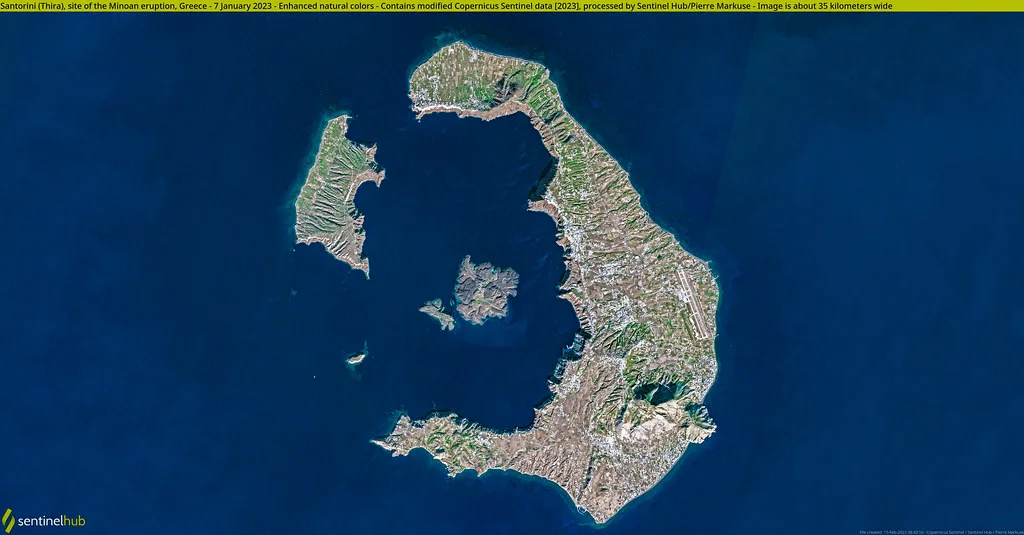
Featured image: SentinelHub, CC BY 2.0, via Flickr.
Minoan Civilization at a Glance
Minoan history is read from ruins, pottery, seals and frescoes. Nobody knows what the Minoans called themselves. Arthur Evans popularized the modern name, drawn from the mythical King Minos. Some chronologies start the culture near 3100 BC and others near 3500 BC, but all place its end around 1100 BC. Our Minoan palaces guide covers each major site in more depth.
- Who: a Bronze Age island culture known for palaces, frescoes, seals and far-reaching sea trade.
- Where: centered on Crete, with settlements around the Aegean, including Kythera and Rhodes.
- When: roughly 3100 to 1100 BC, with absolute dates still debated.
- Why it matters: it is often regarded as the first advanced civilization in Europe, and it shaped later Mycenaean culture.
Minoan Timeline: Prepalatial to Postpalatial
Scholars use two overlapping systems. One follows pottery styles and splits history into Early, Middle and Late Minoan. The other, proposed by the Greek archaeologist Nikolaos Platon, follows the palaces: Prepalatial, Protopalatial, Neopalatial and Postpalatial. The table uses the second system, with the pottery labels as a cross-reference. Absolute dates differ between authors, so treat every figure as approximate.
| Period | Approximate dates | Pottery label | What happened |
|---|---|---|---|
| Prepalatial | 3100–2100 BC | Early Minoan I–III | Villages grow, trade reaches Egypt and Syria, and monumental buildings appear where palaces later stand. |
| Protopalatial | 2100–1750 BC | Middle Minoan I–II | First palaces at Knossos, Phaistos and Malia. Cretan hieroglyphs and Linear A develop. Earthquakes end the period. |
| Neopalatial | 1750–1470 BC | Middle Minoan III to Late Minoan IB | Palaces are rebuilt, trade booms and the Thera eruption occurs. Severe destructions close the era. |
| Postpalatial | 1470–1075 BC | Late Minoan II–IIIC | Only Knossos stays in use. Mycenaean Greek becomes the language of administration. |
How the Minoans Lived: Palaces, Trade, Food and Daily Life
Crete is large, varied and poor in metals. That combination pushed the Minoans toward the sea. They traded for copper and tin to make bronze, and they exported olive oil, wine, wool, cloth and timber. Their contacts reached Egypt, Cyprus and the Levant.
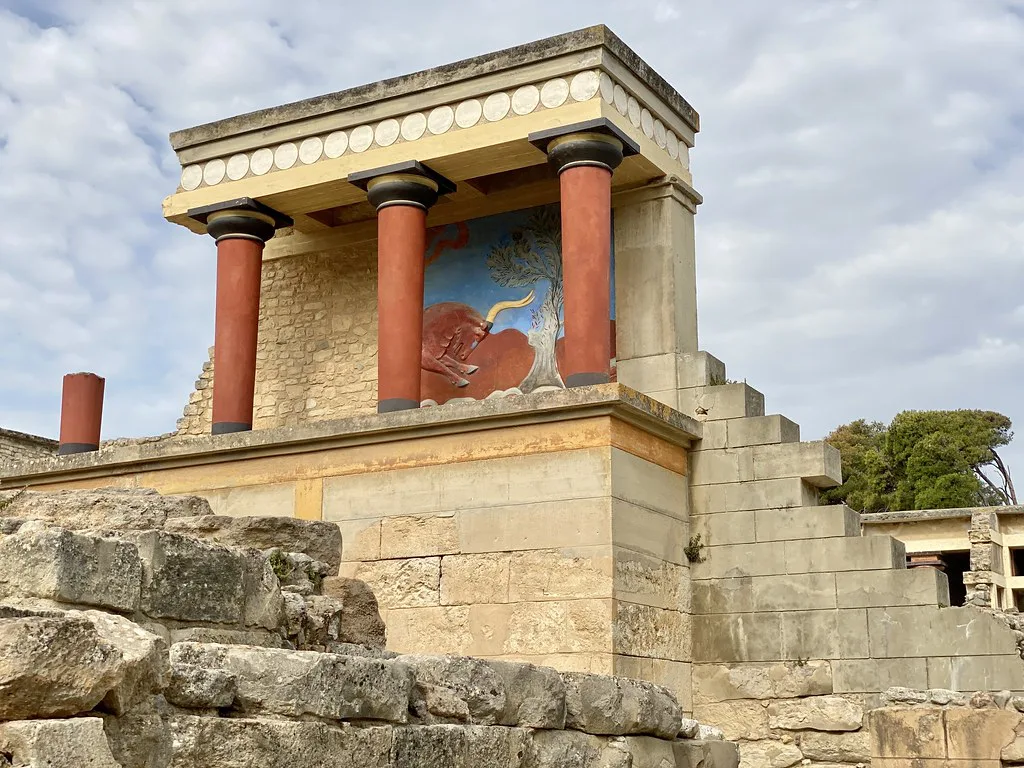
Palaces were hubs rather than simple royal homes. Later research shows they served religious and economic purposes, and scholars still debate their exact role. Storerooms at Knossos held wine, grain and olive oil, which suggests large communal feasts. One scholar quoted by HISTORY estimates Knossos held up to 20,000 people at its height, but that figure is an informed estimate.
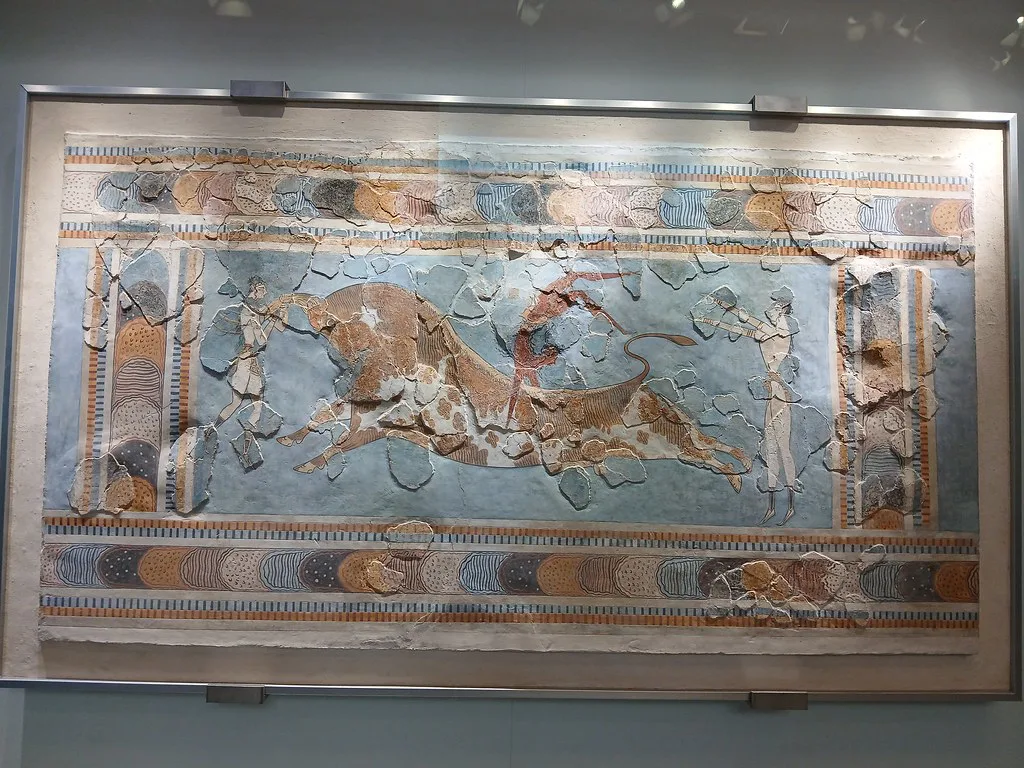
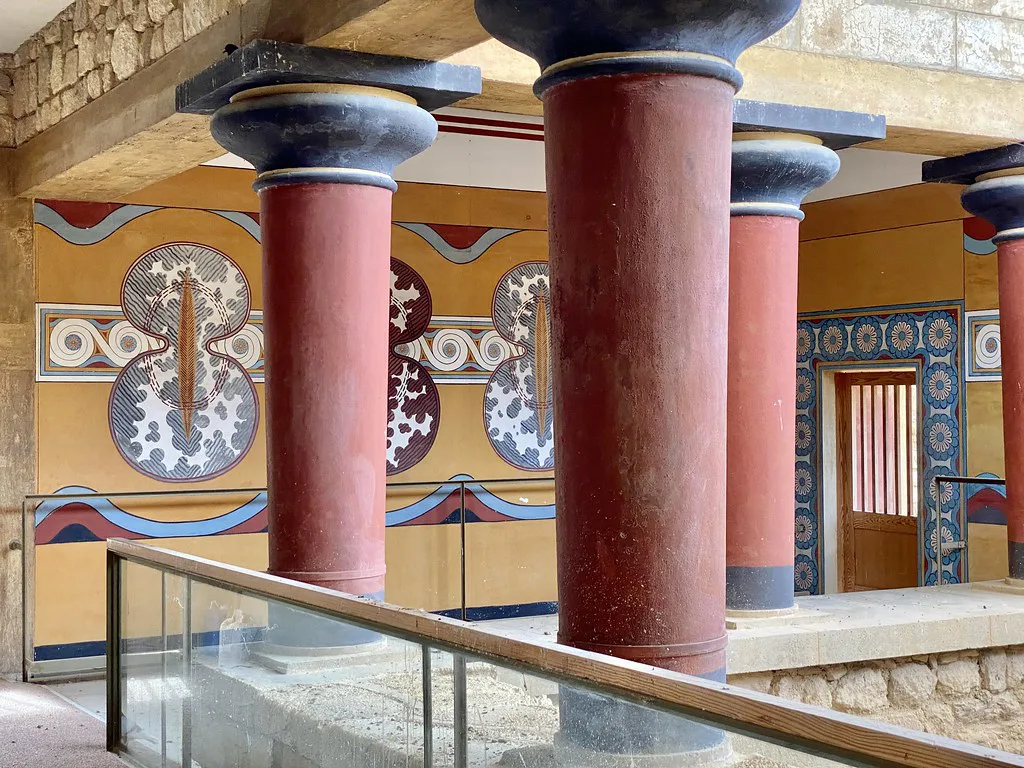
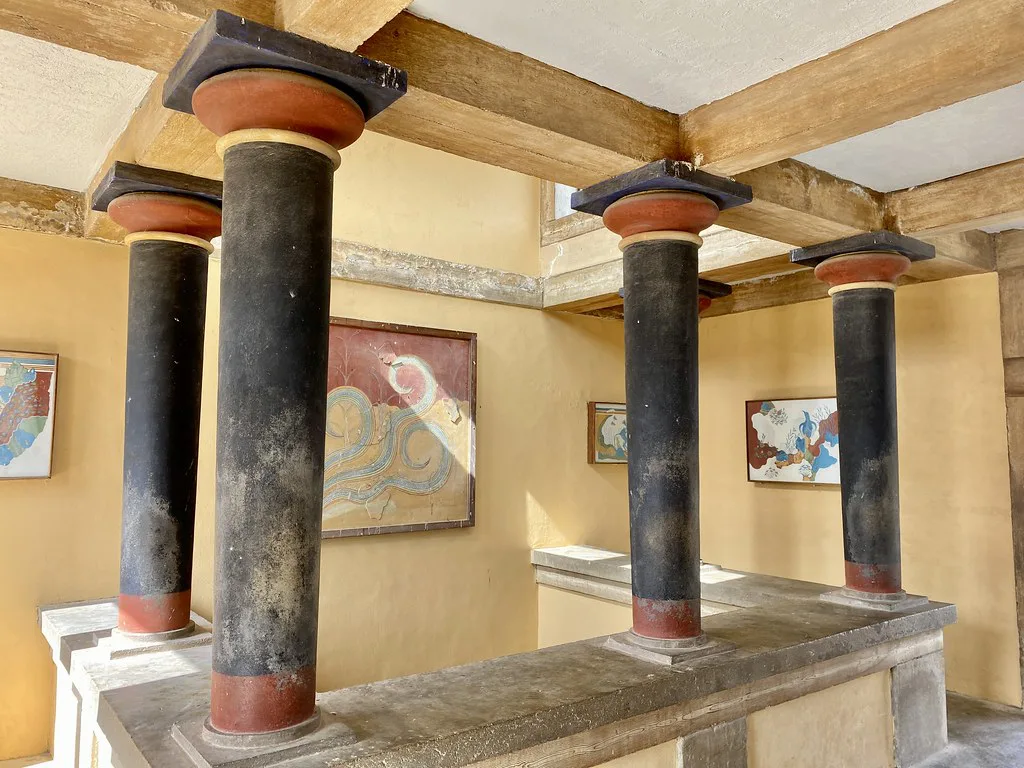
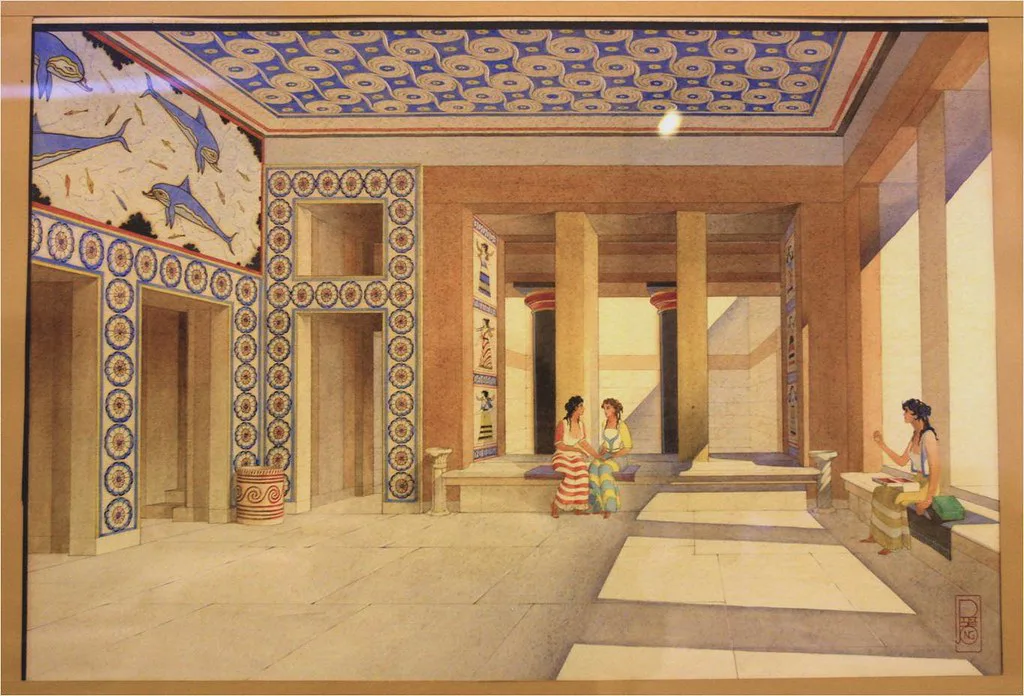
Minoan art favored movement and nature. Frescoes show bull-leaping, dolphins and processions. Marine Style pottery covers whole vessels with octopus and other sea creatures. Women appear prominently in the art, and scholars link this to a strong role in society.
Crete sits on an active seismic zone, so builders adapted. Minoan architecture includes multi-story buildings, light wells and plumbing. Religion centered on peak sanctuaries and sacred caves, with Mount Juktas the greatest peak sanctuary. Today you can still reach the Idaean Cave on Mount Ida, Crete: Access, Route, History and the Dikteon Cave (Psychro) Guide: Access, Walk & Is It Worth It, both tied to later myths about Zeus.
Writing and Language: Linear A, Linear B and What We Still Don't Know
The Minoans used two scripts, Cretan hieroglyphs and Linear A. Neither is fully deciphered, so the Minoan language remains unidentified. Hieroglyphs fell out of use in the Neopalatial period, while Linear A continued.
After about 1450 BC, a modified Linear A called Linear B was used to write Mycenaean Greek. Linear B was deciphered in 1952. Its tablets show that Greek speakers ran the administration at Knossos. The palaces also kept written records of goods and people. The settlement at Agia Triada, near Phaistos, produced the largest number of Linear A tablets.
How Did the Minoan Civilization End?
No single cause explains the end. Scholars debate a chain of events instead.
Earthquakes repeatedly damaged the palaces, and the Minoans rebuilt each time. The Thera eruption, one of the largest volcanic explosions in recorded history, came near the end of Late Minoan IA. Some experts describe ash and tsunamis hitting Crete's north coast. Others argue most ash drifted east, and one expert says the eruption was not the end of the civilization but began a snowball effect.
The destructions at the close of Late Minoan IB, around 1470 BC, look deliberate in places. The town at Knossos burned while the palace did not. Some researchers blame Mycenaean conquerors, while others point to internal upheaval.
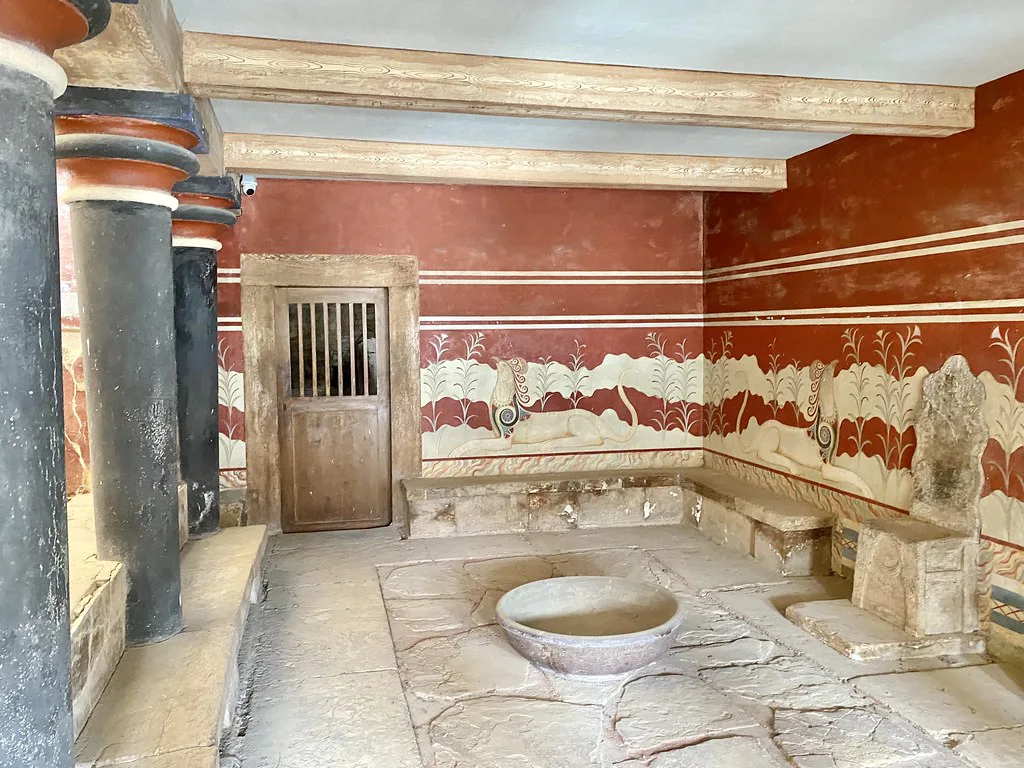
By about 1450 BC, Mycenaean Greeks held growing influence over Crete. Knossos alone stayed in use as a palace, and even it fell by Late Minoan IIIB2. Dates for the final Knossos destruction vary by source, and Ancient-Greece.org gives 1375 BC. Minoan traditions survived in small hill villages until the Early Iron Age.
Myth vs. History: Minos, the Minotaur and the Labyrinth
Classical Greeks believed a King Minos once ruled Knossos. Myth added the Minotaur and a labyrinth beneath the palace. Evans borrowed the king's name for the culture he uncovered in the early twentieth century.
The maze-like palace plan likely fed the labyrinth legend, but no evidence confirms a king named Minos. Myth also links the Cretan caves to Zeus, which is why the Idaean and Dikteon caves appear in both mythology and archaeology. Treat the legends as later stories, not Minoan records.
Where to See Minoan Crete: Sites Compared
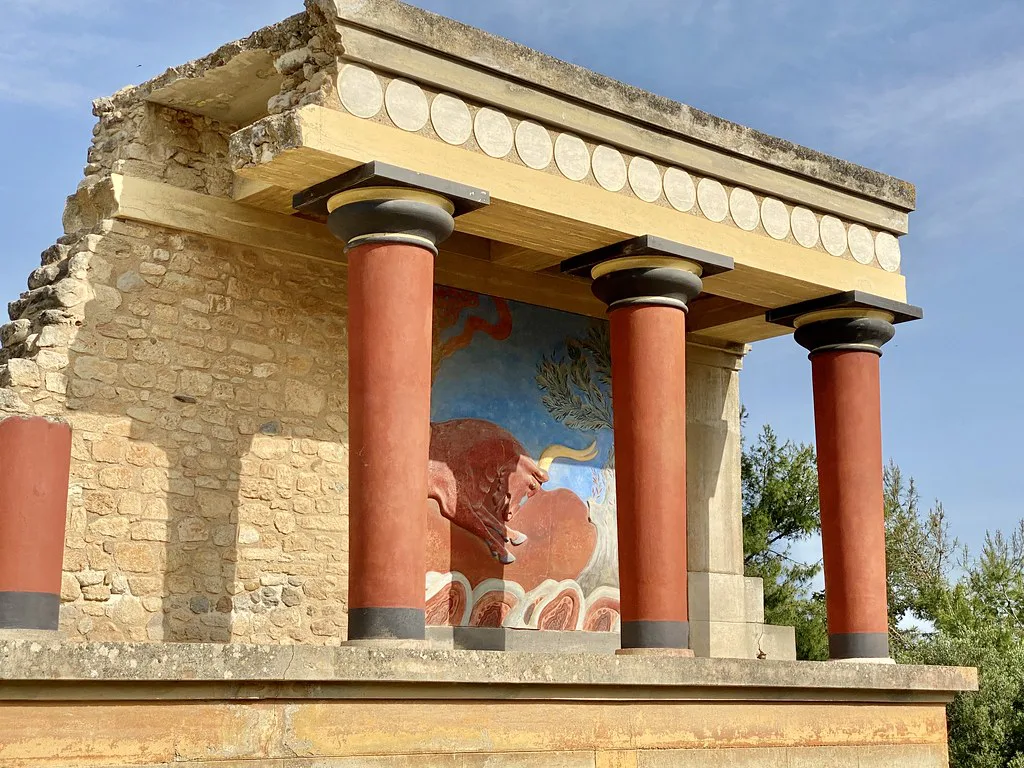
Each site illustrates a different part of the story. Knossos is the largest Bronze Age site on Crete and the best place to understand the palace-as-hub model. It has no dedicated page in our cluster, so use the table for context. Phaistos is the second-largest palace. Gortyna is mostly later Greek and Roman, so treat it as a companion stop, not a Minoan palace.
| Site | What it shows | Best fit | Region |
|---|---|---|---|
| Knossos | Largest palace, reconstructed frescoes, Bronze Age urban scale | First-timers | North coast, near Heraklion |
| Phaistos | Second-largest palace, built over the fertile Messara Plain | Architecture fans | Messara Plain, south central |
| Agia Triada, Crete: Minoan Site vs Monastery Guide | Town and administrative center with many Linear A tablets | Repeat visitors | Near Phaistos |
| Gortyna | Later Greek and Roman city, not a Minoan palace | Layered-history readers | Messara Plain |
| Malia | Palace center showing the Protopalatial period | Quieter palace visit | North coast, east of Heraklion |
| Zakros | Sea-side palace with workshops, likely a trade port | Remote-site seekers | Far east Crete |
| Gournia | Excavated Minoan town rather than a palace | Everyday-life focus | East Crete |
| Idaean Cave on Mount Ida, Crete: Access, Route, History and Dikteon Cave (Psychro) Guide: Access, Walk & Is It Worth It | Sacred caves and the link to myth | Hikers and myth fans | Central Crete mountains |
How to Plan a Minoan Itinerary
Group sites by region and you avoid long backtracking. Crete is about 200 km (roughly 124 miles) long, so distances add up. Most visitors base themselves in Heraklion for central and Messara sites.
For a half day, visit Knossos and the Heraklion Archaeological Museum. Go to the museum first if you want to recognize objects on site. For a full day, add the Messara, using the Heraklion to Phaistos route as your base plan. Pair Phaistos with Agia Triada, which sits near it.
For several days, add the east. Malia is on the north coast, while Gournia and Zakros need more driving. Bus options from Heraklion are listed by KTEL Heraklion-Lassithi, so check the timetable for your day.
Summer heat is a real planning factor at exposed ruins. Aim for early morning or late afternoon, and carry water.
- Mistake: expecting intact palaces. Most are foundations, with some modern reconstruction.
- Mistake: visiting at midday in summer, when shade is scarce.
- Mistake: going without checking hours and closing days.
- Mistake: treating Gortyna as a Minoan palace when it is mainly later Greek and Roman.
Tickets, Hours and Access
Ticket prices, opening hours and closing days change by season, so this page does not quote them. The Ministry of Culture's Odysseus portal is the official source for site information.
Heraklion Museum and Santorini's Akrotiri: Context for the Palaces
The Heraklion Archaeological Museum holds the largest and best collection of Minoan art. It includes the Octopus Vase, a Marine Style piece from about 1500 BC found at Palaikastro. See the museum's official site for current exhibits and visiting details.
Found at Palaikastro, the Octopus Vase dates to about 1500 BC, which falls inside the Neopalatial span, so it pairs well with a Knossos visit.
Akrotiri is on Santorini, not Crete. The Thera eruption destroyed that Cycladic settlement, and its frescoes, such as the Ship Procession, show Minoan-style art and sea travel. It matters here because it supports the dating puzzle and shows Minoan influence beyond Crete.
How to Read the Reconstructions at Knossos
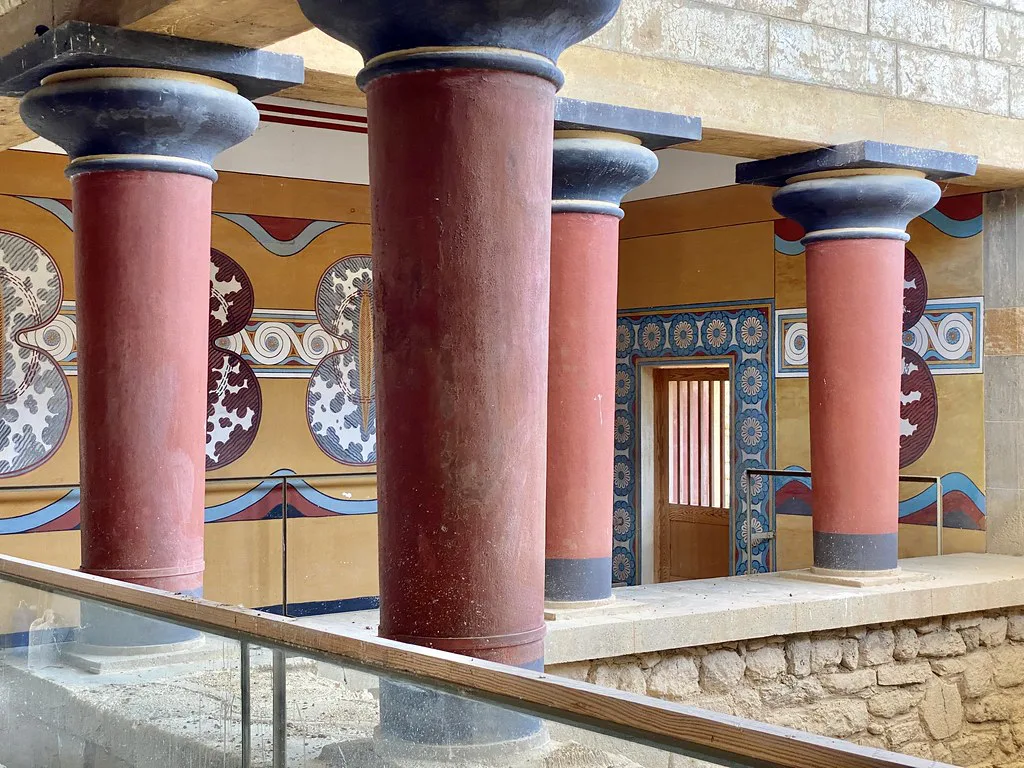
Knossos is unusually easy to picture because some visible areas have modern reconstruction. That makes it a useful introduction, but it can also make the palace seem more intact than other Minoan sites. Most ruins elsewhere are foundations, walls and open courts rather than rebuilt rooms.
Use the site to read the palace plan first. The earliest palace phase at Knossos dates to roughly 2100–1750 BC. It was rebuilt during the Neopalatial period, roughly 1750–1470 BC. Those dates help explain why the complex contains layers rather than one single building.
Then visit the Heraklion Archaeological Museum to see Minoan art away from the reconstructed setting. Its Octopus Vase dates to about 1500 BC and comes from Palaikastro. Seeing objects in the museum before or after Knossos makes it easier to separate surviving artifacts from the interpretive presentation at the palace.
Frequently Asked Questions
What was the Minoan civilization famous for?
It is known for its palaces, especially Knossos and Phaistos. It is also known for frescoes, Marine Style pottery and seals. Sea trade for metals and the undeciphered Linear A script round out its reputation.
What did Egyptians call Minoans?
Egyptian sources use the term Keftiu, written kftjw. Scholars do not know whether it was an outside name or one the Minoans used themselves. Tomb paintings show gift-bearing Keftiu, possibly merchants or officials from Crete.
Related guides


Continue reading
Guides on the same trip