
Gournia Archaeological Site: What to See and How to Visit
Last updated November 2026: Gournia is a Minoan town in eastern Crete, nicknamed the "Pompeii of Minoan Crete" for its well-preserved street plan. It is an open ruin on a low hill by the sea, not a restored palace like Knossos. Expect stone house foundations, paved lanes and a small hilltop palace, and plan a short stop rather than a full day.
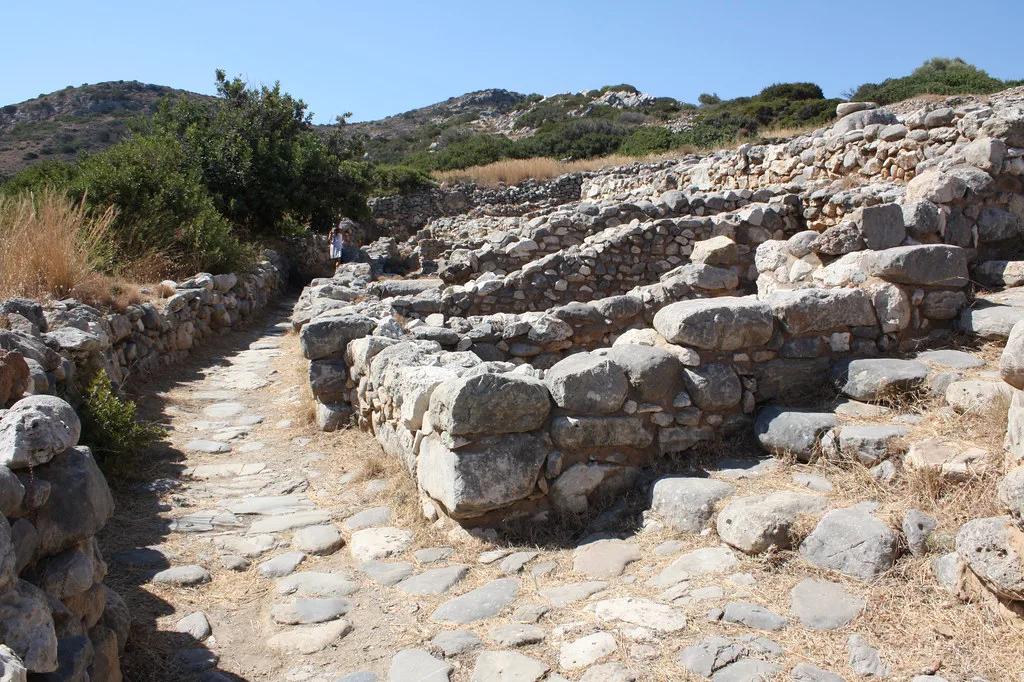
Featured image: Shadowgate, CC BY 2.0, via Flickr.
What Gournia Is, and Whether It's Worth Your Time
This is a medium-sized settlement from the peak of Minoan culture, Late Minoan I (c. 1550–1450 BC). The first settlers arrived in Early Minoan III, around 2300 BC. Its ancient name is unknown. Villagers named it after the stone basins, "gournes" in Greek, that lay around the ruins. For wider context, read our background on Minoan life. Use the quick test below to decide.
- Go if you want to walk a real Minoan street plan with houses, workshops and a drainage system.
- Go if you are already crossing the Ierapetra isthmus and want a short cultural stop.
- Skip if you want reconstructed halls, painted walls or a large museum on site.
- Skip if you have time for only one Minoan site and want the grandest palace.
What You'll See on Site
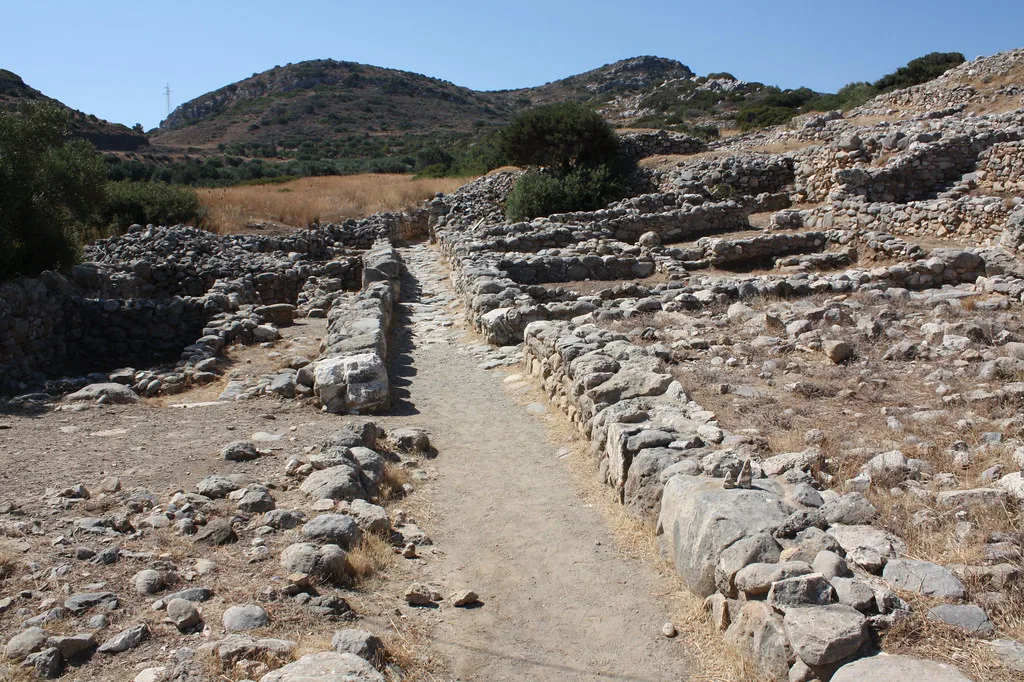
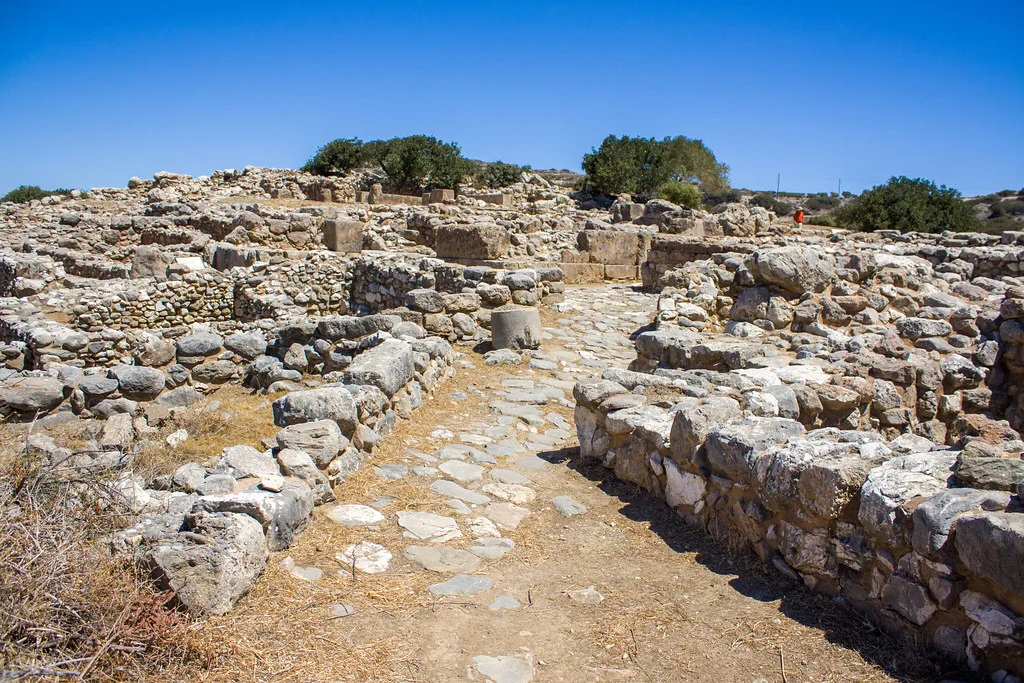
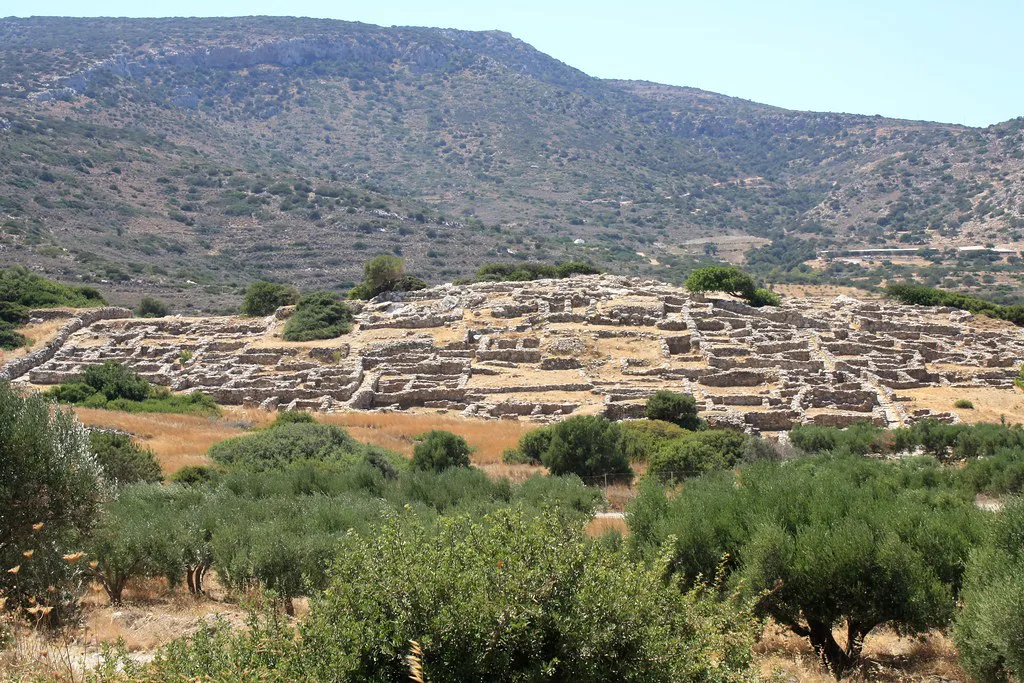
Excavation ran from 1901 to 1904 under the American archaeologist Harriet Boyd-Hawes, prompted by the discovery of a sealstone. Below is a suggested walking order, not an official route. Start on the lower slopes with the unfortified town. Two paved streets cross at right angles, and stepped lanes climb the hill. A drainage system connects them, and the streets divide the town into house blocks. Seven of these blocks have been excavated. Next, look at the two-storey houses, the largest about 5 x 5 m (roughly 16 x 16 ft). Neighbouring houses share outer walls. Lower walls are stone, and the upper parts were mud brick. Ground floors held workshops and storerooms, while the living quarters sat above. Tools found here point to farming, stock-breeding, fishing, pottery and weaving. Climb to the hilltop palace, built west of a rectangular court. An L-shaped flight of steps faces the court. Excavators interpret it as seating for ritual ceremonies. A small paved room behind it is thought to be a bull-sacrifice platform, with a stone "kernos" for libations nearby. North of the palace, a small public shrine to the "Snake goddess" measures about 3 x 4 m (roughly 10 x 13 ft). Finds there included clay figurines, a tripod altar and snake tubes. Treat the ritual readings as interpretation. The streets, walls and room sizes are the physical evidence.
Houses here are small: the largest two-storey one is about 5 x 5 m (roughly 16 x 16 ft), so it suits a short stop rather than a full day.
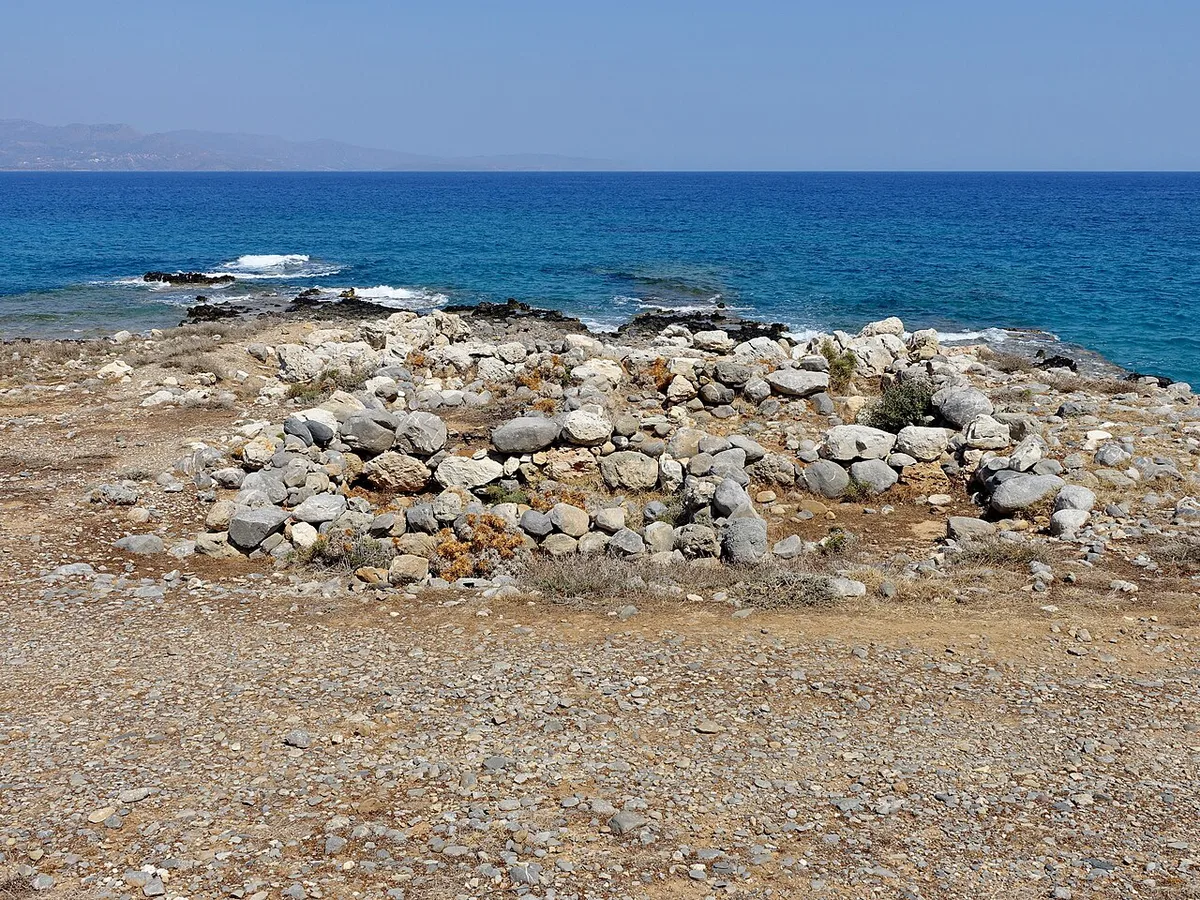
A Town, Not a Palace: Gournia vs Other Minoan Sites
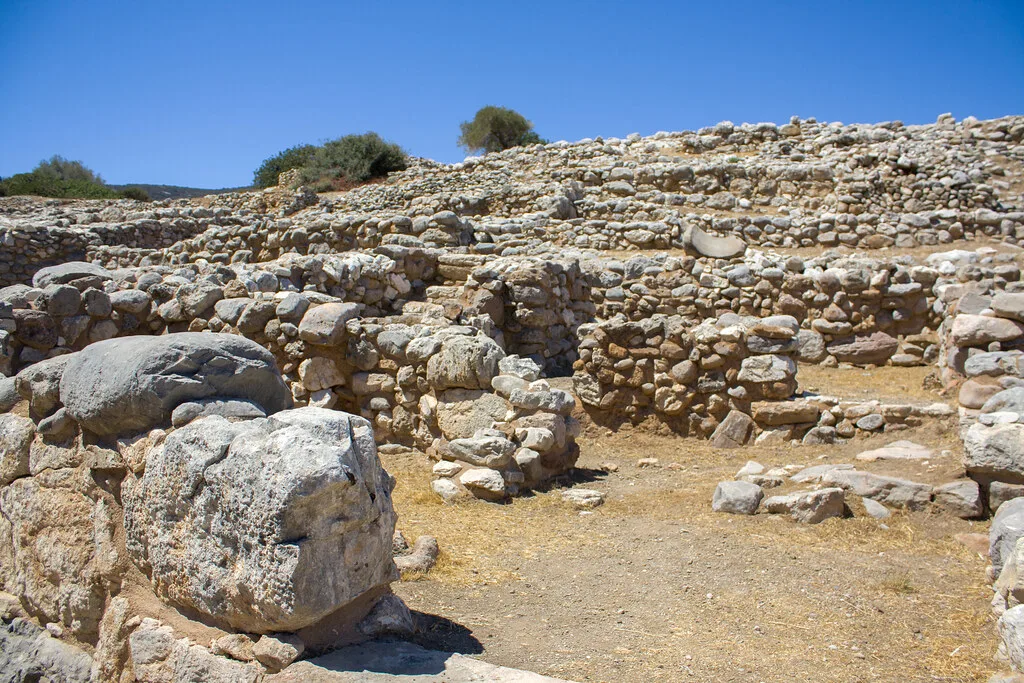
Palace and town were destroyed around 1450 BC, at the same time as the other palatial centres. Partial reoccupation followed about 50 years later, and the site was abandoned around 1200 BC. That history makes this a place to read everyday layout, not royal ceremony. Our guide to the Minoan palaces covers the big sites in more depth. Use the table to choose.
| Site | Type | Best for | How it differs from Gournia |
|---|---|---|---|
| Phaistos | Palace | Palace architecture and court layout | Centred on a palace, not an ordinary town |
| Malia | Palace | Seeing a palace plan | Palace-focused, with less emphasis on streets and houses |
| Zakros | Palace | A palace-centre visit | Palace-centred, while Gournia shows house blocks |
| Agia Triada, Crete: Minoan Site vs Monastery Guide | Minoan site | Adding a smaller Minoan stop | Not a town street grid |
| Gortyna | Largely Roman and Gortynian, not Minoan | Later-period ruins | Different era, so a contrast rather than a comparison |
Getting There and Practical Details
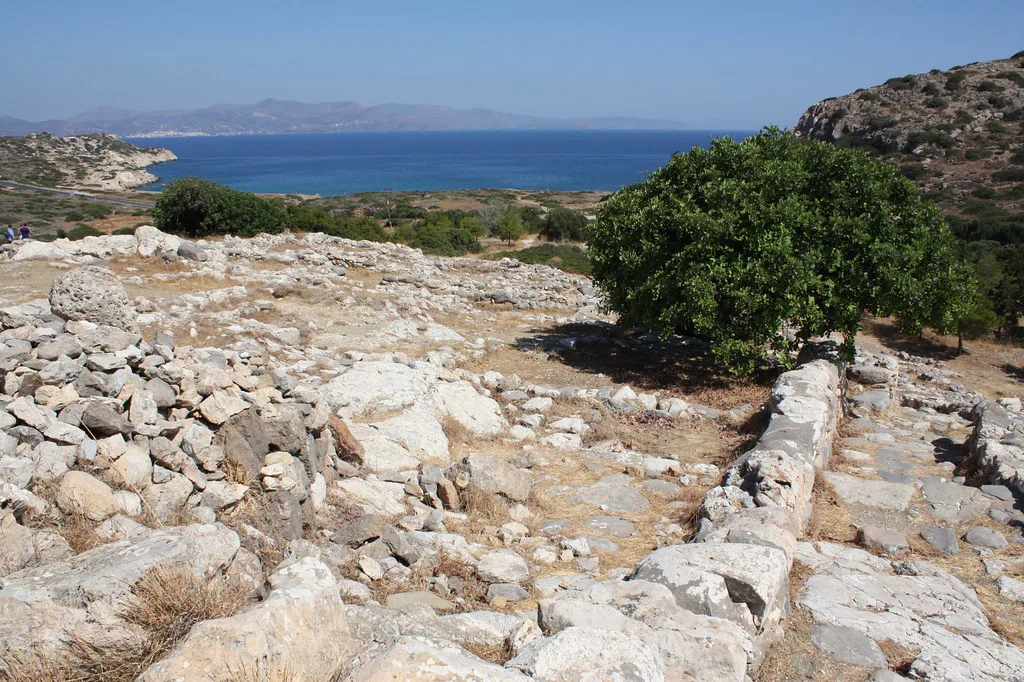
Gournia sits on a low hill a few hundred metres from the sea, in the Gulf of Mirabello. It lies near the north end of the Ierapetra isthmus. Pachia Ammos is about 2 km (1.2 miles) away, and Agios Nikolaos is about 19 km (12 miles). Ierapetra is roughly 11 km (7 miles) away in a straight line, so driving distance will be longer. The official address reads "Pahia Ammos, Ierapetra". Tickets, opening days, hours, parking, bus service, shade and accessibility are not confirmed here. Check them before you go on the Ministry of Culture's Odysseus portal. Treat the site as exposed, with ground that is likely uneven, and wear sturdy shoes.
Combining Gournia With Eastern Crete
Nearby options include Kavousi Gorge canyoning, Sarakina Gorge trekking, and boat trips to Chrissi Island and Koufonisi. Tavernas operate in Koutsounari, Pachia Ammos and Ierapetra. These are editorial pairings, so check travel times on a map.
Ierapetra is roughly 11 km (7 miles) away in a straight line, so the Napoleon's House pairing needs more drive time.
- Morning ruins, then lunch at Mermygas on the beach at Pachia Ammos, about 2 km away.
- Gournia, then Ierapetra for Napoleon's House and a taverna meal.
- Gournia on the way to or from Agios Nikolaos, about 19 km away.
- A Gournia stop before a gorge hike or a Chrissi Island cruise on another day.
Mistakes to Avoid
Expecting a Knossos-style restored palace sets the wrong tone, because walls here stand low. Arriving without checking hours risks a wasted trip. As general guidance, midday summer heat is hard going on an open hillside, so aim for early or late. Walking in without context also costs you, since the ruins make more sense once you know the streets-to-houses-to-palace order above. When you want grander halls afterwards, return to our overview of Minoan palaces and pick the next stop.
For trip-planning details, see Archaeological Museum of Sitia.
Related guides



Continue reading
Guides on the same trip

